Photo courtesy of Elephant Reintegration Trust
Rewilding—the process of rehabilitating captive wild animals and returning them to their natural habitats—represents a critical next step in elephant conservation. For captive-held elephants worldwide, rewilding offers a responsible and humane pathway toward improving welfare and restoring natural behaviors.
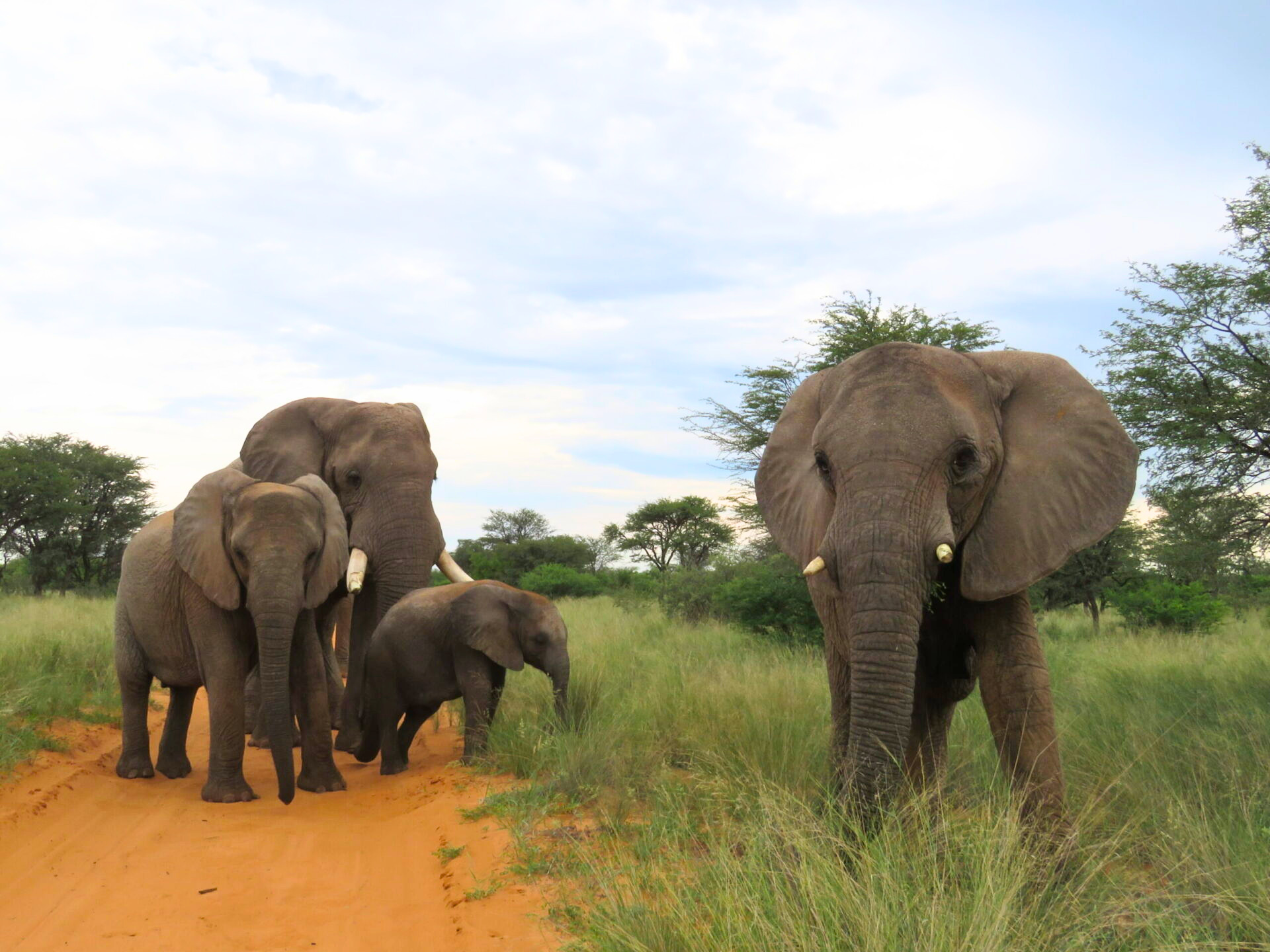
The long-standing assertion within parts of the zoo and exhibit industry that elephant rewilding is impossible is not supported by available evidence. Successful examples already exist. In Africa, conservationist Brett Mitchell has demonstrated that elephants held in captivity for extended periods can be rehabilitated and returned to wild environments. In Thailand, the Mahouts Elephant Foundation has developed programs that similarly move elephants toward greater autonomy in natural habitats, showing promising progress toward rewilding outcomes.
While rewilding elephants presents significant challenges and may not be appropriate for every individual, the claim that it cannot be done is categorically incorrect. Existing successes demonstrate that, with proper planning, expertise, and long-term commitment, rewilding can be a viable conservation and welfare strategy for at least some captive elephants.
Viewed logically, zoos and circuses represent an increasingly outdated model of elephant management based on possession and public exhibition. In contrast, genuine elephant sanctuaries should be structured around a continuum of care: rescue, rehabilitation, and, where feasible, rewilding.
The establishment of the first natural-habitat elephant sanctuary in the United States in 1995 marked a significant departure from the traditional zoo model. During its first fifteen years, public attitudes toward keeping elephants in zoos and circuses shifted dramatically as growing awareness of elephant cognition, social complexity, and welfare needs entered mainstream discussion. The sanctuary model demonstrated that elephants could live in larger, more natural environments and recover from many of the physical and psychological effects of captivity. However, following a change in leadership, the sanctuary’s original philosophy was abandoned in favor of a management approach more closely aligned with conventional zoo practices. As a result, efforts to develop and test rewilding strategies ceased, and progress toward preparing captive elephants for greater autonomy in natural environments halted.
At its most ambitious, the sanctuary movement appeared positioned to create a pathway toward eventual rewilding for suitable elephants. However, changes in philosophy and institutional priorities redirected much of the movement toward permanent captive management rather than preparation for release. As a result, progress toward developing and testing rewilding strategies slowed considerably.
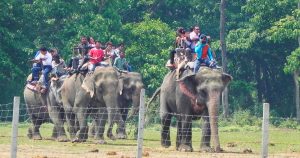
Today, elephant sanctuaries in Asia may offer the greatest potential for future rehabilitation and rewilding efforts. Large populations of captive elephants already exist within their native range, and many live in social groupings that more closely resemble natural elephant society. Several programs have demonstrated elements of successful rehabilitation, but cultural traditions, economic realities, and established management practices continue to limit the broader adoption of rewilding initiatives.
Zoo institutions frequently argue that they provide the highest standard of care for elephants. Critics challenge this claim, noting that elephants in captivity are often unable to express many of the behaviors that define their species in the wild, including long-distance movement, complex social dynamics, autonomous decision-making, and ecological participation. From this perspective, excellent husbandry alone cannot fully compensate for conditions that fundamentally differ from an elephant’s natural way of life.
Economic interests also shape the public conversation. The exhibition of elephants generates revenue and institutional value, creating incentives to maintain captive populations. Critics argue that this financial reality can influence public messaging, sometimes promoting the view that lifelong captivity is preferable to wild existence or potential rewilding opportunities. As evidence supporting rehabilitation and rewilding continues to emerge, the debate increasingly centers not on whether elephants can survive beyond traditional captivity, but on whether institutions are willing to prioritize that possibility.
Contrary to longstanding narratives promoted by much of the elephant exhibit industry, evidence increasingly suggests that elephants thrive when allowed to live in natural habitats that support their physical, social, and behavioral needs. Wild elephants do not commonly experience many of the chronic conditions associated with captivity, including obesity, severe foot and joint disorders linked to restricted movement, and stereotypic stress behaviors such as repetitive swaying and pacing. These conditions are widely recognized as indicators of compromised welfare in captive settings.
Rewilding will not be possible in every circumstance. Suitable habitat, ecological conditions, political support, and the proximity of human populations must all be carefully considered. In some regions, the risks and logistical challenges may make full rewilding impractical. However, where conditions are favorable, serious efforts should be made to explore pathways toward rewilding. At a minimum, elephants should be provided with the greatest possible degree of freedom, autonomy, and natural social interaction within large, protected landscapes.
One promising model involves using elephant scouts—trained observers who monitor elephant activity from a distance while minimizing human interference. Such an approach allows elephants to make their own decisions and rebuild natural behaviors while still benefiting from oversight that promotes safety and supports research.
Momentum is building. Through the efforts of organizations such as Elephant Aid International, global experts have begun collaborating to compile data, evaluate existing case studies, and develop practical frameworks for elephant rehabilitation and rewilding. Their work recognizes that no single model will fit every elephant or every landscape. Instead, multiple approaches may be required depending on local conditions and the histories of individual animals.
The possibility of rewilding captive-held elephants is real. The challenge now is not whether it can be attempted, but whether there is sufficient commitment to develop, test, and refine the models that can make it successful. The time has come to move beyond the assumption that lifelong captivity is the only option and to seriously explore a future in which more elephants can regain the freedom, autonomy, and ecological role that define their nature.
For further insight into this emerging field, readers are encouraged to explore the observations and research of Liv Baker, whose work in Thailand documents the rehabilitation of formerly captive elephants and contributes to the growing body of knowledge supporting rewilding initiatives. https://staging.elephantaidinternational.org/wp-content/uploads/2026/06/Baker-Liv_She-Chose-This-Path.pdf