Category: Other

  • Monsoon Season is Over – September E-Newsletter

    Monsoon Season is Over – September E-Newsletter

    There are more than one hundred elephants awaiting pedicures in India and Nepal. Wow — I can hardly catch my breath at the thought of it!

    This is my passion these days — foot trimming. The joy of being at the ground level, literally, of elephant welfare, is thrilling. I know we cannot fix all the problems facing captive elephants in Asia, but foot care is a very immediate and concrete way to improve their lives.

    India: Care center plans

    I will be in India through October, visiting with colleagues about prospective care center projects (and, of course, trimming elephant feet!). The care center project in Bannerghatta stalled due to property ownership issues and lack of government clearance. Disappointing as it is, we have decided to cancel the Bannerghatta care center project and concentrate on other more promising locations.

    This will be my third visit to Guwahati, in India’s north. It is stunningly beautiful elephant country. Unlike my last visit, which was a six-hour whirlwind blur, I will spend several days studying the area proposed for a new care center. I also plan to meet with the chief warden of Assam about a proposed care center in his state.

    This will be my second meeting with the warden. My colleague from the Assam Elephant Foundation and I are encouraged by the interest he has shown in this project. In fact, it was the warden’s idea and it is only with his endorsement that the project can move forward.

    The last time we met, the warden committed an area of land to the proposed center and agreed to permit the residents of our center to have access to the surrounding forest. This is an exciting start. I will keep you posted as we proceed.

    I will make a repeat visit to Wildlife SOS-India, outside New Delhi. This time I will have the opportunity to provide pedicures for all the elephants before heading off to see their new project, a four hundred-acre elephant rescue center under construction in Mathura. I have heard so much about this project—I can’t wait to see it.

    Nepal: Pedicures, chain-free yards, waste disposal and retirement center

    When I arrive in Nepal in November, I will have my work cut out for me: pedicures for more than one hundred elephants; we hope the construction of several more chain-free yards; development of environmentally sound elephant waste disposal practices; and brainstorming on plans for an elephant retirement center in Sauraha. What a productive time this will be!
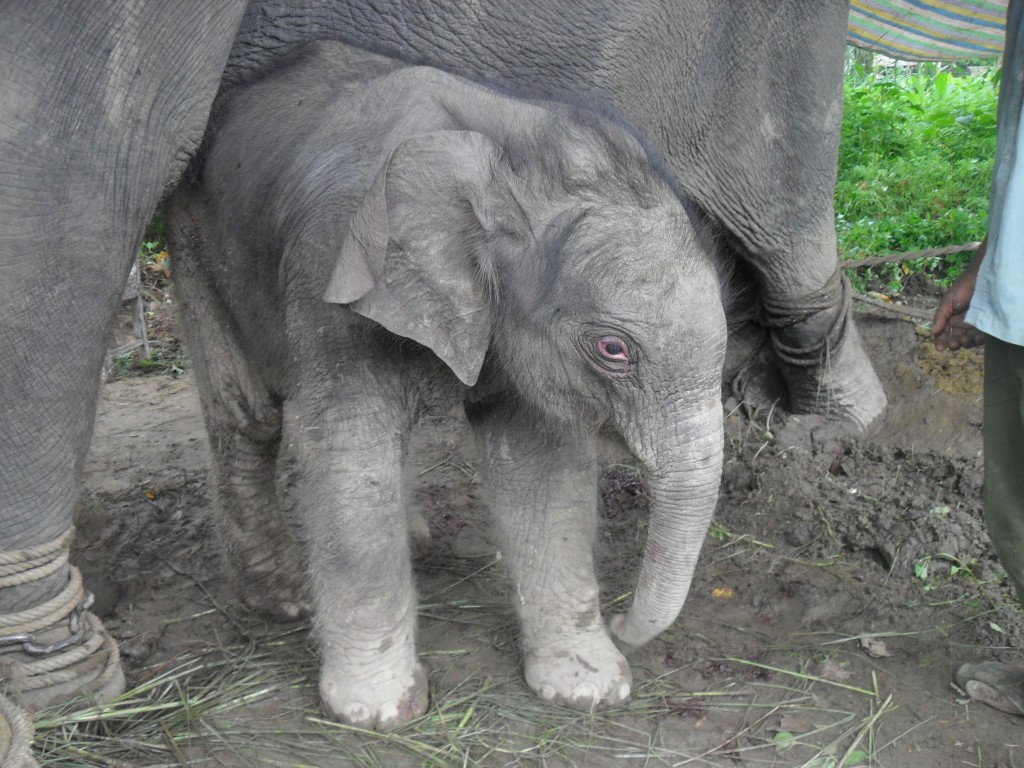
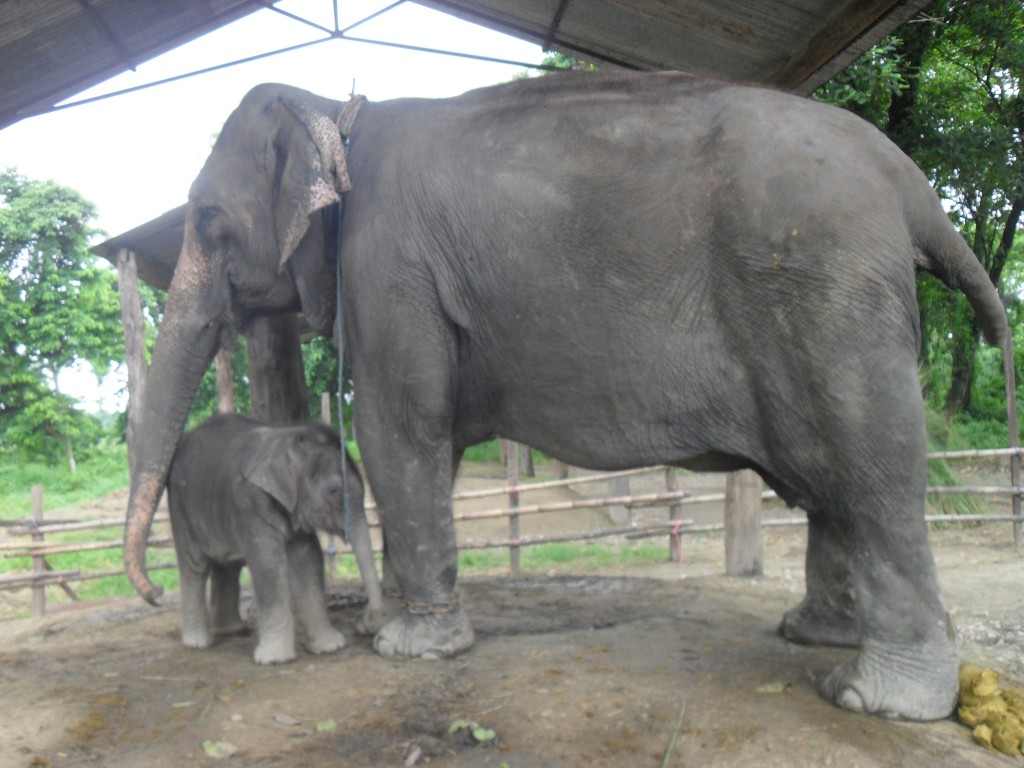
    Our first candidates for a chain-free yard are Man Kali and her two-month-old baby Hem Gaj. Currently, Man Kali is chained but little Hem Gaj is chain-free, kept with his mom in a wooden corral built by the mahouts.

    But the wooden corral won’t hold him in for long!

    After watching how Sweetie Kali blossomed in her chain-free yard, the mahouts want the same for her baby brother. They are determined that Hem Gaj will not be put on chains and have asked us to build a yard for him and his mother.

    Help us build a yard for Man Kali and Hem Gaj!

    Enclosing one acre of land with the power fence required to keep captive elephants in and wild elephants out, costs close to $4,000US. Adding water storage tanks, plumbing and a drinking trough, adds another $2,000US.

    Help us remove the heavy chains from Man Kali’s legs and ensure that baby Hem Gaj will never feel the pain of cold steel around his ankles.

    Just say yes! I want to contribute $10 / $25 / $50 / $75 / $100 / or other $_____ to build a one-acre, chain-free yard for Man Kali and her two-month old baby, Hem Gaj.

    If you prefer to donate by check, please make your check payable to Elephant Aid International and send it to:

    Elephant Aid International

    P.O. Box 106

    Hohenwald, TN 38462

    931-796-1466

    As you might expect, we won’t stop there. As the funds are raised, we will build more yards for more elephants.

    We are making great progress in Nepal. The mahouts welcome my return and are engaged in the changes we are making. They have embraced the chain-free yard concept, are excelling at pedicures and want to learn more humane ways of working with their elephants. The future of elephant welfare in Nepal is in their hands.

    You make it possible

    We have made it this far because we believe in the power of one. Each one of you makes it possible to help one elephant, then another and another.

    As I head off to the Far East once again, I am eternally grateful for your continuing support and encouragement. Knowing that you are behind me one hundred percent gives me the determination to forge ahead, helping one elephant at a time, then another and another. It’s working and it’s all thanks to you!

    Please follow the progress of our work on my blog and thank you, as always, for your support.

    Namaste,

    Carol
  • Rock Quarry Activity in India

    Rock Quarry Activity in India

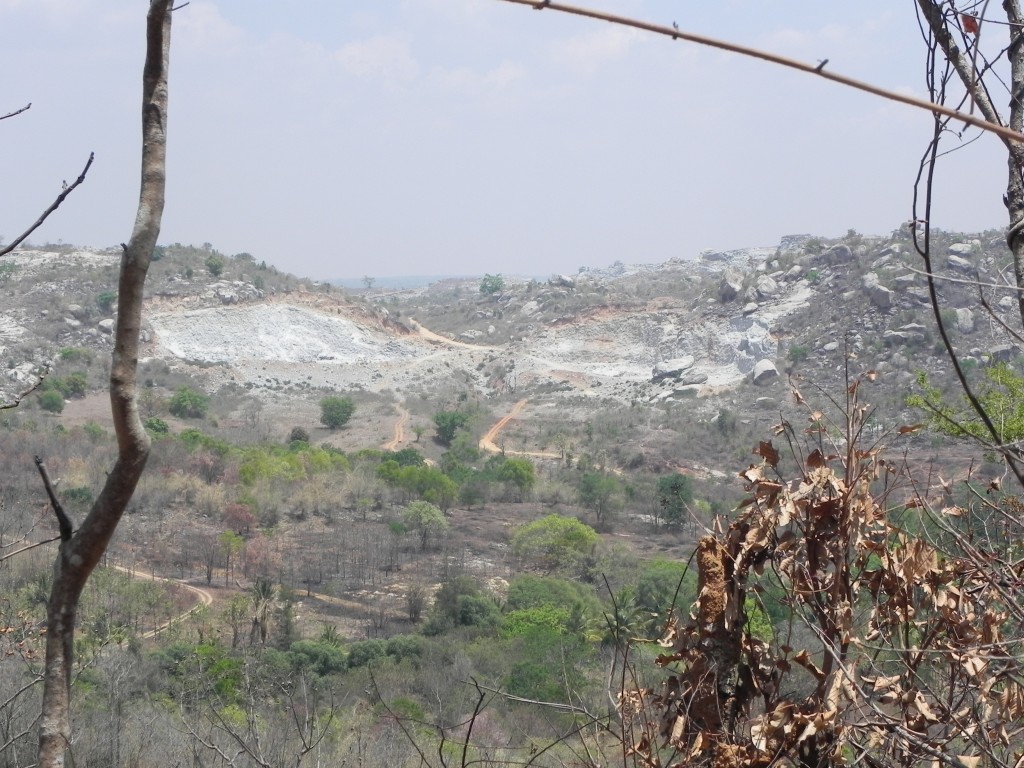
    Recently I read a scathing online article criticizing the India government for failure to enforce an order it issued on January 9, 1991. The order states that “No quarry or quarry lease should be granted to units in the one-km radius around the boundary of a national park.” The order was meant to preserve the no-quarry-zone as a safe zone for wildlife.

    I am personally familiar with this problem. For three months this past spring I lived in Bannerghatta, the center of quarry activity.

    Hundreds, if not thousands, of villagers live in this area. Many hundreds of these same villagers are employed by the quarry, creating a dilemma: protect the wildlife, the forest and public health or make jobs the priority.

    The villages are poor, with limited means of generating a living outside of raising livestock and growing crops. Quarry work is a welcome alternative for many of them. In my area, one village has prospered immensely due to their close affiliation with the quarry. Dump trucks line the village road each evening as workers return from hauling rocks from the quarry to wholesalers. Their work is very lucrative.

    Unfortunately, the personal downside to the quarry seems to have escaped the villagers. Chances are they are unaware of how detrimental it is to their health to breathe in the fine dust the quarry creates. In addition to transporting truckloads of the blasted rock, many workers spend the entire day smashing rocks—by hand—into small pebbles to create gravel for road beds. The dust created by their labor is thick in the air and they breathe it for hours on end. Much like black lung disease, which affects coal miners, lung disease is a real concern for these laborers. But no one seems to be concerned about their welfare.

    My house sits at the bottom of a hill only a few hundred meters from the national forest. I could not see the quarry from my location, I felt its presence every day.

    I could track the quarry’s illegal activity like clockwork. When the sun set and dusk slipped into darkness, a shockingly deafening series of dynamite blasts would rock the land, causing me to nearly jump out of my skin. Even though I knew to expect the blasts, their intensity always shocked me. Sitting on my porch I could feel the vibration of huge granite boulders splitting apart, followed by the unnerving echoes of the blast reverberating over the hill into the adjacent forest. Following the blasts came the ghostly sound of tons of rubble cascading down the side of the quarry, bringing with it a thick cloud of granite dust particles that covered every surface, inhaled by all breathing beings within miles of the quarry.

    As result of non-enforcement, the blasting continues unabated, leaving behind a layer of dust on everything. Leaves, plants, furniture, floors and even the lake are covered with a layer of fine granite dust. The daily ritual of dusting and sweeping was a constant reminder of what we and the forest residents inhaled with each breath.

    According to M Devaraj, deputy conservator of forests, Bannerghatta National Park, “We are authorized to remove the quarry equipment or stop quarrying if the quarries are inside the forest. But since all these quarries are in revenue land, it is the duty of the revenue and mines and geology departments to stop quarrying as per the 20-year-old government order.’’

    The government’s reluctance to enforce the order mirrors their response to other orders meant to protect the forests and her inhabitants. Just as the government order to remove elephants from zoos has lacked enforcement, the quarry order has failed to benefit those it intends to protect. Although government orders indicate knowledge of what is right, the lack of enforcement leaves one to question the real purpose of their enactment.

    It takes a brave person to speak out in India. I am encouraged that Y Maheswara Reddy, DNA, spoke out about the illegal quarry activity. If enough people are willing to do the same, perhaps change will begin and the wildlife and forest can experience some level of protection from potentially lethal activity.

    Read the original article written by Y Maheswara Reddy.

  • One With The Storm

    The storm blew in with little warning — fierce, bending saplings to their breaking point. The wind swept fine particles from the dry, dusty roads and newly plowed fields to create a cloud of dust that blocked the late afternoon sun’s rays, bringing premature darkness. Soon the metallic vibrating of nearby generators created a surprise calm, a base pulse underscoring the mighty storm.

    Second only to elephants, I love storms. The more wind and rain the better.

    The swirling, all-encompassing embrace of the storm’s powerful wind reminds me of Tennessee. Trees dancing outside my door, drapes floating to and fro, bed sheets lifting like butterflies and gently floating back down. Although these storms don’t produce the same spectacular lighting show as the ones back home, the power of their display is identical.

    Sitting in the middle of a storm I can effortlessly be in the moment. I feel engulfed by ancient gods and nature’s grandeur. I feel at peace, one with the world.

    Here comes the gentle tap, tap, tap of raindrops, which I bet will soon explode into a deafening downpour—my favorite part. Metal roofs become their keyboard, magnifying their music, creating one of nature’s unmatched symphonies.

    Oh thunder — here it comes — the exclamation point! Reminds me of Jenny, thumping her trunk on the ground to accentuate her excitement, sending vibrations in every direction to be absorbed by sensitive receptive feet.

    The lightening has finally arrived — what a show! The wind carries a light mist of rain through my open door, bringing with it the scent of fresh flowers, refreshing my skin and lifting my spirits.

    Together, thunder, deep as mighty drumbeats and lightning flashes like a trillion intermittent flash bulbs.

    Being in the moment with such power is inspiring. I can think of nothing more impressive and awe inspiring than storms…except for elephants, of course.

    And now the long awaited crescendo–the skies open up in a deafening downpour. Not to be outdone, the thunder increases its volume. The rain responds in sheets of water. The drapes now beat against the windows, violently flapping back and forth, in time with the storm’s well-orchestrated concert.

    Nature at her finest.

    Bathed in the joy storms create for me, I silently sit in the very center absorbing every glorious bit of her, knowing that like all good things, this storm too will soon pass.

    The storm is spent and quiet begins to settle. Distant ripples of thunder suggest that she is moving on. But not before sending one last gust of wind and splash of rain, rattling the roof tops and reminding me what joy nature brings.

  • Deepani Jayantha completed her course

    Last month many of you chipped in to help cover a portion of travel expenses for Deepani Jayantha, Born Free’s country representative in Sri Lanka, to attend the Smithsonian Conservation Biology Institute course, “Conservation Conflict Resolution,” outside Washington, DC. Your support was beyond generous. The course concluded on Friday and I received this email from Deepani:

    Greetings from Front Royal, Virginia! The course ended today. It was great!

    It is such a great opportunity to come to the Smithsonian Conservation Biology Institute to attend the course, ‘Conservation Conflict Resolution’, which was conducted in collaboration with George Mason University. The intense 5-day course includes conflict analysis, theories of conciliation and mediation, identifying the third party neutral role and multi-stakeholder dialogue in conflict resolution. Role playing based on real life one-on-one conflict situations helps the participants to improve their skills of handling challenging issues. All 14 participants were from the American continents except for me, which made me feel special!

    The most significant exercise of the course was discovering Bodhi-Lama in each participant and bringing him to life when interacting with other people every day. The Bodhi-Lama is a hypothetical character with all possible qualities of a genuine third party neutral.

    With the course over, I plan to explore life in Virginia despite the difficult weather. The Appalachian Trail is inviting; sadly it is winter. It will be exciting for me to learn about the cultural history of Virginia at the museums in DC.

    I am very grateful to all of Elephant Aid International supporters for your financial support. All the friends I made have been enormously helpful – thanks to all! What I learned in this course will invariably be helpful in handling multi-stakeholder dialogue in conservation of elephants in Sri Lanka.

    Thanks again for your support,
    Deepani

  • Helping a Fellow Elephant Welfare Advocate

    Dr. Deepani Jayantha, a dear friend and dedicated elephant welfare colleague working in Sri Lanka, is hoping to attend a conservation conflict resolution course being offered in DC next month. The course is not cheap ($1,500) and neither is the airfare ($2,000), but it promises to benefit her elephant welfare projects in Sri Lanka.

    While in Sri Lanka last year I toured Dr. Jayantha’s projects. I am confident that the knowledge she gains from attending this course will enhance any project she manages.

    I am hoping that someone has air miles to contribute for Dr. Jayantha’s flight from Colombo, SL to DC, USA.  Underwriting would work as well.  Here is a way for us to make a difference for the human/elephant conflict in a personal way.

  • in his own words before being offered the CEO position

    19th February 2010

     Dear Sanctuary Directors,

     To the Board of Directors of the Elephant Sanctuary, TN

    I have become aware of the possible imminent departure of Carol Buckley from the Elephant Sanctuary. I have only today found this out and am writing to you in the hope that I am not too late. Please forgive the brevity of this letter and that it is not typed up on headed paper from my institution, but it is late on Friday night 19th February and I believe I must act very quickly.

    Following twelve years scientific research at Oxford University I became Head of the Animal Department at Woburn Safari Park, which held three Asian elephants, and early in my career worked with elephants at London Zoo. For the last ten years I have been Head of Wildlife at the Royal Society for the Prevention of Cruelty to Animals, the world’s largest animal protection organisation. During my time with the RSPCA I have headed a long-running effort to eliminate the terrible issues associated with elephants in zoos and circuses. I have had considerable success, with a reduction in the number of UK zoos holding elephants from 18 in 2002 to 12 today, and a reduction in the elephant population from 90 to 70.

    I work very closely with my colleagues in the US on captive elephant issues. Amongst those colleagues I do not hesitate to single out Carol as the one who has had most influence on my work. I first visited her at the Sanctuary in 2002, and was struck by all she has achieved, by her knowledge and by her compassion for elephants. What Carol does with elephants without the use of force, bullhooks, electric hotshots, chains or negative reinforcement of any sort is nothing short of remarkable.

    You may not be aware of the massive regard the elephant protection movement has for Carol. She is a beacon of hope to us, because she proves elephants, even the damaged and dangerous, can be loved and cared for and returned to happiness. Accordingly there are many, many zoos which fear her. She does with elephants what none of them has ever achieved or could hope to achieve.

    Carol has an integrity no-one else in our movement can match because of her first hand experience and success; she has nothing left to prove. I remember a colleague of mine, a UK zoo curator, talking to me and Carol in Boston in 2005. This man had been exposed to the lies and confusion of the elephant keeping world, yet having spoken to Carol – who in many ways was his “enemy” – he said “I hear so much and do not know what to believe – but for some reason I believe you”. This says much about Carol’s credibility.

    Carol is an outstanding spokesperson for the Sanctuary. The Sanctuary, its staff and elephants come first, but her impact and influence extends far beyond the Sanctuary’s borders. She is articulate and naturally charming. She is extremely politically astute and wise.

    Carol has made the Sanctuary into a living, breathing model of what elephant management can and should be – and I speak as someone opposed to elephants in captivity. There is only one place I personally would want a captive elephant to live, and that is with Carol at the Sanctuary. Carol has underpinned the Sanctuary’s work with a deep, ethically sound philosophy which gives it its strength. Science is revealing more and more of the complex emotional lives elephants lead, and they are easily traumatised. Please do not underestimate the knowledge needed to understand the minds of these abused and traumatised animals nor the skill involved in aiding their recovery, and in instructing other caregivers to do the same safely. The elephants and the Sanctuary need Carol’s skill, heart and wisdom. I have met elephant carers all over the world, and been one myself, but I have never met anyone like Carol.

    I cannot emphasise enough what it would cost the Sanctuary, captive elephants and the elephant protection movement if we lose Carol; it does not bear thinking about.

    With my best wishes,

    Yours sincerely,

    Rob Atkinson.

    Dr. Robert Atkinson, BSc (London), MSc, PhD (Oxford)

    Head of Wildlife Department,

    Royal Society for the Prevention of Cruelty to Animals,

    Wilberforce Way,

    Southwater,

    Horsham,

    West Sussex

    United Kingdom.

    Tel +44 (0)300 123 0205

    Email [email protected]

  • The Surin Project

    It has been more than a year since my stay at the Surin Project in Thailand. After viewing a YouTube video announcing the completion of their long-awaited fenced habitat, I had to check out their progress.

    I was pleased to learn that their growth has been steady, meeting each goal they established along the way. This privately-run elephant welfare project faces the difficult challenge of operating within a larger, much different government-run elephant attraction. In my opinion, this project surpasses all others in its capacity to bring about change for captive Thai elephants.

    This grassroots project is directed by Alex Godfrey and funded by volunteers and, in part, by the Abraham Foundation. The project subsidizes mahouts to ensure that their elephants receive nutritional food and live chain-free days, foraging, swimming and interacting with other elephants. Although the experience of seeing how government-subsidized mahouts and elephants live is disheartening, Alex’s project, in staggering contrast, demonstrates incredible promise. Experiencing the two diverse programs, side-by-side, can be eye-opening for volunteers.

    The Surin Project is the real thing. If you plan to visit Asia, volunteering at the Surin Project is a must. You will experience firsthand the crisis facing Thai elephants and have an opportunity to be a significant part of the solution for improved elephant and mahout welfare.

  • A tribute to elephant advocates everywhere

    The effort to create an environment in which captive elephants can experience autonomy and true freedom of choice is a daunting challenge and an honorable pursuit.

  • A change for the better

    As soon as we learned that the CEO of our website server GoDaddy had taken the life of a wild elephant we began the process of changing servers.

    It is unfortunate but true that money can buy most anything, including permission to kill. We recognize the hardships that villagers suffer in elephant home ranges; the human/elephant conflict is a serious problem. But killing a raiding elephant is not the solution. Nature has a way of filling all niches. As soon as that elephant was killed, another would fill the vacant niche, taking his/her place as the next “problem elephant”.

    The problem may appear to be caused by the elephant, but, indeed, it is caused by humans — by people encroaching on elephant land. I feel we humans must take responsibility for the havoc we cause in wild habitats and find viable long-term solutions so that wildlife will survive and thrive.

    Thank you for ChippingIn to help us cover the cost of changing servers.

  • Thank You

    Wow, you guys sure work fast! I posted the blog about Kiran less than 24 hours ago and already the Chipin goal has been reached. Thanks so much for your support!

  • Modi Prasad

    Around this time last year, I met a man named Vincent in Sauraha, Nepal. We spoke over dinner, along with a table full of other people, about his plan to start an Elephant Retreat Center in Chitwan.

    Over the following year, Vincent contacted me several times, asking for advice and funding. In my last communication I told Vincent that I was returning to Nepal and was looking forward to seeing the status of his project firsthand.

    No one I spoke with in Chitwan knew anything about the Elephant Retreat Center. I finally located Sharad, the hotel owner alleged to be involved with the project. We had a long conversation and I am sorry to report what I learned.

    Modi Prasad was sold to a buyer in India last month. My heart sank hearing the news. Sharad alleges that he contacted both Vincent and Mary to let them know of the pending sale but, according to him, never heard back from either.

    In his blog, Vincent announced that Modi Prasad would retire on October 17, 2010. On the ERC web site, a big red star announces that Modi Prasad is retired. Unfortunately for Modi, he has not been retired but instead was sold to yet another owner and shipped back to India.

  • Color Holy Day

    March 20, 2011

    Today is the second of two days of the Holy Day Festival of Color, when everyone runs around spreading powered paint on everyone else. It did not take long to learn that the official greeting of the day is Happy Holy. Yesterday was the festival day for the mountain areas, and today is the Color Day for the Thura villages.

    This is a time when age has its benefit. The youth know to respect their elders’ desire to not be covered in “color,” but it also a time to join in on the cultural fun. Yesterday I found myself surrounded by several enthusiastic pre-teenagers desperate to rub yellow paint power on my face. What else could I do but oblige them?

    I am sure the fact that it is full moon is no coincidence; most ancient festivals are dictated by the moon, the stars and the seasons. Last night on my walk back to my guesthouse from town I heard before I saw a huge raging bond fire. The scene was mesmerizing, with the crackling blaze backlighting some 50 painted dancers. Some had drums, others dancing sticks, and all seemed to have handfuls of powered paint. Even from my distance I felt pulled into the ritual that spoke to my soul.

    Today the roving bands of paint-wielding youth have multiplied. Their eagerness to cover the entire town with paint seems to have increased, but they still remain respectful of those of us who duck around the corner of a shed or attempt to hide behind a tree when they approach. With a friendly “Namaste,” everyone breaks into laughter as the kids run off in search of a more cooperative canvas.

    A stage is set up downtown with music blaring and people have been dancing since 10am. Bands of motorcycle riding teenagers, covered in multiple colors of paint, roar through town, yelling to one another as the youngest children giggle as others hold them down and cover their clothes with color! From the paint-free zone of my porch I hear joyful singing from every direction. Young and old alike are engaged in playful banter; from every direction you can hear and see everyone enjoying this Holy Day of Color.