Tag: anti poaching

  • Why do mahouts ride on their elephant?

    Why do mahouts ride on their elephant?

    Mahouts ride bareback on their elephant for safety reasons. Please read the post in its entirety to understand that anti poaching patrol elephants working in Chitwan National Park, Nepal, live a much different life than elephants living in tourist parks in other parts of Asia. We engage in welfare improvements wherever captive-elephants live.


    Many of you ask why mahouts ride on their elephant on anti poaching patrol in Chitwan National Park, Nepal. You say, “set them free.”

    Elephants are not domesticated, no matter how well trained, cooperative and well behaved they may be.

    In the Western world elephant trainers position themselves on the ground. In Asia mahouts position themselves on the elephant’s back.

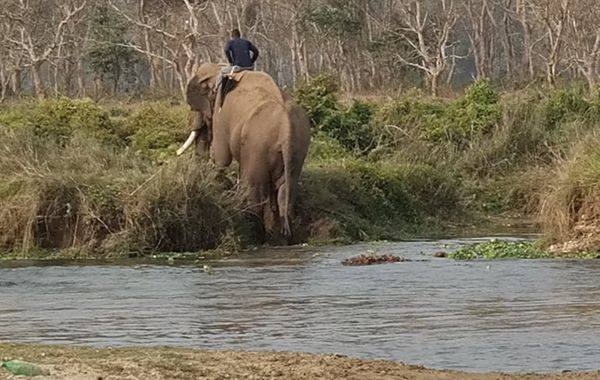
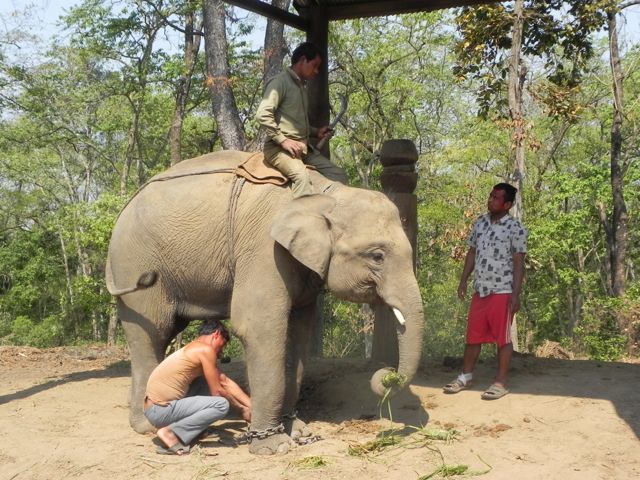
    Being on top of the elephant, as opposed to being on the ground next to the elephant, provides a degree of protection from an aggressive elephant. Also, from this vantage point the mahout can more easily detect wildlife dangers and protect innocent bystanders who potentially could be harmed by the elephant.

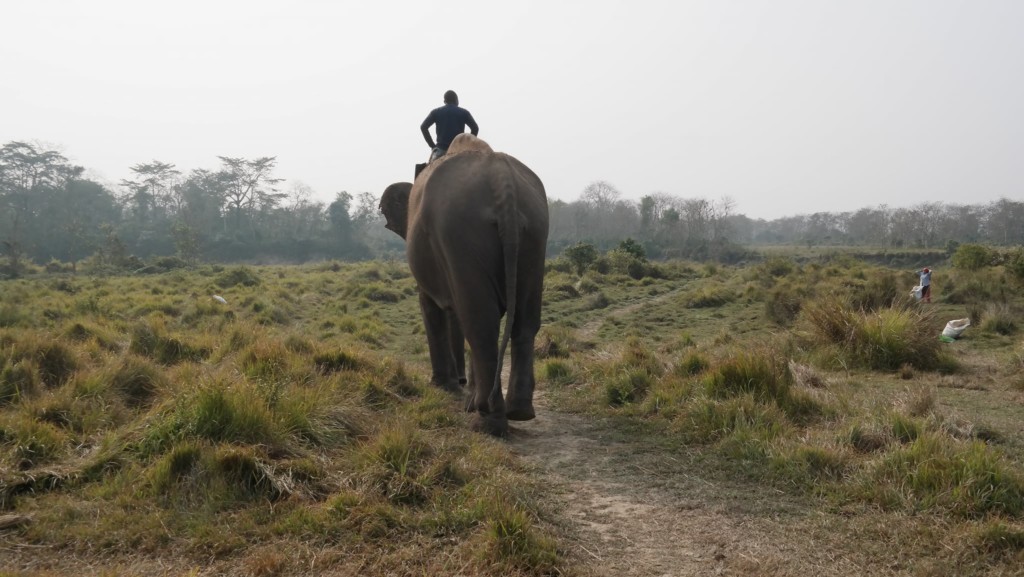
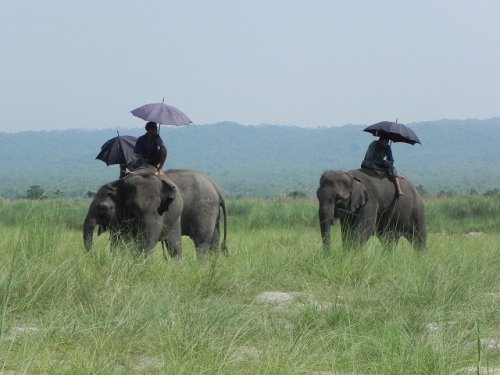
    mahout riding elephant in asia
    Look to the right in this photo. There is a village woman collecting grass for her livestock. She is extremely vulnerable being on the ground. If elephants were allowed to wander unattended, people would be in danger.

    In order to provide a shared environment where elephants are allowed access to the natural habitat of the Park, and humans can collect the resources required to sustain themselves, elephants are ridden.

    The alternative is that elephants remain on chains, which is something none of us want, including the mahouts and the villagers who share this landscape.

  • Changing minds, changing culture

    Changing minds, changing culture

    This release was a surprise to all of us and the reason we build a chain-free corral for each elephant, even if we are told the elephant will remain on chains.

    You just never know what will happen tomorrow. Changing minds, changing culture!

    Yesterday was a day of celebration for EAI and all who support our work. In addition to the work over the past year and a half, culminating in the release of tens of elephant from chains, it was the day you could actually feel the consciousness at the Khorsor hattisar shift.

    Without prompting, Puja Kali’s mahouts released her from chains.

    Earlier in the week, mahouts insisted that Puja Kali could not be released from chains due to her history of aggression. But they brainstormed and decided that if three mahouts were present when they approached Puja Kali, the situation would be safe.

    Without any further discussion they released her from chains.

    11016965_946096498754045_6101301223297155402_n

    This is a seriously significant turn of events. It is the first time we have witnessed the mahouts trouble shooting a problem, putting the elephants’ needs first.

    The mahouts deserve all the credit!

  • Help Us Keep Wild Elephants Wild and Captive Elephants Safe!

    Help Us Keep Wild Elephants Wild and Captive Elephants Safe!

    Thanks to your support, EAI is nearing the completion of its year-long project to free 63 working elephants from chains.

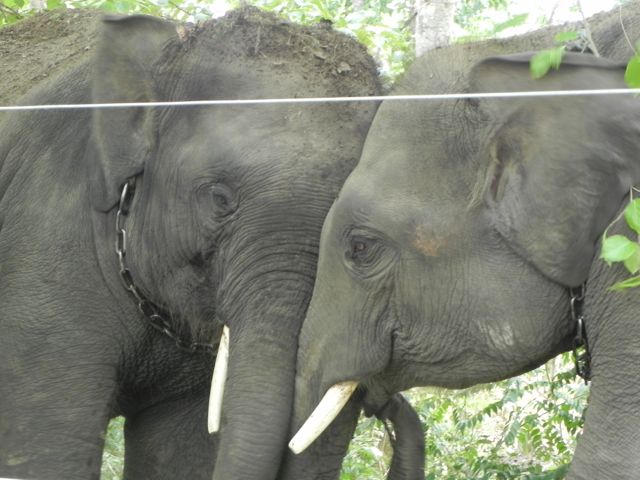
    2 eles chain free

    Elephants who have spent decades shackled by chains are now free to roam spacious mini-sanctuaries for the first time in their lives.

    But now we need your help with an unexpected expense: an elephant-proof perimeter fence to keep wild elephants wild and captive elephants safe.

    Last hattisar: Prototype for a healthy captive elephant environment

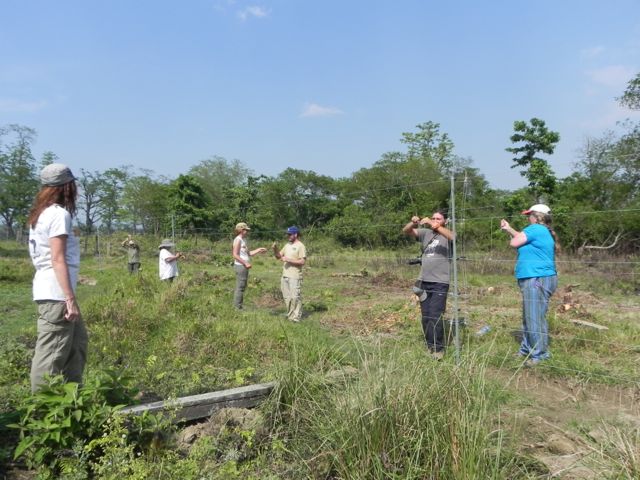
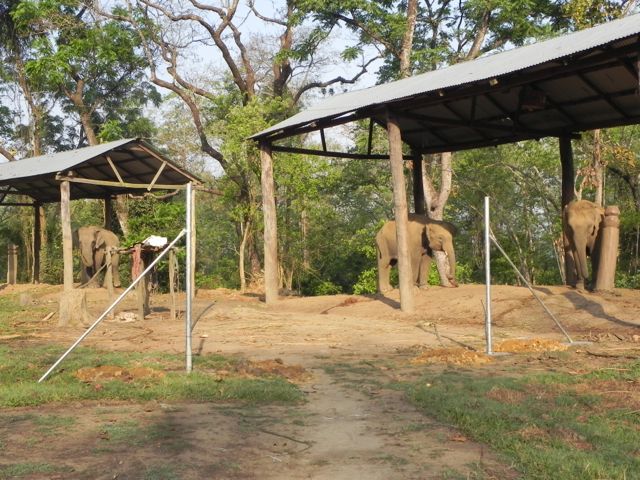
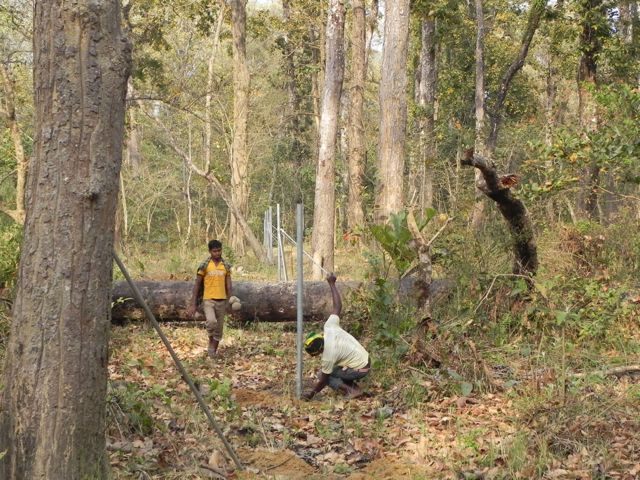
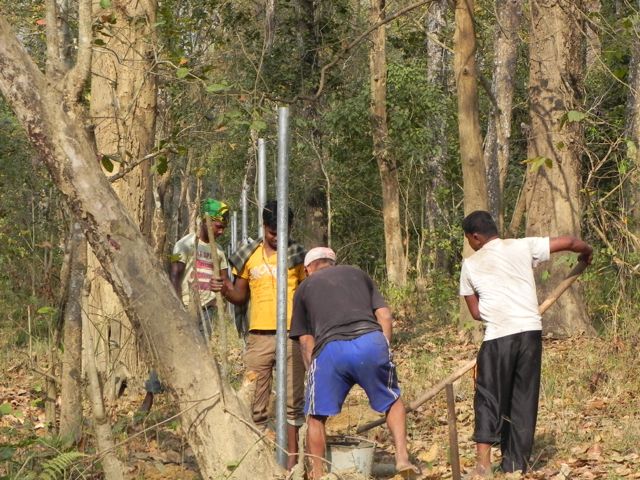
    dscn0321_medFor five weeks, EAI and its tireless volunteers have toiled in sweltering temperatures erecting solar powered corral fencing so that captive-held anti-poaching patrol elephants at one of the government’s 15 hattisars (elephant stables), in Khorsor, Nepal, can be released from their chains forever.

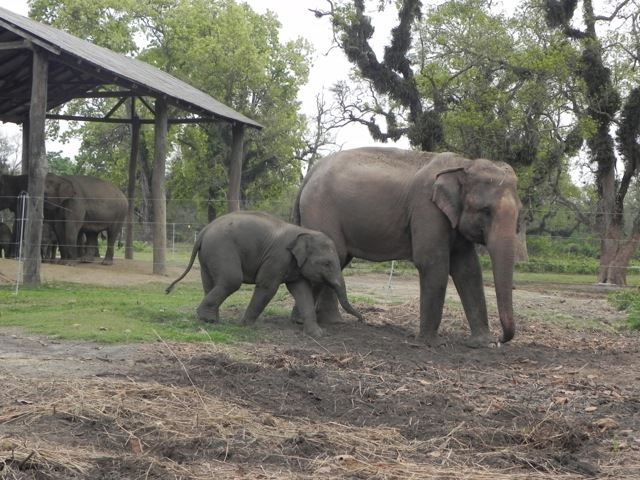
    This hattisar is home to 18 elephants: six females with suckling calves; an older female who acts as auntie, babysitter and wet nurse; a young pregnant female; two adolescents; and two young males who no longer live with their mothers.

    This, the last hattisar in EAI’s Chain Free Means Pain Free project, has the potential to be a prototype for a healthy captive elephant environment and transform elephant management in Nepal.

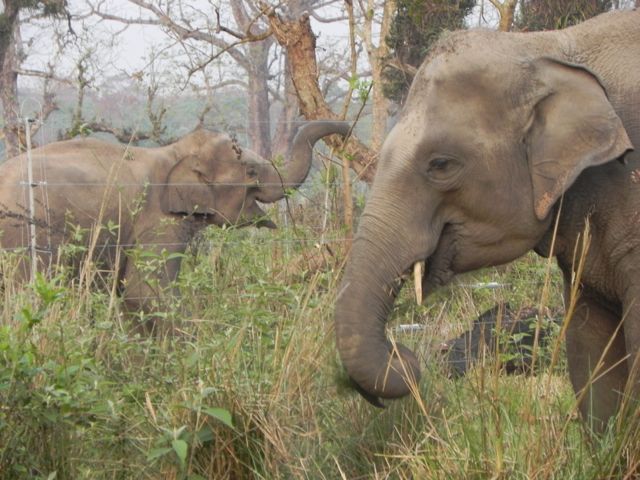
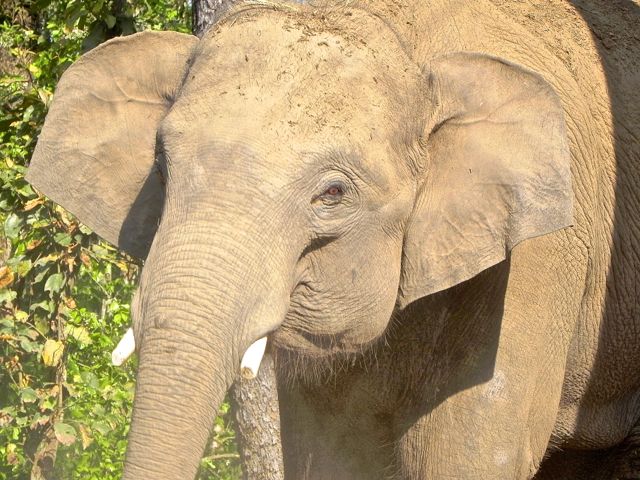
    But an unlikely culprit threatens the success of the project. His name? Sano Jungli Hatti — small wild elephant

    jungli hatti

    Every night for the past month, sano jungli hatti has visited the hattisar, damaged the newly constructed section of corral fencing and then disappeared into the breaking dawn.

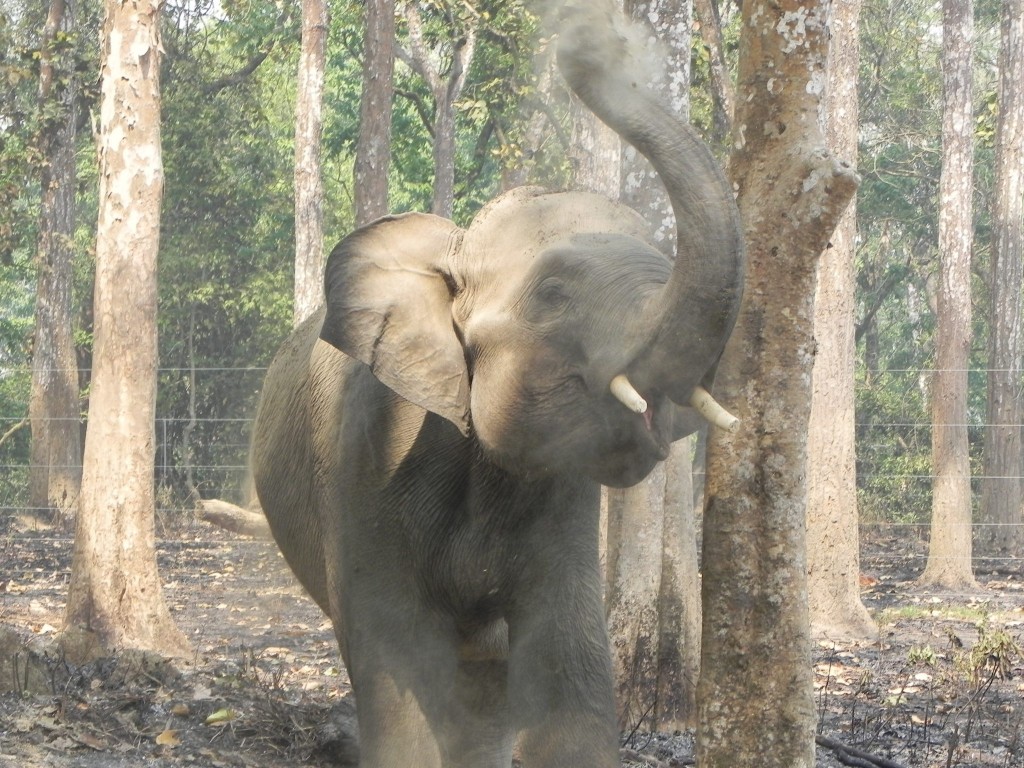
    This wild elephant was dubbed sano jungli hatti because he is less than six feet tall and under 10 years of age. First seen traveling alone more than two years ago, the separation from his wild biological family was many years premature.

    Although the circumstances surrounding his separation remain a mystery, sano jungli hatti’s actions clearly demonstrate that he has adopted the resident elephants in Khorsor as his family.

    It’s not clear if this young elephant is motivated by his desire to procreate or be mothered, but he is willing to disregard the pain of plowing through six strands of solar powered fencing to get to his adopted family.

    Until now, the fence kept out even the most dominant mature wild bulls.

    But this young sano jungli hatti’s destructiveness has created a crisis.

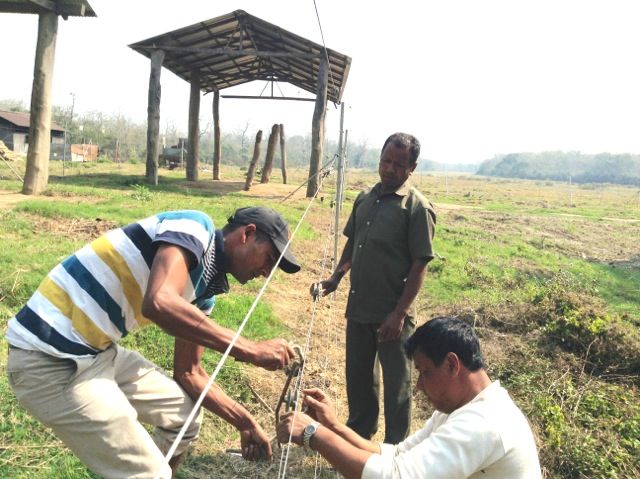
    repairing corral

    Each time sano jungli hatti breaks through the fence, it is repaired.

    It’s not a problem to repair the fence one or two times. But if the fence needs repairing day after day, it is not sustainable.

    If sano jungli hatti continues to break the fence, the resident elephants will be put back on chains.

    We simply cannot allow this to happen.

    Solution: A perimeter fence

    Capturing or relocating jungli hatti is not a viable option.

    Neither is returning all 18 captive-held elephants to chains.

    The answer?

    Build a perimeter fence around the entire 15-acre chain free project to keep wild elephants out and the eighteen resident elephants chain-free.

    The six-foot-high elephant-proof perimeter fence will cover 4,000 running feet. It is estimated to cost $1 per foot, a total of $4,000.

    To ensure the success of our chain free project — to keep sano jungli hatti free and the captive-held elephants chain-free — we must raise the funds for the perimeter fence immediately.

  • The Work Continues to Get Elephants Off Chains

    Good news! Baby Tec Gaj was released from chains.

    Unfortunately, it is not all good news because his mother, Puja Kali, was not.

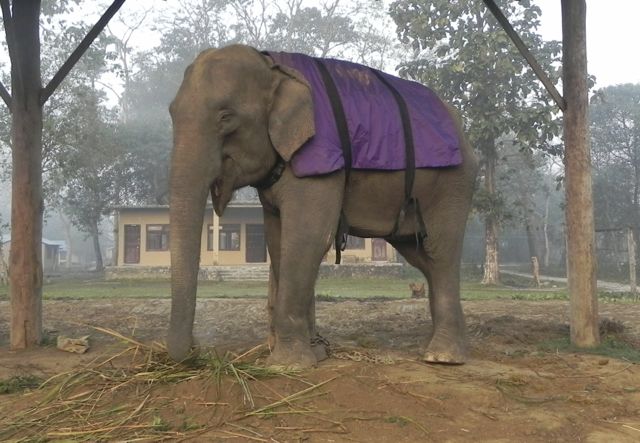
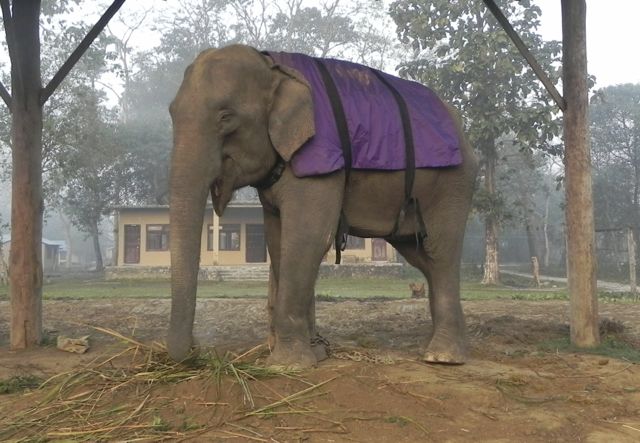
    Two-year-old, captive-born Tec Gaj and his mother Puja Kali reside in Khorsor, ‪Nepal, at the government breeding center.

    Puja Kali is quite aggressive, known to attack her mahouts even while she is on chains.

    Such aggression is an indication of great suffering, usually on a mental and emotional level.

    Responding to Puja Kali’s aggression with corporal punishment compounds her condition but mahouts find themselves with few alternatives.

    Aggressive behavior exhibited by ‪elephants triggers retaliatory aggressive behavior by the mahouts. Aggression breeds aggression, resulting in a vicious cycle in which neither man nor elephant benefits.

    EAI does not endorse the use of any negative means to manage elephants and we empathize with the position the mahouts and captive-held elephants find themselves in.

    Hopefully, with our continued efforts, the day will come when aggressive elephants will no longer be used for activities that put them and their mahouts in danger. And, mahouts will learn alternative ways to care for their elephants.

  • Progress Involves Three Steps Forward and One Step Back

    Progress Involves Three Steps Forward and One Step Back

    Partnering with people and organizations with shared goals is key to success as a foreign NGO working in Asia.  Since hurry up and wait is a culturally accepted norm, an ample supply of patience and flexibility is required if you hope to have a successful project.

    And even the best-laid plans can unravel without a moment’s notice.

    But the daily challenges of different language, conflicting cultures and not having a Home Depot to run to for much needed supplies, is what builds character. Serious determination is required.

    When I shift from the U.S. to Nepal, I know to reset my internal clock, tone down my aspirations and prepare myself for unexpected changes to my plans. This may be a breeze for some, but it is a serious challenge for me. But by keeping my eye on the prize—improved elephant welfare—I am able to operate outside my comfort zone and learn a different way of being.

    The Next Phase of Chain Free Corral Construction 

    By the time I stepped off my flight in Kathmandu, the image of my goal was playing in technicolor in my brain, primed for manifesting.

    But that is when reality strikes. I recognize that my vision must be shared by my partners for it to become more than a well-thought-out dream.

    I am currently working with a fabulous young Australian woman named Chantelle Ridley, whom I hired to organize our Free the Elephant Program volunteers in Nepal.

    Chantelle interned with me a year ago and has turned out to be a perfect fit for this job. Her easygoing attitude, combined with excellent people skills and intimate knowledge of Chitwan, has helped make our new volunteer program a smashing success.

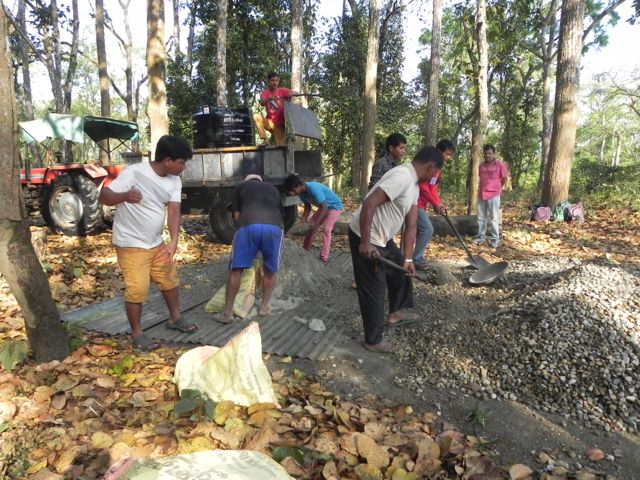
    Chantelle’s assistance frees me up to concentrate on the bigger picture of our Chain Free Means Pain Free Program work: identifying locations, designing chain-free corrals, managing the fence building crew from India and overseeing the local labor.

    Each installation comes with its own unique set of challenges, both situational and logistical.

    To ensure a water source for elephant bathing and drinking, most hattisars are built near a river, which means that they flood during monsoon season.

    For safety, the mahouts (elephant staff) always want the chain-free corrals to be built directly adjacent to their sleeping quarters.  There is the constant threat of an unscheduled appearance of wild rhinos, man-eating tigers and menacing bull elephants in musth.

    In some locations, available space is limited or there is sparse tree cover.

    Contaminated soil caused by years of stockpiling and burning elephant manure is a universal issue.

    With 31 corrals to our credit in 2014, I was overly confident that the next installation would follow the same successful route.

    But I was in for a rude awakening. I immediately realized I would be facing my greatest challenge yet.

    Both installations scheduled for this year house multiple elephants–ivory carrying males, females and calves. Like humans, elephants are individuals and even though they share common language and needs, they have unique personalities that must be acknowledged in order to improve their lives.

    Upon arrival, my first challenge was to discover that the dense forest promised for 15 corrals was no longer available. Instead, it had been set aside for the local people, a decision that is difficult to argue with.

    This left me with a dilemma: build corrals for ivory carrying males that I intuitively know are too small, or build nothing at all.

    In Nepal decisions are made by unanimous agreement of the entire group involved. If one stockholder does not agree, the project will not move forward. Opinion was split: the mahouts, head veterinarian and an influential NGO wanted to keep the males on chains, while the chief warden and I wanted to make some degree of improvement and meet our goal of getting the bulls off chains.

    After a healthy group discussion, we took a walking tour of the facility. Everyone agreed we would build mini-corrals, to see if they would work.

    Optimism is my strong suit, definitely what drives me to believe that elephants in captivity can experience a better, more humane existence. I agreed to reduce the size of the chain-free corrals rather than building none at all.

    After working diligently for two weeks to create six chain free corrals, the volunteers, fence crew, local labor, mahouts, chief warden and I were present for the unchaining. What a thrill.

    But shortly after dark, after the crowd had dispersed and we were patting ourselves on the back, forty-year-old, mild mannered bull Dipendra Prasad effortlessly and silently removed the back gate of his corral and slipped out into the night.

    When his escape was discovered, you could hear a collective exhale of disappointment.

    This morning the mahouts returned Dipendra Prasad to the hattisar but only after a massive manhunt to bring him back.

    Everyone is now in agreement that there is not enough space in this location for chain-free corrals for adult males. My job now is to get back to the drawing board and come up with solutions. Adult males are always the most challenging individuals to care for in captivity.

    If we hope to provide a chain-free life for the mature ivory carrying bulls of Nepal, corrals must be spacious, heavy with trees and natural vegetation and away from human populated areas. Most important, they must be constructed of steel pipe!

    But our effort at this location, the Sauraha hattisar, is not a total loss. Three acres of densely forested land has been set aside for a chain-free corral for three females and a young male.

    The volunteers and fence crew are constructing the corral as we speak. The corral will be completed and the elephants; Loctundra Kali, Oma Kali, Sundar Mala and Paris Gaj, released from their chains within 7 days.


  • Why Does That Elephant Have A Chain Around His Neck?

    Why Does That Elephant Have A Chain Around His Neck?

    For the past few years, most of my time and energy has been devoted to freeing captive held elephants from chains.

    Working alongside Nepali partners, we have created 37 chain free corrals, in 15 different elephant facilities. Before years end, we will add another five chain free corrals in two facilities in Thailand and a huge 100 acre habitat in India.

    Chain Free Means Pain Free has caught on.

    As more elephants are freed from leg chains, attention is shifting to the neck harness elephants wear during anti poaching patrol.

    In the case of elephants in Nepal, the neck harness serves one purpose. It enables a mahout  to stay seated if his elephant becomes frightened and runs.

    Some neck harnesses are made of rope. Others are a combination of rope and light weight chain. All are loose fitting and have loops for the mahouts’ feet. These loops lie flat along the side of the elephants’ neck, behind each ear.

    Remaining seated when an elephant spins around and runs away is virtually impossible, unless your feet are strapped in.

    In the case of Laxman Gaj and his twin brother Ram Gaj, a combination harness is used. The bottom half of the harness is chain. The half that goes over the top of their neck is rope.

    Laxman and Ram are young elephants, only six years old. Regardless of their youth, they are required to participate in daily anti poaching patrol activities in Chitwan National Park. Being young, they are easily frightened when surprised by a wild rhino or tiger.

    They wear the harness because when an elephant is frightened, he or she runs away. Spinning and then sprinting at speeds up to 30 miles per hour, can cause a rider to fall off.

    Having a harness adds a sense of security for the mahout who clearly knows that if he falls from his elephant, while in proximity of a wild rhino or tiger, he will be killed.

    When the elephant recovers from his or her fright, the patrol resumes.

    When an elephant learns s/he is able to escape a frightening situation, their self confidence builds. With each exposure to wildlife their fear level is further diminished. By the time they reach adulthood, the elephant has gained the experience necessary to fearlessly encounter wild tigers, rhinos and bears.

    Undoubtedly, some will insist that the harness is unnecessary as elephants should simply be returned to the wild. I have no problem with this argument. But, until such time as society evolves, some elephants are destined to remain in captivity.

    Constructed and used properly, a neck harness is harmless and provides measurable benefits. The mahouts’ personal safety is guarded, while a young elephant is allowed his natural response to fear, without being punishment.


  • Five Elephants Freed!

    Five Elephants Freed!

    Two years ago, a young captive born elephant broke free from an ancient tradition.

    That was Prakriti Kali, the first elephant in Nepal to be released from chains.

    Six months later, five more elephants were released from a lifetime in chains.

    Mel Kali was the record holder in the herd, having lived in chains for nearly 70 years.

    Culture shift continues in Nepal

    On April 6th, at 4:30pm, Nepal made history again when all five resident elephants at the government’s Kasara hattisar went chain free!

    Six-year-olds Tamor Kali and Himal Gaj were the first to be given their freedom.

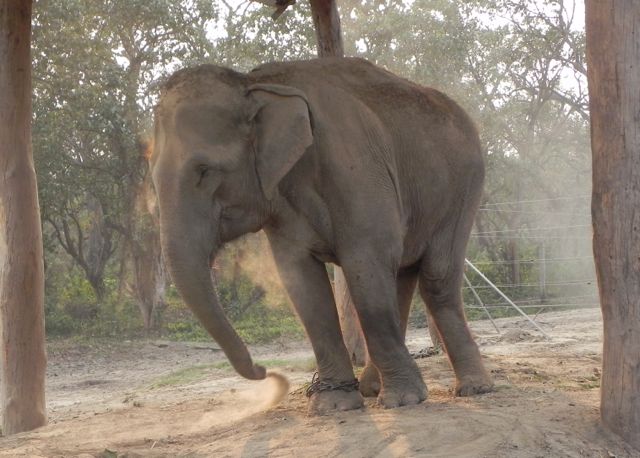
    They wasted no time, finding the best scratching trees and dusting bowl.

    Then, a few days later, after all six chain free corrals were completed, Prayan Kali, Laxmi Kali and Khosi Kali dropped the chains of tradition and went free as well.

    Transition 

    Watching the elephants shed their chains and adapt to the change so effortlessly is breathtaking.

    Young and old alike seem instinctively to know what is happening.

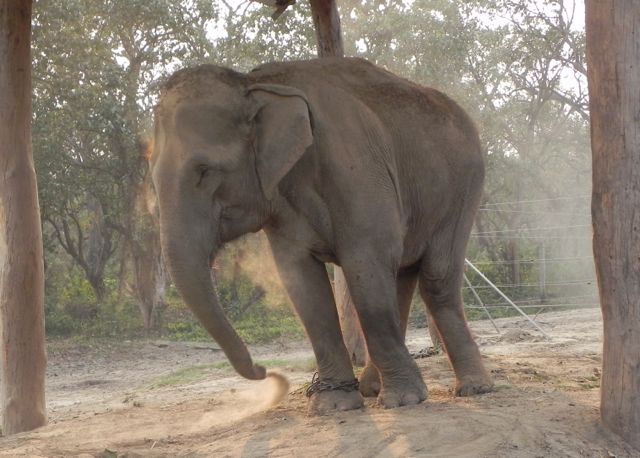
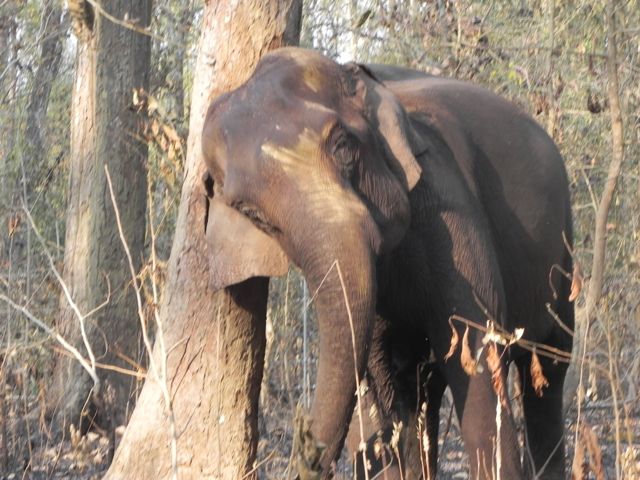
    In synchronized movement, they revel in a scratching and dusting ritual. Nearly becoming one with the trees, they exfoliate every inch of their robust body. Even the tender skin behind their ears and under their massive legs get the invigorating treatment.

    After the exfoliation is complete they follow up with a full-body dusting. In the most graceful slow motion, they fling trunkfuls of dirt under their bellies, on their backs and everywhere in between. This natural spa experience is essential for maintaining healthy skin.

    Chained elephants are denied this opportunity.

    Become an elephant

    For one minute become an elephant. Close your eyes and step inside their skin. Feel the frustration when denied access to trees for scratching and clean dirt for dusting. Now feel the sensation of scratching every tick bite and itch spot until completely satisfied.

    More good news to come

    The five elephants in Kasara hattisar are just the beginning. When our project is complete, 63 elephants will enter the ranks of the chain-free.

    A huge thank-you goes to Kamal Kunwar, chief conservation officer of Chitwan National Park, the hattisar staff and, of course, all who believe in and support this project.

    Five freed. Fifty-eight to go!

  • Change is Afoot

    Change is Afoot

    March 29

    The first two corrals at Kasara hattisar are finally ready.

    The air is charged with anticipation.

    Rescuing an elephant to sanctuary or releasing them from chains brings the same mix of emotions — anticipation, apprehension and excitement.

    Each elephant is a unique individual with a distinct personality. Life’s experiences mold their behavior, shaping them as they mature. Each of them responds differently to different situations.

    Himal Gaj
    Himal Gaj

    When I first arrived at the Kasara hattisar, I noticed that young Himal Gaj was resistant to his mahouts. He appeared fearful. An old scar at the base of his trunk indicated a past confrontation.

    Watching the mahouts struggle through the morning routine, preparing Himal Gaj for duty, was disconcerting. I wondered how he and the mahouts would respond to going chain-free.

    The mahouts were also concerned. They feared for their safety.

    As a result, it was decided that Himal Gaj would be released from his tether but would wear loose hobbles until the mahouts felt safe around him.

    It was disappointing that Himal Gaj would not immediately be completely free, but the compromise was the first step to his future freedom. If the mahouts fear for their safety, Himal Gaj would be destined for a life in chains.

    With time and Compassionate Elephant Care training I hoped Himal Gaj would settle down and become more responsive.

    The chains come off

    The elephants usually return from their anti-poaching patrol duties around 4pm. Chief Conservation Officer Kamal Kunwar postponed a scheduled meeting so he could be present for this auspicious occasion.

    Just before 4pm, the hattisar suba arrived. He’d been out of office for a couple of weeks.  He and Kamal discussed the plan in Nepali. I would soon see that following their brief conversation plans would change dramatically.

    The elephants arrived back from the forest. To my surprise and contrary to the plan, Himal Gaj was walked directly into his new chain-free corral. He was not put on loose hobbles. Calmly and confidently, his mahout gave the command to bite  (stretch out on his sternum).  Without hesitation or fear, Himal Gaj calmly responded.

    I realized that the mahout I’d seen with Himal Gaj the past week was now assisting, rather than riding.

    In that moment things became perfectly clear. The mahout to whom Himal Gaj was resistant to this past week was the junior mahout. And now that his main mahout was back from vacation, everything was fine.

    Himal Gaj waited patiently as his gear was removed. Then he rose and immediately began dusting, as his friend and senior mahout left the corral.

    What a difference a good relationship makes.

    Kamal Kunwar’s turn

    tamor-kali-female2
    Tamor Kali

    I did not have time to dwell on the glory of Himal Gaj’s transformation because Tamor Kali was about to enter her chain-free corral for the first time.

    Kamal Kunwar was sincerely excited, filming her first chain-free steps like a proud father.

    After seeing how well Himal Gaj responded to his mahout, everyone was engaged and relaxed. They gestured at both young elephants free-of-chains with huge smiles on their faces.

    Now was the time to stand back and savor the moment. The instant that life changed for two young elephants and their family of mahouts.

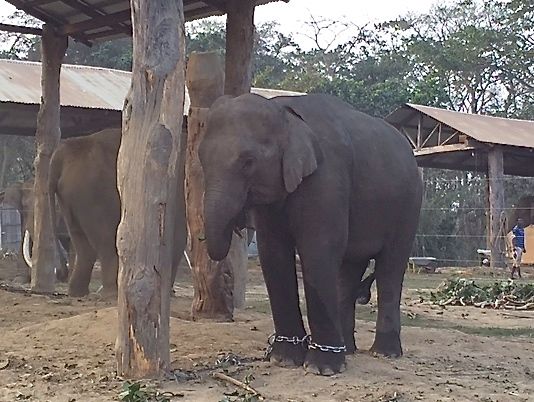
    The three other elephants stood chained under their shelter watching the scene.

    I whispered, “You’re next ladies.”

    It will be close to a week before the other corrals are completed. Without a doubt, Khosi Kali, Laxmi Kali and Prayna Kali, who have all been prisoners to chains for decades, will transition seamlessly.

    Imagine the joy when they are all chain-free. Heart bursting JOY!

  • Progress Report on Chain-Free Corral Project at Kasara Hattisar

    Progress Report on Chain-Free Corral Project at Kasara Hattisar

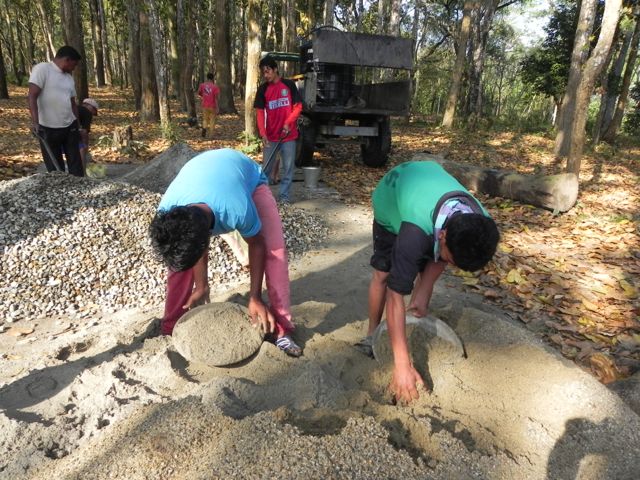
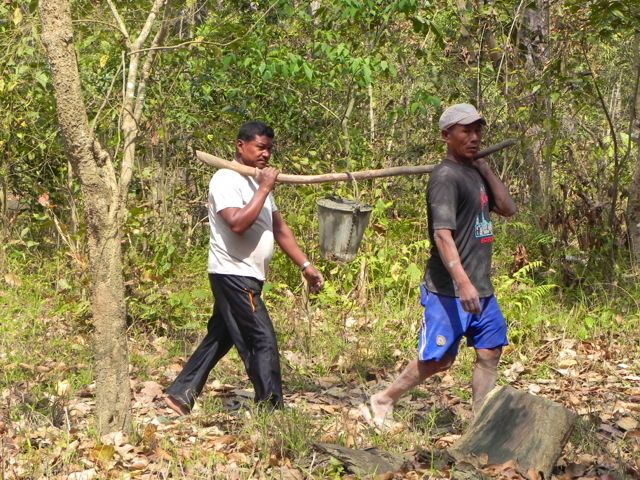
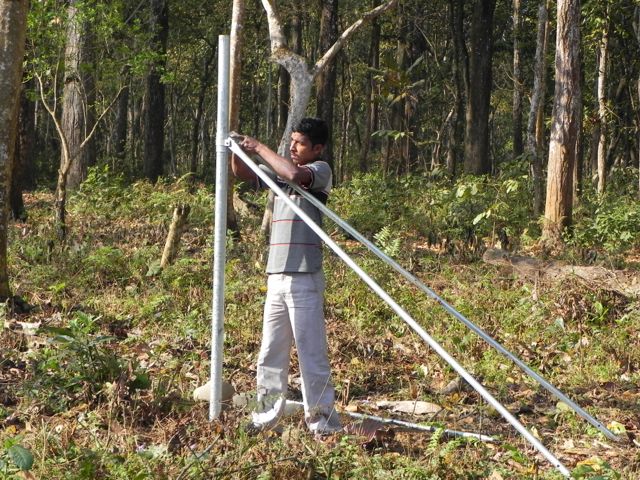
    The framework for all six chain-free corrals at the Kasara hattisar is in place.

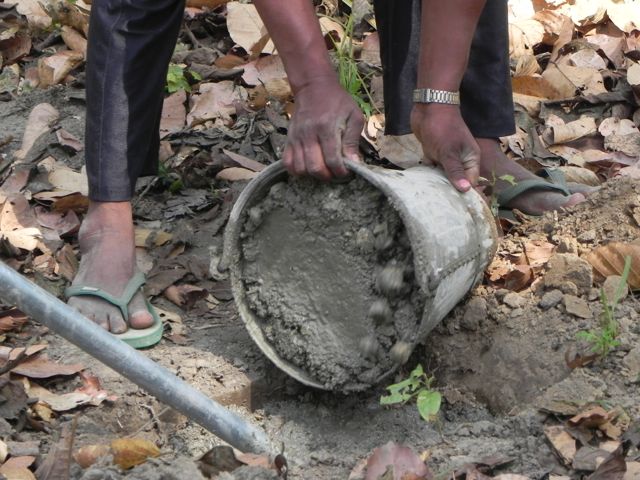
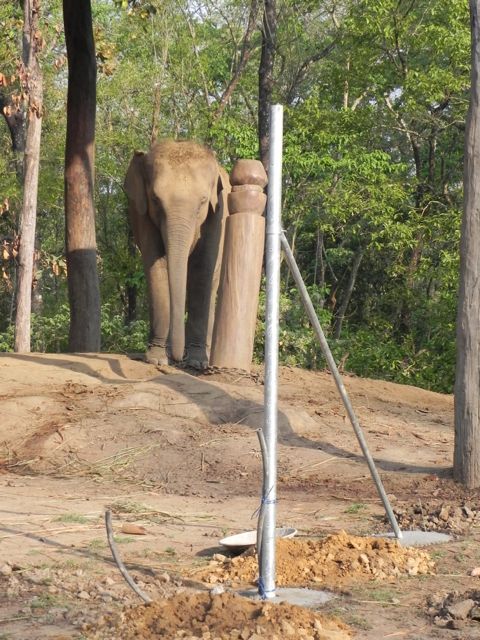
    Support and brace posts are concreted. Gateposts mark the entrance to each new corral.

    Heart work

    Eyeing the progress of this project, my heart pounds. Here it comes, that joyfully intoxicating feeling cursing through my veins.

    My eyes transport the image to my heart. My heart responds, sending a warm glow through my body, filling my eyes with tears. My heart swells with the promise of a better life for these elephants.

    In this moment I stand in my personal space of pure peace. I caress it. Breathe it in deeply. I don’t attempt to own it, only experience it, knowing the feeling is a gift meant to be experienced not possessed.

    Some people meditate, others run, cycle or climb mountains to connect to that place within where they feel most themselves, most centered, most peaceful.

    This is the place of autonomy and personal freedom.

    Such activity can literally become an addiction, in the best sense of the word.

    Watching the chain-free corrals come to life before my eyes is my addiction. Knowing that my actions help reduce the suffering of captive-held elephants brings me great joy! It is heart work, soul fulfilling work. My meditation.

    At times the joy is overwhelming and I just have to cry. Seeing elephants gain even a semblance of autonomy moves me to do more. Knowing that we are able to help bring some peace and freedom to their lives drives me.

    I may never know any of these elephants personally. But that is not the point of my work. I am not here to expand my elephant family. I am here to better the lives of these elephants.

    They know we are helping them. That is good enough for me.

    Construction continues

    The next step is to string the wire between support posts and hand-build the topes (post protectors).

    Each corral is one full acre in size. It is equipped with six strands of wire equaling nearly one mile of wire per corral.

    Ditches will be dug to bury the wires that enable each corral to operate independently.

    Last, the steel box that contains and protects the energizer and batteries will be installed and wired to the solar panel that powers the system.

    A perfect vantage point

    From the open-air raised platform that I have claimed for my new office, I survey the work site. What a gift to witness this miracle unfolding right before my eyes.

    A humble thanks to Kamal Kunwar, Chitwan National Park chief conservation officer, the entire hattisar staff, our IBEX fence crew and all of you who have contributed to this worthwhile project.

    Together we are improving elephant welfare, showing due respect to these wise, kind and self-aware beings who grace our planet and our lives.


  • Himal Gaj

    Himal Gaj

    Himal Gaj is a six-year-old captive born elephant. His father is the dominant wild bull in the area. His mother is a wild born, captive resident of the elephant breeding center at Khosor, Chitwan, Nepal.

    Himal  Gaj was one of five young elephants trained together at the breeding center several months ago. Until their formal training, they lived with their mothers.

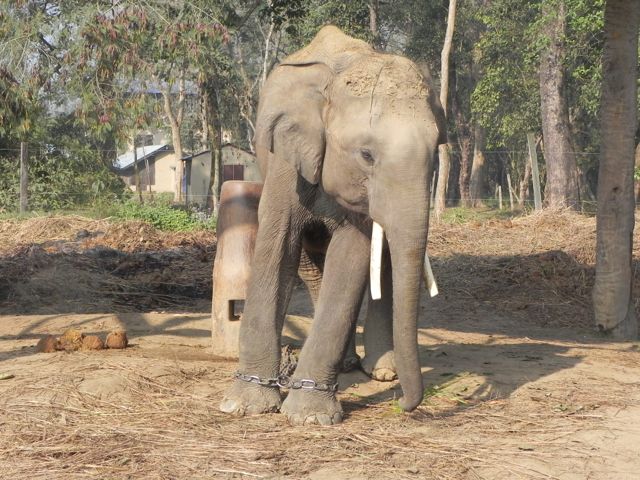
    All five elephants were chained from the age of three months. Chaining is the practice all over Asia. Domestic livestock and captive elephants are tied or chained. It is the cheapest way to keep them in one place.

    The training technique used with Himal Gaj and the others at the breeding center was a deviation from the traditional pujan, a brutal breaking of spirit. Introduced by a foreign NGO, a mixture of traditional methods was used—including the use of koonkie elephants, negative reinforcement and punishment—combined with positive reinforcement techniques known to be successful with domestic horses.

    Unfortunately, once training began, Himal Gaj showed signs of aggression and resistance. He was frightened by the training process and responded poorly to his mahouts. A few months later his training was deemed unsuccessful.

    No video, photographic or written records exist to document the daily training process and Himal Gaj’s progress and difficulties.

    But it does not take such documentation to see that Himal Gaj is a very insecure individual.

    Although Himal Gaj responds well when his mahout is riding, his weakness is responding to commands when his mahout is on the ground.

    Himal Gaj is a good example of the importance of sound training techniques, mahout training and follow through.

    Captive elephants are not domesticated—they are wild animals living in a captive environment. Even generations born in captivity are not domesticated. The scientific process of breeding selected individuals for specific traits is the process required to create a domestic species. This has never been undertaken with elephants.

    In the case of all elephants born at the breeding facility in Khosor, the mothers are wild born living in captivity and the fathers are wild born living in the wild.

    Himal Gaj’s mahouts are as gentle as I have seen anywhere. They are patient but frustrated. What the training process failed to do was give them the tools necessary to help Himal Gaj learn.

    As a result, all are left feeling like failures. Without intervention, Himal Gaj is doomed to be a dangerous elephant for the remainder of his life.

    The good news is that the mahouts and Kamal Kunwar, the chief commanding officer of Chitwan National Park, are receptive to Himal Gaj receiving additional training. His private training course will begin soon.

    This is such exciting news. I feared Himal Gaj would remain a lost cause in the minds of the mahouts. But before his chain-free corral is completed Himal Gaj, will be well on his way to understanding what is expected of him and his mahouts will have gained the humane tools to understand and assist him in his training process.

  • Foot Trimming in Bardia, Nepal

    Foot Trimming in Bardia, Nepal

    I’m back from Bardia. What an adventure!

    It was a 10-hour drive through mountains on rough roads. The 19-year-old driver of our rental truck scared the daylights out of all of us with his speeding, passing trucks on blind curves and nearly missing oncoming vehicles. Oh man — it was a stressful ten hours!

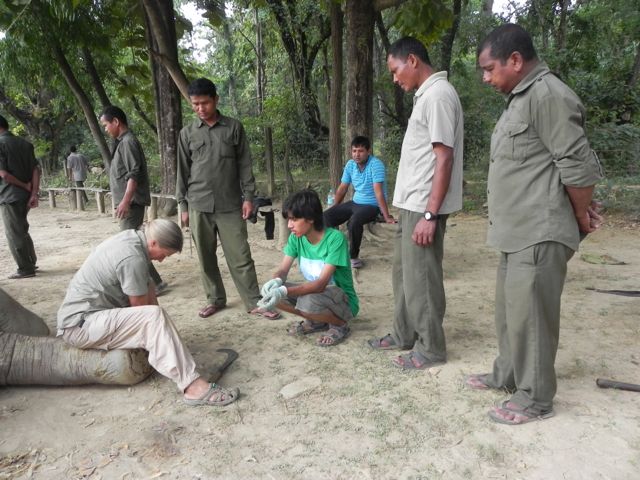
    Carol et al in BardiaBut our foot trimming program was a grand success. We had a fabulous trimming team: Dr. Gairhe; Kiran the vet tech; Hira, Kirti Kali’s phanet (head mahout) from the NTNC hattisar; and I.

    Our students included Chantelle, our intern; Surajan, a new friend and translator; and the vet tech from Bardia.

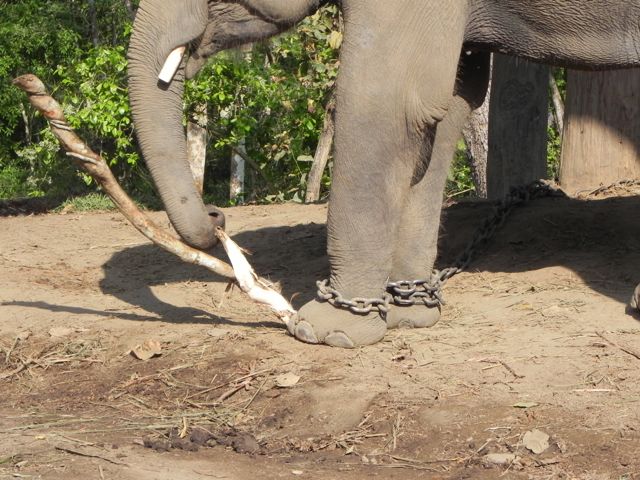
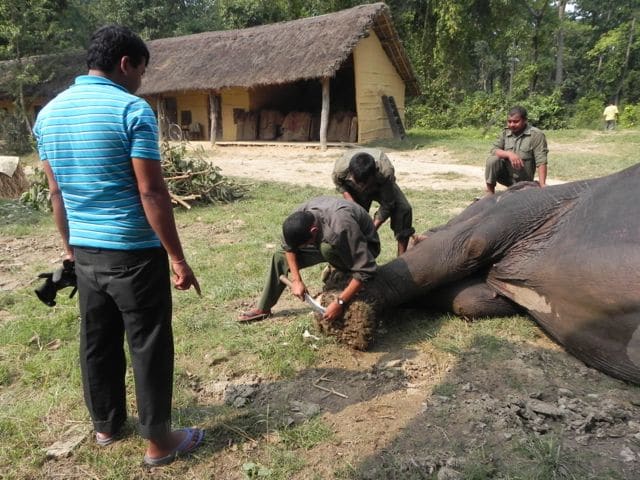
    foot trimming BardiaIn two short days we trimmed the feet of 24 government and privately owned elephants.

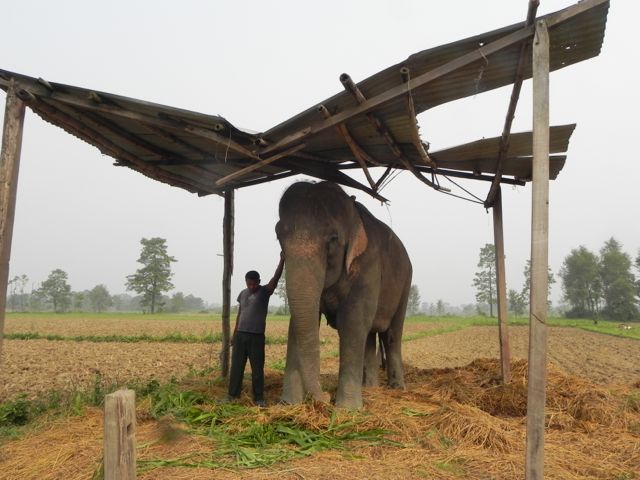
    Honestly, the condition of the privately owned elephant’s feet was criminal, similar to the privately owned elephants in Chitwan. Their pads were dry, cracked and severely overgrown. The nails were equally as dry and overgrown and many had splits and deep cracks.

    broken shelter
    Private owner, broken shelter

    I am always shocked to see how poorly the privately owned elephants are kept, especially since they are the breadwinners for their owners.

    The good news is that 24 more elephants received pedicures and their mahouts were introduced to foot care. With time things can change for these over-used, abused and neglected elephants…I hope.

    A huge thank-you goes out to the trimming team. Without their enthusiasm and hard work we could not have accomplished our goal to provide foot care for elephants in Bardia!

    You can make a difference in the life of a captive elephant by supporting our Foot Care project. Thanks for your help.


  • On Patrol

    On Patrol

    When Nandu learned that I wanted to accompany Sweetie Kali on her anti-poaching patrol he directed me to Ram Kumar who graciously cleared my request with Paspat, the mahout supervisor. Realizing how much is lost in translation, I felt it best to experience Sweetie’s patrol duty first hand. I planned to walk instead of ride, which, for the most part, I did.

    It was reassuring to watch Sweetie Kali voluntarily exit her yard without hesitation. The deepest concern shared by mahouts was that after being chain-free she would refuse to respond to her mahout. That fear has proven to be unfounded.
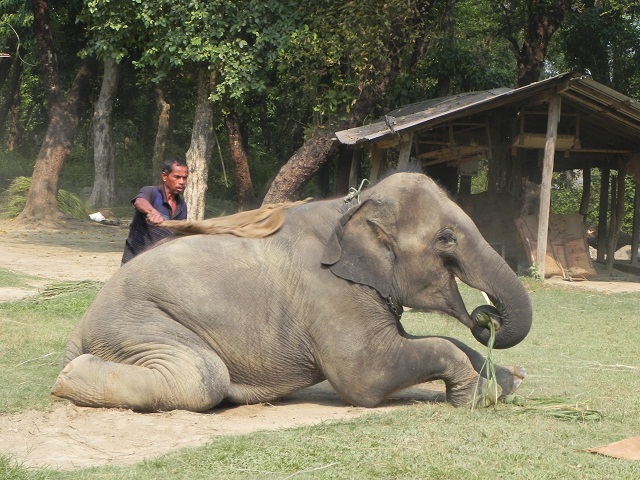
    being brushed off reducedPuntea, Sweetie’s phonet (lead mahout) used a burlap bag to “slap off” the thick layer of fine dirt Sweetie had spent the last several hours throwing on her back. In places where the dirt was very thick he struck her firmly with blunt side of his crew pa (machete), creating an avalanche of silt cascading to the ground.

    This approach to sweeping dirt off Sweetie appears a bit rough and indeed it is. But she showed no concern, moving gracefully from a lying, to half-sitting and then standing position to accommodate the process.  I did catch myself questioning—for the umpteenth time–why the mahouts handle their elephants in such a rough manner.  Nothing is gentle — not a touch or a word; no silent tactile moment of praise.

    Reconsidering the decision to walk

    In seconds we were on our way, me with a satchel of essentials — camera, water, hat, umbrella and Chap Stick — and Puntea perched on Sweetie Kali’s back with the multi-functional burlap bag as a seat cushion. He carried a small wooden switch and badly tattered umbrella. I noticed immediately that he was not carrying a bottle of water and mistakenly took it as a sign that our outing would not be rugged.

    Keeping pace with Sweetie on foot was no problem. Her mahout allowed her to amble at a comfortable speed.
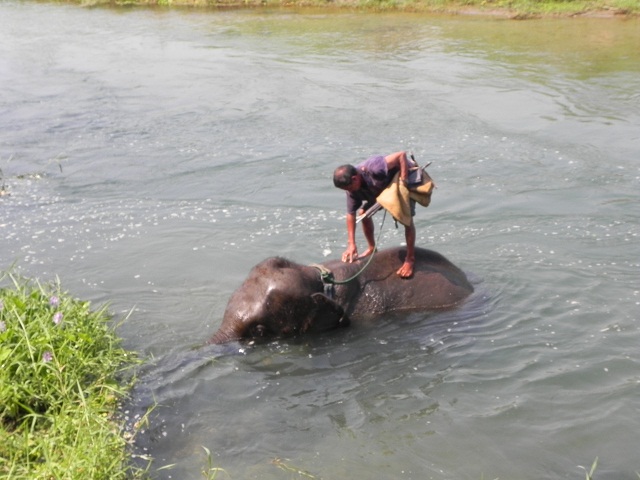
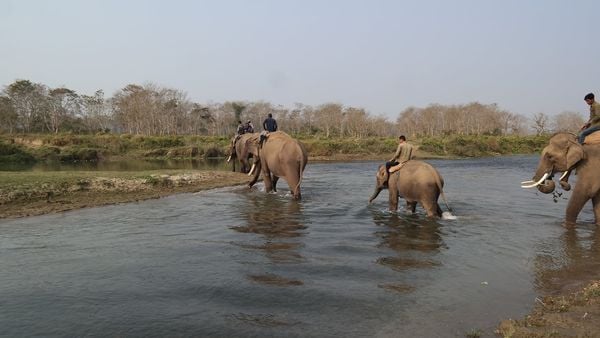
    Our first stop was the river — spectacular. With ease, Sweetie Kali submerged herself in the water with Puntea still perched atop her back. He managed not to get so much as a toe wet — for what reason I don’t know, since it was already sweltering hot. Following one word commands, Sweetie tilted from side to side in the strong current, bobbing like a buoy.

    At this point I realized my plan to make this excursion on foot was flawed. The current would make crossing a challenge but the bigger issue was slithering down the river in our direction—a large crocodile.  Apologizing to Sweetie for the extra burden, I clambered aboard and we crossed safely to the opposite shore.

    Grass: food and trimming tool

    In front of us lay a vast grassland, high as an elephant’s eye, as the saying goes. In stark contrast, in the hazy distance rose a mountain range dense in vegetation, its forest seeming to pulsate in the early morning heat.

    As Sweetie effortlessly ambled through the tall grass she reached to the side, grasped a trunkful of grass, pulled it tight and, with her next step, severed it at the soil line with a strike of her foot. All this without missing a step.

    I remember watching in awe at the Sanctuary the first time I watched Jenny cutting grass in the same manner as she grazed.  With each step she’d grab a trunkful of grass, casually swung her foot forward and effortlessly sever the grass with her toenails. There is quite a hypnotizing, even relaxing, rhythm to this action. The abrasive quality of grass works as a natural trimming tool; this is one way elephants keep their nails, cuticles and pads trimmed to a healthy length.

    Joining the patrol
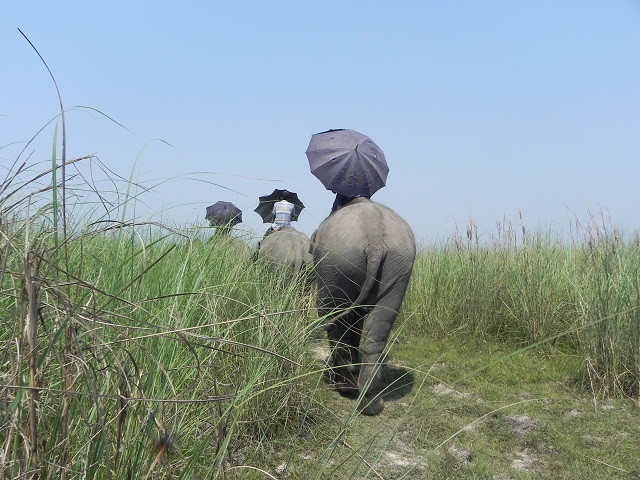
    We traveled in complete silence for some time, umbrellas balanced overhead to shade ourselves from the scorching sun. But soon the silence was pierced when from out of nowhere we were joined by two young elephants and their mahouts. For the next five hours the mahouts chattered nonstop, like school girls at a slumber party. Since I don’t speak the language, I soon drifted off into my own world, taking in every scent and plant and animal sighting.

    Two hours into our patrol we approached a circle of high arching trees where many elephants and mahouts had gathered. Some mahouts were sprawled out, fast asleep on elephant back, while others napped on the ground while elephants grazed close by.

    In the middle of the partially shaded clearing an energetic young mahout was putting his equally young elephant through what appeared to be a training exercise.

    I breathed a sigh of relief to think we were about to take a break. I was ready to continue this excursion on foot as planned. But instead of stopping we crossed through the clearing, exiting the other side.

    The next hour-and-a-half was spent in serious patrolling, or at least that is how it appeared. The mahouts ventured off the trail continually, ducking under low hanging trees scouring the undergrowth for “something.”  Obviously they never found what they were looking for or I would know what it was.

    Rest stop
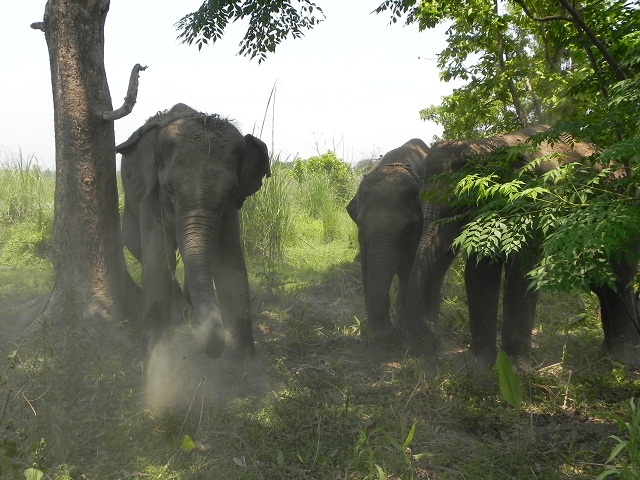
    Then we came upon a circle of towering shade trees that created the perfect place for a rest stop. We no sooner disembarked when all three elephants moved outside the circle to cover their bodies with a fine layer of dirt flung effortlessly onto their backs.

    I watched silently, wondering if they would exchange tactile greeting or show any sign of recognition. Although they stood centimeters from each other, they acted as if the other did not exist. The lack of physical interaction seemed so unnatural, and unfortunate. These three girls, close to the same age, have so much in common, including knowing that forming relationships with each other was discouraged by their mahouts.

    They grazed the tall grass while we napped, burlap bags used as bed rolls.  About fifteen minutes into our slumber Sweetie Kali tiptoed over to my sleeping spot. I felt her approach.  When realizing she intended to make a personal visit I casually propped myself up into a sitting position from where I could quickly stand if need be — and cleared my throat. I would have loved to share a special moment with Sweetie but the truth is, we do not have a relationship and having her so close could be dangerous.

    I know from experience that even while asleep, mahouts are on high alert. Hearing my unspoken warning sign, Puntea got to his feet and Sweetie retreated to the company of the other elephants.

    My role

    One trade-off that I have reconciled myself with is that I am a distant figure in the lives of these elephants. It is not appropriate to insert myself into their lives. I am here to improve their welfare. It is not about me having the chance to form a close relationship with them; it is about me encouraging the mahouts to form a healthy relationship with them.  When we establish the retirement home things will be different and I will have a close relationship with all the residents, but for these elephants who are not under my direct care, a relationship between us would only complicate their lives.

    The mahout-elephant relationship
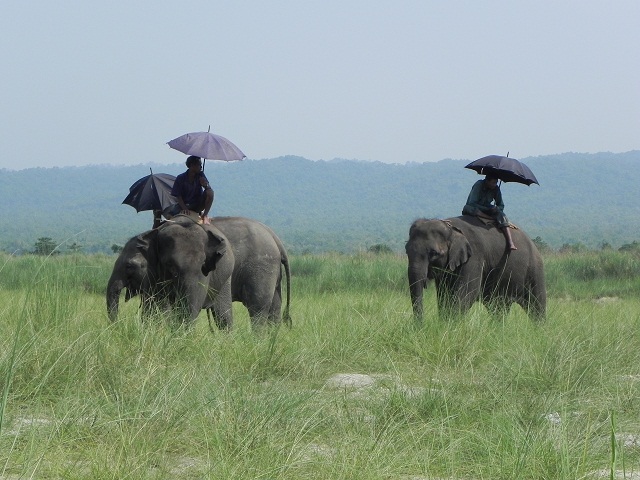
    The day was long and hot for everyone concerned. When we reached an offshoot of the river the elephants submerged while the mahouts quenched their thirst from a spring oozing from the side of the bank. All parties drank their fill.

    The next hour was spent leisurely grazing the sandy grassland that borders the river. When we finally crossed we were immediately immersed in a dense vibrant forest. The temperature dropped by at least ten degrees, the trees blocked the glare and penetrating heat from the sun.

    Umbrellas were closed and stored, mine in my satchel and others, hung by the handle from the back of the mahout’s shirt. What a novel idea and handy hanging location; the neckline of the shirt works perfectly.

    Tree branches invaded the trail, making passage difficult.  I was told that the noise in the trees was monkeys but I never caught a glimpse of one. Spotted deer and birds were abundant. At least one tiger had walked the same sandy path recently, leaving behind huge paw prints. Seeing the size of the prints made me reconsider—once again— my decision to walk instead of ride.

    Soon and without a verbal farewell, our fellow patrollers turned off at different paths, disappearing into the dense bush, on their way to a different hattisar. As we traveled the last mile of our patrol I was lost in thought about the relationship between mahout and elephant. It is a strange one — no outward display of affection, no praise, continual directions and corrections. It takes a strong individual to do this job day in and day out, both elephant and human.