Tag: break the chains

  • Help Us Keep Wild Elephants Wild and Captive Elephants Safe!

    Help Us Keep Wild Elephants Wild and Captive Elephants Safe!

    Thanks to your support, EAI is nearing the completion of its year-long project to free 63 working elephants from chains.

    2 eles chain free

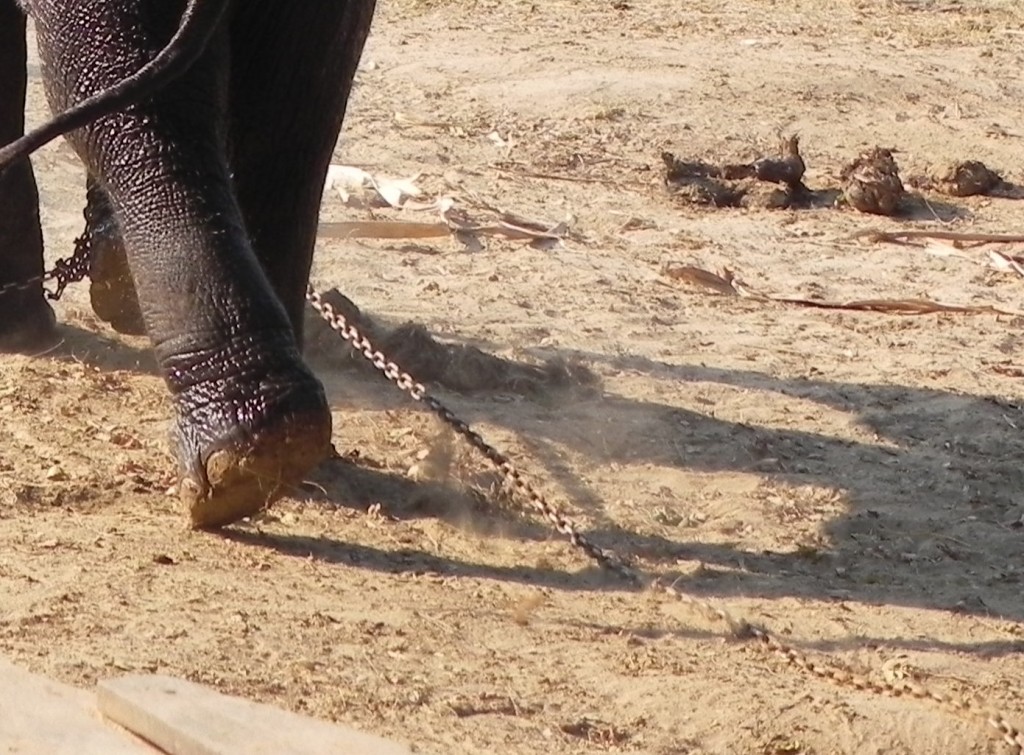
    Elephants who have spent decades shackled by chains are now free to roam spacious mini-sanctuaries for the first time in their lives.

    But now we need your help with an unexpected expense: an elephant-proof perimeter fence to keep wild elephants wild and captive elephants safe.

    Last hattisar: Prototype for a healthy captive elephant environment

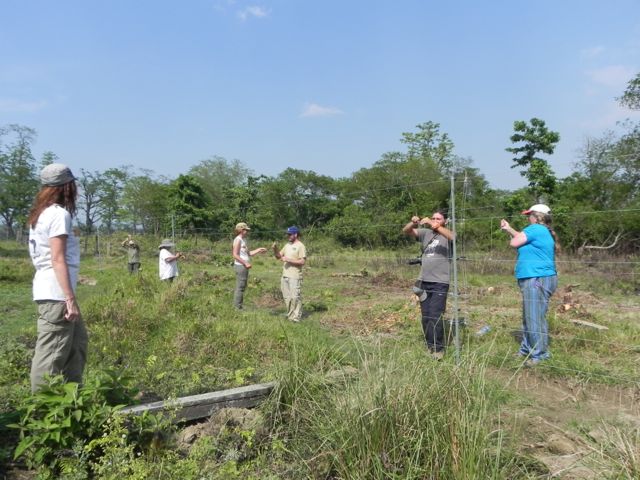
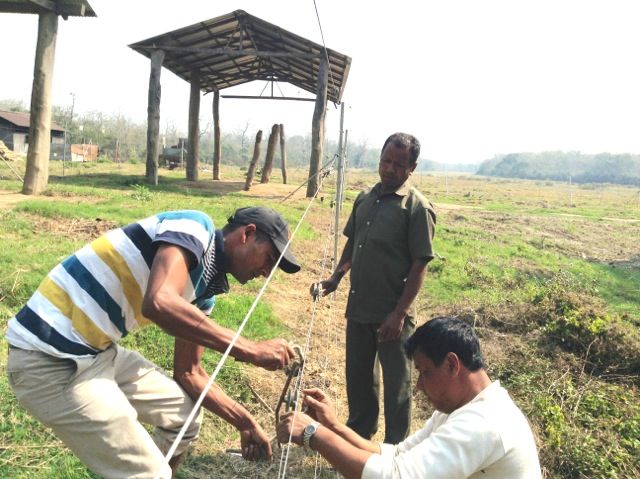
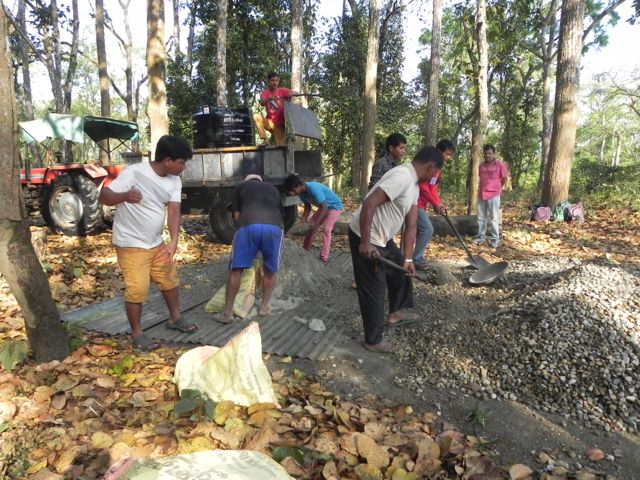
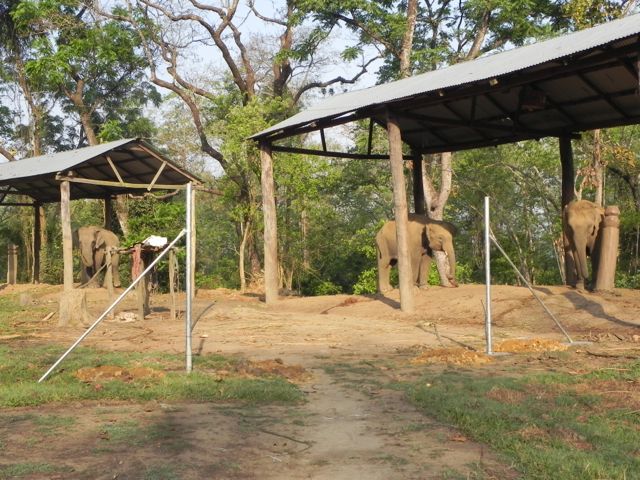
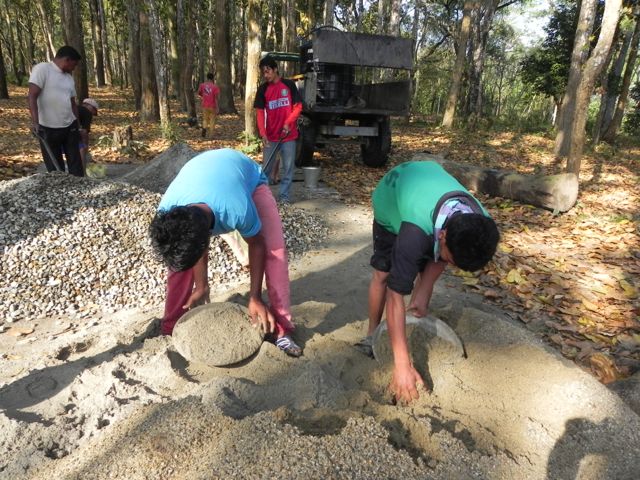
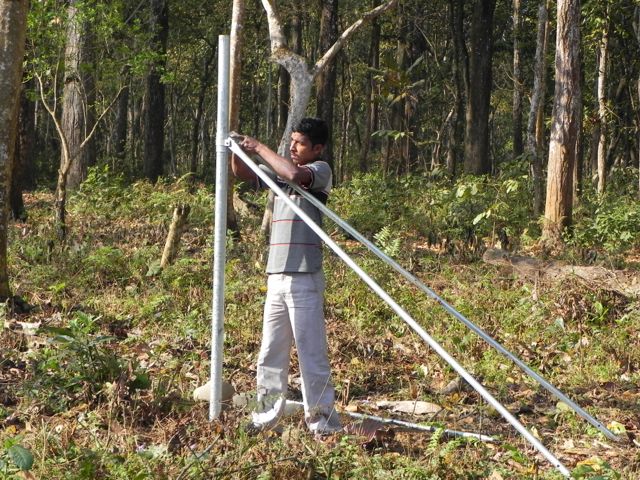
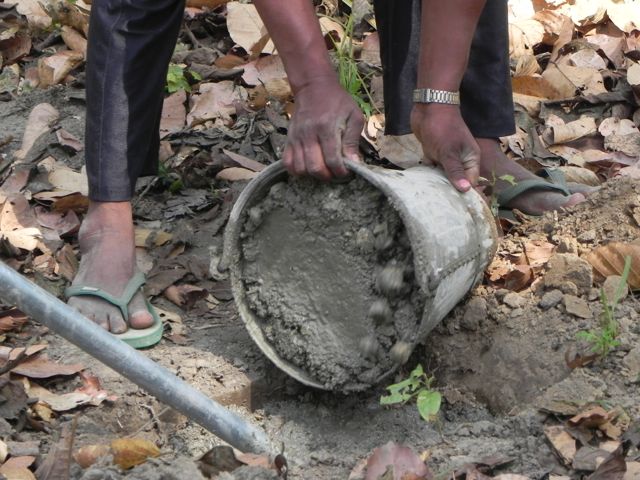
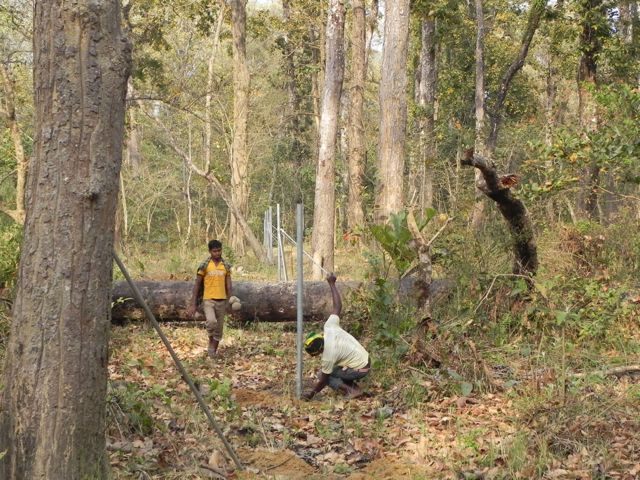
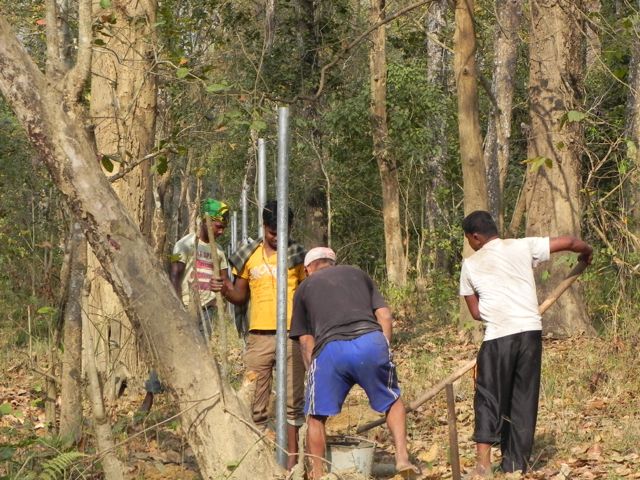
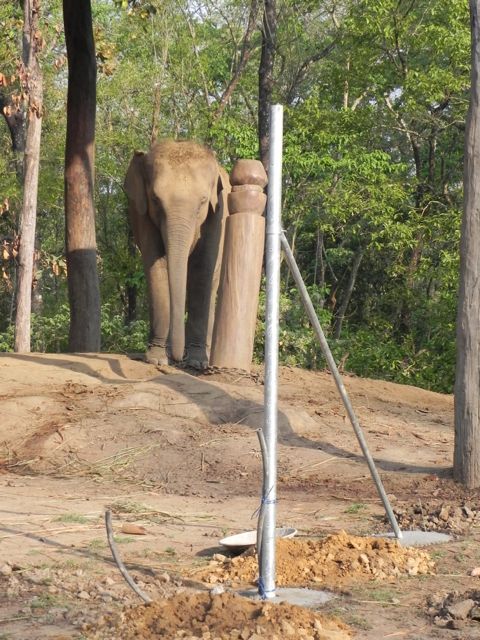
    dscn0321_medFor five weeks, EAI and its tireless volunteers have toiled in sweltering temperatures erecting solar powered corral fencing so that captive-held anti-poaching patrol elephants at one of the government’s 15 hattisars (elephant stables), in Khorsor, Nepal, can be released from their chains forever.

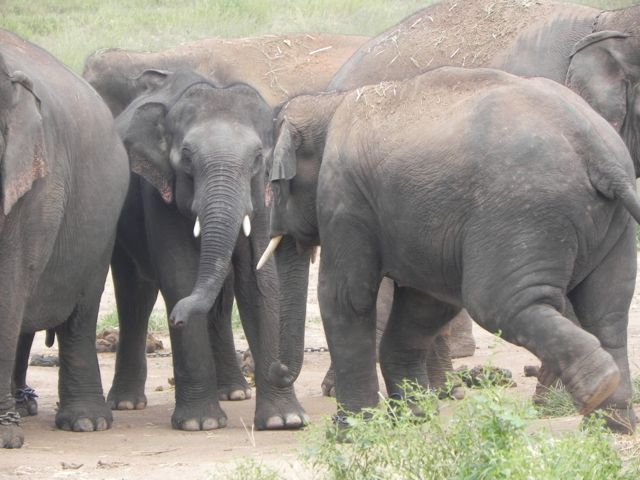
    This hattisar is home to 18 elephants: six females with suckling calves; an older female who acts as auntie, babysitter and wet nurse; a young pregnant female; two adolescents; and two young males who no longer live with their mothers.

    This, the last hattisar in EAI’s Chain Free Means Pain Free project, has the potential to be a prototype for a healthy captive elephant environment and transform elephant management in Nepal.

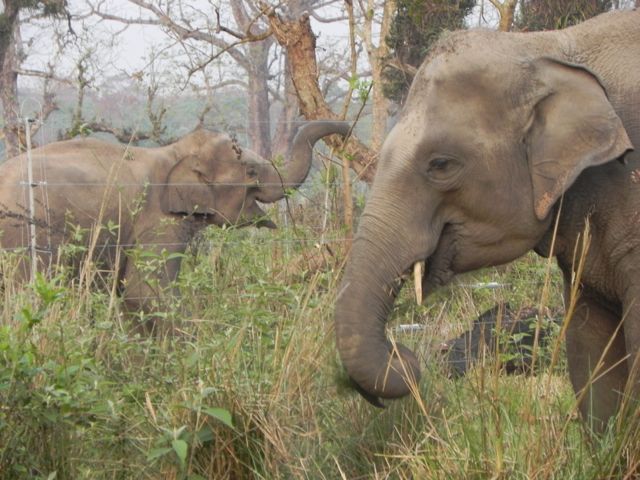
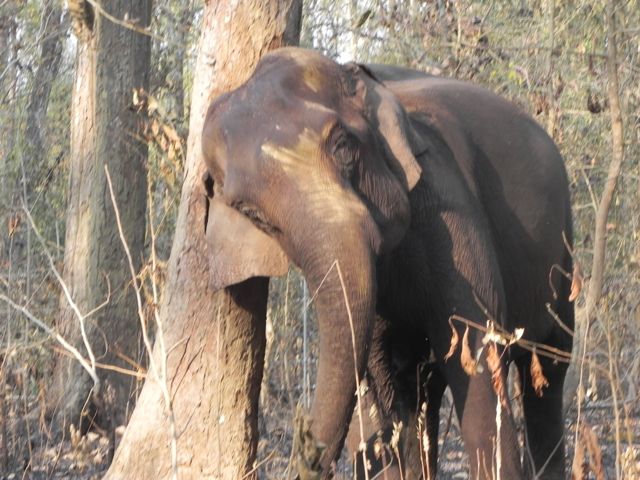
    But an unlikely culprit threatens the success of the project. His name? Sano Jungli Hatti — small wild elephant

    jungli hatti

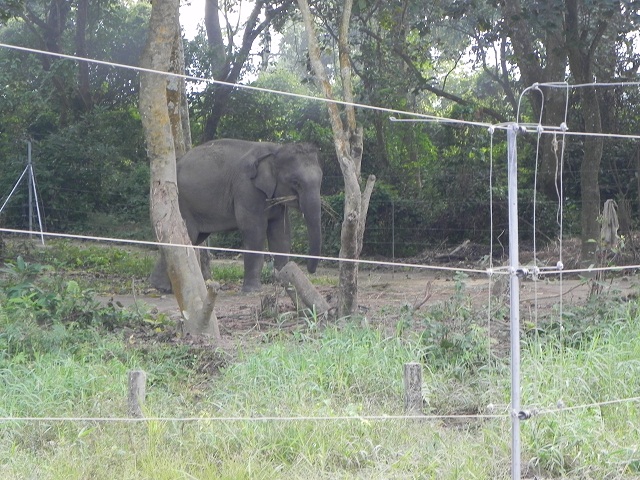
    Every night for the past month, sano jungli hatti has visited the hattisar, damaged the newly constructed section of corral fencing and then disappeared into the breaking dawn.

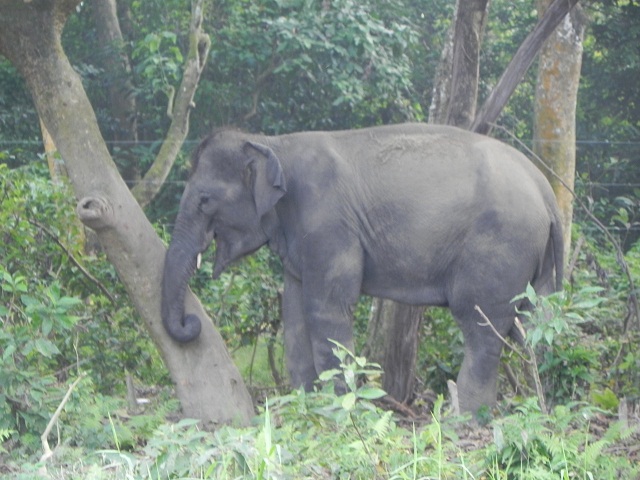
    This wild elephant was dubbed sano jungli hatti because he is less than six feet tall and under 10 years of age. First seen traveling alone more than two years ago, the separation from his wild biological family was many years premature.

    Although the circumstances surrounding his separation remain a mystery, sano jungli hatti’s actions clearly demonstrate that he has adopted the resident elephants in Khorsor as his family.

    It’s not clear if this young elephant is motivated by his desire to procreate or be mothered, but he is willing to disregard the pain of plowing through six strands of solar powered fencing to get to his adopted family.

    Until now, the fence kept out even the most dominant mature wild bulls.

    But this young sano jungli hatti’s destructiveness has created a crisis.

    repairing corral

    Each time sano jungli hatti breaks through the fence, it is repaired.

    It’s not a problem to repair the fence one or two times. But if the fence needs repairing day after day, it is not sustainable.

    If sano jungli hatti continues to break the fence, the resident elephants will be put back on chains.

    We simply cannot allow this to happen.

    Solution: A perimeter fence

    Capturing or relocating jungli hatti is not a viable option.

    Neither is returning all 18 captive-held elephants to chains.

    The answer?

    Build a perimeter fence around the entire 15-acre chain free project to keep wild elephants out and the eighteen resident elephants chain-free.

    The six-foot-high elephant-proof perimeter fence will cover 4,000 running feet. It is estimated to cost $1 per foot, a total of $4,000.

    To ensure the success of our chain free project — to keep sano jungli hatti free and the captive-held elephants chain-free — we must raise the funds for the perimeter fence immediately.

  • The Work Continues to Get Elephants Off Chains

    Good news! Baby Tec Gaj was released from chains.

    Unfortunately, it is not all good news because his mother, Puja Kali, was not.

    Two-year-old, captive-born Tec Gaj and his mother Puja Kali reside in Khorsor, ‪Nepal, at the government breeding center.

    Puja Kali is quite aggressive, known to attack her mahouts even while she is on chains.

    Such aggression is an indication of great suffering, usually on a mental and emotional level.

    Responding to Puja Kali’s aggression with corporal punishment compounds her condition but mahouts find themselves with few alternatives.

    Aggressive behavior exhibited by ‪elephants triggers retaliatory aggressive behavior by the mahouts. Aggression breeds aggression, resulting in a vicious cycle in which neither man nor elephant benefits.

    EAI does not endorse the use of any negative means to manage elephants and we empathize with the position the mahouts and captive-held elephants find themselves in.

    Hopefully, with our continued efforts, the day will come when aggressive elephants will no longer be used for activities that put them and their mahouts in danger. And, mahouts will learn alternative ways to care for their elephants.

  • Five Elephants Freed!

    Five Elephants Freed!

    Two years ago, a young captive born elephant broke free from an ancient tradition.

    That was Prakriti Kali, the first elephant in Nepal to be released from chains.

    Six months later, five more elephants were released from a lifetime in chains.

    Mel Kali was the record holder in the herd, having lived in chains for nearly 70 years.

    Culture shift continues in Nepal

    On April 6th, at 4:30pm, Nepal made history again when all five resident elephants at the government’s Kasara hattisar went chain free!

    Six-year-olds Tamor Kali and Himal Gaj were the first to be given their freedom.

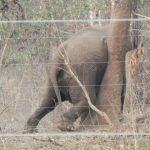
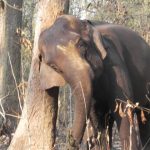
    They wasted no time, finding the best scratching trees and dusting bowl.

    Then, a few days later, after all six chain free corrals were completed, Prayan Kali, Laxmi Kali and Khosi Kali dropped the chains of tradition and went free as well.

    Transition 

    Watching the elephants shed their chains and adapt to the change so effortlessly is breathtaking.

    Young and old alike seem instinctively to know what is happening.

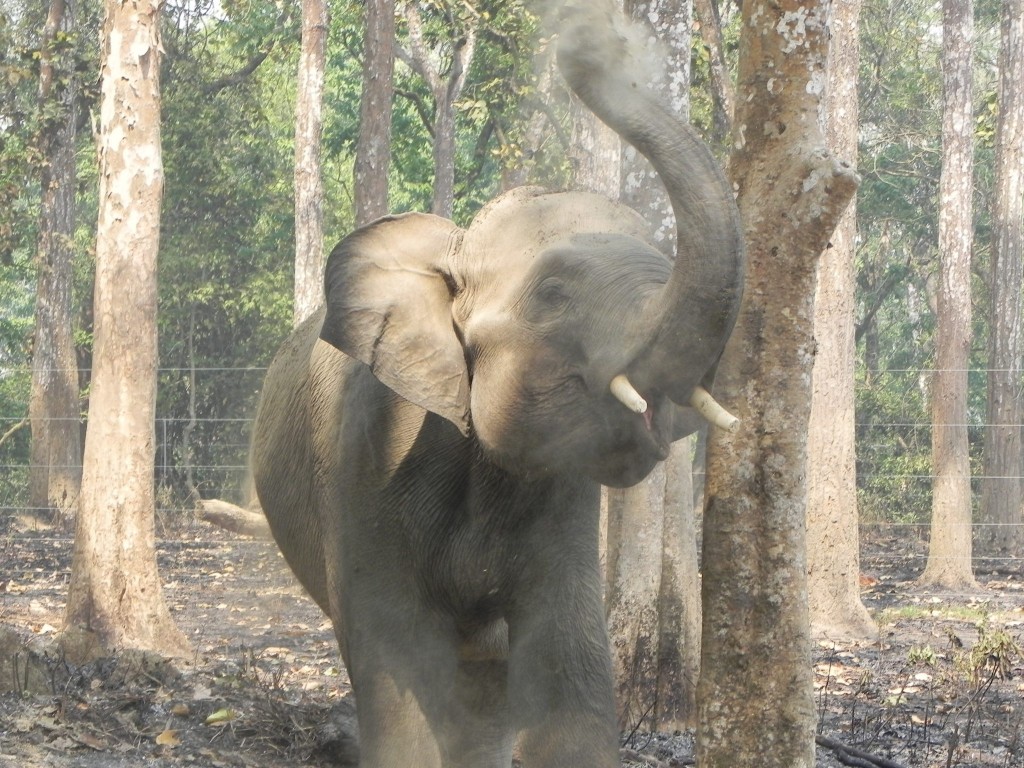
    In synchronized movement, they revel in a scratching and dusting ritual. Nearly becoming one with the trees, they exfoliate every inch of their robust body. Even the tender skin behind their ears and under their massive legs get the invigorating treatment.

    After the exfoliation is complete they follow up with a full-body dusting. In the most graceful slow motion, they fling trunkfuls of dirt under their bellies, on their backs and everywhere in between. This natural spa experience is essential for maintaining healthy skin.

    Chained elephants are denied this opportunity.

    Become an elephant

    For one minute become an elephant. Close your eyes and step inside their skin. Feel the frustration when denied access to trees for scratching and clean dirt for dusting. Now feel the sensation of scratching every tick bite and itch spot until completely satisfied.

    More good news to come

    The five elephants in Kasara hattisar are just the beginning. When our project is complete, 63 elephants will enter the ranks of the chain-free.

    A huge thank-you goes to Kamal Kunwar, chief conservation officer of Chitwan National Park, the hattisar staff and, of course, all who believe in and support this project.

    Five freed. Fifty-eight to go!

  • Change is Afoot

    Change is Afoot

    March 29

    The first two corrals at Kasara hattisar are finally ready.

    The air is charged with anticipation.

    Rescuing an elephant to sanctuary or releasing them from chains brings the same mix of emotions — anticipation, apprehension and excitement.

    Each elephant is a unique individual with a distinct personality. Life’s experiences mold their behavior, shaping them as they mature. Each of them responds differently to different situations.

    Himal Gaj
    Himal Gaj

    When I first arrived at the Kasara hattisar, I noticed that young Himal Gaj was resistant to his mahouts. He appeared fearful. An old scar at the base of his trunk indicated a past confrontation.

    Watching the mahouts struggle through the morning routine, preparing Himal Gaj for duty, was disconcerting. I wondered how he and the mahouts would respond to going chain-free.

    The mahouts were also concerned. They feared for their safety.

    As a result, it was decided that Himal Gaj would be released from his tether but would wear loose hobbles until the mahouts felt safe around him.

    It was disappointing that Himal Gaj would not immediately be completely free, but the compromise was the first step to his future freedom. If the mahouts fear for their safety, Himal Gaj would be destined for a life in chains.

    With time and Compassionate Elephant Care training I hoped Himal Gaj would settle down and become more responsive.

    The chains come off

    The elephants usually return from their anti-poaching patrol duties around 4pm. Chief Conservation Officer Kamal Kunwar postponed a scheduled meeting so he could be present for this auspicious occasion.

    Just before 4pm, the hattisar suba arrived. He’d been out of office for a couple of weeks.  He and Kamal discussed the plan in Nepali. I would soon see that following their brief conversation plans would change dramatically.

    The elephants arrived back from the forest. To my surprise and contrary to the plan, Himal Gaj was walked directly into his new chain-free corral. He was not put on loose hobbles. Calmly and confidently, his mahout gave the command to bite  (stretch out on his sternum).  Without hesitation or fear, Himal Gaj calmly responded.

    I realized that the mahout I’d seen with Himal Gaj the past week was now assisting, rather than riding.

    In that moment things became perfectly clear. The mahout to whom Himal Gaj was resistant to this past week was the junior mahout. And now that his main mahout was back from vacation, everything was fine.

    Himal Gaj waited patiently as his gear was removed. Then he rose and immediately began dusting, as his friend and senior mahout left the corral.

    What a difference a good relationship makes.

    Kamal Kunwar’s turn

    tamor-kali-female2
    Tamor Kali

    I did not have time to dwell on the glory of Himal Gaj’s transformation because Tamor Kali was about to enter her chain-free corral for the first time.

    Kamal Kunwar was sincerely excited, filming her first chain-free steps like a proud father.

    After seeing how well Himal Gaj responded to his mahout, everyone was engaged and relaxed. They gestured at both young elephants free-of-chains with huge smiles on their faces.

    Now was the time to stand back and savor the moment. The instant that life changed for two young elephants and their family of mahouts.

    The three other elephants stood chained under their shelter watching the scene.

    I whispered, “You’re next ladies.”

    It will be close to a week before the other corrals are completed. Without a doubt, Khosi Kali, Laxmi Kali and Prayna Kali, who have all been prisoners to chains for decades, will transition seamlessly.

    Imagine the joy when they are all chain-free. Heart bursting JOY!

  • Progress Report on Chain-Free Corral Project at Kasara Hattisar

    Progress Report on Chain-Free Corral Project at Kasara Hattisar

    The framework for all six chain-free corrals at the Kasara hattisar is in place.

    Support and brace posts are concreted. Gateposts mark the entrance to each new corral.

    Heart work

    Eyeing the progress of this project, my heart pounds. Here it comes, that joyfully intoxicating feeling cursing through my veins.

    My eyes transport the image to my heart. My heart responds, sending a warm glow through my body, filling my eyes with tears. My heart swells with the promise of a better life for these elephants.

    In this moment I stand in my personal space of pure peace. I caress it. Breathe it in deeply. I don’t attempt to own it, only experience it, knowing the feeling is a gift meant to be experienced not possessed.

    Some people meditate, others run, cycle or climb mountains to connect to that place within where they feel most themselves, most centered, most peaceful.

    This is the place of autonomy and personal freedom.

    Such activity can literally become an addiction, in the best sense of the word.

    Watching the chain-free corrals come to life before my eyes is my addiction. Knowing that my actions help reduce the suffering of captive-held elephants brings me great joy! It is heart work, soul fulfilling work. My meditation.

    At times the joy is overwhelming and I just have to cry. Seeing elephants gain even a semblance of autonomy moves me to do more. Knowing that we are able to help bring some peace and freedom to their lives drives me.

    I may never know any of these elephants personally. But that is not the point of my work. I am not here to expand my elephant family. I am here to better the lives of these elephants.

    They know we are helping them. That is good enough for me.

    Construction continues

    The next step is to string the wire between support posts and hand-build the topes (post protectors).

    Each corral is one full acre in size. It is equipped with six strands of wire equaling nearly one mile of wire per corral.

    Ditches will be dug to bury the wires that enable each corral to operate independently.

    Last, the steel box that contains and protects the energizer and batteries will be installed and wired to the solar panel that powers the system.

    A perfect vantage point

    From the open-air raised platform that I have claimed for my new office, I survey the work site. What a gift to witness this miracle unfolding right before my eyes.

    A humble thanks to Kamal Kunwar, Chitwan National Park chief conservation officer, the entire hattisar staff, our IBEX fence crew and all of you who have contributed to this worthwhile project.

    Together we are improving elephant welfare, showing due respect to these wise, kind and self-aware beings who grace our planet and our lives.


  • Back in Sauraha, Chitwan, Nepal

    Back in Sauraha, Chitwan, Nepal

    Working in Asia the past two years I have learned a tremendous amount about how culture and tradition affect collaborative conservation efforts. Among the most important lessons is the need to ensure project sustainability. No matter how groundbreaking or beneficial the project promises to be, it must be sustainable to be successful.

    Ways to sustain the project must be identified during the planning stage, otherwise the effort put into it will have been wasted. Sustainability determines success and people ensure sustainability.

    Before returning to Chitwan, I wondered if our chain-free yard pilot project for Sweetie Kali, aka Prakriti Kali, would prove to be sustainable. Although I prepared myself for less, I hoped the mahouts had truly embraced this welfare project. Success hinged on their acceptance of this approach to elephant care, which is nearly the polar opposite to their tradition.


    As I approached the elephant stables I saw Sweetie Kali foraging in her personal forest. The dense scrubs were a faint memory but the mature trees were standing tall, providing shade and enrichment, just as they had when we built the yard last May.


    I was pleased and honestly a bit relieved to see that the chain-free fence was in pristine condition. The staff, under the direction of Chiran Pokheral, the officer in charge, did a fabulous job of ensuring the success of our pilot project.

    It’s my nature to push headlong into the next project forgetting to take a moment to bask in the glow of a collaborative project well done. It is too easy to get swept away in the excitement of something new and forget to thank the people responsible for making everything happen.

    In addition to Paspat and the mahouts, who were completely receptive to the changes in their routine that a chain-free yard required, many other individuals, including Chiran Pokheral, Dr. Gairhe, Ram Kumar, Babu Ram, Nandu, Vishnu and Dibyendu and his crew, made this project possible. Without their support and assistance, this project would never have come to fruition, much less become sustainable.

    Special thanks goes to Chiran Pokheral who, after securing the required clearances, made sure I had access to plumbers, electricians and day laborers, and the cooperation of everyone needed to complete the project. Without Chiran we would still be dreaming about a chain-free yard instead of watching Prakriti Kali thrive in it.

    Dr. Gairhe, the senior government veterinarian, also played a key role in the project’s success. A true conservationist, Dr. Gairhe’s endorsement and oversight of the project provided the much-needed assurance at the government level.

    Now that I am back in Sauraha, it’s time to identify a location for the second chain-free yard. This yard will be for Man Kali and her three-and-a-half month old calf Hem Gaj. Once again we turn to Chiran Sir,  Dr. Gairhe and the NTNC staff  to lead us in our effort to improve elephant welfare in Nepal.

  • Drag Chains and Training

    Drag Chains and Training

    Elephant’s World posted two videos on YouTube last week of me training a young elephant named Jon (you can view them here and here). I was surprised to see the videos and happy to know they exist.

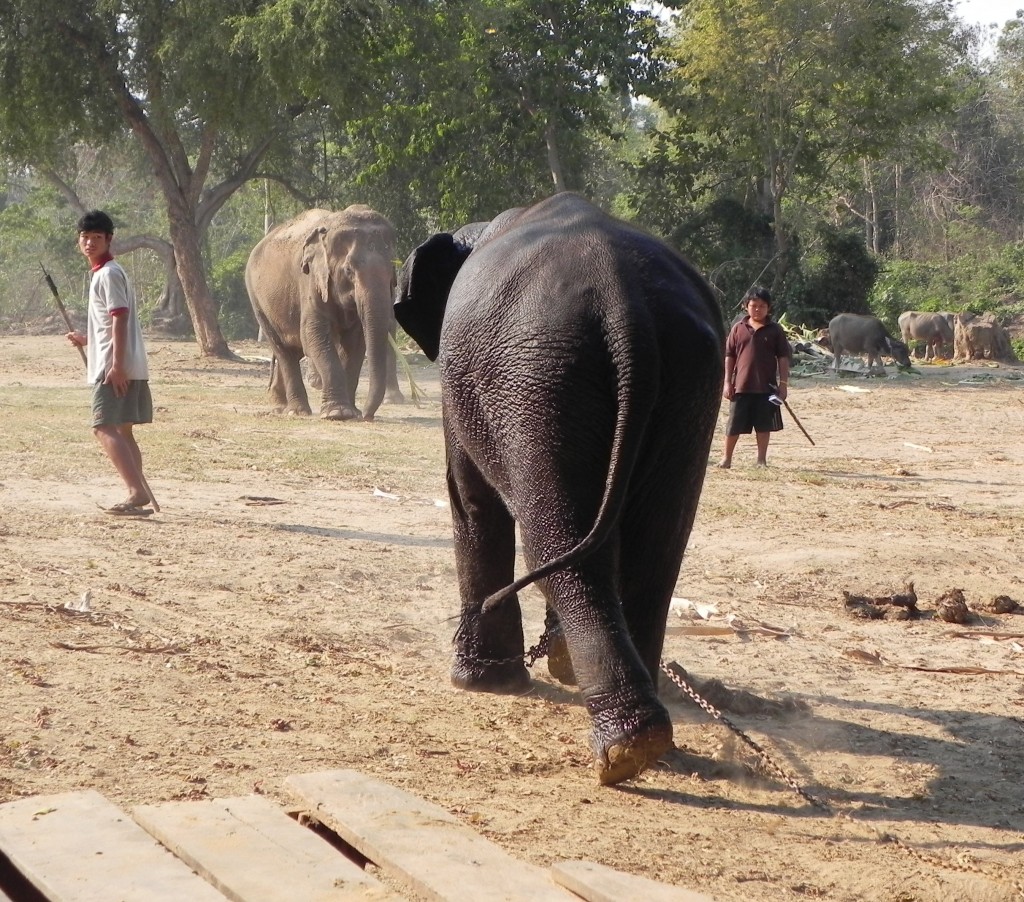
    Many people found the videos interesting and some have asked why Jon is wearing a chain. The chain is called a drag chain; in Asia it is used to prevent an elephant from running away. One end of the long chain is fastened around an elephant’s wrist and the other end drags behind.

    When a mahout is afraid that his elephant will run away, he puts a drag chain on him. If the elephant runs, the mahout wraps the loose end of the chain around a tree to stop him.

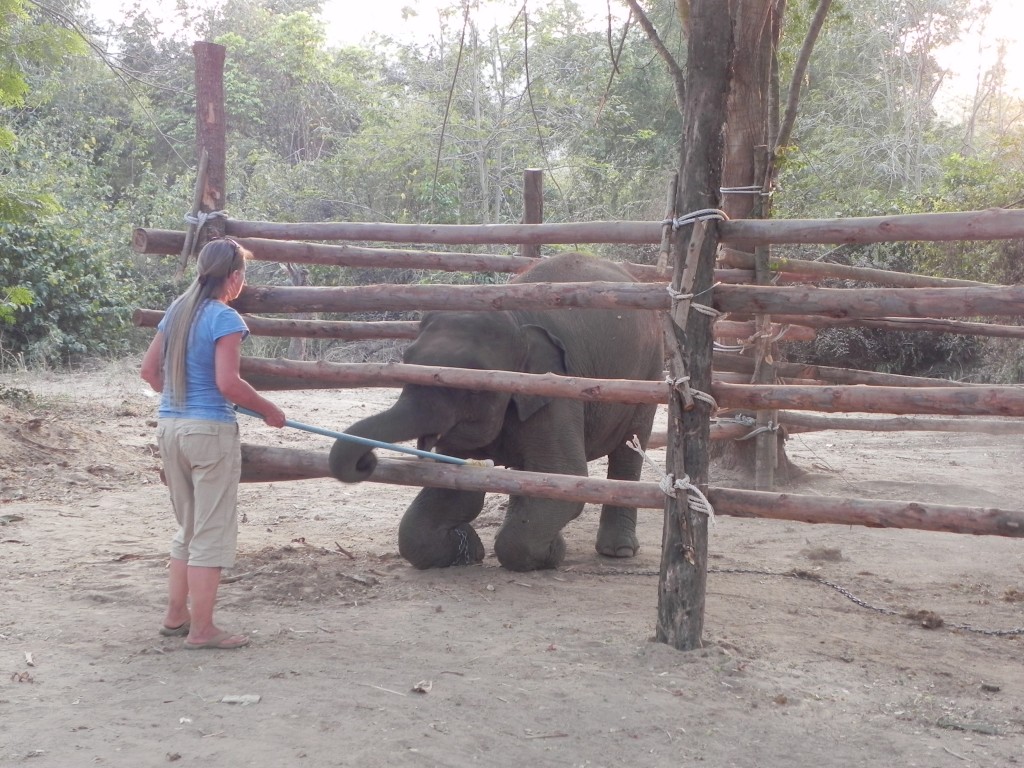
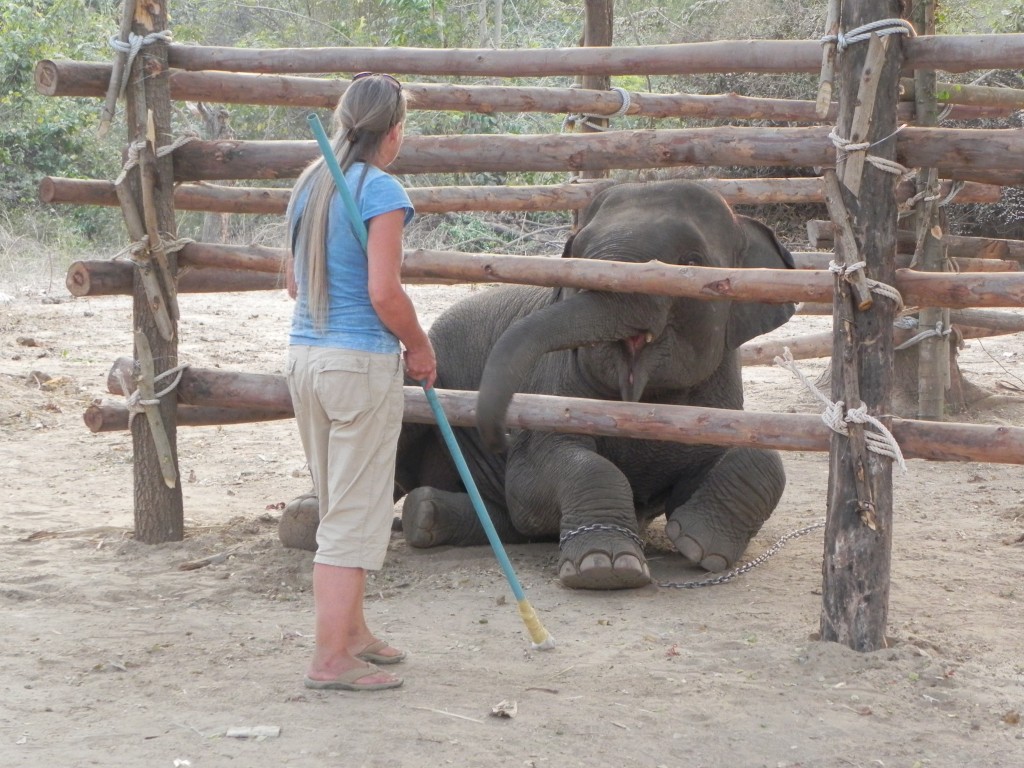
    The mahouts at Elephant’s World were resistant to non-dominance training and even more resistant to removing Jon’s drag chain. In order to be allowed to demonstrate positive reinforcement target training, I agreed to the drag chain for the first two sessions. One end of the chain was on Jon’s ankle and the other end was loose.

    My adherence to their tradition gave the mahouts time to get comfortable with the new training method I offered. They observed firsthand that Jon was more interested in the training game than in trying to get away.

    Jon showed such promise that after the second training session the mahouts agreed to remove the chain.

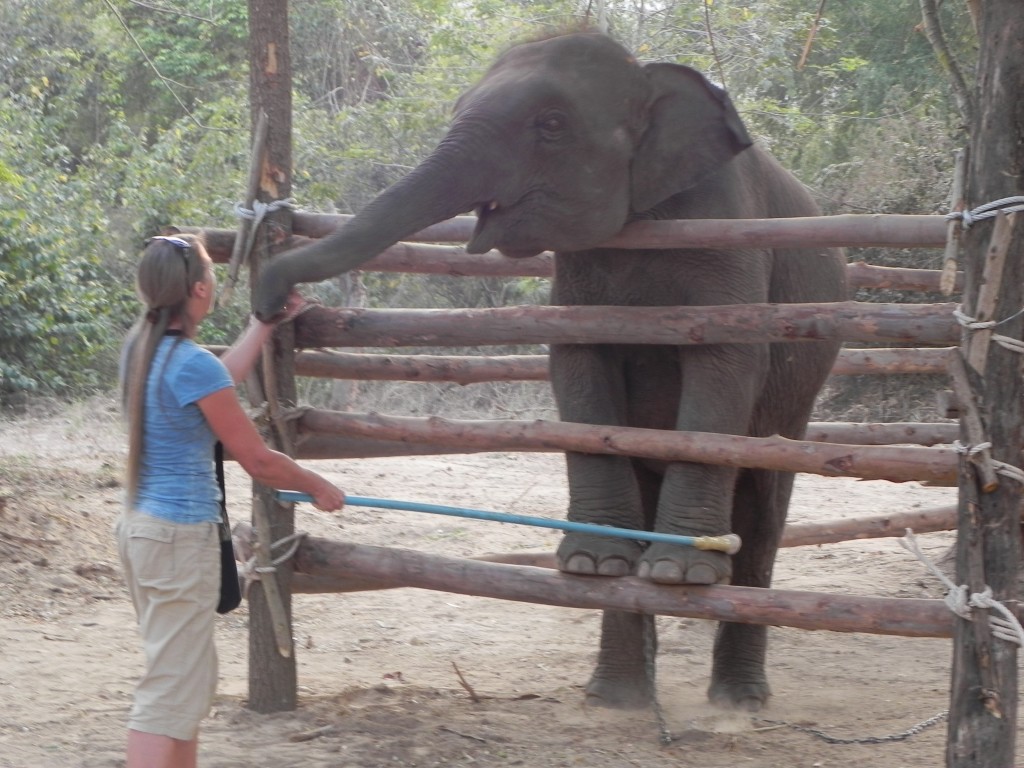
    There have also been questions about the “stick” used during training. The stick, or target as it is called, is a flexible pole with a soft cushion on the end. Watch my training tutorial to see how the target is used and learn the basic concept of target training.

    The goal is to teach an elephant the name/word for different body parts, such as foot, head, ear, side, etc. Once understood—which takes most elephants only minutes to grasp—the elephant will voluntarily offer that body part when asked. The key is to ask, not demand, and always provide praise and a treat as a reward.

    Before watching the videos of Jon’s training sessions, I suggest that you view the tutorial a couple of times. Then watch Jon’s first training session and see if you can identify what body parts Jon is learning. Notice that when Jon becomes frustrated he walks away, but returns almost immediately to try again.

    Positive Reinforcement Target Training gives the elephant the freedom to walk away, take a moment to reflect on what is happening and return when he is ready to try again. Walking away reduces frustration and increases the elephant’s willingness to participate.

    You will also notice in the video that Jon offers behaviors–kneel and lie down. This is common in initial training sessions. Many times the elephant will offer what s/he already knows before starting to “problem solve” and figure out what the trainer is trying to teach.


    Learning to think for themselves is the first thing the elephants learn. After that, training is a breeze.

  • Fundraising for Sweetie Kali’s chain-free corral a success!

    Fundraising for Sweetie Kali’s chain-free corral a success!

    Sweetie Kali
    Sweetie Kali

    I am sincerely grateful, as I know are Sweetie Kali and the entire NTNC staff, for your generosity toward the creation of Sweetie Kali’s chain-free yard.

    The funds raised to date cover the cost of Sweetie’s one-acre power fence enclosure, which she has immersed herself in from day one; her custom water trough, which will be installed tomorrow; and two shovels and a new wheel barrel requested by the mahout staff.

    The mahouts are so proud of this pilot project.

    The second half of the funding goal was intended for a training wall, which is not necessary at this time. Those funds can be raised at a later date and the wall built in a few months when I return to Nepal.

    So, consider this fundraiser a grand success! Pat yourselves on the back. Without you this history-making event would not be possible. Together we have created the first chain-free elephant corral in Nepal, hopefully starting a trend that will change how captive elephants are kept in Asia!

  • Update on Nepal pilot project

    Starting on May 8th, 2012, I put everything on hold while I focused exclusively on Sweetie Kali’s new chain-free corral. The bandh (country-wide strike) caused a bit of delay in the beginning, forcing the fence crew to wait several hours at the Nepal boarder before entering. Clearing customs with 400 KG of power fence materials added to the delay.

    Dibyandu Ghosh and PaspatUpon arrival, Dibyandu Ghosh, the contractor, explained that his fences are not only functional but beautiful as well. He was not exaggerating. No matter the challenge—including keeping a captive elephant in while at the same time keeping wild bulls out—he never balked and consistently came up with solutions that were both functional and visually pleasing.

    Realizing that I did not speak the local language, Dibyendu quickly identified the go-to man, Paspat, the mahout supervisor. They hit it off immediately, as if they had worked together for years.

    Once construction started, it progressed quickly. Each morning Sweetie Kali would leave her stable for a day of patrolling and grazing the forest, leaving several men working diligently around her yard. Each evening she returned to be chained in her stable with the men still busy at work. She was soon encircled by the project.

    watching Sweetie KaliAs the fence began to take shape, the mahouts became more interested. Seeing is a powerful tool to grasping a concept. By the end of four days, the corral had been completed and everyone gathered to witness Sweetie Kali’s release.

    I wouldn’t say that anyone was apprehensive, but there was definitely a feeling of doubt. One researcher with years of wild elephant and rhino experience commented that the mahouts would now have to be with Sweetie Kali constantly since she would be off chains. His comment caught me off guard but showed clearly that the chain-free concept was difficult for them to comprehend. While I tried to explain that the fencing is what contains her, making a mahout unnecessary, his reasoning was revealed. He stated his concern that without the mahouts Sweetie Kali would not be able to function, would not know what to do, where to walk, even how to walk. I was dumbfounded. My response was, just watch, she will do just fine.

    mahout group

    I thought long and hard about this mindset — that elephants cannot function without their mahouts ordering them around. It actually made me sad to have to accept how misunderstood elephants truly are.

    The chains come off

    When Sweetie Kali’s chains were removed for the final time, she stood motionless next to her mahout. Indeed, she was waiting for instruction, expecting discipline if she acted without direction.

    Her mahout obviously did not comprehend his role either. When he was told to walk away from Sweetie Kali and leave the yard, he stood frozen, apparently confused.

    When the mahout finally left the yard, it took a matter of moments for Sweetie to realize she was chain-free. She took a tentative step away from her stable area and abruptly stopped, ears perked, anticipating a sharp correction. When no correction was forthcoming, she relaxed a bit and began to walk the fence line. Unable to let go, the mahout also hovered at the fence line. Sweetie Kali was clearly apprehensive. The other mahouts, administrators and vet techs looked on in anticipation.

    feeding cuchie to KaliI grabbed some kuchi (rice and molasses wrapped in grass) and tried to get the mahout to walk the fence line into the forest and throw the kuchi deep inside. As always, training the elephant trainers is always more difficult than training the elephant, so it took several attempts, in his native tongue, for the mahout to understand that he was not to hand feed the kuchi, but to disperse it in the habitat.

    Chain-free environment and free-choice food are two equally incomprehensible concepts to most mahouts. But after much-repeated instruction from his peers, Sweetie Kali’s mahout finally, almost reluctantly, hurled the last kuchi into the forest.

    Kali's backsideThat was Sweetie Kali’s signal that she was free to roam the premises. The last thing everyone saw of her was her petite backside as she disappeared into the dense brush. I felt like saying, “Sweetie Kali has left the building!” but realized my humor would be lost on this crowd.

    Bundles of fresh cut grass were deposited on the edge of her forest to be consumed at her leisure and the tech set up watch to record Sweetie Kali’s behavior until dark.

    Reinforcing: No chains

    mahout hutThe next morning, Sweetie was still nowhere in sight, which pleased everyone tremendously. As I sat in the open-air mahout hut reveling in the success of the project, Sweetie’s mahout entered her yard. Watching silently, I wondering if the schedule had changed; was she going to the forest early or was there a special tracking program? But then I realized that the mahout intended to chain Sweetie Kali under her shelter.

    Papsat and KaliI leapt from my seat. With as much composure as possible I rallied the mahouts, telling them, “No chains, no chains.” My heart sank but then Paspat, the mahout supervisor, appeared out of nowhere. Usually a quiet, mild-mannered guy, he barreled over to the mahout with raised voice and expressive body language to deal with the situation.

    The mahout explained that he wanted to stick to Sweetie’s normal morning routine, which of course included chaining, but was told, in no uncertain terms, that chaining was not allowed. He now clearly understood his directions. When the drama died down I suggested that the chains be removed from the stable area so they would not “accidentally” be used.

    New routines

    That afternoon when Sweetie returned to the hattisar and was released into her yard, she knew exactly what to do. Without hesitation she made a beeline for the forest and did not come out again until it was dinnertime.

    Before mealtime, kuchi and bundles of grass are stored outside each shelter, inches from the elephants’ reach. The routine is to feed the kuchi first, placing them at the elephants’ feet, and then piling the fresh-cut grass within reach. The elephant knows from years of experience that dinner is served precisely at 6 pm.

    Being chain-free meant Sweetie Kali was free to approach the inviting pile of food and beg to be fed early, thereby creating a situation where she might begin to bob in frustration.

    Everything had been progressing so well, I wanted to avoid creating such a situation. Getting the mahout to disperse the cuchie in the forest earlier than Sweetie Kali’s normal feeding time was not a problem, but then I saw that he put all her grass in one pile under her shelter.

    His fellow mahouts were all talking at the same time, telling him to take the grass to the forest. But he simply ignored them and walked away.

    dragging grassThis time Paspat did not come to the rescue. I was the only one who did not know he was off-grounds. Luckily, another official appeared and after several phone calls got the mahout to return. In a melodramatic display of unwillingness, he dragged the grass to the proper location—and then stomped off, muttering that he would not take orders from junior mahouts.

    By the next day Sweetie Kali’s mahout was over his seniority snit and began to show great pride in the accomplishments of his elephant.

    Many thanks

    GanashThat’s it, the entire story. Every day, Sweetie Kali immerses herself in her personal forest when she is back at the hattisar. She comes out to play in the dirt pit or chase birds and was seen and heard dashing in and out of the trees during the last big storm, but otherwise she is basically unseen except by Ganash, the young tech assigned to her behavior study, which he has taken on with great seriousness. Recording her behavior is an important tool for documenting her response to chain-free living.

    When Sweetie Kali leaves for her daily patrol of the forest, I inspect for habitat damage. I am pleasantly surprised at how little damage there is. She excavated a relatively small sleeping area, sheltered by huge trees and another smaller area for dusting. Aside from the thick curtains of edible hanging vines that are rapidly thinning, the damage is minimal.

    NTNC-BCC

    Sweetie KaliI have so many people to thank for the success of this pilot project including all the staff at NTNC-BCC, the forest department, Naresh, Ram Kumar, Chitran, Dr. Gairhe, Paspat, Nandu, Babu, Kiran, Ganash, Veena and Vishnu at IBEX Gallagher, Dibyendu and crew and especially the mahouts, because without their cooperation, the project would not have been possible.

    And finally, I thank Sweetie Kali for unknowingly volunteering to participate in this important pilot project, one that will undoubtedly have a huge impact on how captive elephants are kept in Nepal.

    Please visit EAI’s Facebook page so I can keep you updated on our progress as it happens!