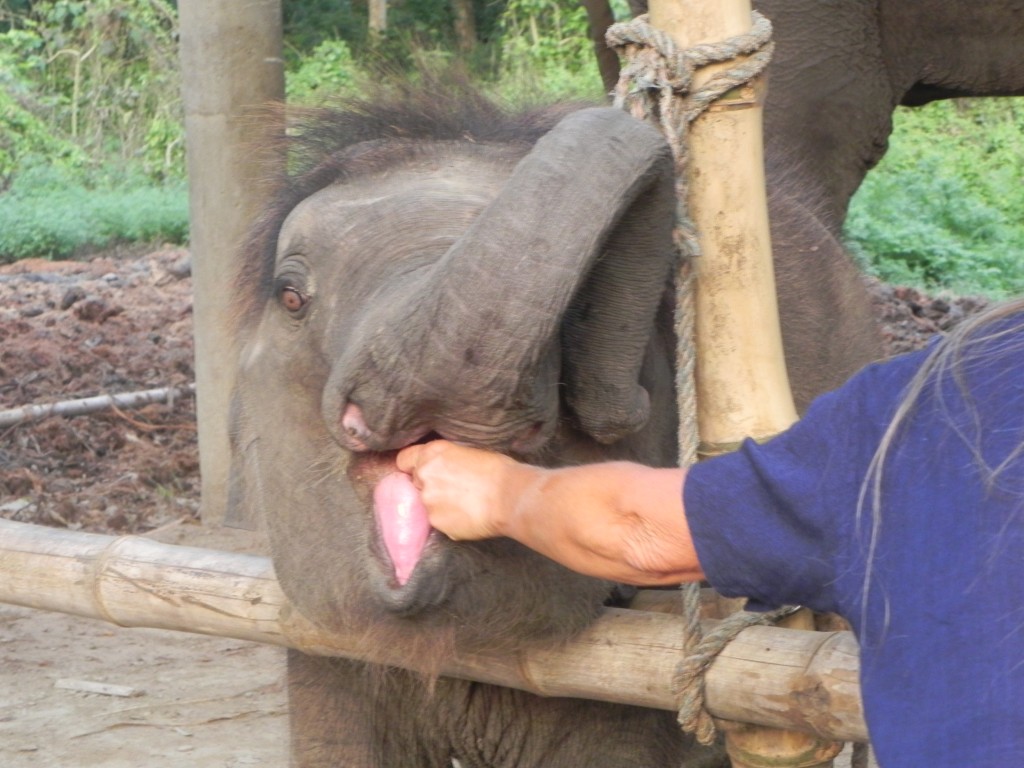
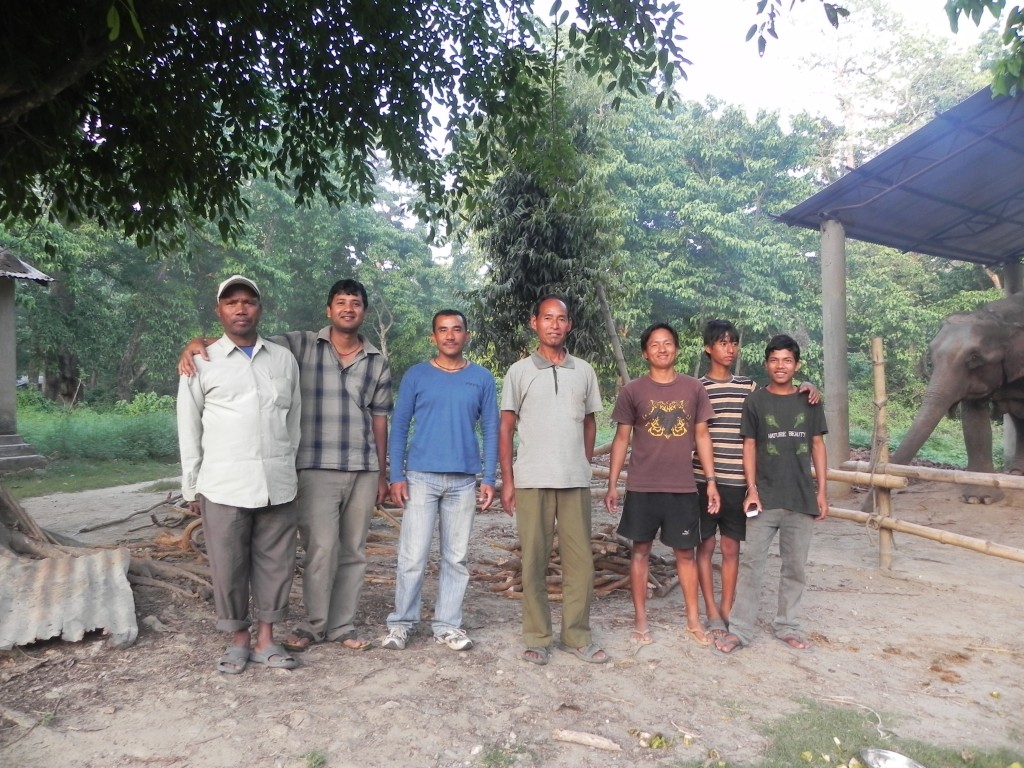
Tag: bull elephants

  • Drag Chains and Training

    Drag Chains and Training

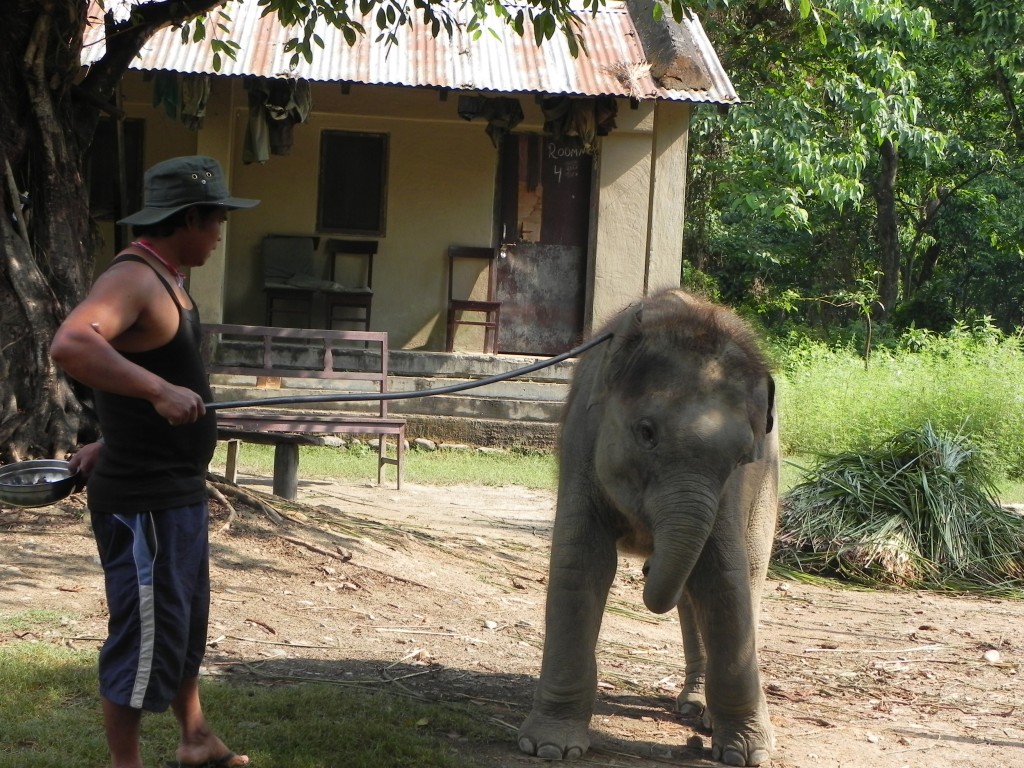
    Elephant’s World posted two videos on YouTube last week of me training a young elephant named Jon (you can view them here and here). I was surprised to see the videos and happy to know they exist.

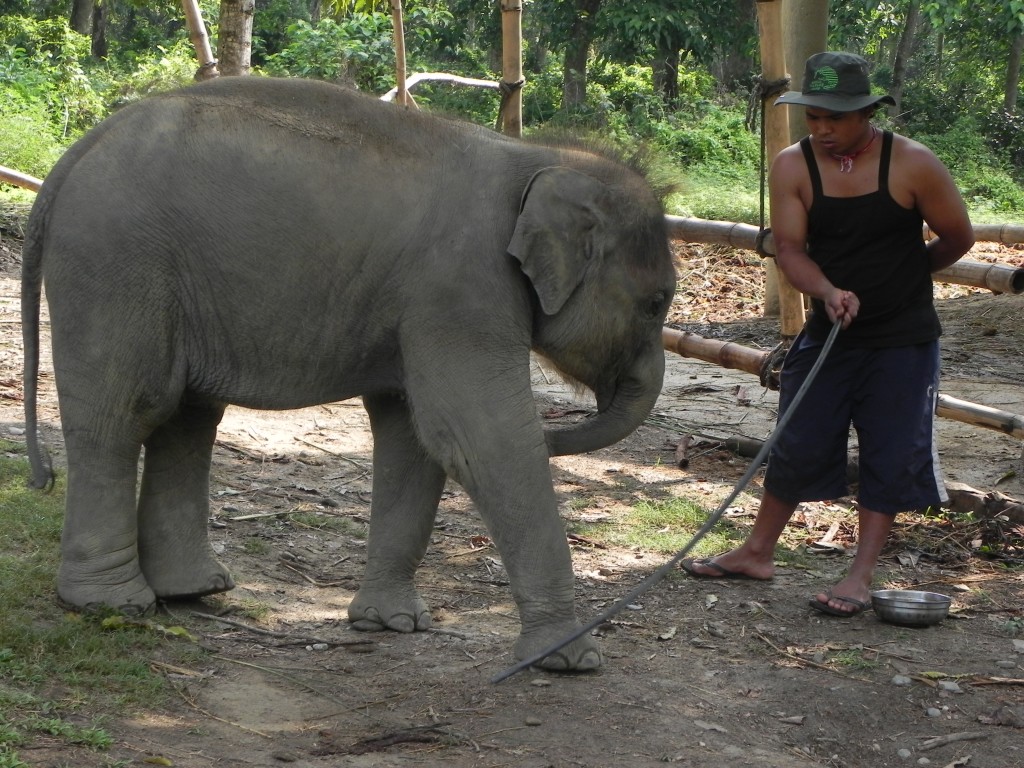
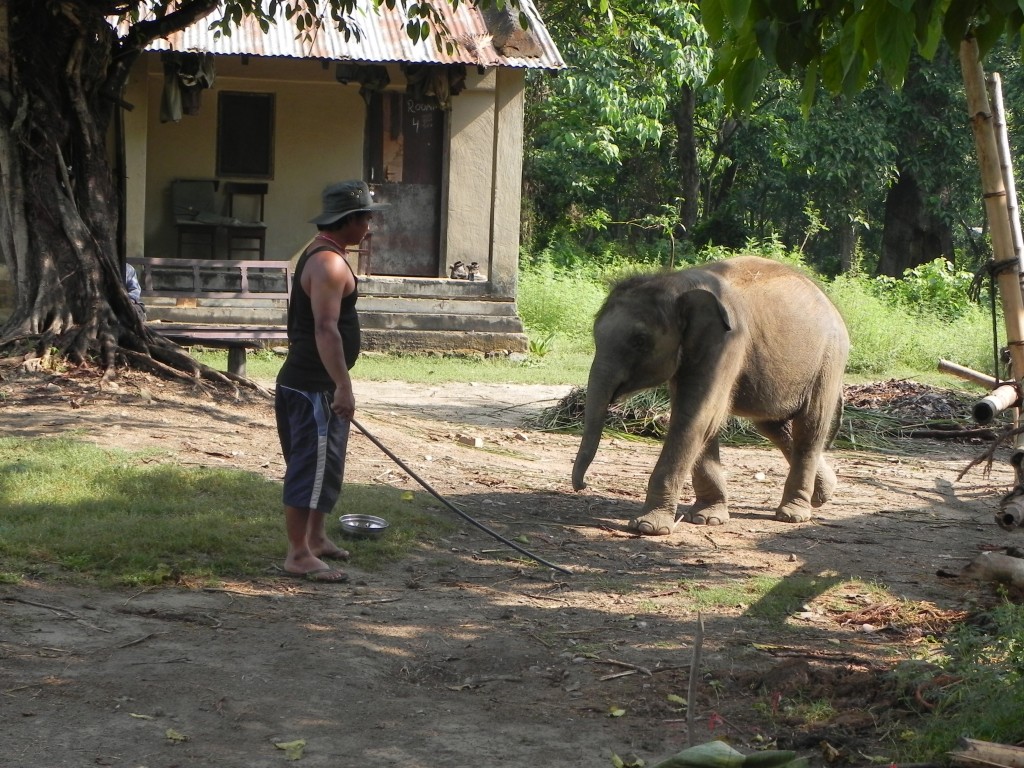
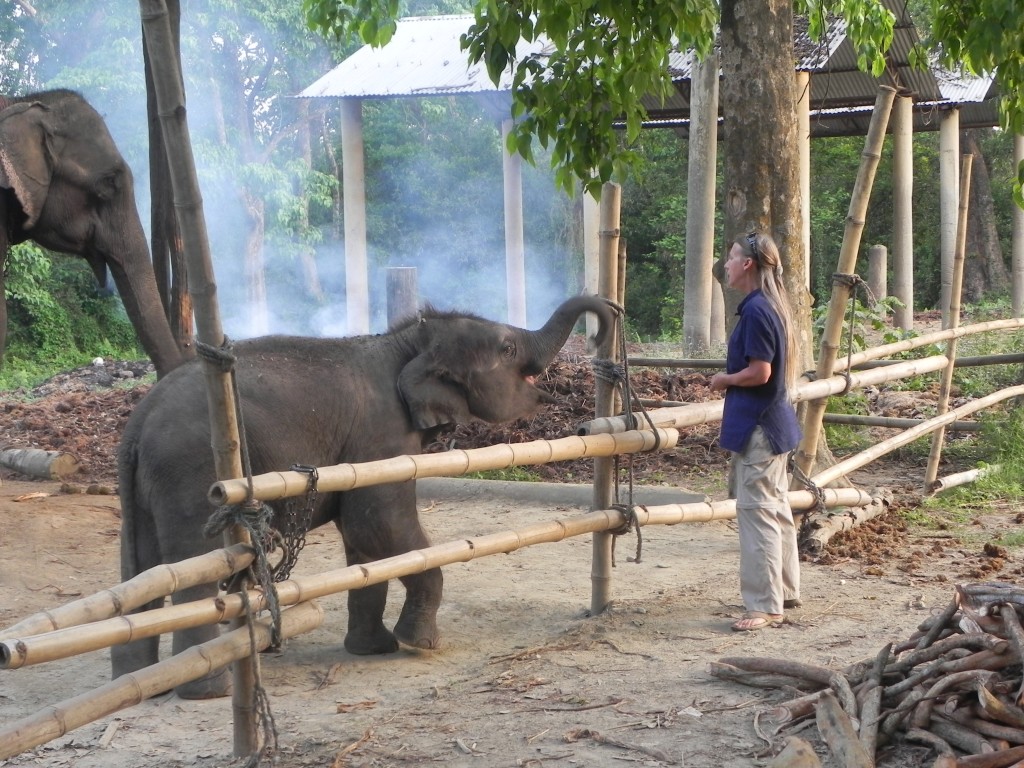
    Many people found the videos interesting and some have asked why Jon is wearing a chain. The chain is called a drag chain; in Asia it is used to prevent an elephant from running away. One end of the long chain is fastened around an elephant’s wrist and the other end drags behind.
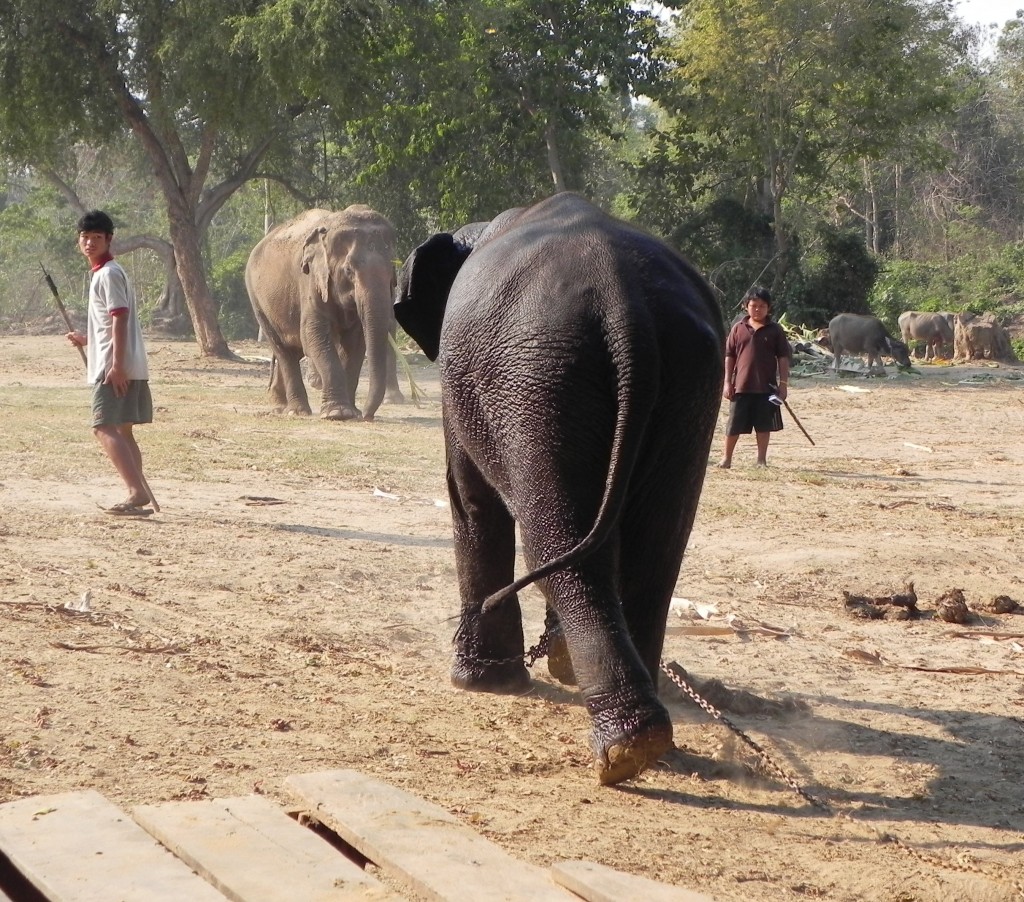
    When a mahout is afraid that his elephant will run away, he puts a drag chain on him. If the elephant runs, the mahout wraps the loose end of the chain around a tree to stop him.
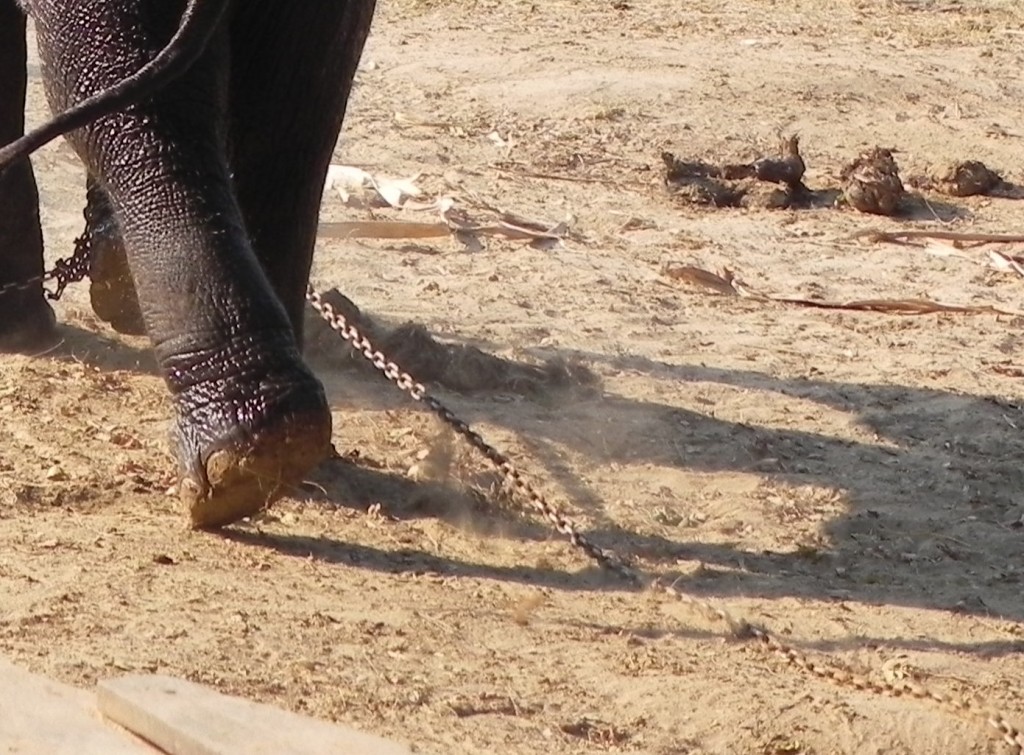
    The mahouts at Elephant’s World were resistant to non-dominance training and even more resistant to removing Jon’s drag chain. In order to be allowed to demonstrate positive reinforcement target training, I agreed to the drag chain for the first two sessions. One end of the chain was on Jon’s ankle and the other end was loose.

    My adherence to their tradition gave the mahouts time to get comfortable with the new training method I offered. They observed firsthand that Jon was more interested in the training game than in trying to get away.

    Jon showed such promise that after the second training session the mahouts agreed to remove the chain.

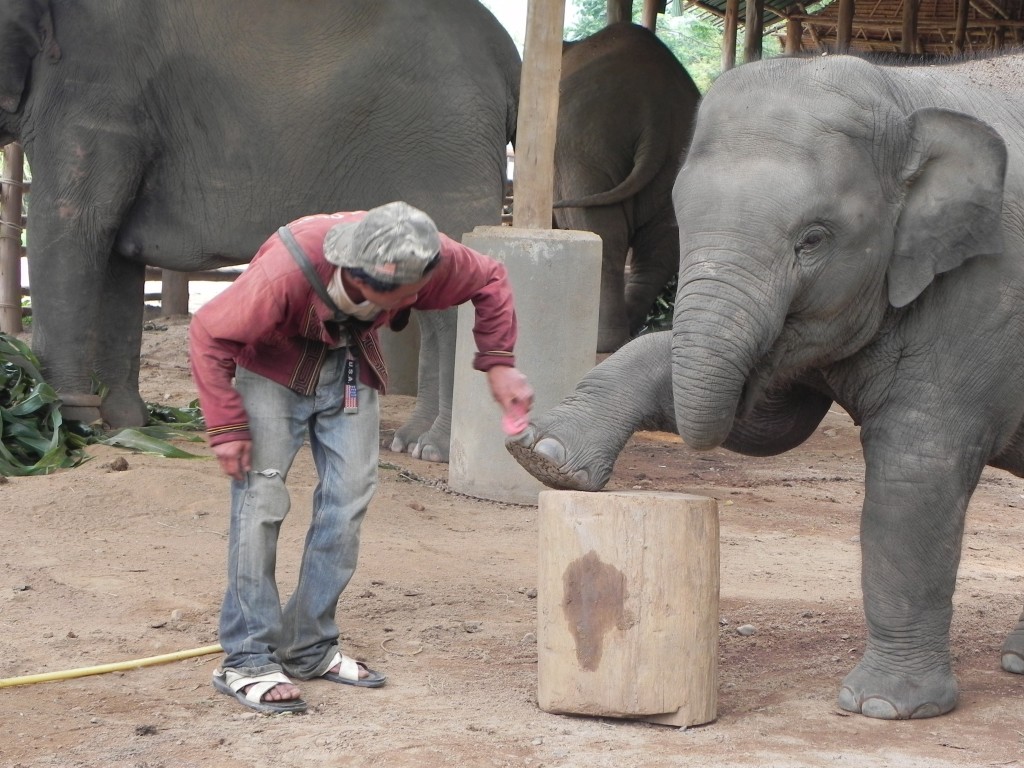
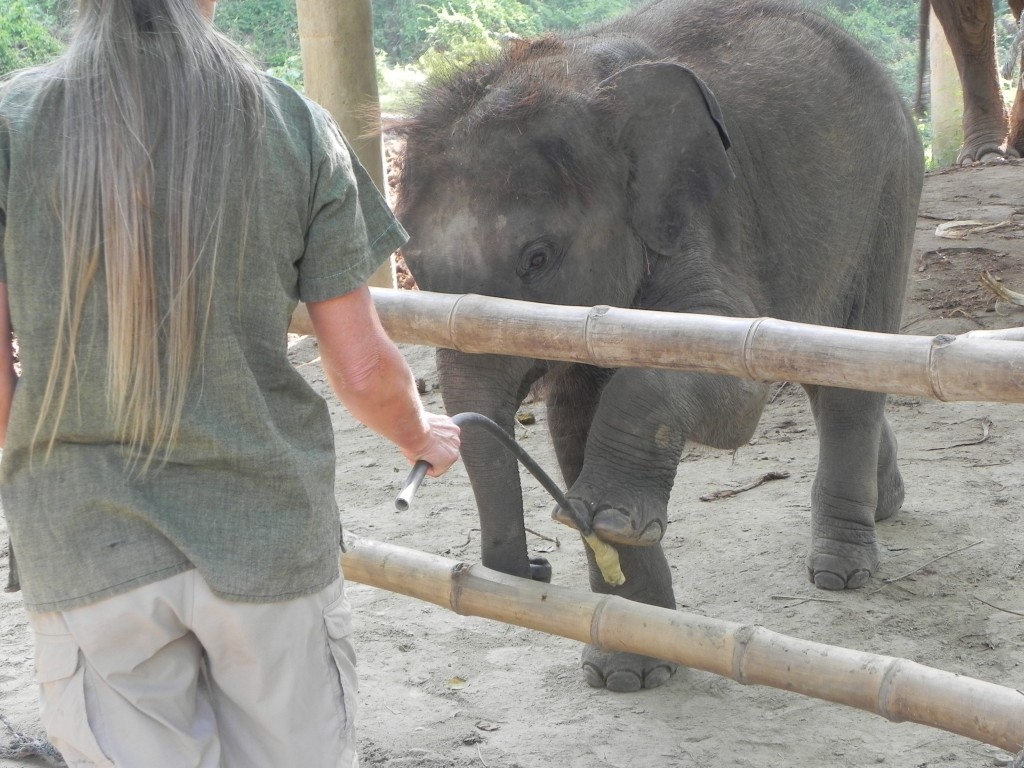
    There have also been questions about the “stick” used during training. The stick, or target as it is called, is a flexible pole with a soft cushion on the end. Watch my training tutorial to see how the target is used and learn the basic concept of target training.

    The goal is to teach an elephant the name/word for different body parts, such as foot, head, ear, side, etc. Once understood—which takes most elephants only minutes to grasp—the elephant will voluntarily offer that body part when asked. The key is to ask, not demand, and always provide praise and a treat as a reward.

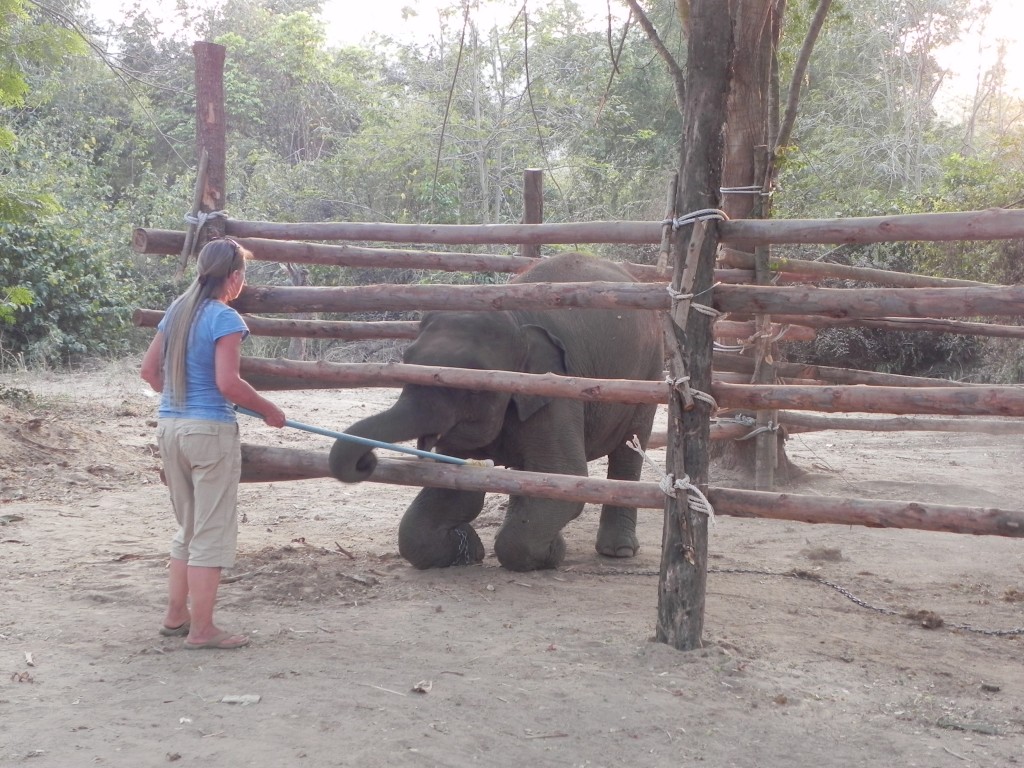
    Before watching the videos of Jon’s training sessions, I suggest that you view the tutorial a couple of times. Then watch Jon’s first training session and see if you can identify what body parts Jon is learning. Notice that when Jon becomes frustrated he walks away, but returns almost immediately to try again.
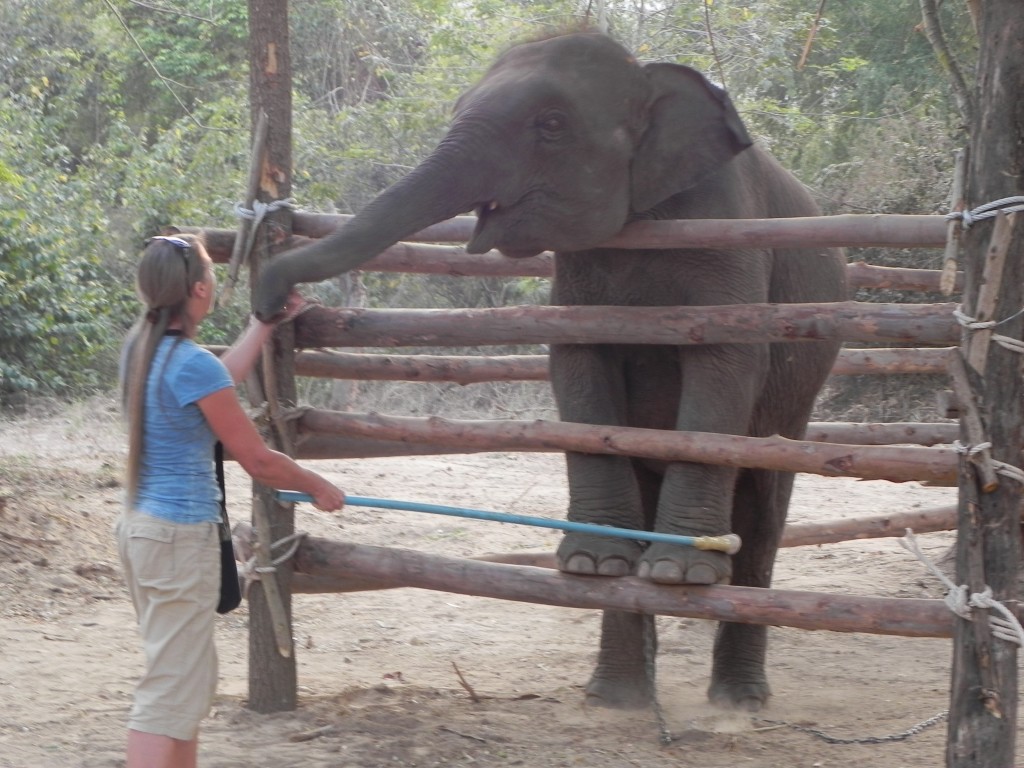
    Positive Reinforcement Target Training gives the elephant the freedom to walk away, take a moment to reflect on what is happening and return when he is ready to try again. Walking away reduces frustration and increases the elephant’s willingness to participate.

    You will also notice in the video that Jon offers behaviors–kneel and lie down. This is common in initial training sessions. Many times the elephant will offer what s/he already knows before starting to “problem solve” and figure out what the trainer is trying to teach.
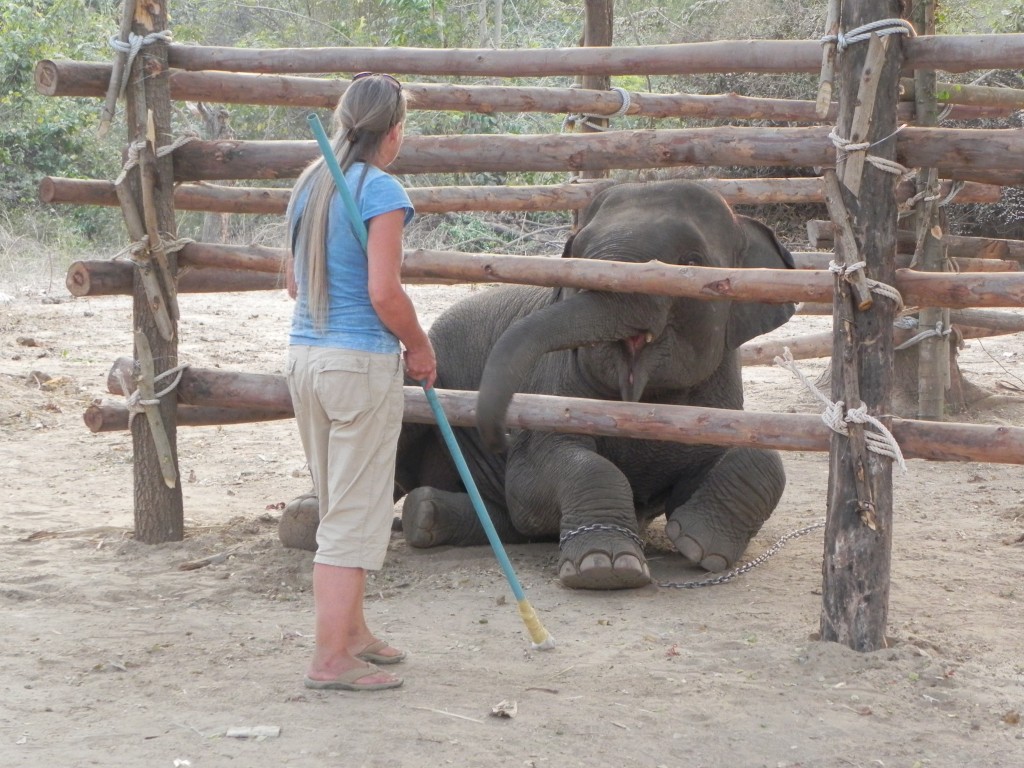
    Learning to think for themselves is the first thing the elephants learn. After that, training is a breeze.
  • Wildlife SOS – INDIA

    Wildlife SOS – INDIA

    During this trip to India I basically sequestered myself in Bannerghatta, singularly focused on the care center project. As my pending departure loomed I realized that I had failed to visit other projects. There really is so much to see—elephant welfare-wise—in India, I was kicking myself for not setting aside time to further my education.

    Literally days before my visa was to expire I received an email invitation from Kertick and Geeta of Wildlife SOS to visit their facilities in Agra. True to my nature, I hesitated at first — not because I did not want to visit their bear and elephant facilities but because my flight was already booked and I did not want to pay the flight change fee.

    Fortunately, my flight from Bangalore to Kathmandu had a plane change in Delhi, the airport I needed to fly into for Wildlife SOS. I was able to postpone the second leg of the flight, giving me almost three days to spend with the Wildlife SOS staff at both their bear and elephant facilities.

    The visit would have been perfect if Kertick and Geeta were in the country but they were in California, presenting at the PAWS elephant summit and other venues. In their absence, their expert staff took care of all arrangements, which made my visit very comfortable. I hope Geeta, Ketrick and I will meet in the next few weeks, as they plan to come to Nepal to observe my work in Sauraha.

    The work Geeta, Kertick and staff have done to rescue and rehabilitate dancing bears is nothing short of miraculous. The facilities are well designed, with expansive yards, spotless night houses and a dedicated and knowledgeable team of caregivers and veterinarians.

    I was in the education hut sitting on a couch viewing one of many informative videos about dancing bears and the plight of other Indian wildlife, when something—light as a feather—touched my shoulder. I assumed it was an insect and reached up to gently brush it away without taking my eyes off the screen.

    Without a sound or advance warning more than the gentle shoulder tap that I mistook for an insect, something much heavier than an insect, maybe four or five pounds, warm and hairy, jumped onto my head. I froze and whatever-it-was froze. I had no idea what it was. It was completely silent and warm, grasping my hair in what felt like many tiny hands.

    Not being able to see what was perched on my head was indeed unnerving, and no one else seemed to be around. I trusted that I would not have been put into this room alone with anything dangerous so I considered my options. Yelling for assistance was out. Reaching up to remove my head ornament seemed risky. And waiting for someone to come to my rescue seemed unrealistic.

    My decision was to slowly reach towards my head to see what would happen. The “thing” leapt from my head across the room to a chair and then back to my head again. Her movement was quick but as she was flying through the air getting ready to land on my head again I saw the “thing” was a young capuchin monkey.

    Even though I am comfortable with captive wild animals I respect them by keeping my distance because I feel interaction is not in their best interest. But this little creature obviously felt differently. She leap frogged from her chair to my head a couple of times and then remained perched on my head. With no staff in sight I realized I would need to deal with this little bundle of curious energy on my own. I was not opposed, I just did not want to do anything wrong, not having been around a primate before.

    Gently untangling my hair from her tiny fingers she allowed me to remove her from my head and lower her to the couch. We looked at each other—too cute is all I can say—as she ever so confidently climbed into my lap, took hold of my hand and placed it on her belly. There was no misunderstanding this gesture — she wanted a tummy rub.

    I admit to being in heaven while at the same time wondering how I could justify having a monkey in my lap. In the end I did not try to justify it, I simply accepted the experience as the gift it was and enjoyed every second she remained in my lap. A few minutes later one of the resident Great Dane rescues showed up, sending her dashing from the room.

    Escorted by staff veterinarians we first toured the bear facilities and then drove a short distance to the temporary elephant facility. Set up on five or six acres of land, the elephant facility is a good start for the rescued elephants. The facility is well designed, with stables for shade and nighttime, sand piles to avoid hard surfaces, a steel corral stable for bulls and a circular concrete pool that is the high point of everybody’s day.

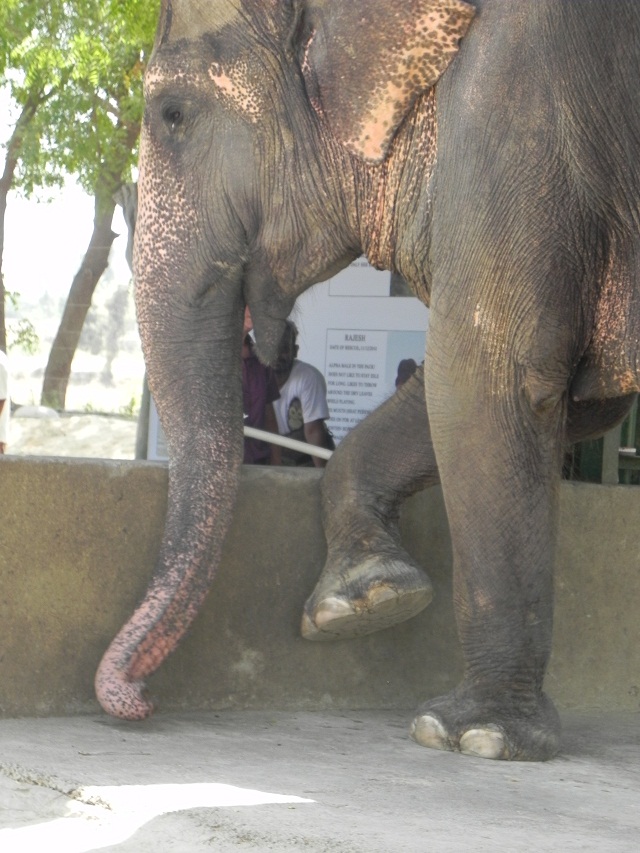
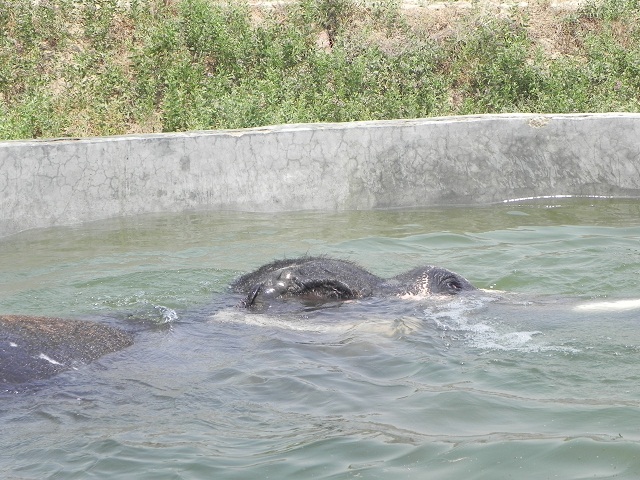
    It was amusing to watch Rajesh, a beautiful full-grown bull with massive tusks, submerged for hours, gently bobbing around in the pool.

    I did a little foot care and target training to give the vets, mahouts and elephants an idea of what was to come in the future. The mahouts have already changed how they work with the elephants to a great degree. The harsh tone and demanding commands are still used but the ankus and infliction of pain are not. I could see the mahouts are being won over to other ways of working with their elephants — it was exciting to see the progress they have already made.

    Kartick and Geeta have plans to move the elephants to a very large tract of land. I have decided to accept their invitation to be involved in this project and recommend that you visit their site and support their work for rescued bears and elephants.


  • Scouting Around

    While scouting the land today I found elephant boluses (dung) scattered along a granite hilltop on the care center property. The granite is spectacular, with sheered layers and huge natural depressions. During monsoon season rainwater fills the many depressions, creating a series of watering holes, some deep enough for an elephant to wallow in. Judging from the age of the dung, monsoon season is probably when the elephant was here.

    While exploring another area of the elephant-lake shoreline I found footprints from a single elephant… Where he exited the water is quite muddy so his footprints were well preserved. They weren’t recent but they were BIG.

    I have been thinking a lot about the wild elephants that use this land. Their corridors must be reestablished and protected or wild elephants will not survive. I would trash my plans for a captive elephant care center if giving this land to the wild elephants would make a difference, but the reality is that 200 acres will not fix the problem.

    Guarding the national forest from further human invasion is an important step toward fixing the problem. One of the reasons Vishnu bought this land was to act as a steward for wild elephant land . He wanted to stop human encroachment, at least in this area. If more landowners took this perspective, things could turn around for elephants. They need land, connecting corridors and stewards willing to protect the land.

    The care center borders the national forest. Years back, in an effort to keep wild elephants from leaving the forest to raid crops, the Forest Department erected miles of stone walls. Unfortunately, with villagers growing crops just feet from the walls, the temptation is too great. Elephants—usually a lone bull— pushes over a section of the wall. It is an easy task for a full-grown male, who lowers his massive head and pushes until a section of the wall topples, creating an opening. After seeing a couple of these breaches in the walls, I am growing ever more thankful for my Indian collaborators.

    Vishnu has lived on this land for years, accumulating quite a bit of knowledge about wild elephants. He is required to know the species because his company is one that installs electric fences designed to keep wild elephants and villagers separate. I recently learned that he installed the fencing at Corbett National Park. Last year, while visiting with Christy Williams, I had the opportunity to observe the effectiveness of Vishnu’s fencing enclosing the compound where I was staying, smack in the middle of the forest. Late one night I noticed a juvenile bull standing close to the fence. He stood there for quite some time, several minutes for sure. He appeared to be contemplating something, perhaps the likelihood of being able to get through the fence. Or maybe he was just as curious about us as we were of him. Either way, the fence held him out.

    After a few more days of scouting, I believe we’ll be able to decide on the location of the perimeter fencing. This is a very exciting time. I do miss the presence of elephants but I realize they would be a huge distraction. I need to stay focused on the project. The elephants will be here soon enough!

  • Ngo-Hok, aka Jon, at Elephant’s World

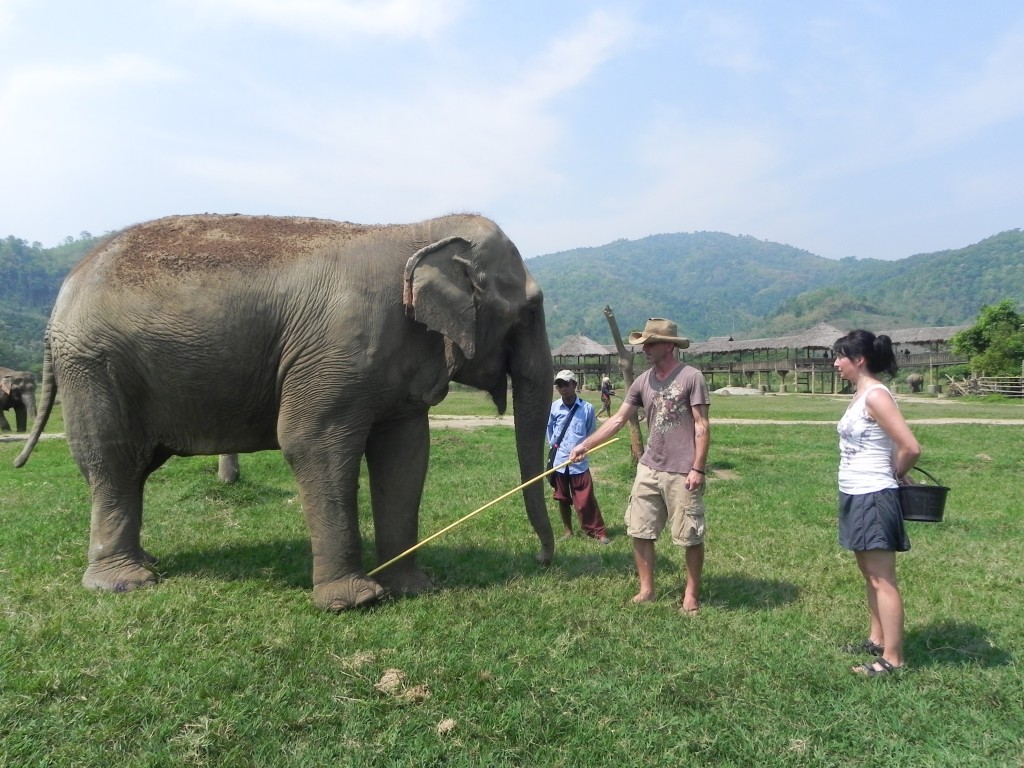
    Elephant’s World was one of the locations where I was fortunate to introduce positive reinforcement target training. I will return there to continue training, and to consult on facility development and elephant training and care.

    During my last visit, Elephant’s World owner agreed to the idea of constructing a large fenced-in area so the elephants can be kept off chains. Fundraising is underway and hopefully by the time I return to Thailand in the fall, the fence will be in place.

    Ngo-Hok, aka Jon, the young male elephant with whom I worked, has a history of aggression. Personally, I believe he was emotionally scarred by the traditional brutal training he received prior to coming to Elephant’s World. From the first session he responded enthusiastically to positive reinforcement target training. I was at Elephant’s World for only about a week, but during that time Ngo-Hok/Jon excelled at demonstrating to the mahouts that he can learn and will respond favorably, at least to this technique of training.

    Unfortunately, the language barrier was a challenge. The mahouts tried to understand what I was telling them but they simply could not. Even though Ngo-Hok/Jon was brilliant during his target training sessions, the mahouts failed to continue the training after I left.

    The staff needs further training to grasp the concept and develop the technique of this training which is so foreign to them. I look forward to returning to Elephant’s World to continue the training. This time I will recruit a translator, which is the only way to ensure that the mahouts understand the philosophy and learn the technique.

    Following is an interview that an Elephant’s World volunteer did with Piza, Ngo-Hok/Jon’s mahout. The volunteer posed the questions as if I had asked them.

    Q: How is Ngo-Hok/Jon doing?

    A: He is doing better since the last time you saw him. Sometimes he is stubborn, and then I cannot climb on this back. He is more often around the other elephants, during swimming and eating, but I have to stay close to him because he is playful and annoys the older female.

    He is now very close with Rom Sai, the full-grown tusker, like a father and son. He has escaped a couple of times in the last months but he comes back to stay with Rom Sai. When eating together, he likes to take food from the other elephants. Only Rom Sai will allow this. I believe the other elephants will hit him if I am not there.

    Last evening I didn’t take him to the forest because he did not let me get on his back earlier in the day — he was stubborn. In this way I am trying to teach him. Also, after he is stubborn he will try to escape when I take him out of the forest. I am trying to teach him that if he obeys and allows me on his back, he will be rewarded with a trip to the forest.

    Ngo-Hok/Jon is growing; he is now taller than me. In one month he has gained about 10 kgs. He now weighs close to 800 kgs and eats about 80 kgs a day.

     Q: Do you think Ngo-Hok/Jon can stay with the other elephants?

    A: He can stay with other elephants. He can stay close to Rom Sai, who will protect him. For now he can stay with the females as well because they are older women and he is still young. But as he gets older and new female elephants come in, it will be a problem.

    Q: How do you feel around Ngo-Hok/Jon since he tried to hurt you?

    A: I feel better around him now, but have to be careful all the time. After the accident I was a little bit afraid, but not anymore. When I am with him anyone can come close, but if I am not there, people cannot come close. If I have one day off, Jon is put on hobbles because the other mahouts cannot deal with him. Right now Ngo-Hok/Jon only listens to me.

    Q: Is there anything else you’d like to tell Carol?

    A: I think she should come again and see Ngo-Hok/Jon for herself.

  • a shared moment of silence in his honor

    I read a very disturbing story about an elephant who was stabbed to death in Vietnam. The photos are so gruesome I cannot post them. This 38-year-old tusker spent his life in captivity entertaining tourists. He was attacked twice last year and it took months to nurse him back to health. This time, the hairs on his tail cost him his life.

    I usually do not post such deeply disturbing stories but I feel a responsibility to this elephant to not let his suffering be in vain. The degree to which humans can harm another being is something I simply cannot comprehend. This elephant was held in captivity to feed tourism, the key component in the abuse and suffering of captive elephants. As long as tourists participate in elephant safaris, shows, rides, photo ops, feeding and petting, elephants will continue to be abused and killed.

    While I was in Nepal this past March/April providing foot care, Dr. Griry, the head government veterinarian, trimmed the tail hairs from elephants to ensure they would not be attacked. I was horrified by stories about attackers in Nepal hacking off the end of an elephant tail to collect the hairs.

    Last update 24/04/2011 04:51:00 PM (GMT+7)

    Da Lat: Elephant stabbed to death

    VietNamNet Bridge – A 38 year old male elephant, named Beckham, was killed in the Tuyen Lam Lake Tourism Area in the resort city of Da Lat on April 24.

    The elephant was found dead near Tuyen Lam forest with two cuts on his two hind legs. It is said that the elephant died because of losing blood from the two cuts. Its ivory and tail however were not removed.

    Phan Thi Hoa, director of the Nam Qua Ecological Tourism Co., Ltd, which owns the elephant, said that the elephant was still healthy on April 23. Its corpse was detected by elephant keepers on the morning of April 24, around 1km from the Tuyen Lam tourist site.

    The elephant was raised by Nam Qua Company to serve tourists in the Tuyen Lam tourist site.

    Before the lunar New Year, this elephant was attacked twice and injured seriously, but fortunately survived the elephant tusk and tail hair hunters.

    “We had to hire a veterinary doctor to take care of him for weeks. It had just recovered four months before it was killed,” said Hoa.

    In August 2010, some elephants in Da Lat’s tourist sites were attacked to take tail hairs. It is said that elephant tail hairs are “sacred objects”, so elephants are often attacked.

    Ninh Phan

    Last update 26/04/2011 03:49:49 PM (GMT+7)

    Da Lat’s elephant corpse is burned

    VietNamNet Bridge – The corpse of the elephant which was killed in the Central Highland city of Da Lat several days ago was burned on April 25, under the witness of local forest protection agency and relevant agencies.

    Ten young staff members at the Tuyen Lam tourist site were mobilized to burn the dead elephant. The task was estimated to take place in one day.

    The entire elephant corpse, including tale and ivory, was burnt by petrol and wood.

    The tourist site’s manager, Anh Vu, said that the elephant, named after British football star Beckham, was dead for one day, but the smell was very bad, so it must be burned urgently.

    Beckham had been bred at the tourist site for a long time and it was the most beautiful elephant in Da Lat. The elephant had both tusks and tail, while other elephants in Da Lat have lost these parts. Beckham was very obedient, gentle and friendly.

    The elephant was around 4 tons, 38 years old. It was bought from the Dak Lak province in 2000, at the price of VND700 million (around US$40,000). Its job was serving tourists at the Tuyen Lam tourist site.

    Beckham was found dead in the forest around 3km from the Tuyen Lam tourist site on April 24, next to pools of blood. The elephant was stabbed and its hind leg tendons were cut off. However, its tusks and tail were not chopped. An axe was found near the elephant corpse.

    Last year the elephant was attacked twice, suffering 38 wounds, and it took him several months to treat the wounds.

    Local police are investigating the case. Some elephant keepers said that the murderer might be familiar to the elephant.

    According to the Da Lat Forest Protection Bureau, there are five elephants at tourist sites in Da Lat now.

    The Central Highland province of Dak Lak currently has the highest number of tamed elephants in Vietnam. In the 1980s, the province had more than 500 elephants, but the current number is only 54.

  • checking in at ENP

    checking in at ENP

    My return flight to Los Angeles leaves from Bangkok, which was the perfect excuse to go back to Elephant Nature Park one more time to see the progress made by Chang Yim and Karl.

    Yim never ceases to impress me. He has made yet another transition from Karl to his new mahout, Lai. Karl has worked diligently over the past many weeks training Lai, and Yim has been a real trouper. There is no doubt in my mind that Chang Yim will miss the special relationship between him and Karl, but Yim has a bigger mission. He has the opportunity to teach a “traditional” mahout a different way, a more humane and gentler way to manage him and his family members. This move from Karl to Lai is actually quite monumental in the big picture…Yim is the catalyst for change. I am so proud to know him.

    In addition to satisfying my curiosity about Yim’s progress, my return to ENP was to give Karl some pointers on training the elephants to place their leg on the trimming stool recently built for back foot trims. Once the elephants are trained, I will be able to return and finish the foot care clinic I started.

    Mae Tee and Mae Kham Geao were our first students. The initial hurdle was getting the ladies to start thinking for themselves, no easy task for elephants who for decades had been conditioned not to think. The training was slow and at times appeared to be at a standstill, but, I could see the wheels slowly beginning to turn in their heads. Patience was the key.

    After two days, my time at the park was up. Karl was well on his way to conditioning Mae Tee and Mae Kham Geao to voluntarily lift their back legs, a requirement in order to slide a trimming stood underneath for support. I felt torn leaving—I always do—but I had confidence that Karl would do just fine.

    Today, a little before four, I received a call from Karl. At first I was apprehensive because Faa Mai is experiencing some unidentified health issue. But the news was all good: Faa Mai seems a little better. But the reason Karl had called was not to update me on Faa Mai, it was to tell me that Mae Tee and Mae Kham Geao got it! They were lifting their back legs off the ground and suspending them in the air when asked. The both of them!

    What do you bet they talked about it over the past two days? It comes as no surprise that both ladies, dear friends who spend all their time together, figured out what Karl wanted in the same training session. Karl was so pleased, and WOW — what can I say. I am so proud of everyone involved in this work: Karl, Dam (the Maes’ mahout), Jody and Sophie (treat givers) and especially Maes Tee and Kham Geao, the ladies of the hour. I sure wish I could have been there to share in the cheers and congratulations showered on the ladies, but I was there in spirit. Planting the seed and seeing it grow, one World, one elephant at a time — in this case, two elephants at a time!

  • Seeds of Change

    Seeds of Change

    April 13

    My work in Sauraha has come to an end, at least for the time being.  Seeds of change have been planted. From the looks of it, some seeds are already growing, quietly shifting the soil around their sprouting roots. Experiencing the fruits of my labor so instantaneously fills me with hope.

    Yesterday when Kiran and I arrived for Bhadra’s morning session we were told that Ramji, his mahout, was off making preparations for the New Year’s Day celebration. I jumped at the chance to work with Bhadra in Ramji’s absence.  But my excitement was quickly doused when Bhadra made it perfectly clear that he would work with me but under protest.

    After completing each request Bhadra would do a mini mock lunge from behind the protective barrier. It seemed that he was clearly bothered about something to do with me. He was responding but being snotty. I have seen this type of behavior before when training a new mahout who struggles to keep pace with an advanced elephant student. I did not make that analogy until sometime later.

    The next day, the motivation behind Bhadra’s behavior became apparent. In our absence, Ramji had risen to a challenge from Kiran to prove his skill with Bhadra within three months. The ultimate goal: to show everyone how far he could take Bhadra with positive reinforcement training.

    Ramji proved his skills beyond question when he surprised us by calling Bhadra from the protection of the corral and proceeded to ask him to present his feet and ears, move to the side, back up and put his head down. I was stunned. They were fabulous. Ramji, all cool, calm, and collected, Bhadra listening intently and responding to each verbal cue. I wish you could have been there to see it for yourself, but I did catch it on video. This type of breakthrough must be documented in order for others to believe.

    Needless to say, Kiran was pleasantly surprised at the immediate progress in less than a week!  Ramji obviously took the challenge seriously, resulting in a display that had me grinning from ear to ear, joyful with disbelief.

    Ramji earned much deserved respect today, and Bhadra…well, he already has my heart. He has now joined the ranks of the “MIGHTY TYKES,” the young elephants in Thailand and now Nepal participating in this important case study of positive reinforcement training. These youngsters are the hope of the future: what they teach us and their mahouts will shape elephant training of the future. They are demonstrating how positive reinforcement training can be used with captive elephants in a hands-on working situation.  We owe them and their mahouts a great debt of gratitude.

    Kiran knew instinctively that witnessing Bhadra and Ramji’s incredible accomplishments would make my day, my last in Sauraha. It was wonderful to see how proud he was. Kiran has been an invaluable asset throughout the training process. I doubt he realizes the role he has played in this cultural shift of mahout attitudes, which has the potential to change the future for captive elephants. The future is bright indeed.

    I left Sauraha today with a heavy heart, heavy with the joy of knowing that we have planted a seed. I for one cannot wait to see how it grows.

  • a fiery red head

    a fiery red head

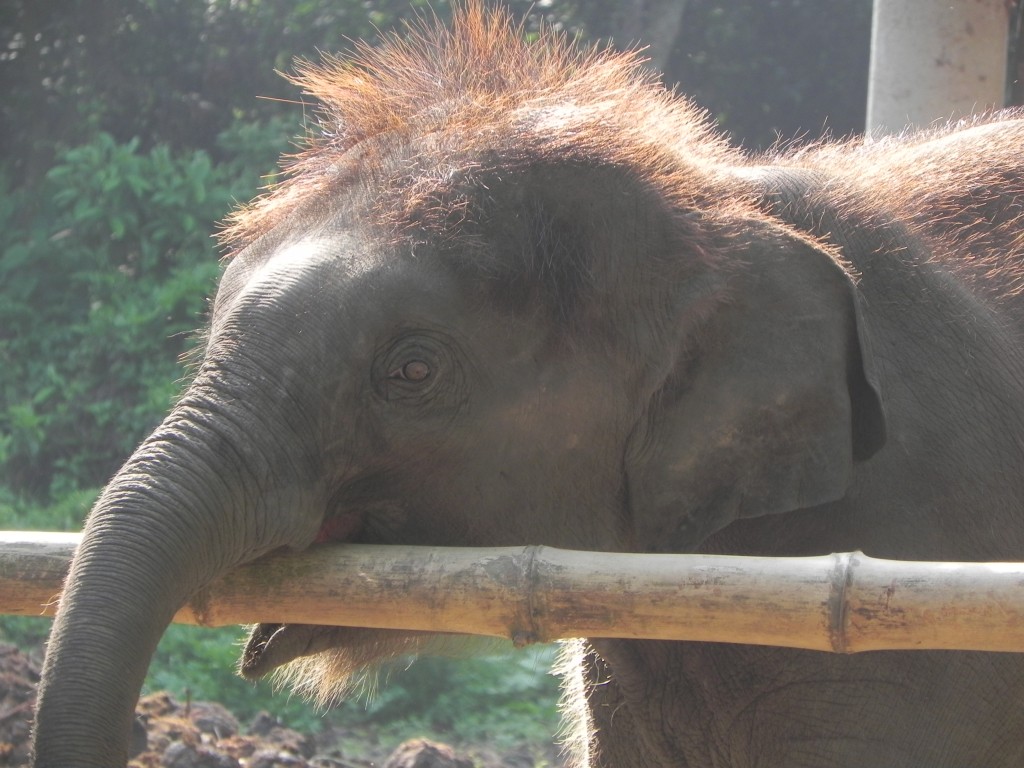
    I’ve got a new heartthrob. He is smart, dark and seriously handsome, with a full head of fiery red hair! Admittedly on the young side, Bhadra still lives with his mom and spends the entire day gallivanting in the Chitwan National Forest.

    We met two days ago and have spent only limited time together but let me tell you this little boy is smart. He is my latest ele-student, one year old and full of spunk and sweetness. There goes another piece of my heart!

    Bhadra lives at a private resort on the border of Chitwan National Park with his mother, his sister and other non-related family. The resort has been closed for a couple of years, making life that much easier on this elephant family. No tourist rides, just lazy days in the forest and short training sessions, when Bhadra gets to demonstrate to his mahouts what elephants are capable of when trained through positive reinforcement.

    The mahouts have been fabulous, very interested and engaged. Bhadra has only had four 15-minute sessions over the past two days and now responds to agot (come here) and ra (stand still), and presents his pow (foot), kan (ear) and thuk mud (head) when asked. Things were a little slow getting started because Bhadra surprised me by not liking bananas or apples. His mahouts knew exactly what he would like — molasses. One taste of the favored treat and he was all ears, head and feet!

    What a blessing it has been to work with him. Hopefully together we have planted a seed with these young mahouts.