Tag: chains

  • National Geographic Features EAI

    National Geographic Features EAI

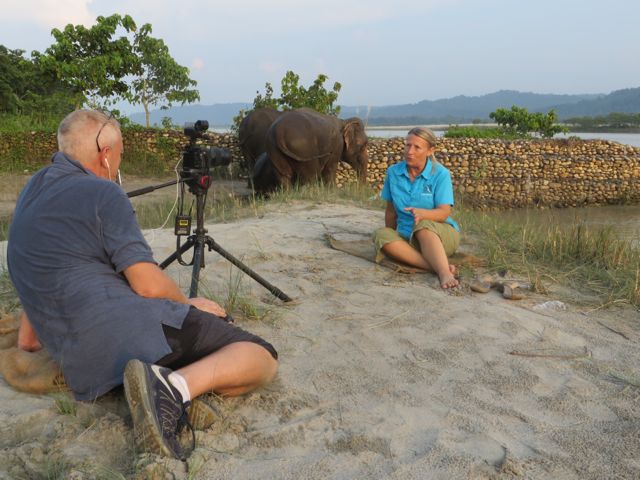
    img_8428_carol-interviewed-by-nat-geo_med

    A new feature in National Geographic, “Captive Elephants Freed From a Life in Chains highlights EAI’s work in Nepal. Carol tells the magazine that “getting [the elephants] ‘chain-free and pain free’ is a start toward improving the lives of captive elephants across Asia.’”

    Read the story and watch the video.

  • Unchained: New Documentary on EAI

    Unchained: New Documentary on EAI

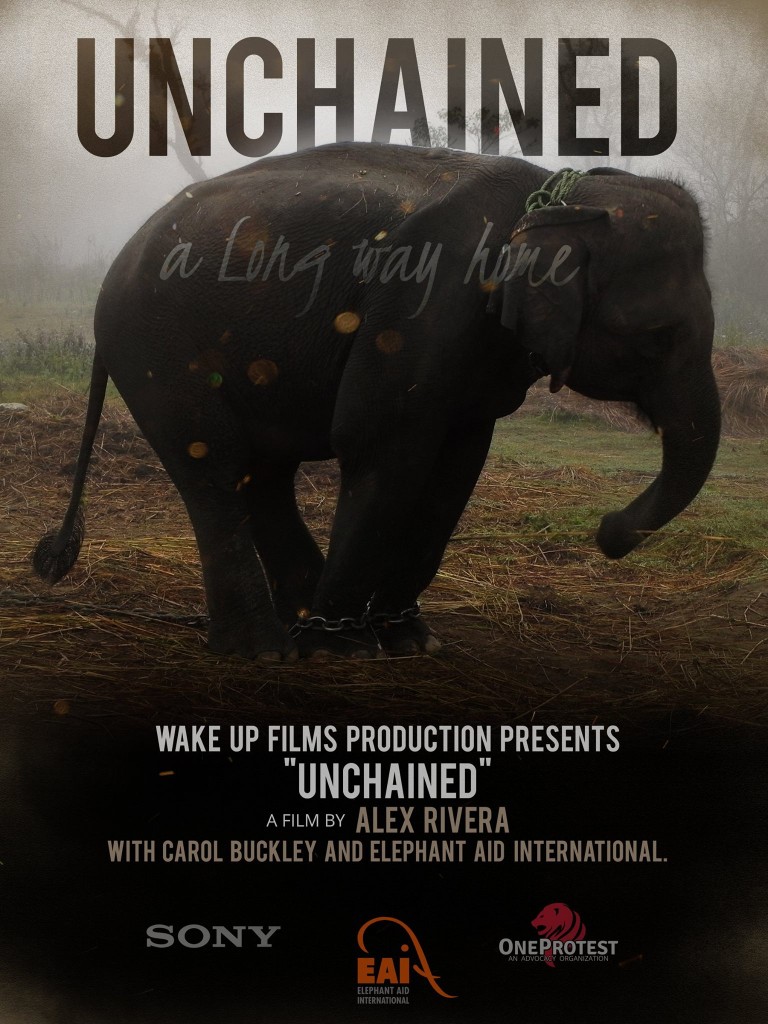
    unchained poster

    A new documentary on the work of Carol Buckley and EAI improving elephant welfare throughout Asia has been selected for the 15th annual Wild & Scenic Film Festival.

    unchained_wild-scenic-festival

    “Unchained” follows Carol and her team in their quest to enhance captive elephant welfare in Nepal. Using gentle persuasion and showing by example that there is a better way to treat elephants in captivity, Carol takes a phased, pragmatic approach to changing attitudes that relies on winning the buy-in of owners and mahouts (elephant handlers).

    Watch the trailer.

    Learn more from the Unchained Facebook page.

  • Elephant Slaves

    Elephant Slaves

    Another predawn awakening, like a recurring dream.

    I’m woken abruptly from a deep sleep by the heart wrenching cries of a suffering elephant. All I can do is swing open my window and yell into the pitch black night, “Hatti la na pita!” (Don’t hit the elephant!). My plea echoes through the darkness, landing on deaf ears.

    It is not yet dawn, the time when most elephants savor their sleep. My heart clinches when I hear the too familiar crack of a bamboo stick across the hide of an elephant slave.

    I try to block the sound and associated pain from my ears but I cannot. The reality and degree of suffering experienced by captive-held elephants in Chitwan National Park is unconscionable.

    If it were not for a drive to improve the lives of the elephants used in Chitwan National Park, admittedly I would never come back to this place. The air is perpetually thick with the sights and sounds of elephant suffering.

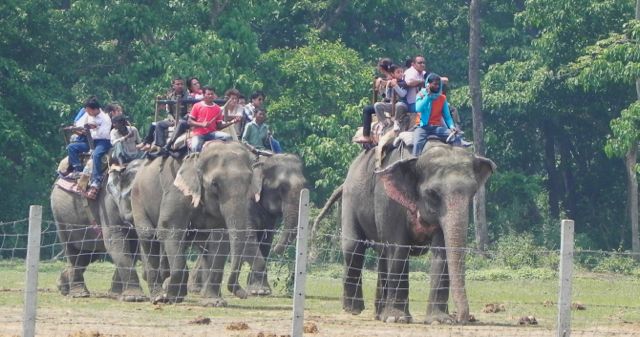
    tourist safari

    The apathy among tourists and owners alike is mind-boggling. Both the mahouts and the elephants in their care are merely money-making machines, no more.

    The elephants’ day begins before sunrise and ends after most tourists are in their rooms preparing for sleep.

    Before the rooster crows, the chained elephants are roused from their slumber and forced by threat of physical punishment to eat, drink and be readied for safari rides for the hundreds of tourists who visit Chitwan National park every day of the year.

    The elephants’ food consists of cuchi—rice wrapped in mildewed, dehydrated rice hay—so unpalatable they must be beaten to eat it. The mahouts will strike them repeatedly with bamboo sticks until they have eaten.

    Mel Kali—the lucky one

    Mel Kali

    In the far distance I hear the familiar trumpet call of Mel Kali. She is one of the lucky elephants in Nepal.

    Mel Kali was retired two years ago. She is the only retired elephant in Nepal. As a result of her advanced age—72—and near-death experience two years ago, Mel Kali is finally allowed to live a pseudo-elephant life, free to wander the national park free of riders and the continual domination of her mahouts.

    Abuse woven into the fabric

    Many tourists come to Chitwan National Park for elephant entertainment, but I come because of the elephant suffering. To experience their pain and not make an effort to help seems unconscionable.

    It is not possible for me to return to my relatively cushy life in the US and forget the elephants’ pain. Their cries tear at my heart. Their incarceration and treatment boggle my mind. It seems like a dream, but it is reality for the elephants 24/7, 365 days a year, for their entire lives. It is an elephant slave camp.

    When I am in Nepal it is my policy to stay only at guest houses that do not own an elephant. It is my way of not contributing to the exploitation and abuse.

    But it is impossible to avoid the abuse completely; it is woven into the fabric of Chitwan National Park.

    At all hours of the morning and evening, the haunting cries of elephants echo across the landscape of dozens of tourist hotels. They live in filthy stables, experience continual harassment and beatings and work from sun-up to sundown carrying heavy loads of riders seeking a fun day in the national park. I cannot help but absorb the feelings of despair and pain the elephants experience. How can the tourists, elephant owners, conservation organizations and locals be oblivious to such obvious suffering? What has become of the human race that we are so insensitive to the cries of others?

    Progress is slow but steady

    Hatti la na pita—do not hit the elephant¬—were the first words I learned after arriving in Nepal five years ago. A phase lost on most. But now, all these years later, the mahouts are familiar with my request. Although they do not comprehend why I ask that they not hit their elephants, out of respect for my work, most refrain from hitting their elephant in my presence.

    But seeing the abuse is not the only way to sense an elephant’s suffering. I am now hyper-sensitive to the sharp crack of the bamboo stick, the body language of an abused elephant, the demanding guttural commands of the mahouts and the oppressive energy in the elephant slave camps.

    After spending more than two dozen months in Nepal working closely with our Nepali partners to improve elephant welfare, I am discouraged by the slow process.

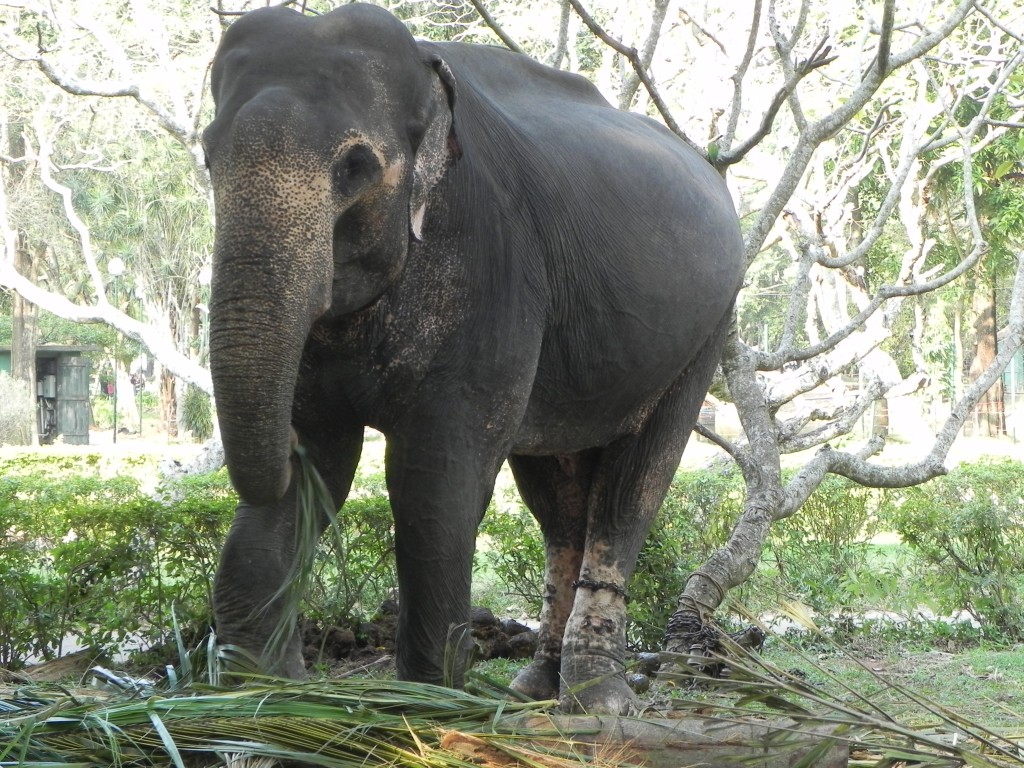
    But I must remember that we have succeeded in influencing many mahouts to treat their elephants more kindly; educated private and government owners alike about the welfare needs of elephants; and, most recently, freed 56 captive-held elephants from chains by creating chain-free corrals. The lives of these elephants are seriously improved.

    And we will not stop until all elephants in Nepal are treated and fed properly, and are living chain-free.

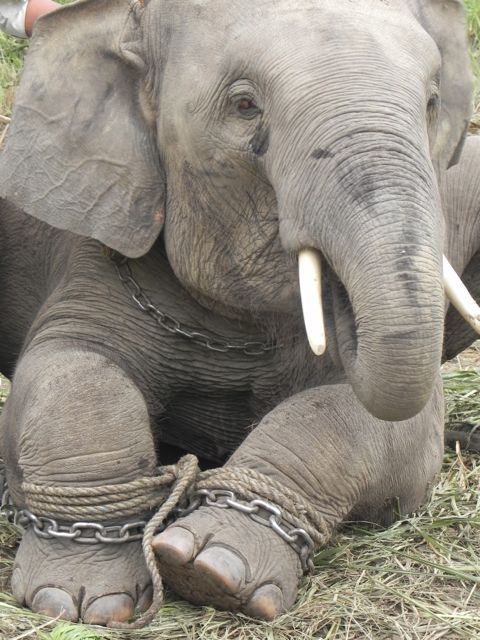
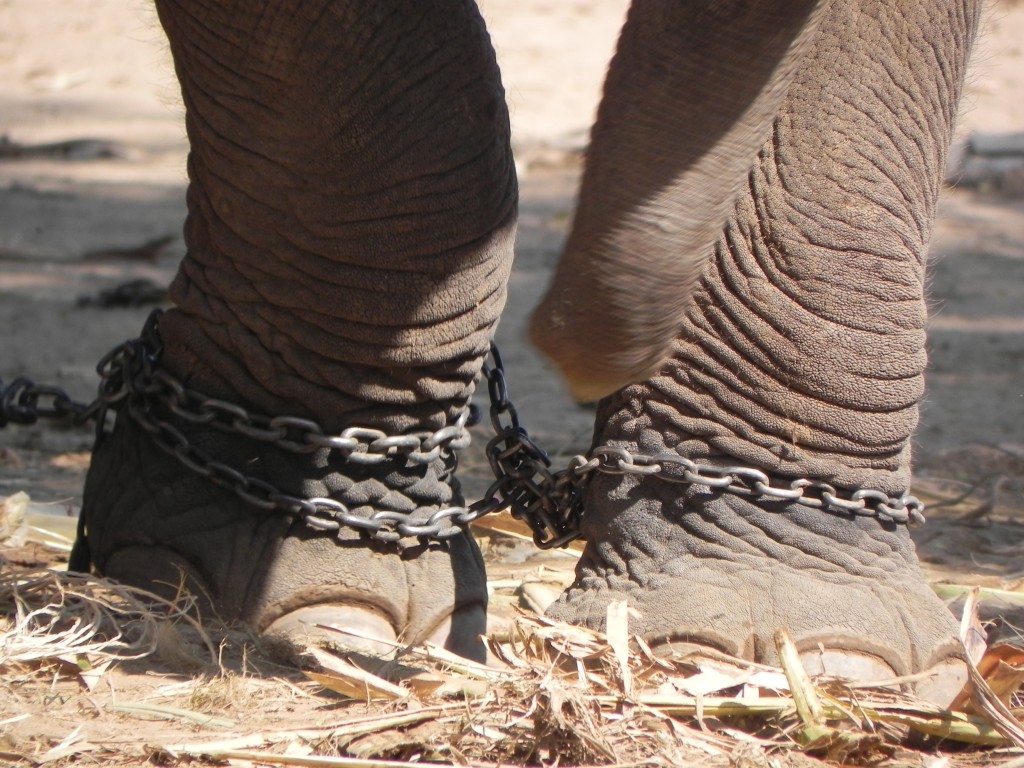
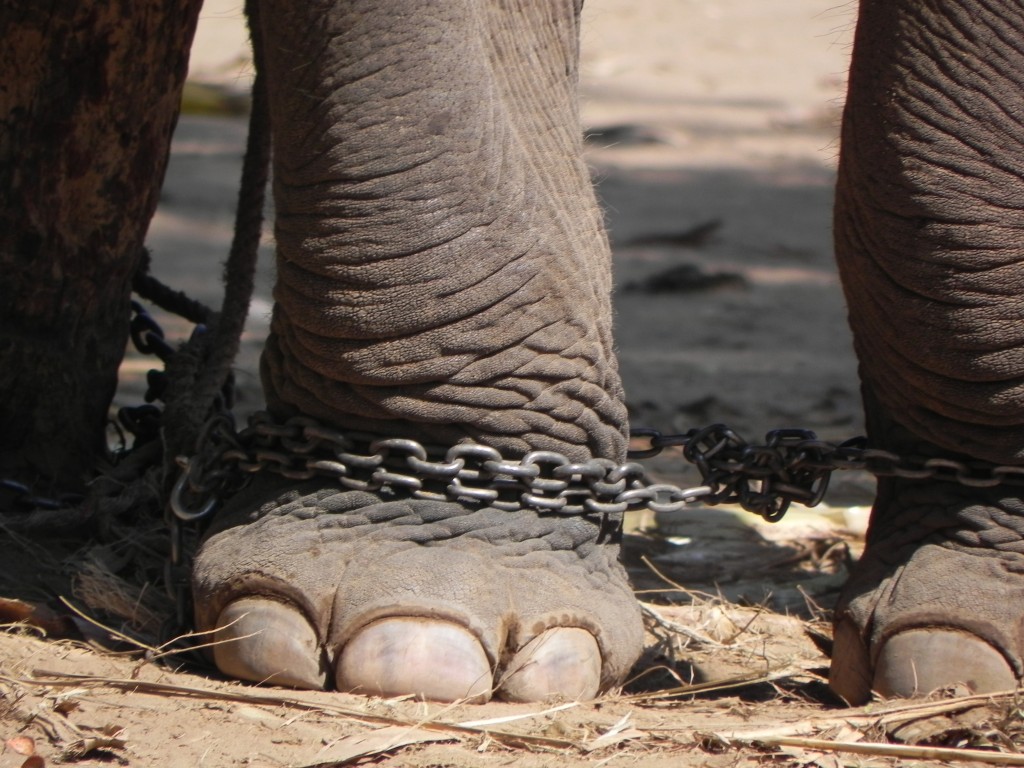
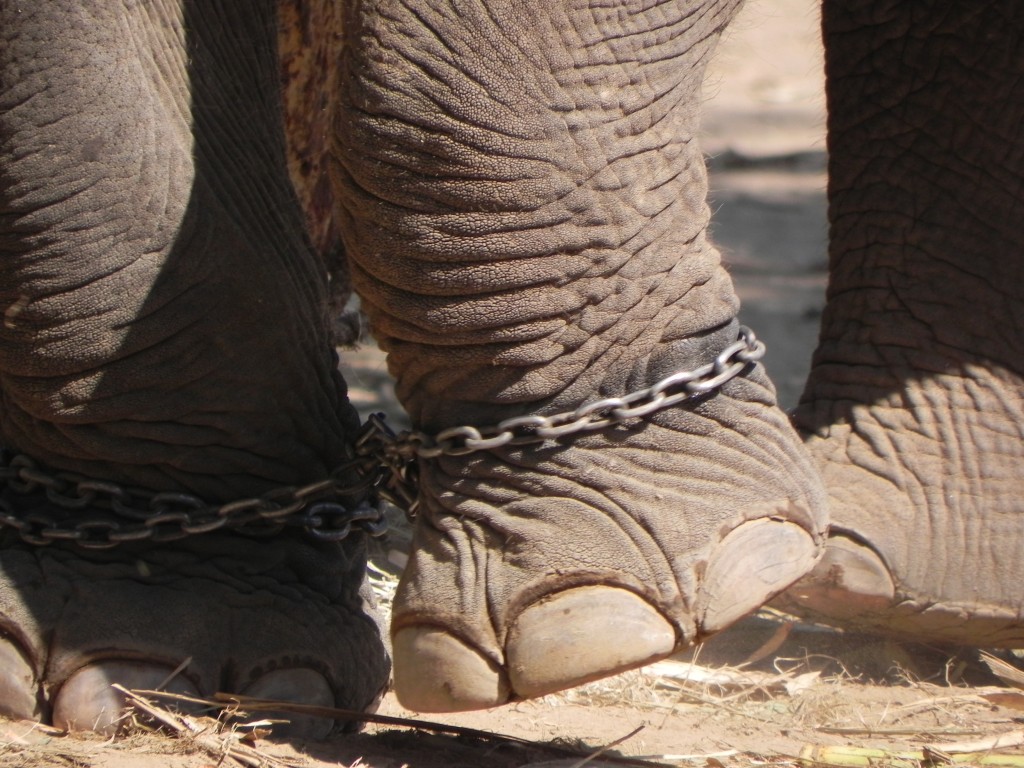
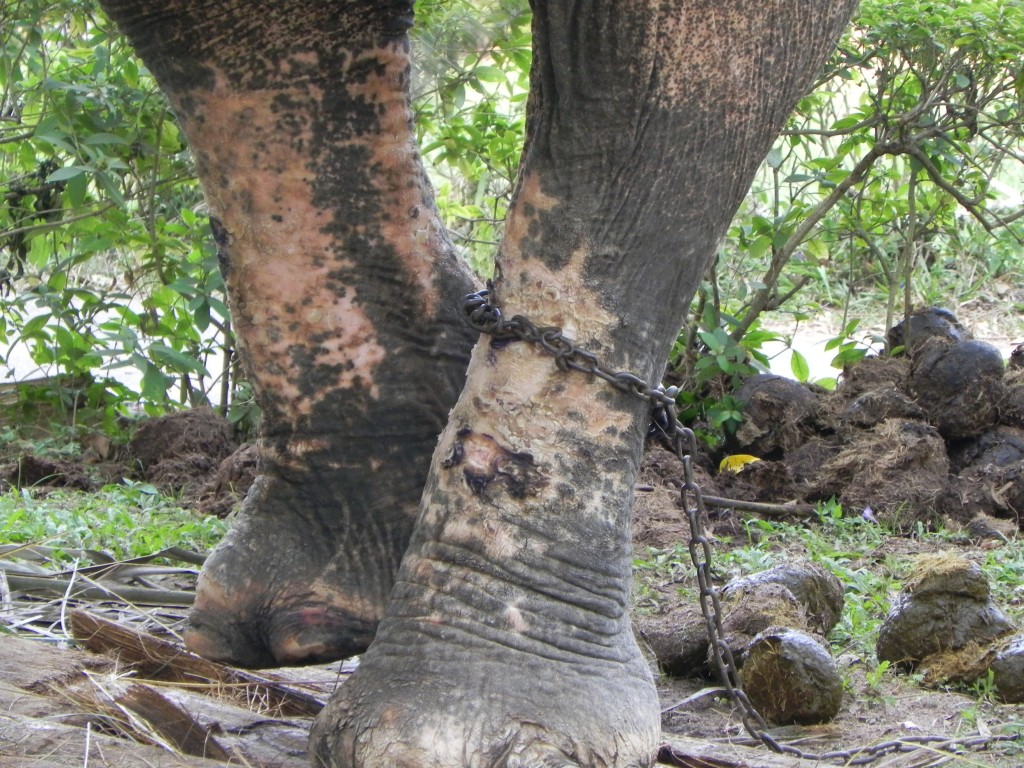
    close-up chained ele

  • Why Does That Elephant Have A Chain Around His Neck?

    Why Does That Elephant Have A Chain Around His Neck?

    For the past few years, most of my time and energy has been devoted to freeing captive held elephants from chains.

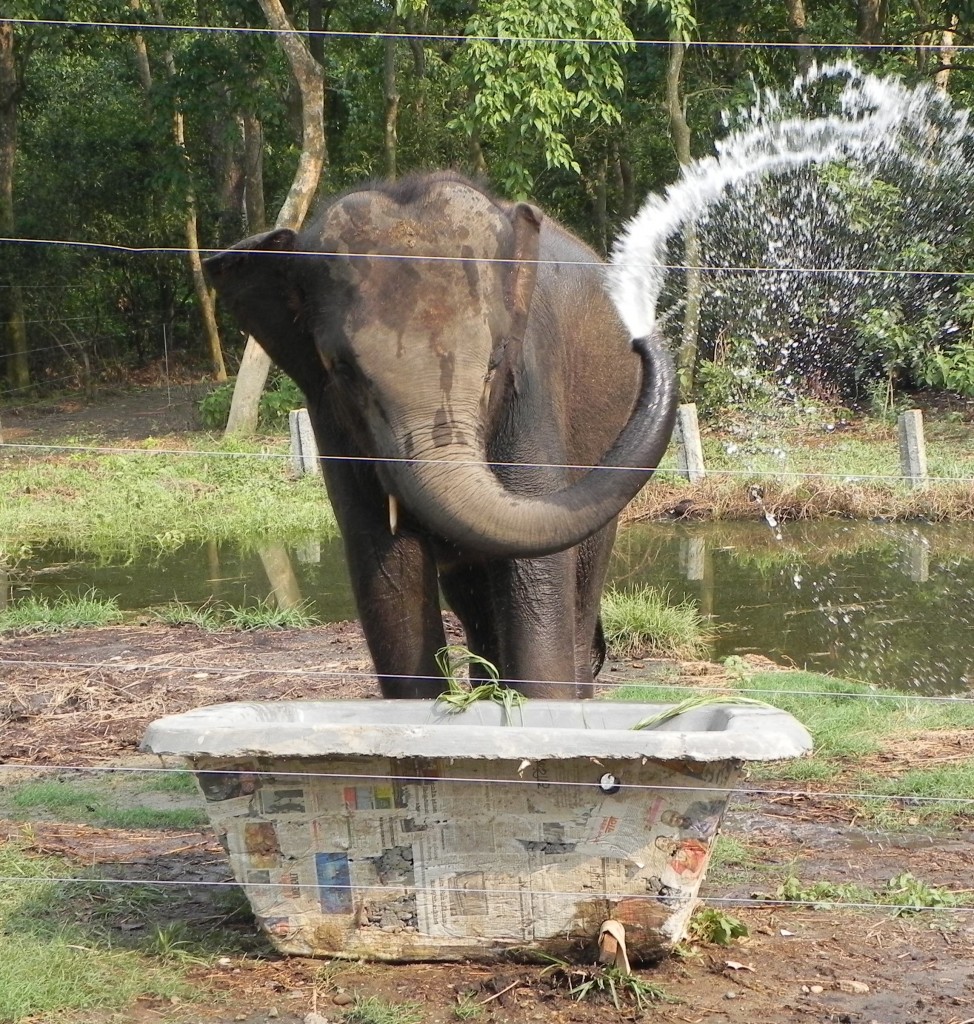
    Working alongside Nepali partners, we have created 37 chain free corrals, in 15 different elephant facilities. Before years end, we will add another five chain free corrals in two facilities in Thailand and a huge 100 acre habitat in India.

    Chain Free Means Pain Free has caught on.

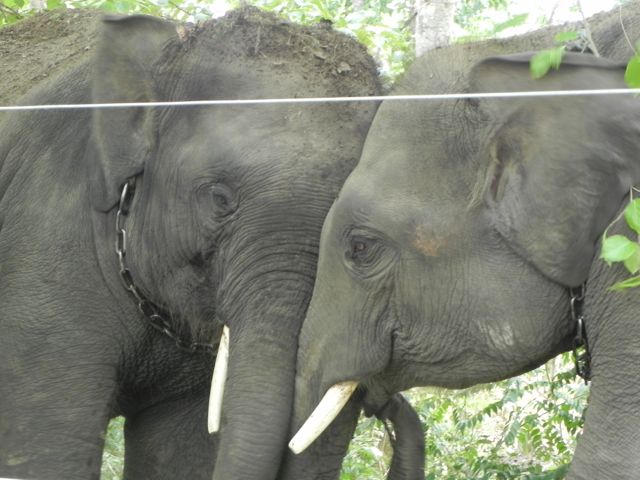
    As more elephants are freed from leg chains, attention is shifting to the neck harness elephants wear during anti poaching patrol.

    In the case of elephants in Nepal, the neck harness serves one purpose. It enables a mahout  to stay seated if his elephant becomes frightened and runs.

    Some neck harnesses are made of rope. Others are a combination of rope and light weight chain. All are loose fitting and have loops for the mahouts’ feet. These loops lie flat along the side of the elephants’ neck, behind each ear.

    Remaining seated when an elephant spins around and runs away is virtually impossible, unless your feet are strapped in.

    In the case of Laxman Gaj and his twin brother Ram Gaj, a combination harness is used. The bottom half of the harness is chain. The half that goes over the top of their neck is rope.

    Laxman and Ram are young elephants, only six years old. Regardless of their youth, they are required to participate in daily anti poaching patrol activities in Chitwan National Park. Being young, they are easily frightened when surprised by a wild rhino or tiger.

    They wear the harness because when an elephant is frightened, he or she runs away. Spinning and then sprinting at speeds up to 30 miles per hour, can cause a rider to fall off.

    Having a harness adds a sense of security for the mahout who clearly knows that if he falls from his elephant, while in proximity of a wild rhino or tiger, he will be killed.

    When the elephant recovers from his or her fright, the patrol resumes.

    When an elephant learns s/he is able to escape a frightening situation, their self confidence builds. With each exposure to wildlife their fear level is further diminished. By the time they reach adulthood, the elephant has gained the experience necessary to fearlessly encounter wild tigers, rhinos and bears.

    Undoubtedly, some will insist that the harness is unnecessary as elephants should simply be returned to the wild. I have no problem with this argument. But, until such time as society evolves, some elephants are destined to remain in captivity.

    Constructed and used properly, a neck harness is harmless and provides measurable benefits. The mahouts’ personal safety is guarded, while a young elephant is allowed his natural response to fear, without being punishment.


  • in the dark of night

    A hauntingly familiar sound of clanking chains passed by my window, so close I thought perhaps my wall would be crushed. The clink clink clink of cold metal bracelets was unmistakable; an escapee was passing by my room in his effort to disappear into the freedom of the bordering National Park.

    Switching off the lights to avoid attracting attention, I pushed open the screen door and stepped into the darkness.

    The rattle of chains chilled me to the bone as a silhouette passed in front of me. First one and then a second, moving silently except for the clanging of the chain hobbles secured around the front ankles of the smaller elephant.

    On this, the night before I leave Sauraha, I wondered why I was to witness another unbearable scene of captive elephant suffering.

    The escapee had entered through the front gate at NTNC-BCC and slowed when he found himself fenced in. The second elephant, a koonki, was being used to subdue and calm the young male, whose ivory glistened in the moonlight.

    When the bull stopped, the mahout began to speak in a soft but firm tone. He told his elephant, the koonki, to bite, which means to stretch out on her sternum. By assuming this vulnerable position, the elephant appeared to bring comfort to the escapee.

    It was then that I saw a mahout precariously perched on top of the young bull, no doubt frightened half out of his wits, with nothing at all to secure himself.

    As soon as the koonki reclined, a command was given for the bull to recline, which he did without hesitation. The reality is that he was frightened and I believe the mahouts involved realized this. As soon as he reclined the mahouts switched elephants and the koonki left silently.

    A little more rattling of the chains and the hobbles were removed, and the young bull moved swiftly back from where he’d come–the government hattisar (elephant stable) next door.

    Not willing to witness the brutal scene I assumed would follow, I called out into the night, no pita (don’t hit). No response. As the elephant and mahout passed my room I called out again, which was when I saw a flashlight-wielding man walking behind the elephant.

    “Government center hattie (elephant)?” I asked.

    “Yes, Raj, from the government center,” he politely replied.

    “The elephant is afraid,” I said. ”Do not add to his misery by beating him.”

    “You are foot trimming lady, right?” he asked. “You trimmed Raj a few days ago–he had a bad nail.”

    “Be kind, Raj is a wild animal,” I said.

    ”No, not a wild elephant, government elephant,” was his reply.

    “Yes, a government elephant and wild,”  I said.

    There we stood under a bright near-full moon discussing the fact that although these elephants are living in captivity they remain wild animals, never formally domesticated and always to remain wild. When I said they deserve to be treated with compassion because of their circumstances, the mahout nodded in polite agreement. He spoke surprisingly good English and appeared to understand what I was saying. In seconds he vanished into the darkness, leaving me to contemplate what I had just witnessed.

    For some time I stood listening to hear if Raj would be brutalized for his attempted escape. But this night I would not have to be reminded of the elephant suffering that permeates this tourist destination in Nepal. The only sound that pierced the night air was the soft repetition of forest birds and chirping insects.

  • Monsoon Season is Over – September E-Newsletter

    Monsoon Season is Over – September E-Newsletter

    There are more than one hundred elephants awaiting pedicures in India and Nepal. Wow — I can hardly catch my breath at the thought of it!

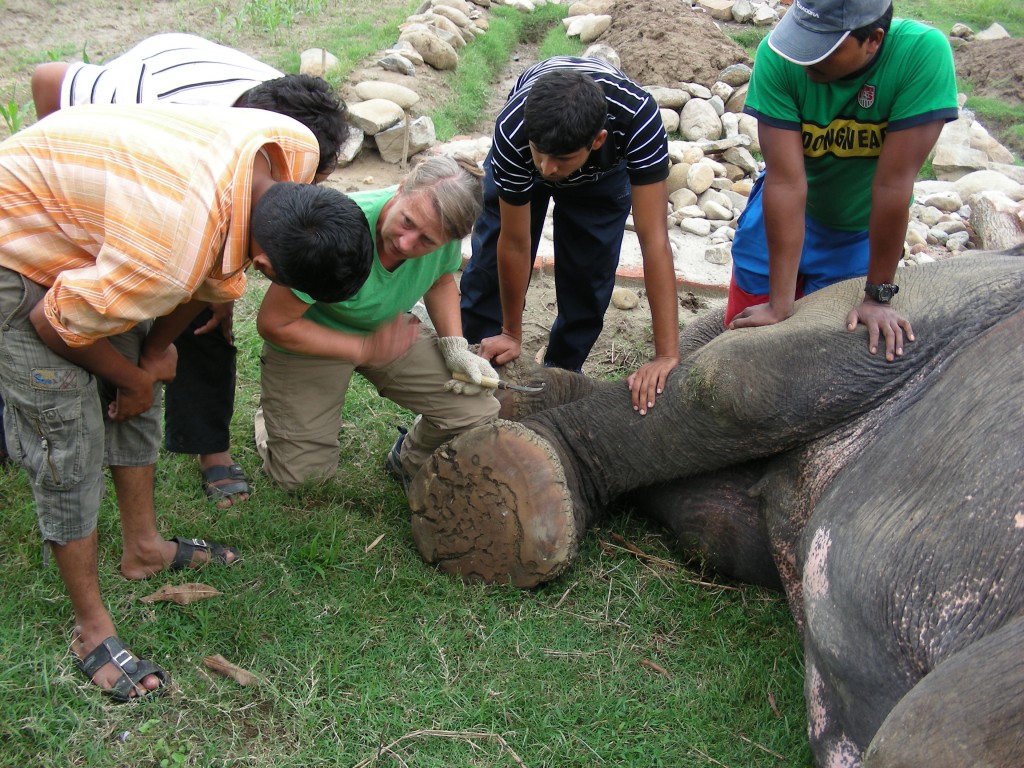
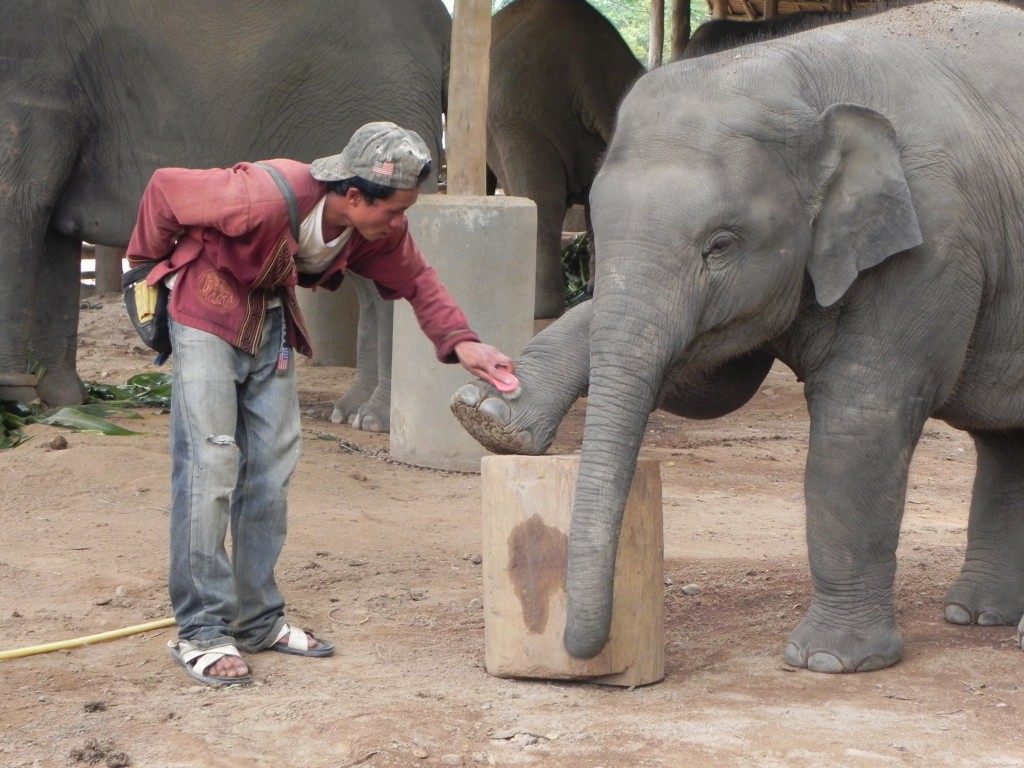
    This is my passion these days — foot trimming. The joy of being at the ground level, literally, of elephant welfare, is thrilling. I know we cannot fix all the problems facing captive elephants in Asia, but foot care is a very immediate and concrete way to improve their lives.

    India: Care center plans

    I will be in India through October, visiting with colleagues about prospective care center projects (and, of course, trimming elephant feet!). The care center project in Bannerghatta stalled due to property ownership issues and lack of government clearance. Disappointing as it is, we have decided to cancel the Bannerghatta care center project and concentrate on other more promising locations.

    This will be my third visit to Guwahati, in India’s north. It is stunningly beautiful elephant country. Unlike my last visit, which was a six-hour whirlwind blur, I will spend several days studying the area proposed for a new care center. I also plan to meet with the chief warden of Assam about a proposed care center in his state.

    This will be my second meeting with the warden. My colleague from the Assam Elephant Foundation and I are encouraged by the interest he has shown in this project. In fact, it was the warden’s idea and it is only with his endorsement that the project can move forward.

    The last time we met, the warden committed an area of land to the proposed center and agreed to permit the residents of our center to have access to the surrounding forest. This is an exciting start. I will keep you posted as we proceed.

    I will make a repeat visit to Wildlife SOS-India, outside New Delhi. This time I will have the opportunity to provide pedicures for all the elephants before heading off to see their new project, a four hundred-acre elephant rescue center under construction in Mathura. I have heard so much about this project—I can’t wait to see it.

    Nepal: Pedicures, chain-free yards, waste disposal and retirement center

    When I arrive in Nepal in November, I will have my work cut out for me: pedicures for more than one hundred elephants; we hope the construction of several more chain-free yards; development of environmentally sound elephant waste disposal practices; and brainstorming on plans for an elephant retirement center in Sauraha. What a productive time this will be!

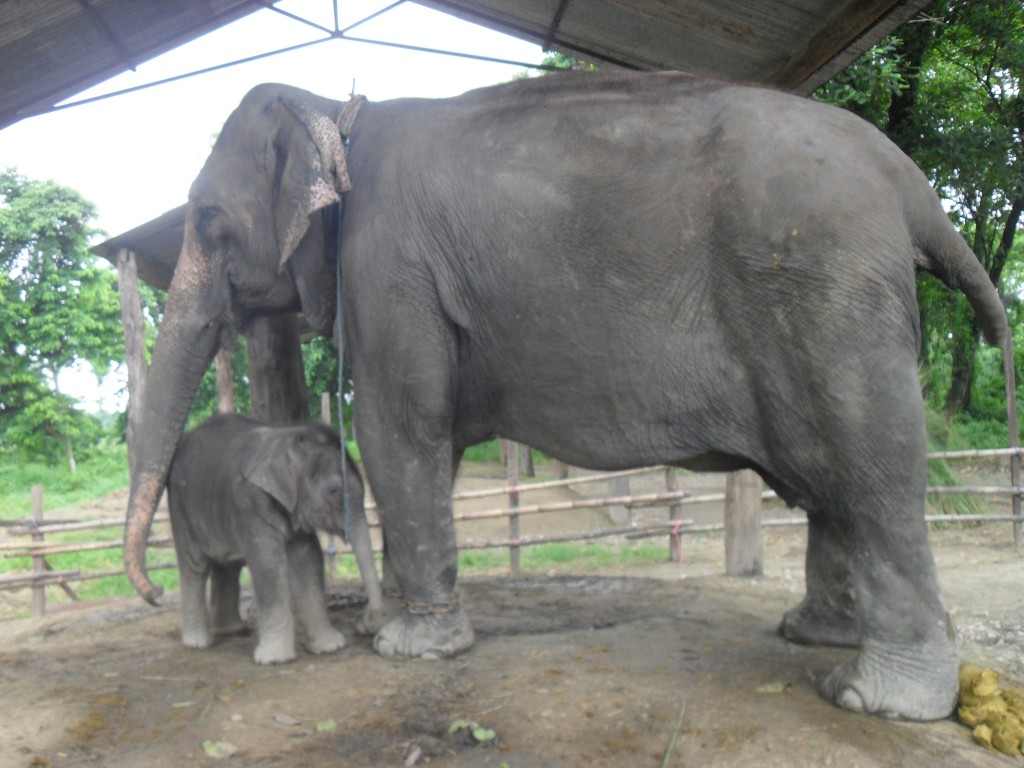
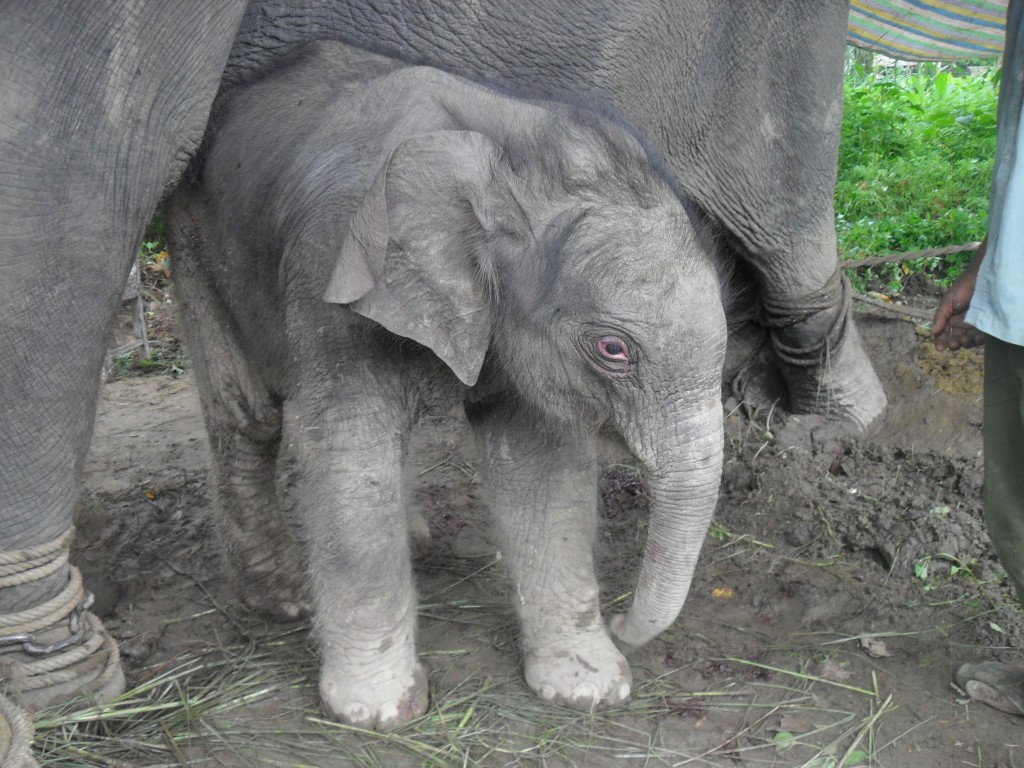
    Our first candidates for a chain-free yard are Man Kali and her two-month-old baby Hem Gaj. Currently, Man Kali is chained but little Hem Gaj is chain-free, kept with his mom in a wooden corral built by the mahouts.

    But the wooden corral won’t hold him in for long!

    After watching how Sweetie Kali blossomed in her chain-free yard, the mahouts want the same for her baby brother. They are determined that Hem Gaj will not be put on chains and have asked us to build a yard for him and his mother.

    Help us build a yard for Man Kali and Hem Gaj!

    Enclosing one acre of land with the power fence required to keep captive elephants in and wild elephants out, costs close to $4,000US. Adding water storage tanks, plumbing and a drinking trough, adds another $2,000US.

    Help us remove the heavy chains from Man Kali’s legs and ensure that baby Hem Gaj will never feel the pain of cold steel around his ankles.

    Just say yes! I want to contribute $10 / $25 / $50 / $75 / $100 / or other $_____ to build a one-acre, chain-free yard for Man Kali and her two-month old baby, Hem Gaj.

    If you prefer to donate by check, please make your check payable to Elephant Aid International and send it to:

    Elephant Aid International

    P.O. Box 106

    Hohenwald, TN 38462

    931-796-1466

    As you might expect, we won’t stop there. As the funds are raised, we will build more yards for more elephants.

    We are making great progress in Nepal. The mahouts welcome my return and are engaged in the changes we are making. They have embraced the chain-free yard concept, are excelling at pedicures and want to learn more humane ways of working with their elephants. The future of elephant welfare in Nepal is in their hands.

    You make it possible

    We have made it this far because we believe in the power of one. Each one of you makes it possible to help one elephant, then another and another.

    As I head off to the Far East once again, I am eternally grateful for your continuing support and encouragement. Knowing that you are behind me one hundred percent gives me the determination to forge ahead, helping one elephant at a time, then another and another. It’s working and it’s all thanks to you!

    Please follow the progress of our work on my blog and thank you, as always, for your support.

    Namaste,

    Carol

  • Asia calls

    Asia calls

    The annual monsoon season is nearly over. Asia is calling me back, once again.

    These weeks home have flown by, filled with taking care of business and preparing for my return to Asia. This coming trip will be my fourth in two-and-a-half years.

    Looking back over my work in Asia has given me a clearer perspective. Each visit built upon the one before, resulting in a firm foundation for elephant welfare programs.

    At first I had no idea what I could accomplish, so I just went and investigated. The search led to discoveries, which resulted in an avalanche of ideas.

    Filtering through all the possibilities, I decided to hone in on areas where I felt most confident. Providing services in a foreign country is challenging enough.

    Doing what I know best has proven to be a wise decision. This is where the mantra “One world, one elephant at a time” got its foothold.

    The idea of trying to save an entire world of suffering elephants is overwhelming, but helping one needy elephant at a time feels doable. The idea actually calms me. I know that we can help one and then another and then another after that.

    The Sanctuary: one elephant at a time

    With Tarra as my inspiration, this is exactly how  the Sanctuary began. My initial goal was to create a safe and healthy place for her to live out  her life, away from zoo and circus.

    With Tarra safely in her sanctuary home, our focus turned to rescuing six solitary female Asian elephants living in zoos and circuses. And we did it—one elephant at a time.

    First came Barbara,

    an ex-circus elephant living alone in a Florida backyard.

    Then came Jenny,

    living alone in a dilapidated dog and cat shelter outside Las Vegas.

    After Jenny was Shirley,

    rescued from a solitary life at the Louisiana Purchase Garden and Zoo

    then Bunny, darling of the Mesker Park Zoo

    Sissy, from the El Paso Zoo

    who had lived alone for two decades at the Frank Buck Zoo

    and Tina, born at the Portland, Oregon zoo

    living alone at the Vancouver Wild Animal Park.

    All were elephants who had lived alone for decades. Each was rescued because we believed that we could help, one elephant at a time.

    Starting again

    Now I feel we have come full circle, back to the starting point. A huge challenge lies ahead of us with so many elephants in need. But instead of being overwhelmed, experience has taught me that focusing on one needy elephant at a time is doable. I know that we can help one and then another and then another after that.

    As always, I will let Tarra inspire and guide me.

    With that vision of possibility firmly planted in my mind, I understand how we now find ourselves—a short two-and-a-half years later after I first went to Asia—experiencing such fabulous results.

    Focusing our efforts on our strengths has been incredibly well received by our colleagues in Asia. Working together has been the key. Together we are improving elephant welfare with foot care, mahout training, chain-free yards and our continuing efforts to develop elephant care centers and retirement homes.

    The ideas for these projects were planted like so many tiny seeds and now they are growing like weeds. I need to get back to Asia and continue where we left off.

    I am thrilled to announce that in my absence, requests have come for expansion of our programs. Yes, they want more chain-free yards, more pedicures, more mahout training and retirement centers for aging elephants. I am so excited about how our elephant welfare programs have caught on! The future is indeed bright.

    Preparing For Pedicures

    On my last visit to Nepal, 84 elephants received pedicures. The goal for my next visit is 100 elephants–400 feet! With that goal in mind I need to restock our foot trimming tools! Using disposable trimming blades ensures trimming accuracy and the highest level of hygiene; one package of two blades services one elephant. The easy-to-grip handles are perfect for precision but they wear out after a dozen or so elephants. The heavy duty farrier rasps are perfect for the job and the mahouts like this tool, but the rasp becomes dull after a short time.

    I hope you will join in the excitement and help us purchase trimming blades, handles and nail filing rasps. I have posted a chipin to meet our goal of foot trimming supplies for 100 elephants. If you prefer to purchase the pedicure tools separately, please visit the EAI wish list.

    To paraphrase a popular saying, helping one elephant won’t change the world. But helping one elephant will change the world for that elephant. This next trip to Asia promises to be incredibly beneficial for many more elephants, thanks to your continued support.

    A HUGE THANK YOU to all who donated to the Foot Trimming Tools ChipIn. We reached our goal, in record time, all thanks to you!

  • Drag Chains and Training

    Drag Chains and Training

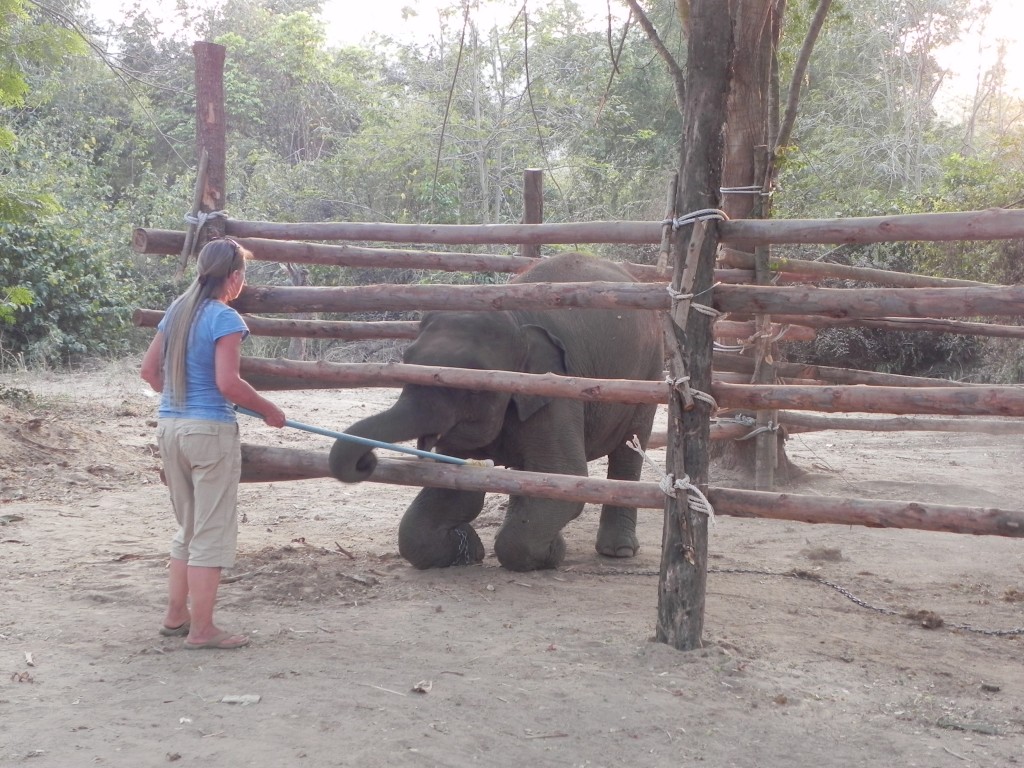
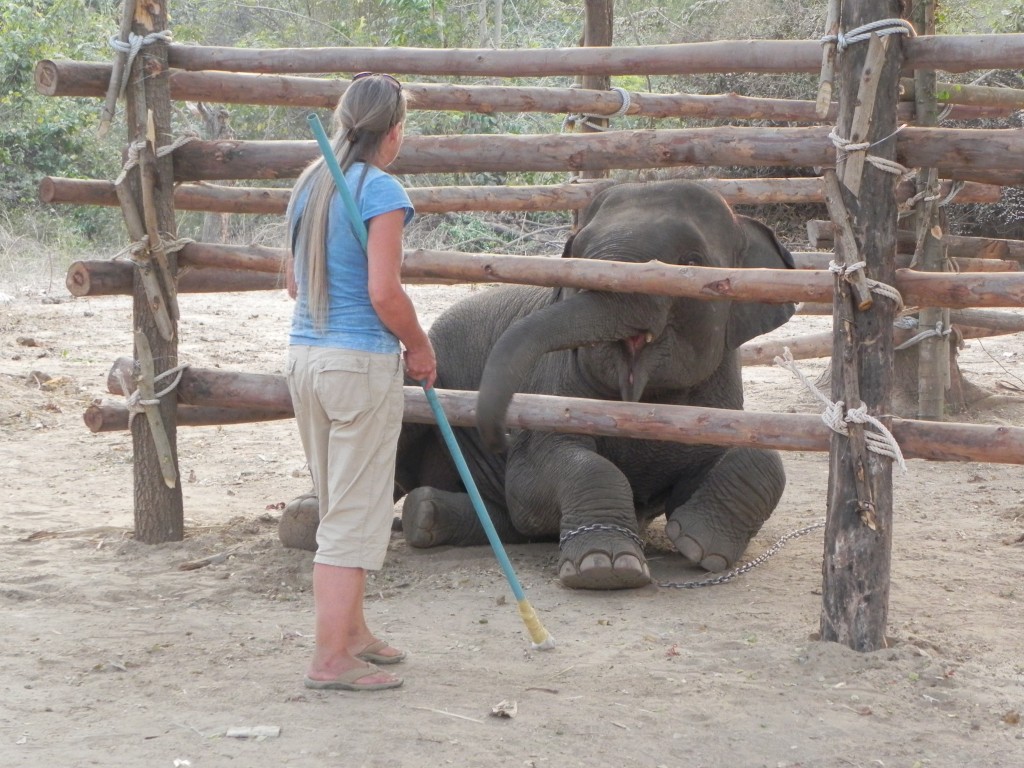
    Elephant’s World posted two videos on YouTube last week of me training a young elephant named Jon (you can view them here and here). I was surprised to see the videos and happy to know they exist.

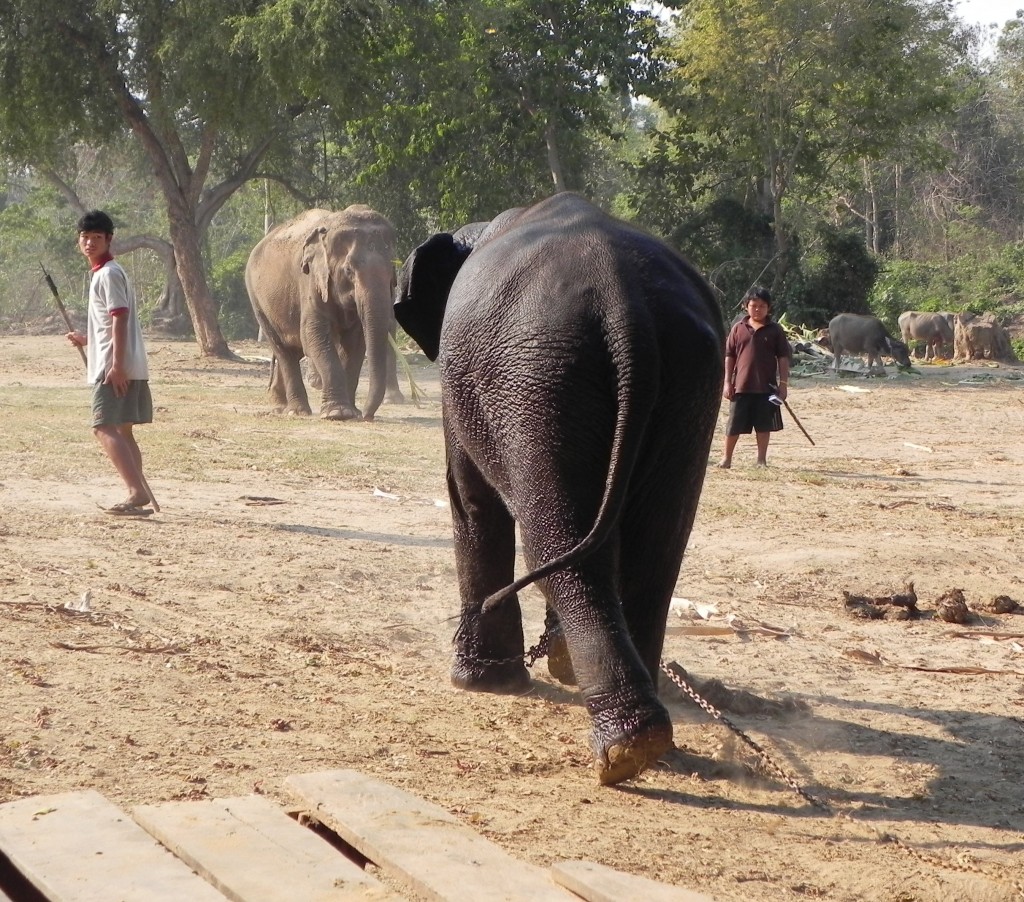
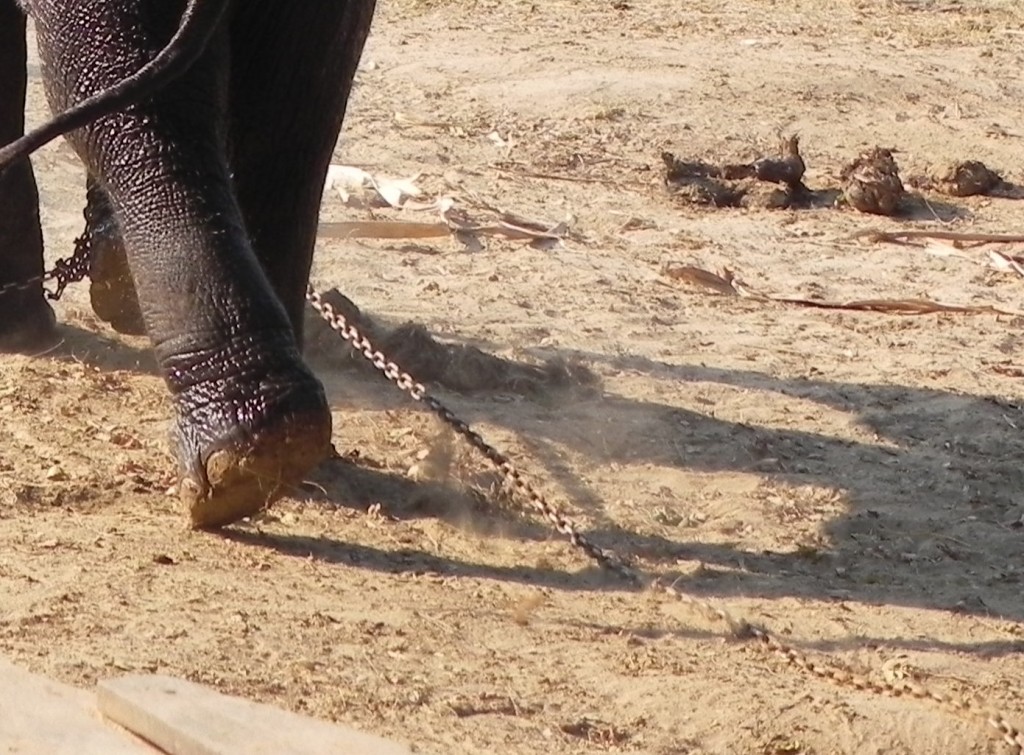
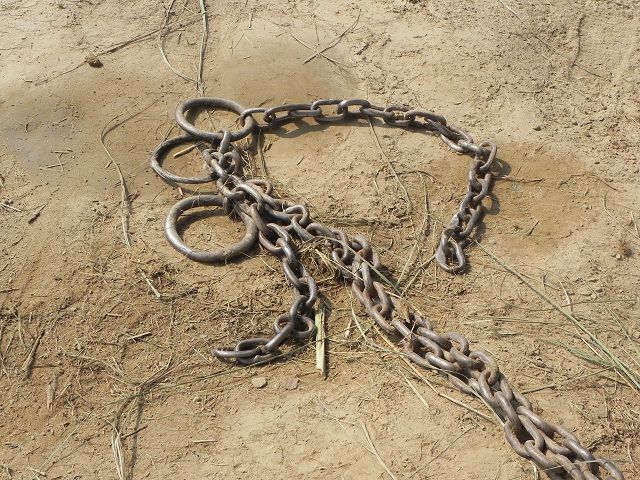
    Many people found the videos interesting and some have asked why Jon is wearing a chain. The chain is called a drag chain; in Asia it is used to prevent an elephant from running away. One end of the long chain is fastened around an elephant’s wrist and the other end drags behind.

    When a mahout is afraid that his elephant will run away, he puts a drag chain on him. If the elephant runs, the mahout wraps the loose end of the chain around a tree to stop him.

    The mahouts at Elephant’s World were resistant to non-dominance training and even more resistant to removing Jon’s drag chain. In order to be allowed to demonstrate positive reinforcement target training, I agreed to the drag chain for the first two sessions. One end of the chain was on Jon’s ankle and the other end was loose.

    My adherence to their tradition gave the mahouts time to get comfortable with the new training method I offered. They observed firsthand that Jon was more interested in the training game than in trying to get away.

    Jon showed such promise that after the second training session the mahouts agreed to remove the chain.

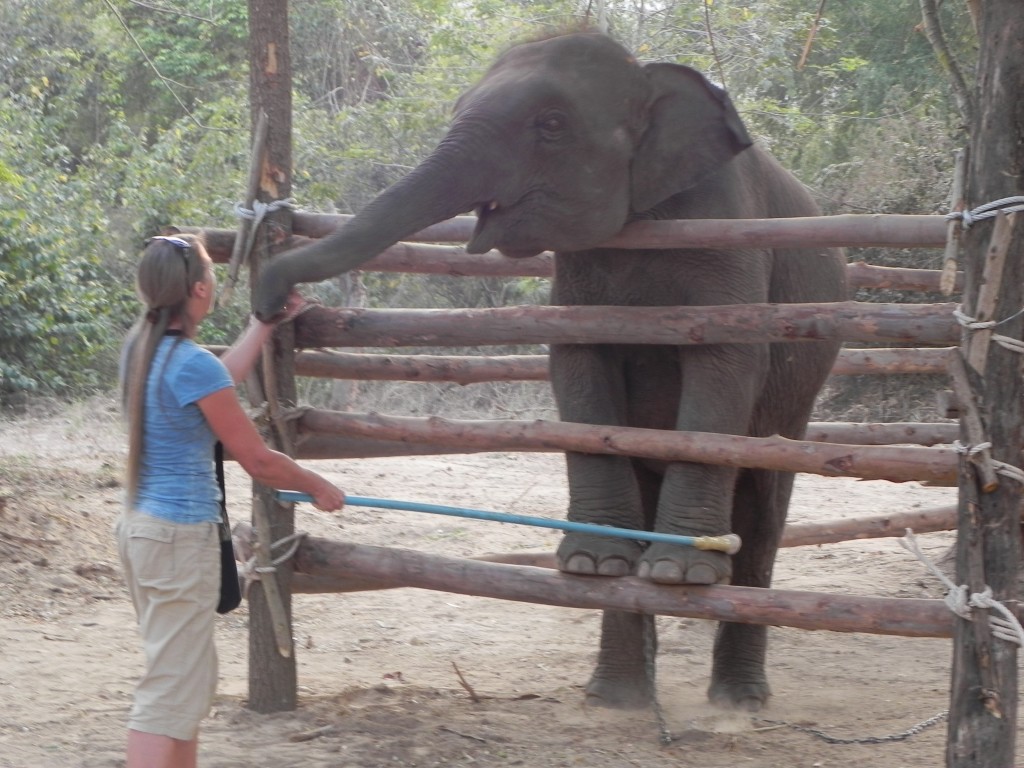
    There have also been questions about the “stick” used during training. The stick, or target as it is called, is a flexible pole with a soft cushion on the end. Watch my training tutorial to see how the target is used and learn the basic concept of target training.

    The goal is to teach an elephant the name/word for different body parts, such as foot, head, ear, side, etc. Once understood—which takes most elephants only minutes to grasp—the elephant will voluntarily offer that body part when asked. The key is to ask, not demand, and always provide praise and a treat as a reward.

    Before watching the videos of Jon’s training sessions, I suggest that you view the tutorial a couple of times. Then watch Jon’s first training session and see if you can identify what body parts Jon is learning. Notice that when Jon becomes frustrated he walks away, but returns almost immediately to try again.

    Positive Reinforcement Target Training gives the elephant the freedom to walk away, take a moment to reflect on what is happening and return when he is ready to try again. Walking away reduces frustration and increases the elephant’s willingness to participate.

    You will also notice in the video that Jon offers behaviors–kneel and lie down. This is common in initial training sessions. Many times the elephant will offer what s/he already knows before starting to “problem solve” and figure out what the trainer is trying to teach.


    Learning to think for themselves is the first thing the elephants learn. After that, training is a breeze.

  • Update on Nepal pilot project

    Starting on May 8th, 2012, I put everything on hold while I focused exclusively on Sweetie Kali’s new chain-free corral. The bandh (country-wide strike) caused a bit of delay in the beginning, forcing the fence crew to wait several hours at the Nepal boarder before entering. Clearing customs with 400 KG of power fence materials added to the delay.

    Dibyandu Ghosh and PaspatUpon arrival, Dibyandu Ghosh, the contractor, explained that his fences are not only functional but beautiful as well. He was not exaggerating. No matter the challenge—including keeping a captive elephant in while at the same time keeping wild bulls out—he never balked and consistently came up with solutions that were both functional and visually pleasing.

    Realizing that I did not speak the local language, Dibyendu quickly identified the go-to man, Paspat, the mahout supervisor. They hit it off immediately, as if they had worked together for years.

    Once construction started, it progressed quickly. Each morning Sweetie Kali would leave her stable for a day of patrolling and grazing the forest, leaving several men working diligently around her yard. Each evening she returned to be chained in her stable with the men still busy at work. She was soon encircled by the project.

    watching Sweetie KaliAs the fence began to take shape, the mahouts became more interested. Seeing is a powerful tool to grasping a concept. By the end of four days, the corral had been completed and everyone gathered to witness Sweetie Kali’s release.

    I wouldn’t say that anyone was apprehensive, but there was definitely a feeling of doubt. One researcher with years of wild elephant and rhino experience commented that the mahouts would now have to be with Sweetie Kali constantly since she would be off chains. His comment caught me off guard but showed clearly that the chain-free concept was difficult for them to comprehend. While I tried to explain that the fencing is what contains her, making a mahout unnecessary, his reasoning was revealed. He stated his concern that without the mahouts Sweetie Kali would not be able to function, would not know what to do, where to walk, even how to walk. I was dumbfounded. My response was, just watch, she will do just fine.

    mahout group

    I thought long and hard about this mindset — that elephants cannot function without their mahouts ordering them around. It actually made me sad to have to accept how misunderstood elephants truly are.

    The chains come off

    When Sweetie Kali’s chains were removed for the final time, she stood motionless next to her mahout. Indeed, she was waiting for instruction, expecting discipline if she acted without direction.

    Her mahout obviously did not comprehend his role either. When he was told to walk away from Sweetie Kali and leave the yard, he stood frozen, apparently confused.

    When the mahout finally left the yard, it took a matter of moments for Sweetie to realize she was chain-free. She took a tentative step away from her stable area and abruptly stopped, ears perked, anticipating a sharp correction. When no correction was forthcoming, she relaxed a bit and began to walk the fence line. Unable to let go, the mahout also hovered at the fence line. Sweetie Kali was clearly apprehensive. The other mahouts, administrators and vet techs looked on in anticipation.

    feeding cuchie to KaliI grabbed some kuchi (rice and molasses wrapped in grass) and tried to get the mahout to walk the fence line into the forest and throw the kuchi deep inside. As always, training the elephant trainers is always more difficult than training the elephant, so it took several attempts, in his native tongue, for the mahout to understand that he was not to hand feed the kuchi, but to disperse it in the habitat.

    Chain-free environment and free-choice food are two equally incomprehensible concepts to most mahouts. But after much-repeated instruction from his peers, Sweetie Kali’s mahout finally, almost reluctantly, hurled the last kuchi into the forest.

    Kali's backsideThat was Sweetie Kali’s signal that she was free to roam the premises. The last thing everyone saw of her was her petite backside as she disappeared into the dense brush. I felt like saying, “Sweetie Kali has left the building!” but realized my humor would be lost on this crowd.

    Bundles of fresh cut grass were deposited on the edge of her forest to be consumed at her leisure and the tech set up watch to record Sweetie Kali’s behavior until dark.

    Reinforcing: No chains

    mahout hutThe next morning, Sweetie was still nowhere in sight, which pleased everyone tremendously. As I sat in the open-air mahout hut reveling in the success of the project, Sweetie’s mahout entered her yard. Watching silently, I wondering if the schedule had changed; was she going to the forest early or was there a special tracking program? But then I realized that the mahout intended to chain Sweetie Kali under her shelter.

    Papsat and KaliI leapt from my seat. With as much composure as possible I rallied the mahouts, telling them, “No chains, no chains.” My heart sank but then Paspat, the mahout supervisor, appeared out of nowhere. Usually a quiet, mild-mannered guy, he barreled over to the mahout with raised voice and expressive body language to deal with the situation.

    The mahout explained that he wanted to stick to Sweetie’s normal morning routine, which of course included chaining, but was told, in no uncertain terms, that chaining was not allowed. He now clearly understood his directions. When the drama died down I suggested that the chains be removed from the stable area so they would not “accidentally” be used.

    New routines

    That afternoon when Sweetie returned to the hattisar and was released into her yard, she knew exactly what to do. Without hesitation she made a beeline for the forest and did not come out again until it was dinnertime.

    Before mealtime, kuchi and bundles of grass are stored outside each shelter, inches from the elephants’ reach. The routine is to feed the kuchi first, placing them at the elephants’ feet, and then piling the fresh-cut grass within reach. The elephant knows from years of experience that dinner is served precisely at 6 pm.

    Being chain-free meant Sweetie Kali was free to approach the inviting pile of food and beg to be fed early, thereby creating a situation where she might begin to bob in frustration.

    Everything had been progressing so well, I wanted to avoid creating such a situation. Getting the mahout to disperse the cuchie in the forest earlier than Sweetie Kali’s normal feeding time was not a problem, but then I saw that he put all her grass in one pile under her shelter.

    His fellow mahouts were all talking at the same time, telling him to take the grass to the forest. But he simply ignored them and walked away.

    dragging grassThis time Paspat did not come to the rescue. I was the only one who did not know he was off-grounds. Luckily, another official appeared and after several phone calls got the mahout to return. In a melodramatic display of unwillingness, he dragged the grass to the proper location—and then stomped off, muttering that he would not take orders from junior mahouts.

    By the next day Sweetie Kali’s mahout was over his seniority snit and began to show great pride in the accomplishments of his elephant.

    Many thanks

    GanashThat’s it, the entire story. Every day, Sweetie Kali immerses herself in her personal forest when she is back at the hattisar. She comes out to play in the dirt pit or chase birds and was seen and heard dashing in and out of the trees during the last big storm, but otherwise she is basically unseen except by Ganash, the young tech assigned to her behavior study, which he has taken on with great seriousness. Recording her behavior is an important tool for documenting her response to chain-free living.

    When Sweetie Kali leaves for her daily patrol of the forest, I inspect for habitat damage. I am pleasantly surprised at how little damage there is. She excavated a relatively small sleeping area, sheltered by huge trees and another smaller area for dusting. Aside from the thick curtains of edible hanging vines that are rapidly thinning, the damage is minimal.

    NTNC-BCC

    Sweetie KaliI have so many people to thank for the success of this pilot project including all the staff at NTNC-BCC, the forest department, Naresh, Ram Kumar, Chitran, Dr. Gairhe, Paspat, Nandu, Babu, Kiran, Ganash, Veena and Vishnu at IBEX Gallagher, Dibyendu and crew and especially the mahouts, because without their cooperation, the project would not have been possible.

    And finally, I thank Sweetie Kali for unknowingly volunteering to participate in this important pilot project, one that will undoubtedly have a huge impact on how captive elephants are kept in Nepal.

    Please visit EAI’s Facebook page so I can keep you updated on our progress as it happens!
  • EAI’s May e-newsletter

    Two exciting new projects are underway in Nepal!

    This e-newsletter kicks off EAI’s first fundraising projects for Nepal this year. I hope you will help make it a success by telling your friends and neighbors how far the US dollar stretches in Nepal. Be part of the solution, one world, one elephant at a time!

    No more chains

    Between trimming feet and brainstorming about a retirement center for elephants in Sauraha, Nepal, we—you, I and all of EAI’s supporters—are about to embark on a very exciting pilot project at the National Trust for Nature Conservation Biodiversity Conservation Center (NTNC-BCC) hattisar (elephant stable).

    Pursuing last year’s recommendation to create chain-free enclosures for the BCC’s five forest patrol elephants, Naresh Subedi, an EAI advisor, and other NTNC officials have enthusiastically agreed to allow EAI to build a chain-free enclosure to demonstrate its functionality.

    No chains = cooperative elephants

    This is huge. It gives us the opportunity to show mahouts how cooperative elephants can become when allowed the freedom to move around unrestricted.

    Sweetie KaliEight-year-old Sweetie Kali will be the lucky recipient of this new and improved yard, where she will be off chains 24/7.

    In addition to the direct benefits to her psychological and physical wellbeing, Sweetie Kali will demonstrate to the mahouts and NTNC administrators that elephants do not “go wild” when allowed to spend unsupervised time off chains.

    Sweetie Kali, her fellow herd members and most of the government elephants are taken to the forest each day. Although they spend eight hours a day wandering the forest foraging for food, they are still under the strict control of their mahouts. Their lives are measurably better than those of privately owned elephants, who are required to give rides to tourists all day and are tethered in a stable overnight.

    But, together with NTNC, we can do better.

    Sweetie Kali and positive changes to come

    Sweetie Kali

    Sweetie Kali was chosen because she is the youngest elephant in the herd, born at the NTNC-BCC. Her incessant head bobbing is a concern for the mahouts and management alike. The staff was witness to the onset of her stereotypical behavior, which started when she turned 3, following her formal training and induction into the traditional world of chains.

    Sweetie Kali shelterCurrently, all the elephants are tethered under their own private shelters. Once everyone is comfortable that the fence provides the security necessary, chances are that Sweetie’s mother will be allowed to join her in the yard. Imagine what a moving reunion that will be.

    The new chain-free yard will allow Sweetie Kali to engage in natural behaviors she has been prevented from in the past. She will be able to explore her new yard, dust herself to her heart’s content, create mud wallows and feel the soothing sensation of scratching on a huge tree. Instead of sleeping tethered between two poles, she will sleep in any soft and comfortable location she chooses.

    EAI’s goal is to get this corral up and functioning before I leave Nepal in June. That is a rather optimistic expectation but I am determined to move the project forward as quickly as possible.

    Sweetie Kali fence

    Vishnu Narain, a collaborative partner in our Bannerghatta, India, care center project, operates IBEX Gallagher, a power fence company. We could not be more fortunate to have this connection. I have his bid in hand and a commitment to install the fence as soon as we are ready.

    Training and foot care wall — a prototype for Asia

    If we built only the electric fence for the corral it would mean a world of improvement for Sweetie and would keep the cost of the project down. But a training and foot care wall—a two-sided, free standing, steel pipe structure—is essential to our efforts to improve elephant welfare in Nepal. Once the wall is in place, foot care will become a required duty of each mahout, integrated into their elephant care responsibilities, and all the NTNC-BCC and government elephants in Sauraha will have access to it.

    The cost of the electric fence, including area preparation, materials, shipping and installation, is estimated to be $3,240. The training and foot care wall, including pipe, delivery, welding, concrete and labor, nearly doubles the cost of the project. I believe this will be $6,000 well spent as it will create a prototype that can be duplicated throughout Asia.

    Help us hire a veterinarian to oversee our Nepal projects!

    EAI has the exciting opportunity to engage a veterinarian in Sauraha, Chitwan National Park. The timing is perfect!

    This is our third year in Sauraha. With the ongoing foot care and mahout training and the new chain-free enclosure and training and foot care wall, it is essential that we hire a veterinarian to coordinate and supervise our activities. It will also be much easier to expand EAI’s welfare projects in Nepal with a professional in place.

    Simply building a chain-free corral and a training and foot care wall for the mahouts and their elephants is not enough. We also need to formalize our Compassionate Elephant Care training and create incentives to encourage the mahouts to become more engaged in all aspects of their elephants’ care and wellbeing. Once our collaborative effort to create an elephant retirement home is realized, our veterinarian will monitor the daily care of the resident elephants.

    In addition to overseeing EAI’s projects in my absence, our veterinarian will work closely with Dr. Gairhe, the senior government veterinarian, assisting in wildlife captures, rhino counts and regular animal management activities undertaken by NTNC-BCC.

    EAI will be responsible for the vet’s salary as well as all necessary equipment, lab work, travel and any other expenses we deem appropriate. Resumes are currently being reviewed.

    Our budget for the first year is $15,000. Yes, you read that right — $15,000 includes the veterinarian’s salary and other costs associated with his/her work for EAI.

    Update: Elephant Care and Rehabilitation Center Project, Bannerghatta, India

    Earlier this year I learned that a portion of the land intended for our care center project was designated as revenue land.

    care center property - BannerghattaRevenue land is owned by the government and designated for agricultural use or forest restoration. There are cases when the government can gift this land but the recipient must abide by strict use requirements and restrictions, is never allowed to sell it and the government has the legal right to reclaim it.

    The process to acquire permission to use revenue land in India moves slowly and must take into consideration the villagers’ needs and legal rights.

    EAI collaborating partner Vishnu Narain reports that progress continues for the care center. He has met with local government officials and regulators, who expressed support of the project.

    EAI is taking a wait-and-see attitude on this project. Once we have written authorization from the government to fence off and use the land for the intended purpose of an elephant care center, EAI will once again become active in the process moving forward.

    I look forward to keeping you up to date on our exciting new projects.

    Please visit EAI’s Facebook page so we can keep you updated on our progress as it happens!
  • March update on India Care Center Project

    March update on India Care Center Project

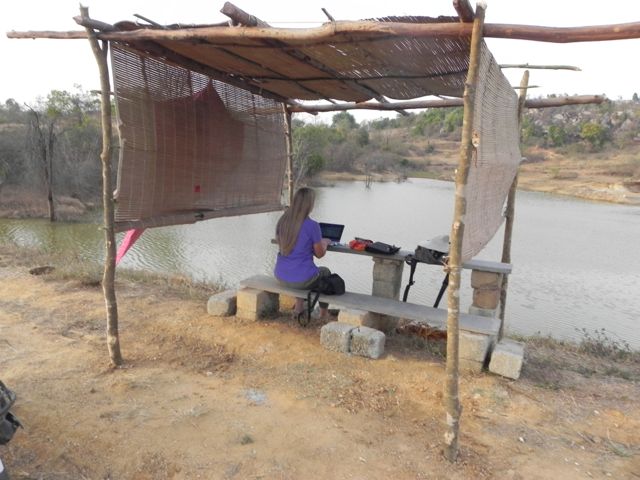
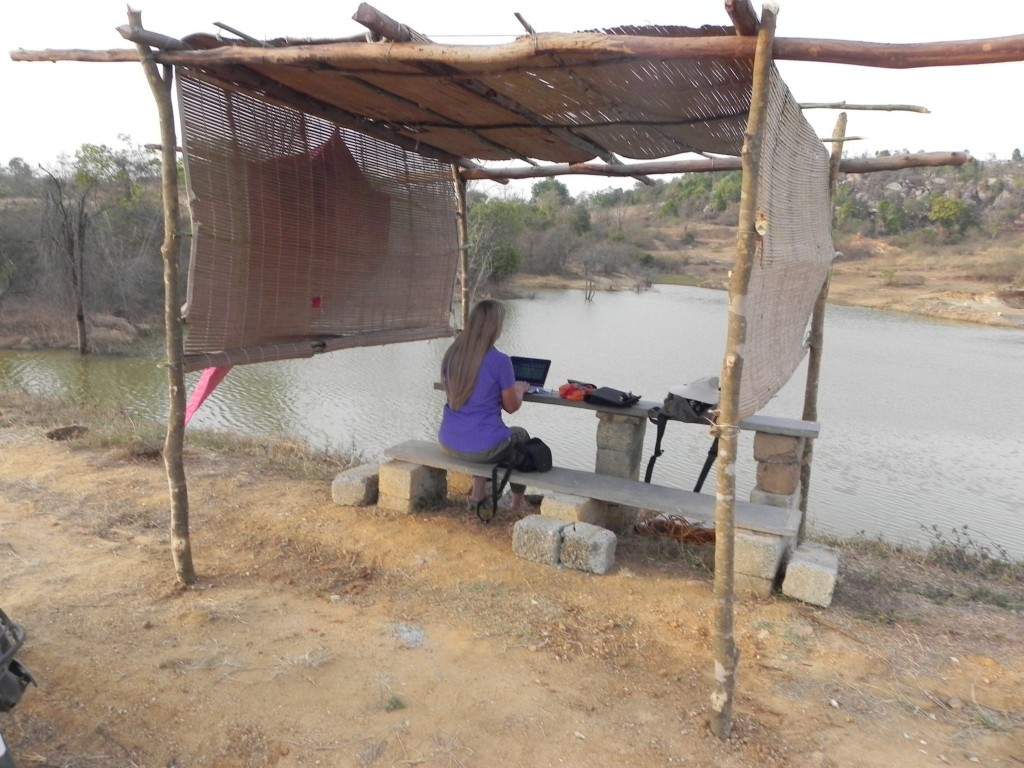
    Carol in her officeFrom my lake-front office, Bannerghatta, India

    The two months since my arrival in India have been filled — with meetings, brainstorming sessions, hiking through cinder-dry forests and continual reality checks.

    It is so important that I am here now—on the care center site—to study the land, the wild elephant activity in the adjacent forest, the habits of the local villagers and the laws that govern land ownership and use. There is so much to learn, I am ever thankful that everyone I am working with speaks fluent English.

    The project’s scope widens

    The project has remained focused on elephant welfare but its scope and approach has shifted a bit…for the better.

    Initially, we planned to have a relatively small plot of land in exchange for the care center elephants being allowed access to the national forest. Allowing elephants nighttime access to the forest is standard practice for the forest department’s captive-held elephants and seemed like a viable solution to limited day time space.

    But as I hiked the adjacent national forestland, I was disheartened to see how the forest’s resources are exploited. The forest herself appears to be barely breathing, suffering from over-grazing, intentionally set fires and the destruction of trees by the local villages that border the forest.

    Seeing the poor condition of the forest made me realize how the wild elephants are struggling to survive, with not enough food, water or shelter to sustain them. The idea of adding even a few more elephants to the already stressed habitat—reducing wild elephant resources even further—was a deal breaker for me.

    Following a frank discussion with the collaborators on the project, we decided to expand the land used for the care center, something close to 200 acres, thereby eliminating the need for the center’s elephants to use the forest.

    No chains, no dominance

    This change in operations has resulted in positive shifts in the facility design and style of elephant care.

    The original plan called for a small plot of land and giving the elephants access to the national forest at night. But I recently learned that allowing the elephants into the forest overnight called for a compromise: the elephants would have been required to wear a drag chain on one leg whenever they were in the forest. The chain helps keep them from being mistaken for wild elephants by villagers and makes it easier for the mahouts to track, retrieve and return them to their home during daylight hours.

    But now, with national forest use no longer an issue, there is no compromise required – chains will have no place at the care center.

    You can imagine how excited I am about this unforeseen turn of events! I had almost been convinced that in India elephants will never be completely free of chains. But with our land expansion we will be able to do just that—keep elephants on a large tract of forested land, free of chains and dominance.

    Infrastructure development and acquiring land

    As result of this positive shift in the design of the project, we need more time for preconstruction development than earlier projected. We must conduct an expanded survey to identify land ownership. Surveying the entire tract of land will provide the legal assurance required prior to constructing the miles of necessary trenching and fencing.

    This expansion also requires a follow-up communication to the government informing them of our desire to expand…even before we have begun!

    We also have the challenge of acquiring a small parcel of land that is essential to the project but is currently occupied by another person. We have received assurance that this parcel of land—approximately seven acres—can be acquired.

    In India, land rights are complicated but well defined, if not always enforced. In some cases property owners hold a deed and are permitted to sell to whomever they choose. In other cases, villagers and tribals who receive land from the government are allowed to pass the land down to family members, but are not allowed to sell outright.

    Becoming familiar with the regulations is essential for anyone intending to own, lease or occupy land in India.

    I am told that when it comes to land, possession is nine-tenths of the law and even in cases in which the land cannot be sold, occupants can accept payment to vacate. As I understand, once they have vacated the land, another person can occupy it, with stipulations that it be used for some agricultural purpose or forest restoration and it can never be sold. One small parcel of land essential to our project falls in this category.

    I am keeping a positive outlook about acquiring this piece of land, which stretches across the edge of the lake, one of the essential areas for our elephants. Negotiations are underway. All I can do right now is wait.

    Co-existing with wild elephants

    In the meantime, I am tracking the movement and land use of wild elephants in the area. There is one section of the care center land they frequent. All the collaborators have agreed that no care center land used by wild elephants will be blocked to them. Our goal is to be mindful that our project, although well meaning and helpful to captive elephants, not cause hardship to wild elephants who use the land.

    We have identified a small corridor just inside the care center property, adjacent to the national forest, where wild elephants leave the forest to enter the care center property. They have a well-established path, which will remain open for their use.

    Protecting this wild elephant corridor is another unexpected development that makes me even more excited about the care center project. Being able to create a healthy space for captive elephants to recover and thrive, while at the same time preserving land for wild elephants who migrate through the area, feels like the right thing to do.

    Care center and bird sanctuary

    With an estimated 180 different species of wild birds in the area, the care center property is already a bird sanctuary. Never before have I been so enthralled by bird watching but from day one I was in awe of the many different birds and their beauty.

    The lakes draw a variety of fishing birds, from the Indian Pond Heron to the regal Brahminy Kite. Their nonstop activity, sometimes entertainingly comical, has sparked my interest in studying these winged creatures with whom I now share my space.

    The animated and gutsy Blue Eared Kingfisher was the first to catch my attention. His fishing perch is feet from my outdoor office. The first time I watched him make a catch, I admit to being a bit shocked that this minute blue bundle of constant movement disarmed his prey by bashing its head against a rock.

    I’ve observed Brahminy Kites collecting branches for nest building, a trio of Red-Wattled Lapwings singing a chorus, a Black Shoulder Kite dive-bombing to catch a mouse and a Great Cormorant perching on a branch 30 feet above the lake on its awkward looking webbed feet. I’ve seen egrets of every size follow the resident horses, snatching up displaced insects. Then there were the stunning Rufous Treepie, Red Whiskered Bulbul and a pair of White Browed Wagtails who chased a Crested Serpent Eagle away from their favorite tree.

    Being able to observe so much winged activity has opened a new world to me.

    Survey and land

    Surveying the expanded land is the next step required to move forward on this project. Acquiring the seven-acre parcel of land currently in negotiations will come after that, followed by a government endorsement of our expansion. All this needs to be accomplished before beginning construction.

    Fencing and trenching

    Only after the survey is completed, the extra parcel of land acquired and government approval secured can we begin work on the perimeter trenching and electric fence required to keep wild elephants out and our care center elephants chain-free inside. The fencing is estimated to cost $7 per foot/$36,000 per mile. The approximately four miles of trenching and electric fence will come to about $142,000.

    Compare this to the average $100 per foot elephant sanctuaries in the US spend on fencing. For 7 percent of the cost, we can provide a safe and secure, chain-free environment for needy elephants in their authentic natural habitat while simultaneously protecting wild elephants and their land.

    I am very anxious to move forward on this project but am cognizant that we cannot overlook any step or detail in our enthusiasm to make the care center a reality. If great journeys are launched one step at a time, who knows where helping one elephant at a time will take us.

    Please visit EAI’s Facebook page so I can keep you updated on our progress as it happens!
    Thank you for your interest and continued support. This care center promises to be more than any of us ever expected. Thank you for sharing my dream.

    Carol

  • Billie-Sue

    Billie-Sue

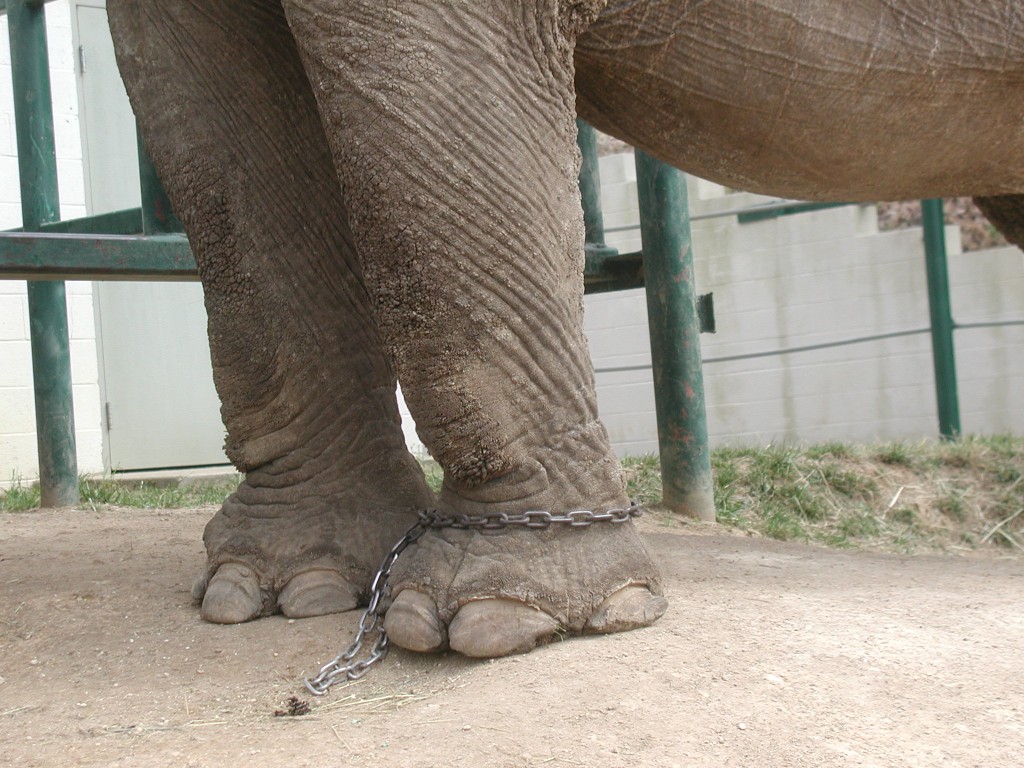
    Hurray! Billie-Sue is bracelet-free! The chain that was securely attached to her ankle upon arrival at the Sanctuary has been removed.

    What a transition Billie-Sue has experienced since her arrival with the Divas. Her transformation has been steady and inspiring.

    She arrived with Frieda, labeled a killer, described as dangerous and unmanageable. Prior to her release to us, Billie-Sue was held in solitary confinement in a steel cage at the Hawthorn Corporation for ten years. Upon arrival, she was fearful, defensive and heavily guarded.

    this photo was taken days after Billie-Sue arrived at the Sanctuary March 2006

    In the beginning, Billie-Sue became suspicious whenever we focused on the leg chain. That is when we began to refer to it as an bracelet, to consciously change the perception and meaning of the chain. Shortly after she arrived, caregivers began using T-Touch in protected contact to desensitize her to the human touch. Time passed and she began to relax. With time and patience Billie-Sue allowed caregivers to hand feed her through a protective barrier and take trunk swabs for TB testing, but still she remained guarded.

    Billie-Sue, Frieda and Lizzie became inseparable friends

    When Liz was diagnosed with TB, she and Frieda and Billie-Sue — her two best friends — made the physical move to the quarantine compound, a small barn and yard adjacent to the main barn. In this secluded location, away from the constant activity of Debbie, Ronnie, Lottie and Minnie, Billie-Sue found comfort and security and blossomed. She wandered the small yard without concern of turning a corner to be confronted by Minnie.

    This increased security led to this fantastic development of Billie-Sue shedding her bracelet. What a fabulous feeling this must be for her, forever free of chains. Although her leg chain was never used at the Sanctuary, the fact that she has now shed it is wonderful. Bless you Billie-Sue and all the caregivers who worked diligently to free her from that chain. Thank you.