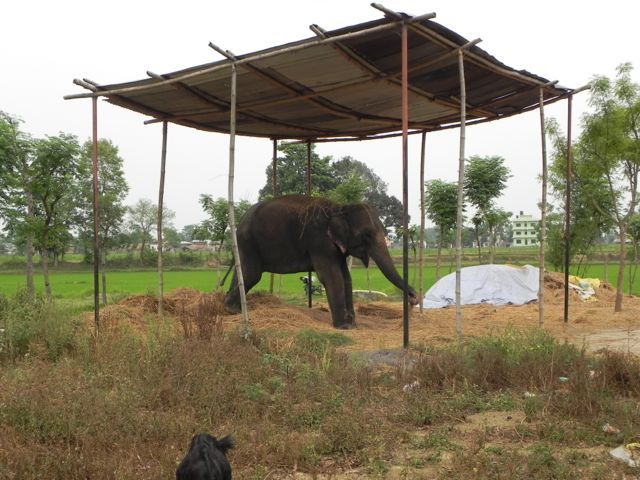
 It’s easy to look at an elephant shackled by both front feet to the ground, with open wounds, and blame the mahout.
But I challenge you to learn the facts.
Elephants belong to hotel owners
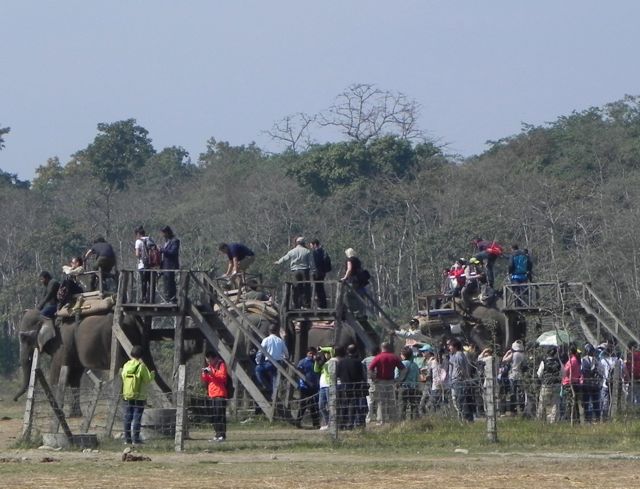
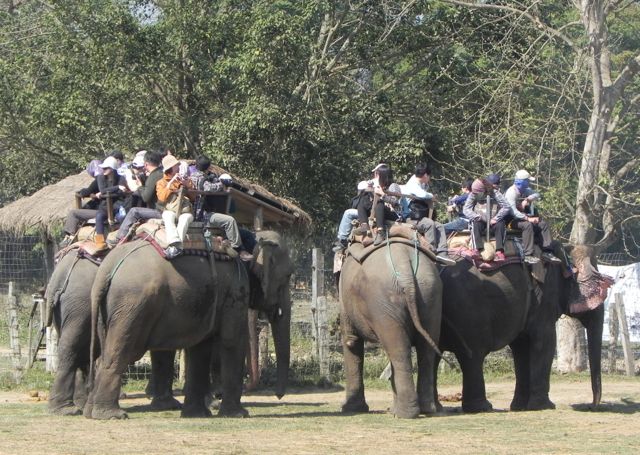
In Chitwan, Nepal, mahouts do not own elephants. Elephants are the private property of hotel owners, who use them to augment their income by offering elephant back safaris to overnight guests and daytrippers coming to Chitwan in search of fun and adventure.
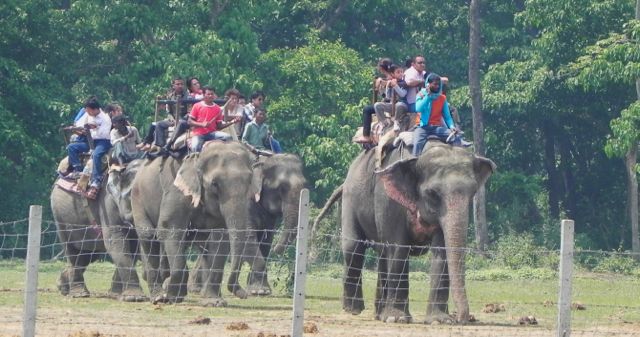 Elephant back safaris not only provide a bountiful financial benefit for the owner, they are actually the life’s blood of Chitwan.
In Sauraha, Chitwan’s tourist destination, every shopkeeper, restaurant owner, hotel, bar, service provider, wilderness guide, money changer, street vendor and orphanage owe their survival to these elephants. Many falsely claim that without elephant safaris, this tourist destination would cease to exist.
Grueling work schedule
All day long, 24/7, mahouts and elephants give safari rides in the community forest.
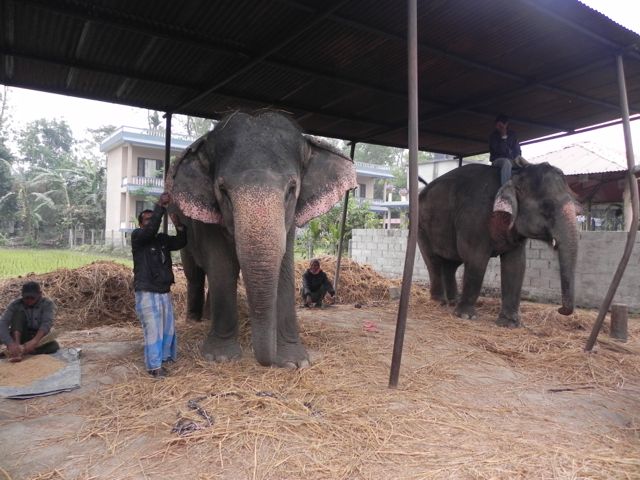 Mahouts train, feed and ready the elephants for the rides. It is a grueling job for both. Up at 4:30am, the pair sets out on the long trek to the safari loading area as the rising sun lights up the morning sky.
During what is supposed to be a one-hour lunch and rest period, the elephants instead are taken to a riverfront area where tourists mount them to have their photo taken.
Walking back and forth to the safari ride area, tourist bathing area and home stable, while carrying hundreds of pounds of tourists for hours at a time, takes its toll on elephant and mahout alike.
At dusk, and even into the dark of night, elephants can be seen silhouetted against the sky trudging down the paved roads of Chitwan toward their home stable.
Mahouts: Overworked, underpaid and devalued
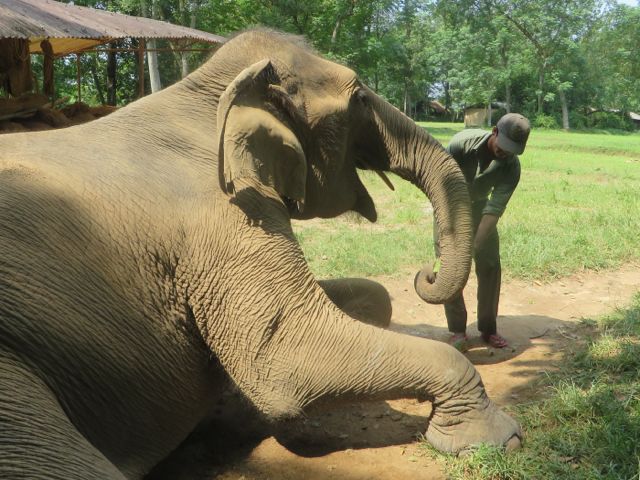
Elephant owners know nothing about elephants and rely on the mahouts to keep the elephants alive and working without killing tourists. This is a heavy burden to put on overworked, underpaid and devalued employees.
When mahouts “ask for more,” be it food for themselves or the elephants, they are chastised. Many owners view the mahouts as stupid, uneducated and unmotivated and blame them for the elephant’s unsanitary living conditions and poor health.
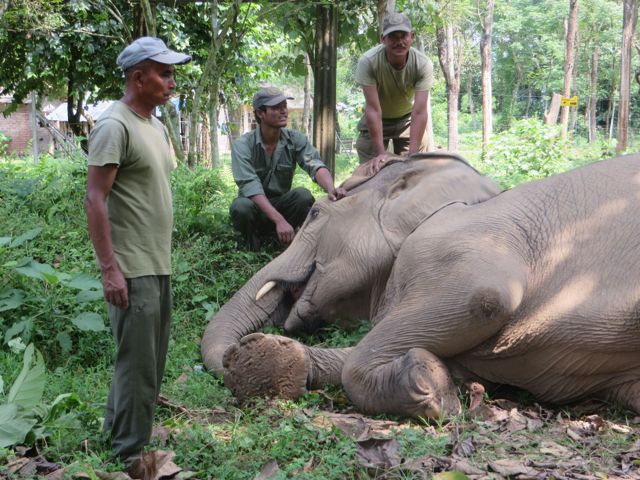
Yet mahouts are not provided even the most basic supplies to ensure the health and wellbeing of the elephants in their care. Owners fail to supply nutritious food but blame the mahouts for the elephant’s poor health. Stables are rancid cesspools because no provision is made for waste disposal. Many stables don’t even have a source of fresh water. For this, the mahout is unjustly blamed.
A marginalized community
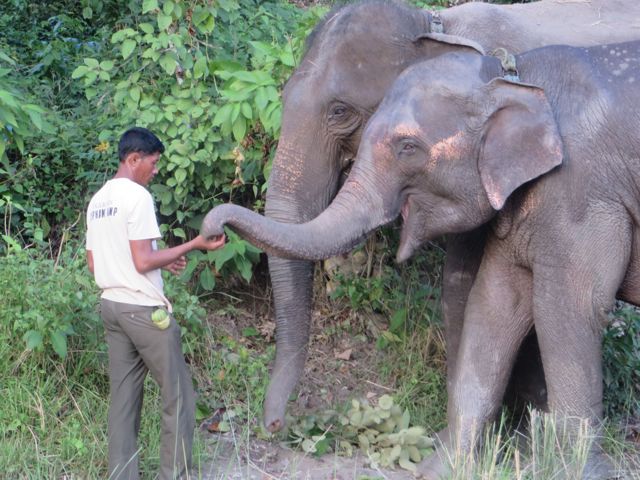
The truth is that the mahouts are a marginalized community. The custom of treating them as poorly as the elephants is woven into the fabric of society and their living conditions are a mirror image of those of the elephants.
Mahouts learn their trade on the job, from senior mahouts. Their lot in life dictates they do as they are told without question. They hit the elephants because they are taught they must in order to ensure the elephant does not kill them.
Still, this does not excuse how the mahouts mistreat the elephants.
Abuse can be eliminated
Through education and culture shifting, elephant abuse can be eliminated.
Demonizing either owners or mahouts is not the solution.
The first step is understanding why the situation exists and accepting the challenge to help move culture forward.
Owners must be held responsible and mahouts and tourists must be educated.
This will result in improved welfare for the elephants in Chitwan.
How we can help
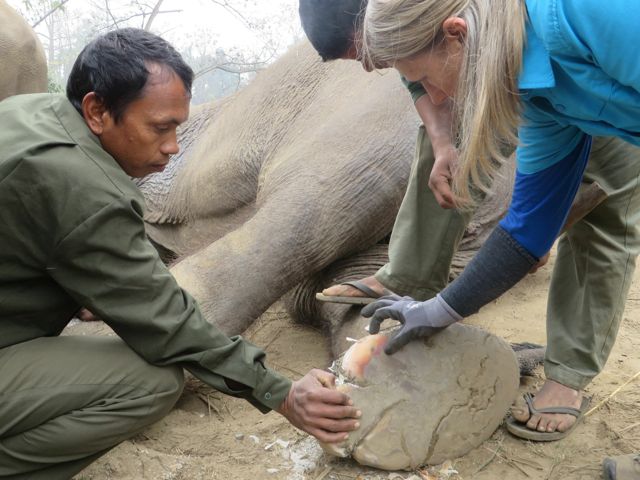 Developing sustainable assistance programs is essential. Live demonstrations, educational resources such as videos and manuals, translators and hands-on assistance are needed to improve mahout knowledge and understanding of new approaches to elephant care.
This is Elephant Aid International’s mission. By providing bi-annual foot trimming; training mahouts and vet techs in the skill of foot trimming; teaching positive reinforcement training philosophy and techniques; and constructing chain-free corrals, we are laying the foundation for positive change.
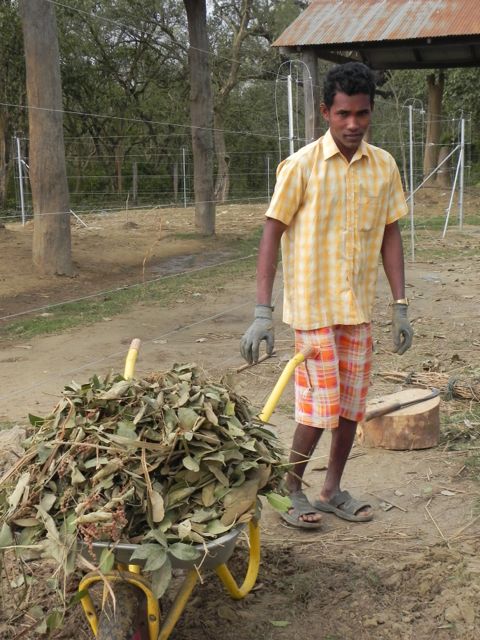
EAI doesn’t blame the mahouts. We give them the tools necessary to take better care of their elephants.