Tag: foot health

  • Tiger Tops Makes Top 10

    Tiger Tops Makes Top 10


    There’s a lot happening at ERNA! Volunteers and staff are now planting various types of bamboo. This will create an environment resembling elephant habitats in Asia. Plus, bamboo is the staple of wild Asian elephants’ diet. Sign up to become a volunteer today and help us create a thriving elephant environment.


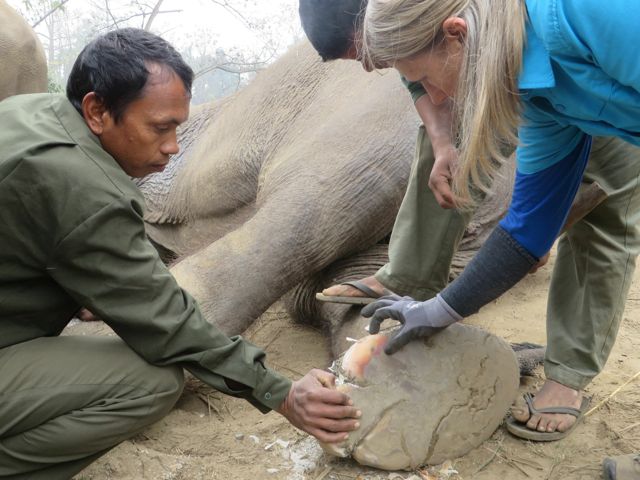
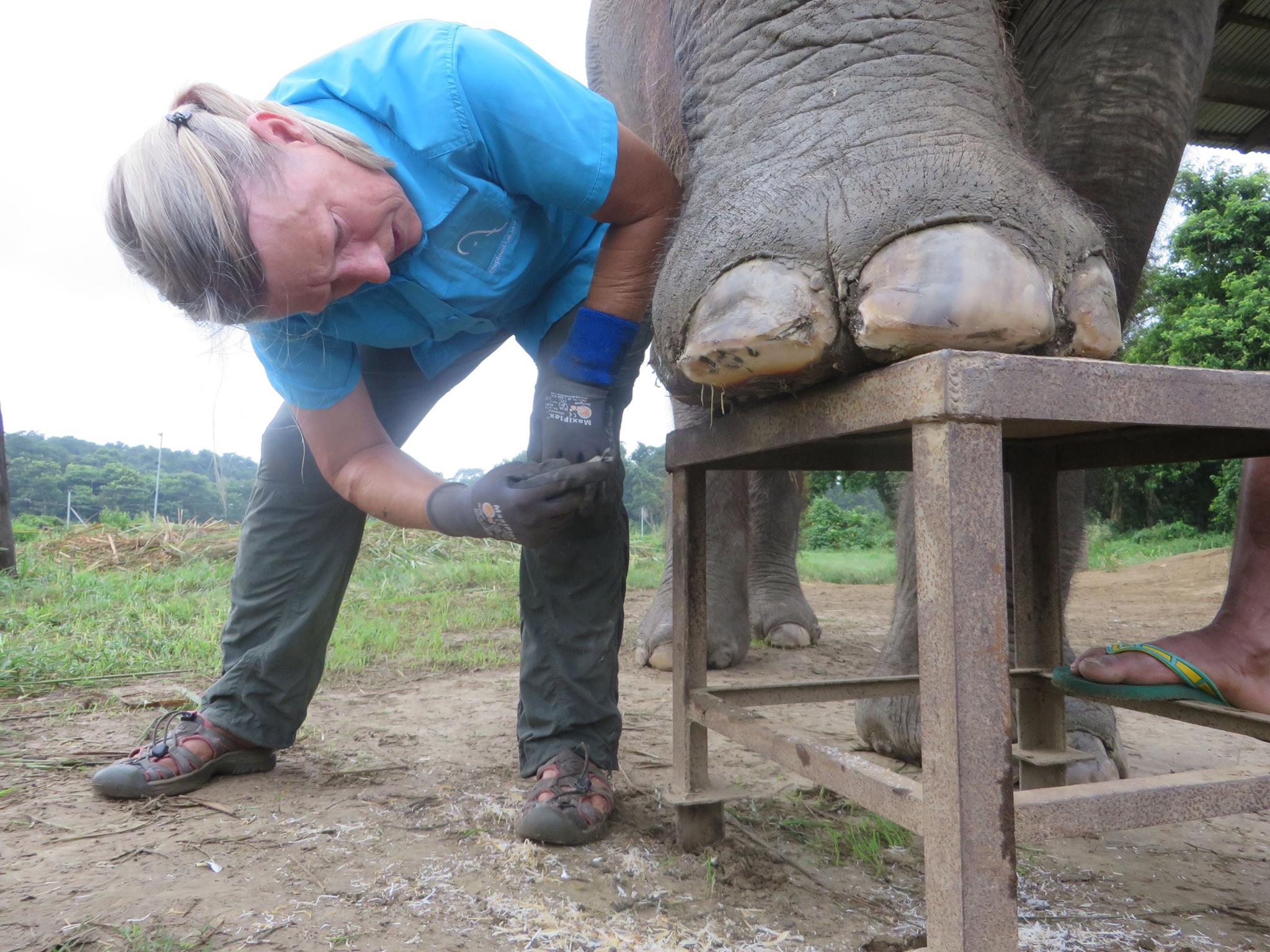
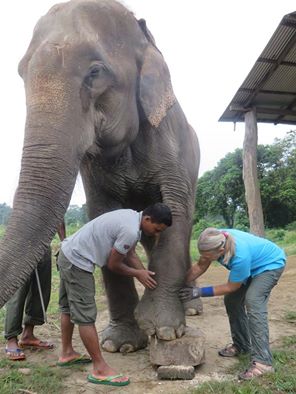
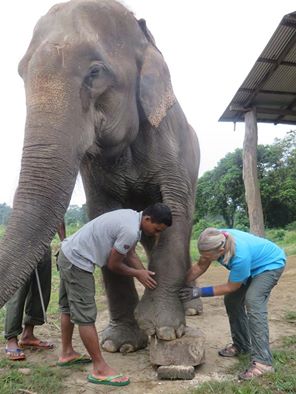
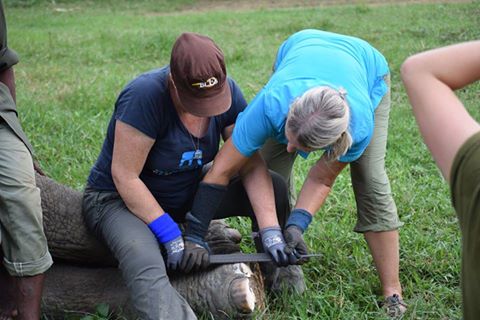
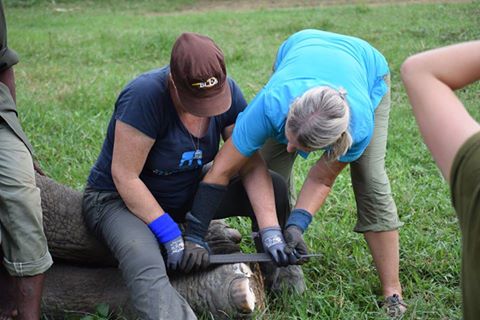
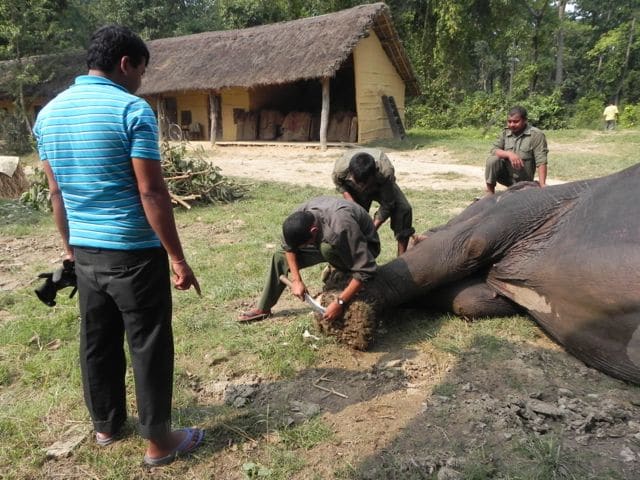
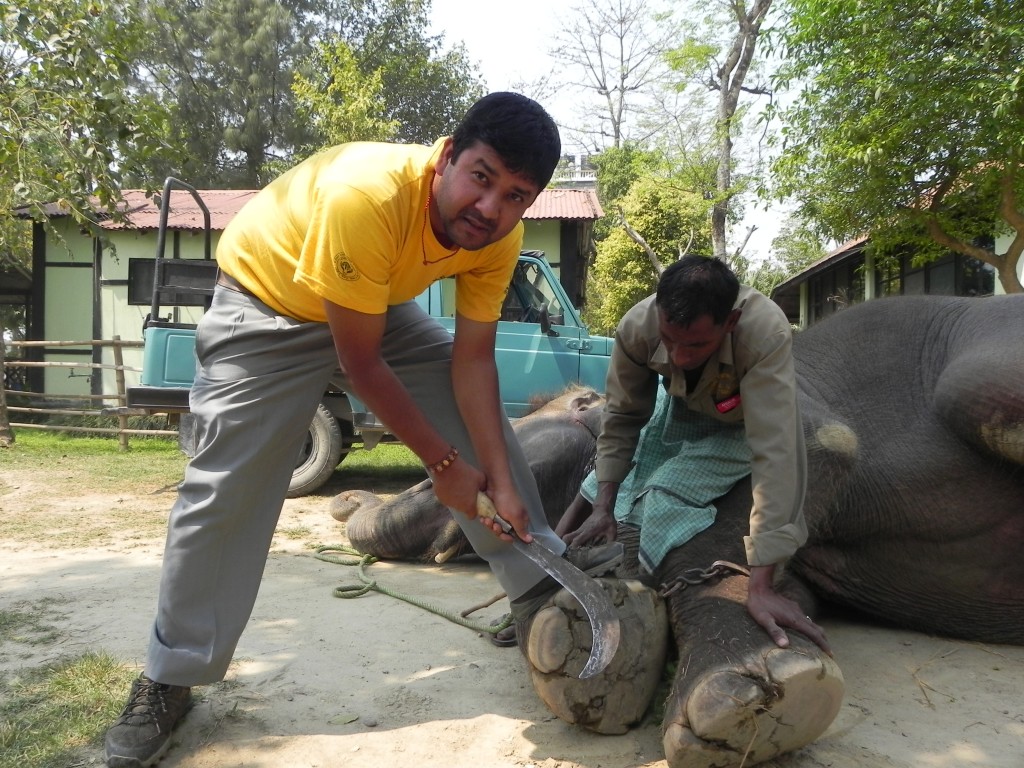
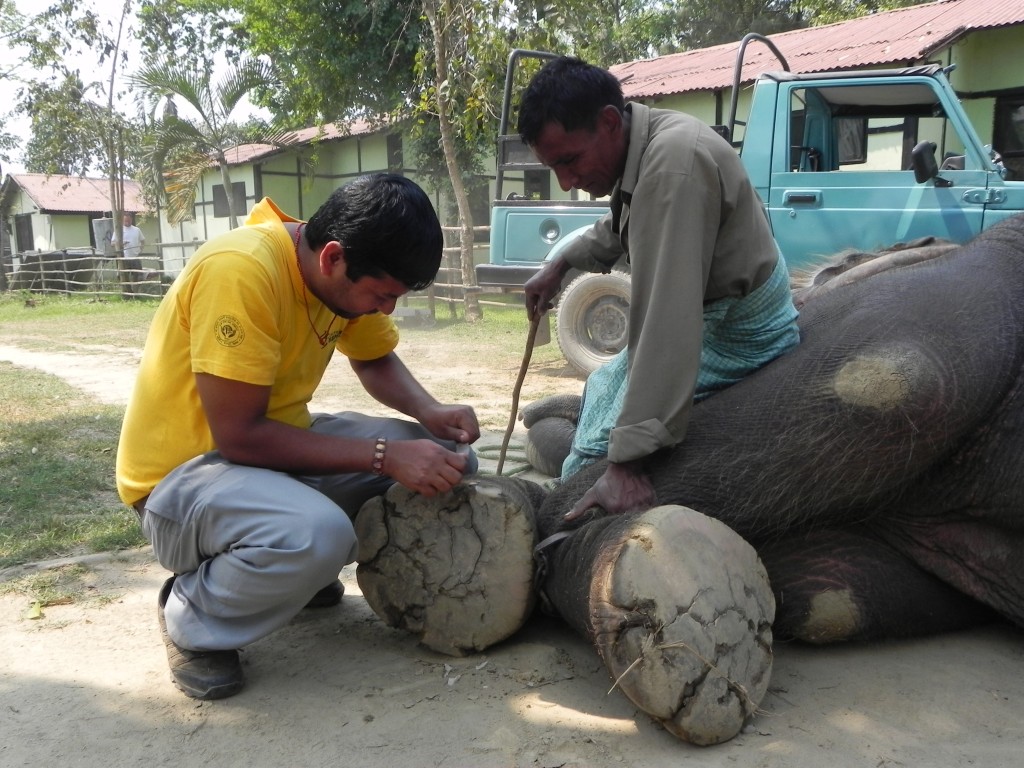
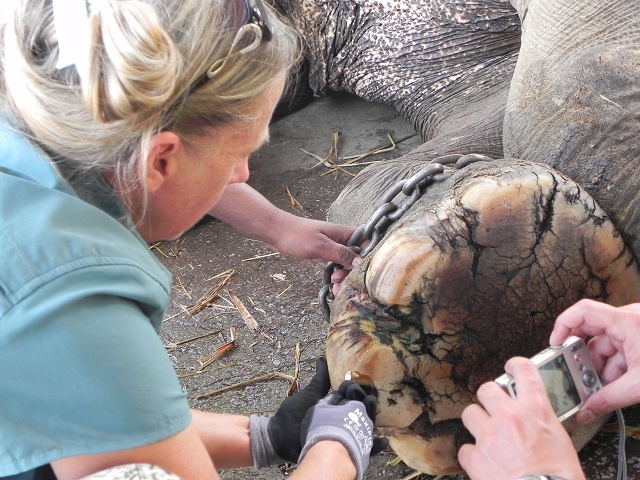
    Foot health is a critical issue for elephants living in captivity, as the overall health of the elephant depends on proper foot care. EAI provides training to mahouts on how to take proper care of elephant feet to reduce the risk of disease. The 2nd annual Foot Care Workshop will occur in Nepal in October! Learn more.


    Congratulations, Tiger Tops Elephant Camp! National Geographic selected Tiger Tops as one of the top 10 luxury camping experiences. Learn more.


    If you are unable to volunteer at ERNA this spring/summer, you can still help… even from your home! Consider making a donation to ERNA today. THANK YOU!


    Fatal foot diseases due to improper care have become an epidemic among elephants living in captive environments. EAI promotes proper foot care education for mahouts — and the next workshop will be taught in October. Learn more.


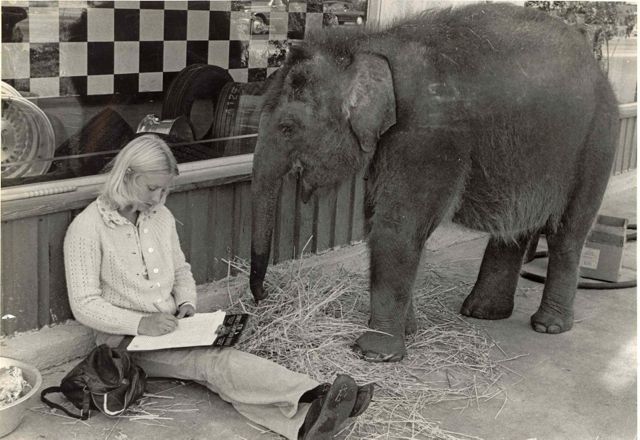
    Tarra & Carol tire store 1974
    On Tarra: “She has just taken me on my life’s journey… She is it. She is the reason I do anything, the reason I’ve learned anything. She is my mentor.”

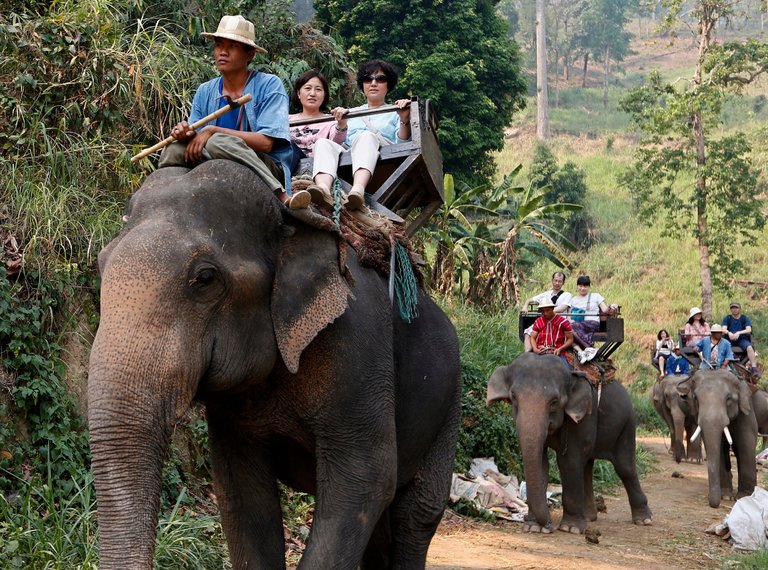
  • TripAdvisor no longer makes money off animal suffering

    TripAdvisor no longer makes money off animal suffering

    11tripadvisor-animals-master768Making steady progress for animal welfare: TripAdvisor to Stop Selling Tickets to Many Animal Attractions.

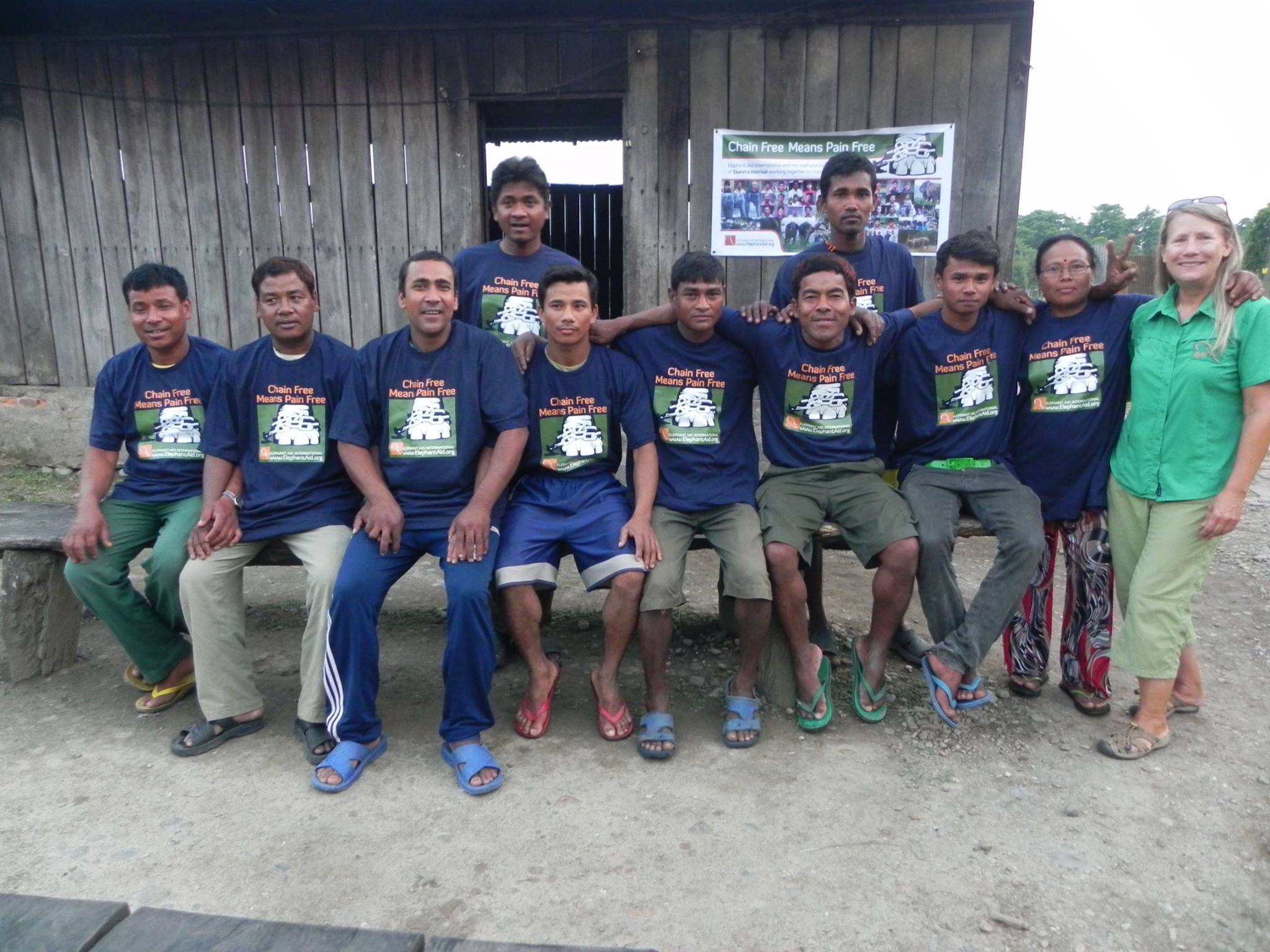
    14615856_1286567708040254_7526071632518963441_oThe progress in Nepal is driven by the mahouts’ willingness to learn how to provide better care for captive elephants.

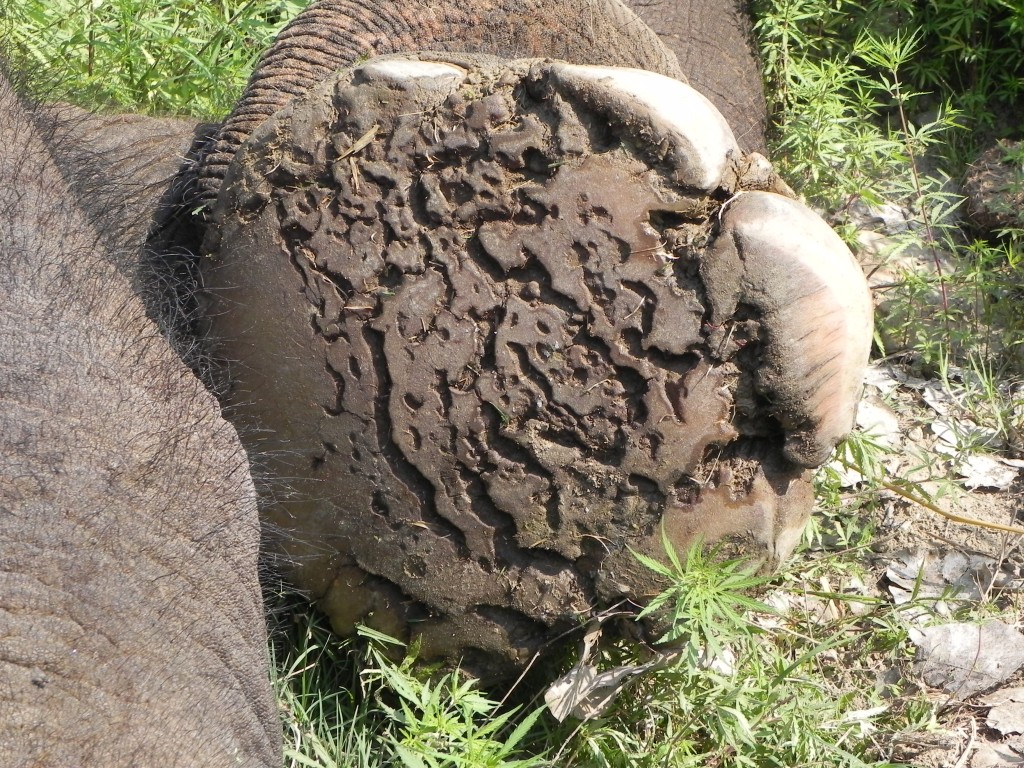
    14566427_1286789894684702_1653308219345432894_oFoot disease is epidemic among elephants living in captive environments. Captivity-induced foot diseases among these long-lived beings can lead to physical collapse and death. Proper elephant foot care is vital for elephant health.

    14650303_1287513497945675_8147598989740765811_nIf we want a future of compassion toward elephants, we must teach our children to care for all creatures.

    14707902_1288403497856675_4883728828528651954_o28 DAYS UNTIL CLOSING! Only four weeks remain until the finalization of the ERNA land sale, and the elephants still need your help. Even the smallest contribution allows you to personally support the elephants in need of an environment to thrive. Donate today!

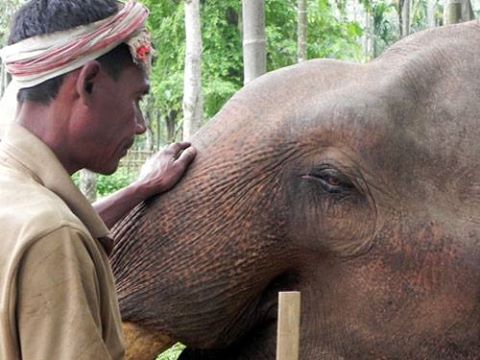
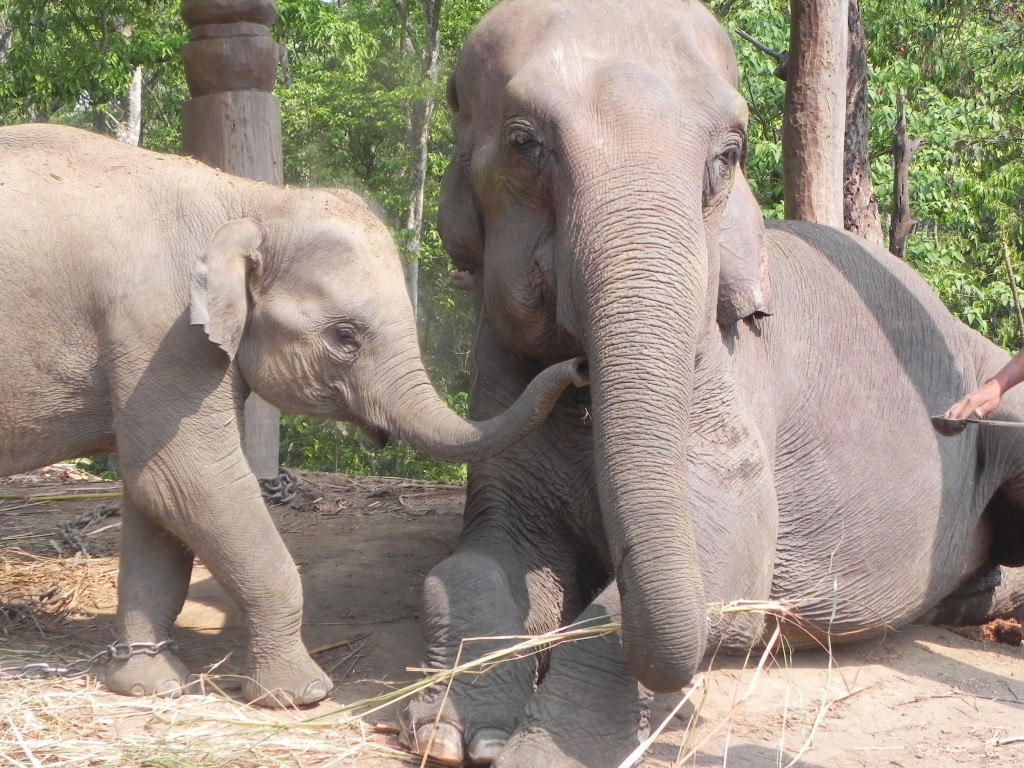
    14724476_1289593234404368_7665143081699443228_nAnother incredible picture of a sweet elephant from Nepal.

  • The first workshop was a complete success!

    The first workshop was a complete success!

    eai1

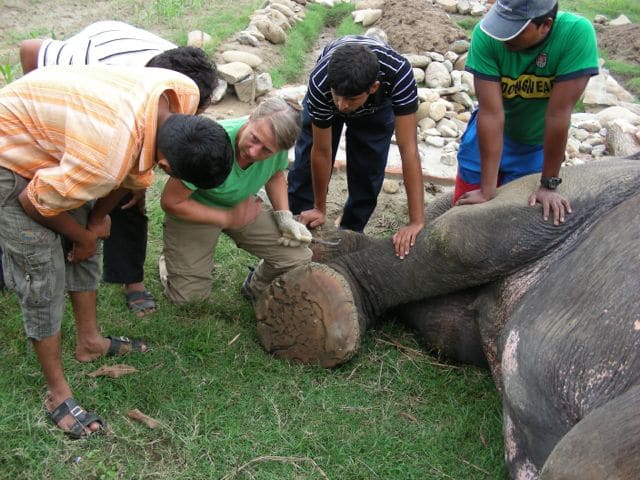
    The first workshop was a complete success, raising consciousness about the plight of captive-held elephants and training an enthusiastic group of elephant lovers in the art of foot trimming. The second workshop begins today.

    eai2
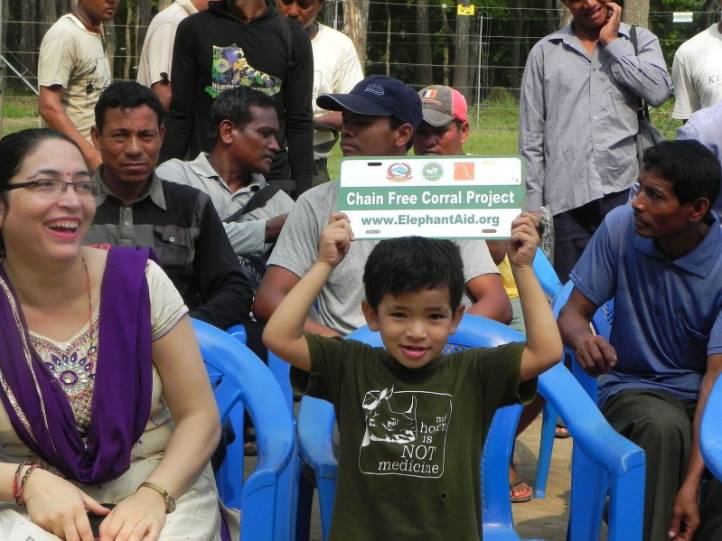
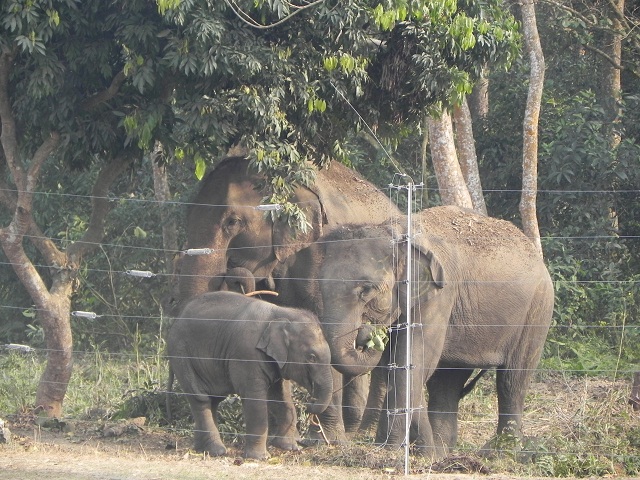
    A few days ago a surprise excursion took us to one of the remote hattisars (elephant stables) inside the Buffer Zone forest adjacent to Chitwan National Park. The group was treated to a sample of the remote chain-free corrals EAI built in 2014, one of 31 corrals built for government-owned anti-poaching patrol elephants in Chitwan National Park. Shankar Prasad is a large male who lives chain free without incident in the solar powered corral even though he could easy dismantle the fencing with his ivory which does not conduct electricity.
    eai3
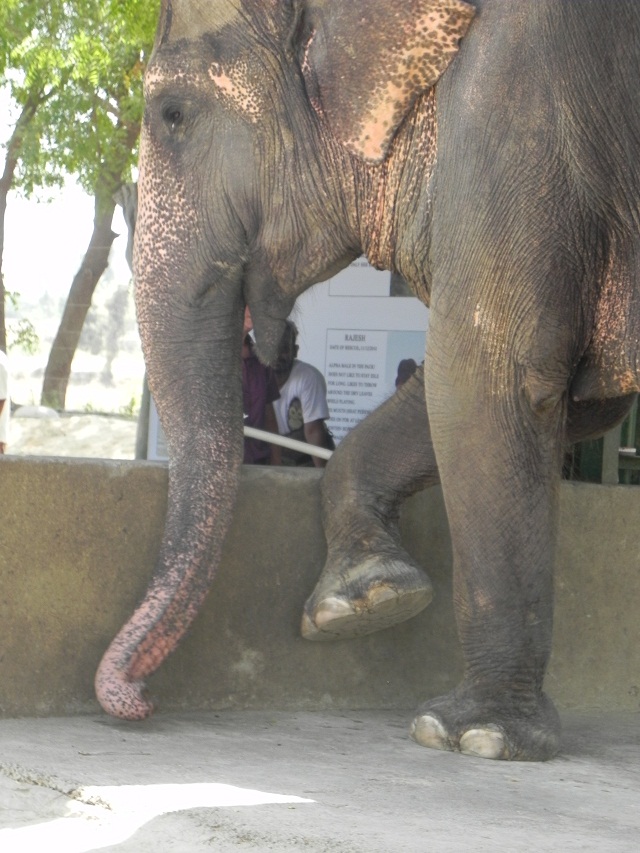
    The mahouts in all of the locations we work have exceeded our expectations. They are interested, engaged and are excited to show the progress they have made with their elephants. Sundar Mala’s new mahout shows off his skill teaching her how to put her foot up on a stump for foot trimming.
    eai5
    During his musth season a male elephant covers tens of miles daily searching out receptive females and socializing with his offspring in many different herds.
    eai6
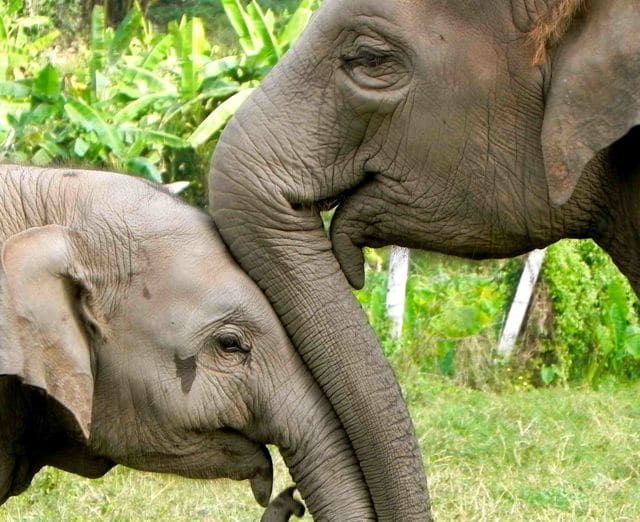
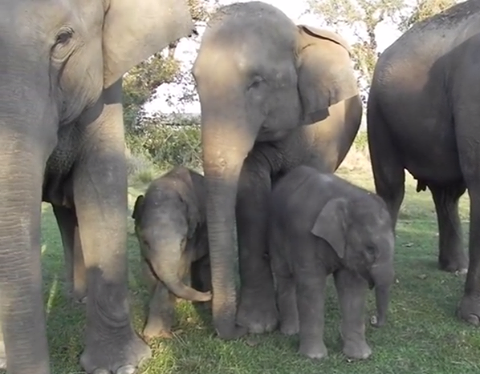
    Did You Know? Baby female elephants remain with their mother their entire life. The male calves are driven from the herd around age ten.
    eai7
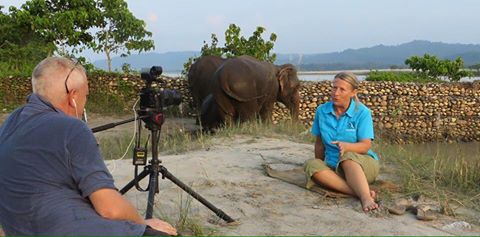
    David Clark, a filmmaker with National Geographic, is currently at Tiger Tops Elephant Camp in Nepal documenting Carol’s work.
  • Tiger Tops Elephant Camp is proving to be an amazing experience for all

    Tiger Tops Elephant Camp is proving to be an amazing experience for all

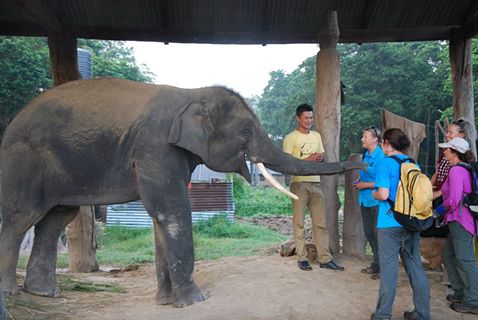
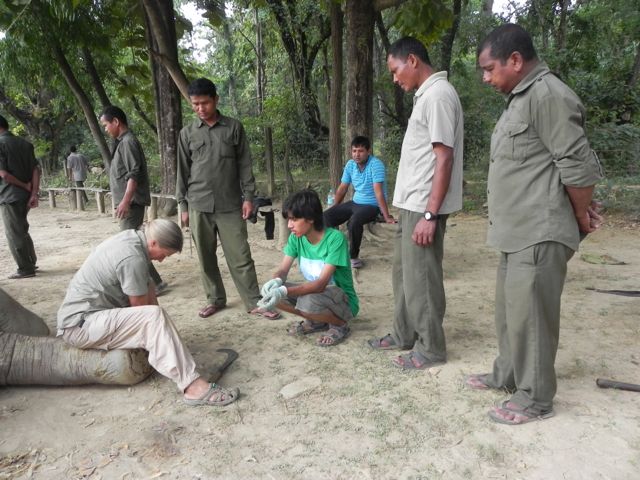
    3When teacher and student connect, the elephants benefit! EAI’s Elephant Foot Care Workshop at Tiger Tops Elephant Camp is proving to be an amazing experience for all

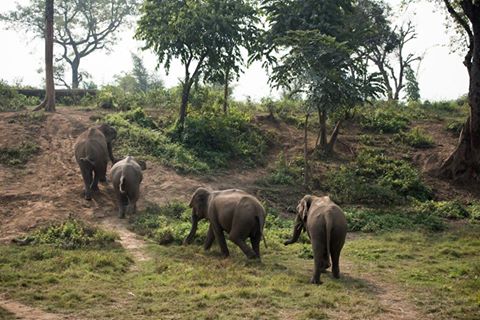
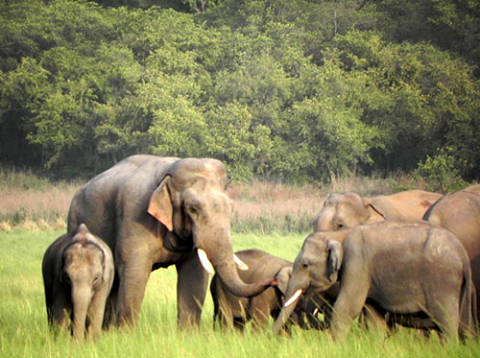
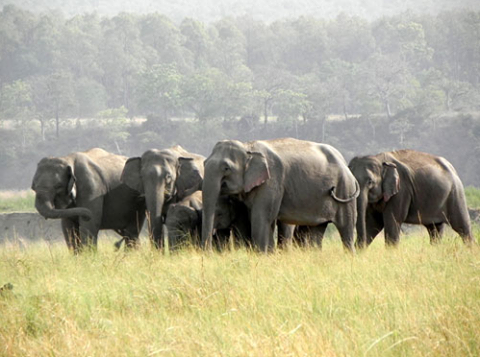
    Herds of wild elephants grazing peacefully in the vast grasslands of India.

    57 DAYS UNTIL CLOSING! The ERNA land and the surrounding climate are tailor-made for elephants, ensuring that each elephant who calls ERNA home will thrive.

    Researchers have found that elephants are highly intelligent and capable of many human-like emotions, such as happiness, sorrow and even empathy.

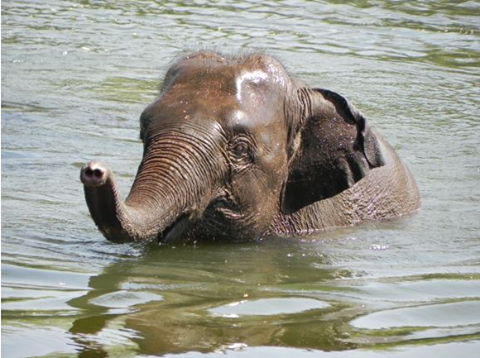
    Beautiful Jon taking a refreshing dip in the water.

    “The pure joy an elephant exhibits when given a resemblance of freedom is what drives me to do more.” – Carol Buckley


  • Foot Trimming in Bardia, Nepal

    Foot Trimming in Bardia, Nepal

    I’m back from Bardia. What an adventure!

    It was a 10-hour drive through mountains on rough roads. The 19-year-old driver of our rental truck scared the daylights out of all of us with his speeding, passing trucks on blind curves and nearly missing oncoming vehicles. Oh man — it was a stressful ten hours!

    Carol et al in BardiaBut our foot trimming program was a grand success. We had a fabulous trimming team: Dr. Gairhe; Kiran the vet tech; Hira, Kirti Kali’s phanet (head mahout) from the NTNC hattisar; and I.

    Our students included Chantelle, our intern; Surajan, a new friend and translator; and the vet tech from Bardia.

    foot trimming BardiaIn two short days we trimmed the feet of 24 government and privately owned elephants.

    Honestly, the condition of the privately owned elephant’s feet was criminal, similar to the privately owned elephants in Chitwan. Their pads were dry, cracked and severely overgrown. The nails were equally as dry and overgrown and many had splits and deep cracks.

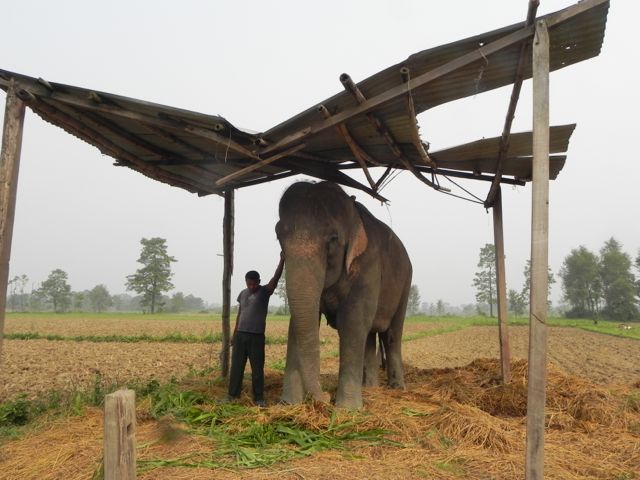
    broken shelter
    Private owner, broken shelter

    I am always shocked to see how poorly the privately owned elephants are kept, especially since they are the breadwinners for their owners.

    The good news is that 24 more elephants received pedicures and their mahouts were introduced to foot care. With time things can change for these over-used, abused and neglected elephants…I hope.

    A huge thank-you goes out to the trimming team. Without their enthusiasm and hard work we could not have accomplished our goal to provide foot care for elephants in Bardia!

    You can make a difference in the life of a captive elephant by supporting our Foot Care project. Thanks for your help.


  • Report: Chain-Free Project, National Trust for Nature Conservation — Biodiversity Conservation Center

    Report: Chain-Free Project, National Trust for Nature Conservation — Biodiversity Conservation Center

    Chain-Free Hattisar Project
    National Trust for Nature Conservation – Biodiversity Conservation Center
    Chitwan, Nepal

    REPORT

    Project completed Jan 10, 2013

     Department of National Parks and Wildlife Conservation
    Jhamak Karki, Chief Warden-Chitwan National Park
    Dr. Kamal Gairhe, Senior Wildlife Veterinarian-Chitwan National Park

    National Trust for Nature Conservation
    Naresh Subedi, Senior Conservation Officer
    Chiranjibi Pd. Pokheral, Senior Conservation Officer-Biodiversity Conservation Center
    Babu Ram Lamichhane, Conservation Officer-Biodiversity Conservation Center
    Dr. Arjun Pandit, Staff Veterinarian- Biodiversity Conservation Center

    In collaboration with

    Elephant Aid international-USA
    Carol Buckley, Founder and CEO

    INTRODUCTION

    In January 2013, construction was completed on a solar-powered chain-free hattisar at the National Trust for Nature Conservation’s Biodiversity Conservation Center (NTNC-BCC).

    This first-of-its-kind pilot project was developed to study the benefits of working elephants in Nepal living chain-free.

    Six elephants, ranging from seven months to seventy-plus years, currently live in five interconnected chain-free corrals designed to improve their welfare.

    The elephants spend an average of fifteen hours in the hattisar each day. In the past they were hobbled by both front legs, chained under a shelter that prevented natural posturing and healthy physical activity.

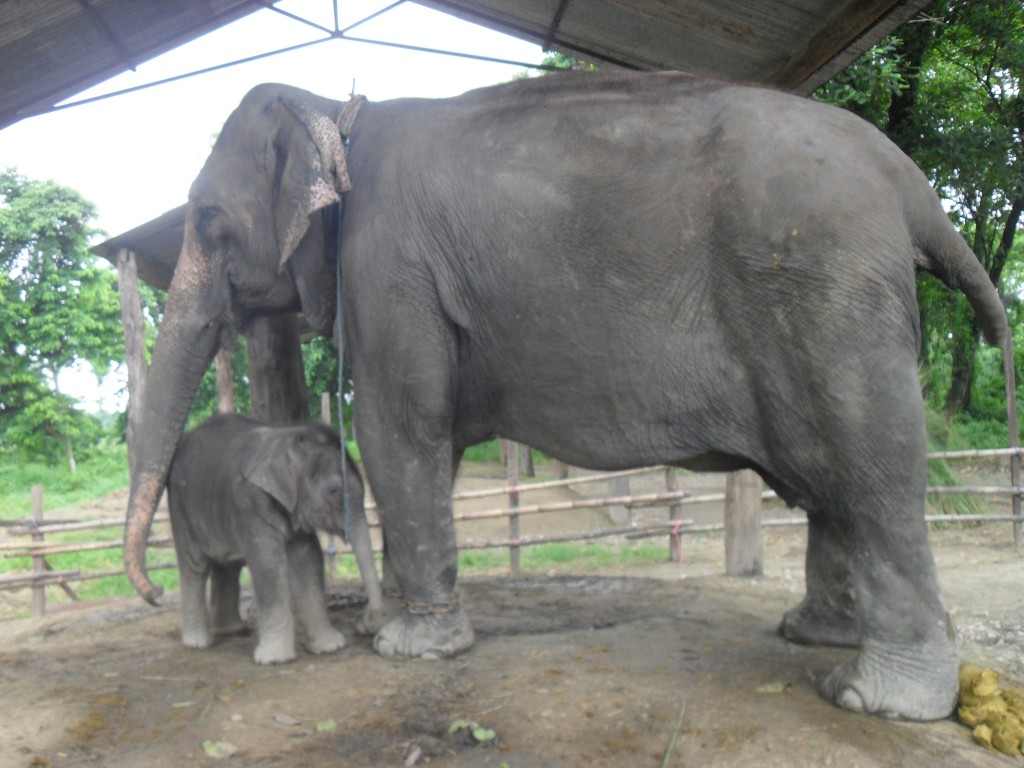
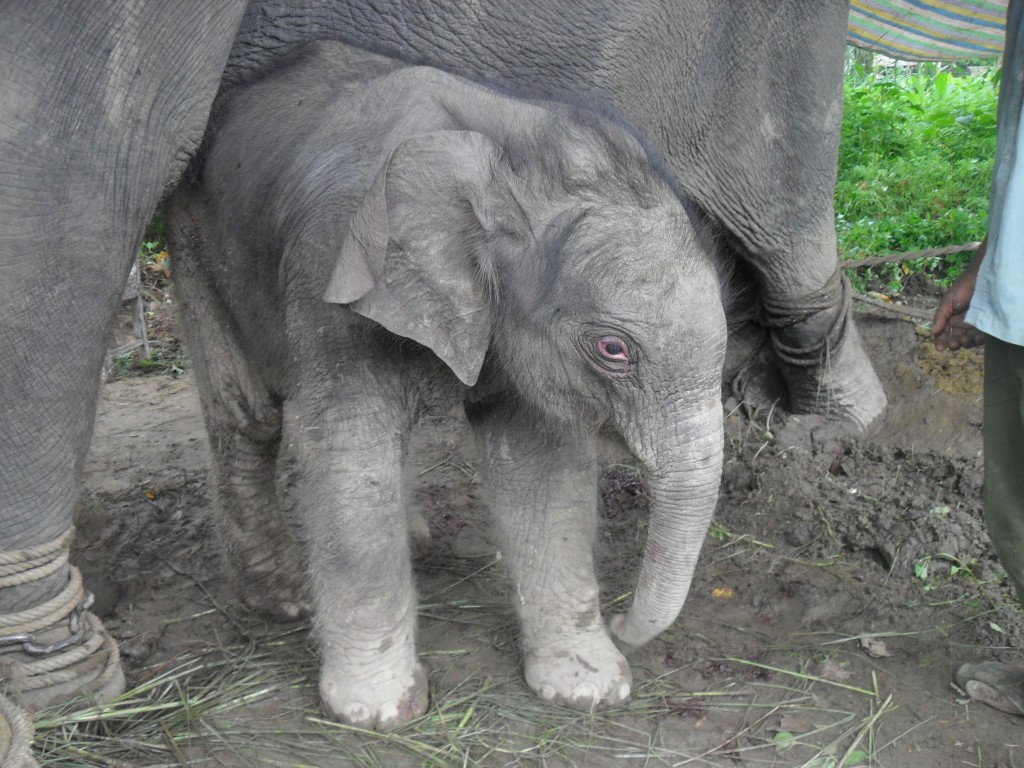
    Now, living in the chain-free corral, each elephant is free to move at will and engage in natural behavior such as dusting, foraging, sleeping, bathing, walking, playing. In the case of Man Kali and her children, eight-year-old daughter Prakriti Kali and seven-month-old son Hem Gaj, this related family is able to engage in normal social behavior.

    Corral construction and operating system

    The corral’s operating system is a solar-powered energizer with a double battery back-up. Three hours of sunlight is required to keep the batteries charged for 10 days.

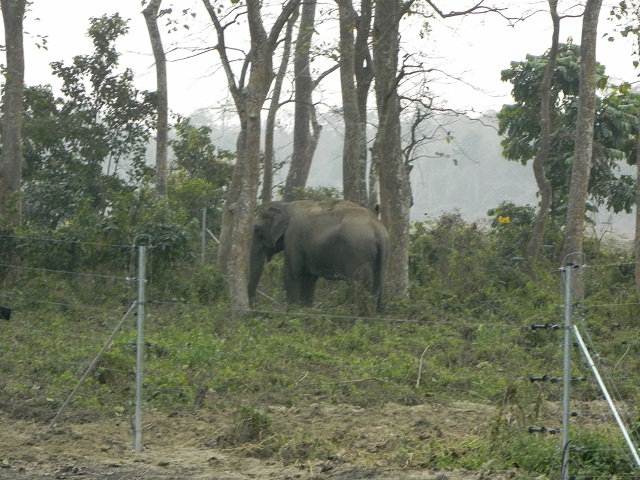
    Specifically designed for wildlife, the corral administers a mild shock upon contact. Due to the pulsating current, it is virtually harmless. Being highly sensitive to the clicking sound of the current, most elephants avoid the fence without ever coming into contact with it.

    The chain-free hattisar consists of five interconnected corrals on approximately two-and-one-half acres of open and wooded land.

    The corrals stand seven feet tall, constructed of rust-free steel posts and six strands of high tensile wire. Each post is encased in a protective tope.

    Each corral has a front, back and side gate for ease of access for cleaning, feeding, moving elephants in and out and providing socialization opportunities.

    The energizer and batteries are housed inside the mahout residence; two solar panels that charge the batteries are attached to the roof of the residence.

    Each corral is equipped with a cut-off switch enabling independent operation.

    This design has proven successful in many areas of Asia to prevent entry by wild bull elephants.

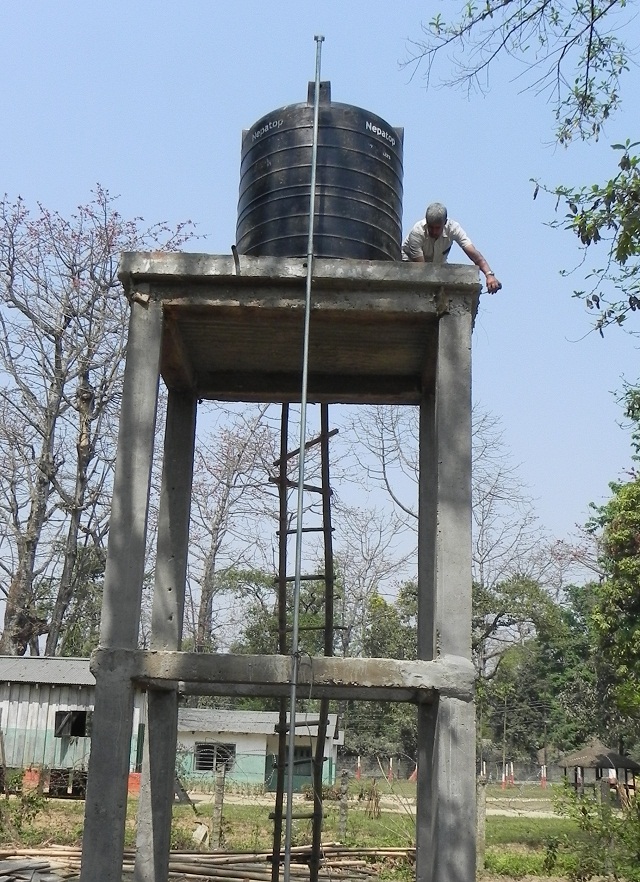
    Fresh water is stored in an elevated water tank and troughs are filled by gravity feed.

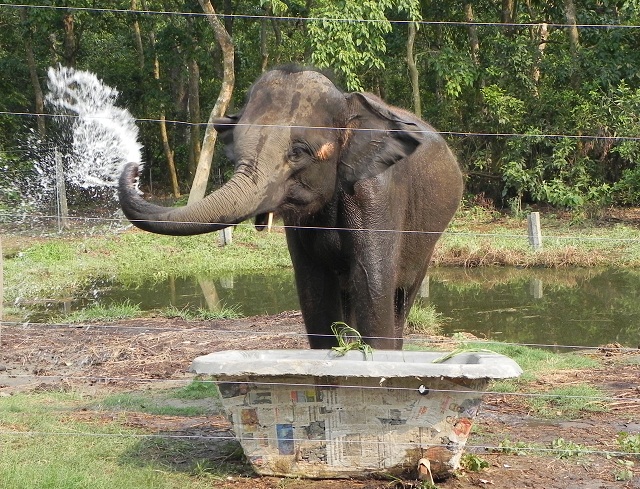
    water trough reduced 3
    All corrals have a custom-made concrete water trough that provides clean water.

    Healthy trees are an important component of the chain-free corrals, providing shade, browse and a natural scratching surface.

    To prevent serious damage to trees from elephant tusking activity, protectors were built around select trees.

    GOALS AND OBJECTIVES

    • Reduce or eliminate stereotypical behavior caused by chaining
    • Eliminate low-level long-term stress caused by chaining
    • Increase physical activity
    • Encourage engagement in natural species-specific behavior such as  foraging, dusting, bathing, walking, playing, socializing and exploring
    • Eliminate injuries and bone and joint damage
    • Improve foot health
    • Maintain elephants’ compliance with mahout authority

    METHODS

    • Ethogram
    • Husbandry protocol
    • Management protocol
    • Feeding protocol

    1.   ETHOGRAM

    In order to quantify the effectiveness of the chain-free corral, an ethogram spreadsheet was created to track a list of natural and stereotypical behaviors, including walking, eating, dusting, playing, exploring, drinking, socializing, sleeping and exhibiting stereotypic behaviors.

    2.     HUSBANDRY PROTOCOL

    Manure removal and corral cleanliness standards were established to ensure the highest level of hygiene.

    3.    MANAGEMENT PROTOCOL

    Training and management practices for inside the corral were established to give elephants a sense of freedom and security.

    4.    FEEDING PROTOCOL

    Changes to traditional feeding practices were established to promote activity and alleviate boredom.

    PROGRESS AND PRELIMINARY RESULTS

    Each elephant spends approximately 15 hours each day in the chain-free corrals. The remainder of their time is spent in Chitwan National Park engaged in grass collecting, anti-poaching patrols and conservation work and jungle safaris.

    Upon first introduction to the chain-free corrals, each elephant calmly explored the area, foraging, dusting and scratching on trees. Each evening they dig in the soft dirt of the forest, creating a comfortable sleeping spot; none return to the stable area to sleep.

    The related family of Man Kali, Prakriti Kali and Hem Gaj are housed together. They bonded immediately when united in the chain-free corral and continue to exhibit healthy elephant behavior, with Prakriti Kali assuming the role of big sister to Hem Gaj.

    A survey was conducted to track the behavior of the elephants toward the mahouts and drivers. Mahout compliance has not changed. Each elephant continues to respond favorably to mahouts and drivers—both inside and outside the corral—at the same high level as before being released from chains.

    Photographic records are being kept to track foot health and bone and joint conditions.

    Collectively, the elephants’ behavior represents a substantial improvement in natural activity and reduction in stress and stereotypical behavior.

    CONCLUSION

    The goal to eliminate stress from chaining and the resulting stereotypic behavior is realized. Adherence to the new feeding protocol ensures that both Prakriti Kali and Mel Kali do not engage in stereotypic, food anticipatory behavior. Since being introduced into the chain-free corral hattisar, all elephants engage in appropriate, beneficial, species-specific behavior; respond favorably to their mahouts; and appear to be calm and comfortable in their new environment, indications that the project is meeting its goals and objectives.

  • Monsoon Season is Over – September E-Newsletter

    Monsoon Season is Over – September E-Newsletter

    There are more than one hundred elephants awaiting pedicures in India and Nepal. Wow — I can hardly catch my breath at the thought of it!

    This is my passion these days — foot trimming. The joy of being at the ground level, literally, of elephant welfare, is thrilling. I know we cannot fix all the problems facing captive elephants in Asia, but foot care is a very immediate and concrete way to improve their lives.

    India: Care center plans

    I will be in India through October, visiting with colleagues about prospective care center projects (and, of course, trimming elephant feet!). The care center project in Bannerghatta stalled due to property ownership issues and lack of government clearance. Disappointing as it is, we have decided to cancel the Bannerghatta care center project and concentrate on other more promising locations.

    This will be my third visit to Guwahati, in India’s north. It is stunningly beautiful elephant country. Unlike my last visit, which was a six-hour whirlwind blur, I will spend several days studying the area proposed for a new care center. I also plan to meet with the chief warden of Assam about a proposed care center in his state.

    This will be my second meeting with the warden. My colleague from the Assam Elephant Foundation and I are encouraged by the interest he has shown in this project. In fact, it was the warden’s idea and it is only with his endorsement that the project can move forward.

    The last time we met, the warden committed an area of land to the proposed center and agreed to permit the residents of our center to have access to the surrounding forest. This is an exciting start. I will keep you posted as we proceed.

    I will make a repeat visit to Wildlife SOS-India, outside New Delhi. This time I will have the opportunity to provide pedicures for all the elephants before heading off to see their new project, a four hundred-acre elephant rescue center under construction in Mathura. I have heard so much about this project—I can’t wait to see it.

    Nepal: Pedicures, chain-free yards, waste disposal and retirement center

    When I arrive in Nepal in November, I will have my work cut out for me: pedicures for more than one hundred elephants; we hope the construction of several more chain-free yards; development of environmentally sound elephant waste disposal practices; and brainstorming on plans for an elephant retirement center in Sauraha. What a productive time this will be!

    Our first candidates for a chain-free yard are Man Kali and her two-month-old baby Hem Gaj. Currently, Man Kali is chained but little Hem Gaj is chain-free, kept with his mom in a wooden corral built by the mahouts.

    But the wooden corral won’t hold him in for long!

    After watching how Sweetie Kali blossomed in her chain-free yard, the mahouts want the same for her baby brother. They are determined that Hem Gaj will not be put on chains and have asked us to build a yard for him and his mother.

    Help us build a yard for Man Kali and Hem Gaj!

    Enclosing one acre of land with the power fence required to keep captive elephants in and wild elephants out, costs close to $4,000US. Adding water storage tanks, plumbing and a drinking trough, adds another $2,000US.

    Help us remove the heavy chains from Man Kali’s legs and ensure that baby Hem Gaj will never feel the pain of cold steel around his ankles.

    Just say yes! I want to contribute $10 / $25 / $50 / $75 / $100 / or other $_____ to build a one-acre, chain-free yard for Man Kali and her two-month old baby, Hem Gaj.

    If you prefer to donate by check, please make your check payable to Elephant Aid International and send it to:

    Elephant Aid International

    P.O. Box 106

    Hohenwald, TN 38462

    931-796-1466

    As you might expect, we won’t stop there. As the funds are raised, we will build more yards for more elephants.

    We are making great progress in Nepal. The mahouts welcome my return and are engaged in the changes we are making. They have embraced the chain-free yard concept, are excelling at pedicures and want to learn more humane ways of working with their elephants. The future of elephant welfare in Nepal is in their hands.

    You make it possible

    We have made it this far because we believe in the power of one. Each one of you makes it possible to help one elephant, then another and another.

    As I head off to the Far East once again, I am eternally grateful for your continuing support and encouragement. Knowing that you are behind me one hundred percent gives me the determination to forge ahead, helping one elephant at a time, then another and another. It’s working and it’s all thanks to you!

    Please follow the progress of our work on my blog and thank you, as always, for your support.

    Namaste,

    Carol

  • Forest Dwellers

    Forest Dwellers

    Today’s foot trimming adventure was over the top, a marathon day with Dr. Gairhe—the senior government veterinarian—leading the way.

    Kiran and Chitran, the two vet tech/3rd year foot trimming students, and I fit perfectly in the back seat of the full-size pickup truck…or so I thought when we all piled in. If it had not been for the road conditions, the ride would have been…well, let’s say, less memorable. I’m not complaining — far from it — and I enjoyed every minute of our 14-hour adventure.

    One thing that struck me this time in Nepal is realizing my unconscious expectation of comforts that I take for granted in the US. Sitting between two large men, bouncing down a seriously bumpy road and being slammed side-to-side like bumper cars, I realized that I accepted this assignment with an unreasonable expectation of transportation comfort. The reality of the situation made me laugh.

    The Nepalese don’t fret over physical discomfort, they simply accept it. So when I started joking about the guys staying on their own side of the seat, it soon became a humorous game. When Kiran would absent mindedly crowd my space, I drew an imaginary line between us and said, “You have crossed the line,” and like two adolescents we’d crack up with laughter. Soon everyone got into the game of not invading each other’s space, so when Kiran flopped his entire arm over Chitran’s leg, he was abruptly chastised—jokingly. Everyone broke out into hysterical laughter. It was refreshingly silly to experience such discomfort and be able to laugh about it together.

    Humor aside, I realized that if I continued to be thrown back and forth between the football player-size shoulders on either side of me, I was going to be very sore, if not crippled by the end of the day, so I pulled rank (age, actually) and claimed the window seat. This was much better for me as I could press myself against the door and hang onto the armrest for security.

    Four outposts, seven elephants and a canoe like a swimming pool

    Our mission for the day was to visit four government outposts to trim the feet of seven elephants. Our first stop was Gadini outpost, a place we visited last year. After driving for nearly two hours we arrived on the bank of a beautiful river. The flimsy wooden canoe that would carry us to our destination was on the opposite side of the river. The boat man soon appeared and to my amusement proceeded to bail out the canoe—it had taken on quite a bit of water—before heading in our direction.

    In order to board in peaceful waters we hiked a short distance upstream. The day was already steamy hot. Tiny frogs scattered as we approached the water’s edge, disappearing into the calm shallows.

    Our canoe was waiting when we arrived and we gingerly climbed aboard. A real man, or woman for that matter, sits on the floor of the boat. But customs are changed for foreigners. The government guard post on our side of the river provided tiny wooden seats for our canoeing comfort—and to keep our backsides dry. I kind of wondered where the life jackets were, since the canoe was already taking on water through cracks in the flimsy wooden planks strapped together with giant metal staples. To add to the drama, Dr. G asked “Can you swim?” I can’t remember not knowing how to swim, and wondered the level of fear one would experience crossing this fast-moving river in a boat that resembled a swimming pool, not knowing how to swim.

    With a smooth push off from a ten-foot bamboo pole, the boat master expertly guided us into the swiftly moving current. The water picked up volume and speed and within minutes we were deposited on the opposite bank without incident. We disembarked and hiked the short distance into the forest to the outpost. The forest was lush and green and teaming with active, boisterous bird life.

    Gadini outpost: Healthy feet and relaxed elephants

    Namastes were exchanged and then it was right to work. Kiran requested that the crew pa (machete) be sharpened, which is effectively done on a large rock with sand. No power sharpening tools here: they use the available resources and manage just fine.

    Elephants Sano Chanchal Kali and Rampyari were tethered under separate shelters bordered by the forest. The stables were clean and the girls looked on calmly.

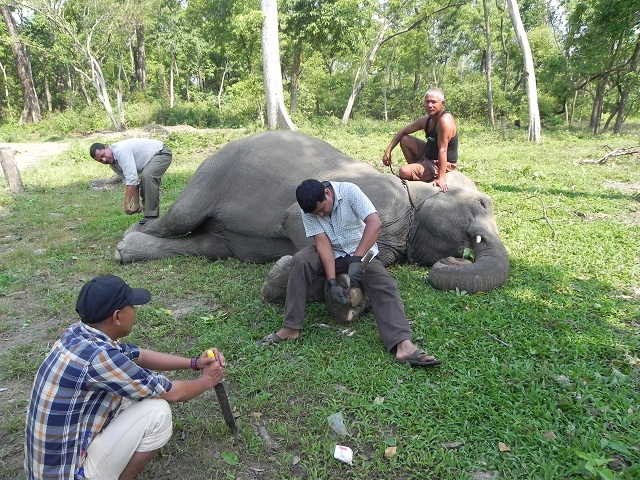
    With a simply utterance of bite (lie down), Sano Chanchal Kali slowly folded to the ground without resistance or concern. We were all so pleased to see that her pads were healthy and evenly worn and her nails were only slightly overgrown.

    As I took “before” photos, put on my girly gloves and prepared my exacto blades, which are also kind of girly, the guys were already trimming excess nail with precision that is hard to imagine when using a machete. I am in awe of how well the men handle this tool, but they grow up using it, starting with cutting grass to feed livestock and later as a knife to cut anything.
    Sano Chanchal Kali took this special time of hati la na pita (don’t hit the elephant) to drop off into a fairly sound sleep for most of her trimming. She shifted to her other side without resistance and allowed us to give her one of the most beautiful pedicures to date!

    Almost in an identical fashion to her sister, Rampyri folded to the ground following a simple verbal command. The mahouts have gotten the word: if you want this crew to trim feet, no hitting allowed. Refreshing for us and for the elephant. Rampyri’s feet were another pleasant surprise, pads evenly worn and supple, nails only slightly overgrown and no sign of decay or infection. The crew commented on “what easy feet” these were.

    Our work in this camp was completed in record time thanks to the healthy condition of the elephants’ feet and the relationship they share with their mahouts.

    Honestly, I can’t remember if we had our home cooked meal at this outpost or the next — those details seem to blur together — but I do remember that to get to the second outpost we got back into the canoe and floated downstream for some time. A black egret fished on the shoreline ahead and a white breasted Kingfisher swooped past us in pursuit of a meal. Without any initial sign of elephant or mahout life, we landed again on the riverbank and hiked a short distance to the second camp.

    These camps are inside the national forest, which, in this location, is an island. Dr. G told us that wild bulls do not cross the river encircling this island. No one knows why, but as result of this phenomenon, captive bulls can be kept on the island without fear of being attacked by wild bulls.

    Kurauli post: More healthy feet and easy pedicures

    As with Gideni, the elephants at Kurauli post were aware of our arrival. Dhirendra Kali and Gandaki Kali, were waiting—mahouts casually mounted on top—surveying the approaching team.

    Before having hardly a chance to settle in, I heard “bit” followed by “raw,” which meant our first client had reclined and was awaiting her pedicure. We now operate quite smoothly as a crew. While I unpacked trimming tools, gloves and camera, the others examined the client’s feet and prepared for trimming by sharpening the machetes.

    We all commented on how great Dhirendra Kali’s feet looked. I liked the pattern I was seeing. The more remote the outpost, the better condition the elephants and their feet were in, the more skilled the mahouts were and the less pressure the elephants experienced when requests were made for their compliance. But of course, they were living in their element with the river nearby, sheltered under giant trees, on natural substrate and plenty of exercise combing the forest for poachers.
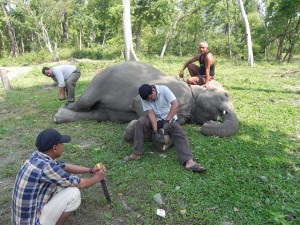
    With such healthy feet, there was little work for the crew. Shave off overgrown nails a little, check for decayed areas and she was done. Another easy pedicure!

    When Dhirendra Kali left the trimming area she let out a “Queenie-squeak.” It transported me back in time to the Sanctuary overlook at the Q-barn with Minnie, Lottie and Queenie playing in the mud, Queenie making her distinctive squeaks nonstop. Dhirendra Kali’s gentle sound brought back a very a pleasant memory for me. I accepted it as the gift it was.

    But this was not time for daydreaming because Gandaki Kali was already in place and waiting for her pedicure. I was pleased to see that her nails and pads were also healthy and only slightly overgrown.

    It is so encouraging to see that these elephants are getting sufficient exercise, on appropriate substrate, which is why their feet are so healthy.

    To be continued….
  • Wildlife SOS – INDIA

    Wildlife SOS – INDIA

    During this trip to India I basically sequestered myself in Bannerghatta, singularly focused on the care center project. As my pending departure loomed I realized that I had failed to visit other projects. There really is so much to see—elephant welfare-wise—in India, I was kicking myself for not setting aside time to further my education.
    Literally days before my visa was to expire I received an email invitation from Kertick and Geeta of Wildlife SOS to visit their facilities in Agra. True to my nature, I hesitated at first — not because I did not want to visit their bear and elephant facilities but because my flight was already booked and I did not want to pay the flight change fee.

    Fortunately, my flight from Bangalore to Kathmandu had a plane change in Delhi, the airport I needed to fly into for Wildlife SOS. I was able to postpone the second leg of the flight, giving me almost three days to spend with the Wildlife SOS staff at both their bear and elephant facilities.

    The visit would have been perfect if Kertick and Geeta were in the country but they were in California, presenting at the PAWS elephant summit and other venues. In their absence, their expert staff took care of all arrangements, which made my visit very comfortable. I hope Geeta, Ketrick and I will meet in the next few weeks, as they plan to come to Nepal to observe my work in Sauraha.

    The work Geeta, Kertick and staff have done to rescue and rehabilitate dancing bears is nothing short of miraculous. The facilities are well designed, with expansive yards, spotless night houses and a dedicated and knowledgeable team of caregivers and veterinarians.

    I was in the education hut sitting on a couch viewing one of many informative videos about dancing bears and the plight of other Indian wildlife, when something—light as a feather—touched my shoulder. I assumed it was an insect and reached up to gently brush it away without taking my eyes off the screen.

    Without a sound or advance warning more than the gentle shoulder tap that I mistook for an insect, something much heavier than an insect, maybe four or five pounds, warm and hairy, jumped onto my head. I froze and whatever-it-was froze. I had no idea what it was. It was completely silent and warm, grasping my hair in what felt like many tiny hands.

    Not being able to see what was perched on my head was indeed unnerving, and no one else seemed to be around. I trusted that I would not have been put into this room alone with anything dangerous so I considered my options. Yelling for assistance was out. Reaching up to remove my head ornament seemed risky. And waiting for someone to come to my rescue seemed unrealistic.

    My decision was to slowly reach towards my head to see what would happen. The “thing” leapt from my head across the room to a chair and then back to my head again. Her movement was quick but as she was flying through the air getting ready to land on my head again I saw the “thing” was a young capuchin monkey.

    Even though I am comfortable with captive wild animals I respect them by keeping my distance because I feel interaction is not in their best interest. But this little creature obviously felt differently. She leap frogged from her chair to my head a couple of times and then remained perched on my head. With no staff in sight I realized I would need to deal with this little bundle of curious energy on my own. I was not opposed, I just did not want to do anything wrong, not having been around a primate before.

    Gently untangling my hair from her tiny fingers she allowed me to remove her from my head and lower her to the couch. We looked at each other—too cute is all I can say—as she ever so confidently climbed into my lap, took hold of my hand and placed it on her belly. There was no misunderstanding this gesture — she wanted a tummy rub.

    I admit to being in heaven while at the same time wondering how I could justify having a monkey in my lap. In the end I did not try to justify it, I simply accepted the experience as the gift it was and enjoyed every second she remained in my lap. A few minutes later one of the resident Great Dane rescues showed up, sending her dashing from the room.

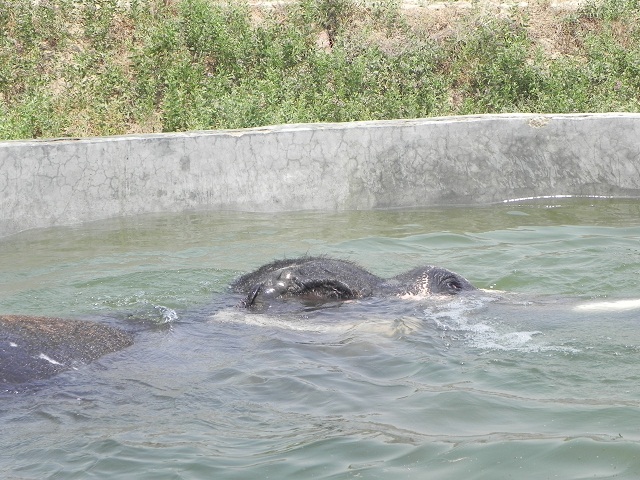
    Escorted by staff veterinarians we first toured the bear facilities and then drove a short distance to the temporary elephant facility. Set up on five or six acres of land, the elephant facility is a good start for the rescued elephants. The facility is well designed, with stables for shade and nighttime, sand piles to avoid hard surfaces, a steel corral stable for bulls and a circular concrete pool that is the high point of everybody’s day.

    It was amusing to watch Rajesh, a beautiful full-grown bull with massive tusks, submerged for hours, gently bobbing around in the pool.

    I did a little foot care and target training to give the vets, mahouts and elephants an idea of what was to come in the future. The mahouts have already changed how they work with the elephants to a great degree. The harsh tone and demanding commands are still used but the ankus and infliction of pain are not. I could see the mahouts are being won over to other ways of working with their elephants — it was exciting to see the progress they have already made.

    Kartick and Geeta have plans to move the elephants to a very large tract of land. I have decided to accept their invitation to be involved in this project and recommend that you visit their site and support their work for rescued bears and elephants.


  • Kasara Camp

    Kasara Camp

    Today I traveled many kilometers through Chitwan National Park to reach my foot trimming clients. To get there, I hiked to the river’s edge, boarded a small sailing vessel, crossed a river and drove through a magnificent forest, crossing over creeks on what I would call barely-bridges (as opposed to sturdy concrete ones). It was a wonderful adventure!

    When I reached the river, the tourists were packed like sardines in their low-rider boats with a boatman steering them lazily down river. Dr. Geare, the head Government veterinarian at Chitwan National Park, Chitra, a vet tech who works with Dr. Geare, and I were ushered onto our private dugout canoe with removable seats (little wooden stools that fold up against the side of the canoe when not in use), which silently glided across the river to the sand bank on the opposite side.

    Our driver magically appeared. We climbed into a truck and I must say had a ride of my life. It was only after we picked up several young soldiers hoofing it back to camp that I was able to release my firm grip on the door frame, the only thing keeping me from bouncing out of my seat and hitting head on the roof. The weight of the men in the back gave the truck better traction and kept the back end from bouncing up and down like a trampoline. It was a great ride through a beautiful forest.

    Within minutes a wild boar had crossed the road, male peacocks could be seen and heard sounding their calls, a monkey clung to the side of a tree, a couple of deer flashed by and too many muggers (crocs) sunned themselves along the back of a small creek.

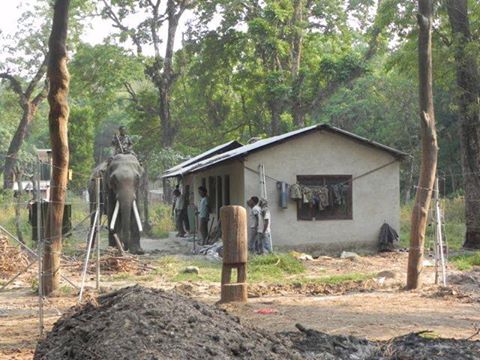
    Our destination was the Kasara forest camp where four government elephants live. What a shift from Sauraha. Don’t get me wrong — Sauraha is a nice place for the government elephants — but in Kasara the elephants are really living in the forest. If I could only get rid of the chains and hobbles and put up some hot wire fencing, I would really feel as if I was helping them. Okay, one thing at a time — first feet trimming and then more freedom!

    Kiran was not with us today, but Chitra also excels at foot trimming. Upon arrival, I found that instead of the three elephants I was expecting there were actually four. Three elephants were scheduled for foot trims which is why they made it on the list, or maybe it was because the fourth elephant actually is unnamed. She is Laxmi Kali’s year-old calf. When I asked her name, a slight hesitation was followed by, “Her name is Laxmi’s calf.”

    After spending several days trimming the feet of privately owned elephants, I must admit that today really highlighted the differences from those owned by the government. The government mahouts seem to have a much better relationship with their elephants. They do not yell incessantly nor strike their elephants absentmindedly, which is good because Chitra and Dr. Geare had already heard my request for no pit neu. Actually, my request has grown more sophisticated following an impromptu Nepalese lesson I had last night. I was told that no pit neu is nonsensical and that the proper way to get my point across in proper Nepalese is hati lie na pita, which translated means, “Do not hit the elephant.”

    The foot trimming went smoothly, with the mahouts seeing for the first time how to administer proper foot care. They were very interested and helpful, and each appeared proud when his elephant’s trimming was completed.

    Just as we were finishing up with Laxmi Kali, her calf decided that it was time for a drink and let out a boisterous “I’m thirsty!” yell. Mom immediately threw her hind leg in the air to get up, a fair warning to the mahouts that she really needed to respond to her calf. We all laughed, knowing how the babies call the shots. Laxmi jumped to her feet and baby got the drink she was so thirsting for.

  • Nepal Mobile Pedicure Parlor

    Nepal Mobile Pedicure Parlor

    Foot trimming with the privately owned elephants started yesterday. Once again Kiran, a veterinary technician working with NTNC and the government in Chitwan National Park, came through, setting up the foot trimming schedule and arranging for the elephants to be at the stable.

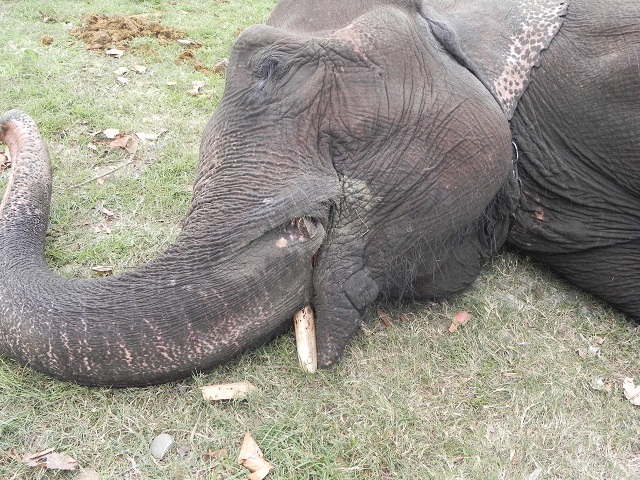
    Sona Kali laid down to expose feet in dire need of trimming. Her back pads were okay but the nails on all four feet were severely overgrown, decayed and split. The pads of her front feet had deep black tracks of bacteria.

    The first difficulty we experienced was the mahout’s failure to respond to Kiran’s direction. At first I thought he was ignoring Kiran and then it seemed he did not understand what Kiran was saying. Araw means stop and, even if you don’t speak Nepalese, a mahout would know that word because they use it with their elephants continually. But when Kiran said “araw,” the mahout kept cutting. Without hesitation, Kiran took the knife and continued the trimming himself. The mahout training was a bit slow at first but when he finally started following Kiran’s directions, it seemed that he could end up being a good foot trimmer.

    Kiran’s and my partnership is well established. He starts with the big cutting, shaving down the overgrown nails, and I follow up with digging out the rotten areas, taking off more of the overgrown nail and shaping everything into place. It is a pleasure to work with him, not only because he does a good job but because he takes pride in doing a good job. When I am deep in concentration focused on a problem area Kiran will say, “Carol, please,” which I have come to understand means “move out of the way with that sissy knife and let me cut away more of that excess nail.” I am happy to oblige him because I can save my energy for sculpting.
    I must admit that Sona Kali’s feet had me sweating — they were definitely the most overgrown so far. We were able to trim her nails into shape but the thick tracks of bacteria were so deep between the toes of her front feet, it will take several follow-up visits over the next many weeks to bring her feet back to health.

    With all that Kiran has done to make this Nepal Mobile Pedicure Parlor a success, I want to raise some funds to show appreciation. There are forty private owned elephant here in Sauraha so we have our work cut out for us, but the effort is worth it: the elephants will have healthier feet and the mahouts will acquire additional skills. The truth is that I could not have provided this service without Kiran’s assistance.

  • Breeding Center

    Kiran, the government veterinary technician, and I finished trimming feet at the Government Breeding Center yesterday.

    I was so pleased that things really changed from the first day. I spoke with Kiran about the mahouts hitting the elephants; he was great. Without hesitation, he engaged the mahouts, men he has worked with for many years, and explained why they cannot hit their elephants. From his intonation and body language, I could tell that Kiran took my request very seriously and the phonits (lead mahouts) and mahouts listened intently. . They respect Kiran and followed his direction without hesitation, which was that at no time should they hit the elephants.

    When the first nervous elephant laid down, the mahout unconsciously went to strike her instead of allowing her time to lay her arthritic body gently to the ground. The other mahouts and Kiran cried out in unison – “no pit nau” (show respect-don’t hit).

    Stopping in mid-swing, you could see that the mahout had not realized he was about to hit his elephant; the action is so ingrained there is no thought associated with it. Like breathing, it is automatic. For the next 90 minutes, the mahouts needed to remind each other only a couple of times, and the reflex to hit was quickly under control.

    It was great to see the mahouts monitor each other in an effort to comply with our request. There was even laughter when a mahout would absentmindedly raise his stick and other mahouts would verbally jump all over him. All of the mahouts and phonits got into the act of making sure no elephants were harmed during my time at the center. Joking around with the mahouts and having Kiran present made it possible to create a calm and abuse-free environment. As expected, the elephants relaxed into their pedicures.

    The elephants at the breeding center spend the day out in the forest browsing and the nights chained under a shelter. Mothers and calves are allowed to stay together until the calf is around five, and I must say, the center runs quite smoothly.

    With a good mix of young and senior phonits and mahouts, we had lots of guys jockeying for a turn to trim feet. The competition between men and boys did not hurt a bit, and then add to the mix that a woman was doing trimming. By the second day I was able to instruct the mahouts to do the heavy cutting with the cycle knife (which I refuse to touch), leaving me to do my favorite part: intricate trimming and shaping with my prissy exacto blade. At first the guys laughed at my knife but the smiles melted from their faces when they tried to trim with it. They quickly learned that my knife was designed for precision work, not brute strength, and that it takes some time to get a feel for it. In the end, the guys were opting for the girly knife and doing some really fine trimming on their elephants’ feet.

    Dr. Geare, the head government vet, checked on our progress several times over the past two weeks. He encouraged his staff to learn as much as possible, stating that with proper foot care the center would save money. He said that in the past many elephants developed foot problems requiring drug therapy, antibiotics and anti-inflammatory treatment. He was optimistic that by learning foot trimming skills, the phonits and mahouts could ensure better foot health for their elephants and reduce the need for drug therapy.

    Each morning on our way to the breeding center we stopped at a local produce stand to buy a stock of bananas. Kiran was a champ, never complaining about having to taxi me around on his motorcycle. The road to the breeding center is…well…how do I say? — rocky! Potholes are not the concern; it’s all the boulder-size rocks used to make the paved surface. Watch out when you fall…ouch!

    We did take a spill, once. Luckily we were driving quite slow, crossing another road, when a baby goat, in hot pursuit of breakfast, darted right under the front tire. Kiran successfully avoided the youngster but spilled the bike as result. I saw it coming and was only concerned that we not hit the goat. The local shopkeepers rushed out to brush the dust from our clothes and make sure we were okay. I craned my neck to see the condition of the goat. She was safe and sound a few feet away, suckling from her mom with her twin sister, unconcerned about the commotion she had created. In Asia animals may be treated differently but they are valuable, more valuable than the motorcycle we rode on. If Kiran had harmed or killed the goat he would have had to reimburse the owners for her value. Needless to say, every precaution is taken to avoid harming someone else’s livestock.