Tag: humane training

  • Unchained: New Documentary on EAI

    Unchained: New Documentary on EAI

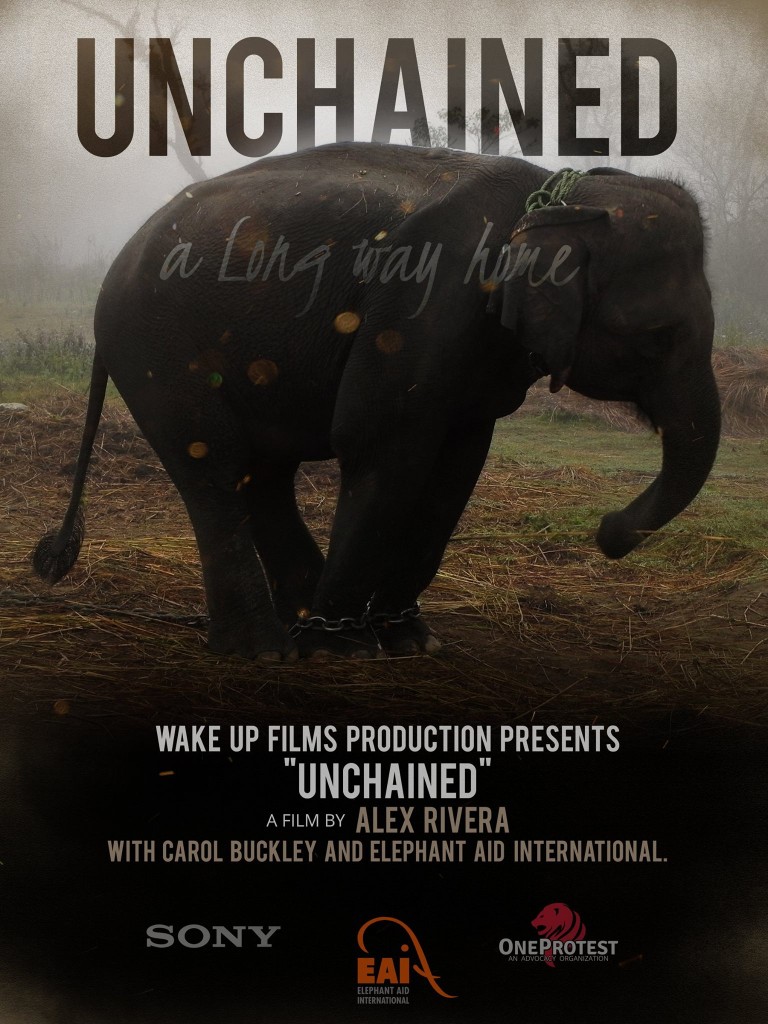
    unchained poster

    A new documentary on the work of Carol Buckley and EAI improving elephant welfare throughout Asia has been selected for the 15th annual Wild & Scenic Film Festival.

    unchained_wild-scenic-festival

    “Unchained” follows Carol and her team in their quest to enhance captive elephant welfare in Nepal. Using gentle persuasion and showing by example that there is a better way to treat elephants in captivity, Carol takes a phased, pragmatic approach to changing attitudes that relies on winning the buy-in of owners and mahouts (elephant handlers).

    Watch the trailer.

    Learn more from the Unchained Facebook page.

  • Current donation total is now at $858,945.00

    Current donation total is now at $858,945.00

    captureThe current donation total is now at $858,945.00. From the bottom of our hearts, we deeply appreciate your support in our efforts to help provide a better environment for elephants. We want to acknowledge the kindness every individual who donates and likes, comments or shares our posts. You are all contributing to the cause. Thank you. Donate today!

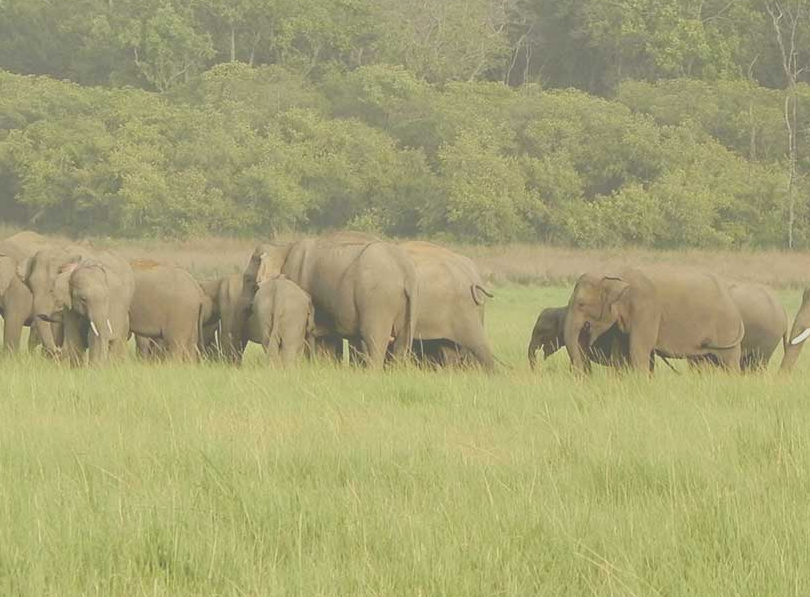
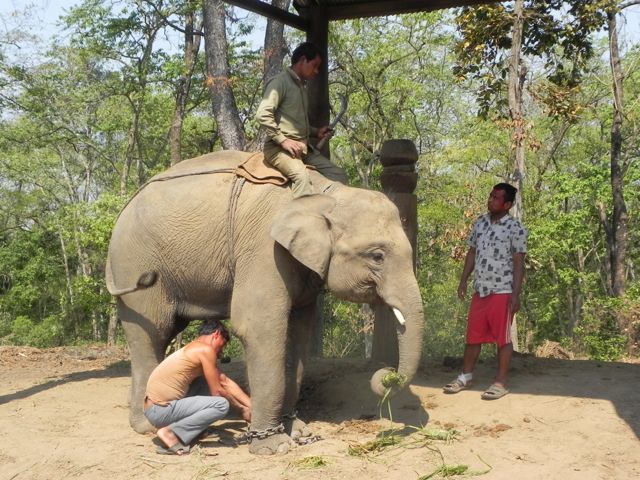
    14713070_1290567650973593_3888856378838742979_oElephants in Asia compete with humans for nearly all resources, including bamboo, a staple of the Asian elephant diet and traditional building material for humans. As long as humans see their needs as more deserving, elephants will continue to suffer. We must continue our efforts by educating the mahouts and providing chain-free corrals for captive-held elephants.

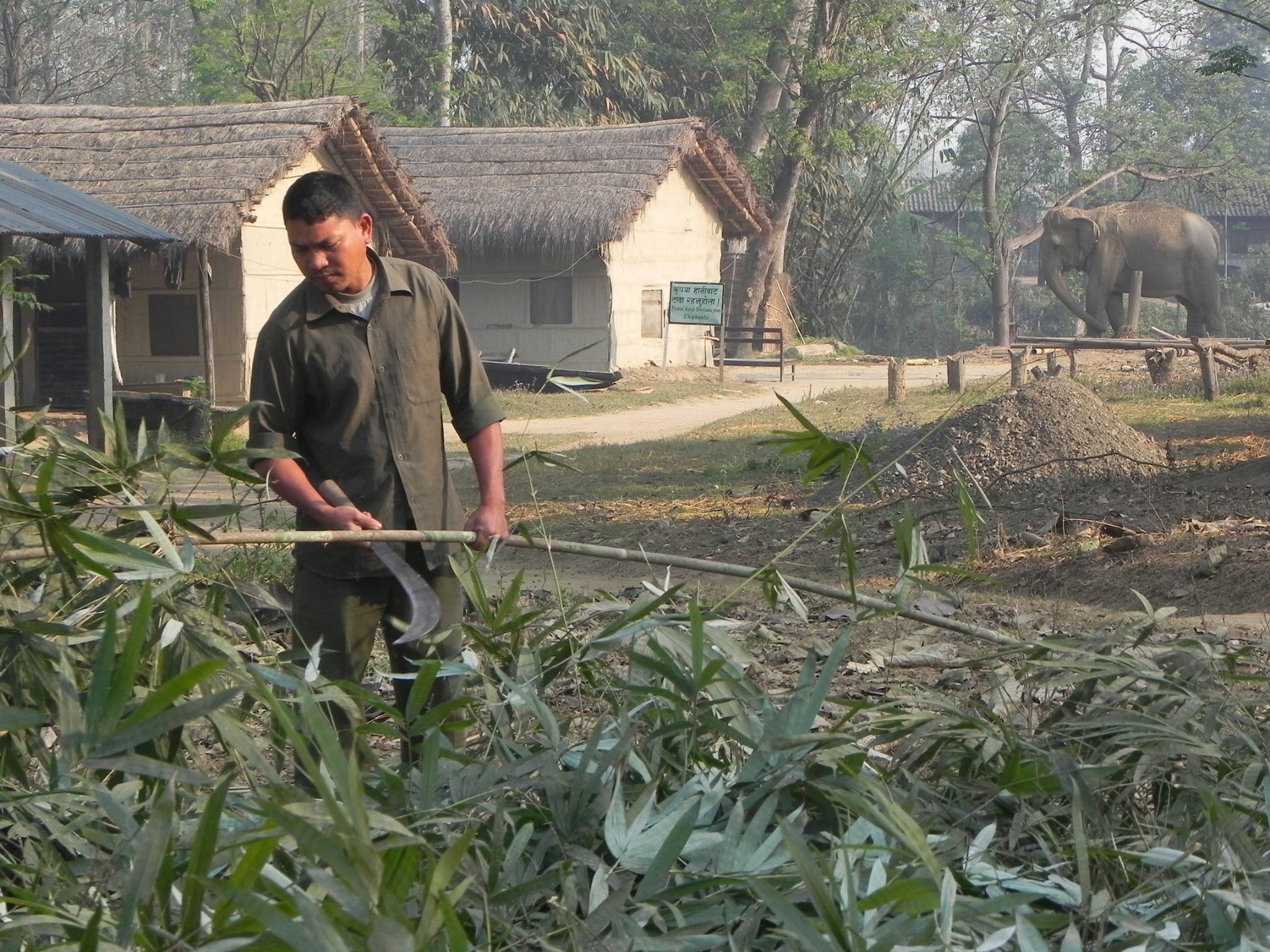
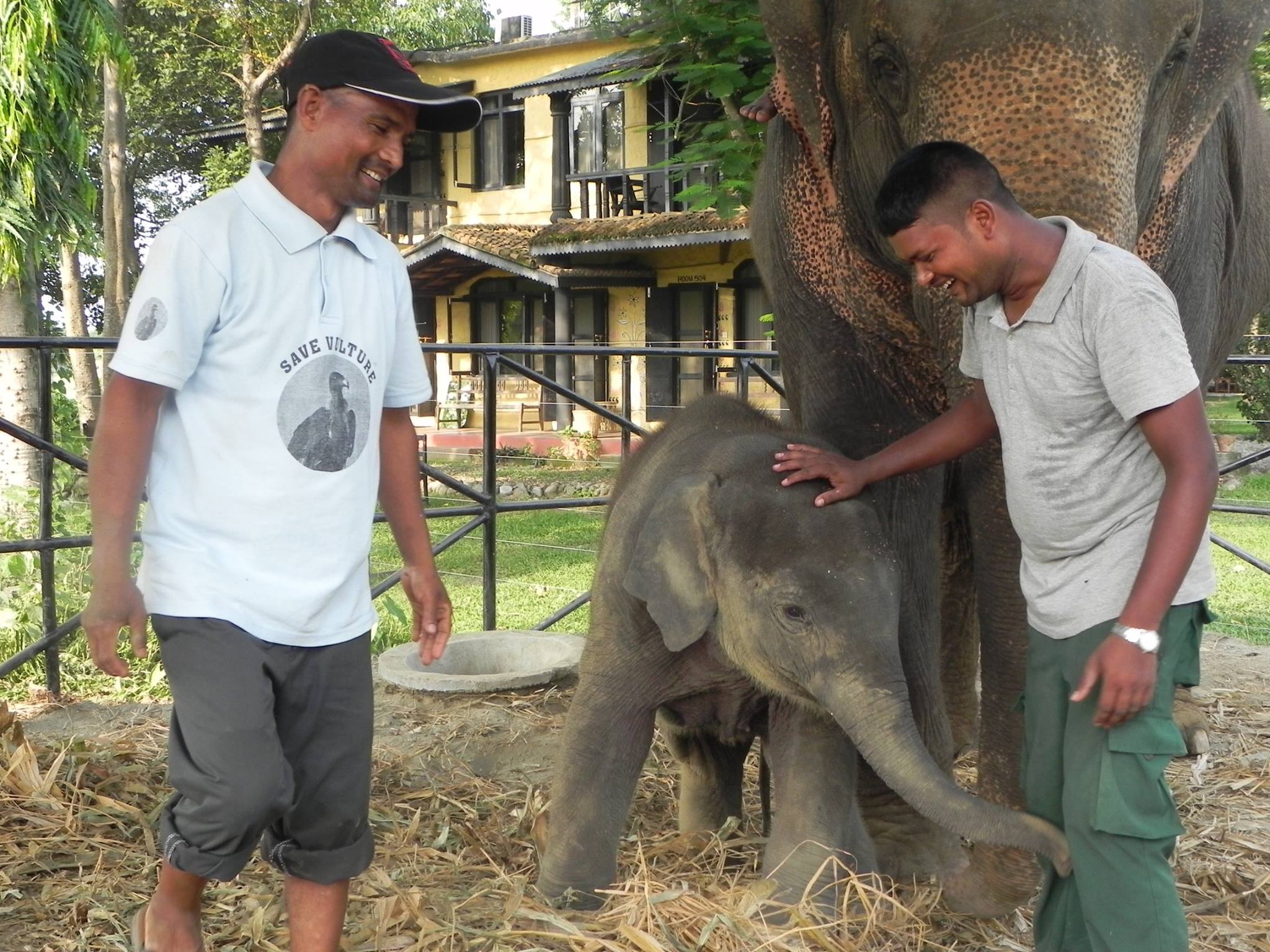
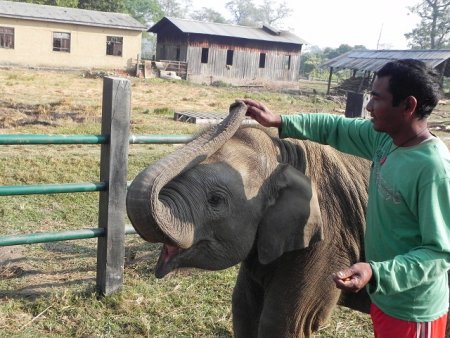
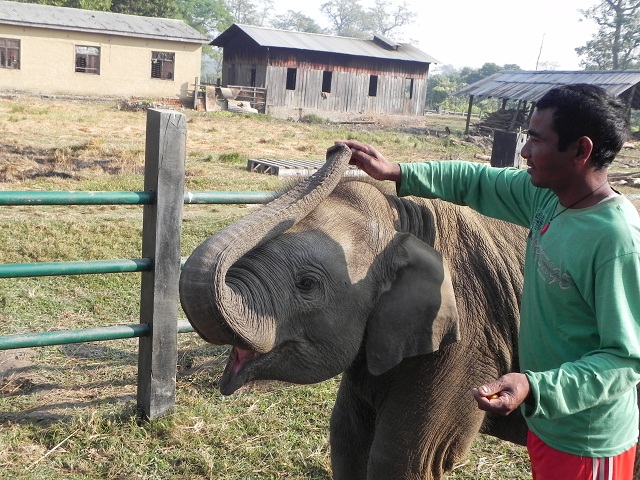
    14715661_1293375797359445_6945717541295315919_oShree (a mahout trained using EAI’s Compassionate Elephant Care) shows fellow mahout a more humane, more effective way to work around Samrat Gaj, a 4-month old captive-born elephant in Nepal. The mahout student is delighted by the results.

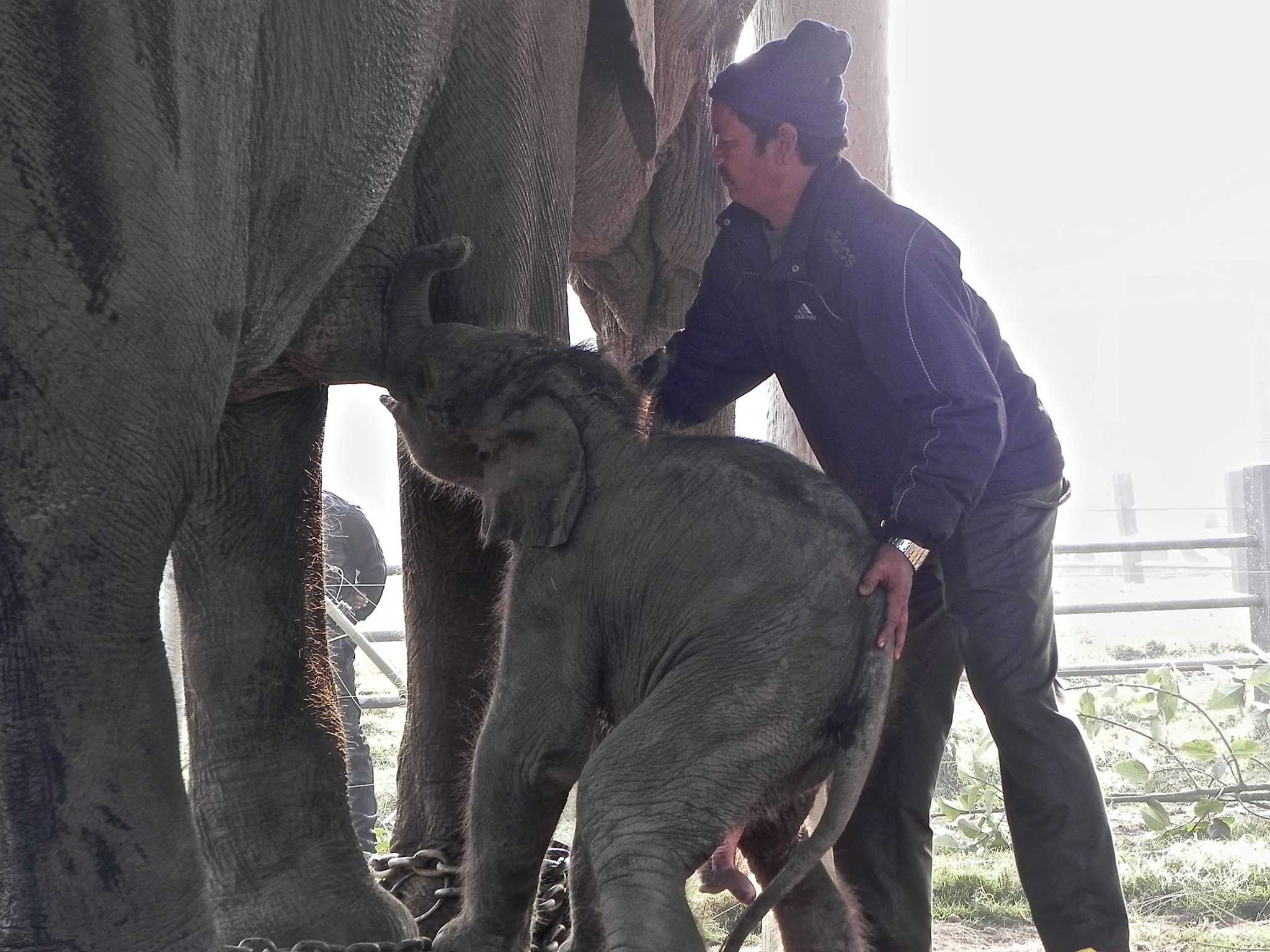
    14714836_1293522757344749_3029055320299766199_oThis newborn calf, only hours old, suckles from his mother — aided by a mahout learning new ways of relating to elephants. Compassionate Elephant Care, an EAI program being taught to all mahouts at government owned hattisars (elephant stables) in Nepal, is changing how mahouts manage their elephants.

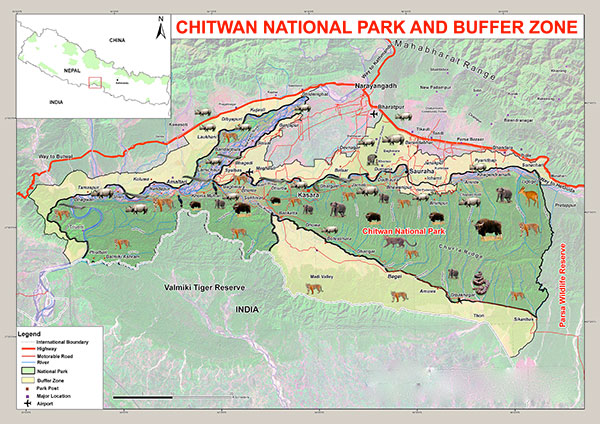
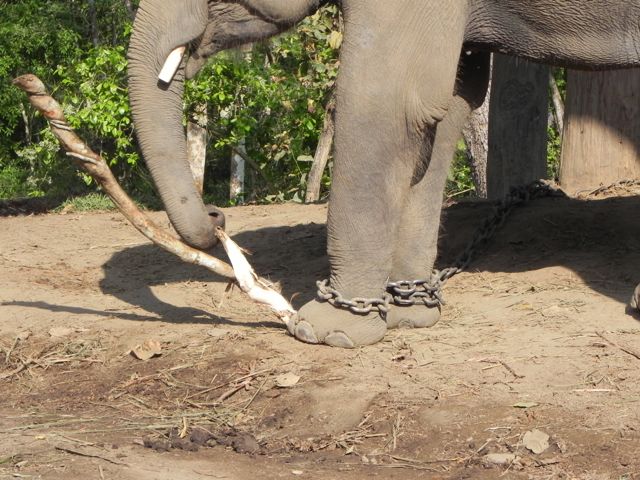
    chitwan1Change starts with one person, who can inspire a whole group, who can go on to inspire the entire world. For elephants, chain free means pain free. By supporting the mahouts who care for impoverished elephants, the welfare of both is improved. Show the mahouts that you recognize their value. Support their transition from archaic to humane.

    14692053_1295359530494405_4158283269240433179_o“The love for all living creatures is the most noble attribute of man.” – Charles Darwin

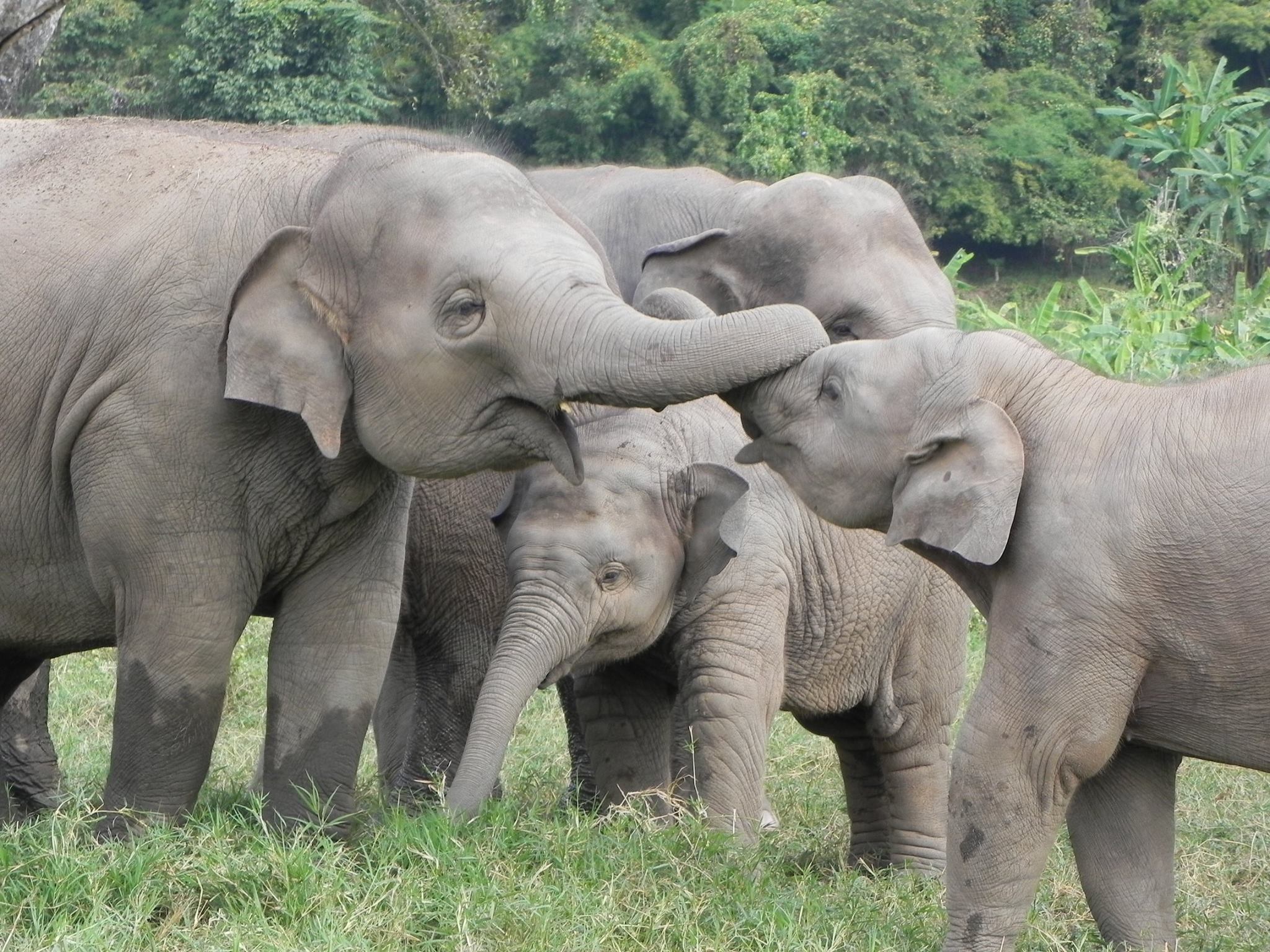
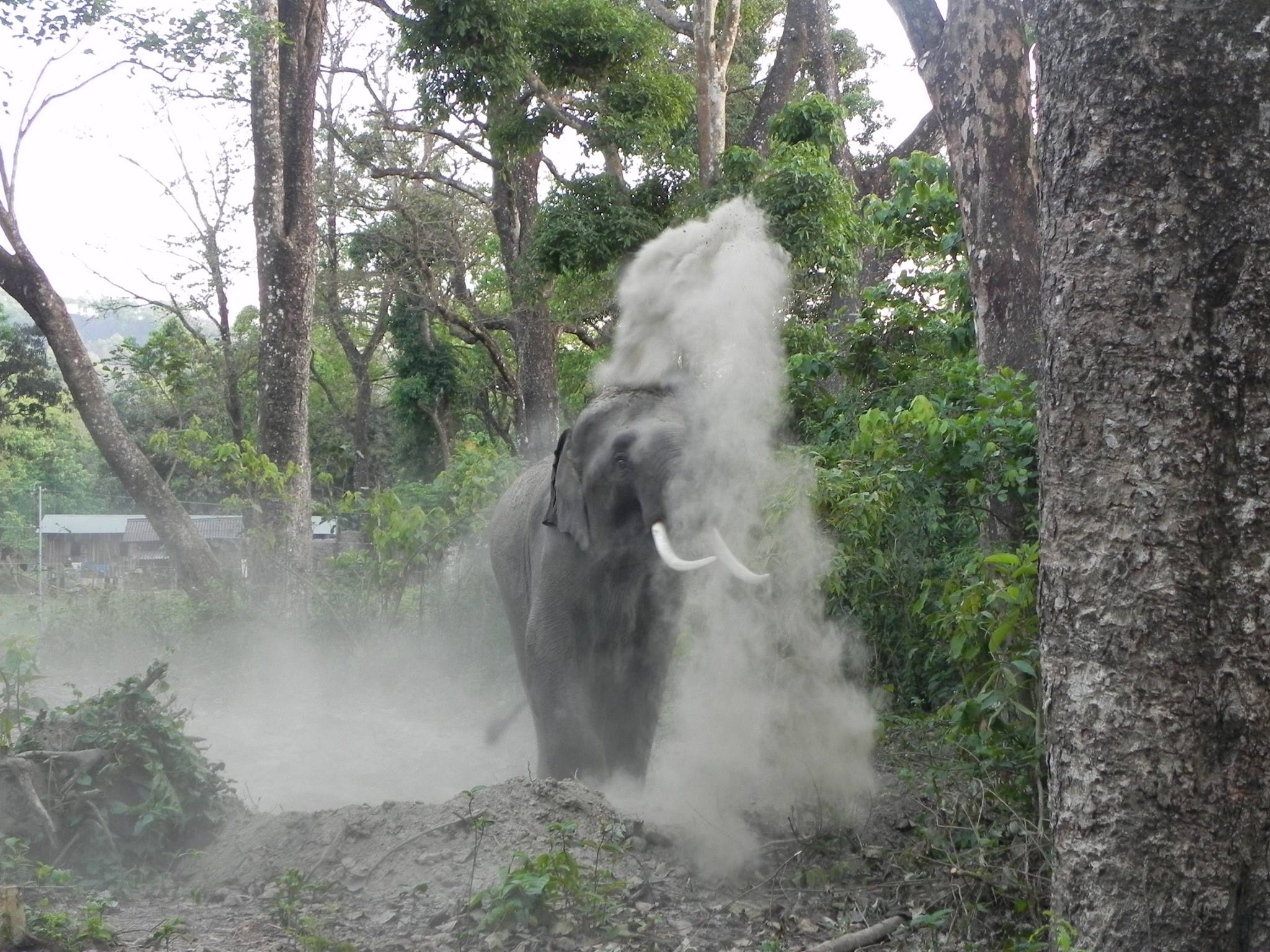
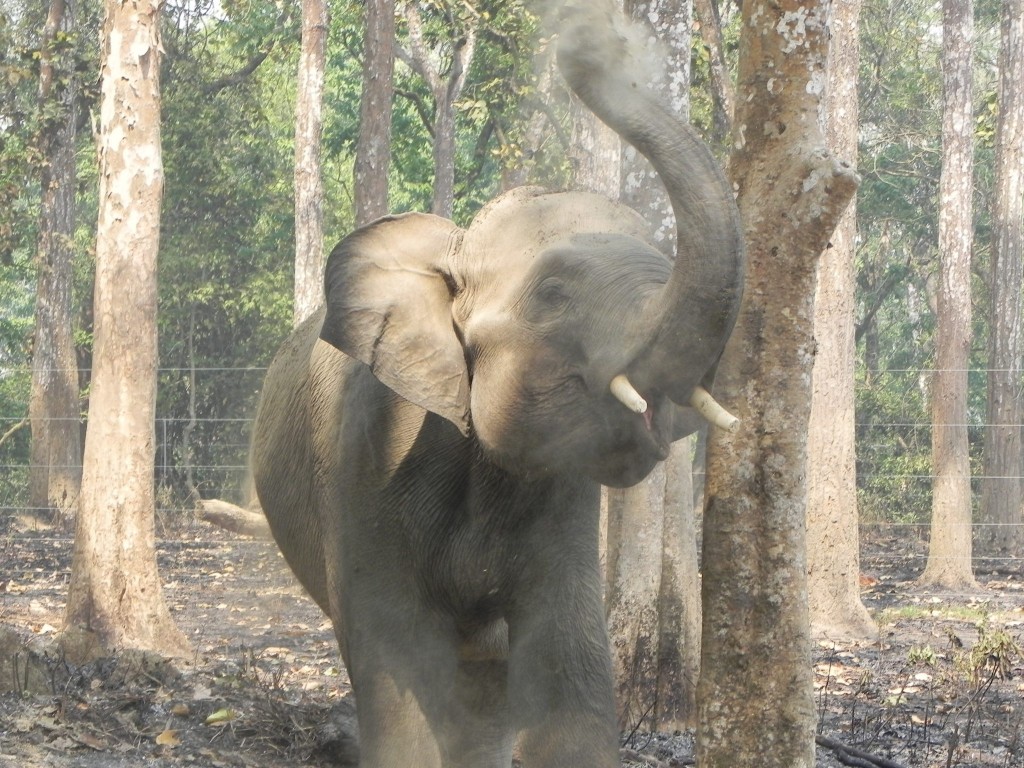
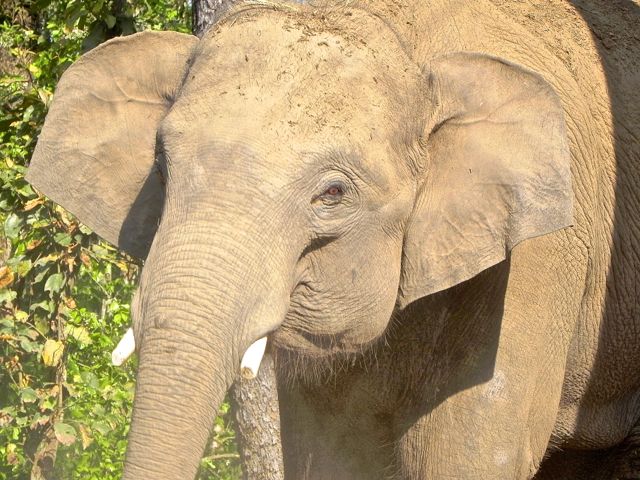
    14711625_1295361663827525_8717717484992416154_oDid you know: Elephants take “dust baths” — as seen in the picture below — to protect their sensitive skin from sunburn and biting insects

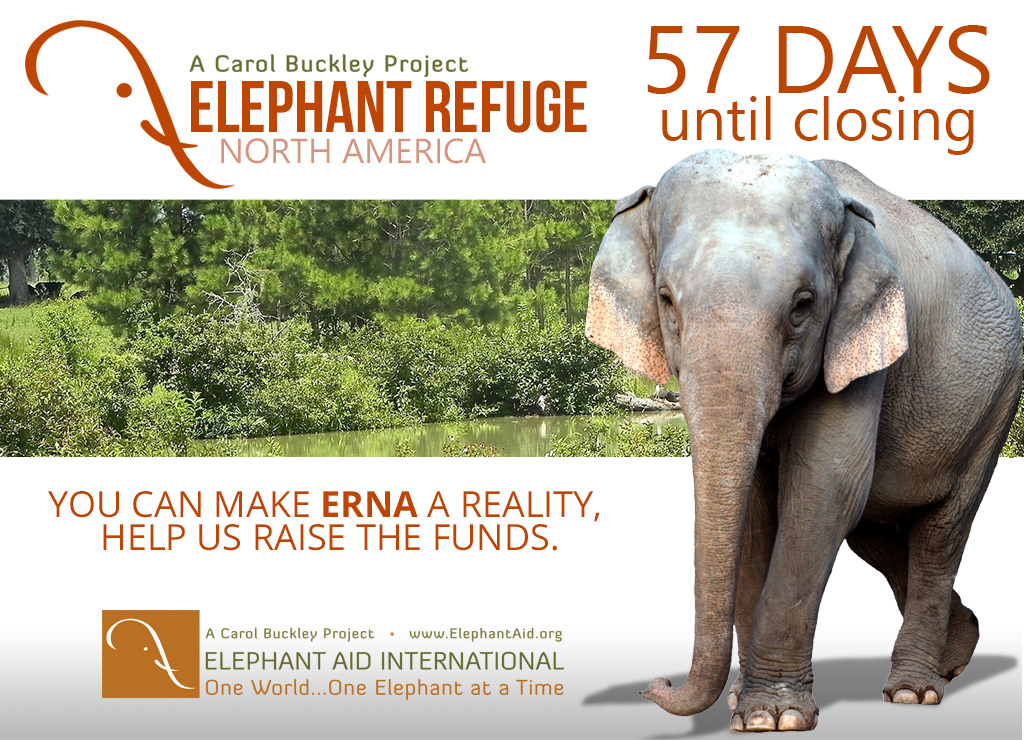
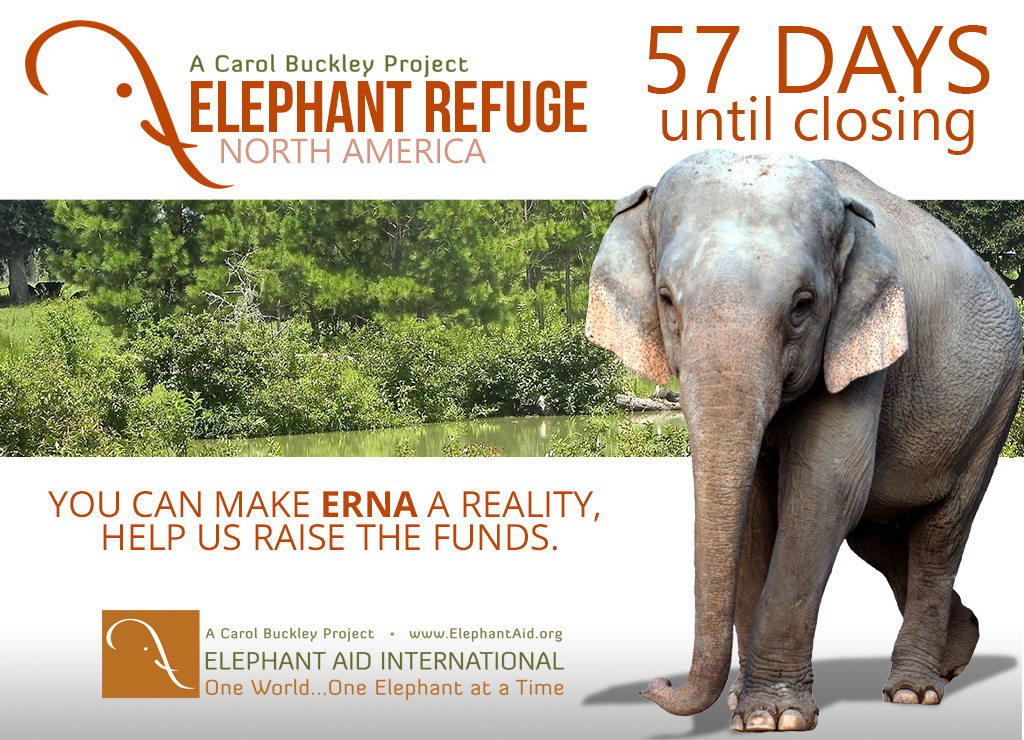
    14712991_1296262603737431_6131236874564709140_oThe ERNA closing date has been pushed to December 15th, so now we stand at 57 days until closing! To help raise funds for the elephant paradise, donate today!

  • Elephant Slaves

    Elephant Slaves

    Another predawn awakening, like a recurring dream.

    I’m woken abruptly from a deep sleep by the heart wrenching cries of a suffering elephant. All I can do is swing open my window and yell into the pitch black night, “Hatti la na pita!” (Don’t hit the elephant!). My plea echoes through the darkness, landing on deaf ears.

    It is not yet dawn, the time when most elephants savor their sleep. My heart clinches when I hear the too familiar crack of a bamboo stick across the hide of an elephant slave.

    I try to block the sound and associated pain from my ears but I cannot. The reality and degree of suffering experienced by captive-held elephants in Chitwan National Park is unconscionable.

    If it were not for a drive to improve the lives of the elephants used in Chitwan National Park, admittedly I would never come back to this place. The air is perpetually thick with the sights and sounds of elephant suffering.
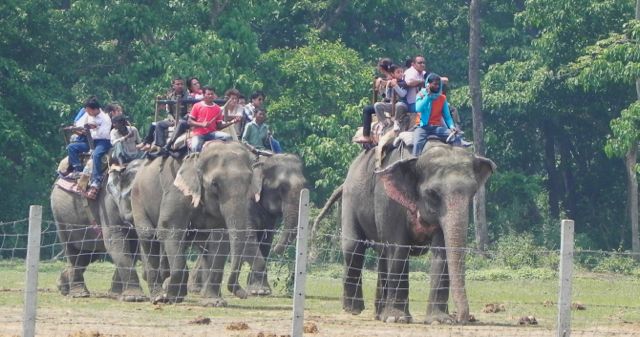
    tourist safari

    The apathy among tourists and owners alike is mind-boggling. Both the mahouts and the elephants in their care are merely money-making machines, no more.

    The elephants’ day begins before sunrise and ends after most tourists are in their rooms preparing for sleep.

    Before the rooster crows, the chained elephants are roused from their slumber and forced by threat of physical punishment to eat, drink and be readied for safari rides for the hundreds of tourists who visit Chitwan National park every day of the year.

    The elephants’ food consists of cuchi—rice wrapped in mildewed, dehydrated rice hay—so unpalatable they must be beaten to eat it. The mahouts will strike them repeatedly with bamboo sticks until they have eaten.

    Mel Kali—the lucky one
    Mel Kali

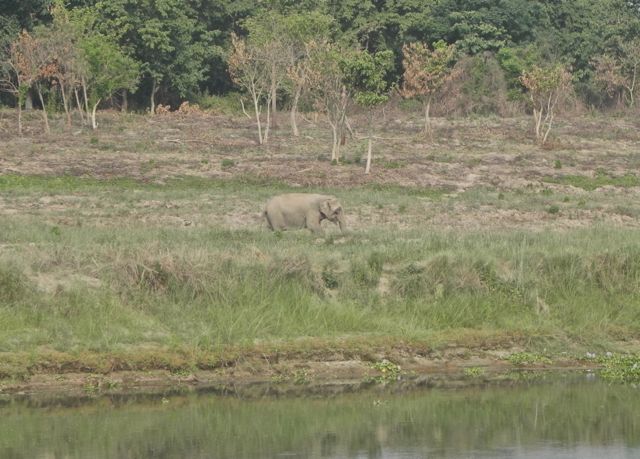
    In the far distance I hear the familiar trumpet call of Mel Kali. She is one of the lucky elephants in Nepal.

    Mel Kali was retired two years ago. She is the only retired elephant in Nepal. As a result of her advanced age—72—and near-death experience two years ago, Mel Kali is finally allowed to live a pseudo-elephant life, free to wander the national park free of riders and the continual domination of her mahouts.

    Abuse woven into the fabric

    Many tourists come to Chitwan National Park for elephant entertainment, but I come because of the elephant suffering. To experience their pain and not make an effort to help seems unconscionable.

    It is not possible for me to return to my relatively cushy life in the US and forget the elephants’ pain. Their cries tear at my heart. Their incarceration and treatment boggle my mind. It seems like a dream, but it is reality for the elephants 24/7, 365 days a year, for their entire lives. It is an elephant slave camp.

    When I am in Nepal it is my policy to stay only at guest houses that do not own an elephant. It is my way of not contributing to the exploitation and abuse.

    But it is impossible to avoid the abuse completely; it is woven into the fabric of Chitwan National Park.

    At all hours of the morning and evening, the haunting cries of elephants echo across the landscape of dozens of tourist hotels. They live in filthy stables, experience continual harassment and beatings and work from sun-up to sundown carrying heavy loads of riders seeking a fun day in the national park. I cannot help but absorb the feelings of despair and pain the elephants experience. How can the tourists, elephant owners, conservation organizations and locals be oblivious to such obvious suffering? What has become of the human race that we are so insensitive to the cries of others?

    Progress is slow but steady

    Hatti la na pita—do not hit the elephant¬—were the first words I learned after arriving in Nepal five years ago. A phase lost on most. But now, all these years later, the mahouts are familiar with my request. Although they do not comprehend why I ask that they not hit their elephants, out of respect for my work, most refrain from hitting their elephant in my presence.

    But seeing the abuse is not the only way to sense an elephant’s suffering. I am now hyper-sensitive to the sharp crack of the bamboo stick, the body language of an abused elephant, the demanding guttural commands of the mahouts and the oppressive energy in the elephant slave camps.

    After spending more than two dozen months in Nepal working closely with our Nepali partners to improve elephant welfare, I am discouraged by the slow process.

    But I must remember that we have succeeded in influencing many mahouts to treat their elephants more kindly; educated private and government owners alike about the welfare needs of elephants; and, most recently, freed 56 captive-held elephants from chains by creating chain-free corrals. The lives of these elephants are seriously improved.

    And we will not stop until all elephants in Nepal are treated and fed properly, and are living chain-free.
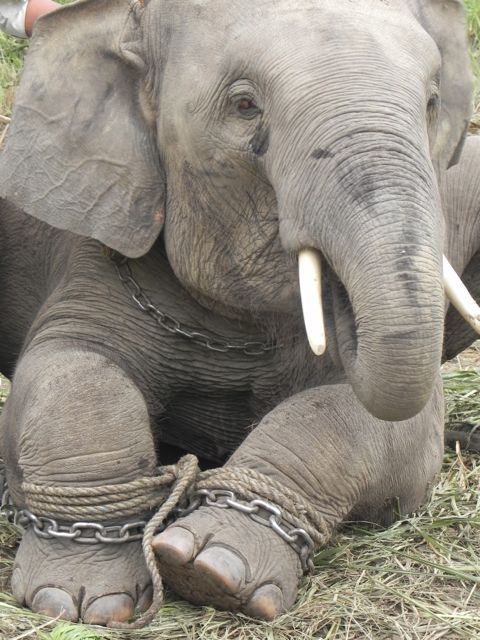
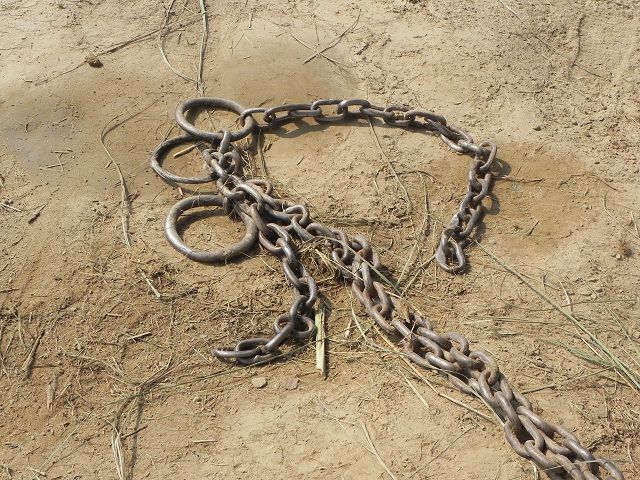
    close-up chained ele

  • The Work Continues to Get Elephants Off Chains

    Good news! Baby Tec Gaj was released from chains.

    Unfortunately, it is not all good news because his mother, Puja Kali, was not.

    Two-year-old, captive-born Tec Gaj and his mother Puja Kali reside in Khorsor, ‪Nepal, at the government breeding center.

    Puja Kali is quite aggressive, known to attack her mahouts even while she is on chains.

    Such aggression is an indication of great suffering, usually on a mental and emotional level.

    Responding to Puja Kali’s aggression with corporal punishment compounds her condition but mahouts find themselves with few alternatives.

    Aggressive behavior exhibited by ‪elephants triggers retaliatory aggressive behavior by the mahouts. Aggression breeds aggression, resulting in a vicious cycle in which neither man nor elephant benefits.

    EAI does not endorse the use of any negative means to manage elephants and we empathize with the position the mahouts and captive-held elephants find themselves in.

    Hopefully, with our continued efforts, the day will come when aggressive elephants will no longer be used for activities that put them and their mahouts in danger. And, mahouts will learn alternative ways to care for their elephants.

  • Change is Afoot

    Change is Afoot

    March 29

    The first two corrals at Kasara hattisar are finally ready.

    The air is charged with anticipation.

    Rescuing an elephant to sanctuary or releasing them from chains brings the same mix of emotions — anticipation, apprehension and excitement.

    Each elephant is a unique individual with a distinct personality. Life’s experiences mold their behavior, shaping them as they mature. Each of them responds differently to different situations.

    Himal Gaj
    Himal Gaj

    When I first arrived at the Kasara hattisar, I noticed that young Himal Gaj was resistant to his mahouts. He appeared fearful. An old scar at the base of his trunk indicated a past confrontation.

    Watching the mahouts struggle through the morning routine, preparing Himal Gaj for duty, was disconcerting. I wondered how he and the mahouts would respond to going chain-free.
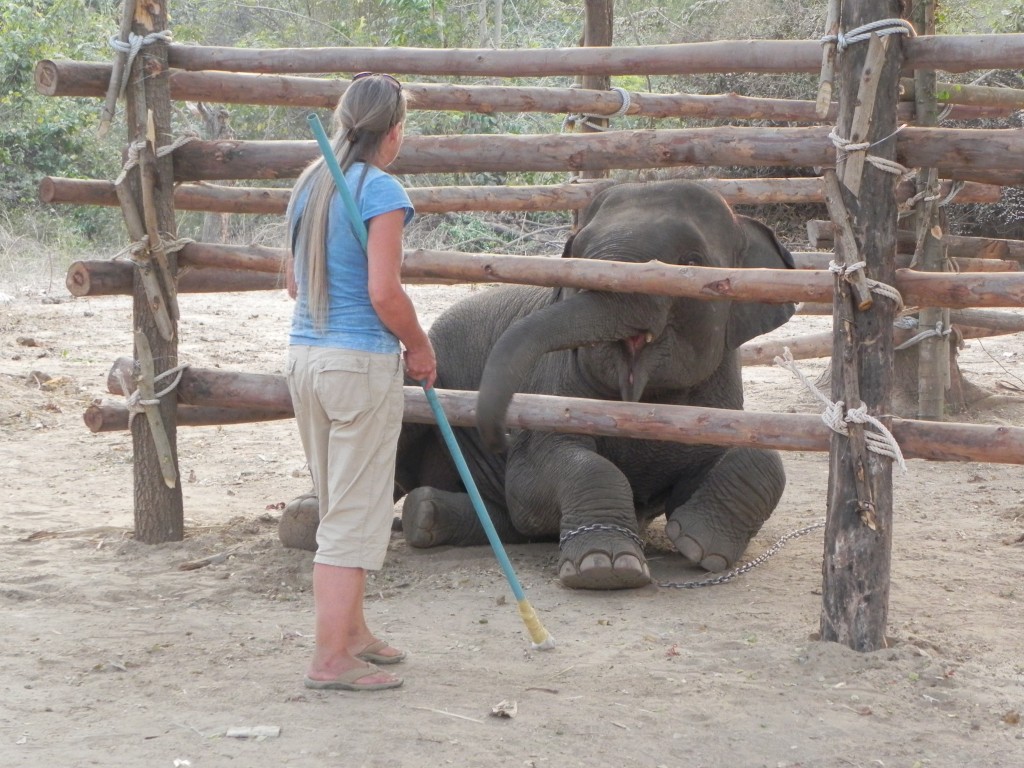
    The mahouts were also concerned. They feared for their safety.

    As a result, it was decided that Himal Gaj would be released from his tether but would wear loose hobbles until the mahouts felt safe around him.

    It was disappointing that Himal Gaj would not immediately be completely free, but the compromise was the first step to his future freedom. If the mahouts fear for their safety, Himal Gaj would be destined for a life in chains.

    With time and Compassionate Elephant Care training I hoped Himal Gaj would settle down and become more responsive.

    The chains come off

    The elephants usually return from their anti-poaching patrol duties around 4pm. Chief Conservation Officer Kamal Kunwar postponed a scheduled meeting so he could be present for this auspicious occasion.

    Just before 4pm, the hattisar suba arrived. He’d been out of office for a couple of weeks.  He and Kamal discussed the plan in Nepali. I would soon see that following their brief conversation plans would change dramatically.

    The elephants arrived back from the forest. To my surprise and contrary to the plan, Himal Gaj was walked directly into his new chain-free corral. He was not put on loose hobbles. Calmly and confidently, his mahout gave the command to bite  (stretch out on his sternum).  Without hesitation or fear, Himal Gaj calmly responded.

    I realized that the mahout I’d seen with Himal Gaj the past week was now assisting, rather than riding.

    In that moment things became perfectly clear. The mahout to whom Himal Gaj was resistant to this past week was the junior mahout. And now that his main mahout was back from vacation, everything was fine.

    Himal Gaj waited patiently as his gear was removed. Then he rose and immediately began dusting, as his friend and senior mahout left the corral.

    What a difference a good relationship makes.

    Kamal Kunwar’s turn

    tamor-kali-female2
    Tamor Kali

    I did not have time to dwell on the glory of Himal Gaj’s transformation because Tamor Kali was about to enter her chain-free corral for the first time.

    Kamal Kunwar was sincerely excited, filming her first chain-free steps like a proud father.

    After seeing how well Himal Gaj responded to his mahout, everyone was engaged and relaxed. They gestured at both young elephants free-of-chains with huge smiles on their faces.

    Now was the time to stand back and savor the moment. The instant that life changed for two young elephants and their family of mahouts.

    The three other elephants stood chained under their shelter watching the scene.

    I whispered, “You’re next ladies.”

    It will be close to a week before the other corrals are completed. Without a doubt, Khosi Kali, Laxmi Kali and Prayna Kali, who have all been prisoners to chains for decades, will transition seamlessly.

    Imagine the joy when they are all chain-free. Heart bursting JOY!
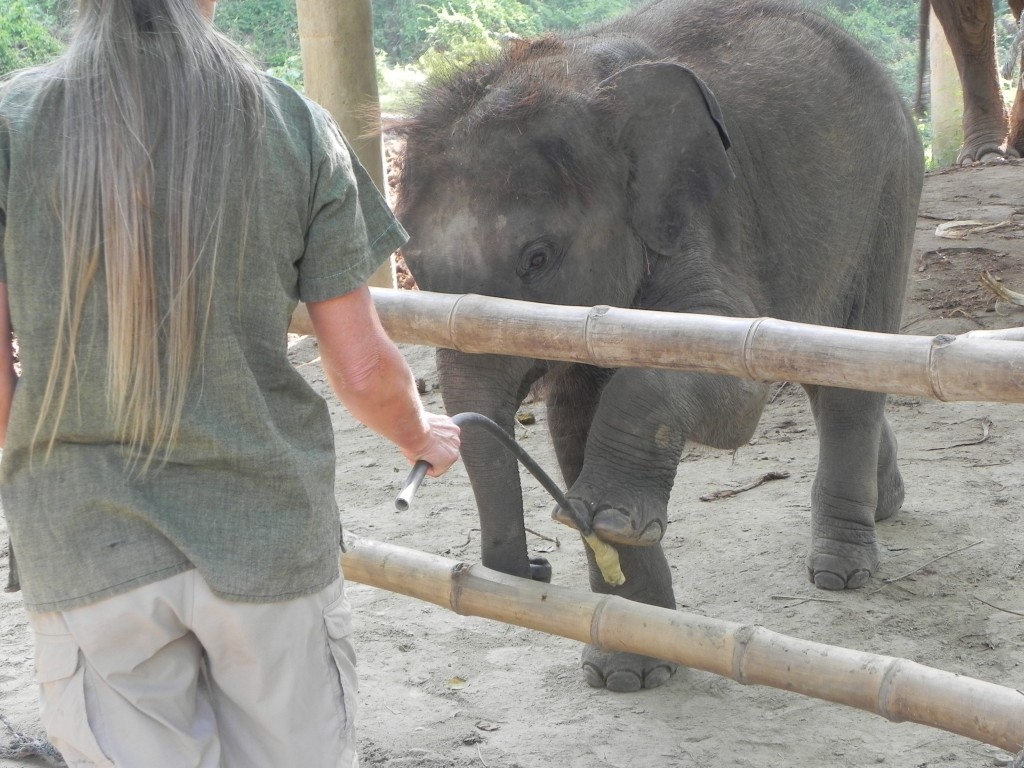
  • Himal Gaj

    Himal Gaj

    Himal Gaj is a six-year-old captive born elephant. His father is the dominant wild bull in the area. His mother is a wild born, captive resident of the elephant breeding center at Khosor, Chitwan, Nepal.

    Himal  Gaj was one of five young elephants trained together at the breeding center several months ago. Until their formal training, they lived with their mothers.

    All five elephants were chained from the age of three months. Chaining is the practice all over Asia. Domestic livestock and captive elephants are tied or chained. It is the cheapest way to keep them in one place.

    The training technique used with Himal Gaj and the others at the breeding center was a deviation from the traditional pujan, a brutal breaking of spirit. Introduced by a foreign NGO, a mixture of traditional methods was used—including the use of koonkie elephants, negative reinforcement and punishment—combined with positive reinforcement techniques known to be successful with domestic horses.

    Unfortunately, once training began, Himal Gaj showed signs of aggression and resistance. He was frightened by the training process and responded poorly to his mahouts. A few months later his training was deemed unsuccessful.

    No video, photographic or written records exist to document the daily training process and Himal Gaj’s progress and difficulties.

    But it does not take such documentation to see that Himal Gaj is a very insecure individual.

    Although Himal Gaj responds well when his mahout is riding, his weakness is responding to commands when his mahout is on the ground.

    Himal Gaj is a good example of the importance of sound training techniques, mahout training and follow through.

    Captive elephants are not domesticated—they are wild animals living in a captive environment. Even generations born in captivity are not domesticated. The scientific process of breeding selected individuals for specific traits is the process required to create a domestic species. This has never been undertaken with elephants.

    In the case of all elephants born at the breeding facility in Khosor, the mothers are wild born living in captivity and the fathers are wild born living in the wild.

    Himal Gaj’s mahouts are as gentle as I have seen anywhere. They are patient but frustrated. What the training process failed to do was give them the tools necessary to help Himal Gaj learn.

    As a result, all are left feeling like failures. Without intervention, Himal Gaj is doomed to be a dangerous elephant for the remainder of his life.

    The good news is that the mahouts and Kamal Kunwar, the chief commanding officer of Chitwan National Park, are receptive to Himal Gaj receiving additional training. His private training course will begin soon.

    This is such exciting news. I feared Himal Gaj would remain a lost cause in the minds of the mahouts. But before his chain-free corral is completed Himal Gaj, will be well on his way to understanding what is expected of him and his mahouts will have gained the humane tools to understand and assist him in his training process.

  • A precious soul lost

    A precious soul lost

    It’s been a pretty intense week. A two-year-old female calf at the breeding center was diagnosed with herpes. Even though she received treatment, she passed away two days later.

    Herpes is near-epidemic among elephants in the US and recently reared its ugly head in Chitwan. Young calves between the ages of one and three seem to be most susceptible but there are records of juveniles and adults dying from the disease as well.

    You’ll remember Bhadra, the fabulous flaming redhead we trained with positive reinforcement in Sauraha, Nepal. He died of the herpes virus last year, shortly before his second birthday. His mahout was so devastated that he left his job and returned to his home village.

    Famciclovir, the treatment of choice for herpes, is not available in Nepal and must be imported from India. A small elephant can require as many as 1000 pills to fight the virus. The exorbitant cost—75 cents per pill—and large quantity needed, made stockpiling the medication impossible.

    The calf was given available medication and was under treatment and constant surveillance as I arrange for a shipment of Famciclovir from friends at Wildlife SOS-India. Unfortunately, the drug did not arrive in time to save her. She died in the night with her mother stoically standing by. Records indicate that even with Famciclovir many calves do not survive.

    I accompanied the team for the necropsy and somber burial; both were done with the utmost respect. All the mahouts were present and, for the first time in my observation, near silent. As Dr. Gaihre led the exploratory necropsy, examining and collecting tissue samples for lab work, the mahouts dug a grave. It was a sad and sobering experience. This calf had the classic symptoms of herpes–severe hemorrhaging–but otherwise was a very healthy elephant.

    When it came time to lay her body to rest, I instinctively glanced around for wild flowers to place on her grave, just as we always did at the Sanctuary. After her precious body was covered with a sparkling clean white linen cloth, incense was lit and ceremonial red powder and flowers were sprinkled over her covered body. When the flowers I collected left my hand and floated down into her grave, a wave of gentle remembering engulfed my heart as I thought of the beloved elephants who had lived and died at the Sanctuary. At this moment we were all one, sharing the loss of a sacred soul.

    The senior wildlife staff presided over the burial. Although the words spoken over her grave were in Nepalese and foreign to my ear, I knew exactly what the prayers were. It was the same ceremony, the same prayers uttered each time we buried another precious elephant at the Sanctuary. Like never before, I felt a connection with the mahouts who care as deeply for their elephants as we do ours.

    Preparing for next time

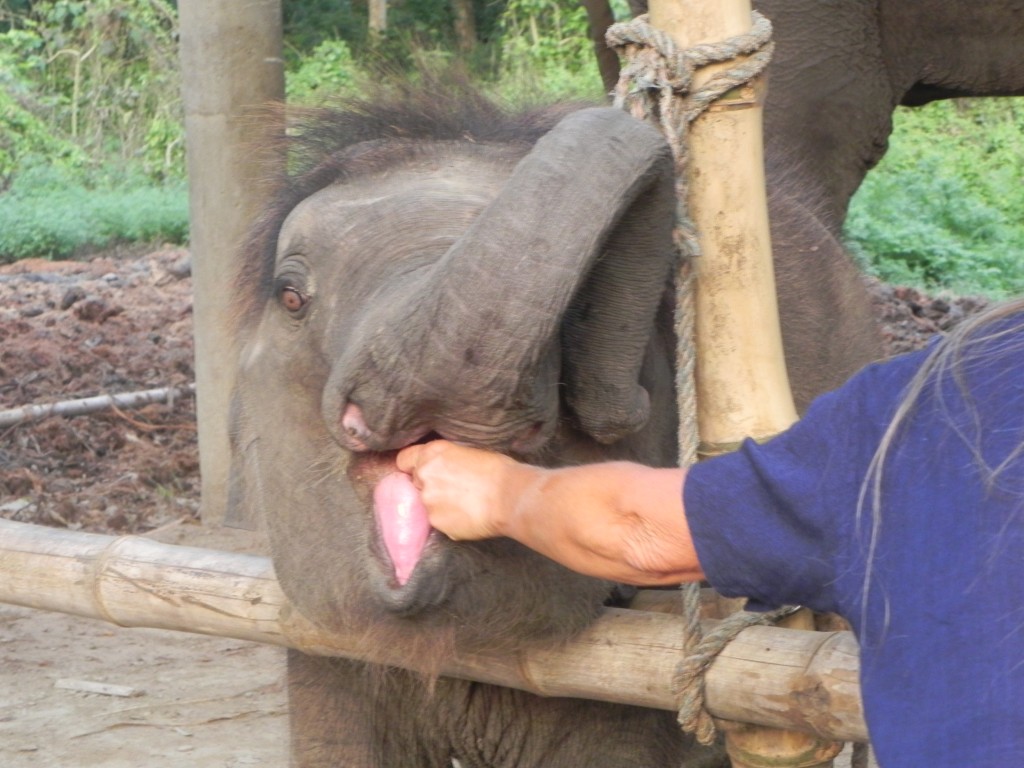
    The signs of herpes include dark spots on the tongue. By checking the tongue twice a day, the disease can be diagnosed in the early stages. In an effort to monitor the other three young calves at the breeding center, I was asked to train them for tongue examinations, a request that I was happy to fulfill.

    checking tonguesThe first day of training was a heart-lifting success. We were able to get the calves to place their trunks on their foreheads—for a tasty piece of banana—and took photos of their tongues.

    Additionally, I ordered Famciclovir. Even though the drug may expire before it can be used, I feel strongly that having it on-hand whenever possible is important.  We were not able to help one precious elephant but if the disease strikes again we will be better prepared.

  • Drag Chains and Training

    Drag Chains and Training

    Elephant’s World posted two videos on YouTube last week of me training a young elephant named Jon (you can view them here and here). I was surprised to see the videos and happy to know they exist.

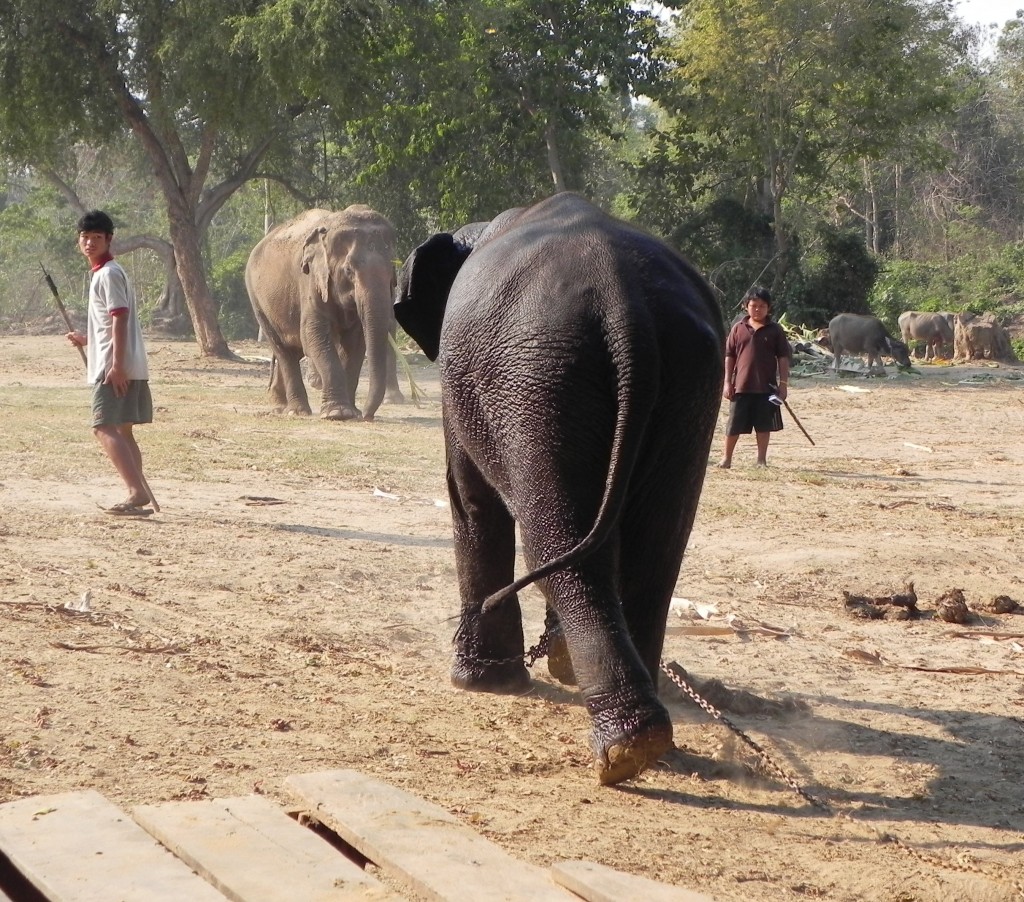
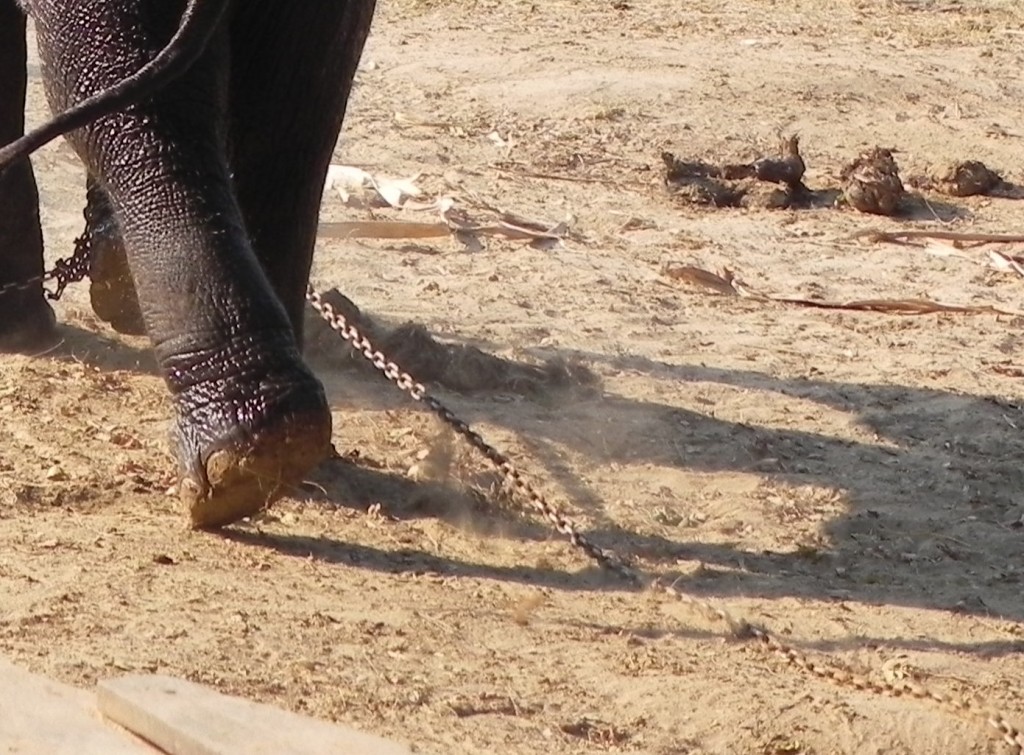
    Many people found the videos interesting and some have asked why Jon is wearing a chain. The chain is called a drag chain; in Asia it is used to prevent an elephant from running away. One end of the long chain is fastened around an elephant’s wrist and the other end drags behind.

    When a mahout is afraid that his elephant will run away, he puts a drag chain on him. If the elephant runs, the mahout wraps the loose end of the chain around a tree to stop him.

    The mahouts at Elephant’s World were resistant to non-dominance training and even more resistant to removing Jon’s drag chain. In order to be allowed to demonstrate positive reinforcement target training, I agreed to the drag chain for the first two sessions. One end of the chain was on Jon’s ankle and the other end was loose.

    My adherence to their tradition gave the mahouts time to get comfortable with the new training method I offered. They observed firsthand that Jon was more interested in the training game than in trying to get away.

    Jon showed such promise that after the second training session the mahouts agreed to remove the chain.

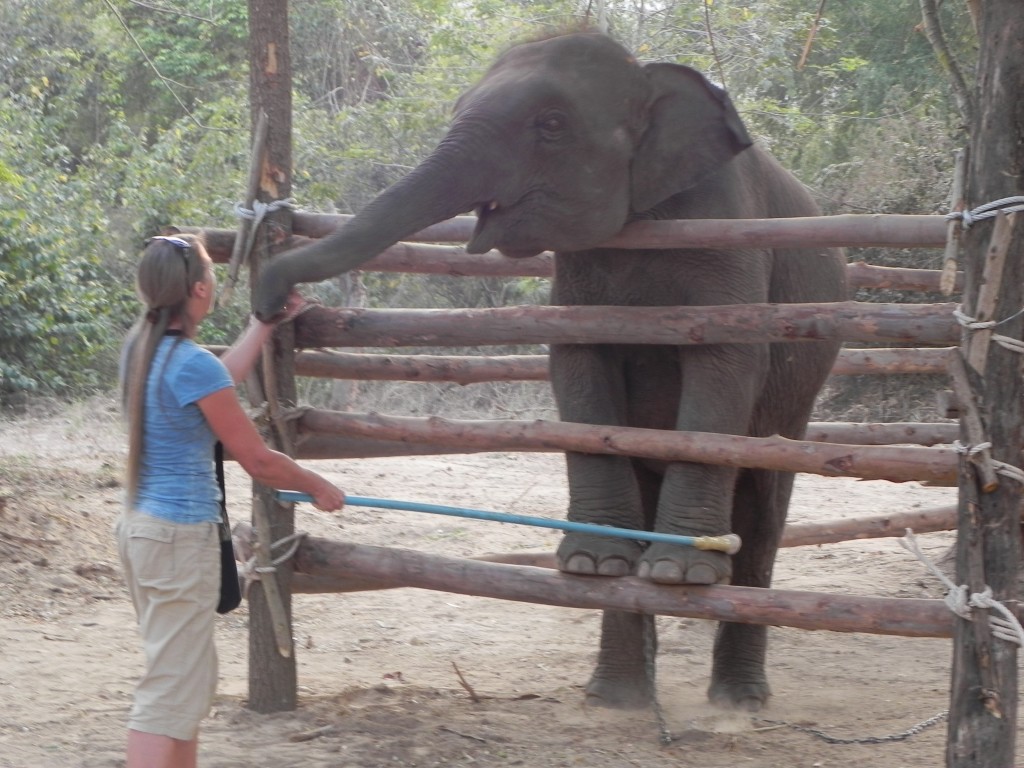
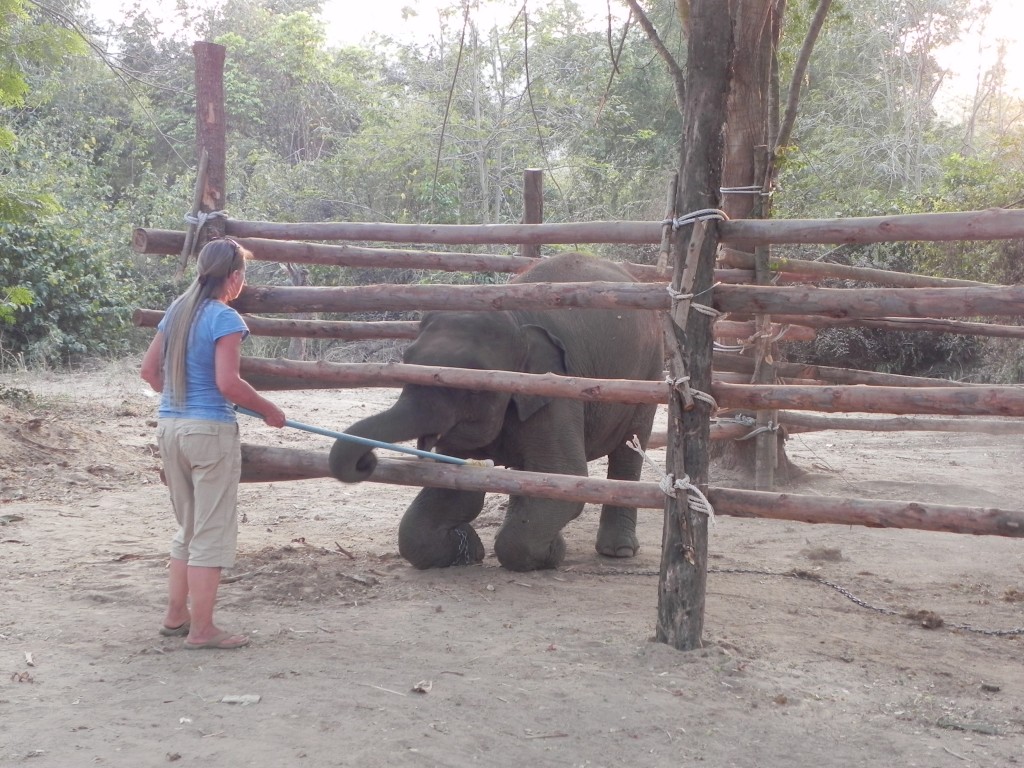
    There have also been questions about the “stick” used during training. The stick, or target as it is called, is a flexible pole with a soft cushion on the end. Watch my training tutorial to see how the target is used and learn the basic concept of target training.

    The goal is to teach an elephant the name/word for different body parts, such as foot, head, ear, side, etc. Once understood—which takes most elephants only minutes to grasp—the elephant will voluntarily offer that body part when asked. The key is to ask, not demand, and always provide praise and a treat as a reward.

    Before watching the videos of Jon’s training sessions, I suggest that you view the tutorial a couple of times. Then watch Jon’s first training session and see if you can identify what body parts Jon is learning. Notice that when Jon becomes frustrated he walks away, but returns almost immediately to try again.

    Positive Reinforcement Target Training gives the elephant the freedom to walk away, take a moment to reflect on what is happening and return when he is ready to try again. Walking away reduces frustration and increases the elephant’s willingness to participate.

    You will also notice in the video that Jon offers behaviors–kneel and lie down. This is common in initial training sessions. Many times the elephant will offer what s/he already knows before starting to “problem solve” and figure out what the trainer is trying to teach.


    Learning to think for themselves is the first thing the elephants learn. After that, training is a breeze.

  • a fiery red head

    a fiery red head

    I’ve got a new heartthrob. He is smart, dark and seriously handsome, with a full head of fiery red hair! Admittedly on the young side, Bhadra still lives with his mom and spends the entire day gallivanting in the Chitwan National Forest.

    We met two days ago and have spent only limited time together but let me tell you this little boy is smart. He is my latest ele-student, one year old and full of spunk and sweetness. There goes another piece of my heart!

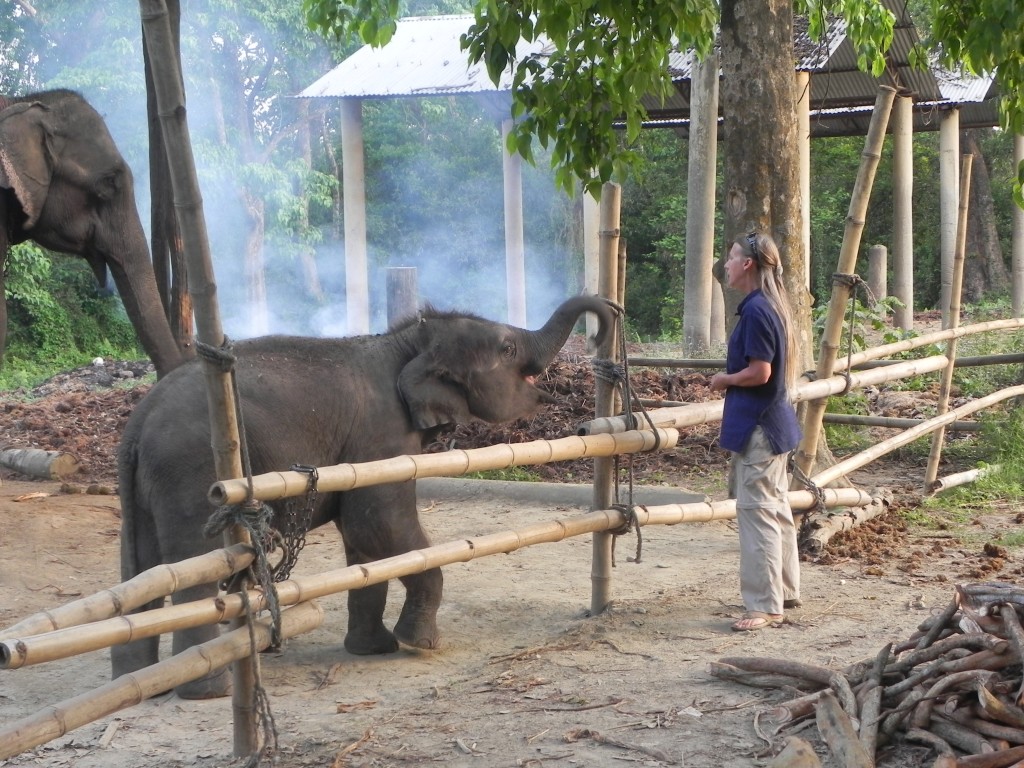
    Bhadra lives at a private resort on the border of Chitwan National Park with his mother, his sister and other non-related family. The resort has been closed for a couple of years, making life that much easier on this elephant family. No tourist rides, just lazy days in the forest and short training sessions, when Bhadra gets to demonstrate to his mahouts what elephants are capable of when trained through positive reinforcement.

    The mahouts have been fabulous, very interested and engaged. Bhadra has only had four 15-minute sessions over the past two days and now responds to agot (come here) and ra (stand still), and presents his pow (foot), kan (ear) and thuk mud (head) when asked. Things were a little slow getting started because Bhadra surprised me by not liking bananas or apples. His mahouts knew exactly what he would like — molasses. One taste of the favored treat and he was all ears, head and feet!

    What a blessing it has been to work with him. Hopefully together we have planted a seed with these young mahouts.

  • The TARGET of target training

    A target is a tool — a flexible pole with a spongy end — used to shape behaviors. Its purpose is to create a focal point, a benign object for the elephant to focus on.

    To start, we touch Chang Yim’s head gently and say “target.” When he makes contact, we blow a whistle and give him a treat. Chang Yim quickly connects the whistle with the touch and, of course, the treat with the whistle. Throughout the training we touch the target to different parts of Chang Yim’s body — his foot, ear, leg and side — following the same process, giving each body part a name.

    When Chang Yim understands what we want, he responds by touching the appropriate body part to the target. The whistle sounds and he receives a reward, a treat. In moments, Yim makes the connection. He is quickly learning his ear, head, side, feet and back.

    The purpose of this training is to gain Chang Yim’s cooperation for medical procedures and foot care. He is never told no and can never fail, which helps boost his self-confidence and willingness to engage in the game. Done properly, the training becomes a much-anticipated activity that Chang Yim freely participates in.

    Learn the basics of target training.