Tag: india

  • Chain Free Corral Project Has Released 106 Elephants

    Chain Free Corral Project Has Released 106 Elephants

    Carol was recently interviewed for KBOO radio’s Voices for the Animals program. “Listen and prepare to be inspired and moved by this remarkable journey of love and hope.”


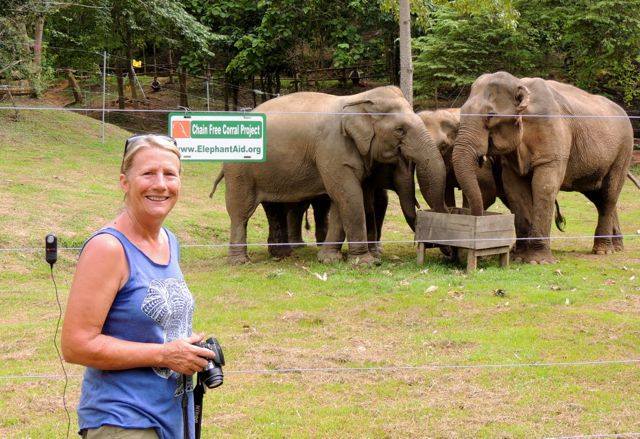
    Carol & BLES chain-free corral
    FACT: With the help of EAI, a total of 106 elephants have been released from chains forever in Nepal, Thailand and India. Read more about the project here.


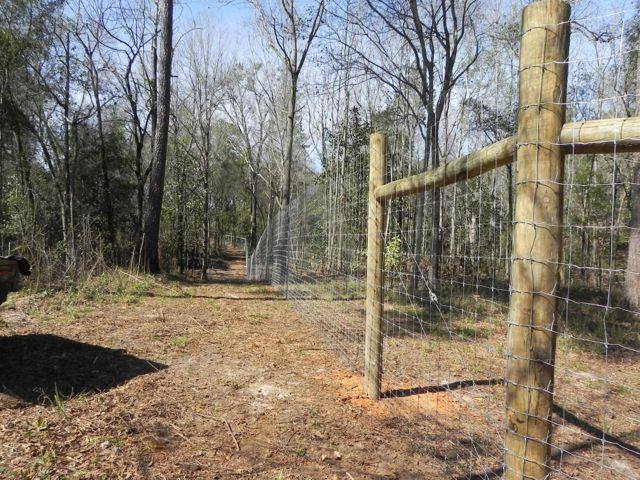
    To provide privacy for the resident elephants and security for the neighbors, Elephant Aid International is constructing a double fence system for Elephant Refuge North America. 30,000 feet of 8 foot high fencing takes some time and effort to install and our crew from Topnotch Fencing is doing an amazing job!


    We’re creating the next generation of sanctuary for elephants in captivity… And we couldn’t continue this incredible journey without you. Please consider donating by clicking here — every dollar helps. Thank you for your support!

  • Blending of Two Worlds

    Blending of Two Worlds

    Haatha, hati, hatti, hathi, are all words referring to the Asian elephant. Kipling, in his infamous Jungle Book, gave life to his supporting character, naming him Colonel Hathi.

    There is something pure and powerful about the Colonel as the representative of an entire species. He becomes more than himself: he is the conduit to the world of elephants, their ancient culture and lives.

    I am continually amazed by the impact elephants have on people. Even those who have never been in the presence of an elephant can become obsessed with protecting them. It is as if elephants can reach into your soul and light a spark that defies reason. Their culture is complex, their nature compassionate and resilience indefinable.

    A wild bull joins Sunder and friends

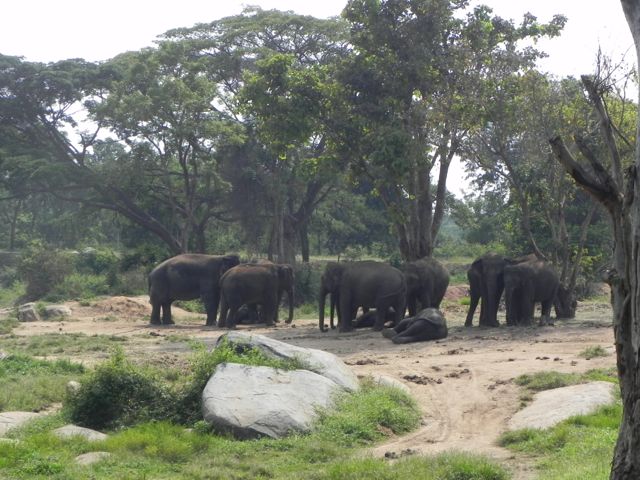
    Recently I experienced a scene that touched me deeply. I was at the Bannerghatta Biological Park (BBP) in India to inspect the chain free-enclosure I’d designed for Sunder and his new family.

    The staff excitedly told me that a young wild elephant had entered the enclosure 15 days prior and remained inside. I found this disconcerting. I imagined the young bull to be frightened and holed up in the back reaches of the 122 acres, hiding from the scary humans who surrounded the entrance and exit of the enclosure.

    As I walked the fence line inspecting the corral, there were signs of another inspection. The young bull had made his rounds, leaving footprints and signs of dusting and foraging along the fence line on the inside, but no damage. I had no doubt that he was looking for a way out.

    Yet, although the fence was newly completed and would not be operational until after my inspection, this jungle, pronounced junglee (wild) hatti (elephant) did not breach it. The solar power energizer had not yet been turned on, the fence wasn’t yet powered, so the bull would have felt no discomfort if he pushed through it to escape. I was curious why he hadn’t.

    The jungle hatti appears

    About two hours later, the mahouts became active, calling to each other and moving to the exterior of the enclosure, closer to the fence line. The mahouts understand the danger of wild elephants; I was told they were afraid of this hatti because he was wild.

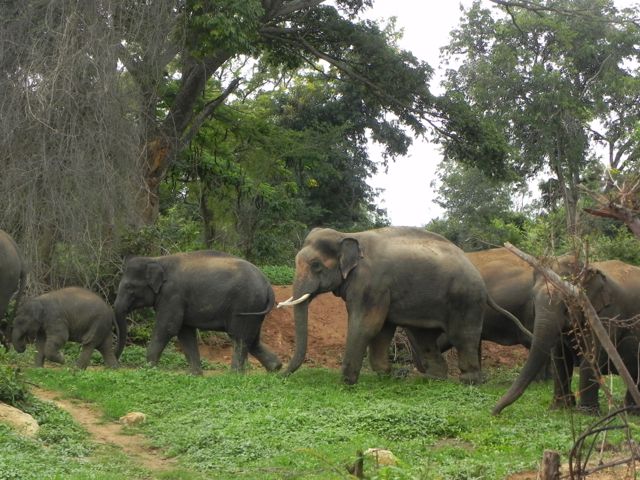
    When I first saw the jungle hatti my heart melted. He was just a kid, maybe 10 years old. His skin pigment was much darker than that of the two captive-held BBP residents who accompanied him into the clearing. The three stuck together like glue, with the jungle hatti sandwiched in the middle.

    The mahouts nervously checked their escape routes. The jungle hatti tensed when they started yelling to warn each other that the wild one had emerged from the forest. I was in awe at the scene unfolding.

    Once the hatti and his friends converged with other herd members, the tension in the air dissipated. All the elephants appeared quite comfortable with their wild cousin. In fact, they seemed to know each other quite well.

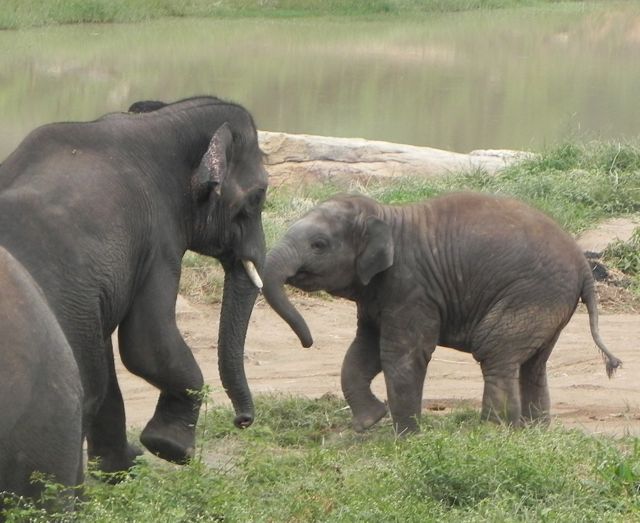
    Shiva, the baby of the herd, could not get enough of his wild friend. He followed him around, pushed and shoved on his legs and trunk, trying to get the jungle hatti to play. What a sight — tiny Shiva and this wild 10-year-old, acting as if their interactions were common place. And perhaps they were.

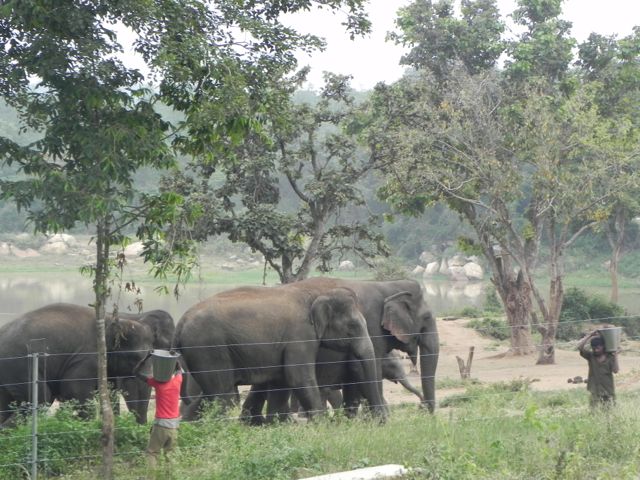
    During the daytime hours, the BBP herd is on exhibit in the drive-through safari section of the Park, corralled in a pasture area with a sizable pond. The new 122-acre chain free enclosure eliminates the need for the elephants to be chained during the day to contain them.

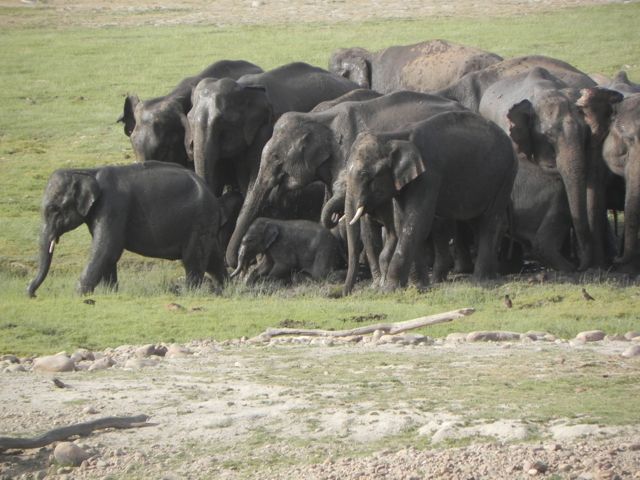
    But at night, the entire herd is released in the nearby National Park to forage and commune with wild elephants. Captivity is a burden for elephants but this arrangement, releasing the elephants into the wild overnight, is genius and the healthiest captive situation I am aware of in India.

    An adoptive family

    Throughout the day, the jungle hatti continued to interact with the entire herd. When Shiva became too much of a pest, as a younger sibling sometimes is, the jungle hatti pushed Shiva off his feet. Without a single vocalization Shiva’s mother and aunt instantly moved in on either side of him.

    I realized I was holding my breath when the elephants relaxed and returned to eating. Shiva got up, brushed himself off and went right back to pestering the jungle hatti.

    It was then that I understood the relations was familiar. For whatever reason the jungle hatti left his biological family and had joined the BBP family. And they had accepted him.

    He grazed with them, swam with them, dusted with them, communed with them. The only thing he had not yet done in the past two weeks was to leave the corral with them, but it was time.

    Food and friends entice

    The mahouts wanted suggestions how to get the jungle hatti to leave the corral. After I assured them that food and the companionship of his friends would entice the wild one to leave the corral, the mahouts had the confidence to implement a plan.

    At 5pm, amidst anticipatory rumbles and trumpets, the food truck arrived. Buckets of prepared treats were unloaded, each containing supplemental, softball-size rice balls. Elephants and mahouts alike were in high gear, vocalizing and dashing around on opposite sides of the corral fence.

    The young jungle hatti resumed his position sandwiched between the two other juveniles as they raced back and forth in unison, moving like a perfectly synchronized school of fish. His head and tail were raised, his eyes bugged. He was afraid, prompted by the noisy humans on the other side of the fence.

    The jungle hatti and his bodyguards hung back while the other elephants were called from the corral. There was organized confusion as the elephants ran in every direction to their appointed mahout and food bucket. As mahouts gently placed the freshly prepared nutritious food balls inside the gaping mouths of their respective charges, the jungle hatti and friends continued to pace the inside of the corral.

    Finally, it was time to see if the plan would work. The empty buckets had been gathered and, along with the nervous mahouts, were sitting in the back of the truck that stood ready to speed away if necessary.

    As the jungle hatti and his escorts made a wide circle back toward the lake, one brave mahout opened the gate.

    The jungle hatti nervously approached the open gate with his friends close on either side. At one point he broke ranks and turned to run away, but his friends quickly sandwiched him and helped guide him out through the open gate. He was seriously frightened but clearly he trusted his friends.

    Once through the gate, it was all butts, raised tails and trumpets of excitement as the entire herd stampeded off toward the National Park.

    The mahouts were all smiles as the elephants disappeared over the hill into the forest.

    I have never before observed a more powerfully moving sight. This herd of elephants–some wild caught decades ago, some rescued from temples, some captive born at BBP–and one wild boy who chose them for his new family.


  • Sunder the Elephant Embarks on New Life

    sunder__family_bannerghatta_zoo_india-1_med
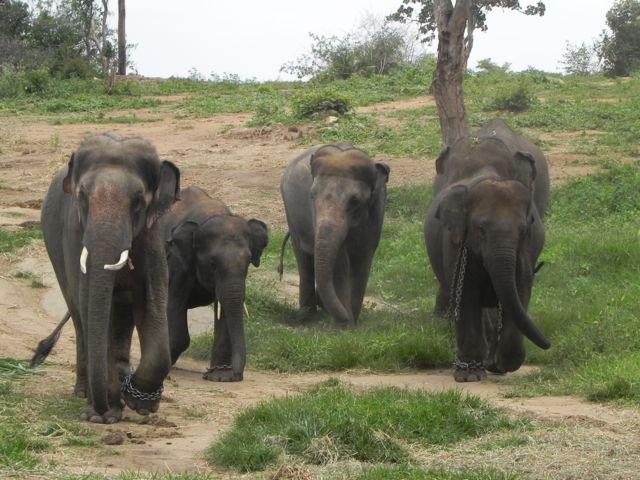
    Sunder (left) with his new family

    Elephant welfare expert Carol Buckley says rescued elephant is in good hands at model facility.

    More than a month after his rescue from a life of horrific suffering, 15-year-old bull elephant Sunder is enjoying lush forests, cool ponds and the close companionship of 14 other elephants at the Bannerghatta Biological Park (BBP) outside Bangalore, India.

    Sunder’s tragic plight touched the hearts of people from all around the world and galvanized an international social media campaign that helped win his release and recovery.

    sunder_and_family_india_2_med“Sunder has a new life and a fresh start at a wonderful facility,” said Carol Buckley, an expert in innovative approaches to elephant welfare in captivity, who recently visited Sunder in India to design a chain-free facility at the park where he now lives.

    “Thanks to the courage of the Supreme Court of India, which ruled against Sunder’s longtime abusers, the willingness of BBP to accept Sunder for permanent residence and the tireless logistical and legal efforts of PETA India, Sunder’s future looks very bright.”

    Buckley, who founded and leads the US-based nonprofit Elephant Aid International, says BBP has all the desired components for captive elephants. Its 122 acres of diverse habitat include open pasture, shaded forests and ponds, where the elephants are free to roam and play during the day. At night, they are given access to the adjoining national park forest for foraging and exploration.

    The upcoming construction of a custom designed, solar powered, chain-free perimeter fence system to enclose the entire daytime habitat will give the elephants even more autonomy. The fence creates a safe containment area, eliminating the need for mahouts to dictate the elephants’ activities. It should be completed before the end of the year and will be the first constructed at any zoo in India.

    Buckley noted that unlike most elephant facilities throughout the world, BBP’s mahouts manage their captive elephants in a “herder style” manner that supports their physical, emotional and mental health. This style of management acknowledges elephants’ nature as highly social, herd animals, giving them freedom to wander at will while mahouts keep a watchful eye on their whereabouts.

    “Bannerghatta Biological Park, working in partnership with PETA India, offers the world an exemplary model for managing captive-held elephants and the best possible new home for Sunder,” said Buckley. “I’m so grateful for their efforts.”

  • Capture is an ill-conceived solution to human-elephant conflict

    Capture is an ill-conceived solution to human-elephant conflict

    Corbett Tiger Reserve eles

    The competition between humans and elephants for space and resources has reached an all-time high in India. The problem stems from both species’ dependence on forest resources for survival.

    Elephants leave their forest home in search of food. Until villagers are given alternative means to meet their daily needs without depleting forest resources, the problem will continue.

    Lacking a well-thought-out plan to combat the problem, the Indian government continues to resort to crisis management. Always a step behind the problem, they have failed in their responsibility to the welfare of marginalized people and wild elephants.

    Capturing elephants is an ill-conceived, short-term solution to a long-term problem. Although it is ethically repugnant to some, others have no problem incarcerating wild elephants to a life in chains.  How a people who profess to believe that Ganesh is god can capture and torture his likeness is disturbing.

    To avoid a continued escalation of the problem, the government must devise a way to protect the village people, the wild elephants and their forest home.

    Potential solutions to these pressing problems need immediate and thoughtful consideration. The future of the forest, wildlife and the villagers who encroach upon the forest are at stake. Ignoring any aspect of the problem will result in failure–a loss for humans and uncertain future for India’s forests and elephants.

    Some foreign NGOs recognize the need to relocate villages and open elephant corridors and are pursuing initiatives. But most efforts by local and foreign NGOs to create protected areas for elephants at no expense to the government have, to date, been thwarted.  Government resistance to outsiders bankrolling solutions to the human elephant problem seems counterintuitive and bewildering.

    Read more:

  • ke garne…what to do?

    I have held off writing this blog for weeks hoping that my experience was anecdotal. I also wondered if sharing my experience and expressing my concern could be beneficial or would simply broaden the already huge culture gap that divides humans who view all beings as sentient and those who do not. As the situation continues to repeat itself over and over again I realize—even though I am still unsure of the outcome—that an expression of my concern is required.

    Over the past four months I have been immersed in creating a healthy environment for six captive held elephants in Nepal. The challenge to improve their welfare is relatively easy, their transition seemingly effortless. The problems we experience are not with the elephants, it’s with people.

    Although the facility where I am working is a private NGO conducting wildlife conservation studies, the general public feels it is their right to enter the grounds and act in any manner they please, which at a minimum consists of invading the animals’ personal space to take photos—not of the animal but of themselves standing next to the animal. Sadly, the animal is insignificant; it is a photo of themselves that they wish to save for prosperity.

    It has become increasingly distressing to witness the degree to which people disregard and abuse animals. Even authority figures are unable to protect captive held wildlife and wild animals from insidious abuse by humans.

    This exasperating situation is repeated all over Asia, where wildlife, both captive and in-situ, find themselves harassed by frenzied mobs of non-empathetic humans.

    Take, for example, the recent craze in Coimbatore forests in India, where crowds of people gather on a regular basis to incite wild elephants to become aggressive. Who has the power to change the mindset that gives people permission to harass wild animals on this grand scale? Where is common decency? And where does religion come into play in the cultural abuse of non-human animals?

    It has been my observation that policing authorities have little influence on crowds of people unless batons and violence are employed. A seemingly docile crowd can erupt into an angry, violent mob in seconds. The trigger that transforms a crowd of people is simple: ask someone to stop doing what s/he is doing.

    For example, request that a person not enter a private area and your request will be met with a refusal,  followed by immediate argument. All the while, the offender will continue to enter the premises, totally ignoring the request.

    The problem is compounded if the person is not alone but accompanied by others, which is most often the case. Everyone will equally ignore the request and add their voice to the argument. The volume of verbal resistance increases until a confrontation ensues, with the offending crowd encircling the requester, yelling their refusal in an attempt to intimidate.

    The offenders appear to cross all lines of common decency, causing stress and trauma to the wildlife, who have no other way to respond but to become aggressive to protect themselves. At this point the animal is viewed as the offender and made to suffer further for his/her response to the abusive crowd of unruly people.

    Trying to stop the abuse

    I wonder almost every day what can be done to prevent widespread, systematic animal abuse. Education is the most obvious, but until such time as a new generation can be sensitized to the pain and suffering of non-human animals, the question remains, what can be done to protect the innocent?

    We have tried posting signs, which are torn down and spat upon. Placing an educator in key locations to speak with the public, both about the wildlife and the appropriate human behavior in the presence of wildlife, proved equally ineffective. The public argues, demands to be allowed past the barrier, pushes past, verbally abuses the educator and demands to touch, feed and have their photo taken touching the captive wildlife.

    I witness crowds of people taunting wild animals and intentionally abusing domestic livestock and street dogs on a regular basis. The lack of empathy and even malice shown toward non-human animals is mirrored in the manner in which a rioting crowd responds to authority figures. On too many occasions I have witnessed a complete disregard and disrespect for a reasonable and legal request, such as “please do not feed, tease, hit or touch the animal.” Surprisingly, many people appear to view these activities as one of their inalienable rights.

    It is not possible for me to turn my back and walk away when animals are being abused. As result, on too many occasions, I have become the focus of an enraged crowd of near-violent humans ready to bash my head in because I have told them to stop harassing the elephants, to not hit the dog or even to refrain from tormenting the baby rhino.  Admittedly, nothing I have tried has worked to stop the violence except to stand between the tormentors and the animal they have targeted. But this approach is not sustainable. So then, what to do?

    Fencing has been used to keep captive wildlife in. Until a new empathetic generation emerges it appears the same approach must be taken to keep the human wildlife out.

  • Bahabur’s surgery

    Bahabur’s surgery

    Oct 17th

    [Warning: This post includes graphic photos.]

    My first morning in Assam, I awoke to learn there was an elephant emergency.

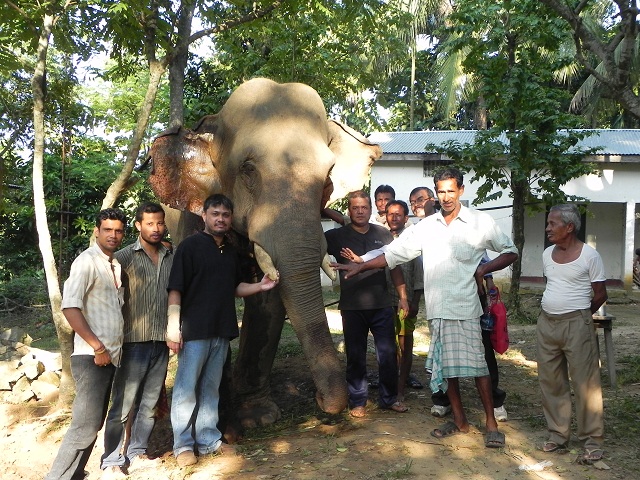
    Thirty-five-year-old, Bahabur, a skilled koonki (elephants trained to assist mahouts in the capture, training and management of wild elephants) who only days before successfully pulled a wild rhino from a mud bog nearly lost his right ear in a fight with a wild bull elephant.

    Bahabur is intimately familiar with both captive and wild elephants. He lives with a non-related herd of koonki elephants whose job it is to assist their wild kin by participating in human-elephant conflict mitigation.

    When wild elephants emerge from the forest in search of food and water, they raid crops and create havoc. In an effort to protect both elephants and humans, Bahabur and his herd, guided by their mahouts, becomes a formidable barrier between wild elephants and trouble, literally saving the wild elephants’ lives.

    Many elephants are killed as result of crop raiding–poisoned, shot, electrocuted, their mouths blown apart by bomb-laden food. These koonkis are the front line of protection for their brethren and the villagers whose encroachment and farming activity create such a dangerous situation for everyone involved.

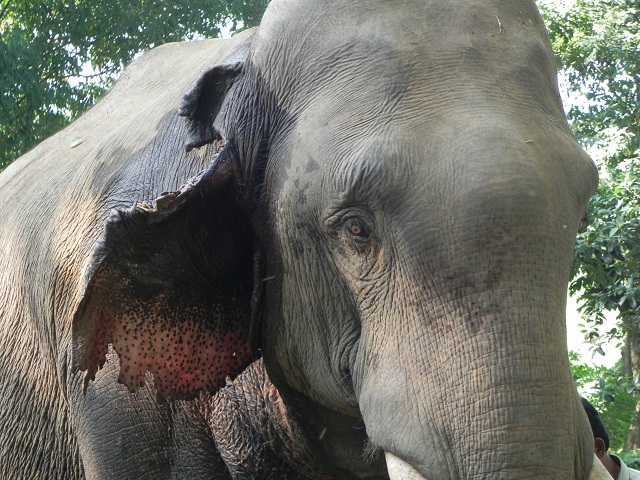
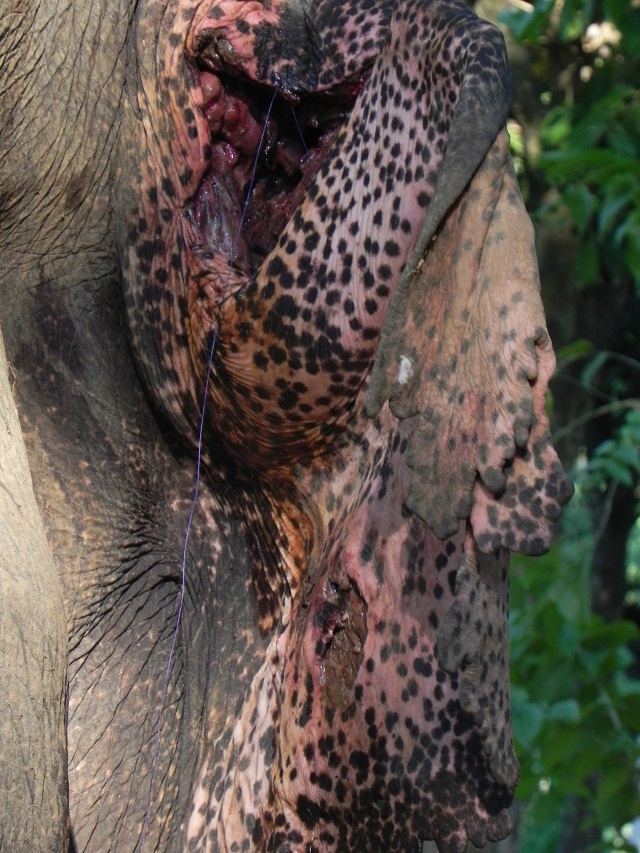
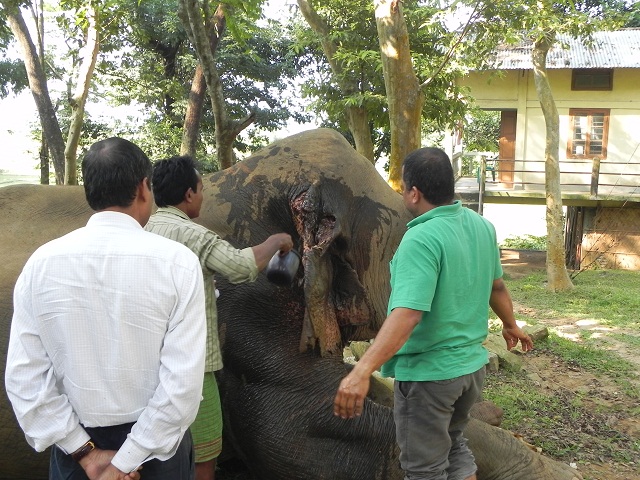
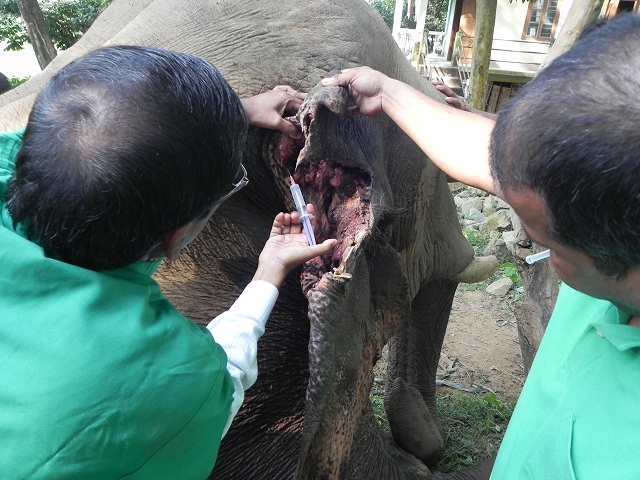
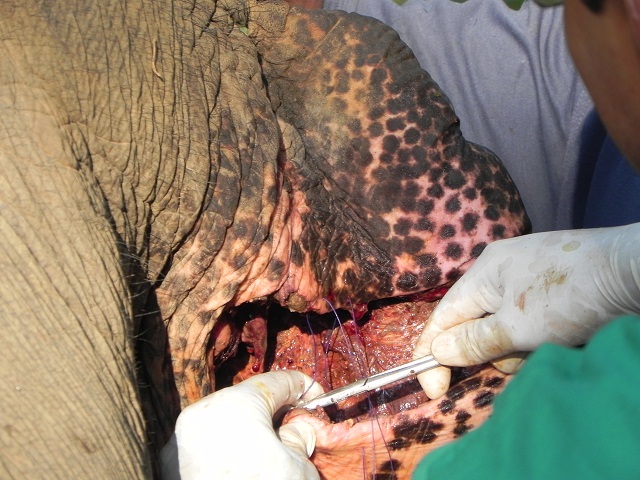
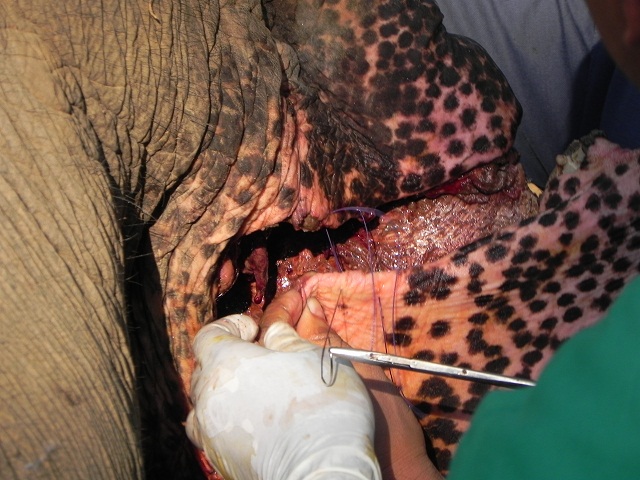
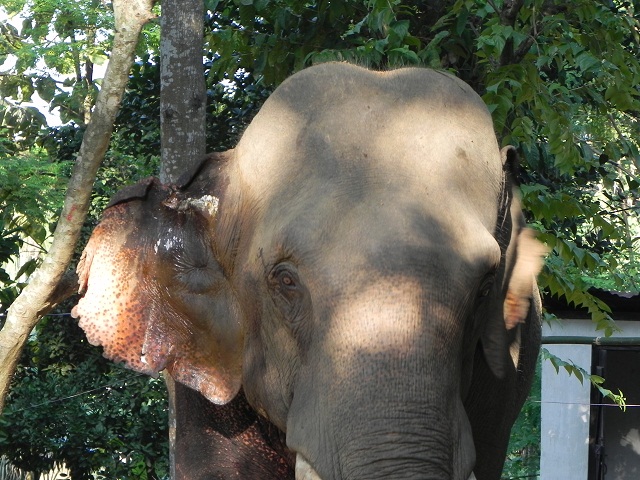
    Bahabur stood motionless, his right ear ripped in half, dangling painfully under its own weight. The cartilage was ripped apart at the top ridge of his ear. The flesh that covered the back of his ear was torn from the ear, creating a huge gaping pocket between the skin and cartilage. It was a seriously gruesome sight and no doubt painful.

    The attack had happened eight to 12 hours before, after Bahabur, just coming into his annual musth season, had uprooted his tether tree and headed straight into trouble.

    Mahouts tracked Bahabur and received no resistance when they instructed him to return home.

    The expert mahout staff managed Bahabur while Drs. Bhupen Sarma and Anjan Talukdar assessed the injury. In a natural self-medicating fashion, Bahabur had packed the gaping wound with dirt, which needed to be removed before surgery could begin.

    Without complaint Bahabur reclined in a half-sitting position, giving the veterinarians access to the wound. No one yelled, hit or in any way badgered Bahabur. Instead they spoke calmly and confidently, patiently waiting for Bahabur to respond to their commands and get comfortably situated.

    In soft tones, treatment instructions were given. The wound was cleaned, flushed out with clean water and Betadine.

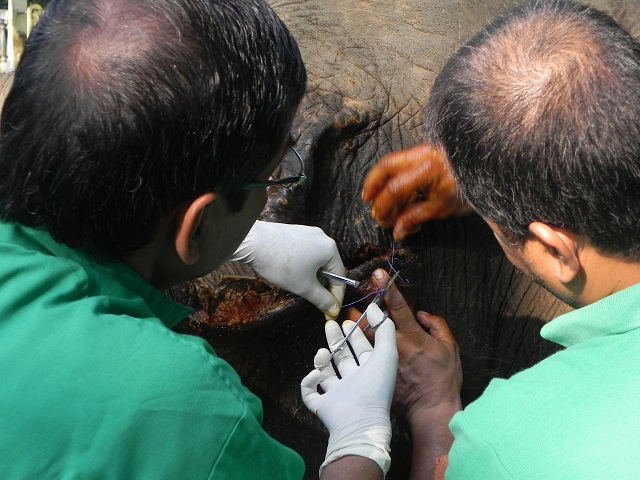
    The veterinarians and mahouts worked seamlessly together, voices low as they repaired the half-severed ear of this full-grown bull elephant.

    From time to time Bahabur needed to stand in order to readjust and, I believe, to distract himself from the pain. After a few seconds standing he would once again respond to the patient command given by his mahout to recline.

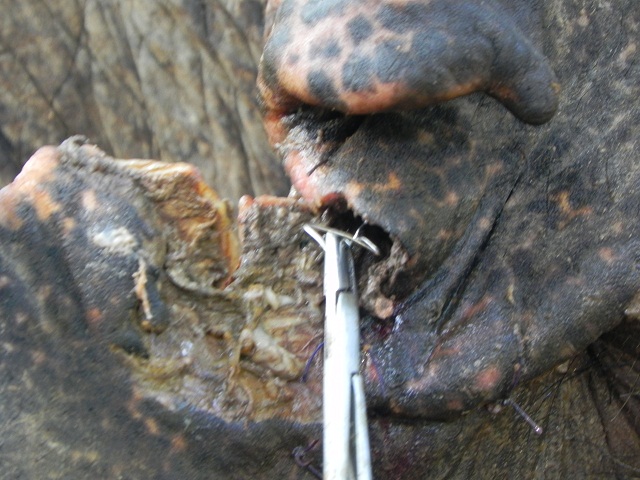
    With only a local anesthetic to deaden the pain in the area to be sutured, Bahabur’s ear was expertly reconstructed; the torn cartilage stitched together with sutures and ripped flesh reconnected. The result was amazing.

    Bahabur is a mesmerizing example of this highly evolved, profoundly intelligent species, who for so long has captured my respect and awe.

  • Monsoon Season is Over – September E-Newsletter

    Monsoon Season is Over – September E-Newsletter

    There are more than one hundred elephants awaiting pedicures in India and Nepal. Wow — I can hardly catch my breath at the thought of it!

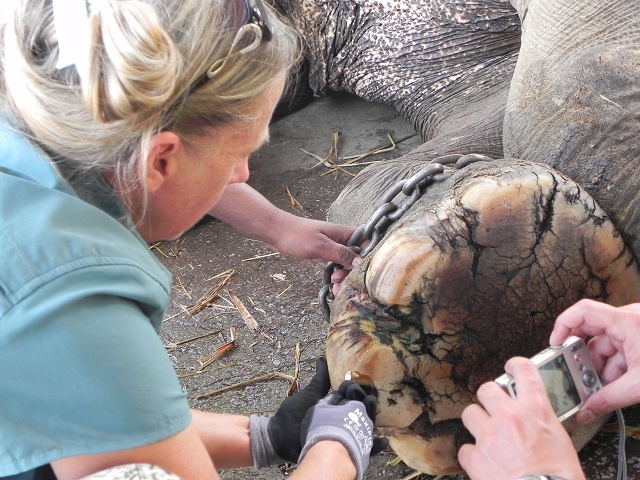
    This is my passion these days — foot trimming. The joy of being at the ground level, literally, of elephant welfare, is thrilling. I know we cannot fix all the problems facing captive elephants in Asia, but foot care is a very immediate and concrete way to improve their lives.

    India: Care center plans

    I will be in India through October, visiting with colleagues about prospective care center projects (and, of course, trimming elephant feet!). The care center project in Bannerghatta stalled due to property ownership issues and lack of government clearance. Disappointing as it is, we have decided to cancel the Bannerghatta care center project and concentrate on other more promising locations.

    This will be my third visit to Guwahati, in India’s north. It is stunningly beautiful elephant country. Unlike my last visit, which was a six-hour whirlwind blur, I will spend several days studying the area proposed for a new care center. I also plan to meet with the chief warden of Assam about a proposed care center in his state.

    This will be my second meeting with the warden. My colleague from the Assam Elephant Foundation and I are encouraged by the interest he has shown in this project. In fact, it was the warden’s idea and it is only with his endorsement that the project can move forward.

    The last time we met, the warden committed an area of land to the proposed center and agreed to permit the residents of our center to have access to the surrounding forest. This is an exciting start. I will keep you posted as we proceed.

    I will make a repeat visit to Wildlife SOS-India, outside New Delhi. This time I will have the opportunity to provide pedicures for all the elephants before heading off to see their new project, a four hundred-acre elephant rescue center under construction in Mathura. I have heard so much about this project—I can’t wait to see it.

    Nepal: Pedicures, chain-free yards, waste disposal and retirement center

    When I arrive in Nepal in November, I will have my work cut out for me: pedicures for more than one hundred elephants; we hope the construction of several more chain-free yards; development of environmentally sound elephant waste disposal practices; and brainstorming on plans for an elephant retirement center in Sauraha. What a productive time this will be!

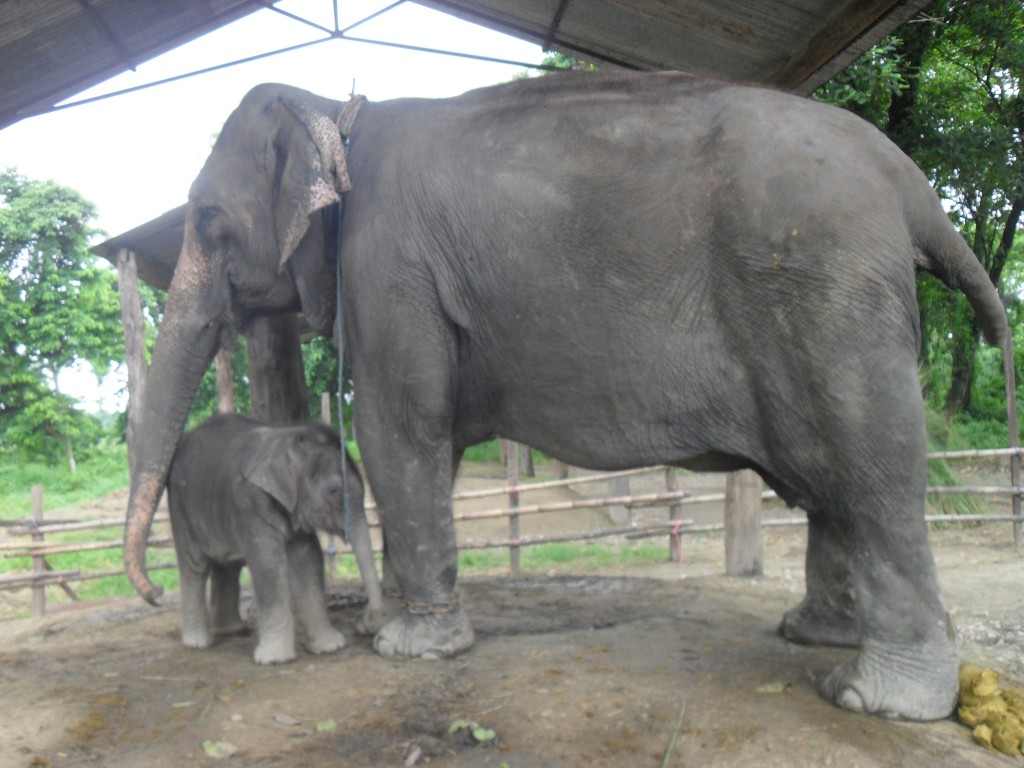
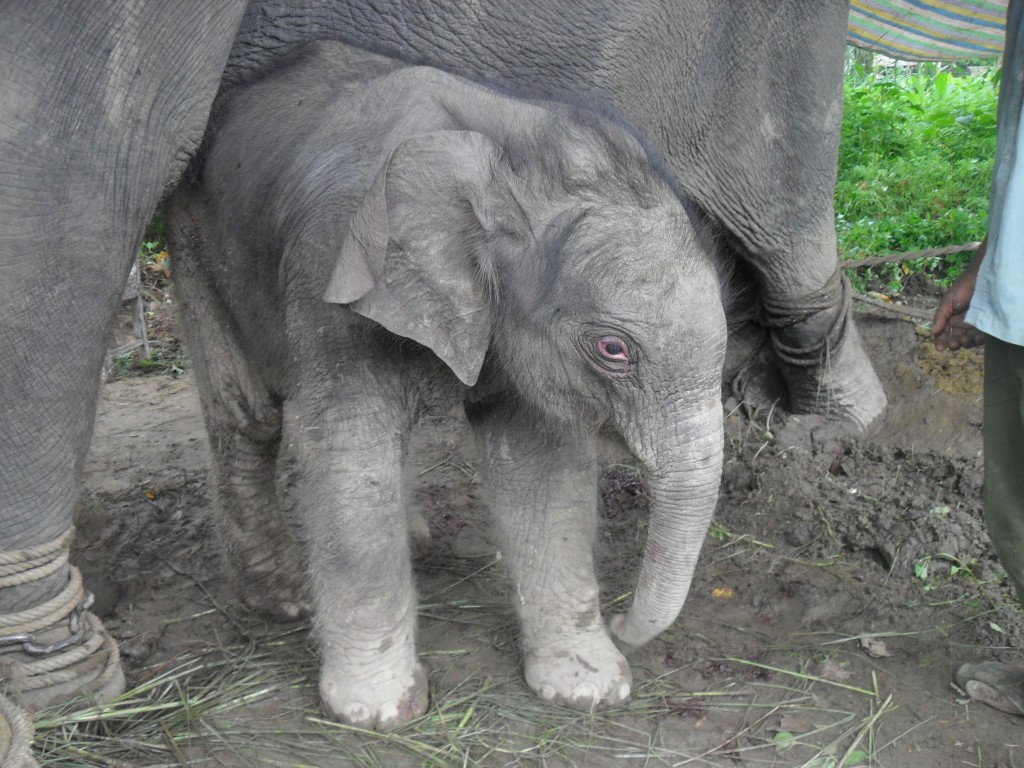
    Our first candidates for a chain-free yard are Man Kali and her two-month-old baby Hem Gaj. Currently, Man Kali is chained but little Hem Gaj is chain-free, kept with his mom in a wooden corral built by the mahouts.

    But the wooden corral won’t hold him in for long!

    After watching how Sweetie Kali blossomed in her chain-free yard, the mahouts want the same for her baby brother. They are determined that Hem Gaj will not be put on chains and have asked us to build a yard for him and his mother.

    Help us build a yard for Man Kali and Hem Gaj!

    Enclosing one acre of land with the power fence required to keep captive elephants in and wild elephants out, costs close to $4,000US. Adding water storage tanks, plumbing and a drinking trough, adds another $2,000US.

    Help us remove the heavy chains from Man Kali’s legs and ensure that baby Hem Gaj will never feel the pain of cold steel around his ankles.

    Just say yes! I want to contribute $10 / $25 / $50 / $75 / $100 / or other $_____ to build a one-acre, chain-free yard for Man Kali and her two-month old baby, Hem Gaj.

    If you prefer to donate by check, please make your check payable to Elephant Aid International and send it to:

    Elephant Aid International

    P.O. Box 106

    Hohenwald, TN 38462

    931-796-1466

    As you might expect, we won’t stop there. As the funds are raised, we will build more yards for more elephants.

    We are making great progress in Nepal. The mahouts welcome my return and are engaged in the changes we are making. They have embraced the chain-free yard concept, are excelling at pedicures and want to learn more humane ways of working with their elephants. The future of elephant welfare in Nepal is in their hands.

    You make it possible

    We have made it this far because we believe in the power of one. Each one of you makes it possible to help one elephant, then another and another.

    As I head off to the Far East once again, I am eternally grateful for your continuing support and encouragement. Knowing that you are behind me one hundred percent gives me the determination to forge ahead, helping one elephant at a time, then another and another. It’s working and it’s all thanks to you!

    Please follow the progress of our work on my blog and thank you, as always, for your support.

    Namaste,

    Carol

  • EAI’s May e-newsletter

    Two exciting new projects are underway in Nepal!

    This e-newsletter kicks off EAI’s first fundraising projects for Nepal this year. I hope you will help make it a success by telling your friends and neighbors how far the US dollar stretches in Nepal. Be part of the solution, one world, one elephant at a time!

    No more chains

    Between trimming feet and brainstorming about a retirement center for elephants in Sauraha, Nepal, we—you, I and all of EAI’s supporters—are about to embark on a very exciting pilot project at the National Trust for Nature Conservation Biodiversity Conservation Center (NTNC-BCC) hattisar (elephant stable).

    Pursuing last year’s recommendation to create chain-free enclosures for the BCC’s five forest patrol elephants, Naresh Subedi, an EAI advisor, and other NTNC officials have enthusiastically agreed to allow EAI to build a chain-free enclosure to demonstrate its functionality.

    No chains = cooperative elephants

    This is huge. It gives us the opportunity to show mahouts how cooperative elephants can become when allowed the freedom to move around unrestricted.

    Sweetie KaliEight-year-old Sweetie Kali will be the lucky recipient of this new and improved yard, where she will be off chains 24/7.

    In addition to the direct benefits to her psychological and physical wellbeing, Sweetie Kali will demonstrate to the mahouts and NTNC administrators that elephants do not “go wild” when allowed to spend unsupervised time off chains.

    Sweetie Kali, her fellow herd members and most of the government elephants are taken to the forest each day. Although they spend eight hours a day wandering the forest foraging for food, they are still under the strict control of their mahouts. Their lives are measurably better than those of privately owned elephants, who are required to give rides to tourists all day and are tethered in a stable overnight.

    But, together with NTNC, we can do better.

    Sweetie Kali and positive changes to come

    Sweetie Kali

    Sweetie Kali was chosen because she is the youngest elephant in the herd, born at the NTNC-BCC. Her incessant head bobbing is a concern for the mahouts and management alike. The staff was witness to the onset of her stereotypical behavior, which started when she turned 3, following her formal training and induction into the traditional world of chains.

    Sweetie Kali shelterCurrently, all the elephants are tethered under their own private shelters. Once everyone is comfortable that the fence provides the security necessary, chances are that Sweetie’s mother will be allowed to join her in the yard. Imagine what a moving reunion that will be.

    The new chain-free yard will allow Sweetie Kali to engage in natural behaviors she has been prevented from in the past. She will be able to explore her new yard, dust herself to her heart’s content, create mud wallows and feel the soothing sensation of scratching on a huge tree. Instead of sleeping tethered between two poles, she will sleep in any soft and comfortable location she chooses.

    EAI’s goal is to get this corral up and functioning before I leave Nepal in June. That is a rather optimistic expectation but I am determined to move the project forward as quickly as possible.

    Sweetie Kali fence

    Vishnu Narain, a collaborative partner in our Bannerghatta, India, care center project, operates IBEX Gallagher, a power fence company. We could not be more fortunate to have this connection. I have his bid in hand and a commitment to install the fence as soon as we are ready.

    Training and foot care wall — a prototype for Asia

    If we built only the electric fence for the corral it would mean a world of improvement for Sweetie and would keep the cost of the project down. But a training and foot care wall—a two-sided, free standing, steel pipe structure—is essential to our efforts to improve elephant welfare in Nepal. Once the wall is in place, foot care will become a required duty of each mahout, integrated into their elephant care responsibilities, and all the NTNC-BCC and government elephants in Sauraha will have access to it.

    The cost of the electric fence, including area preparation, materials, shipping and installation, is estimated to be $3,240. The training and foot care wall, including pipe, delivery, welding, concrete and labor, nearly doubles the cost of the project. I believe this will be $6,000 well spent as it will create a prototype that can be duplicated throughout Asia.

    Help us hire a veterinarian to oversee our Nepal projects!

    EAI has the exciting opportunity to engage a veterinarian in Sauraha, Chitwan National Park. The timing is perfect!

    This is our third year in Sauraha. With the ongoing foot care and mahout training and the new chain-free enclosure and training and foot care wall, it is essential that we hire a veterinarian to coordinate and supervise our activities. It will also be much easier to expand EAI’s welfare projects in Nepal with a professional in place.

    Simply building a chain-free corral and a training and foot care wall for the mahouts and their elephants is not enough. We also need to formalize our Compassionate Elephant Care training and create incentives to encourage the mahouts to become more engaged in all aspects of their elephants’ care and wellbeing. Once our collaborative effort to create an elephant retirement home is realized, our veterinarian will monitor the daily care of the resident elephants.

    In addition to overseeing EAI’s projects in my absence, our veterinarian will work closely with Dr. Gairhe, the senior government veterinarian, assisting in wildlife captures, rhino counts and regular animal management activities undertaken by NTNC-BCC.

    EAI will be responsible for the vet’s salary as well as all necessary equipment, lab work, travel and any other expenses we deem appropriate. Resumes are currently being reviewed.

    Our budget for the first year is $15,000. Yes, you read that right — $15,000 includes the veterinarian’s salary and other costs associated with his/her work for EAI.

    Update: Elephant Care and Rehabilitation Center Project, Bannerghatta, India

    Earlier this year I learned that a portion of the land intended for our care center project was designated as revenue land.

    care center property - BannerghattaRevenue land is owned by the government and designated for agricultural use or forest restoration. There are cases when the government can gift this land but the recipient must abide by strict use requirements and restrictions, is never allowed to sell it and the government has the legal right to reclaim it.

    The process to acquire permission to use revenue land in India moves slowly and must take into consideration the villagers’ needs and legal rights.

    EAI collaborating partner Vishnu Narain reports that progress continues for the care center. He has met with local government officials and regulators, who expressed support of the project.

    EAI is taking a wait-and-see attitude on this project. Once we have written authorization from the government to fence off and use the land for the intended purpose of an elephant care center, EAI will once again become active in the process moving forward.

    I look forward to keeping you up to date on our exciting new projects.

    Please visit EAI’s Facebook page so we can keep you updated on our progress as it happens!

  • Wildlife SOS – INDIA

    Wildlife SOS – INDIA

    During this trip to India I basically sequestered myself in Bannerghatta, singularly focused on the care center project. As my pending departure loomed I realized that I had failed to visit other projects. There really is so much to see—elephant welfare-wise—in India, I was kicking myself for not setting aside time to further my education.

    Literally days before my visa was to expire I received an email invitation from Kertick and Geeta of Wildlife SOS to visit their facilities in Agra. True to my nature, I hesitated at first — not because I did not want to visit their bear and elephant facilities but because my flight was already booked and I did not want to pay the flight change fee.

    Fortunately, my flight from Bangalore to Kathmandu had a plane change in Delhi, the airport I needed to fly into for Wildlife SOS. I was able to postpone the second leg of the flight, giving me almost three days to spend with the Wildlife SOS staff at both their bear and elephant facilities.

    The visit would have been perfect if Kertick and Geeta were in the country but they were in California, presenting at the PAWS elephant summit and other venues. In their absence, their expert staff took care of all arrangements, which made my visit very comfortable. I hope Geeta, Ketrick and I will meet in the next few weeks, as they plan to come to Nepal to observe my work in Sauraha.

    The work Geeta, Kertick and staff have done to rescue and rehabilitate dancing bears is nothing short of miraculous. The facilities are well designed, with expansive yards, spotless night houses and a dedicated and knowledgeable team of caregivers and veterinarians.

    I was in the education hut sitting on a couch viewing one of many informative videos about dancing bears and the plight of other Indian wildlife, when something—light as a feather—touched my shoulder. I assumed it was an insect and reached up to gently brush it away without taking my eyes off the screen.

    Without a sound or advance warning more than the gentle shoulder tap that I mistook for an insect, something much heavier than an insect, maybe four or five pounds, warm and hairy, jumped onto my head. I froze and whatever-it-was froze. I had no idea what it was. It was completely silent and warm, grasping my hair in what felt like many tiny hands.

    Not being able to see what was perched on my head was indeed unnerving, and no one else seemed to be around. I trusted that I would not have been put into this room alone with anything dangerous so I considered my options. Yelling for assistance was out. Reaching up to remove my head ornament seemed risky. And waiting for someone to come to my rescue seemed unrealistic.

    My decision was to slowly reach towards my head to see what would happen. The “thing” leapt from my head across the room to a chair and then back to my head again. Her movement was quick but as she was flying through the air getting ready to land on my head again I saw the “thing” was a young capuchin monkey.

    Even though I am comfortable with captive wild animals I respect them by keeping my distance because I feel interaction is not in their best interest. But this little creature obviously felt differently. She leap frogged from her chair to my head a couple of times and then remained perched on my head. With no staff in sight I realized I would need to deal with this little bundle of curious energy on my own. I was not opposed, I just did not want to do anything wrong, not having been around a primate before.

    Gently untangling my hair from her tiny fingers she allowed me to remove her from my head and lower her to the couch. We looked at each other—too cute is all I can say—as she ever so confidently climbed into my lap, took hold of my hand and placed it on her belly. There was no misunderstanding this gesture — she wanted a tummy rub.

    I admit to being in heaven while at the same time wondering how I could justify having a monkey in my lap. In the end I did not try to justify it, I simply accepted the experience as the gift it was and enjoyed every second she remained in my lap. A few minutes later one of the resident Great Dane rescues showed up, sending her dashing from the room.

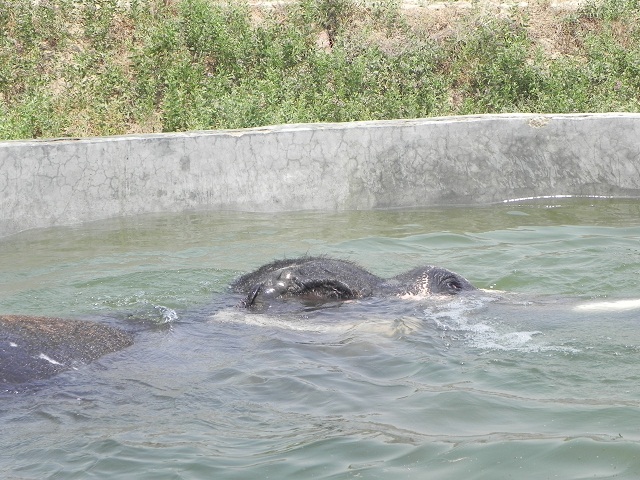
    Escorted by staff veterinarians we first toured the bear facilities and then drove a short distance to the temporary elephant facility. Set up on five or six acres of land, the elephant facility is a good start for the rescued elephants. The facility is well designed, with stables for shade and nighttime, sand piles to avoid hard surfaces, a steel corral stable for bulls and a circular concrete pool that is the high point of everybody’s day.

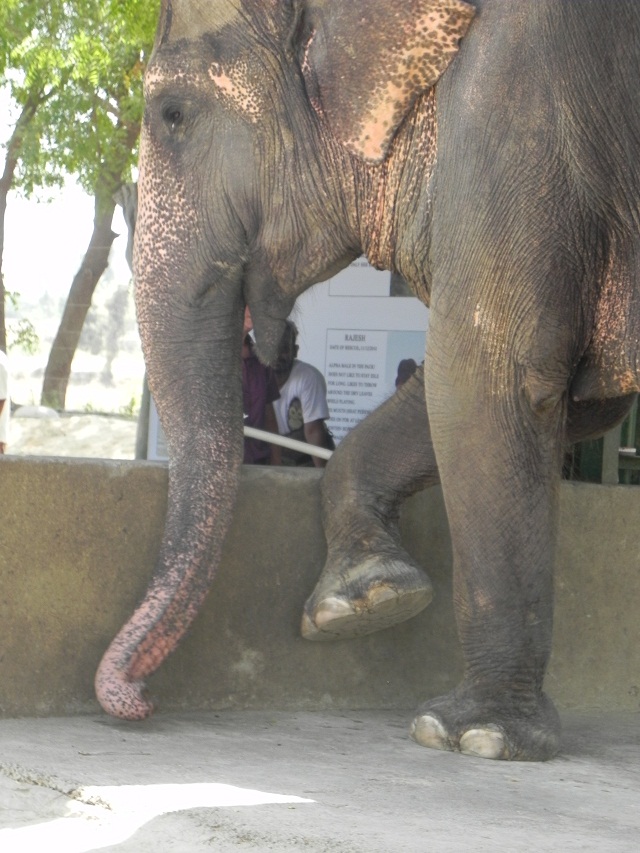
    It was amusing to watch Rajesh, a beautiful full-grown bull with massive tusks, submerged for hours, gently bobbing around in the pool.

    I did a little foot care and target training to give the vets, mahouts and elephants an idea of what was to come in the future. The mahouts have already changed how they work with the elephants to a great degree. The harsh tone and demanding commands are still used but the ankus and infliction of pain are not. I could see the mahouts are being won over to other ways of working with their elephants — it was exciting to see the progress they have already made.

    Kartick and Geeta have plans to move the elephants to a very large tract of land. I have decided to accept their invitation to be involved in this project and recommend that you visit their site and support their work for rescued bears and elephants.


  • my Visa has run out

    It’s hard to believe that my time in India—for now—is up because my visitor visa is about to expire. I admit that I thought by now the fencing would be in and the first elephant on her way. But things simply don’t work that quickly here. No criticism intended, just recognition of how the system works.

    Practicing patience is a requirement when working in Asia. Even getting a map of the local area from the regional office is riddled with complications. The difficulty is not because I am a foreigner; the locals experience the same frustrating delays.

    Without a doubt we are spoiled in America. If I want a map of any property in my county, I simply go to the clerk’s office. In all my years of using the service there has never been a waiting line and has always been a helpful clerk behind the desk ready to provide me with any information I need. For a nominal fee I receive—within minutes—a printed copy of the records of any property, which include acreage, dimensions, location and purchase price. Now that’s what I call customer service!

    In spite of the difficulties encountered pulling together all the necessary documents, I am thankful for what we have accomplished in these past three months. As result of my daily excursions, I know every inch of the place — every land feature, hill, curve in the creek, pasture, rock formation and water catchment. I have seen what vegetation is thriving and what is struggling and how the serious lack of precipitation during this seasonal dry spell affects the area. Most important, I see the potential of this land and what a blessing it is for elephants and other indigenous wildlife.

    Living alongside the villagers I now have an intimate knowledge of their lifestyle, activities, needs and challenges, and how they care for their livestock.

    Although the village dogs have a canine community of their own, they are constant companions to the villagers. Basically ignored, they silently pad along behind the herder with his sheep, goats and cattle; accompany the village women doing laundry and dishes at the lake or collecting vegetation for the livestock; and shadow the village men collecting fire wood and resources for their homes. And then, at the end of each long hot day when lights are switched off and blaring communal music silenced, the dogs stand watch all night, protecting the villagers’ life and livestock by warding off intruders, including wild elephants.

    With a great deal of necessary information already collected we will continue to pursue the area maps, surveys, property documents and the long-awaited final endorsement by the government. Let’s hope we can do it in record time.

    In the meantime, while I abide by the visa requirements and await the docs required to continue the care center project, I am off to Nepal to continue the work I started last year. There are many elephants in need of pedicures, mahouts eager to learn new skills, veterinarians anxious to receive a new stock of trimming tools and a retirement center to brainstorm!

  • March update on India Care Center Project

    March update on India Care Center Project

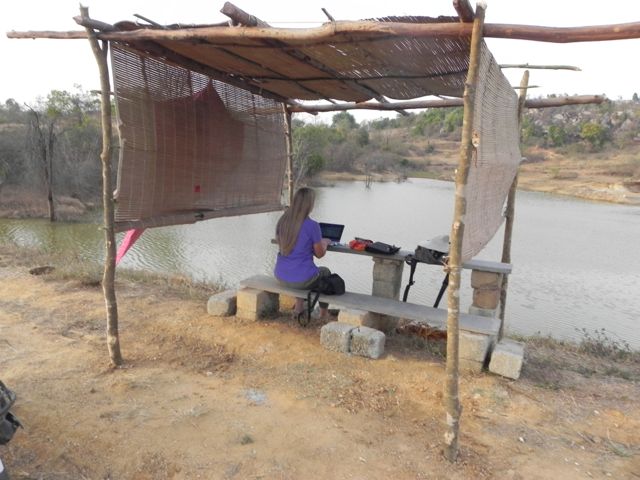
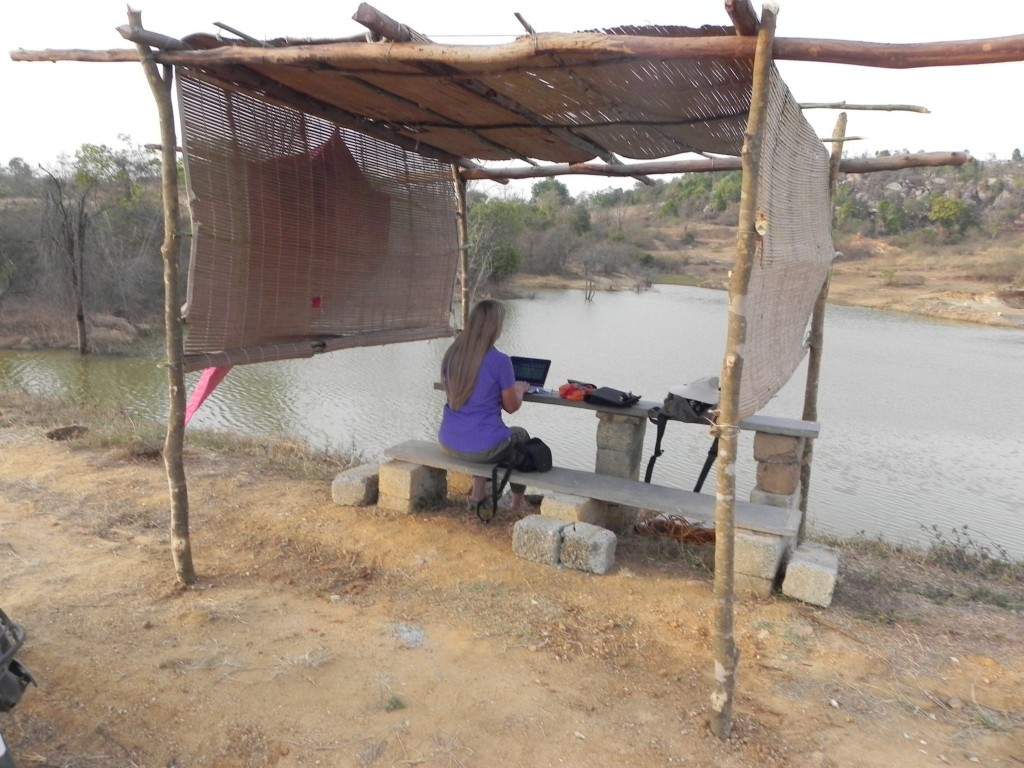
    Carol in her officeFrom my lake-front office, Bannerghatta, India

    The two months since my arrival in India have been filled — with meetings, brainstorming sessions, hiking through cinder-dry forests and continual reality checks.

    It is so important that I am here now—on the care center site—to study the land, the wild elephant activity in the adjacent forest, the habits of the local villagers and the laws that govern land ownership and use. There is so much to learn, I am ever thankful that everyone I am working with speaks fluent English.

    The project’s scope widens

    The project has remained focused on elephant welfare but its scope and approach has shifted a bit…for the better.

    Initially, we planned to have a relatively small plot of land in exchange for the care center elephants being allowed access to the national forest. Allowing elephants nighttime access to the forest is standard practice for the forest department’s captive-held elephants and seemed like a viable solution to limited day time space.

    But as I hiked the adjacent national forestland, I was disheartened to see how the forest’s resources are exploited. The forest herself appears to be barely breathing, suffering from over-grazing, intentionally set fires and the destruction of trees by the local villages that border the forest.

    Seeing the poor condition of the forest made me realize how the wild elephants are struggling to survive, with not enough food, water or shelter to sustain them. The idea of adding even a few more elephants to the already stressed habitat—reducing wild elephant resources even further—was a deal breaker for me.

    Following a frank discussion with the collaborators on the project, we decided to expand the land used for the care center, something close to 200 acres, thereby eliminating the need for the center’s elephants to use the forest.

    No chains, no dominance

    This change in operations has resulted in positive shifts in the facility design and style of elephant care.

    The original plan called for a small plot of land and giving the elephants access to the national forest at night. But I recently learned that allowing the elephants into the forest overnight called for a compromise: the elephants would have been required to wear a drag chain on one leg whenever they were in the forest. The chain helps keep them from being mistaken for wild elephants by villagers and makes it easier for the mahouts to track, retrieve and return them to their home during daylight hours.

    But now, with national forest use no longer an issue, there is no compromise required – chains will have no place at the care center.

    You can imagine how excited I am about this unforeseen turn of events! I had almost been convinced that in India elephants will never be completely free of chains. But with our land expansion we will be able to do just that—keep elephants on a large tract of forested land, free of chains and dominance.

    Infrastructure development and acquiring land

    As result of this positive shift in the design of the project, we need more time for preconstruction development than earlier projected. We must conduct an expanded survey to identify land ownership. Surveying the entire tract of land will provide the legal assurance required prior to constructing the miles of necessary trenching and fencing.

    This expansion also requires a follow-up communication to the government informing them of our desire to expand…even before we have begun!

    We also have the challenge of acquiring a small parcel of land that is essential to the project but is currently occupied by another person. We have received assurance that this parcel of land—approximately seven acres—can be acquired.

    In India, land rights are complicated but well defined, if not always enforced. In some cases property owners hold a deed and are permitted to sell to whomever they choose. In other cases, villagers and tribals who receive land from the government are allowed to pass the land down to family members, but are not allowed to sell outright.

    Becoming familiar with the regulations is essential for anyone intending to own, lease or occupy land in India.

    I am told that when it comes to land, possession is nine-tenths of the law and even in cases in which the land cannot be sold, occupants can accept payment to vacate. As I understand, once they have vacated the land, another person can occupy it, with stipulations that it be used for some agricultural purpose or forest restoration and it can never be sold. One small parcel of land essential to our project falls in this category.

    I am keeping a positive outlook about acquiring this piece of land, which stretches across the edge of the lake, one of the essential areas for our elephants. Negotiations are underway. All I can do right now is wait.

    Co-existing with wild elephants

    In the meantime, I am tracking the movement and land use of wild elephants in the area. There is one section of the care center land they frequent. All the collaborators have agreed that no care center land used by wild elephants will be blocked to them. Our goal is to be mindful that our project, although well meaning and helpful to captive elephants, not cause hardship to wild elephants who use the land.

    We have identified a small corridor just inside the care center property, adjacent to the national forest, where wild elephants leave the forest to enter the care center property. They have a well-established path, which will remain open for their use.

    Protecting this wild elephant corridor is another unexpected development that makes me even more excited about the care center project. Being able to create a healthy space for captive elephants to recover and thrive, while at the same time preserving land for wild elephants who migrate through the area, feels like the right thing to do.

    Care center and bird sanctuary

    With an estimated 180 different species of wild birds in the area, the care center property is already a bird sanctuary. Never before have I been so enthralled by bird watching but from day one I was in awe of the many different birds and their beauty.

    The lakes draw a variety of fishing birds, from the Indian Pond Heron to the regal Brahminy Kite. Their nonstop activity, sometimes entertainingly comical, has sparked my interest in studying these winged creatures with whom I now share my space.

    The animated and gutsy Blue Eared Kingfisher was the first to catch my attention. His fishing perch is feet from my outdoor office. The first time I watched him make a catch, I admit to being a bit shocked that this minute blue bundle of constant movement disarmed his prey by bashing its head against a rock.

    I’ve observed Brahminy Kites collecting branches for nest building, a trio of Red-Wattled Lapwings singing a chorus, a Black Shoulder Kite dive-bombing to catch a mouse and a Great Cormorant perching on a branch 30 feet above the lake on its awkward looking webbed feet. I’ve seen egrets of every size follow the resident horses, snatching up displaced insects. Then there were the stunning Rufous Treepie, Red Whiskered Bulbul and a pair of White Browed Wagtails who chased a Crested Serpent Eagle away from their favorite tree.

    Being able to observe so much winged activity has opened a new world to me.

    Survey and land

    Surveying the expanded land is the next step required to move forward on this project. Acquiring the seven-acre parcel of land currently in negotiations will come after that, followed by a government endorsement of our expansion. All this needs to be accomplished before beginning construction.

    Fencing and trenching

    Only after the survey is completed, the extra parcel of land acquired and government approval secured can we begin work on the perimeter trenching and electric fence required to keep wild elephants out and our care center elephants chain-free inside. The fencing is estimated to cost $7 per foot/$36,000 per mile. The approximately four miles of trenching and electric fence will come to about $142,000.

    Compare this to the average $100 per foot elephant sanctuaries in the US spend on fencing. For 7 percent of the cost, we can provide a safe and secure, chain-free environment for needy elephants in their authentic natural habitat while simultaneously protecting wild elephants and their land.

    I am very anxious to move forward on this project but am cognizant that we cannot overlook any step or detail in our enthusiasm to make the care center a reality. If great journeys are launched one step at a time, who knows where helping one elephant at a time will take us.

    Please visit EAI’s Facebook page so I can keep you updated on our progress as it happens!

    Thank you for your interest and continued support. This care center promises to be more than any of us ever expected. Thank you for sharing my dream.

    Carol
  • progress report of sorts

    progress report of sorts

    Each day living at the proposed care center property brings more insight and, in some cases, more unanswered questions.

    The temperature has heated up, causing afternoon activities to slow down. Even the shade offers little relief. Thank goodness for the breeze that has proven to be a near constant in this area.

    Today a group of college students arrived to tour the property. This is a popular education sight for the conservation minded. The students, all city dwellers, were given an opportunity to see how desperate the situation is for the forest in this area.

    Included in the group was a man who has dedicated his life to bringing awareness to India’s conservation issues. We shared a few minutes of conversation and he expressed true dread about the future of the area’s forests. When I commented on how important it is for the youth to become involved in conservation, he bluntly said he felt there was not enough time for us to wait for this new generation to turn things around—at least not in this immediate area. It was a sobering statement from a person who has studied the deterioration first-hand. I felt his desperation.

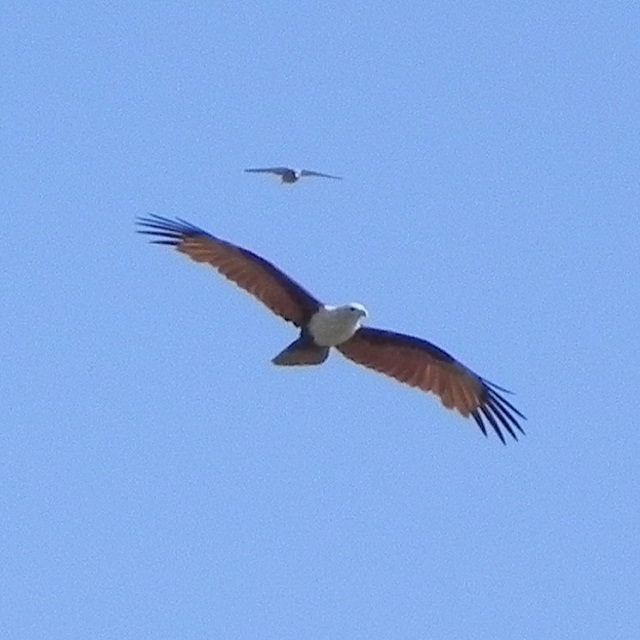
    As the students followed their professor down the levee, responding to his questions about plant life and its purpose in a forest area, the resident Brahminy Kite soared overhead. This was her third cruising over the lake this morning and she was putting on quite a show. Her massive wingspan and grace were spellbinding. Keenly eying the lake below, she circled and soared, gently dipping toward the water.

    A much smaller bird pestered her with dive bombs but the Kite expertly shrugged the pest away with a well-calculated twist, dip and spin whenever the attacker got too close. As she soared overhead I was able to get a few good photos but none that really did her grace and precision justice.

    I am learning, out of necessity, about land holdings here. The jigsaw pieces of this puzzle are finally coming together to give me a clearer picture of how things work. Perhaps I should have read up on India’s land laws before coming but, honestly, the thought never crossed my mind. I naively assumed that you buy land, sell it, lease, rent or give it away. I now have a clearer understanding of other ways a person can acquire land, how land can be occupied and how possession is—or isn’t— regulated.

    According to those I have consulted with, one of the important things for me to know is that occupation is nine-tenths of the law. But more on that later.

    The collaborators on the care center project are meeting regularly to provide progress reports on each partner’s responsibilities and to discuss questions and issues as they arise. Everyone is dedicated to the project and wants to make sure we have considered every eventuality before taking the next step.

    The time that is being taken to ensure we don’t overlook anything in the early planning stage has been invaluable to me. More often than not, I awake in the morning with a much sought-after solution to a challenge or with a new idea that I had not yet considered. The work that is being done on a subconscious level—while I sleep—makes me laugh because, without question, I am working on the project day and night.

    In the process of developing the project I have been fortunate to meet many very kind and gentle people. They share a passion for the project, which is a blessing. I clearly remember while dreaming up the Elephant Sanctuary for Tarra that many people, mostly colleagues, were less than supportive of the idea. Of course my family knew very well that the dream I had been dreaming for so many years would indeed come to fruition and could not have been more supportive. So to have complete strangers, with no vested interest in the success of the care center project, show this degree of interest and support is very gratifying.

    On a wild elephant sighting note: A few nights ago an adolescent male was seen harvesting jack fruit from the tree on the perimeter of the village only a few hundred yards from my house. The fellow was sly and silent; I did not hear a sound. If it had not been for the village dogs sounding the alarm, no one would have witnessed the midnight raid.