Chain-Free Hattisar Project
National Trust for Nature Conservation – Biodiversity Conservation Center
Chitwan, Nepal
REPORT
Project completed Jan 10, 2013
Department of National Parks and Wildlife Conservation
Jhamak Karki, Chief Warden-Chitwan National Park
Dr. Kamal Gairhe, Senior Wildlife Veterinarian-Chitwan National Park
National Trust for Nature Conservation
Naresh Subedi, Senior Conservation Officer
Chiranjibi Pd. Pokheral, Senior Conservation Officer-Biodiversity Conservation Center
Babu Ram Lamichhane, Conservation Officer-Biodiversity Conservation Center
Dr. Arjun Pandit, Staff Veterinarian- Biodiversity Conservation Center
In collaboration with
Elephant Aid international-USA
Carol Buckley, Founder and CEO
INTRODUCTION
In January 2013, construction was completed on a solar-powered chain-free hattisar at the National Trust for Nature Conservation’s Biodiversity Conservation Center (NTNC-BCC).
This first-of-its-kind pilot project was developed to study the benefits of working elephants in Nepal living chain-free.
Six elephants, ranging from seven months to seventy-plus years, currently live in five interconnected chain-free corrals designed to improve their welfare.
The elephants spend an average of fifteen hours in the hattisar each day. In the past they were hobbled by both front legs, chained under a shelter that prevented natural posturing and healthy physical activity.
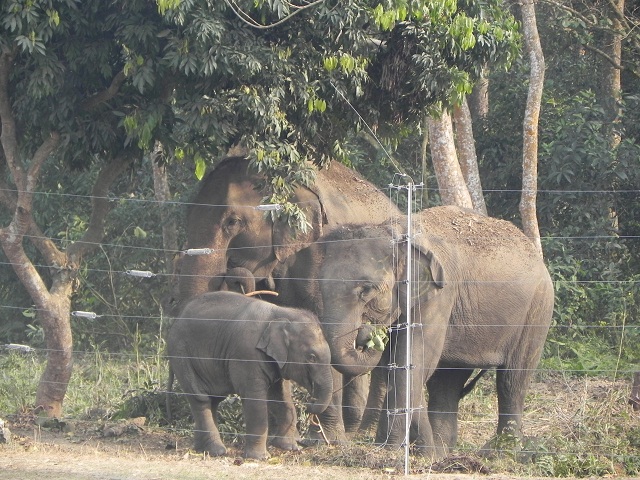
Now, living in the chain-free corral, each elephant is free to move at will and engage in natural behavior such as dusting, foraging, sleeping, bathing, walking, playing. In the case of Man Kali and her children, eight-year-old daughter Prakriti Kali and seven-month-old son Hem Gaj, this related family is able to engage in normal social behavior.
Corral construction and operating system
The corral’s operating system is a solar-powered energizer with a double battery back-up. Three hours of sunlight is required to keep the batteries charged for 10 days.
Specifically designed for wildlife, the corral administers a mild shock upon contact. Due to the pulsating current, it is virtually harmless. Being highly sensitive to the clicking sound of the current, most elephants avoid the fence without ever coming into contact with it.
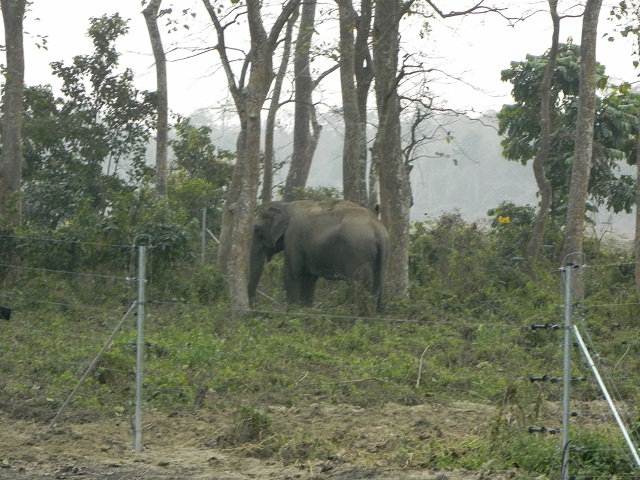
The chain-free hattisar consists of five interconnected corrals on approximately two-and-one-half acres of open and wooded land.
The corrals stand seven feet tall, constructed of rust-free steel posts and six strands of high tensile wire. Each post is encased in a protective tope.
Each corral has a front, back and side gate for ease of access for cleaning, feeding, moving elephants in and out and providing socialization opportunities.
The energizer and batteries are housed inside the mahout residence; two solar panels that charge the batteries are attached to the roof of the residence.
Each corral is equipped with a cut-off switch enabling independent operation.
This design has proven successful in many areas of Asia to prevent entry by wild bull elephants.
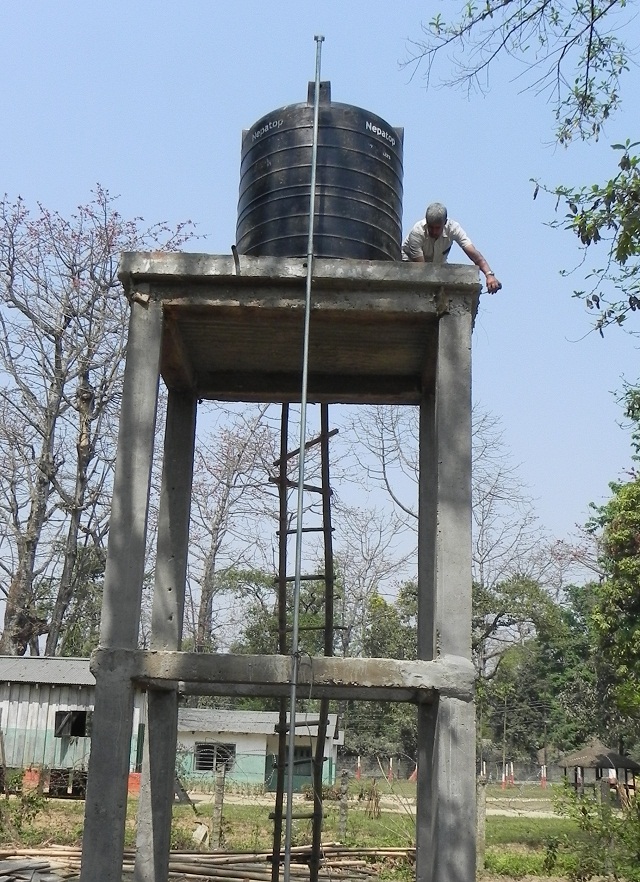 Fresh water is stored in an elevated water tank and troughs are filled by gravity feed.
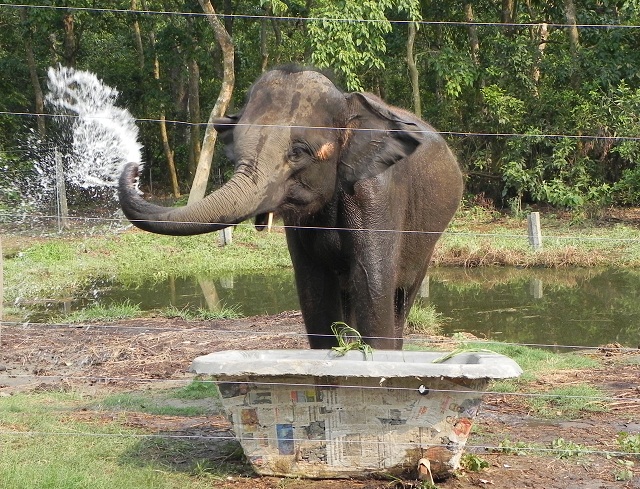
Healthy trees are an important component of the chain-free corrals, providing shade, browse and a natural scratching surface.
To prevent serious damage to trees from elephant tusking activity, protectors were built around select trees.
GOALS AND OBJECTIVES
- Reduce or eliminate stereotypical behavior caused by chaining
- Eliminate low-level long-term stress caused by chaining
- Increase physical activity
- Encourage engagement in natural species-specific behavior such as foraging, dusting, bathing, walking, playing, socializing and exploring
- Eliminate injuries and bone and joint damage
- Improve foot health
- Maintain elephants’ compliance with mahout authority
METHODS
- Ethogram
- Husbandry protocol
- Management protocol
- Feeding protocol
1. ETHOGRAM
In order to quantify the effectiveness of the chain-free corral, an ethogram spreadsheet was created to track a list of natural and stereotypical behaviors, including walking, eating, dusting, playing, exploring, drinking, socializing, sleeping and exhibiting stereotypic behaviors.
2. HUSBANDRY PROTOCOL
Manure removal and corral cleanliness standards were established to ensure the highest level of hygiene.
3. MANAGEMENT PROTOCOL
Training and management practices for inside the corral were established to give elephants a sense of freedom and security.
4. FEEDING PROTOCOL
Changes to traditional feeding practices were established to promote activity and alleviate boredom.
PROGRESS AND PRELIMINARY RESULTS
Each elephant spends approximately 15 hours each day in the chain-free corrals. The remainder of their time is spent in Chitwan National Park engaged in grass collecting, anti-poaching patrols and conservation work and jungle safaris.
Upon first introduction to the chain-free corrals, each elephant calmly explored the area, foraging, dusting and scratching on trees. Each evening they dig in the soft dirt of the forest, creating a comfortable sleeping spot; none return to the stable area to sleep.
The related family of Man Kali, Prakriti Kali and Hem Gaj are housed together. They bonded immediately when united in the chain-free corral and continue to exhibit healthy elephant behavior, with Prakriti Kali assuming the role of big sister to Hem Gaj.
A survey was conducted to track the behavior of the elephants toward the mahouts and drivers. Mahout compliance has not changed. Each elephant continues to respond favorably to mahouts and drivers—both inside and outside the corral—at the same high level as before being released from chains.
Photographic records are being kept to track foot health and bone and joint conditions.
Collectively, the elephants’ behavior represents a substantial improvement in natural activity and reduction in stress and stereotypical behavior.
CONCLUSION
The goal to eliminate stress from chaining and the resulting stereotypic behavior is realized. Adherence to the new feeding protocol ensures that both Prakriti Kali and Mel Kali do not engage in stereotypic, food anticipatory behavior. Since being introduced into the chain-free corral hattisar, all elephants engage in appropriate, beneficial, species-specific behavior; respond favorably to their mahouts; and appear to be calm and comfortable in their new environment, indications that the project is meeting its goals and objectives.
 Eight-year-old Sweetie Kali will be the lucky recipient of this new and improved yard, where she will be off chains 24/7.
 Currently, all the elephants are tethered under their own private shelters. Once everyone is comfortable that the fence provides the security necessary, chances are that Sweetie’s mother will be allowed to join her in the yard. Imagine what a moving reunion that will be.
 Revenue land is owned by the government and designated for agricultural use or forest restoration. There are cases when the government can gift this land but the recipient must abide by strict use requirements and restrictions, is never allowed to sell it and the government has the legal right to reclaim it.