Tag: sauraha

  • Elephant Back Safaris: Misery for Elephants

    Elephant Back Safaris: Misery for Elephants

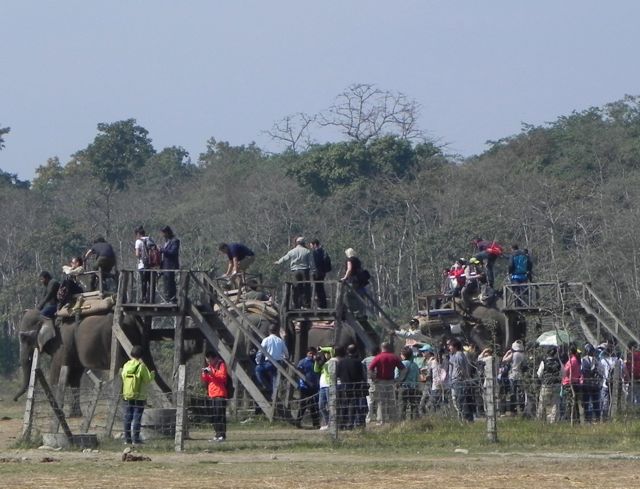
    boarding safari rides

    May 24, 2014, 8:30AM, Sauraha, Nepal.

    The temperature is already 32 degrees Celsius (about 90 degrees Fahrenheit).

    Tens of elephants are already hard at work.

    Each morning at dawn, seven days a week, elephants are saddled up in preparation for another day of carrying tourists on safaris.

    This is the routine the elephants will follow, year in and year out, until they die.

    First, they are forced to lower themselves onto their elbows to accept the saddle. This unnatural position causes pain and irreversible damage to their elbows.

    Next, a heavy canvas pad and ill-fitting howdah (saddle) are placed on their back. The pad and howdah are each so heavy, it takes two men to lift them, one at a time.

    Then, a howdah strap is cinched tightly around their chest, lacerating sensitive flesh in their armpits and cutting the tissue of their breasts.

    A second synthetic rope is tied from the back of the saddle under their tail, ripping deep gashes in the flesh around their anus.

    The life of the safari elephant
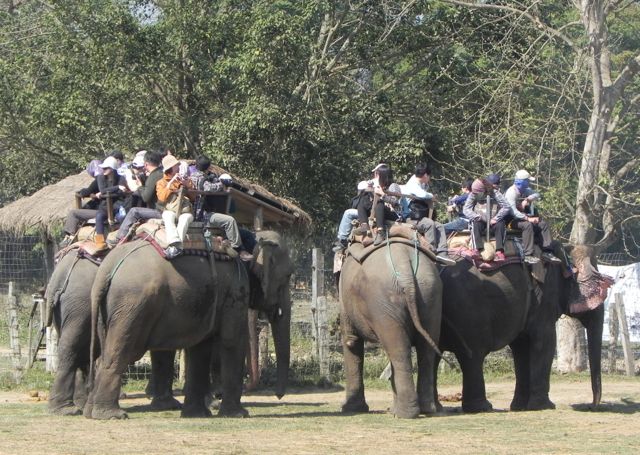
    3 eles carrying tourists

    Safari elephants spend the day carrying tourists — four to six at a time — through the jungle in sweltering heat.

    Elephants are poorly suited for this activity. The pad and howdah cause huge blisters that fester into deep abscesses that can take months to heal.

    According to a study published in the Journal of Experimental Biology, four hours of exercise in the sun causes overheating and can be fatal. Laboring in direct sunlight, carrying too much weight – pad, saddle and tourists — elephants quickly become overheated.

    What does it take to force an elephant to work under such conditions?

    Brutality.

    Mahouts hit the elephants over the head with heavy sticks, metal knives and axes. The wounds remain infected for weeks.

    Bright white scarring can be observed across the forehead of virtually every working elephant in Nepal. The abuse is systematic, accepted by elephant owners, locals and the tourists.

    The images haunt me.

    I can’t help but wonder: Is this the memory of Nepal tourists want to take home with them? And what will it take for them to see the abuse?


  • in the dark of night

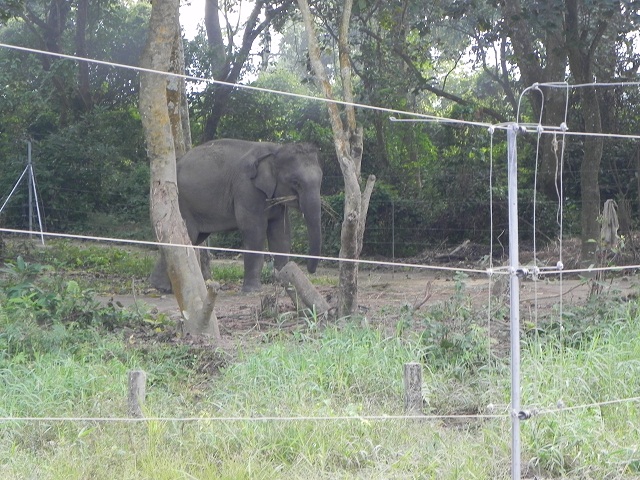
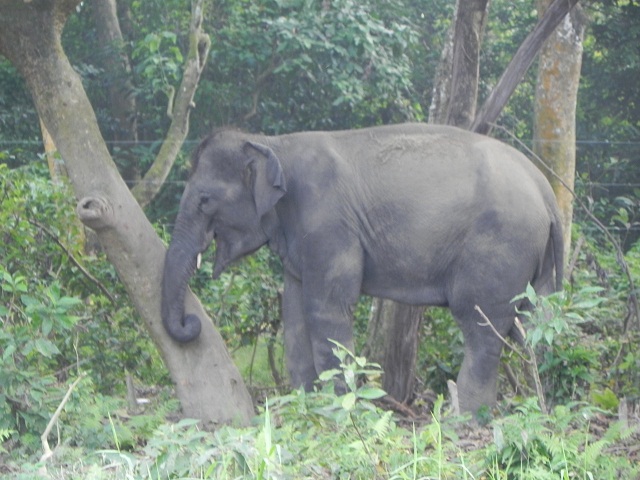
    A hauntingly familiar sound of clanking chains passed by my window, so close I thought perhaps my wall would be crushed. The clink clink clink of cold metal bracelets was unmistakable; an escapee was passing by my room in his effort to disappear into the freedom of the bordering National Park.

    Switching off the lights to avoid attracting attention, I pushed open the screen door and stepped into the darkness.

    The rattle of chains chilled me to the bone as a silhouette passed in front of me. First one and then a second, moving silently except for the clanging of the chain hobbles secured around the front ankles of the smaller elephant.

    On this, the night before I leave Sauraha, I wondered why I was to witness another unbearable scene of captive elephant suffering.

    The escapee had entered through the front gate at NTNC-BCC and slowed when he found himself fenced in. The second elephant, a koonki, was being used to subdue and calm the young male, whose ivory glistened in the moonlight.

    When the bull stopped, the mahout began to speak in a soft but firm tone. He told his elephant, the koonki, to bite, which means to stretch out on her sternum. By assuming this vulnerable position, the elephant appeared to bring comfort to the escapee.

    It was then that I saw a mahout precariously perched on top of the young bull, no doubt frightened half out of his wits, with nothing at all to secure himself.

    As soon as the koonki reclined, a command was given for the bull to recline, which he did without hesitation. The reality is that he was frightened and I believe the mahouts involved realized this. As soon as he reclined the mahouts switched elephants and the koonki left silently.

    A little more rattling of the chains and the hobbles were removed, and the young bull moved swiftly back from where he’d come–the government hattisar (elephant stable) next door.

    Not willing to witness the brutal scene I assumed would follow, I called out into the night, no pita (don’t hit). No response. As the elephant and mahout passed my room I called out again, which was when I saw a flashlight-wielding man walking behind the elephant.

    “Government center hattie (elephant)?” I asked.

    “Yes, Raj, from the government center,” he politely replied.

    “The elephant is afraid,” I said. ”Do not add to his misery by beating him.”

    “You are foot trimming lady, right?” he asked. “You trimmed Raj a few days ago–he had a bad nail.”

    “Be kind, Raj is a wild animal,” I said.

    ”No, not a wild elephant, government elephant,” was his reply.

    “Yes, a government elephant and wild,”  I said.

    There we stood under a bright near-full moon discussing the fact that although these elephants are living in captivity they remain wild animals, never formally domesticated and always to remain wild. When I said they deserve to be treated with compassion because of their circumstances, the mahout nodded in polite agreement. He spoke surprisingly good English and appeared to understand what I was saying. In seconds he vanished into the darkness, leaving me to contemplate what I had just witnessed.

    For some time I stood listening to hear if Raj would be brutalized for his attempted escape. But this night I would not have to be reminded of the elephant suffering that permeates this tourist destination in Nepal. The only sound that pierced the night air was the soft repetition of forest birds and chirping insects.

  • Back in Sauraha, Chitwan, Nepal

    Back in Sauraha, Chitwan, Nepal

    Working in Asia the past two years I have learned a tremendous amount about how culture and tradition affect collaborative conservation efforts. Among the most important lessons is the need to ensure project sustainability. No matter how groundbreaking or beneficial the project promises to be, it must be sustainable to be successful.

    Ways to sustain the project must be identified during the planning stage, otherwise the effort put into it will have been wasted. Sustainability determines success and people ensure sustainability.

    Before returning to Chitwan, I wondered if our chain-free yard pilot project for Sweetie Kali, aka Prakriti Kali, would prove to be sustainable. Although I prepared myself for less, I hoped the mahouts had truly embraced this welfare project. Success hinged on their acceptance of this approach to elephant care, which is nearly the polar opposite to their tradition.


    As I approached the elephant stables I saw Sweetie Kali foraging in her personal forest. The dense scrubs were a faint memory but the mature trees were standing tall, providing shade and enrichment, just as they had when we built the yard last May.


    I was pleased and honestly a bit relieved to see that the chain-free fence was in pristine condition. The staff, under the direction of Chiran Pokheral, the officer in charge, did a fabulous job of ensuring the success of our pilot project.

    It’s my nature to push headlong into the next project forgetting to take a moment to bask in the glow of a collaborative project well done. It is too easy to get swept away in the excitement of something new and forget to thank the people responsible for making everything happen.

    In addition to Paspat and the mahouts, who were completely receptive to the changes in their routine that a chain-free yard required, many other individuals, including Chiran Pokheral, Dr. Gairhe, Ram Kumar, Babu Ram, Nandu, Vishnu and Dibyendu and his crew, made this project possible. Without their support and assistance, this project would never have come to fruition, much less become sustainable.

    Special thanks goes to Chiran Pokheral who, after securing the required clearances, made sure I had access to plumbers, electricians and day laborers, and the cooperation of everyone needed to complete the project. Without Chiran we would still be dreaming about a chain-free yard instead of watching Prakriti Kali thrive in it.

    Dr. Gairhe, the senior government veterinarian, also played a key role in the project’s success. A true conservationist, Dr. Gairhe’s endorsement and oversight of the project provided the much-needed assurance at the government level.

    Now that I am back in Sauraha, it’s time to identify a location for the second chain-free yard. This yard will be for Man Kali and her three-and-a-half month old calf Hem Gaj. Once again we turn to Chiran Sir,  Dr. Gairhe and the NTNC staff  to lead us in our effort to improve elephant welfare in Nepal.