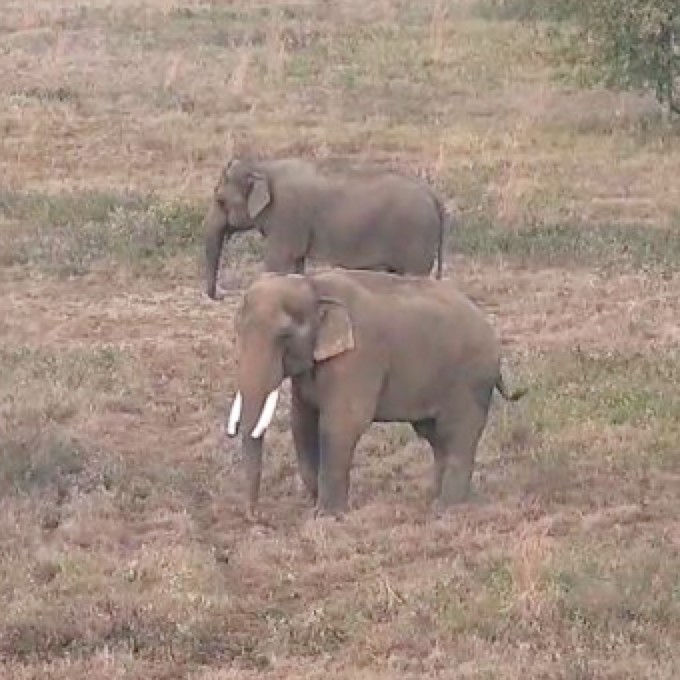
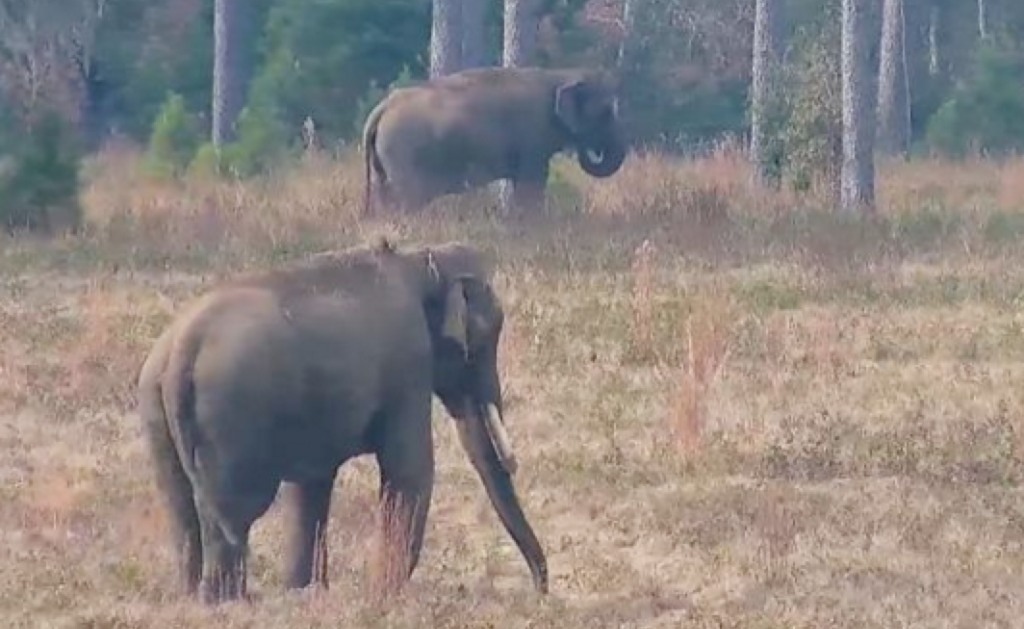
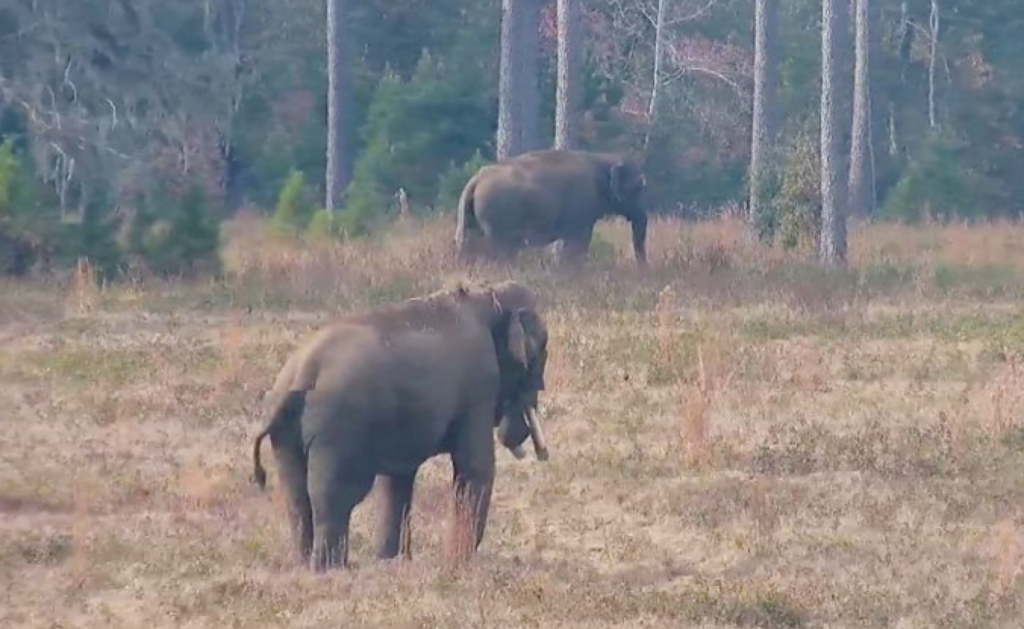
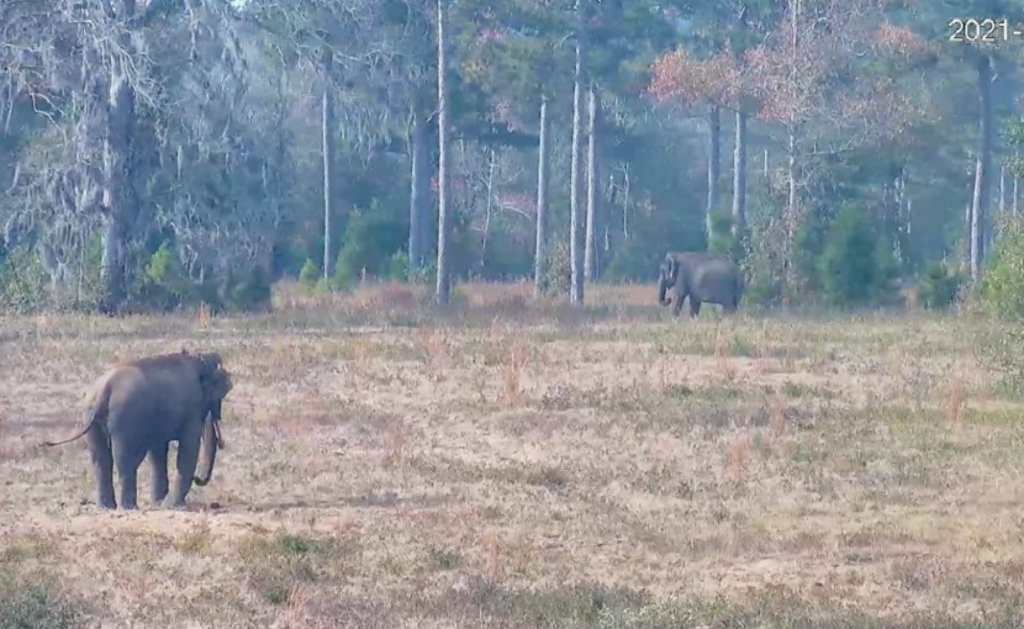
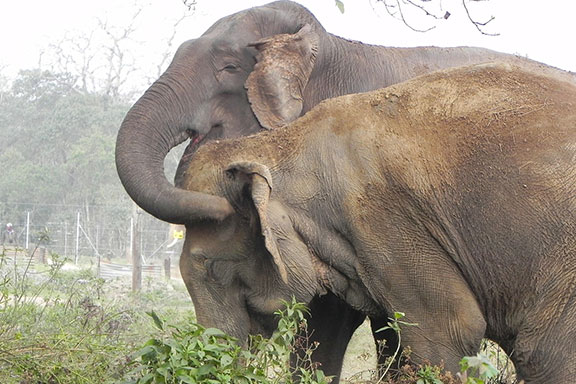
When I claim that elephants come first in everything we do, I am not exaggerating. With that philosophy we clearly know what decision should be made in all situations concerning our elephants. This morning was no exception.
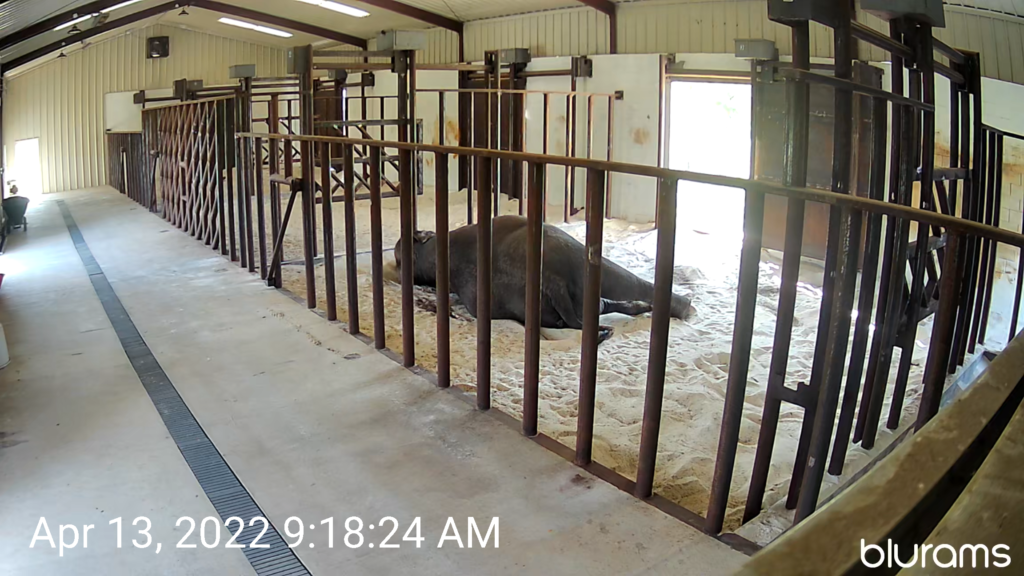
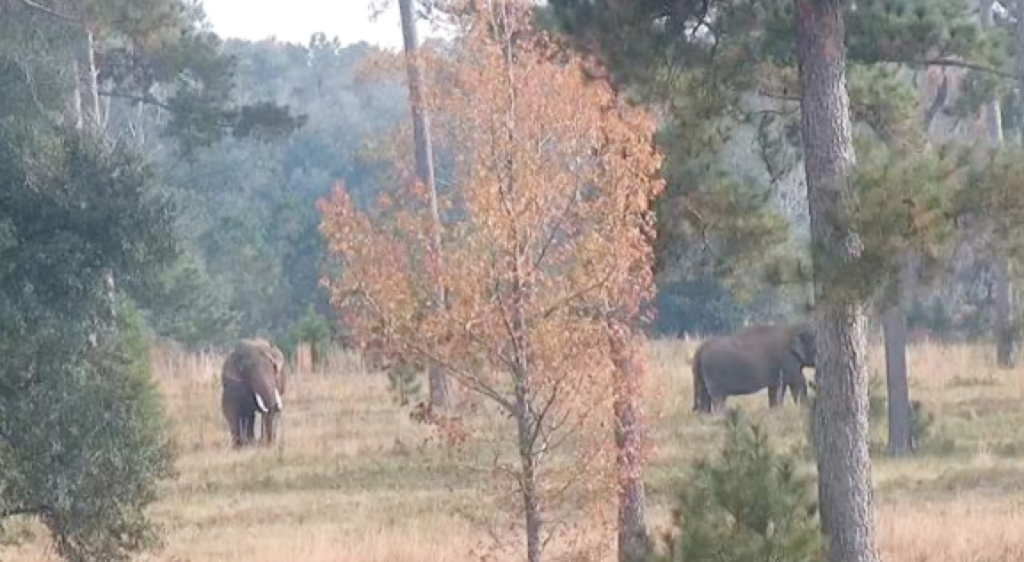
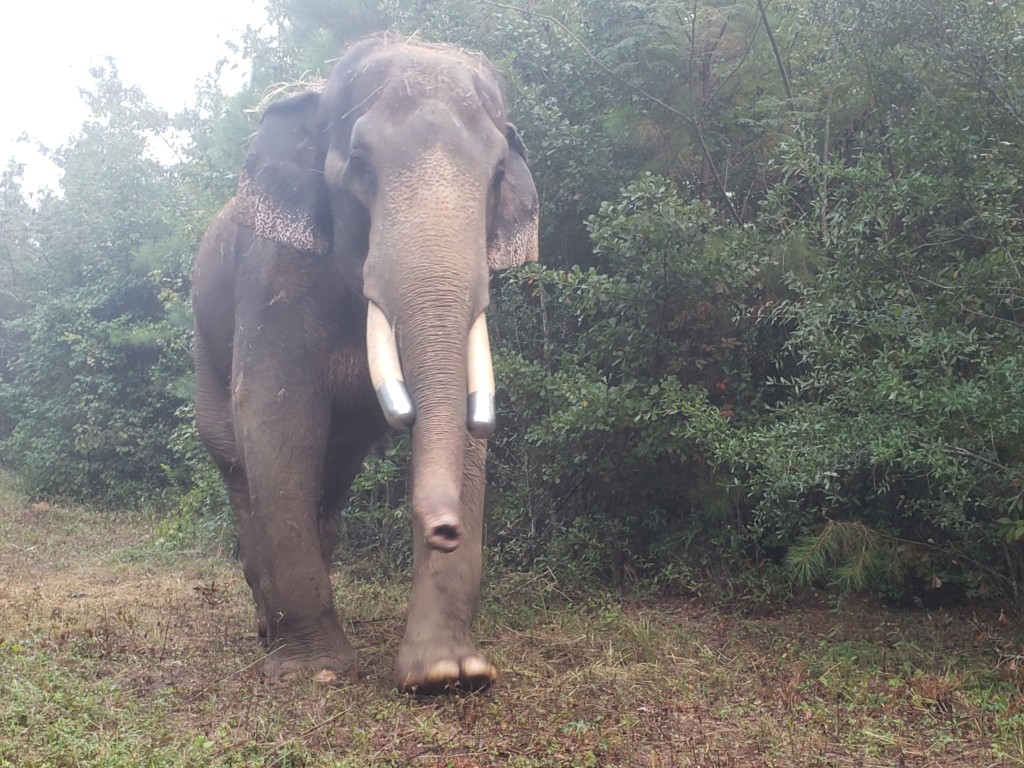
Bo spends all his waking hours out in the habitat, grazing, exploring, browsing, bathing and even napping during day light hours. But when it comes to sleeping in the dark, Bo retreats to the barn with its sand filled stalls and open doors.
From the looks of it, Bo had a long night of grazing because he was still sleeping when staff was scheduled to arrive. Text messages were sent informing staff, “Bo is still asleep, do not drive through the front gate.” This decision was made knowing that a vehicle passing the barn could wake Bo. Our goal is his health, and sound sleep is a big part of that.
8am, 8:30, 9, and now 9:16 as I am writing this post, Bo is still sound asleep, non-invasively observed through the barn nanny cam.
Staff are patiently waiting at the front gate, content knowing that Bo’s needs are our primary focus.
Let’s talk about stereotypical behavior, what it is and why captive-held elephants engage in it. The facts might surprise you.
Self-stimulatory or stereotypic behavior is defined as the repetition of physical movements. Two commonly recognized stereotypical behaviors exhibited by captive-held elephants are head bobbing and swaying.
Elephants might engage in these behaviors when they feel unstimulated or as an anticipatory reaction to their normal routine, such as regularly scheduled access in or out of a barn or feeding time.
Fear can also cause an elephant to engage in stereotypical behavior, in which case the head bobbing or swaying is overly exaggerated, fast paced and pronounced. When the cause of the behavior is boredom or anticipatory, bobbing is slow and rhythmic.
Stereotypical behavior is the elephant’s way of managing stress, a calming mechanism that creates endorphins that soothe the elephant. While humans might engage in physical exercise, meditate or take drugs to deal with stress, elephants have this natural mechanism to accomplish the same thing.
When caring for elephants in captivity, the goal is to provide an environment that minimalizes the incidence of self-stimulatory behavior. But stereotypical behavior is common and can be displayed when elephants anticipate feeding or experience a change in routine. It’s important to identify the cause of the behavior, fear or anticipation in order to modify existing routines to avoid that response in the future.
Facilities that strive to provide optimal welfare understand that allowing elephants to engage in prolonged periods of stereotypical behavior is unhealthy. Employing behavior enrichment and attention to space and social situations are practices designed to reduce stereotypical behavior.
It is unclear whether captive-held elephants can live a life completely free of stereotypical behavior. But it has been proven that access to a vast, complex space can occupy an elephant and provide the stimulation needed to greatly reduce their need to self-medicate.
In the 47 years that I have been blessed to be around elephants, they never cease to amaze me. They demonstrate every day that they are not only intelligent, but highly evolved, sentient beings who are able to communicate and understand others far beyond anything I have ever experienced.
Tonight’s “feed” was like any other: prepare diets, load the ATV with hay, fill grain buckets and head out to the habitat in search of Bo and Tarra. Usually, Bo is close to the barn for the night feed. Tonight, he was inside. I’m always looking for an opportunity to share some quality time with him, so instead of leading him out into the habitat as usual, I decided to stop at the barn and give him his supplement filled apples, just him and me.
As I handed Bo his apples my glove slipped off along with the apple and both went directly into his mouth. I said “Oh dear,” but just as quickly as the glove disappeared into his mouth, he spat it out. I knew eating that small glove would not hurt him but nevertheless I was relieved that he spit it out.
Glancing at the glove on the ground right underneath Bo, I knew what would happen next.
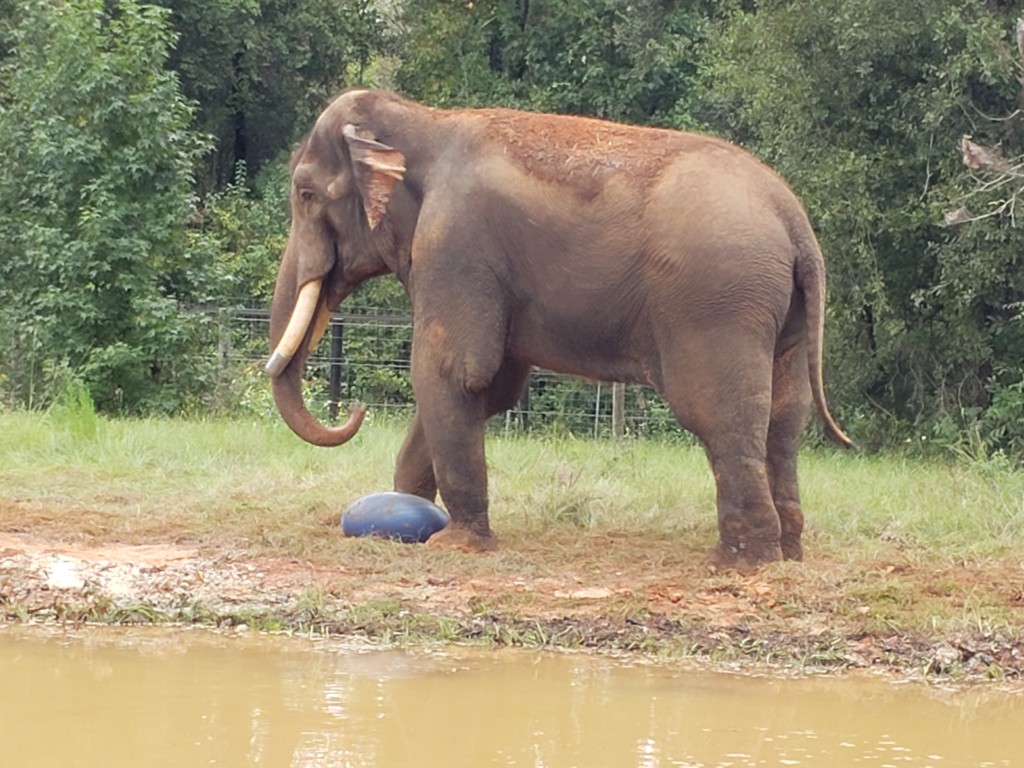
You see, Bo has a playful habit, one shared by many elephants, of smashing, chewing and absconding with any non-food item in reach. Buckets, feed bags, even gloves make for great, although short-lived, toys. So, I figured that my glove was a goner.
I hoped that he would ignore the glove long enough for me to distract him into the next stall with hay. But he was too quick. Before I could do or say anything Bo reached down, gingerly picked up the glove and with precision handed it directly to me.
Yes, I know, Bo has probably done something like this a million times. He performed for decades. Picking up an object and handing it to a trainer is a common trained behavior. But not with me, not here, not when he was not asked to pick it up. Bo made the decision to not chew it, tear it up or toss it over his back. Bo made the decision to hand it to me. His decision.
All I could do was laugh and thank him. After praising him profusely, I walked away feeling blessed that he was willing to show me this side of him. Cooperation is a choice, and that was the choice he made.
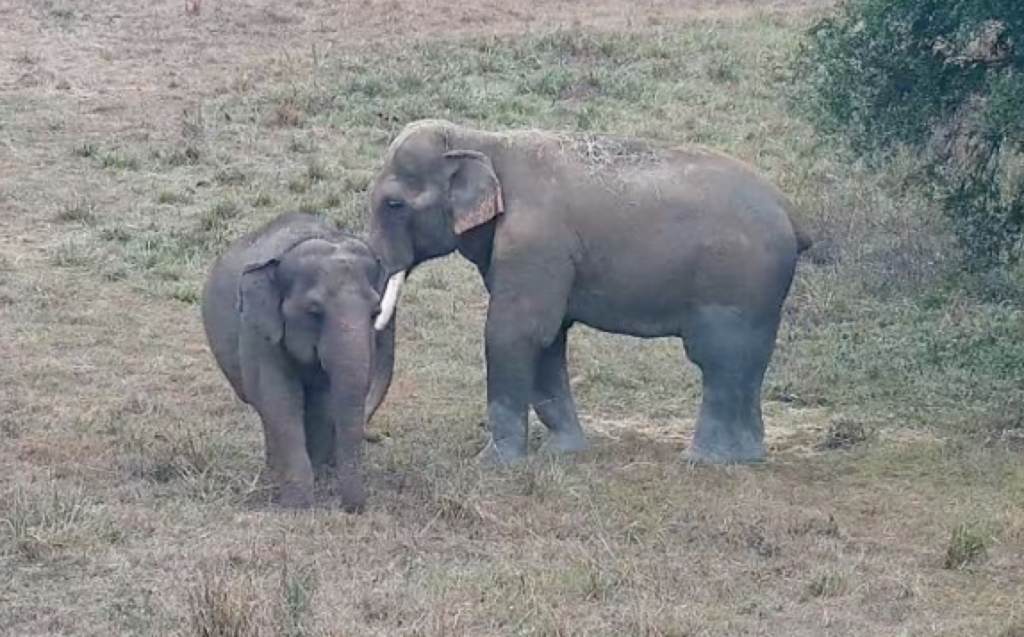
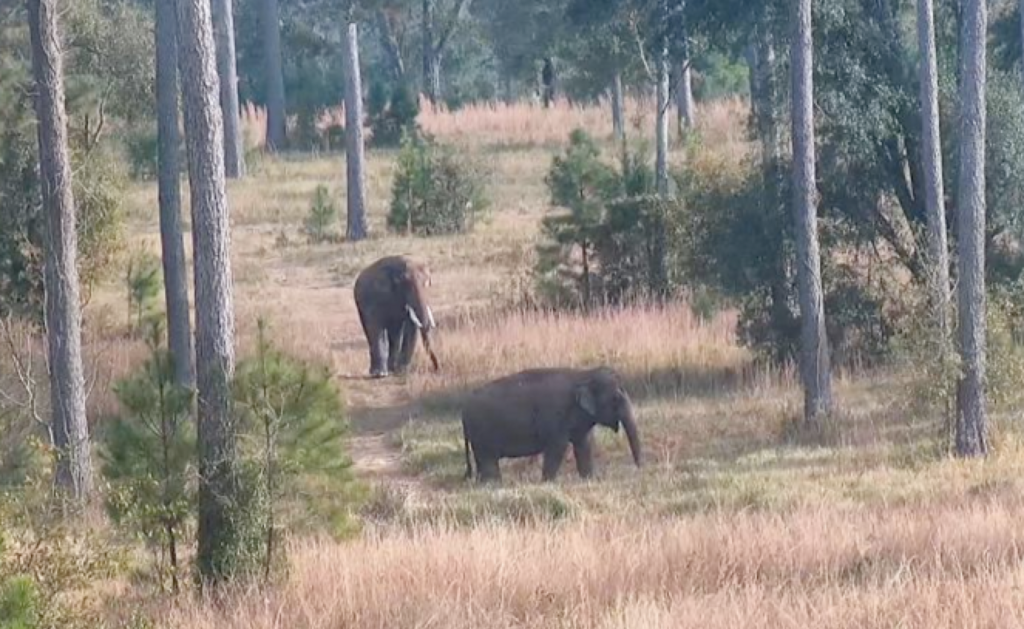
Over the past several days it has become crystal clear that Tarra is in charge of how her bonding dance with Bo proceeds.
Mornings seem to be the best time for her to be interested in Bo’s attention. For Bo, any time is a good time, but he is very sensitive to and respectful of Tarra’s need to determine when, where and for how long they interact.
It begins with Tarra approaching Bo, casually acting like she is simply grazing in his direction. But one look at her face and you can see she is calculating her next move. Not in a bad way: she is light and comfortable, obviously not afraid of Bo.
And Bo has never given her a reason to do anything but trust him. He never encroaches on her space without her permission, doesn’t attempt to take her food and crowds her only when the water is on and they can drink directly from the hose. (They both prefer flowing water opposed to standing water. Who wouldn’t?)
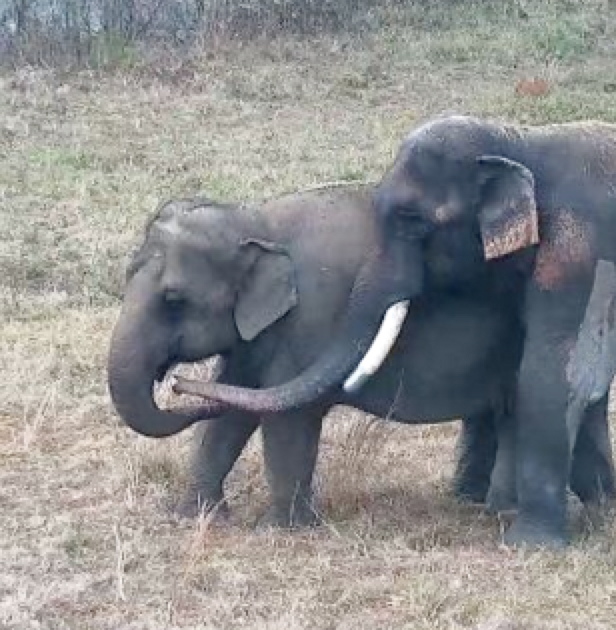
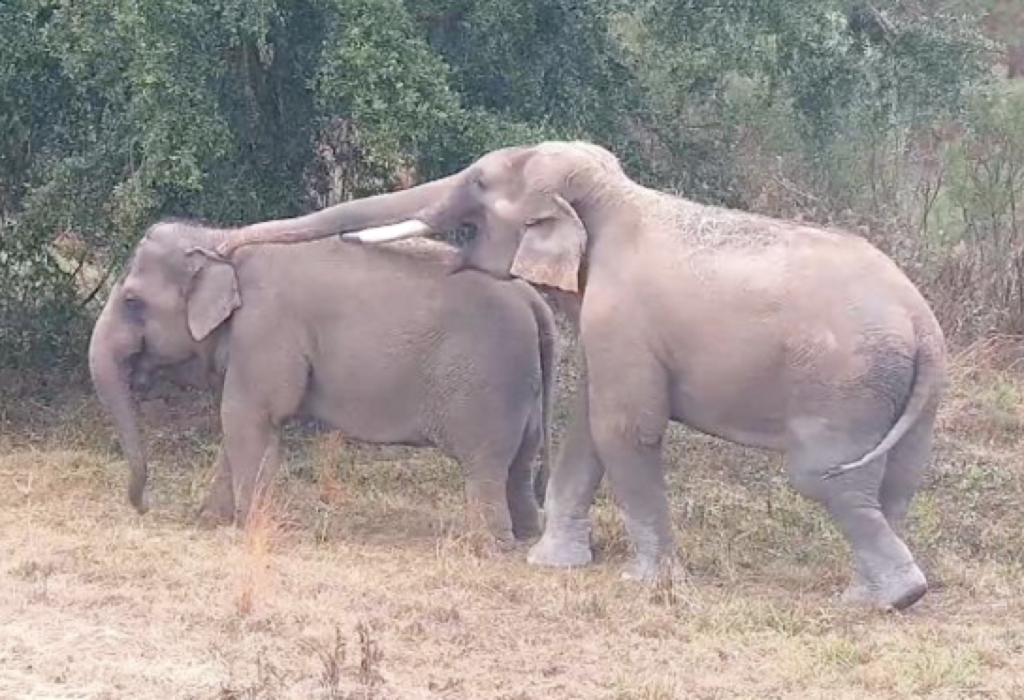
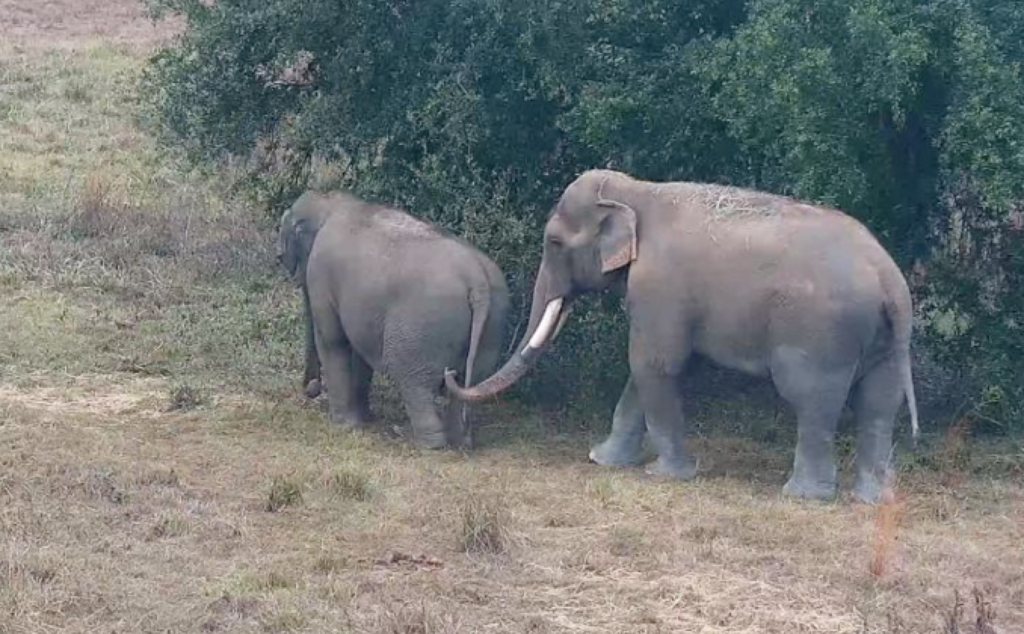
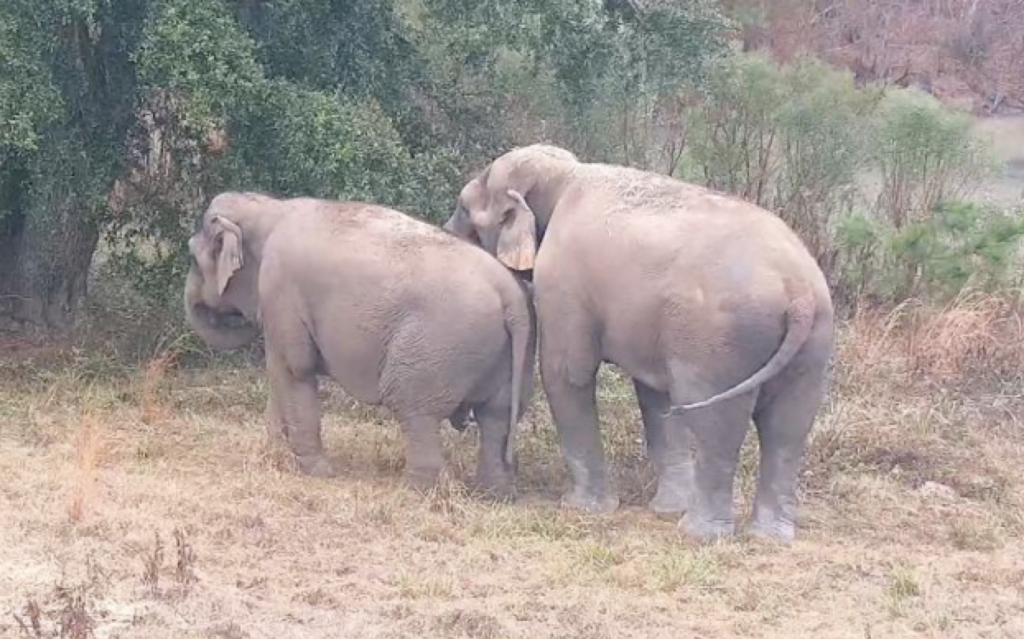
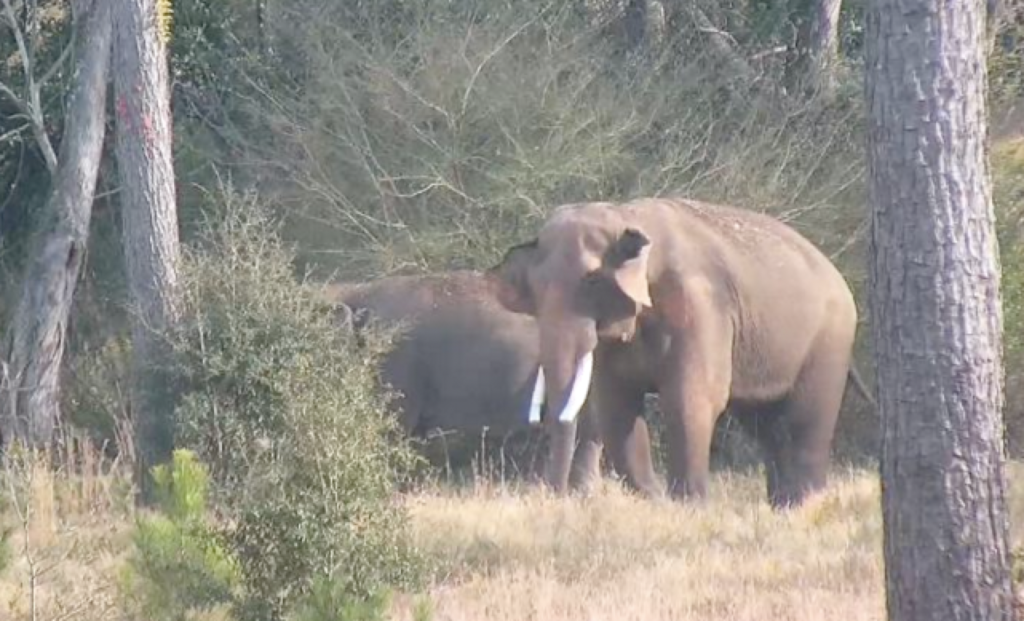
This morning I was not at the trough with the hose. Rather I was glued to the EleCam, so excited about the display of interest and affection being shared between Tarra and Bo. As we’ve observed in the recent past, Tarra initiated the exchange, slowly backing up until her rump was touching Bo, who responded by gently running his trunk across her body, reaching for and smelling her ear. If he were a breeding bull he might, at this point, have tried to mount her. But instead, he moved up next to her so their bodies were touching, as their trunks explored with feathery touches, both of them calm and receptive.
This display of exploration and interaction continued for about 10 minutes when the need to graze overtook them both and the moment was gone, but not lost or forgotten.
The EleCam is such a valuable tool, a thrilling opportunity to be a fly on the wall to Tarra and Bo’s blossoming relationship. They’ve been together for 5 weeks now, which is not a long time for their relationship to have developed to this level. It is very heartwarming.
Anyone watching Tarra and Bo on the EleCam today finally got to see what Bo does when he’s at the migratory bird pond.
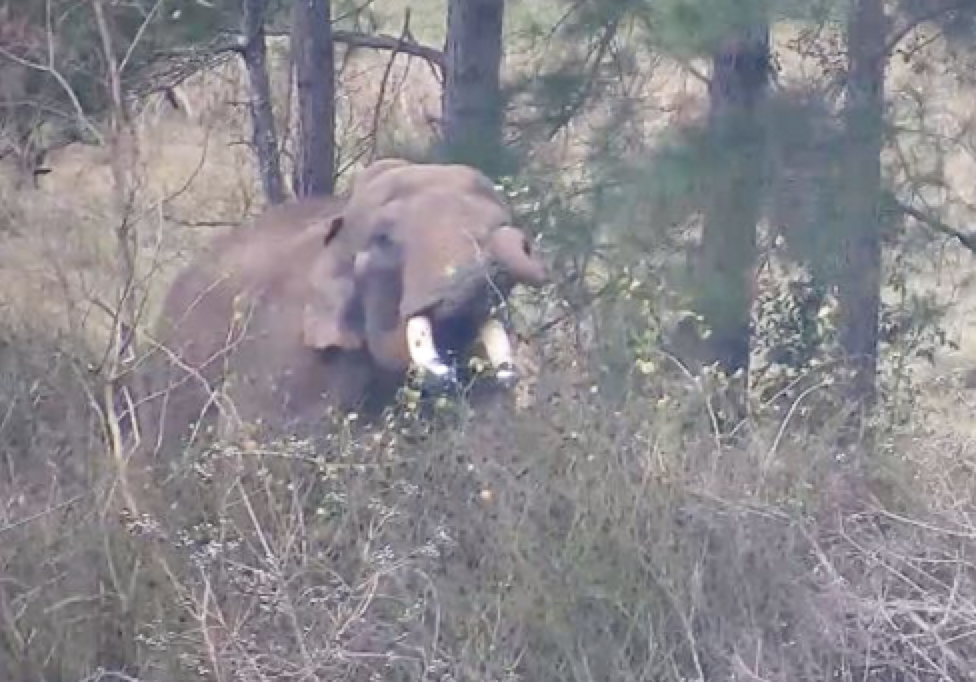
Today he was browsing. It was fascinating to watch him rummage around and through the variety of live vegetation of bushes, trees and vines. Imagine his wonder in realizing this is food, there for him to eat at any time.
Freedom of choice is not limited to where Bo wanders and who he socializes with. It includes what he eats as well. Selecting, collecting and eating is a fulltime job for an elephant. In nature, elephants are known to engage in eating activity nearly 20 hours of the day. And Bo proves this to be true.
Until today I’d not been able to observe Bo browsing. I must admit that I was seriously impressed by his grazing skills immediately upon his arrival in September. I guess with so much grass to graze, browsing was not a priority. But with cooler weather the grasses are becoming dormant, shifting the eating option to browsing.
I suspect that browsing takes an added set of skills. The first is recognizing that those bushes that block your path, the vines that catch on your ears and head and the tree branches that you thought were simply for scratching are also delicious and nutritious food.
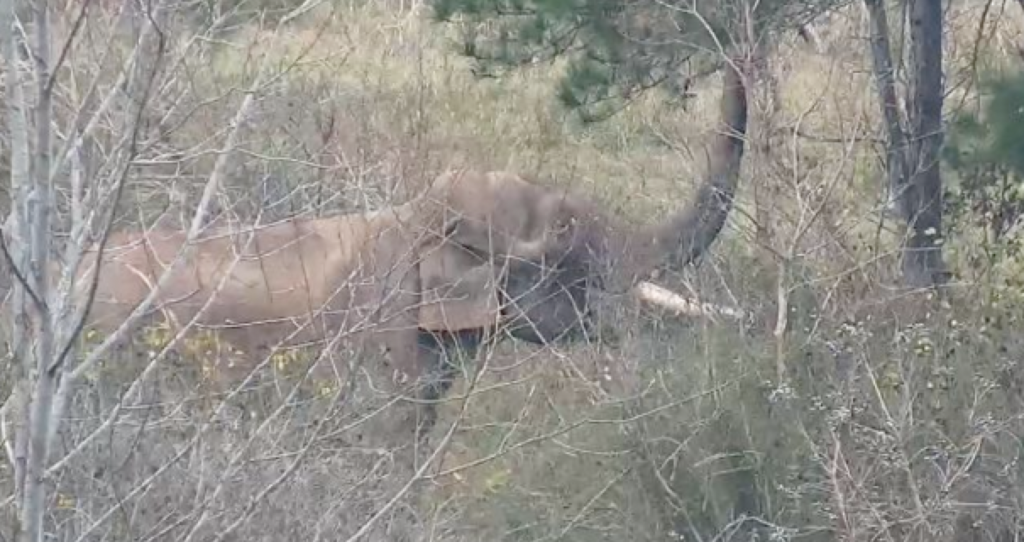
Today was thrilling because Bo was in full Elecam sight for an extended time while he browsed. He demonstrated how he first selects and then collects the different vines, branches and bushes. Using his trunk, he grabbed his selection and tugged until it broke free. The vines appeared to be the greatest challenge since they were wound around bushes and tree branches and difficult to break. But Bo’s persistence won out and he browsed to his tummy’s content.
Oh, the lessons they teach us if we take the time to observe!
Yesterday when Tarra was getting a drink, Mala was doing her regular leg, foot, tail and trunk inspection. She calmly walked around Tarra in her usual way, under her belly and around her legs, sniffing her feet and her trunk, looking up at her face curiously. Tarra stood perfectly still and did not utter a sound. This is her way of making sure that she doesn’t frighten Mala, or any other dog who is brave enough to approach. She just loves it when Mala comes around and they both appear to savor every bit of the attention they share.
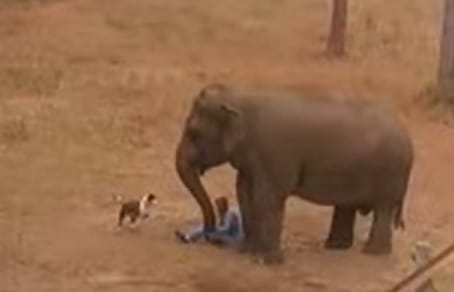
When Tarra was done drinking and I was about to leave she reached her trunk toward my hand and started chattering. She knows that when I leave, so does Mala, and she apparently had not gotten her fill of dog attention. So, she took my hand with her trunk and ushered me to sit on the ground. You get it, she holds my hands and gently but firmly directs me to sit on the ground under her chest in front of her legs. Imagine an usher in a dark theater firmly directing you to your seat and you’ve got the picture. She has done this a million times. I can’t help but laugh, tell her not to hold my hand SO tight, and feign resistance as I wholeheartedly yield to her wishes.
Tarra knows from experience that with me sitting directly under her chin she’ll be involved in doggie play. Of course, I know the drill, Tarra holds my hand so that when I play with and pet Mala, Tarra is petting her as well. Ingenious, no? She is so clever. By using me as the middleman, Tarra gets to pet Mala! And most times, just when Mala is all played out, she will sprawl out, frog style, right in front of Tarra and allow her to gently rub her belly.
Tarra so enjoys Mala’s company that I never refuse her desire for doggie play. Being the middleman is my part, which I find both rewarding and an honor.
This photo was captured from the EleCam. Its blurry but gives you a visual of Tarra’s ingenious manipulation!
After feeding Bo and Tarra this morning I was mesmerized watching them on the ELECAM. They were fed closer together then usual, so I was curious how both would respond. They spent a good hour savoring their produce, grain, and since the winter pastures is a bit sparce, they also had a pile of hay each.
After both had finished and were now grazing, I noticed that Tarra, instead of wandering off to her favorite grazing place, was looking over at Bo. Then surprisingly she started moving in his direction. This was a first in the relationship dance. Usually Bo is the one who approaches first, but this morning it was Tarra who was showing interest.
Now some might say, oh, she wanted to see if he left any food and I considered that. But as I watched I saw that Bo had finished eating and was already grazing in another area. And Tarra was moving directly towards him, not towards the area his food had been dropped.
Then for the next 10 minutes Tarra continued to slowly move in Bo’s direction, unhurried step by step, stopping to occupy herself with grazing and watching Bo’s reaction. Bo appeared quite aware of Tarra’s interest, and he played it cool. He glanced over at her every few steps she took, all the while continuing grazing.
Tarra appeared cool, calm and collected. How could I tell? Well, her body was relaxed, she wasn’t holding her head high, and she was approaching Bo head on. Tarra is known for backing into a situation when she feels unsure of the outcome. Maybe because that way she can make a quick exit if needed. But here she was, walking slowly, calmly towards Bo, apparently feeling quite secure. Bo was amazing. He is so savvy. Raised around a large family of elephants, Bo learned social skills. He uses these skills with Tarra and is working magic with her.
After about ten minutes Tarra closed the distance between them and was standing right next to Bo. I realized that I was holding my breath, so excited about this development, and had to remind myself that I was watching on the ELECAM, so breathing in no way could disturb them. I must have called Suzanne 4 times saying “Are you watching this? Are you recording this? Wow, oh wow.” Suzanne just laughed.
This continuation of the relationship dance was glorious, precious and exciting. After about fifteen minutes Bo took a few steps closer to Tarra, they stood side by side, just being together. Then with no urgency or even a sense of dismissal they both started grazing in different directions, Tarra to her favorite area around the giant oak trees and Bo in the wide open pasture by the pond. It was another good day in Bo and Tarra’s world.
I am bursting with hope for the future for Tarra and Bo. We wish for the best for those we love. We assist in any way possible to make them feel safe and cared for. We lose sleep wondering if we are doing all we can or should do, deeply wanting them to experience a fulfilled life. And when the clear demonstration of their positive growth and comfort stares us right in the face, our heart sings.
That is what happened today. This afternoon anyone watching the elecam witnessed the blossoming relationship between Tarra and Bo. Without question Bo wants the relationship, does his best to make Tarra feel safe, and is more patient than anyone I know.
Due to being raised a single elephant, Tarra has trust issues with elephants. Her default when in an uncomfortable situation is to walk away and be alone. The exciting news is that things are changing with Tarra and Bo.
Today I watched as Tarra and Bo tested personal boundaries, slowing weaving in and out of the other’s space. Bo is a pro, having lived with elephants nearly his entire life, it was breathtaking to watch how well he did. Tarra was interested, engaged, and willing to allow Bo into her personal space and then out again, within limits. This relationship building dance went on for almost 4 hours and it was a joy to behold.
When the dance concluded they stood calmly 50 feet apart grazing contently, while I watched in tears. I am so happy for them both. There will be more relationship dancing to come, I am sure.
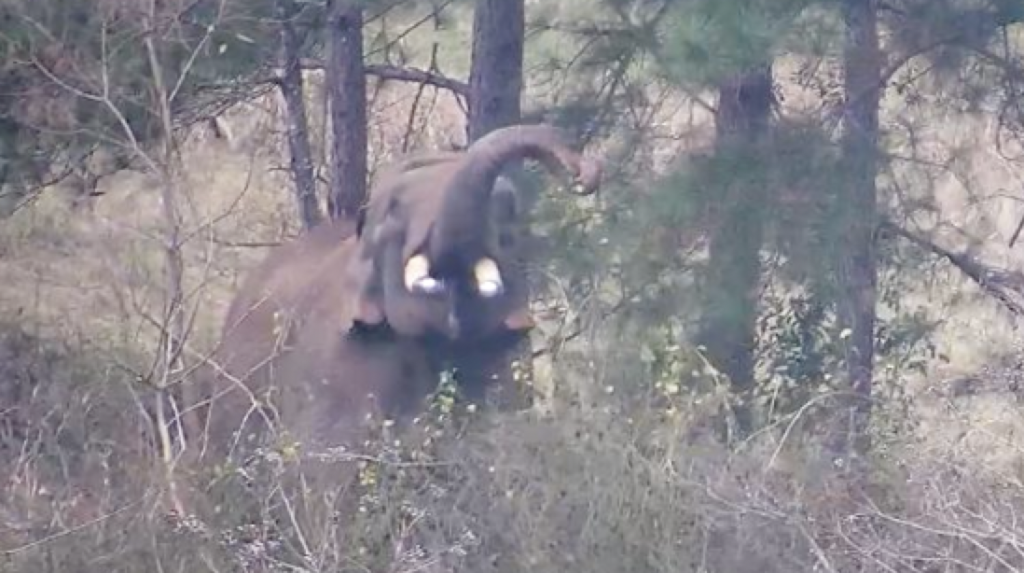
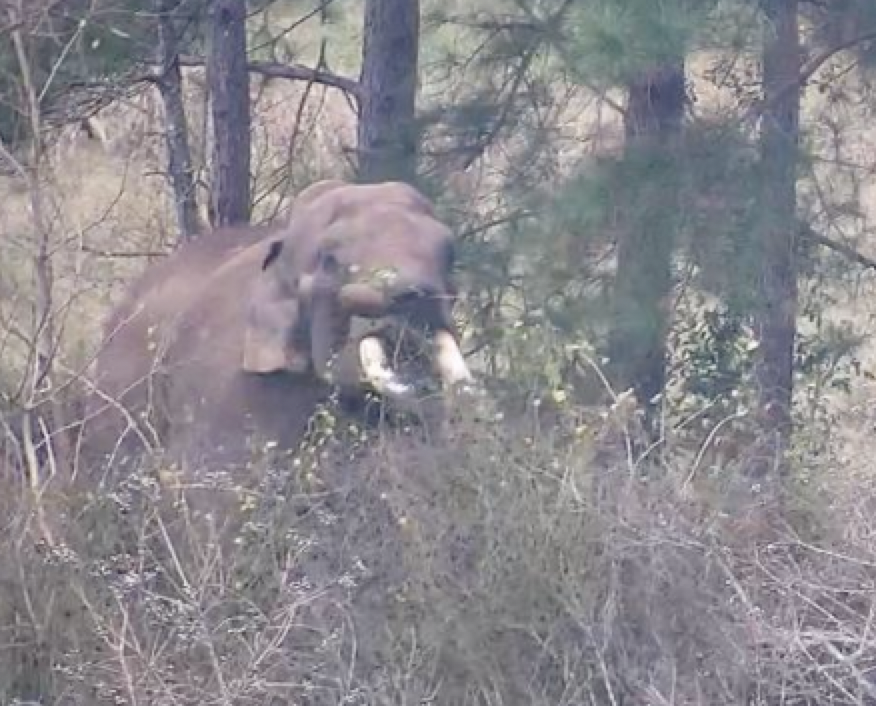
Last night on my way to bring Tarra and Bo their night feed, I sped down the paved road which divides the 100 acres from the 750, deep in thought. A flash of light to my left caught my eye. It was Bo, the headlights of my UTV reflecting off his tusks. But he wasn’t just standing there grazing. I had to do a double take and realized he was racing the UTV. Squeaking and trumpeting with complete abandon, he was having so much fun! Of course, at that point so was I.
What a sight he was, this magnificent playful giant, racing along the fence line shoulder to shoulder with me. No worries, he was on his side of the fence, and I was on mine.
I broke out in laughter, encouraging him which only egged him on. His playful trumpets were deafening. I cannot imagine what the distant neighbors thought. Bo raced, and I raced, and when we arrived at the barn, he let out a series of powerful trumpets and spun in a triumphant circle dance…I guess he won!
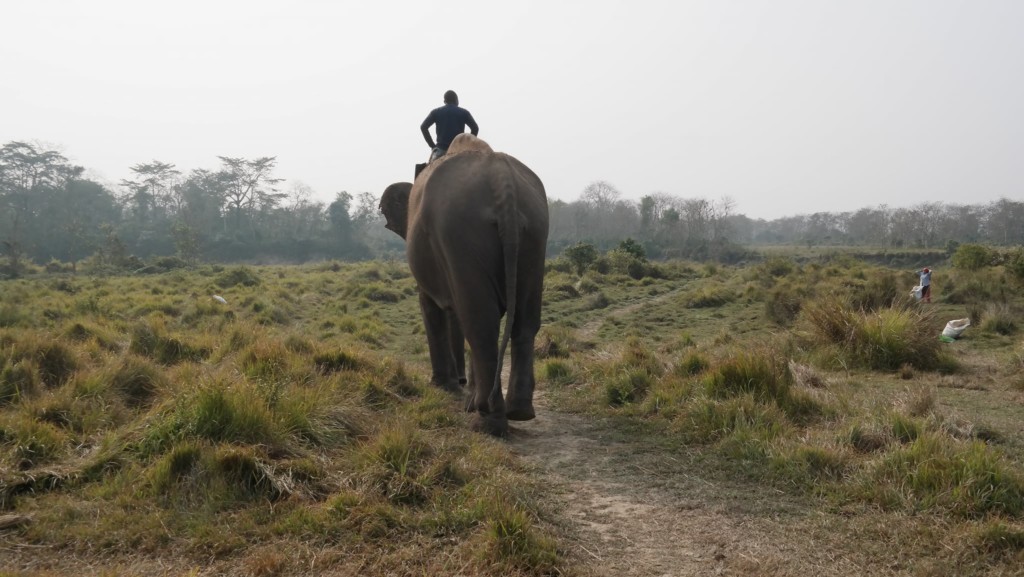
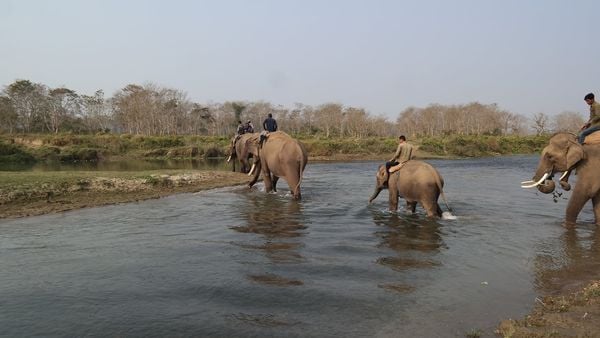
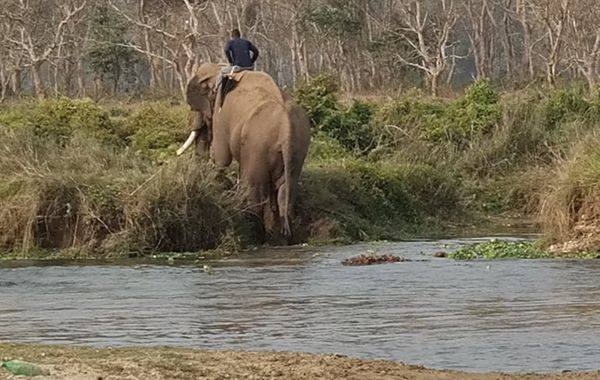
Mahouts ride bareback on their elephant for safety reasons. Please read the post in its entirety to understand that anti poaching patrol elephants working in Chitwan National Park, Nepal, live a much different life than elephants living in tourist parks in other parts of Asia. We engage in welfare improvements wherever captive-elephants live.
Many of you ask why mahouts ride on their elephant on anti poaching patrol in Chitwan National Park, Nepal. You say, “set them free.”
Elephants are not domesticated, no matter how well trained, cooperative and well behaved they may be.
In the Western world elephant trainers position themselves on the ground. In Asia mahouts position themselves on the elephant’s back.
Being on top of the elephant, as opposed to being on the ground next to the elephant, provides a degree of protection from an aggressive elephant. Also, from this vantage point the mahout can more easily detect wildlife dangers and protect innocent bystanders who potentially could be harmed by the elephant.
Look to the right in this photo. There is a village woman collecting grass for her livestock. She is extremely vulnerable being on the ground. If elephants were allowed to wander unattended, people would be in danger.
In order to provide a shared environment where elephants are allowed access to the natural habitat of the Park, and humans can collect the resources required to sustain themselves, elephants are ridden.
The alternative is that elephants remain on chains, which is something none of us want, including the mahouts and the villagers who share this landscape.
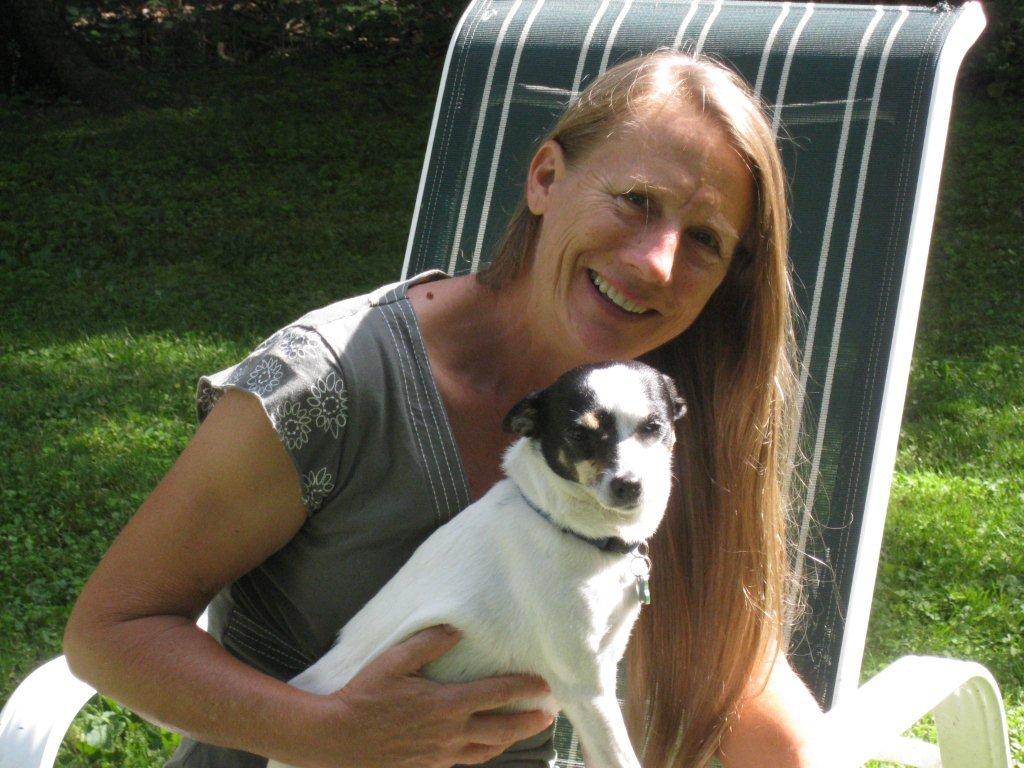
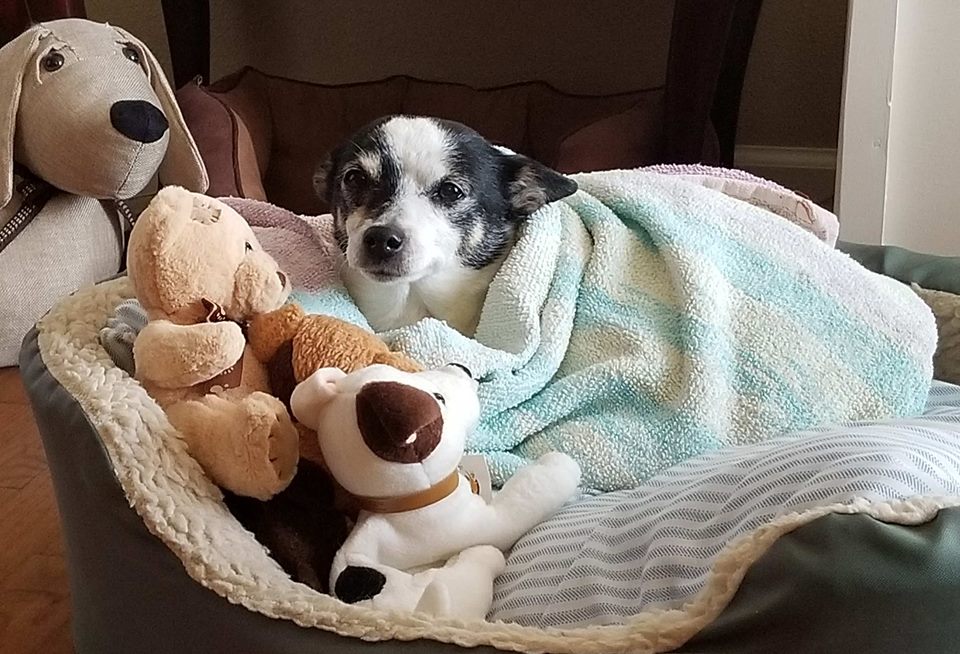
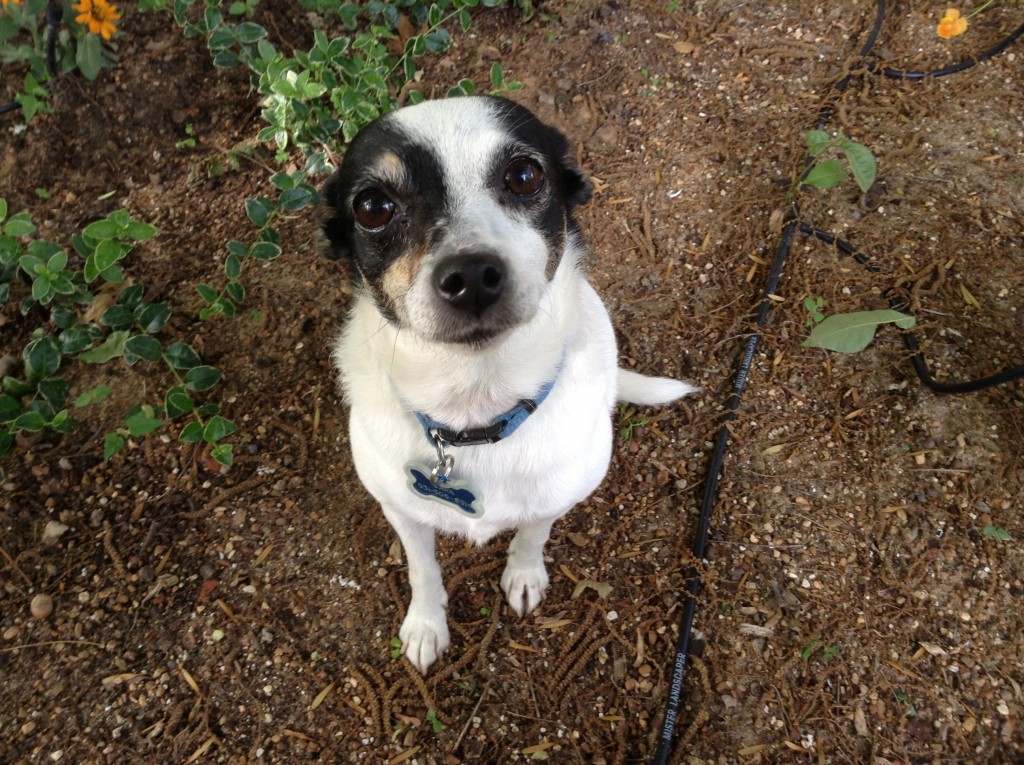
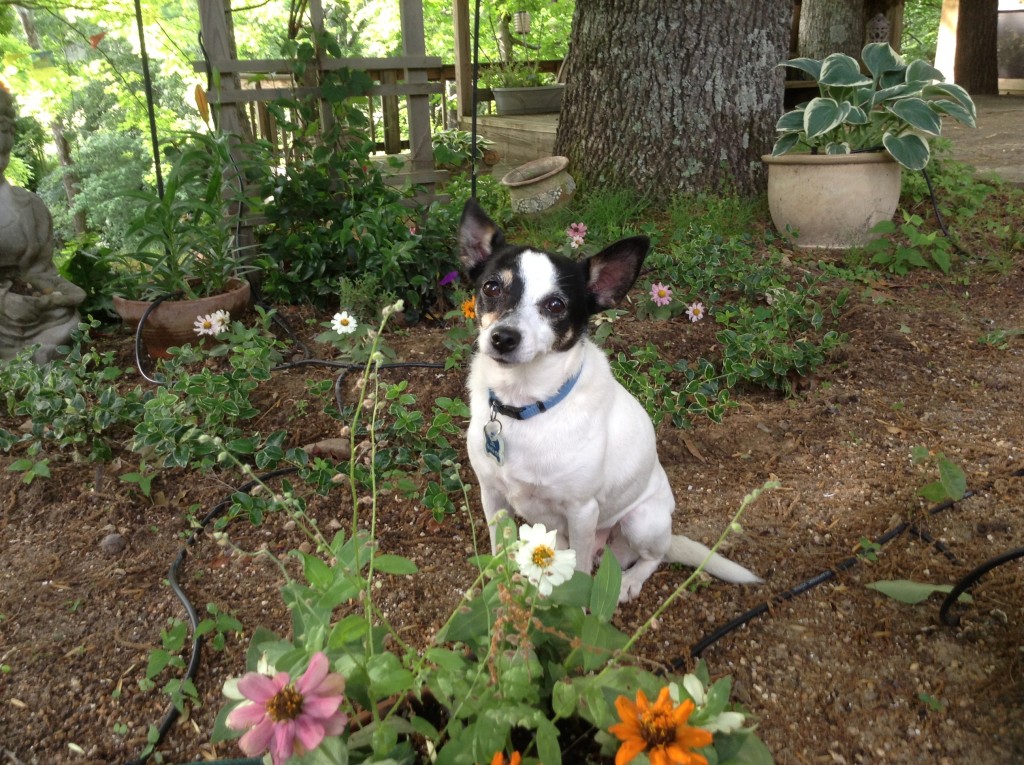
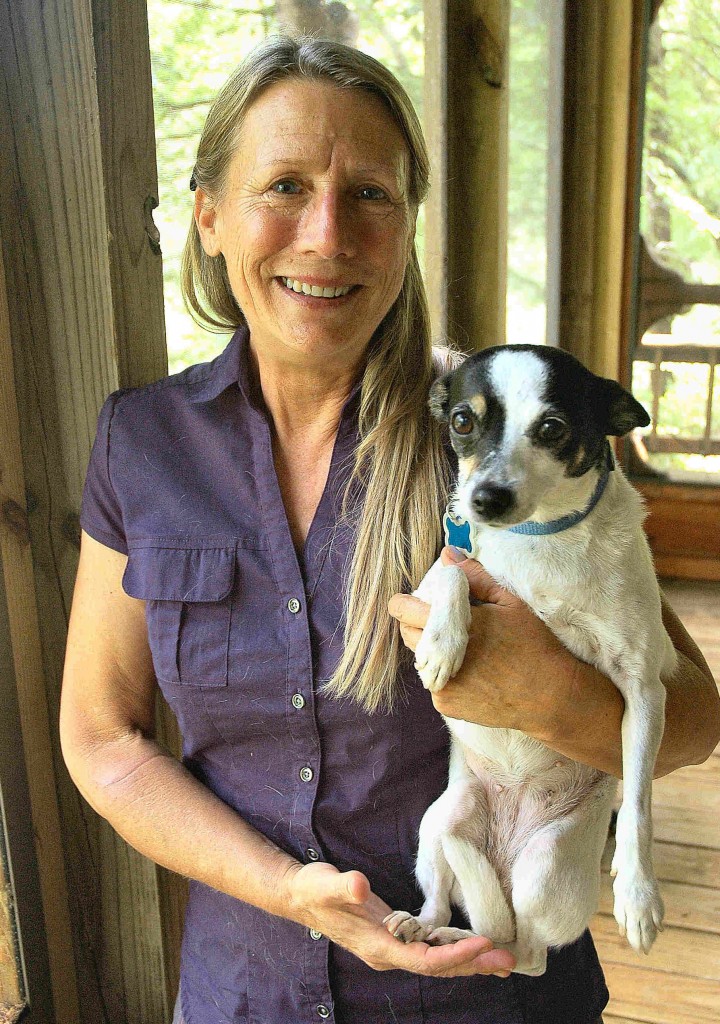
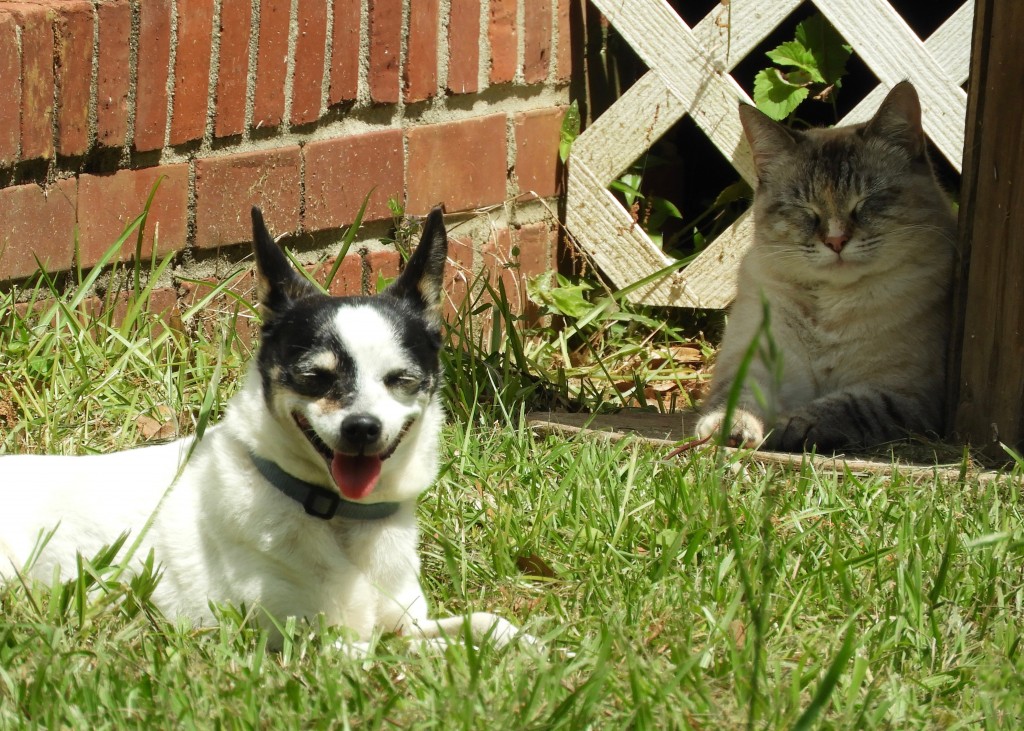
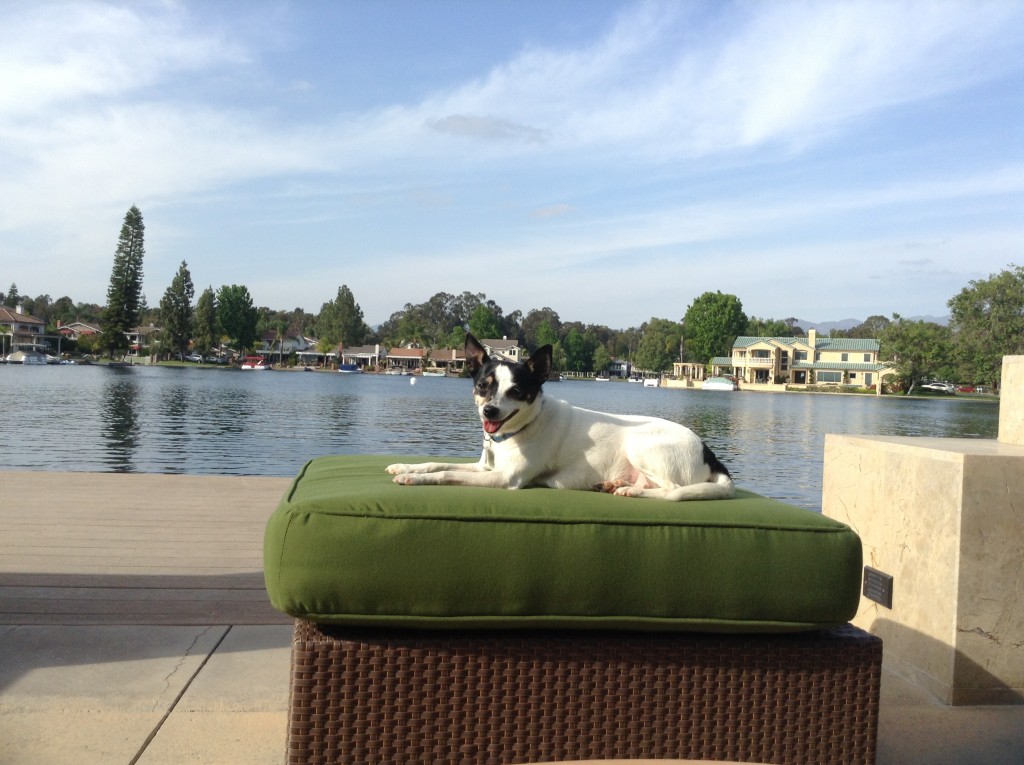
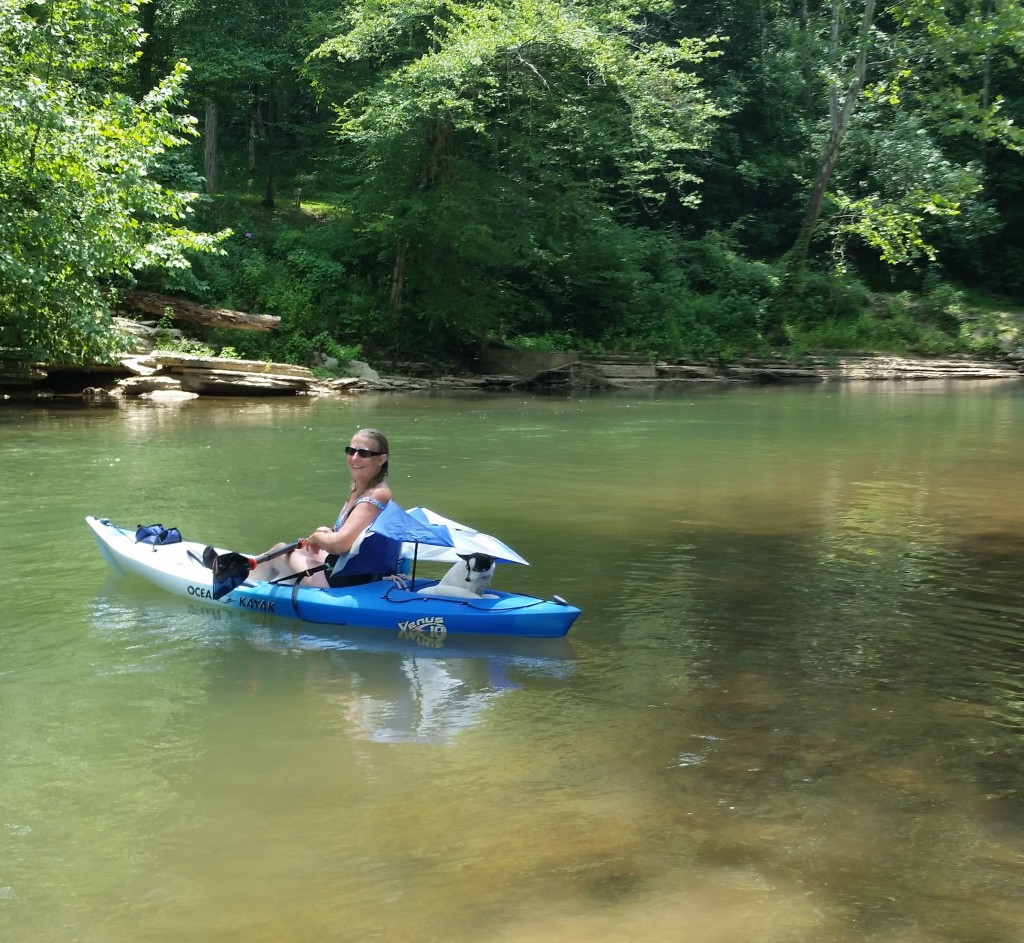
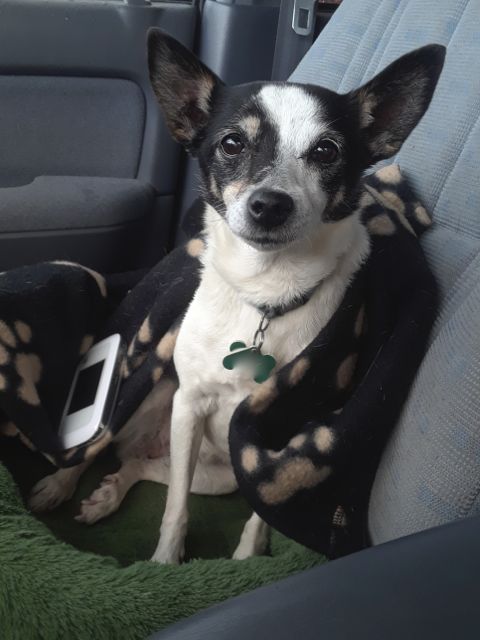
For as long as I can remember I have been blessed with a loving human family and an affinity for nonhuman animal companions. With six kids in the family my Mom had her hands full, but she indulged my heart for animals. Even in high school friends knew the best birthday surprise they could give me would be a new farmyard friend or other animal to add to my family. My mother worried about what she viewed as an unnaturally strong love for animals. My dad not so much. But when he learned that my first job was cleaning kennels at a local pet store, my Dad voiced his concern. Protectively he said, “Do something else. You don’t want to clean up animal shit your whole life.” He was wrong, because cleaning cages gave me the opportunity to meet and start to understand animals as individuals, deeply sensitive loving beings. He really did not understand when I told him how happy the job made me. Well, 66 years have passed since my birth and I have been blessed to have so many special beings come into my life, the latest to leave this planet is Java. Yes, I am grieving her now, it is natural, and the process is becoming less intense, somehow soothing. Java’s passing and me grieving her passing is different than any other time one of my animal companions passed. This loss is not softened by the presence of another animal family member. For the past 10 years it has been me and Java. And now I am alone with my loss. As result I am feeling, with every cell of my body, the profound love we shared. I am feeling it fully, embracing and honoring it. I am alone without another loving animal distracting me from my painful yet illuminating process. No licking away my tears making me feel less pain. And this is good because I am fully here, in the moment, immersed in the realization that I love nonhuman animals as deeply as any of my cherished human friends and family. LOVE is LOVE. It knows no species. It is one pure and powerful energy that transcends any cultural judgement or prejudice. In her passing Java taught me how deeply I love and that my love is not diluted when given outside the human species. I am humbled by this gift that Java has given me in her passing. Love you Java.
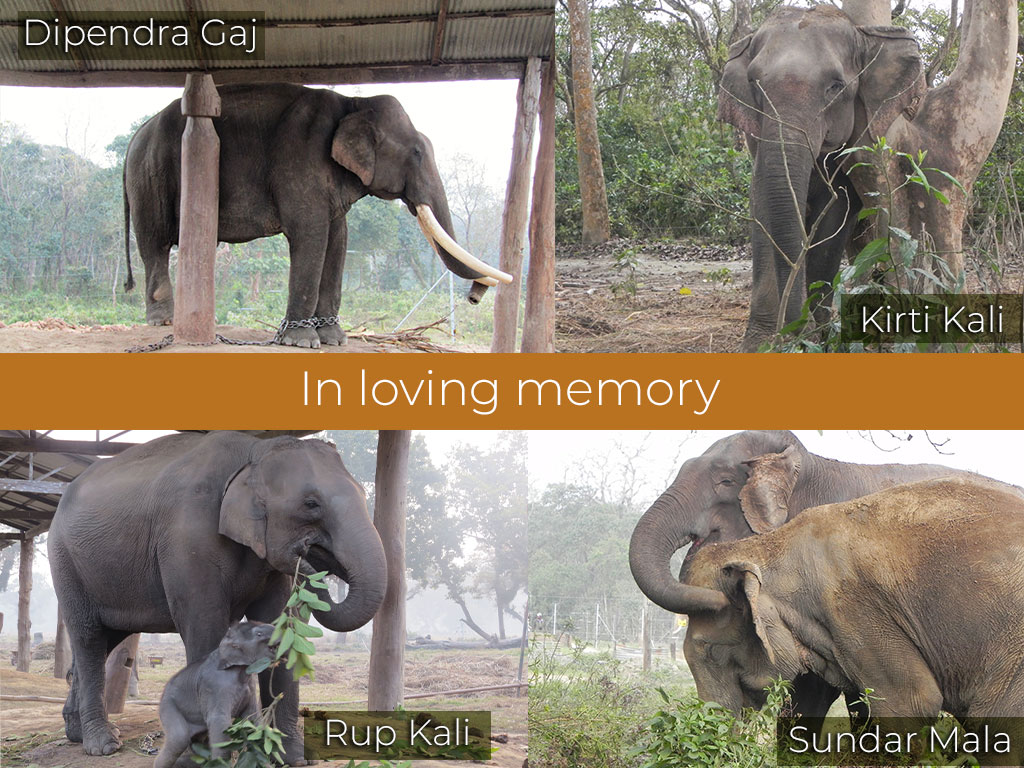
World Animal Day was created to help raise the status of animals to improve welfare standards around the globe. It is befitting to commemorate this day by paying tribute to four elephants in Nepal who recently died. Each made profound contributions to wildlife conservation efforts for more than five decades. I am forever grateful for everything these amazing beings taught me.
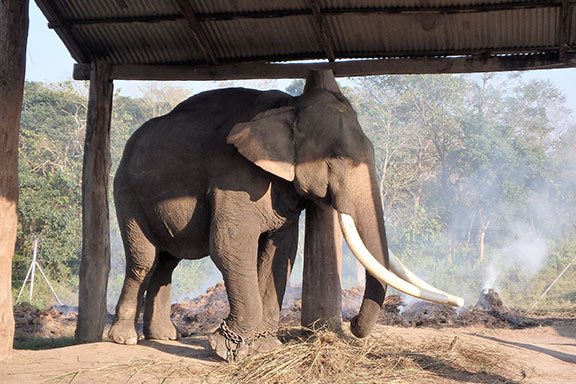
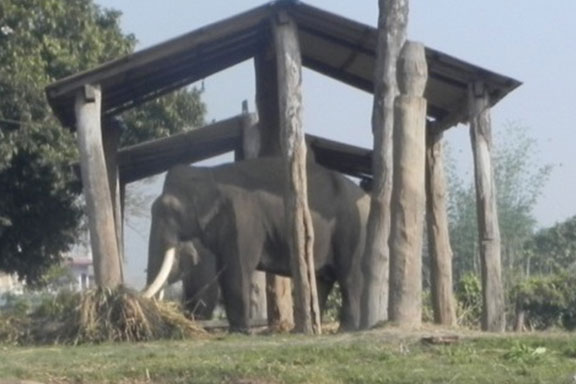
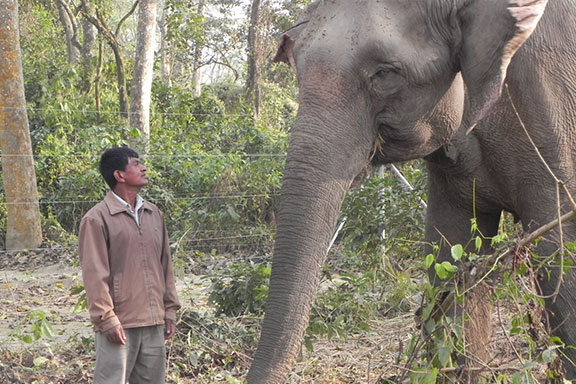
Dipendra Gaj, Rup Kali, Kirti Kali and Sundar Mala were all members of a select group of anti-poaching patrol elephants deployed daily in Chitwan National Park. For decades they worked dawn to dusk protecting wildlife. When they returned to their shelter each evening, their front feet were shackled together with heavy chains to restrict their movement. They spent every night of their lives isolated from fellow elephants, including their offspring.
Captive life for these elephants was never easy. Neither were the lives of their mahouts (keepers). Together these conservation rangers did their jobs obediently, rain or shine, day in and day out. Their success at protecting wild rhinos and tigers is the pride of the conservation world.
Elephants, of course, are an endangered species, designated by Nepal as a heritage animal. These four elephants were wild born, but because they ended up in captivity, their value was diminished in the eyes of their human overlords.
I honor these elephants by sharing their stories, by telling the truth about who they were, how they lived and how much they contributed to conservation in Chitwan National Park. In speaking openly about these four brave elephants, I hope not to cause outrage and protests, but to bring about change for their surviving captive-held brethren.
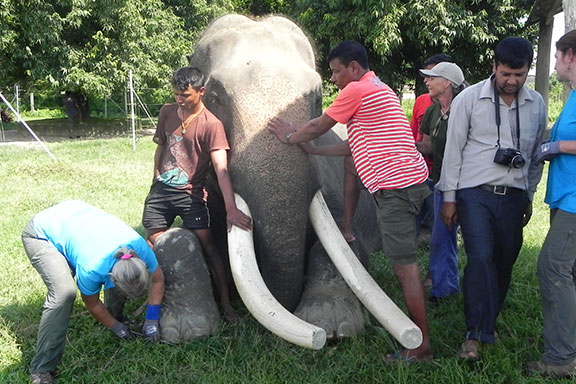
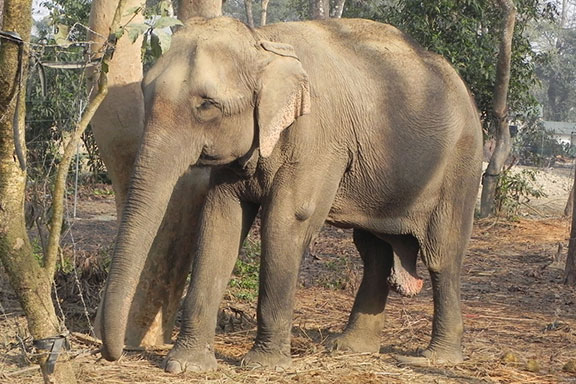
Dipendra Gaj was a magnificent bull who was resigned to his duty. Forced to comply with every demand made upon him, he never lost his sense of self. He seemed to overlook the demeaning aspects of his life and remain proud of being an impressive bull elephant. It was my greatest honor to trim his feet twice a year. His superior cognitive abilities and willingness to accept care made his mahouts so very proud. Dipendra Gaj died in his mid 50’s–too young–after losing his battle with the human strain of tuberculosis.
Rup Kali was a wise mother and grandmother. Captured from the wild at a young age, she was forced into servitude. Her official anti-poaching patrol duty spanned nearly 60 years.
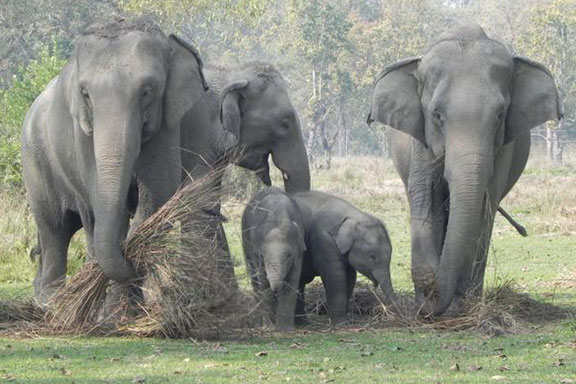
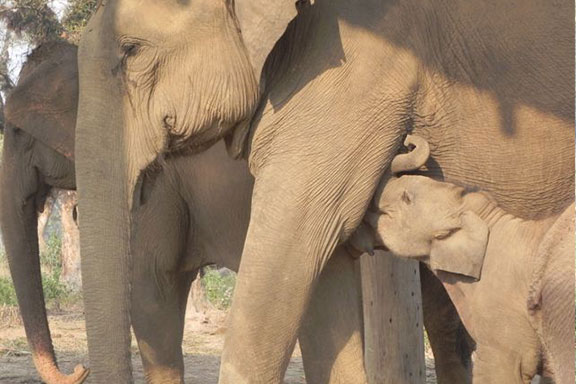
When we first met Rup Kali, she was “auntie” to two calves, one four months old, and the other five months. The calves were left unchained so they were free to wander through the hattisar (elephant stable) to socialize with the chained adults. They developed a deep relationship with Rup Kali, spending more time with her than with their own mothers. Rup Kali responded by developing milk and nursing both calves.
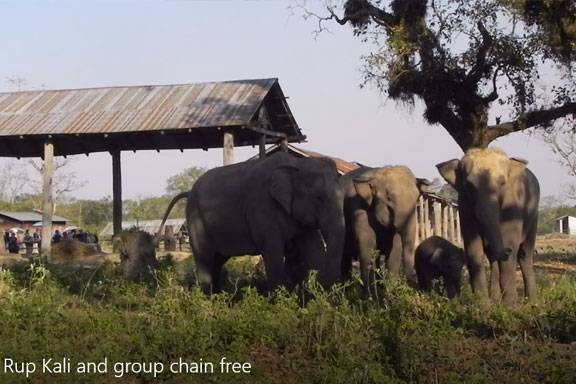
In 2015, Rup Kali was released into a chain-free corral built by EAI, which she shared with the two calves and their mothers. The elephants were overwhelmed by their new circumstances and melted into one another, forming the unbreakable bonds elephant families are renowned for.
Later, Rup Kali was moved to a remote hattisar where she was semi-retired. After losing her last set of teeth, she became thin. EAI provided her with a coat this past winter, which she wore willingly. This spring, Rup Kali died of natural causes. She was in her seventies.
Kirti Kali had a long, documented history of conservation work and giving tourist rides. She was a member of a group of elephants who were isolated from each other under separate tin shelters, and never allowed to socialize.
Kirti Kali was one of two elephants who provided elephant back safaris in Chitwan National Park. Her anti-poaching patrol duties meant long days in the sweltering summer heat and harsh winter cold. She was also required to provide tourist rides every dawn and dusk. The majority of riders were Nepali VIPs receiving special tours of the park (all other safaris take place outside the park in buffer zone forests). It was reported that the funds she generated paid staff salaries.
Midlife, Kirti Kali developed a severe case of carcinomas that affected her gait and subsequently her foot health. Over time she became thin and remained that way until her death.
In 2014, Kirti Kali was one of five elephants to receive a chain-free corral built by EAI. At first, her mahouts resisted allowing her to live chain-free since she had a history of aggression. But shortly after the other elephants went chain free, Kirti Kali did as well. She proved to be a star resident of chain-free living, remaining calm, responsive and nonaggressive.
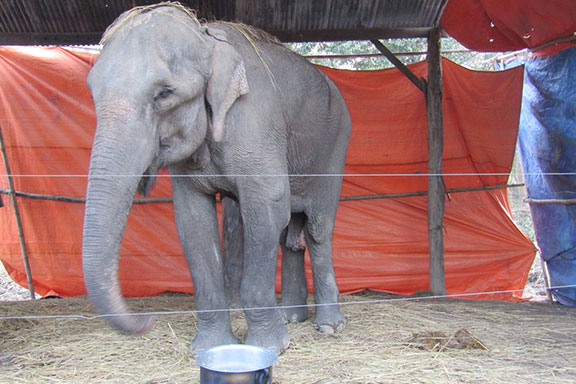
Last winter, Kirti Kali’s health deteriorated, which meant she no longer had to give rides. Tarps were erected around her stable to help block the cold wind, and EAI provided a coat to keep her warm.
This spring, Kirti Kali died after years of suffering from the human strain of tuberculosis. Her contribution to conservation was as great as her suffering. She was almost 60 years old.
Sundar Mala was another wild-caught elephant who spent her entire captive life working anti-poaching patrols protecting Nepal’s wildlife. Although age is sometimes difficult to confirm, I was told that she was close to 60 years old when we first met. She was severely thin and suffering from foot disease.
In 2015, after living chained in isolation most of her life, Sundar Mala was released into a chain-free corral built by EAI. She and Oma Kali, a senior elephant who had been crippled by a wild bull, bonded instantaneously and remained inseparable until Oma Kali died two years later.
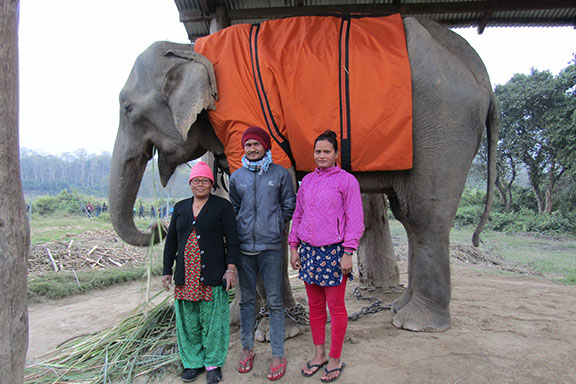
Sundar Mala was the first recipient of a winter coat. It took some convincing for the government to grant permission for EAI to provide the custom-made garment, but thanks to Sundar Mala’s complete acceptance of her coat, many other elephants in need have since received them as well.
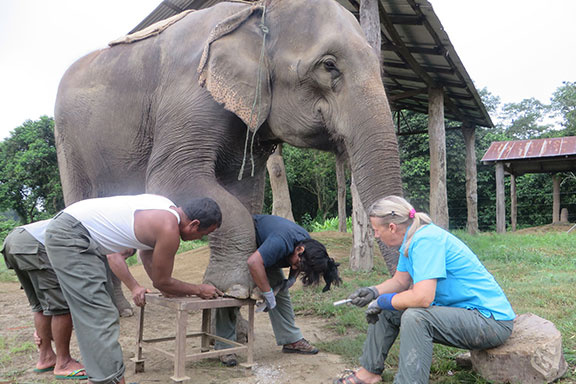
During our bi-annual foot trimming visits, Sundar Mala was always the first client. She was unable to lie down, but quickly learned how to place her feet on a platform so that her nails and foot pads could be trimmed. It was always a group effort, with two to three mahouts and me gently maneuvering her feet into place and trimming, while yet another person provided treats, her favorite part. Sundar Mala’s calmness, cooperation and gentle engagement was humbling.
Last winter, I heard Sundar Mala’s health was deteriorating. We offered support in the form of supplemental food and a new coat. She wore her coat with a sense of pride, posing with her team of mahouts and well wishers. With the deepest sadness, I learned Sundar Mala just passed away. She was reportedly in her mid-70’s.
I can only hope the sacrifices made by these and other elephants we have lost does not go unnoted. They are heroes of the greatest magnitude, wild-caught elephants who rose to the challenges forced upon them. Their contributions to the success of human endeavors cannot go unrecognized, nor the cost they paid in their service to humans and other animals.
With our deepest respect, rest in peace, Dipendra Gaj, Rup Kali, Kirti Kali and Sundar Mala.