Blog

  • Elephant Slaves

    Elephant Slaves

    Another predawn awakening, like a recurring dream.

    I’m woken abruptly from a deep sleep by the heart wrenching cries of a suffering elephant. All I can do is swing open my window and yell into the pitch black night, “Hatti la na pita!” (Don’t hit the elephant!). My plea echoes through the darkness, landing on deaf ears.

    It is not yet dawn, the time when most elephants savor their sleep. My heart clinches when I hear the too familiar crack of a bamboo stick across the hide of an elephant slave.

    I try to block the sound and associated pain from my ears but I cannot. The reality and degree of suffering experienced by captive-held elephants in Chitwan National Park is unconscionable.

    If it were not for a drive to improve the lives of the elephants used in Chitwan National Park, admittedly I would never come back to this place. The air is perpetually thick with the sights and sounds of elephant suffering.
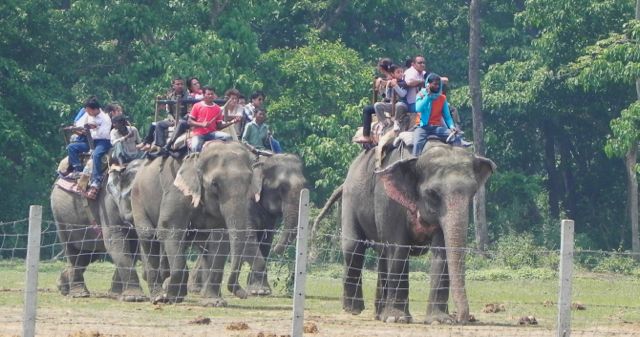
    tourist safari

    The apathy among tourists and owners alike is mind-boggling. Both the mahouts and the elephants in their care are merely money-making machines, no more.

    The elephants’ day begins before sunrise and ends after most tourists are in their rooms preparing for sleep.

    Before the rooster crows, the chained elephants are roused from their slumber and forced by threat of physical punishment to eat, drink and be readied for safari rides for the hundreds of tourists who visit Chitwan National park every day of the year.

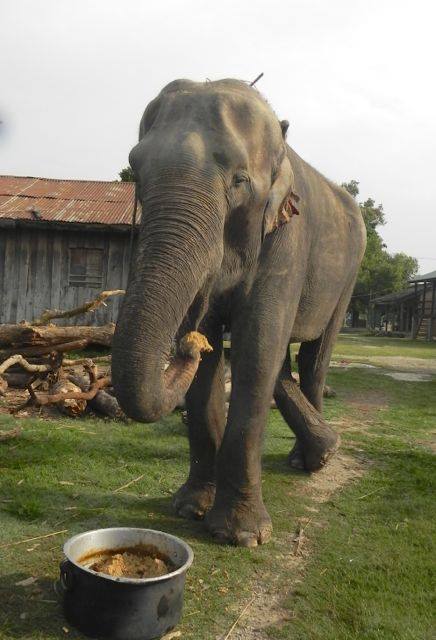
    The elephants’ food consists of cuchi—rice wrapped in mildewed, dehydrated rice hay—so unpalatable they must be beaten to eat it. The mahouts will strike them repeatedly with bamboo sticks until they have eaten.

    Mel Kali—the lucky one
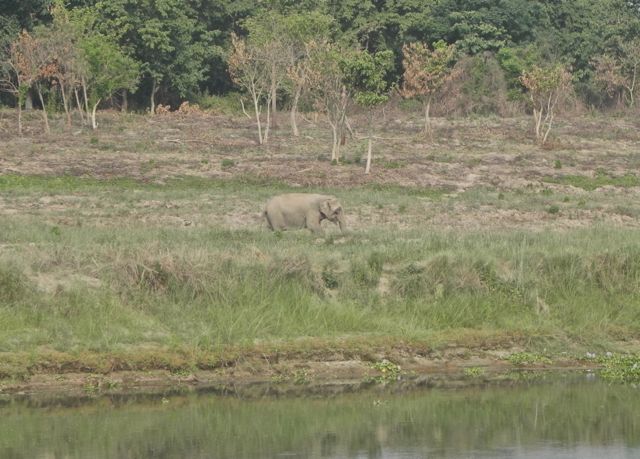
    Mel Kali

    In the far distance I hear the familiar trumpet call of Mel Kali. She is one of the lucky elephants in Nepal.

    Mel Kali was retired two years ago. She is the only retired elephant in Nepal. As a result of her advanced age—72—and near-death experience two years ago, Mel Kali is finally allowed to live a pseudo-elephant life, free to wander the national park free of riders and the continual domination of her mahouts.

    Abuse woven into the fabric

    Many tourists come to Chitwan National Park for elephant entertainment, but I come because of the elephant suffering. To experience their pain and not make an effort to help seems unconscionable.

    It is not possible for me to return to my relatively cushy life in the US and forget the elephants’ pain. Their cries tear at my heart. Their incarceration and treatment boggle my mind. It seems like a dream, but it is reality for the elephants 24/7, 365 days a year, for their entire lives. It is an elephant slave camp.

    When I am in Nepal it is my policy to stay only at guest houses that do not own an elephant. It is my way of not contributing to the exploitation and abuse.

    But it is impossible to avoid the abuse completely; it is woven into the fabric of Chitwan National Park.

    At all hours of the morning and evening, the haunting cries of elephants echo across the landscape of dozens of tourist hotels. They live in filthy stables, experience continual harassment and beatings and work from sun-up to sundown carrying heavy loads of riders seeking a fun day in the national park. I cannot help but absorb the feelings of despair and pain the elephants experience. How can the tourists, elephant owners, conservation organizations and locals be oblivious to such obvious suffering? What has become of the human race that we are so insensitive to the cries of others?

    Progress is slow but steady

    Hatti la na pita—do not hit the elephant¬—were the first words I learned after arriving in Nepal five years ago. A phase lost on most. But now, all these years later, the mahouts are familiar with my request. Although they do not comprehend why I ask that they not hit their elephants, out of respect for my work, most refrain from hitting their elephant in my presence.

    But seeing the abuse is not the only way to sense an elephant’s suffering. I am now hyper-sensitive to the sharp crack of the bamboo stick, the body language of an abused elephant, the demanding guttural commands of the mahouts and the oppressive energy in the elephant slave camps.

    After spending more than two dozen months in Nepal working closely with our Nepali partners to improve elephant welfare, I am discouraged by the slow process.

    But I must remember that we have succeeded in influencing many mahouts to treat their elephants more kindly; educated private and government owners alike about the welfare needs of elephants; and, most recently, freed 56 captive-held elephants from chains by creating chain-free corrals. The lives of these elephants are seriously improved.

    And we will not stop until all elephants in Nepal are treated and fed properly, and are living chain-free.
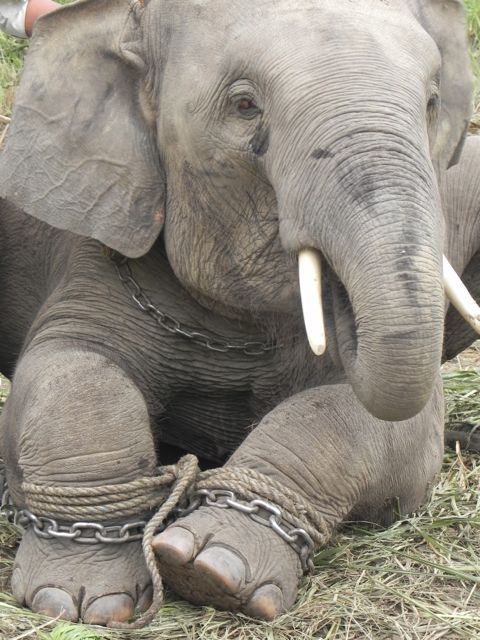
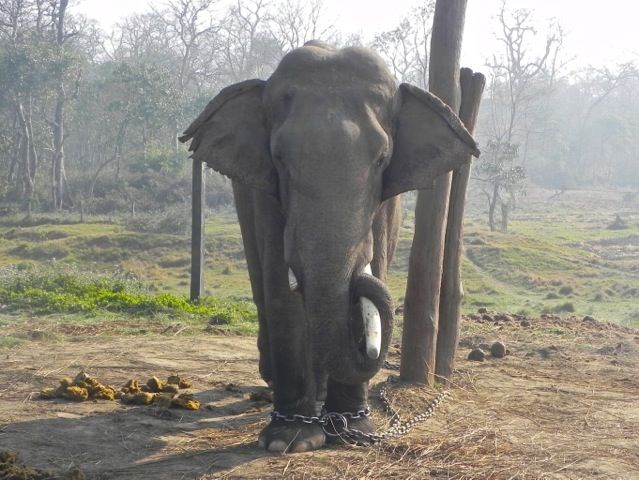
    close-up chained ele

  • Chain Free in Thailand

    Chain Free in Thailand

    Boon Lott's eles

    Lotus stood perfectly still while her mahout removed the chain from her ankle. Next came Pang Dow and, last, Wassana, a land mine victim who lost part of her foot several years ago in an explosion.

    They were unaware that their next few steps would be monumental.

    Lovely Lotus led the small herd, the family she chose after arriving at Boon Lott’s Elephant Sanctuary (BLES). She walked in the direction of the corral. For a split second she hesitated at the gate opening. A calculating glance from gate post to gate post and the open span between and she was satisfied that it was safe to lead her family inside. Almost in slow motion, Lotus entered the chain-free corral.

    I held my breath, knowing from experience the joy the elephants, their caregivers and the crew that only hours before had completed this first solar powered chain-free corral in Thailand, would feel.

    Pang Dow and Wassana followed close behind Lotus, less than inches apart, as they silently flowed into the expansive corral filled with vegetation and clusters of trees. The air was buzzing with anticipation. The elephants knew something was up. How could they not? Half a dozen people gave off quite a collective energy as we watched in hopeful anticipation of the elephants’ reaction to their new found freedom.

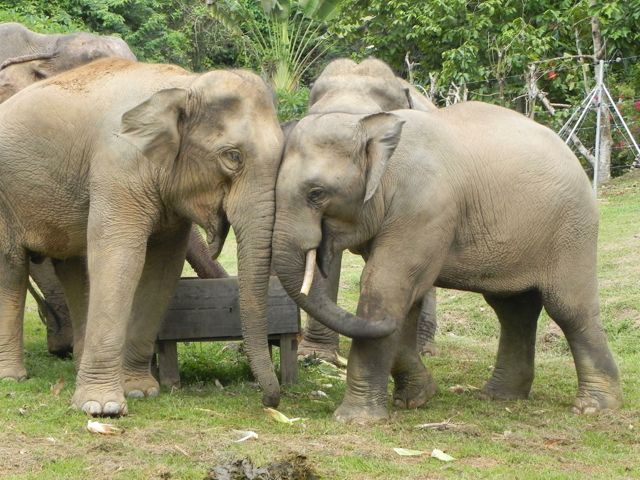
    Lotus, Pang Dow and Wassana cleared the gate opening, walked single file for less than 50 feet and then erupted into excited squeaks and trumpets. They broke line and huddled together, a tangle of trunks and tails, chattering excitedly, gently touching each other in reassurance.

    The mahouts stayed silent to ensure the elephants knew they were free to do as they pleased–a novel experience for a captive-held elephant, especially in countries like Thailand, where elephants are a commodity used for tourist entertainment, always under the control of a mahout.

    Before finding sanctuary at BLES, Wassana, Lotus and Pang Dow did not know freedom of any kind. Now they were about to experience the next level of freedom–autonomy. The ability to make their own choices about where they walk, when and with whom. What they eat, where they sleep and, most important, who they share their life with.

    It took mere seconds for all three to realize they were free to wander at will. They moved like a school of fish, close together, in step with each other, exploring as one. Happy squeaks, trumpets, chattering and ground thumps echoed across the hilly terrain.

    They soon forgot the humans who observed from outside the corral. They were in their own world, with their family, free from chains, to interact and share the natural habitat together.

    After sampling the tender vegetation underfoot, they made their way into a thicket of trees. With low rumbles and tender chirps they disappeared into their personal mini-sanctuary.

    Each time I witness the release of an elephant from chains, I am flooded with such deep emotion and with such gratitude, it’s as if it’s the first time I’ve experienced such a joyful event.

    I see their immediate shift, their letting go of the past. They accept the gift provided and without looking back immerse themselves in their new found freedom.

    I know that we have given a gift so great it transforms them. Being witness to an elephant’s release is life changing, the most powerful experience I’ve ever had.

    Elephants living in captivity are stripped of everything meaningful in their lives; autonomy, freedom of choice, family. Sanctuary life begins to restore some of these things. Although most captive-held elephants will never experience a real family of their own, they form bonds as deep and meaningful with unrelated others as if they were biologically related.

    The pure joy an elephant exhibits when given a resemblance of freedom is what drives me to do more. Chain free does mean pain free to these elephants. It is an honor to give back some of what has been taken away.

    Watch their release:

    and their introduction to their new chain-free corral:

  • THAILAND HERE WE COME!

    After nearly two years of preparation and numerous setbacks our chain-free corral project In Thailand is scheduled to begin July 12th.

    In October 2013, I visited two sites–Friends of the Asian Elephant (FAE) and Boon Lott’s Elephant Sanctuary (BLES)–to map areas for chain-free corrals. The corral locations were identified and construction plans laid out. Everyone was excited about giving their well-cared-for elephants more autonomy and physical freedom within a safe and secure jungle environment.

    This is when things became challenging.

    I soon learned that Thailand did not have a supplier for the materials we use for solar powered chain-free corrals. The closest supplier was IBEX Galleger in India. All materials would have to be shipped from India via the wholesaler in New Zealand.

    Stopped at the border

    The plan was to build the corrals last October.

    I monitored the progress of the materials shipment from my US office. The Indian fence crew would fly to Thailand to oversee the arrival of materials, while the staff at BLES stood by, ready to receive the delivery. Partners in three countries experienced a great deal of anticipatory anxiety.

    As soon as the materials arrived from New Zealand, they were transported from Bengaluru, India, to the coast and loaded onto a cargo ship, which crossed the Bay of Bengal and docked in Bangkok, Thailand. They cleared customs without a hitch.

    This is when we hit a major snag.

    The Indian crew was supposed to receive the delivery in order to avoid a hefty unloading and storage fee.

    But the crew was stopped at Thai immigration to verify their residence while in Thailand.

    BLES’s phone and internet were not working so there was no way for Thai immigration to verify the crew’s destination. Emails flew back and forth among continents, to no avail. We couldn’t reach BLES.

    After a couple of hours, Thai immigration refused the crew entry and sent them back to India.

    Unfortunately, the project had already exceeded the estimated cost even before the materials were loaded onto the cargo ship. This latest development didn’t help. At this point, the costs threatened to skyrocket.

    Everything falls into place

    Thanks to this experience, the Indian crew was afraid to return to Thailand.

    I set out to find qualified installers in Thailand. No luck. No one in Thailand wanted to take on the job, as they were unfamiliar with the corral system.

    After weeks of searching, I decided to try to convince the Indian crew to try again. They were leery, so it took months to finally convince them. By the time they finally agreed, they were working on a new project in India, and unavailable to return to Thailand until later this year.

    But here we are, several months later, heading to Thailand once again.

    We don’t have to worry about the materials–they are safely stored at BLES.

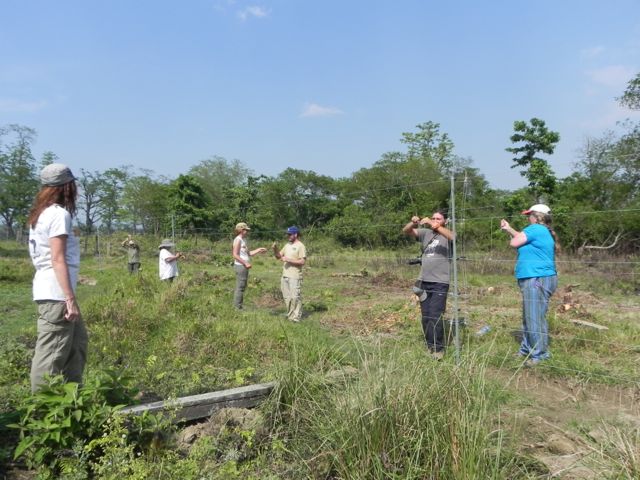
    Pre-construction is already underway at FAE and they are clearing the fence line as we speak. It will be cleared and ready for my arrival on July 12.

    The plan is to get all the corner posts set at both FAE and BLES before the fence crew arrives on the 18th.

    All we have to worry about is getting the crew into Thailand. This time I plan to be standing outside immigration at the airport with a working cell number, ready to handle any problems that might arise.

    This project has been a serious challenge but I have no doubt that it will be well worth every bit of frustration and anxiety when we see the elephants released into their new chain-free corrals.

    Thank you for helping us create the first solar powered chain-free corrals at Boon Lott’s Elephant Sanctuary and Friends of the Elephant Hospital in Thailand.


  • Male Elephants in Captivity

    Male Elephants in Captivity

    Caring for male elephants in captivity is a challenge at best.

    Attempts to provide a quality of life within the parameters dictated by their captivity produce poor results. Their size, natural tendency toward dominance and drive to breed, combined with their innate wildness, is a recipe for disaster in a captive situation.

    Males are especially dangerous when they are in musth, a natural biological function when testosterone levels increase. During their annual musth season, captive-held males become too aggressive to approach and stop responding to their mahouts.

    EAI respects the true nature of each elephant and would prefer that no elephant live in captivity. But elephants whose lives are forever altered by captivity need our help.

    Lambodhar Prasad: In musth, out of water

    Lambodhar Prasad

    We were building chain-free corrals when Lambodhar Prasad came into musth. He was unapproachable. His front wrists were chained together, secured to a large wooden timber that was buried 10 feet deep to prevent his escape. He had no shelter from the hot sun, the seasonal storms that pellet him with golf ball-size hail or the frightening earthquake that devastated entire villages in Nepal earlier this month.

    And he had no access to water to drink unless the mahouts brought it to him.

    Because of his aggressive state, mahouts could not get close enough to Lambodhar Prasad to give him water, which concerned them and made them anxious to find a solution. Their only option was to offer Lambodhar Prasad water in a large metal cooking pot.

    Out of trunk’s reach, several mahouts struggled to push the heavy pot close to Lambodhar Prasad with a long bamboo pole. A thick handmade rope was tied to one handle of the pot in order to pull it back, out of Lambohdar Prasad’s reach, after he finished drinking.

    But things did not go as planned. Lambodhar Prasad was irritable, not in a mood to cooperate. He grabbed the pot with his trunk and before the mahouts could yank it away, he crushed it under his foot.

    The mahouts were out of ideas and had no resources to solve the problem, so they came to EAI for help.

    A simple solution

    An immediate solution was devised, simple but effective.

    EAI volunteers headed to town to buy a replacement cooking pot/water dish. We purchased an electric water pump and water hose and hired a plumber to hook it up to the existing well where the mahouts bathe and wash their cloths and dishes. The Chitwan National Parks Department provided a large water storage tank as a back-up for when the electricity is out, which in Nepal is more often then not.

    While the plumber was installing the pump, connecting the water hose and setting up the water tank, the mahouts wasted no time wiring the pump at a nearby building.

    There are no inspections required or codes for electric and plumbing work at the hattisar. You just do it!

    In a couple of hours our solution was up and running. The mahouts were relieved and excited about the prospect of being able to water Lambodhar Prasad and give him a bathe as well.

    Then came the moment to test out the new watering system.

    As suggested, the mahouts filled the water pot before maneuvering it in front of Lambodhar Prasad. He was seriously thirsty and drank hurriedly for several minutes. But as he quenched his thirst, his drive for dominance surfaced.

    The muscles in his face tightened as he grabbed for the pot in an act of defiance. The mahouts recognized his attitude shift and pulled the pot out of his reach. The pot lived to provide water for another day.

    Learn how you can support EAI’s pilot project to build Lambodhar Prasad his own steel pipe corral.

    Mahouts know we care

    Every effort in Nepal is unnecessarily difficult due to limited or nonexistent resources, expertise and motivation. Generations of mahouts have grown to believe that nothing can or will be done to make their job easier or the lives of the elephants in their care better. They have stopped asking for help, or perhaps they never started.

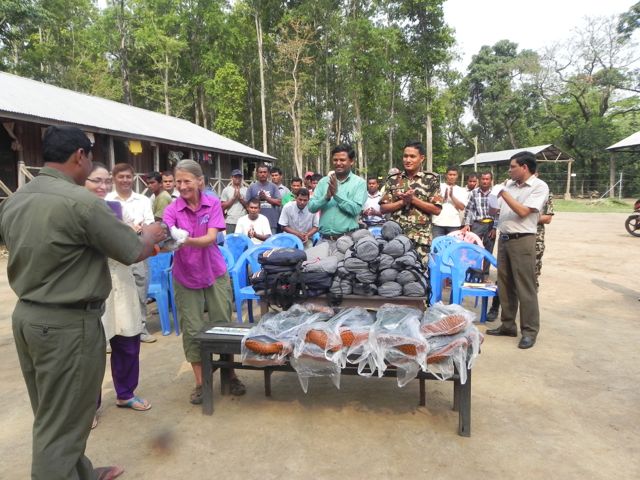
    supplies to mahouts

    But now, because you, our supporters, have enabled EAI to offer new resources, options and solutions, the mahouts know that there are people who truly care about them and the welfare of their elephants. They have begun to ask for help. They have begun to believe that when they ask, their concerns will be heard and their need for assistance will be answered.

    The most encouraging shift we have observed is that mahouts are beginning to speak up for their elephants. Improvements in elephant welfare can be encouraged from the outside but true sustainability comes from within. The mahouts are the key to improved elephant welfare in Nepal.

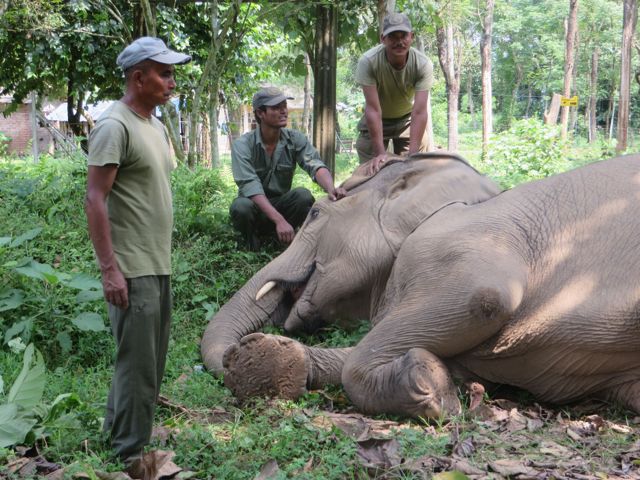
    3 mahouts & eles

    EAI is honored to partner with them. Learn how you can support mahouts and their elephants.

  • Rhinos and reunions

    Rhinos and reunions

    Chitwan National Park’s annual rhino count is underway.

    50 government elephants, from all over Nepal, take part in the survey. Elephants and their mahouts fan out through the jungle, covering Chitwan National Park from east to west. This is the most effective way to gain an accurate count of the rhino population in the park.

    The elephants benefit because they spend a couple of weeks inside the jungle, day and night. Being immersed in their natural habitat is rejuvenating.

    In preparation for the count, the elephants gather at two central hattisars–Khorsor and Sauraha, the two hattisars where we completed our chain free corrals last week.

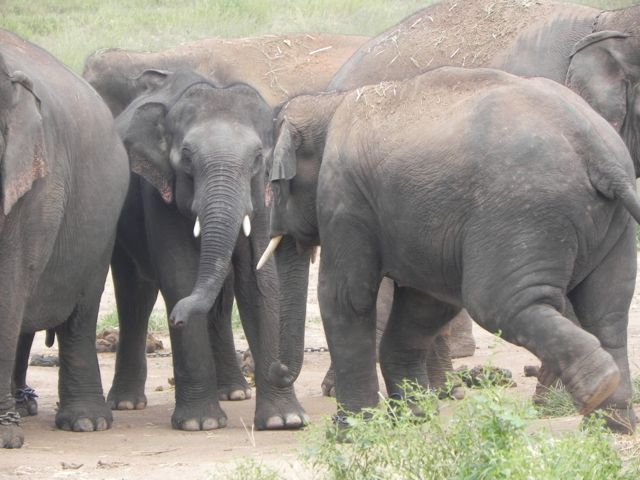
    Four boarders arrived at Khorsor yesterday. The scene was mesmerizing. Thanks to our chain-free corrals, families were reunited.

    Simsar Kali and her mother were as one, floating peacefully, side by side, chain free. Tumor Kali was also with them, a threesome of chain-free compatibility.

    Young Amaltari Gaj was also in elephant heaven. He and his mother grazed peacefully, chain free, a tearful reunion of joy.

    Change is happening!

    Below: Mom, daughter and a friend reunited when mom visited from another hattisar.

    22109_946953388668356_279845061956447565_n 10441038_946953378668357_6965332770962719656_n 11008428_946953412001687_3724965258527183178_n


  • Changing minds, changing culture

    Changing minds, changing culture

    This release was a surprise to all of us and the reason we build a chain-free corral for each elephant, even if we are told the elephant will remain on chains.

    You just never know what will happen tomorrow. Changing minds, changing culture!

    Yesterday was a day of celebration for EAI and all who support our work. In addition to the work over the past year and a half, culminating in the release of tens of elephant from chains, it was the day you could actually feel the consciousness at the Khorsor hattisar shift.

    Without prompting, Puja Kali’s mahouts released her from chains.

    Earlier in the week, mahouts insisted that Puja Kali could not be released from chains due to her history of aggression. But they brainstormed and decided that if three mahouts were present when they approached Puja Kali, the situation would be safe.

    Without any further discussion they released her from chains.

    11016965_946096498754045_6101301223297155402_n

    This is a seriously significant turn of events. It is the first time we have witnessed the mahouts trouble shooting a problem, putting the elephants’ needs first.

    The mahouts deserve all the credit!

  • Ganesha Kali and her calf are chain free!

    Ganesha Kali and her unnamed calf were the first to be released in a procession of another seven ‪elephants in our ‪Chain Free Means Pain Free program. Their mahout was surprisingly receptive to having his elephants go chain free. Attitudes are changing. ‪

  • Soon They Will Be Chain Free!

    Mother & calf

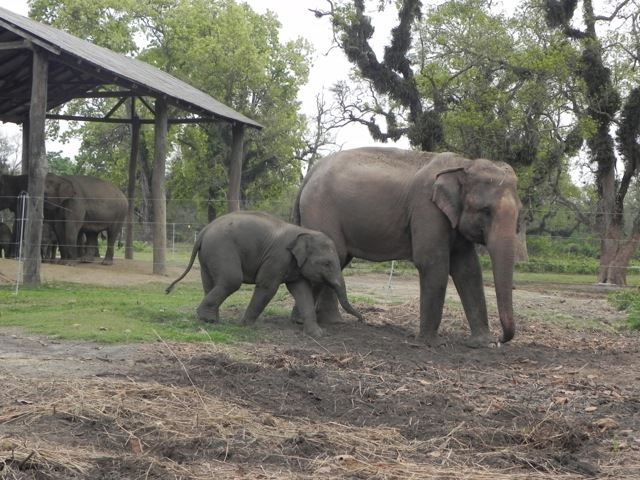
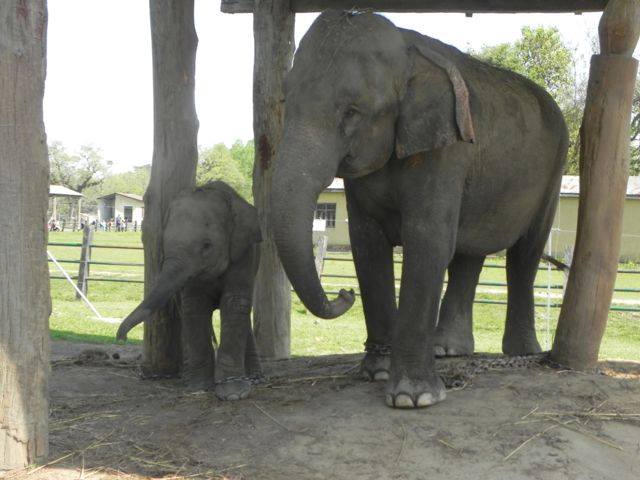
    Ganesha and her young calf Kasara Gaj have lived on chains their entire lives.

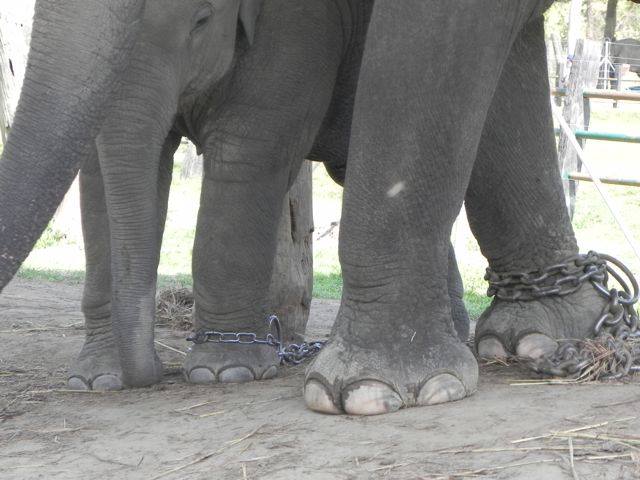
    Captive elephants are wild animals and an endangered species. The tradition of chaining disregards the trauma this practice causes.

    Chained feet
    But things are changing.

    Thanks to our Chain Free Means Pain Free program, Ganesha and her calf will be soon be released from chains.


  • A change in diet

    A change in diet

    Sundar Mala & mahout

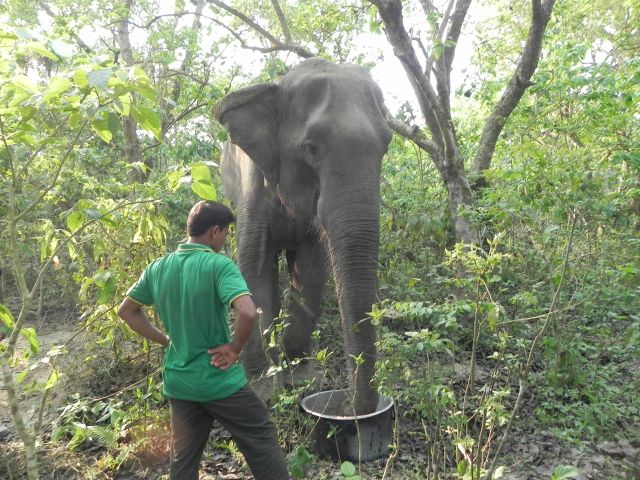
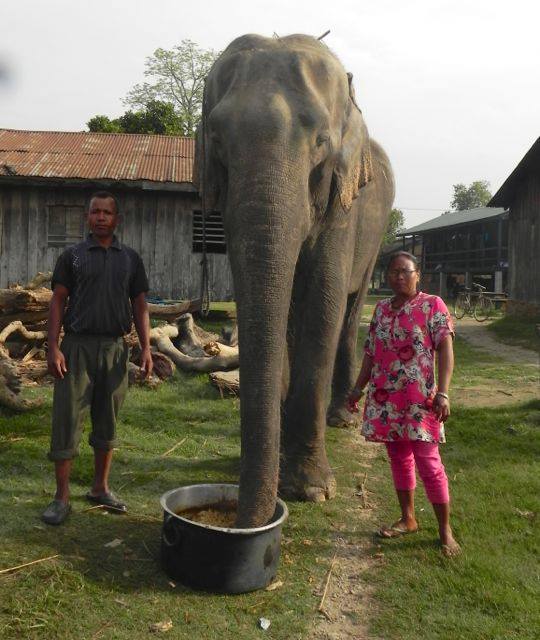
    Sundar Mala is nearly 70 years old and resides at the Sauraha hattisar in Chitwan, Nepal. Recently she began to lose weight, resulting in her removal from her friends Loctandra Kali and Oma Kali, to ensure the other elephants did not eat her food.

    We lobbied for a healthier solution. Our suggestion of a dietary supplement and reunion with her friends was accepted by the mahouts.

    sundar mala

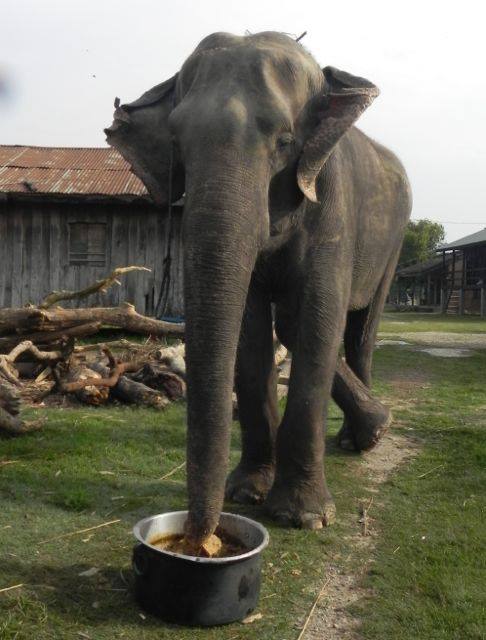
    It took two days for Sundar Mali to acquire a taste for her new diet. She still eats slowly but does not stop until she has eaten it all.

    Sundar Mala eating2

    Sundar Mala eating

  • Help Us Keep Wild Elephants Wild and Captive Elephants Safe!

    Help Us Keep Wild Elephants Wild and Captive Elephants Safe!

    Thanks to your support, EAI is nearing the completion of its year-long project to free 63 working elephants from chains.

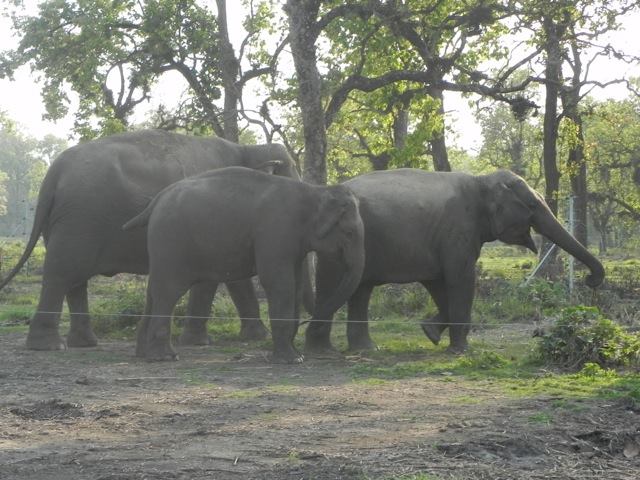
    2 eles chain free

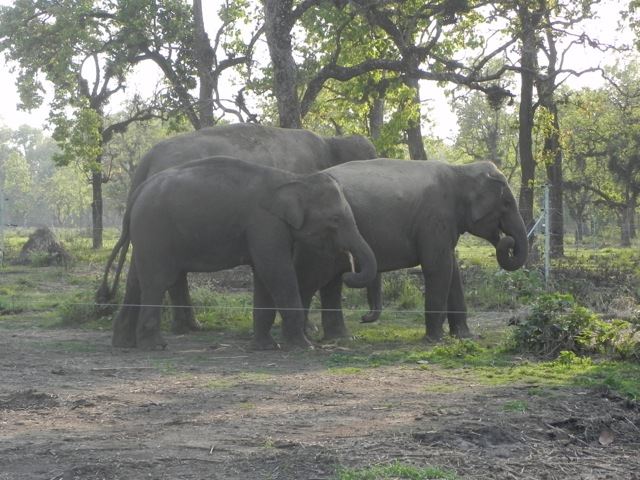
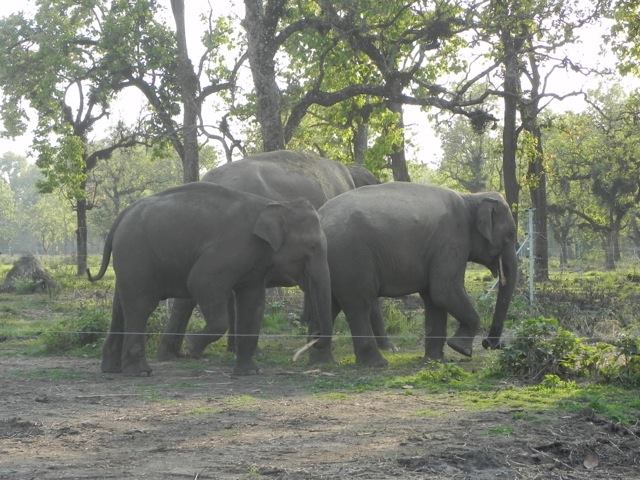
    Elephants who have spent decades shackled by chains are now free to roam spacious mini-sanctuaries for the first time in their lives.

    But now we need your help with an unexpected expense: an elephant-proof perimeter fence to keep wild elephants wild and captive elephants safe.

    Last hattisar: Prototype for a healthy captive elephant environment

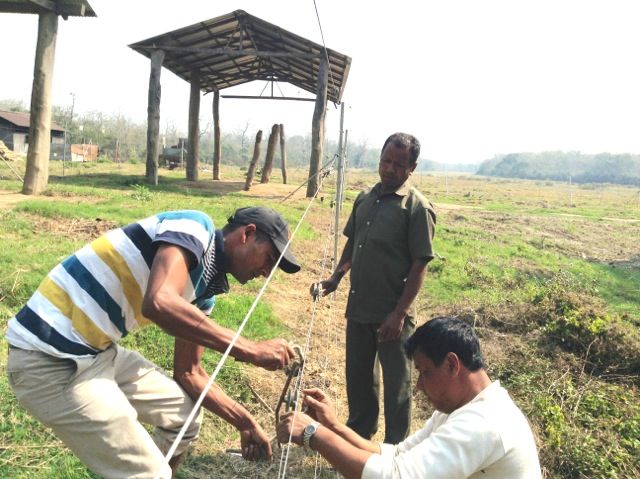
    dscn0321_medFor five weeks, EAI and its tireless volunteers have toiled in sweltering temperatures erecting solar powered corral fencing so that captive-held anti-poaching patrol elephants at one of the government’s 15 hattisars (elephant stables), in Khorsor, Nepal, can be released from their chains forever.

    This hattisar is home to 18 elephants: six females with suckling calves; an older female who acts as auntie, babysitter and wet nurse; a young pregnant female; two adolescents; and two young males who no longer live with their mothers.

    This, the last hattisar in EAI’s Chain Free Means Pain Free project, has the potential to be a prototype for a healthy captive elephant environment and transform elephant management in Nepal.

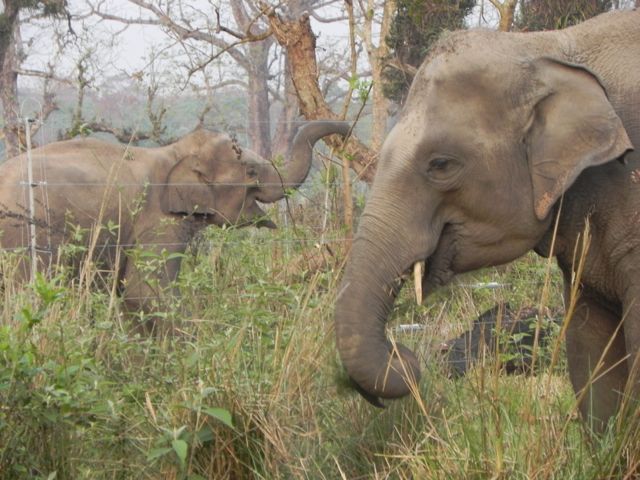
    But an unlikely culprit threatens the success of the project. His name? Sano Jungli Hatti — small wild elephant

    jungli hatti

    Every night for the past month, sano jungli hatti has visited the hattisar, damaged the newly constructed section of corral fencing and then disappeared into the breaking dawn.

    This wild elephant was dubbed sano jungli hatti because he is less than six feet tall and under 10 years of age. First seen traveling alone more than two years ago, the separation from his wild biological family was many years premature.

    Although the circumstances surrounding his separation remain a mystery, sano jungli hatti’s actions clearly demonstrate that he has adopted the resident elephants in Khorsor as his family.

    It’s not clear if this young elephant is motivated by his desire to procreate or be mothered, but he is willing to disregard the pain of plowing through six strands of solar powered fencing to get to his adopted family.

    Until now, the fence kept out even the most dominant mature wild bulls.

    But this young sano jungli hatti’s destructiveness has created a crisis.

    repairing corral

    Each time sano jungli hatti breaks through the fence, it is repaired.

    It’s not a problem to repair the fence one or two times. But if the fence needs repairing day after day, it is not sustainable.

    If sano jungli hatti continues to break the fence, the resident elephants will be put back on chains.

    We simply cannot allow this to happen.

    Solution: A perimeter fence

    Capturing or relocating jungli hatti is not a viable option.

    Neither is returning all 18 captive-held elephants to chains.

    The answer?

    Build a perimeter fence around the entire 15-acre chain free project to keep wild elephants out and the eighteen resident elephants chain-free.

    The six-foot-high elephant-proof perimeter fence will cover 4,000 running feet. It is estimated to cost $1 per foot, a total of $4,000.

    To ensure the success of our chain free project — to keep sano jungli hatti free and the captive-held elephants chain-free — we must raise the funds for the perimeter fence immediately.

  • The Work Continues to Get Elephants Off Chains

    Good news! Baby Tec Gaj was released from chains.

    Unfortunately, it is not all good news because his mother, Puja Kali, was not.

    Two-year-old, captive-born Tec Gaj and his mother Puja Kali reside in Khorsor, ‪Nepal, at the government breeding center.

    Puja Kali is quite aggressive, known to attack her mahouts even while she is on chains.

    Such aggression is an indication of great suffering, usually on a mental and emotional level.

    Responding to Puja Kali’s aggression with corporal punishment compounds her condition but mahouts find themselves with few alternatives.

    Aggressive behavior exhibited by ‪elephants triggers retaliatory aggressive behavior by the mahouts. Aggression breeds aggression, resulting in a vicious cycle in which neither man nor elephant benefits.

    EAI does not endorse the use of any negative means to manage elephants and we empathize with the position the mahouts and captive-held elephants find themselves in.

    Hopefully, with our continued efforts, the day will come when aggressive elephants will no longer be used for activities that put them and their mahouts in danger. And, mahouts will learn alternative ways to care for their elephants.

  • The Suffering Continues At Nepal’s Top Tourist Destination

    The Suffering Continues At Nepal’s Top Tourist Destination

    EAI‬ has been “boots on the ground” in ‪Nepal for nearly five years. Initially, much of our efforts were focused on improving welfare for the privately owned ‪elephants used for tourist rides.

    We’ve provided free pedicures and husbandry and training advice bi-annually since 2011. But today the safari elephants of ‪Chitwan suffer to the same degree as they did when we first started. As long as ‪tourists pay to ride elephants, the elephants of Nepal will continue to be exploited.

    One way for you to help is by supporting groups actively working to influence tour companies to drop elephant safaris from their tour packages. Elephant Watch Nepal is one such group.

    Old abused ele
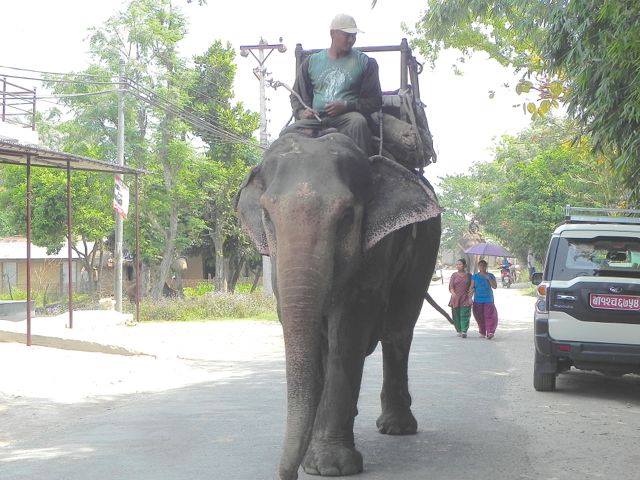
    Six months ago we found this elephant being walked along a busy highway, in the midday scorching sun, on a 30-mile walk back from a party she’d been hired for.

    Today we found her in Sauraha on her way to the tourist ride area.

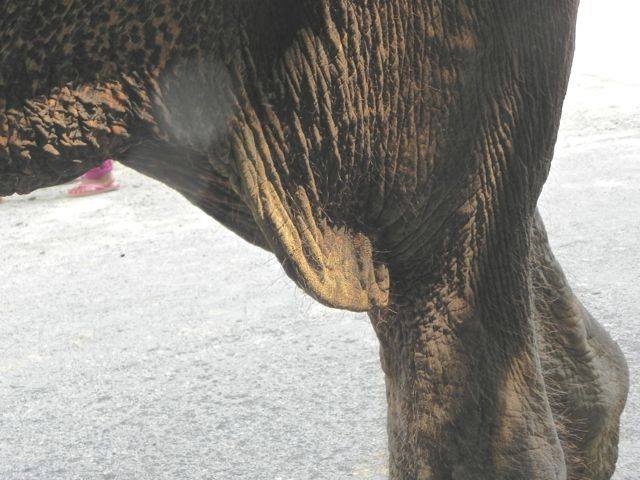
    saggy dehydrated flesh
    Saggy, dehydrated flesh

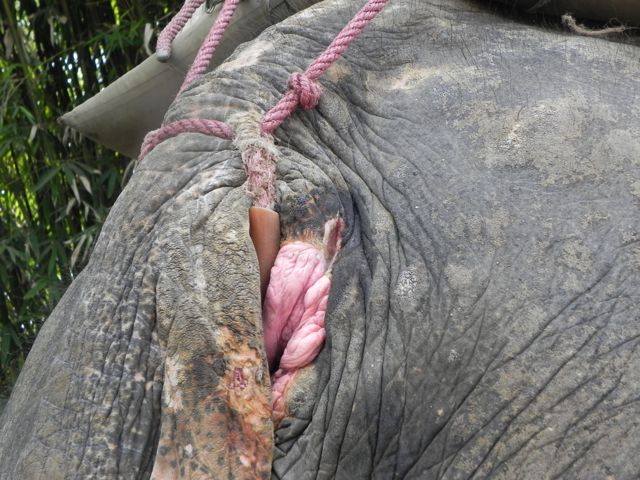
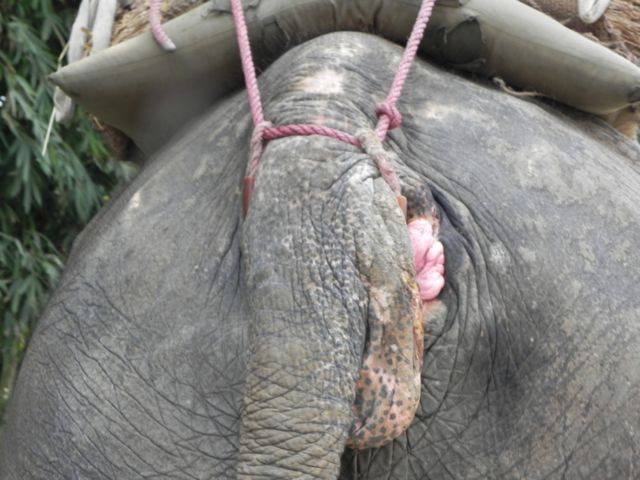
    This old elephant is blind, dehydrated, exhausted, underfed, continually beaten and suffers from deep gouges around her anus from the howdah (saddle) rope.

    Painful wounds caused by nylon ropes
    Painful wounds caused by nylon ropes used to tie the howdah (saddle) on for tourist rides
    torn anus
    Torn anus

    The owner and mahouts are aware of her injury and how to prevent and treat it. But they do nothing to ease her suffering.