Category: Training

  • How to Be a Responsible Ele-Tourist

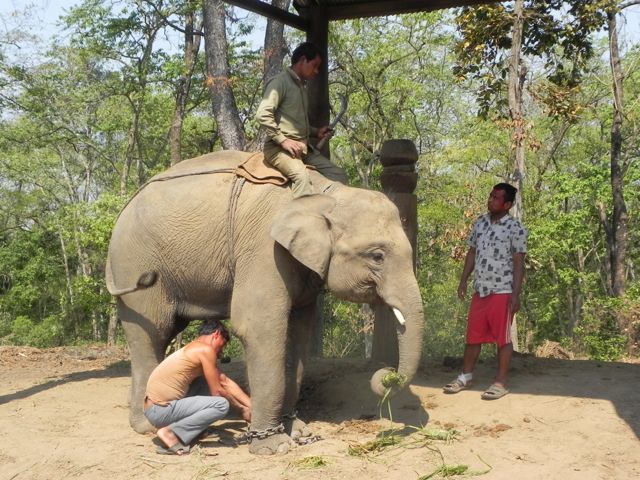
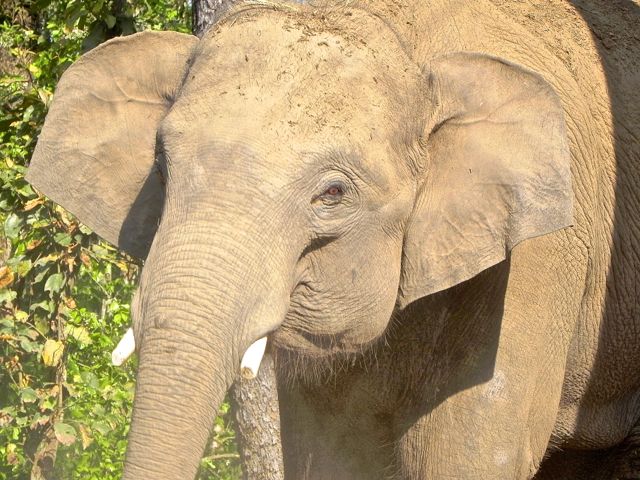
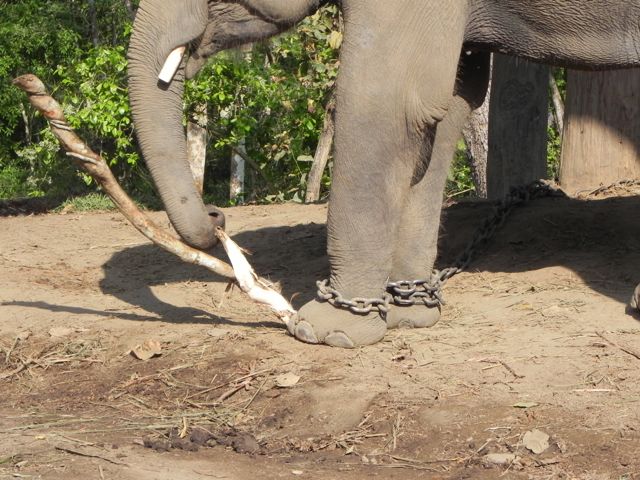
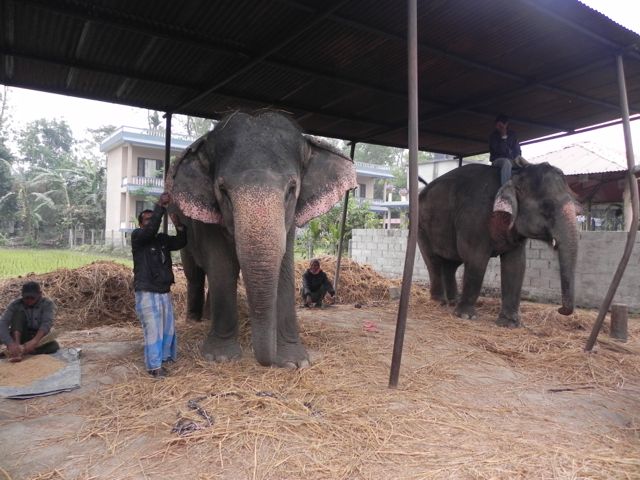
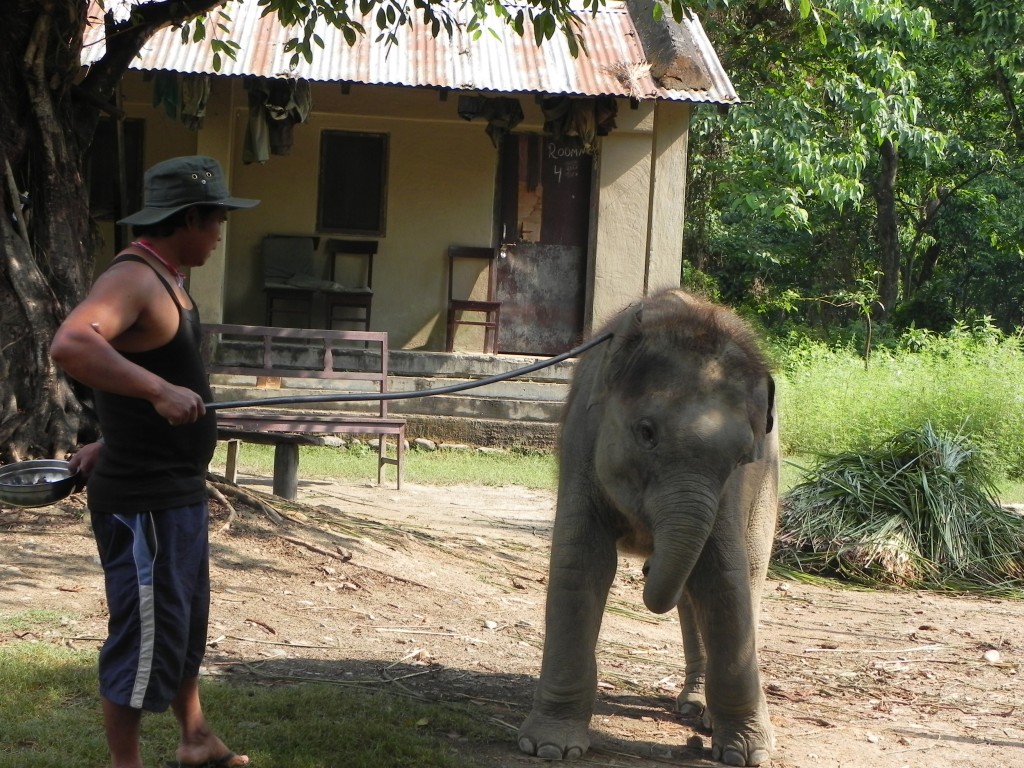
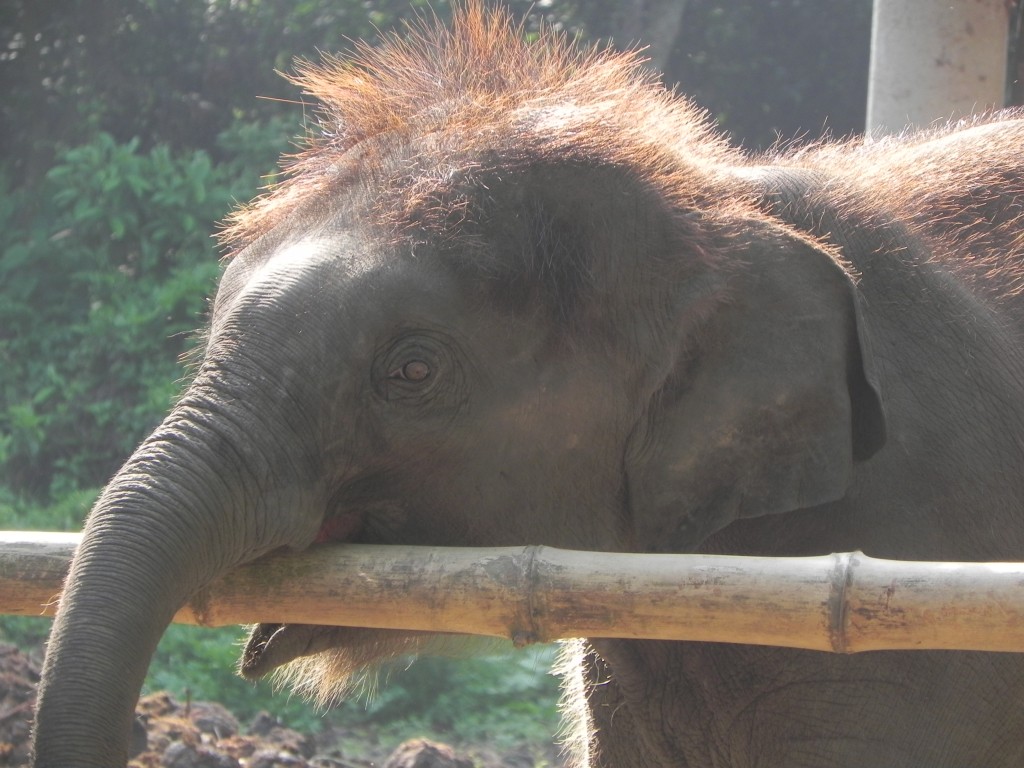
    These photos of captive-held elephants in Asia are not unique. I am posting them to document what happens when an elephant is struck on the head with a stick, ankus (elephant hook), axe or other weapon. They illustrate how these elephants suffer for the tourist industry.
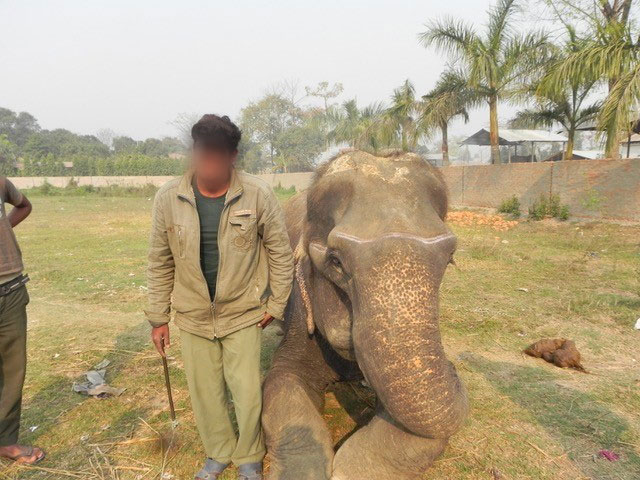
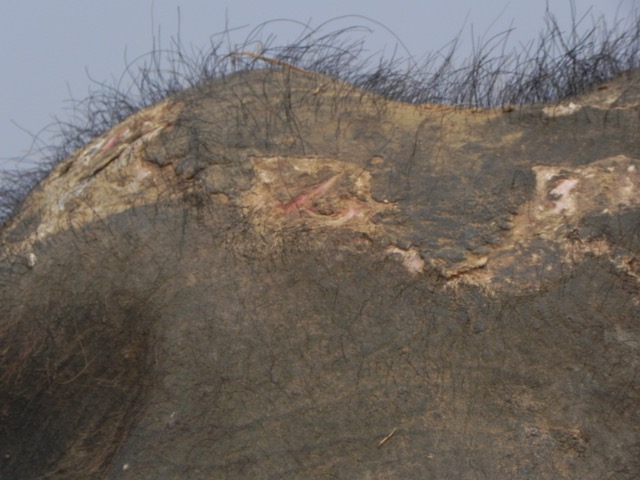
    The practice of hitting an elephant on the head with force is traditional across Asia. Abusive dominance is believed to be the only way to control an elephant. It is the form of dominance and punishment taught to and expected of mahouts (handlers).

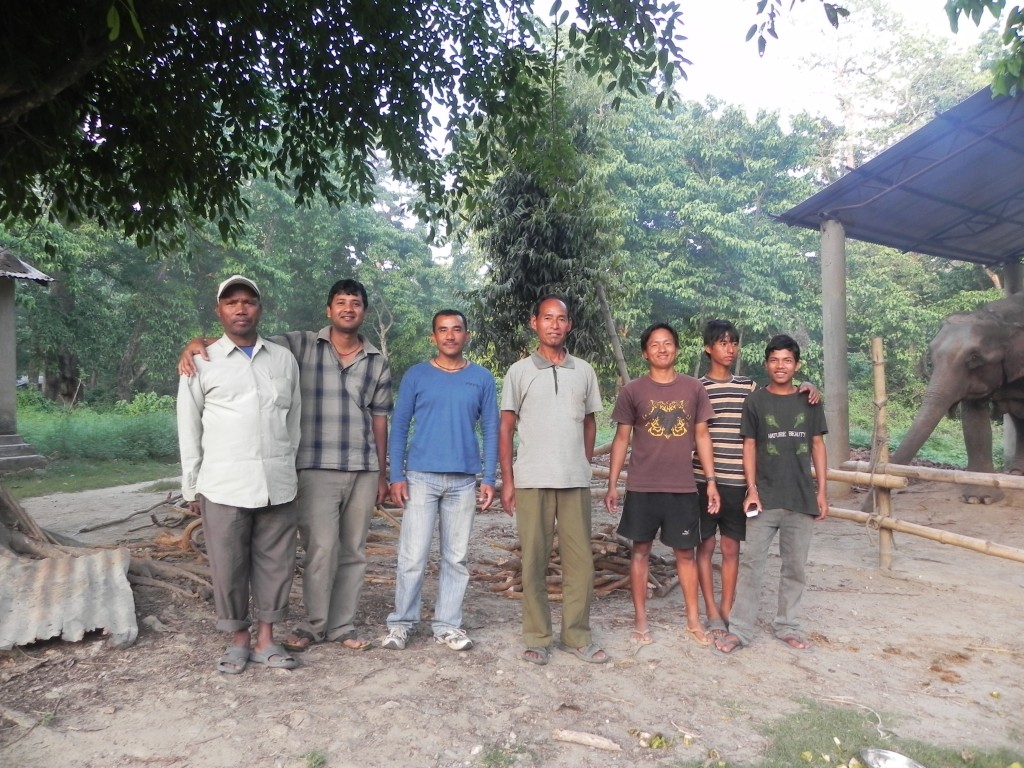
    It’s easy to blame the mahout but, if we do, that blame is misplaced. Mahouts are poorly educated and paid, low-status workers. According to the cast system, if they want to work , they do what they are told, without question.

    It might be hard for us as westerners to comprehend such blind obedience but in many Asian countries, it is expected of low-status citizens.

    Tourists are key

    Rather than blaming the mahout we should look hard and long at those who control the mahouts — elephant owners and supervisors — and those who finance the system, tourists.

    Yes, tourists are key. Tourists pay to get close and interact with elephants. In many cases, unscrupulous supervisors and owners force mahouts to allow the dangerous interactions tourists want, making the mahout responsible for their safety.

    I have witnessed many examples of young children of higher social standing demand that a mahout allow them to interact with his elephant in a dangerous manner. The mahout and his elephant are required to oblige their whims. These privileged adolescents will even strike the elephant and mahout with a weapon to demonstrate their position of power.

    Hitting and striking

    The mahout is required to keep his elephant under control at all times. When an elephant does not respond quickly to a command, the mahout is, by training, required to strike him/her forcibly with a weapon across the bony surface of the forehead.

    Hitting an elephants’ skull with force causes a thunderous noise and vibration inside the head, as well as physical pain.

    Repeated hitting causes tissue damage. After several harsh blows, the tissue is irreversibly damaged. It abscesses, dies, rots away, scabs over and then sloughs off, leaving a light colored scar.

    An elephant’s physical response to injury is no different from that of humans’. The process from injury to scar takes weeks, during which time the elephant is suffering painfully.

    No research has been conducted to evaluate the damage done to an elephants’ brain by beatings and subsequent infection. It is known, however, that mammals can contract encephalitis from a brain infection.

    What you can do

    When you travel in Asia you’ll see that most elephants used in the tourist industry have wounds and scars from being beaten. The abuse is driven by tourists’ desire to interact with elephants, requiring mahouts to use force to control their elephants during the interactions.

    Here are three ways you can reduce the suffering of captive-held elephants and contribute to change:

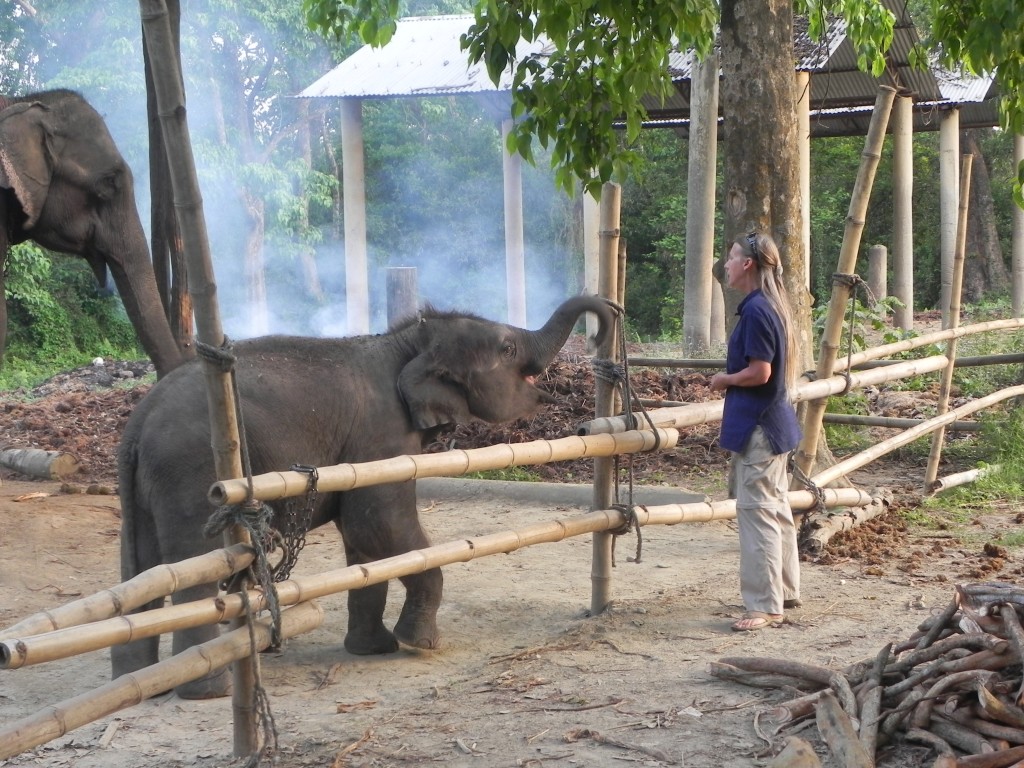
    • Eliminate elephant rides, bathing, painting, entertaining, selfies and hand feeding from your bucket list. If you refrain from direct contact with an elephant, the handler has no need to abuse his elephant to accommodate and protect you.

    • Educate friends and family who plan to visit Asia about the how elephants are used in the tourist industry.

    • Support only organizations that offer ele-friendly programs. Ele-friendly programs prohibit direct physical contact between tourists and elephants. Instead, they allow you to observe the elephants from a safe distance as they go about their daily routine.

    If you or someone you know is preparing for a trip to Asia, there are a few organizations that provide ele-friendly programs: in India, Wildlife SOS India; in Thailand, Boon Lott’s Elephant Sanctuary and The Mahouts Elephant Foundation; and in Nepal, Tiger Tops and the Association Moey.

    An informed tourist is a responsible tourist.
  • Helping Captive-Held Elephants Heal

    Helping Captive-Held Elephants Heal

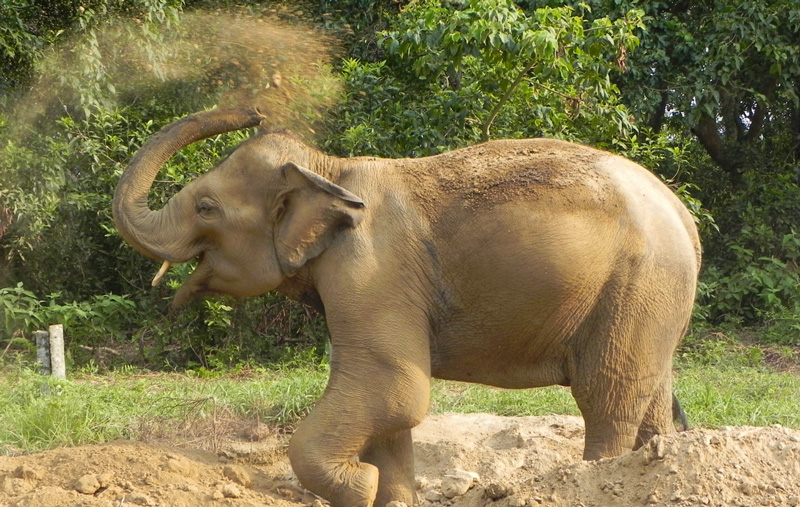
    elephant dusting
    EAI Founder and CEO Carol Buckley recently completed a comprehensive guide to rehabilitating captive-held elephants so they can be released into a wild environment. The guide draws on Carol’s four decades of hands-on experience to present detailed instructions for facility construction and assessing, interacting with and healing traumatized elephants. Although the paper is written for caregivers and those working in direct contact with elephants, anyone interested in the rehabilitation process will find it of value.

    READ THE PAPER

  • Himal Gaj

    Himal Gaj

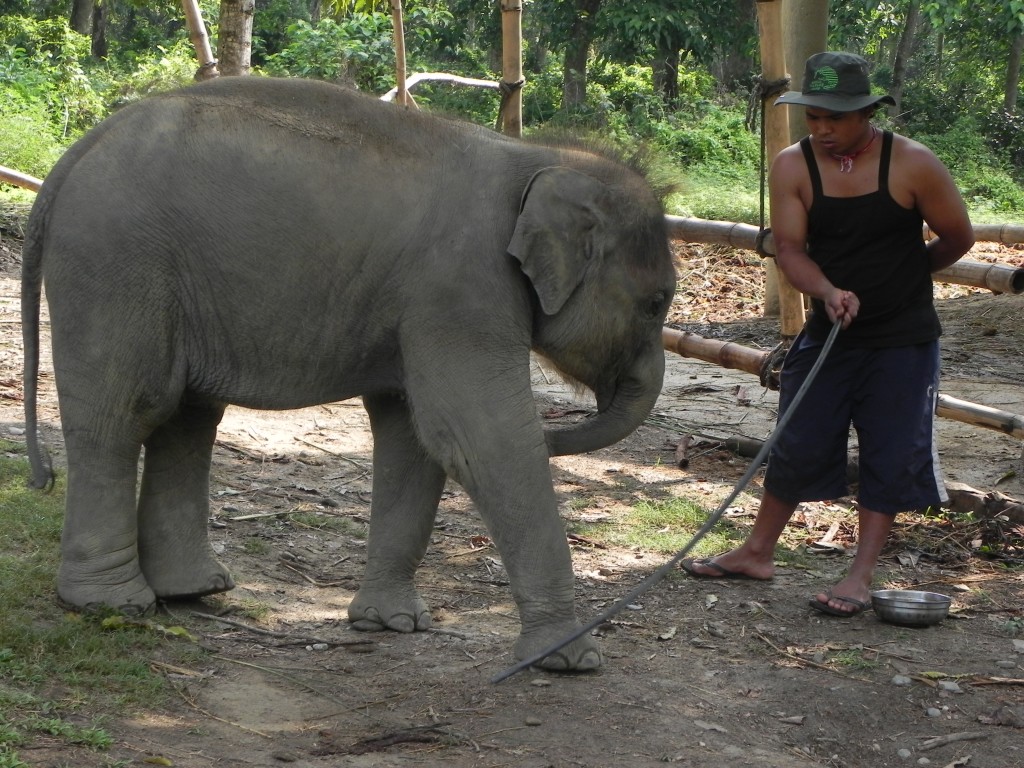
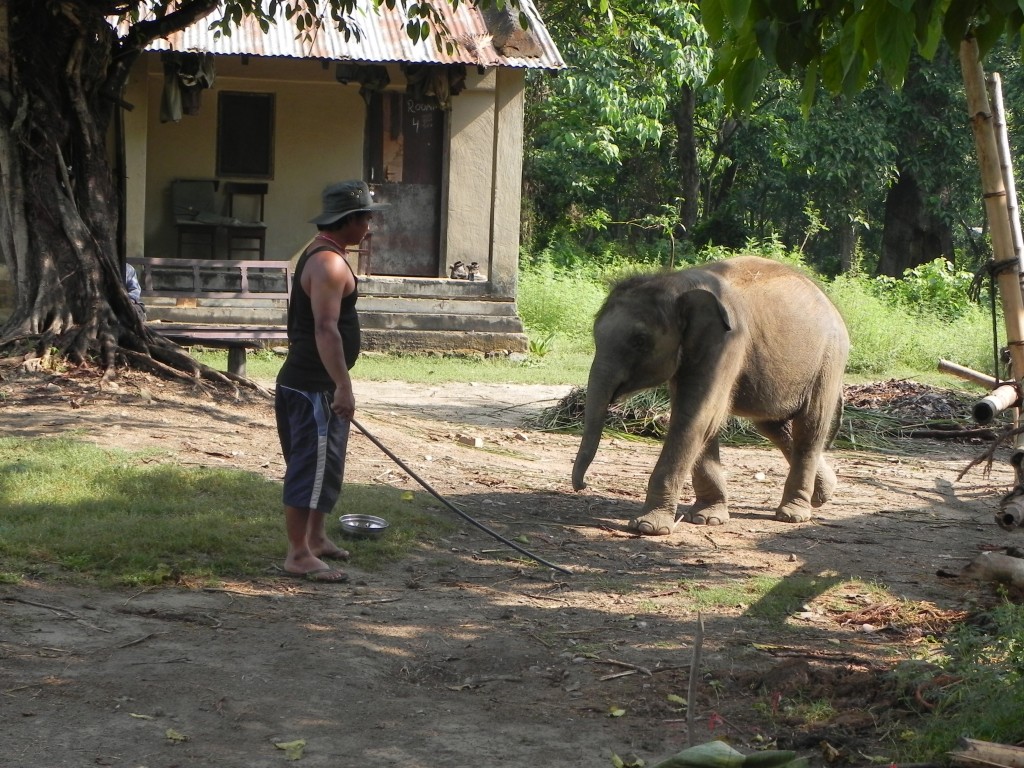
    Himal Gaj is a six-year-old captive born elephant. His father is the dominant wild bull in the area. His mother is a wild born, captive resident of the elephant breeding center at Khosor, Chitwan, Nepal.

    Himal  Gaj was one of five young elephants trained together at the breeding center several months ago. Until their formal training, they lived with their mothers.

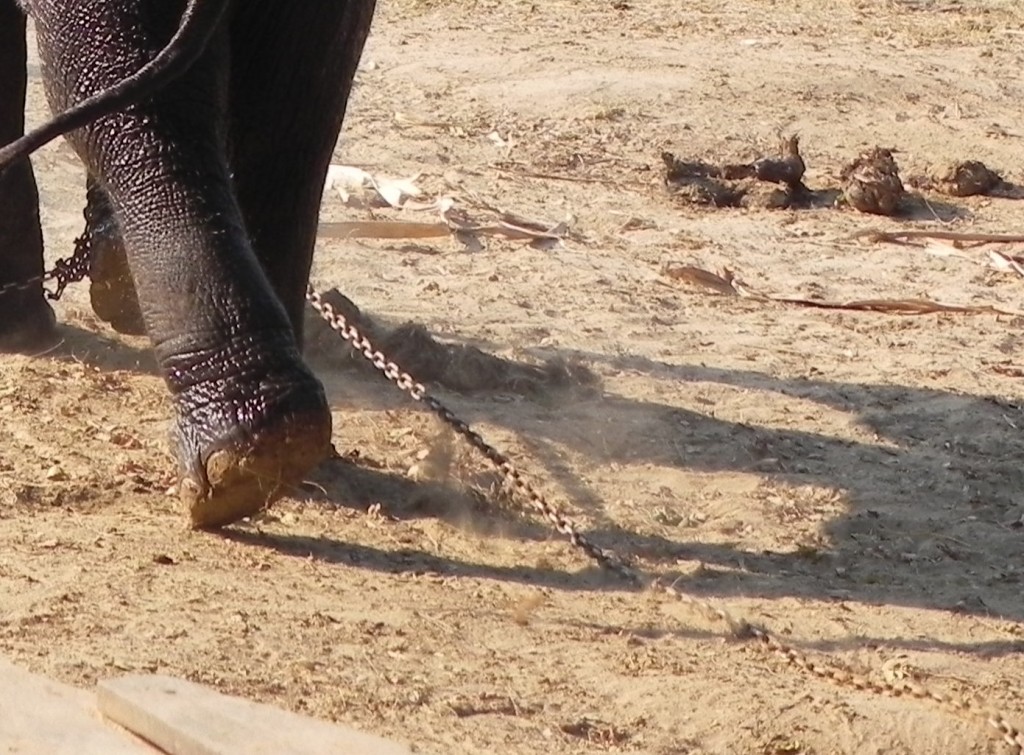
    All five elephants were chained from the age of three months. Chaining is the practice all over Asia. Domestic livestock and captive elephants are tied or chained. It is the cheapest way to keep them in one place.

    The training technique used with Himal Gaj and the others at the breeding center was a deviation from the traditional pujan, a brutal breaking of spirit. Introduced by a foreign NGO, a mixture of traditional methods was used—including the use of koonkie elephants, negative reinforcement and punishment—combined with positive reinforcement techniques known to be successful with domestic horses.

    Unfortunately, once training began, Himal Gaj showed signs of aggression and resistance. He was frightened by the training process and responded poorly to his mahouts. A few months later his training was deemed unsuccessful.

    No video, photographic or written records exist to document the daily training process and Himal Gaj’s progress and difficulties.

    But it does not take such documentation to see that Himal Gaj is a very insecure individual.

    Although Himal Gaj responds well when his mahout is riding, his weakness is responding to commands when his mahout is on the ground.

    Himal Gaj is a good example of the importance of sound training techniques, mahout training and follow through.

    Captive elephants are not domesticated—they are wild animals living in a captive environment. Even generations born in captivity are not domesticated. The scientific process of breeding selected individuals for specific traits is the process required to create a domestic species. This has never been undertaken with elephants.

    In the case of all elephants born at the breeding facility in Khosor, the mothers are wild born living in captivity and the fathers are wild born living in the wild.

    Himal Gaj’s mahouts are as gentle as I have seen anywhere. They are patient but frustrated. What the training process failed to do was give them the tools necessary to help Himal Gaj learn.

    As a result, all are left feeling like failures. Without intervention, Himal Gaj is doomed to be a dangerous elephant for the remainder of his life.

    The good news is that the mahouts and Kamal Kunwar, the chief commanding officer of Chitwan National Park, are receptive to Himal Gaj receiving additional training. His private training course will begin soon.

    This is such exciting news. I feared Himal Gaj would remain a lost cause in the minds of the mahouts. But before his chain-free corral is completed Himal Gaj, will be well on his way to understanding what is expected of him and his mahouts will have gained the humane tools to understand and assist him in his training process.

  • Elephant abuse in Nepal: Are the mahouts really to blame?

    Elephant abuse in Nepal: Are the mahouts really to blame?

    private owner NepalIt’s easy to look at an elephant shackled by both front feet to the ground, with open wounds, and blame the mahout.

    But I challenge you to learn the facts.

    Elephants belong to hotel owners

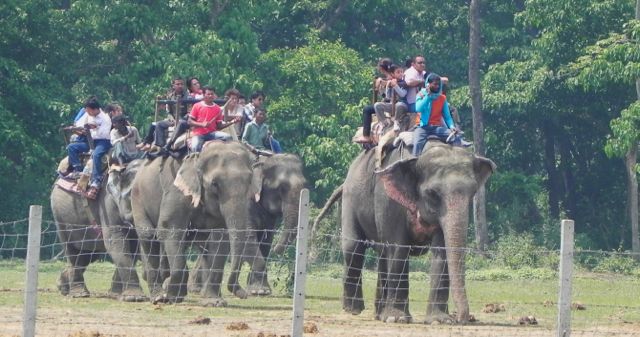
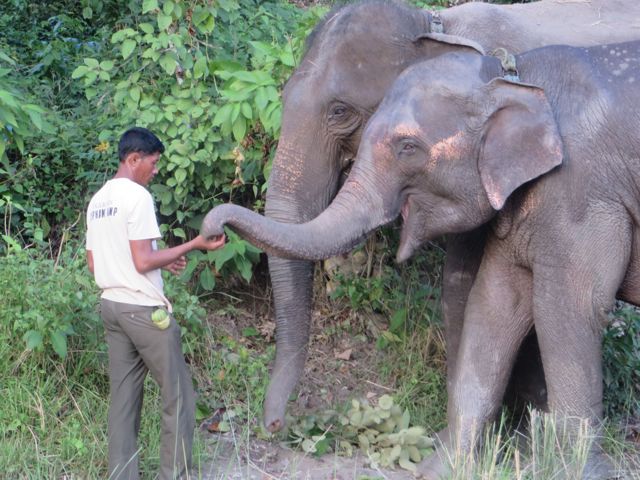
    In Chitwan, Nepal, mahouts do not own elephants. Elephants are the private property of hotel owners, who use them to augment their income by offering elephant back safaris to overnight guests and daytrippers coming to Chitwan in search of fun and adventure.

    tourist safariElephant back safaris not only provide a bountiful financial benefit for the owner, they are actually the life’s blood of Chitwan.

    In Sauraha, Chitwan’s tourist destination, every shopkeeper, restaurant owner, hotel, bar, service provider, wilderness guide, money changer, street vendor and orphanage owe their survival to these elephants. Many falsely claim that without elephant safaris, this tourist destination would cease to exist.

    Grueling work schedule

    All day long, 24/7, mahouts and elephants give safari rides in the community forest.

    private owner stableMahouts train, feed and ready the elephants for the rides. It is a grueling job for both.  Up at 4:30am, the pair sets out on the long trek to the safari loading area as the rising sun lights up the morning sky.

    During what is supposed to be a one-hour lunch and rest period, the elephants instead are taken to a riverfront area where tourists mount them to have their photo taken.

    Walking back and forth to the safari ride area, tourist bathing area and home stable, while carrying hundreds of pounds of tourists for hours at a time, takes its toll on elephant and mahout alike.

    At dusk, and even into the dark of night, elephants can be seen silhouetted against the sky trudging down the paved roads of Chitwan toward their home stable.

    Mahouts: Overworked, underpaid and devalued

    img_8199-2
    Elephant owners know nothing about elephants and rely on the mahouts to keep the elephants alive and working without killing tourists. This is a heavy burden to put on overworked, underpaid and devalued employees.

    When mahouts “ask for more,” be it food for themselves or the elephants, they are chastised. Many owners view the mahouts as stupid, uneducated and unmotivated and blame them for the elephant’s unsanitary living conditions and poor health.

    3 mahouts & ele

    Yet mahouts are not provided even the most basic supplies to ensure the health and wellbeing of the elephants in their care. Owners fail to supply nutritious food but blame the mahouts for the elephant’s poor health. Stables are rancid cesspools because no provision is made for waste disposal. Many stables don’t even have a source of fresh water. For this, the mahout is unjustly blamed.

    A marginalized community

    img_8462
    The truth is that the mahouts are a marginalized community. The custom of treating them as poorly as the elephants is woven into the fabric of society and their living conditions are a mirror image of those of the elephants.

    Mahouts learn their trade on the job, from senior mahouts. Their lot in life dictates they do as they are told without question. They hit the elephants because they are taught they must in order to ensure the elephant does not kill them.

    Still, this does not excuse how the mahouts mistreat the elephants.

    Abuse can be eliminated

    Through education and culture shifting, elephant abuse can be eliminated.

    Demonizing either owners or mahouts is not the solution.

    The first step is understanding why the situation exists and accepting the challenge to help move culture forward.

    Owners must be held responsible and mahouts and tourists must be educated.

    This will result in improved welfare for the elephants in Chitwan.

    How we can help

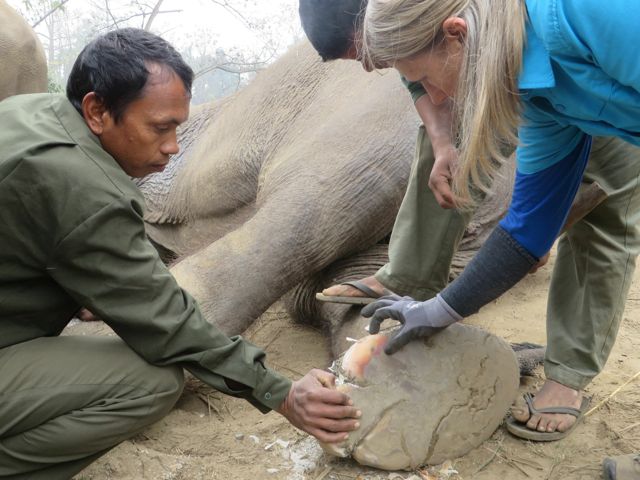
    carol-indicating-how-much-on-ele-foot-with-2-mahouts_medDeveloping sustainable assistance programs is essential. Live demonstrations, educational resources such as videos and manuals, translators and hands-on assistance are needed to improve mahout knowledge and understanding of new approaches to elephant care.
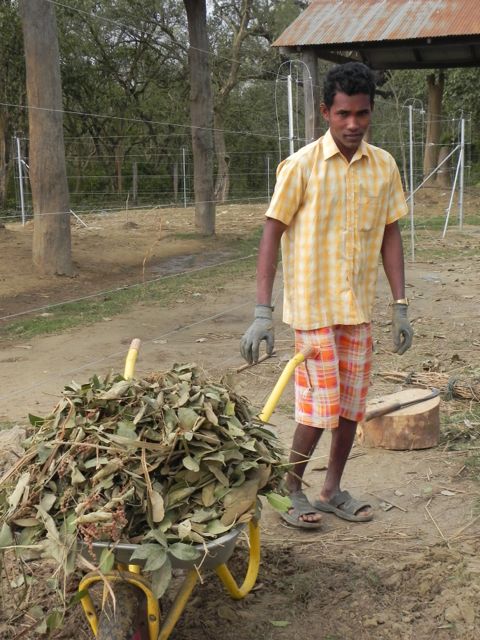
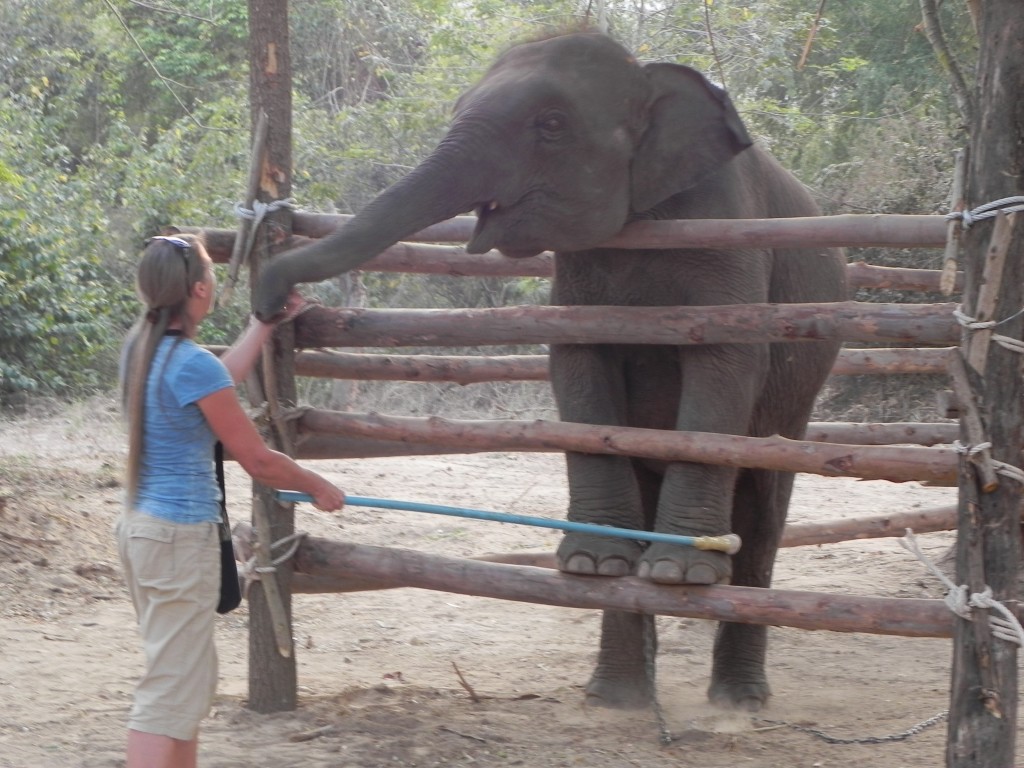
    This is Elephant Aid International’s mission. By providing bi-annual foot trimming; training mahouts and vet techs in the skill of foot trimming; teaching positive reinforcement training philosophy and techniques; and constructing chain-free corrals, we are laying the foundation for positive change.

    mahout & wheelbarrow
    EAI doesn’t blame the mahouts. We give them the tools necessary to take better care of their elephants.

  • Drag Chains and Training

    Drag Chains and Training

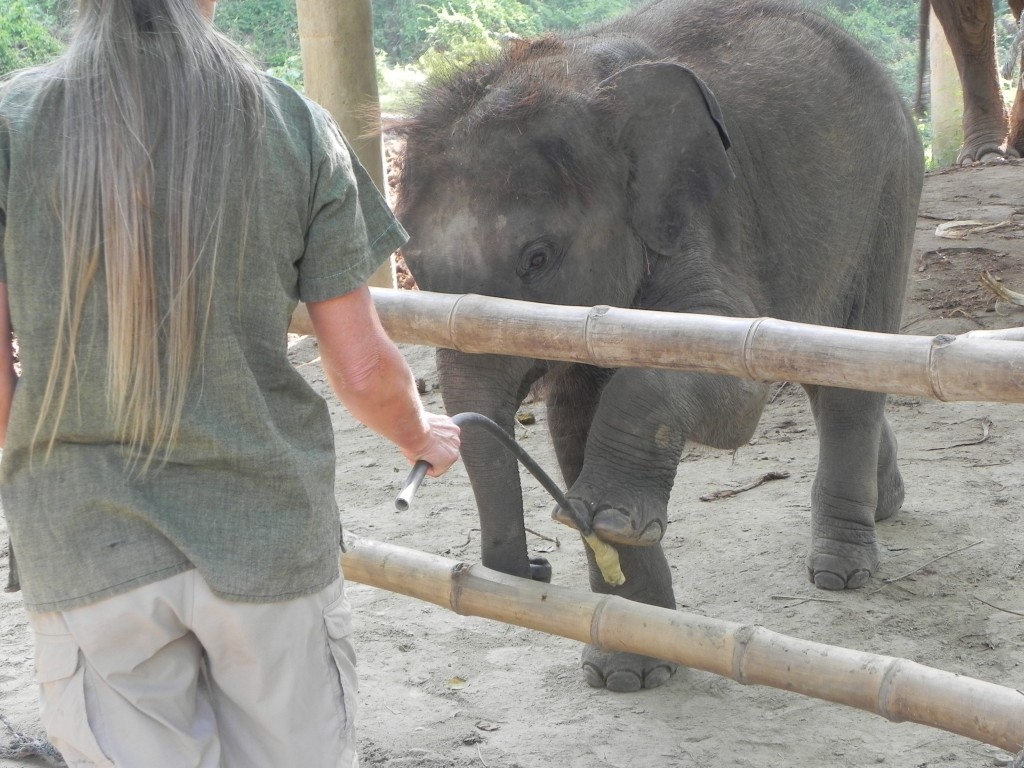
    Elephant’s World posted two videos on YouTube last week of me training a young elephant named Jon (you can view them here and here). I was surprised to see the videos and happy to know they exist.

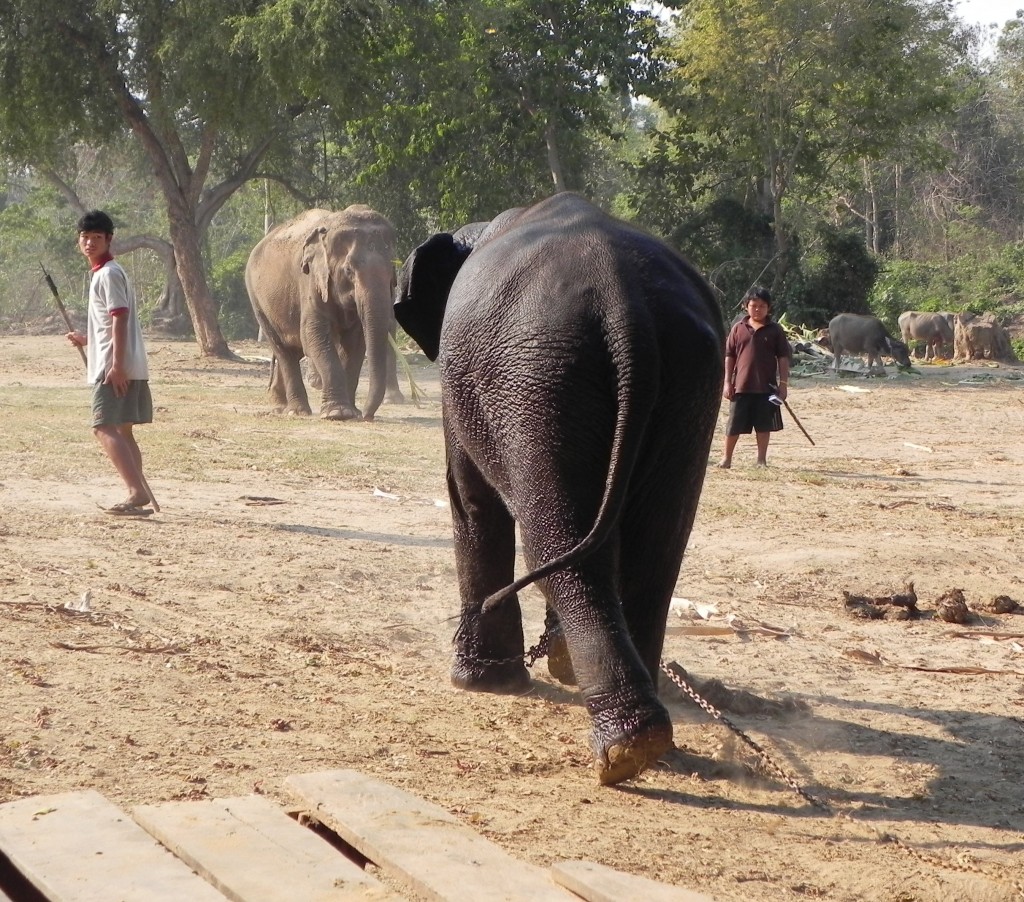
    Many people found the videos interesting and some have asked why Jon is wearing a chain. The chain is called a drag chain; in Asia it is used to prevent an elephant from running away. One end of the long chain is fastened around an elephant’s wrist and the other end drags behind.

    When a mahout is afraid that his elephant will run away, he puts a drag chain on him. If the elephant runs, the mahout wraps the loose end of the chain around a tree to stop him.

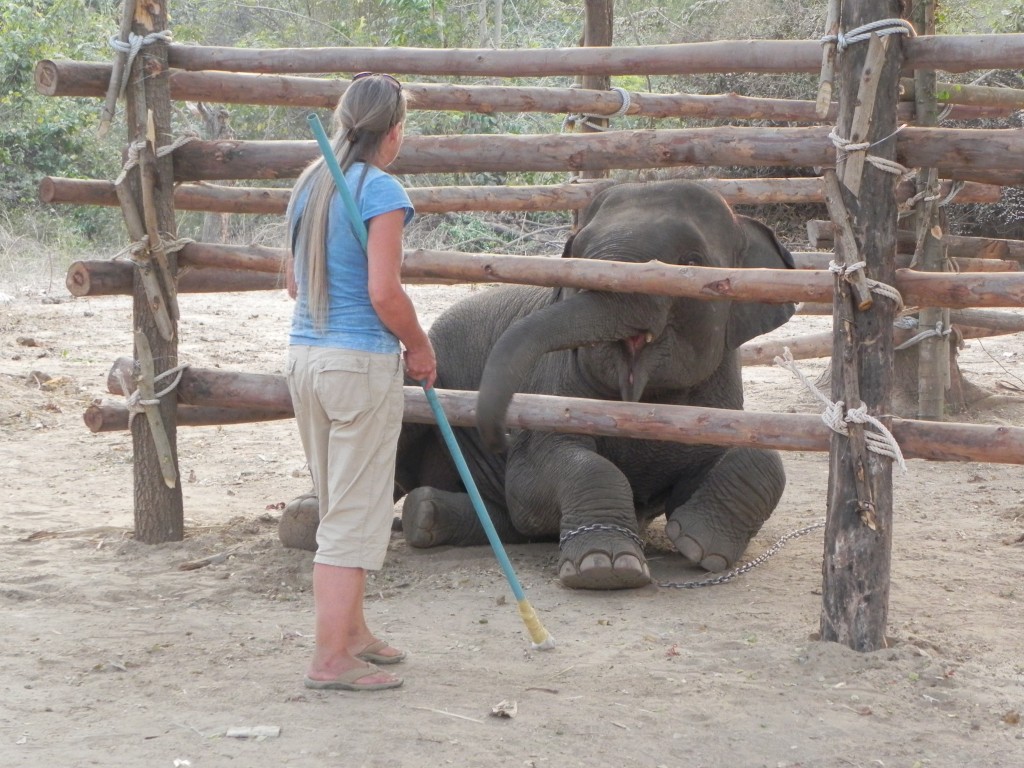
    The mahouts at Elephant’s World were resistant to non-dominance training and even more resistant to removing Jon’s drag chain. In order to be allowed to demonstrate positive reinforcement target training, I agreed to the drag chain for the first two sessions. One end of the chain was on Jon’s ankle and the other end was loose.

    My adherence to their tradition gave the mahouts time to get comfortable with the new training method I offered. They observed firsthand that Jon was more interested in the training game than in trying to get away.

    Jon showed such promise that after the second training session the mahouts agreed to remove the chain.

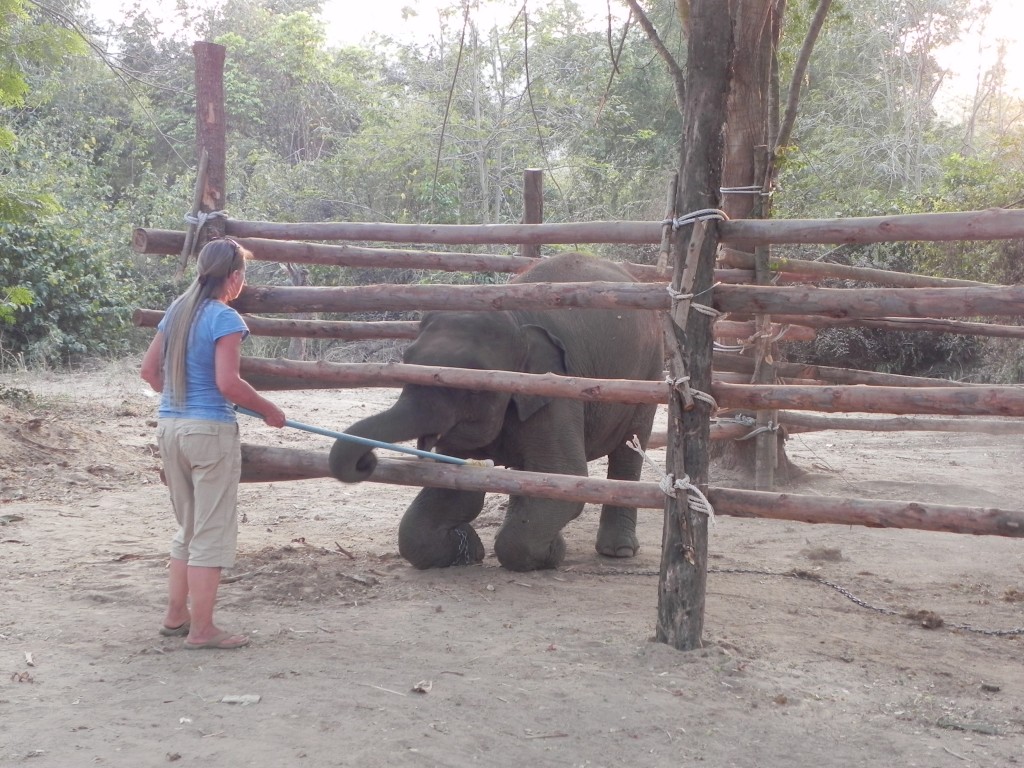
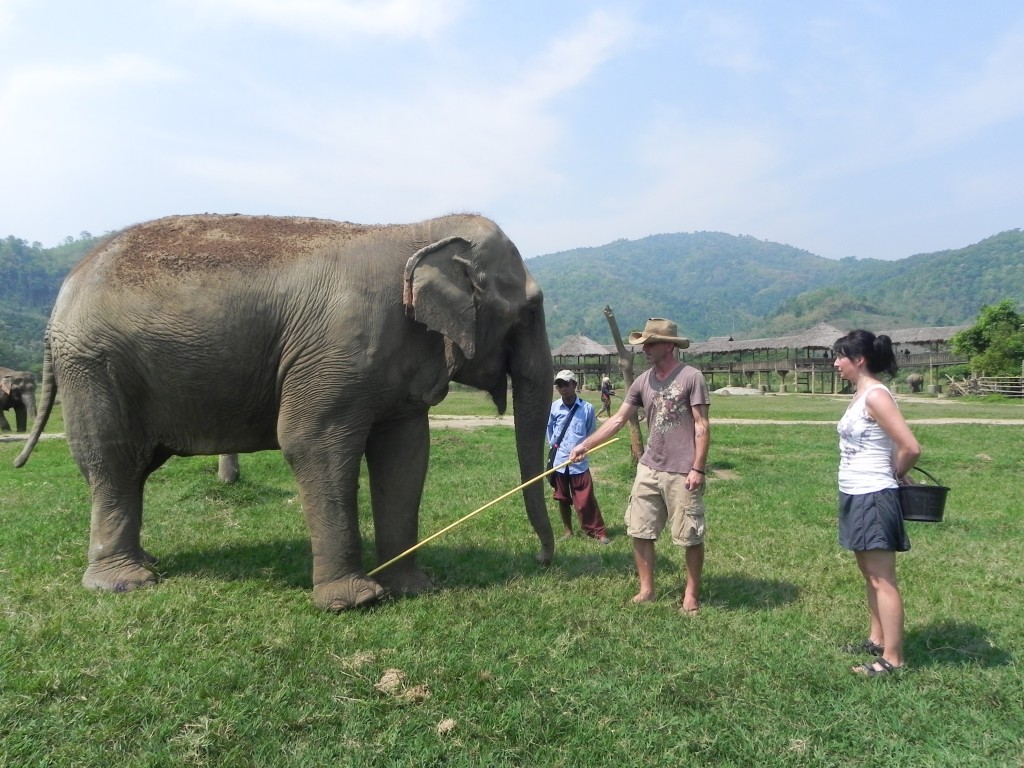
    There have also been questions about the “stick” used during training. The stick, or target as it is called, is a flexible pole with a soft cushion on the end. Watch my training tutorial to see how the target is used and learn the basic concept of target training.

    The goal is to teach an elephant the name/word for different body parts, such as foot, head, ear, side, etc. Once understood—which takes most elephants only minutes to grasp—the elephant will voluntarily offer that body part when asked. The key is to ask, not demand, and always provide praise and a treat as a reward.

    Before watching the videos of Jon’s training sessions, I suggest that you view the tutorial a couple of times. Then watch Jon’s first training session and see if you can identify what body parts Jon is learning. Notice that when Jon becomes frustrated he walks away, but returns almost immediately to try again.

    Positive Reinforcement Target Training gives the elephant the freedom to walk away, take a moment to reflect on what is happening and return when he is ready to try again. Walking away reduces frustration and increases the elephant’s willingness to participate.

    You will also notice in the video that Jon offers behaviors–kneel and lie down. This is common in initial training sessions. Many times the elephant will offer what s/he already knows before starting to “problem solve” and figure out what the trainer is trying to teach.


    Learning to think for themselves is the first thing the elephants learn. After that, training is a breeze.

  • Jon

    Jon

    Last year I had the honor of working with a young, energetic elephant named Jon. He was a recent rescue, living at Elephant’s World, a Thai-run facility outside of Bangkok.

    To my surprise, two videos of Jon’s first training sessions showed up on YouTube (here and here). I was unaware that the videos even existed.

    Watching Jon brought back a flood of memories: his intelligence, how he dealt with his initial distrust and confusion and how well he masked his fear. His energy was explosive and outdone only by his genius.

    I can’t help but smile remembering his antics and eagerness to understand this new “game” — and his determination to prove that he could do anything!

    Read more about Jon:

  • a need for change, right here at home

    I recently returned from a lengthy trip to Asia, where I taught traditional mahouts (trainers) a gentler, more humane way of training and working with captive elephants.

    Viewing the undercover video exposing the abuse of Tai, the elephant star of “Water for Elephants,” was unnerving. The techniques circus trainers in America use are identical to the traditional, antiquated and abusive methods of breaking and training elephants used by mahouts in Asia that have been handed down for centuries.

    As in Asia, American circuses embody tradition, animal abuse for public entertainment. Being involved in the circus for nearly fifteen years gave me ample exposure to this abuse. Even though we have made huge advances in our knowledge about elephant intelligence and suffering, this tradition has, sadly, thus far failed to evolve.

    There is an alternative to these harsh training methods, if indeed elephants must be trained. I am pioneering the field of positive reinforcement training in the traditional free contact environment in Asia. Although I do not condone the commercial use of elephants, I am realistic enough to know that my personal concerns will not put a stop to the shows and rides that exploit elephants there. Only through education targeted at elephant trainers, mahouts, and the insatiable public can the abuse be curtailed and eventually stopped.

    It is uncanny that Tai’s abuse was exposed as result of her portrayal of an abused elephant in “Water for Elephants.” By enforcing existing regulations and strengthening laws to protect the innocent, the antiquated training practices of the circus in America can be eradicated.

    I am of the firm belief that if the only way an elephant can be on public display is to be dominated with harsh control methods then we, as a society, are required to forfeit the opportunity to have elephants in captivity.

  • Ngo-Hok, aka Jon, at Elephant’s World

    Elephant’s World was one of the locations where I was fortunate to introduce positive reinforcement target training. I will return there to continue training, and to consult on facility development and elephant training and care.

    During my last visit, Elephant’s World owner agreed to the idea of constructing a large fenced-in area so the elephants can be kept off chains. Fundraising is underway and hopefully by the time I return to Thailand in the fall, the fence will be in place.

    Ngo-Hok, aka Jon, the young male elephant with whom I worked, has a history of aggression. Personally, I believe he was emotionally scarred by the traditional brutal training he received prior to coming to Elephant’s World. From the first session he responded enthusiastically to positive reinforcement target training. I was at Elephant’s World for only about a week, but during that time Ngo-Hok/Jon excelled at demonstrating to the mahouts that he can learn and will respond favorably, at least to this technique of training.

    Unfortunately, the language barrier was a challenge. The mahouts tried to understand what I was telling them but they simply could not. Even though Ngo-Hok/Jon was brilliant during his target training sessions, the mahouts failed to continue the training after I left.

    The staff needs further training to grasp the concept and develop the technique of this training which is so foreign to them. I look forward to returning to Elephant’s World to continue the training. This time I will recruit a translator, which is the only way to ensure that the mahouts understand the philosophy and learn the technique.

    Following is an interview that an Elephant’s World volunteer did with Piza, Ngo-Hok/Jon’s mahout. The volunteer posed the questions as if I had asked them.

    Q: How is Ngo-Hok/Jon doing?

    A: He is doing better since the last time you saw him. Sometimes he is stubborn, and then I cannot climb on this back. He is more often around the other elephants, during swimming and eating, but I have to stay close to him because he is playful and annoys the older female.

    He is now very close with Rom Sai, the full-grown tusker, like a father and son. He has escaped a couple of times in the last months but he comes back to stay with Rom Sai. When eating together, he likes to take food from the other elephants. Only Rom Sai will allow this. I believe the other elephants will hit him if I am not there.

    Last evening I didn’t take him to the forest because he did not let me get on his back earlier in the day — he was stubborn. In this way I am trying to teach him. Also, after he is stubborn he will try to escape when I take him out of the forest. I am trying to teach him that if he obeys and allows me on his back, he will be rewarded with a trip to the forest.

    Ngo-Hok/Jon is growing; he is now taller than me. In one month he has gained about 10 kgs. He now weighs close to 800 kgs and eats about 80 kgs a day.

     Q: Do you think Ngo-Hok/Jon can stay with the other elephants?

    A: He can stay with other elephants. He can stay close to Rom Sai, who will protect him. For now he can stay with the females as well because they are older women and he is still young. But as he gets older and new female elephants come in, it will be a problem.

    Q: How do you feel around Ngo-Hok/Jon since he tried to hurt you?

    A: I feel better around him now, but have to be careful all the time. After the accident I was a little bit afraid, but not anymore. When I am with him anyone can come close, but if I am not there, people cannot come close. If I have one day off, Jon is put on hobbles because the other mahouts cannot deal with him. Right now Ngo-Hok/Jon only listens to me.

    Q: Is there anything else you’d like to tell Carol?

    A: I think she should come again and see Ngo-Hok/Jon for herself.

  • checking in at ENP

    checking in at ENP

    My return flight to Los Angeles leaves from Bangkok, which was the perfect excuse to go back to Elephant Nature Park one more time to see the progress made by Chang Yim and Karl.

    Yim never ceases to impress me. He has made yet another transition from Karl to his new mahout, Lai. Karl has worked diligently over the past many weeks training Lai, and Yim has been a real trouper. There is no doubt in my mind that Chang Yim will miss the special relationship between him and Karl, but Yim has a bigger mission. He has the opportunity to teach a “traditional” mahout a different way, a more humane and gentler way to manage him and his family members. This move from Karl to Lai is actually quite monumental in the big picture…Yim is the catalyst for change. I am so proud to know him.

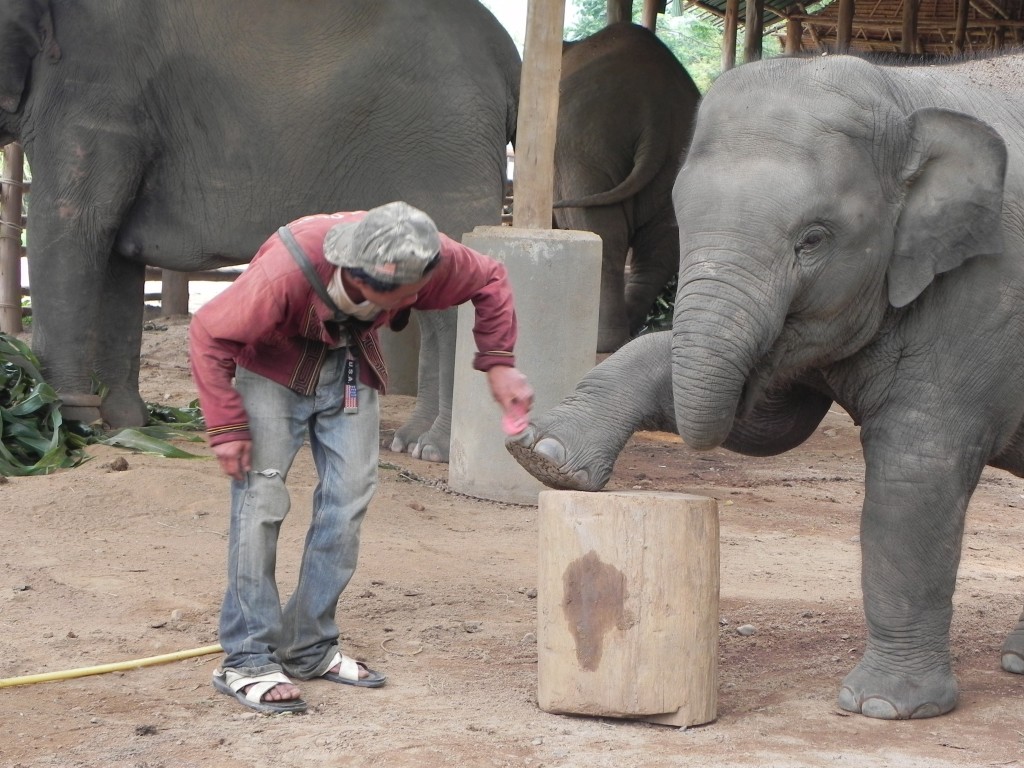
    In addition to satisfying my curiosity about Yim’s progress, my return to ENP was to give Karl some pointers on training the elephants to place their leg on the trimming stool recently built for back foot trims. Once the elephants are trained, I will be able to return and finish the foot care clinic I started.

    Mae Tee and Mae Kham Geao were our first students. The initial hurdle was getting the ladies to start thinking for themselves, no easy task for elephants who for decades had been conditioned not to think. The training was slow and at times appeared to be at a standstill, but, I could see the wheels slowly beginning to turn in their heads. Patience was the key.

    After two days, my time at the park was up. Karl was well on his way to conditioning Mae Tee and Mae Kham Geao to voluntarily lift their back legs, a requirement in order to slide a trimming stood underneath for support. I felt torn leaving—I always do—but I had confidence that Karl would do just fine.

    Today, a little before four, I received a call from Karl. At first I was apprehensive because Faa Mai is experiencing some unidentified health issue. But the news was all good: Faa Mai seems a little better. But the reason Karl had called was not to update me on Faa Mai, it was to tell me that Mae Tee and Mae Kham Geao got it! They were lifting their back legs off the ground and suspending them in the air when asked. The both of them!

    What do you bet they talked about it over the past two days? It comes as no surprise that both ladies, dear friends who spend all their time together, figured out what Karl wanted in the same training session. Karl was so pleased, and WOW — what can I say. I am so proud of everyone involved in this work: Karl, Dam (the Maes’ mahout), Jody and Sophie (treat givers) and especially Maes Tee and Kham Geao, the ladies of the hour. I sure wish I could have been there to share in the cheers and congratulations showered on the ladies, but I was there in spirit. Planting the seed and seeing it grow, one World, one elephant at a time — in this case, two elephants at a time!

  • Seeds of Change

    Seeds of Change

    April 13

    My work in Sauraha has come to an end, at least for the time being.  Seeds of change have been planted. From the looks of it, some seeds are already growing, quietly shifting the soil around their sprouting roots. Experiencing the fruits of my labor so instantaneously fills me with hope.

    Yesterday when Kiran and I arrived for Bhadra’s morning session we were told that Ramji, his mahout, was off making preparations for the New Year’s Day celebration. I jumped at the chance to work with Bhadra in Ramji’s absence.  But my excitement was quickly doused when Bhadra made it perfectly clear that he would work with me but under protest.

    After completing each request Bhadra would do a mini mock lunge from behind the protective barrier. It seemed that he was clearly bothered about something to do with me. He was responding but being snotty. I have seen this type of behavior before when training a new mahout who struggles to keep pace with an advanced elephant student. I did not make that analogy until sometime later.

    The next day, the motivation behind Bhadra’s behavior became apparent. In our absence, Ramji had risen to a challenge from Kiran to prove his skill with Bhadra within three months. The ultimate goal: to show everyone how far he could take Bhadra with positive reinforcement training.

    Ramji proved his skills beyond question when he surprised us by calling Bhadra from the protection of the corral and proceeded to ask him to present his feet and ears, move to the side, back up and put his head down. I was stunned. They were fabulous. Ramji, all cool, calm, and collected, Bhadra listening intently and responding to each verbal cue. I wish you could have been there to see it for yourself, but I did catch it on video. This type of breakthrough must be documented in order for others to believe.

    Needless to say, Kiran was pleasantly surprised at the immediate progress in less than a week!  Ramji obviously took the challenge seriously, resulting in a display that had me grinning from ear to ear, joyful with disbelief.

    Ramji earned much deserved respect today, and Bhadra…well, he already has my heart. He has now joined the ranks of the “MIGHTY TYKES,” the young elephants in Thailand and now Nepal participating in this important case study of positive reinforcement training. These youngsters are the hope of the future: what they teach us and their mahouts will shape elephant training of the future. They are demonstrating how positive reinforcement training can be used with captive elephants in a hands-on working situation.  We owe them and their mahouts a great debt of gratitude.

    Kiran knew instinctively that witnessing Bhadra and Ramji’s incredible accomplishments would make my day, my last in Sauraha. It was wonderful to see how proud he was. Kiran has been an invaluable asset throughout the training process. I doubt he realizes the role he has played in this cultural shift of mahout attitudes, which has the potential to change the future for captive elephants. The future is bright indeed.

    I left Sauraha today with a heavy heart, heavy with the joy of knowing that we have planted a seed. I for one cannot wait to see how it grows.

  • a fiery red head

    a fiery red head

    I’ve got a new heartthrob. He is smart, dark and seriously handsome, with a full head of fiery red hair! Admittedly on the young side, Bhadra still lives with his mom and spends the entire day gallivanting in the Chitwan National Forest.

    We met two days ago and have spent only limited time together but let me tell you this little boy is smart. He is my latest ele-student, one year old and full of spunk and sweetness. There goes another piece of my heart!

    Bhadra lives at a private resort on the border of Chitwan National Park with his mother, his sister and other non-related family. The resort has been closed for a couple of years, making life that much easier on this elephant family. No tourist rides, just lazy days in the forest and short training sessions, when Bhadra gets to demonstrate to his mahouts what elephants are capable of when trained through positive reinforcement.

    The mahouts have been fabulous, very interested and engaged. Bhadra has only had four 15-minute sessions over the past two days and now responds to agot (come here) and ra (stand still), and presents his pow (foot), kan (ear) and thuk mud (head) when asked. Things were a little slow getting started because Bhadra surprised me by not liking bananas or apples. His mahouts knew exactly what he would like — molasses. One taste of the favored treat and he was all ears, head and feet!

    What a blessing it has been to work with him. Hopefully together we have planted a seed with these young mahouts.

  • Leaving Elephant’s World and Jon

    Leaving Elephant’s World and Jon

    Sitting in the passenger seat of the bright orange son tough (vehicle), the solo passenger bouncing down the dusty road, I left Elephant’s World. The tornado of emotion swirling inside made me dizzy, happy, sad, thankful, torn, already longing for the family I am leaving behind.

    The last three days have been trying. Jon is in detention. He is fighting against the restraints of control being put upon him. Being as respectful as possible, I have made every effort to find common ground with management and the mahouts in order to ensure that Jon receive proper care during this critical time. They are not beating him, nor being overtly cruel, but they are punishing him by tightening the reins of control and reducing his freedom. They are mirroring their forefathers, who taught that disobedience results in punishment, which in this case requires deprivation.

    Today was especially hard because I knew I was leaving. I felt I had failed Jon and the mahouts, and struggled for inspiration. I spent time observing the elephants in the morning. We were alone — the mahouts had gone to collect fodder and there were no tourists on grounds. I found myself melting into the elephants’ rhythm. It took no effort to feel their boredom, their thirst and their hunger. Their resignation hung heavy in the air.

    In a near meditative state I found myself thinking about the mahouts and their families, living in their simple bamboo huts. Laundry hanging on bamboo rods to dry in the open air. Breathtakingly colorful violets draped from the rickety porch shaded by scraps of shade cloth. I thought about this for a long time. I tried to feel how it would feel to live here, to be here, to know nothing else. Would I yearn for something different? Do they yearn for something else? Or are they content, surrounded by their families and friends and their elephants?

    Drawn back to the massive gods chained in front of me, I wondered if my need to help them resulted from an unrealistic personal projection, or could it be that they too recognize the lack of freedom of choice they live with day after day. The peaceful river flowed nearly silent on one side of me, while tethered elephants simply existed on the other. On the river side, life is abundant, rich with texture and color, teaming with bugs, darting birds, the swirling current and the wind. On the other side, a colorless one-dimensional backdrop of dust covered half dead trees rooted in a barren carpet of dehydrated earth devoid of vegetation did nothing to enhance the elephants, who were deep in the escape they have mastered, nearly void of life from being left on chains for nearly every hour of every day. They don’t even sway — they just breathe, hardly existing.

    Being kept on chains creates a disconnect that cuts an elephant off from the natural world and, as result, their own nature. They look so out of place. Watching them, I’m sure the elephants know the difference between here and their real home, and they realize that the choice is not theirs. Some rebel, some accept and others go insane. I wonder if the mahouts ever feel this way.

    Piza knew I was sad about leaving with Jon still incarcerated. Over the past three days, I asked about Jon’s food, water and chain-free time at every opportunity. Piza was always polite and kind and explained the current plan as best he could.

    I had delayed my departure to the very last moment so I could see the elephants in the river one last time. I heard a familiar playful voice call out to Jon and spun around in its direction. I couldn’t believe it — Jon was running full speed ahead, hobbled, with drag chain trailing behind, making a beeline for the river and the other elephants. He was a whirlwind of energy, like a tornado, spinning rapidly while steadily moving forward. Piza had intentionally released Jon for the river, standing a few feet behind, wearing that “I love Jon, too” grin that stretches across his entire face.

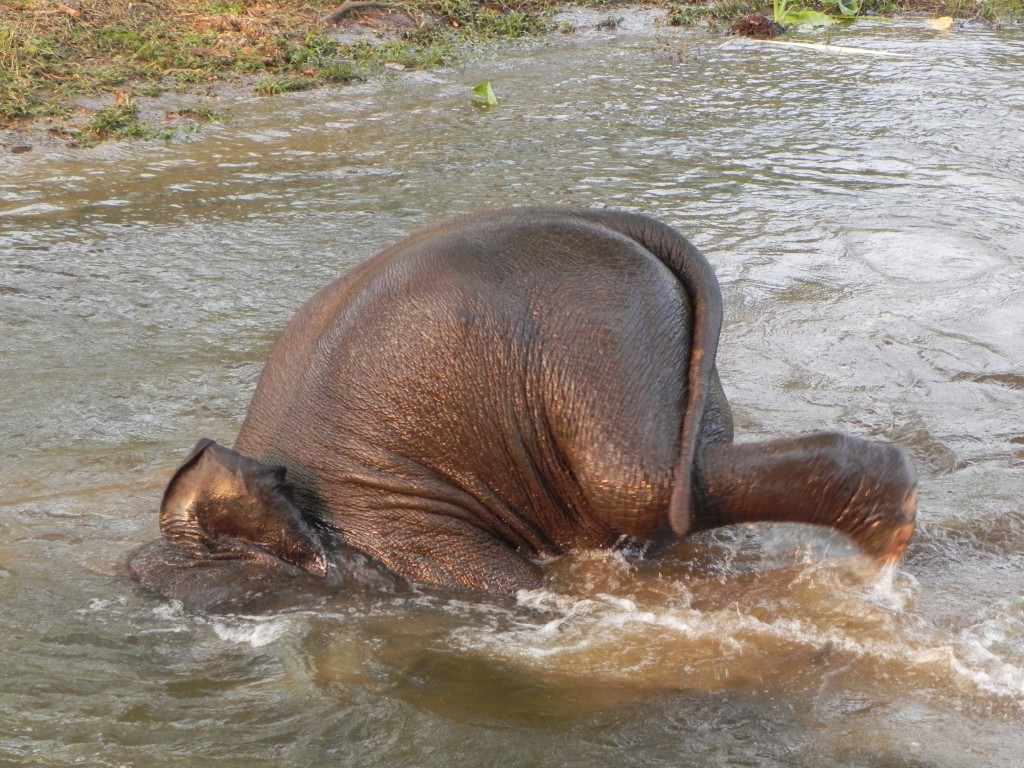
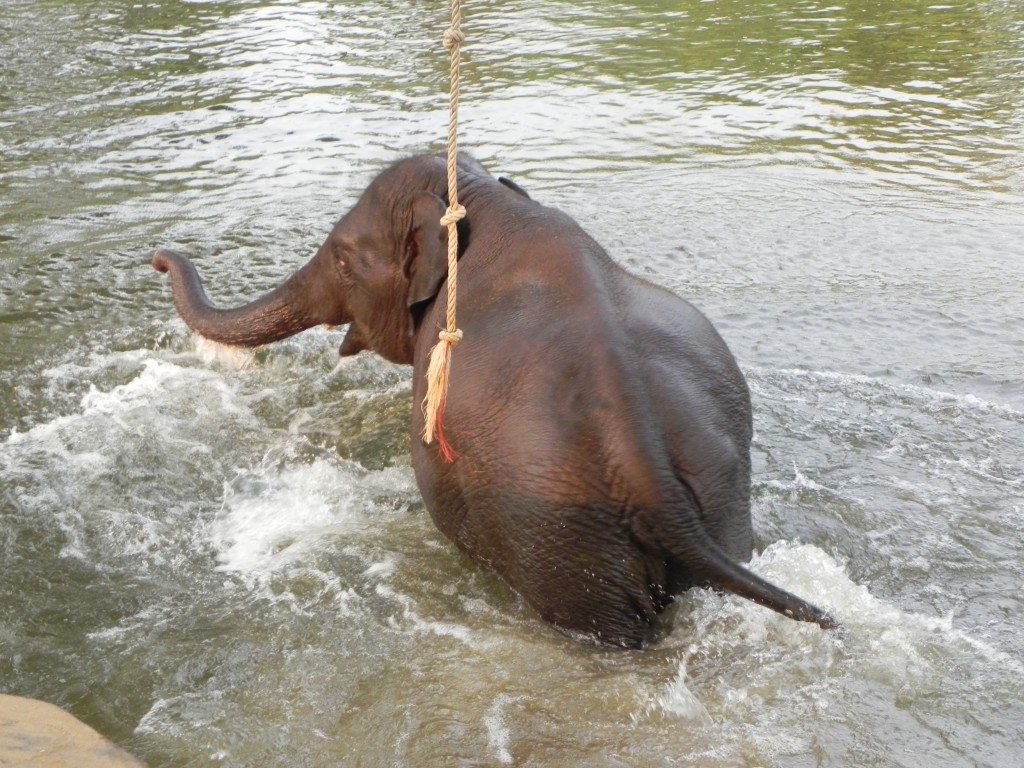
    I was overjoyed. What a sight Jon was, running FAST, glancing back at Piza every few seconds to make sure he was not being followed too closely. He was ready for this mad dash to the river; he had waited all day for it. My heart burst seeing the look on Jon’s face: he was ecstatic, about to explode with excitement. He did not slow as he approached the river and nearly created a tidal wave when he plowed into the water at full speed.

    I looked at Piza. He had a cheeky look on his face and I realized that he had allowed Jon to go to the river for me. Piza knows how deeply I want Jon to have some freedom and I am eternally grateful that he created the situation where my last memory of Jon was watching him play with full abandon.

    In the river, the scene was “watch out elephants and mahouts-on-elephants, Jon is here!” He flew into the water, eyes intense, wild in anticipation. He ran, hopped, swam and play-charged the other elephants. He literally dove into the water doing a sideways body slam not holding back an ounce of his boundless energy — he was on fire. The mahouts were on guard, but they were happy that Jon was able to experience a moment of fun as well.

    Later, speeding down the paved highway toward the Kanchanaburi bus station, I found myself grateful for my time at Elephant’s World even as I pondered the plight of elephants worldwide. Can we help them? Is it possible to give them their lives back? I am optimistic because to fail them is not an option.

    Because of this, I know I will go back to Elephant’s World. Not because it is a progressive facility where elephants’ needs are met first and foremost — quite the contrary. I will go back to help Elephant’s World reach these goals. They have good intentions and I believe that in the future EW will be an organization that I will proudly endorse. I will go back to help EW make a better life for Jon, for all of his elephant family and for the mahouts. This is my Kanchanaburi family and I will not forget them.

    I am thankful for Jon, Piza and all the mahouts. I am especially thankful for all of you who made my unscheduled stay at Elephant’s World possible by your generous support. My life is enriched daily and today I feel like a billionaire.

    Namaste