Tag: asia

  • Soon They Will Be Chain Free!

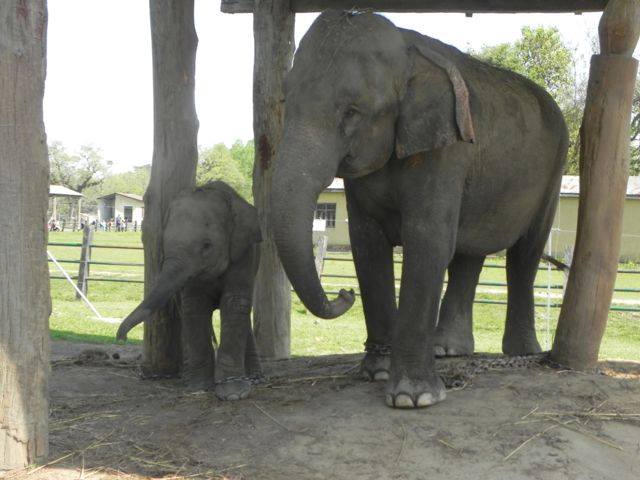
    Mother & calf

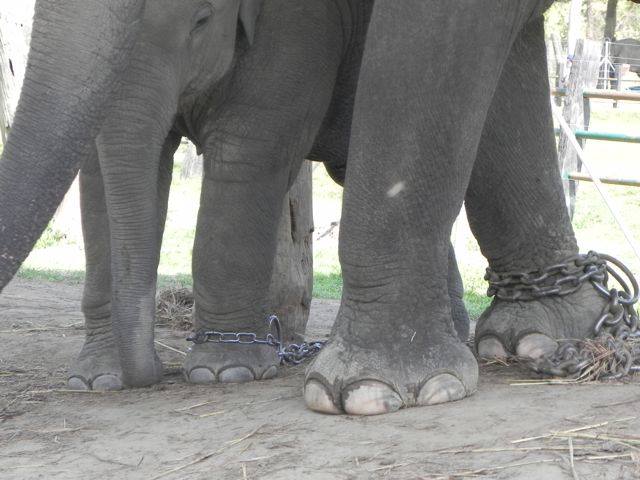
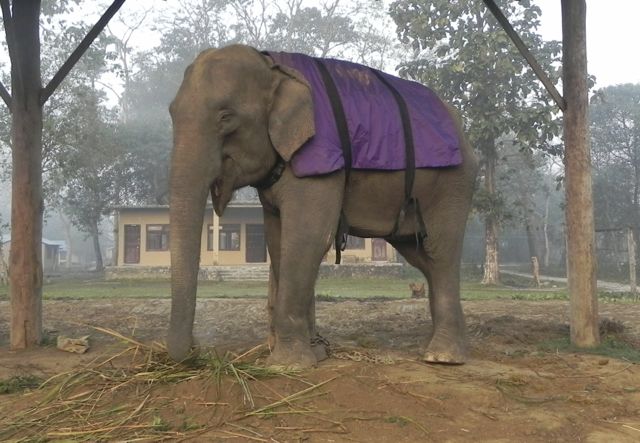
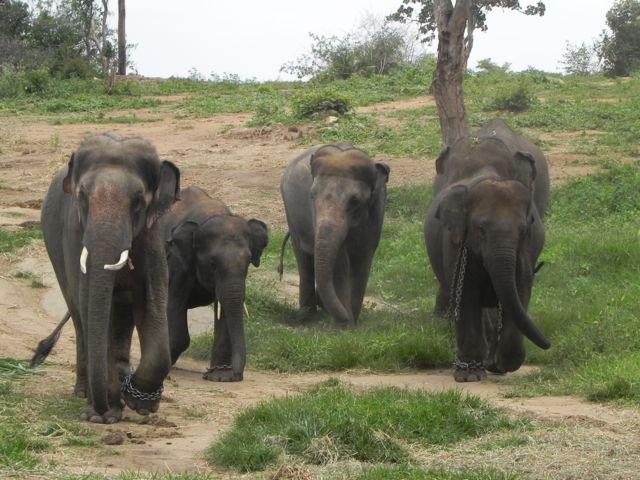
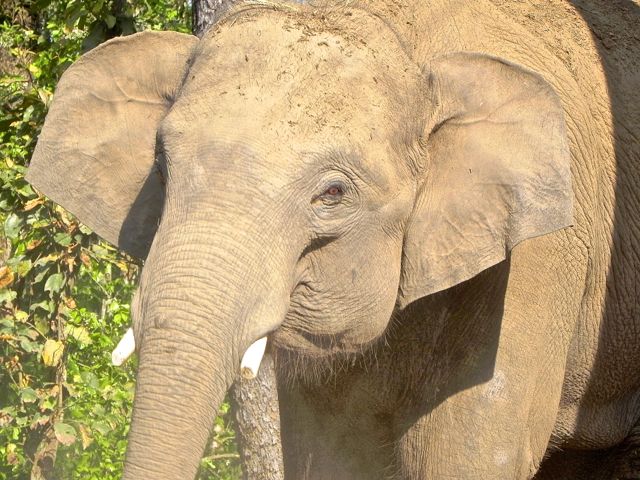
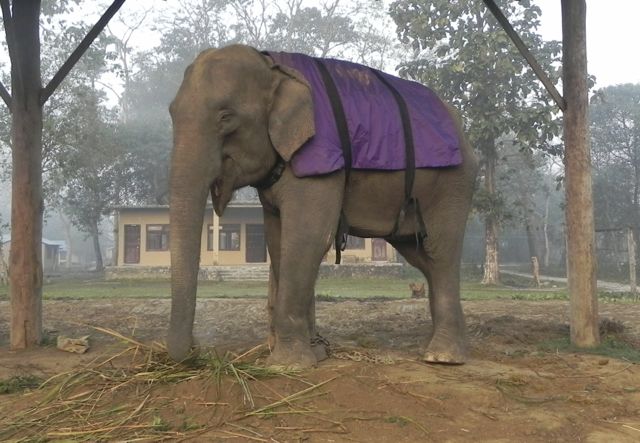
    Ganesha and her young calf Kasara Gaj have lived on chains their entire lives.

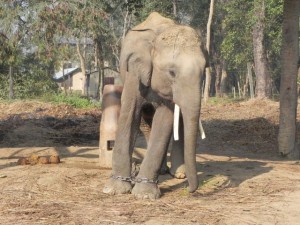
    Captive elephants are wild animals and an endangered species. The tradition of chaining disregards the trauma this practice causes.

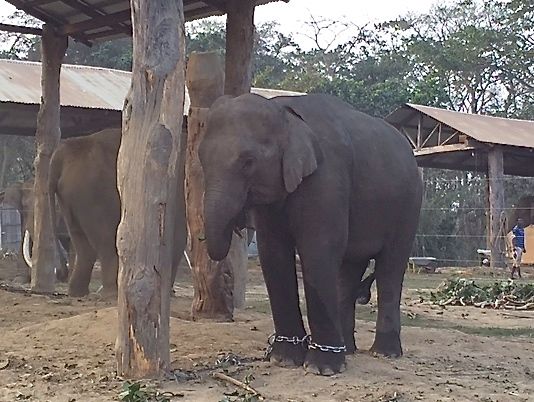
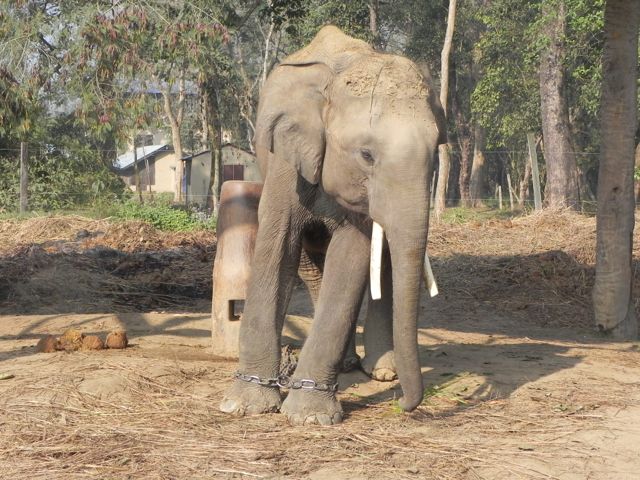
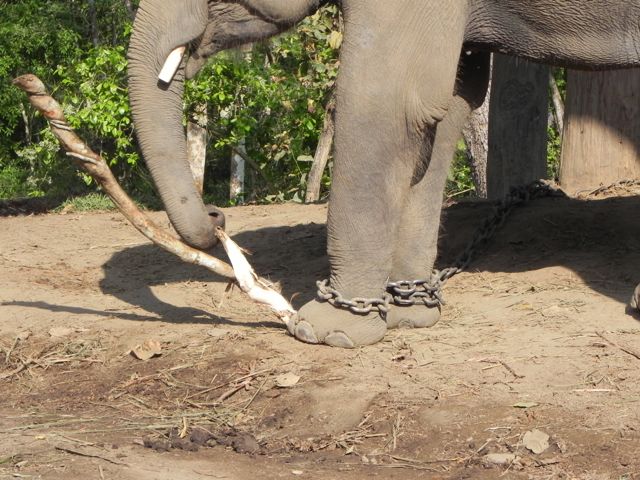
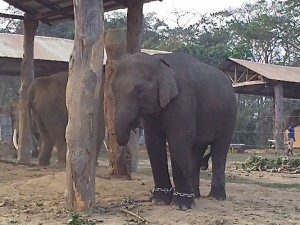
    Chained feet
    But things are changing.

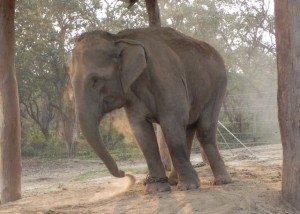
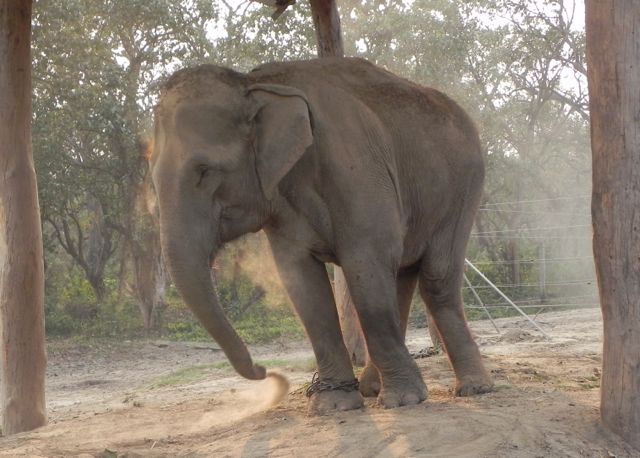
    Thanks to our Chain Free Means Pain Free program, Ganesha and her calf will be soon be released from chains.


  • A change in diet

    A change in diet

    Sundar Mala & mahout

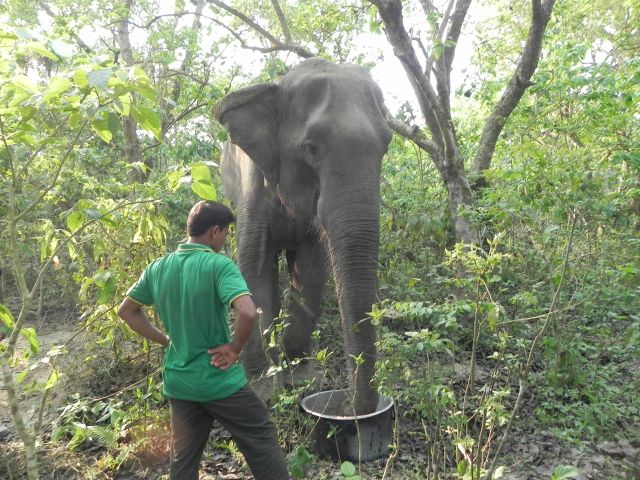
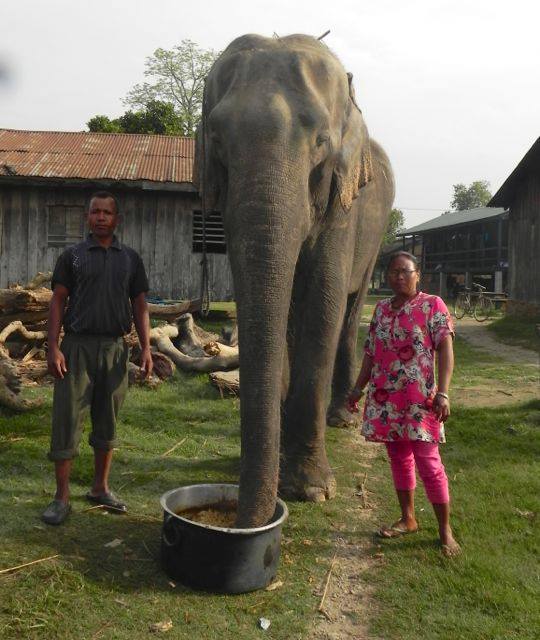
    Sundar Mala is nearly 70 years old and resides at the Sauraha hattisar in Chitwan, Nepal. Recently she began to lose weight, resulting in her removal from her friends Loctandra Kali and Oma Kali, to ensure the other elephants did not eat her food.

    We lobbied for a healthier solution. Our suggestion of a dietary supplement and reunion with her friends was accepted by the mahouts.

    sundar mala

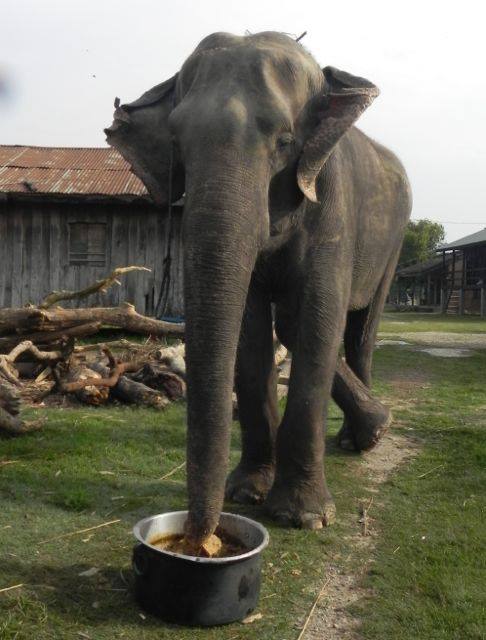
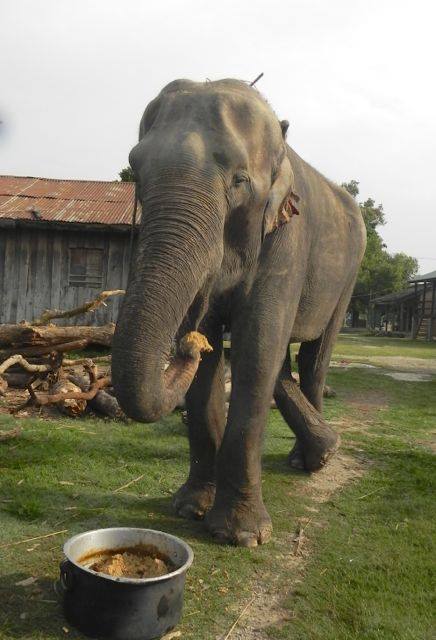
    It took two days for Sundar Mali to acquire a taste for her new diet. She still eats slowly but does not stop until she has eaten it all.

    Sundar Mala eating2

    Sundar Mala eating

  • The Work Continues to Get Elephants Off Chains

    Good news! Baby Tec Gaj was released from chains.

    Unfortunately, it is not all good news because his mother, Puja Kali, was not.

    Two-year-old, captive-born Tec Gaj and his mother Puja Kali reside in Khorsor, ‪Nepal, at the government breeding center.

    Puja Kali is quite aggressive, known to attack her mahouts even while she is on chains.

    Such aggression is an indication of great suffering, usually on a mental and emotional level.

    Responding to Puja Kali’s aggression with corporal punishment compounds her condition but mahouts find themselves with few alternatives.

    Aggressive behavior exhibited by ‪elephants triggers retaliatory aggressive behavior by the mahouts. Aggression breeds aggression, resulting in a vicious cycle in which neither man nor elephant benefits.

    EAI does not endorse the use of any negative means to manage elephants and we empathize with the position the mahouts and captive-held elephants find themselves in.

    Hopefully, with our continued efforts, the day will come when aggressive elephants will no longer be used for activities that put them and their mahouts in danger. And, mahouts will learn alternative ways to care for their elephants.

  • The Suffering Continues At Nepal’s Top Tourist Destination

    The Suffering Continues At Nepal’s Top Tourist Destination

    EAI‬ has been “boots on the ground” in ‪Nepal for nearly five years. Initially, much of our efforts were focused on improving welfare for the privately owned ‪elephants used for tourist rides.

    We’ve provided free pedicures and husbandry and training advice bi-annually since 2011. But today the safari elephants of ‪Chitwan suffer to the same degree as they did when we first started. As long as ‪tourists pay to ride elephants, the elephants of Nepal will continue to be exploited.

    One way for you to help is by supporting groups actively working to influence tour companies to drop elephant safaris from their tour packages. Elephant Watch Nepal is one such group.

    Old abused ele
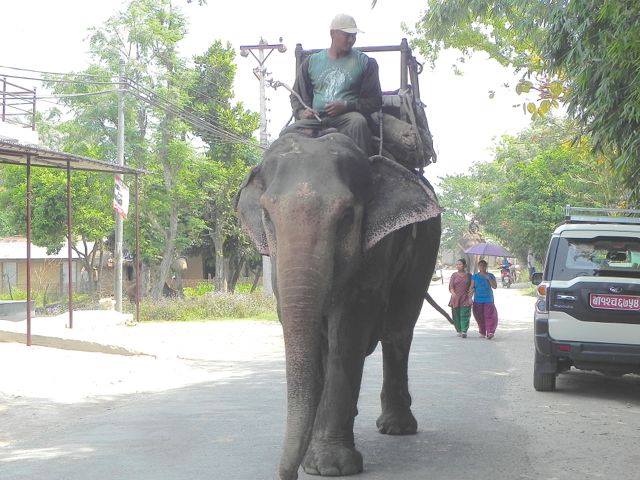
    Six months ago we found this elephant being walked along a busy highway, in the midday scorching sun, on a 30-mile walk back from a party she’d been hired for.

    Today we found her in Sauraha on her way to the tourist ride area.

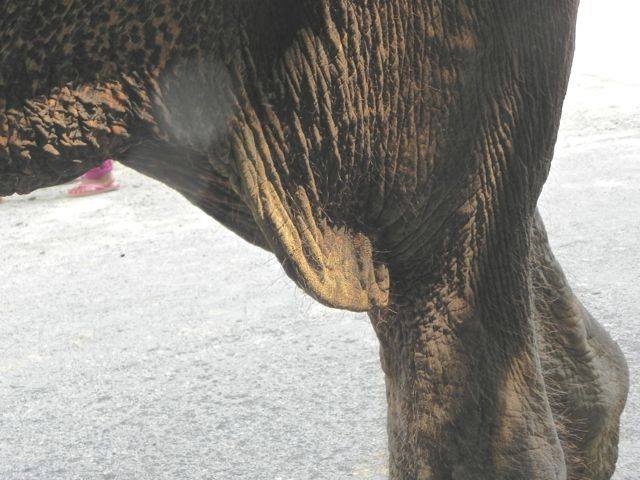
    saggy dehydrated flesh
    Saggy, dehydrated flesh

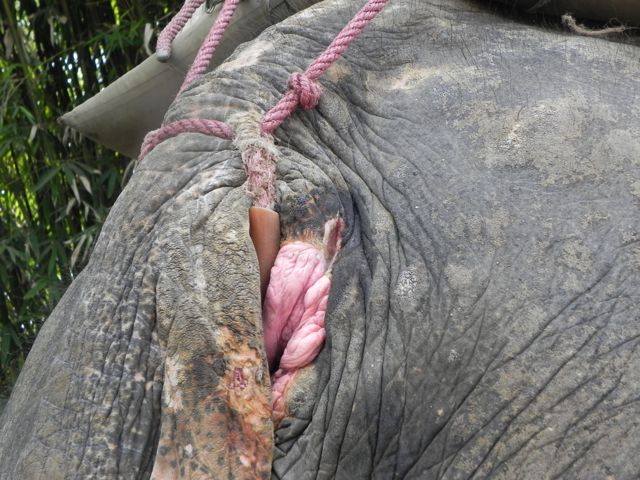
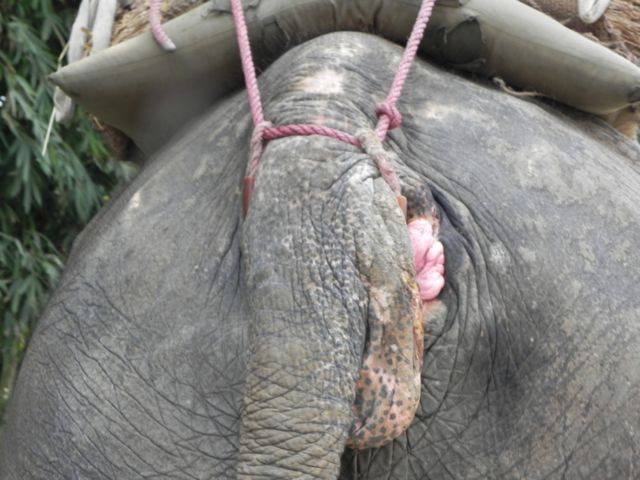
    This old elephant is blind, dehydrated, exhausted, underfed, continually beaten and suffers from deep gouges around her anus from the howdah (saddle) rope.

    Painful wounds caused by nylon ropes
    Painful wounds caused by nylon ropes used to tie the howdah (saddle) on for tourist rides
    torn anus
    Torn anus

    The owner and mahouts are aware of her injury and how to prevent and treat it. But they do nothing to ease her suffering.

  • Progress Involves Three Steps Forward and One Step Back

    Progress Involves Three Steps Forward and One Step Back

    Partnering with people and organizations with shared goals is key to success as a foreign NGO working in Asia.  Since hurry up and wait is a culturally accepted norm, an ample supply of patience and flexibility is required if you hope to have a successful project.

    And even the best-laid plans can unravel without a moment’s notice.

    But the daily challenges of different language, conflicting cultures and not having a Home Depot to run to for much needed supplies, is what builds character. Serious determination is required.

    When I shift from the U.S. to Nepal, I know to reset my internal clock, tone down my aspirations and prepare myself for unexpected changes to my plans. This may be a breeze for some, but it is a serious challenge for me. But by keeping my eye on the prize—improved elephant welfare—I am able to operate outside my comfort zone and learn a different way of being.

    The Next Phase of Chain Free Corral Construction 

    By the time I stepped off my flight in Kathmandu, the image of my goal was playing in technicolor in my brain, primed for manifesting.

    But that is when reality strikes. I recognize that my vision must be shared by my partners for it to become more than a well-thought-out dream.

    I am currently working with a fabulous young Australian woman named Chantelle Ridley, whom I hired to organize our Free the Elephant Program volunteers in Nepal.

    Chantelle interned with me a year ago and has turned out to be a perfect fit for this job. Her easygoing attitude, combined with excellent people skills and intimate knowledge of Chitwan, has helped make our new volunteer program a smashing success.

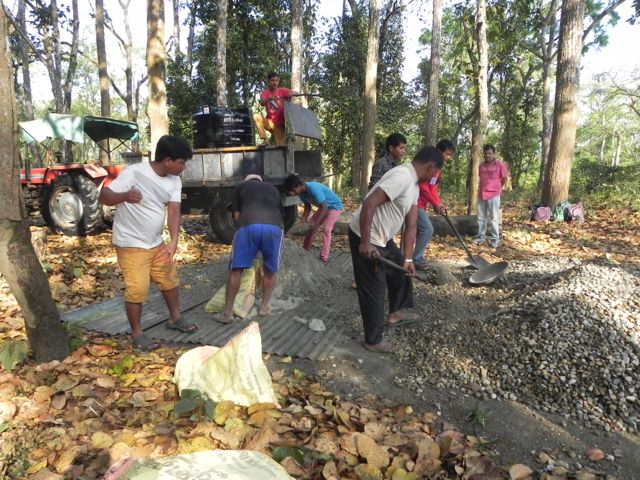
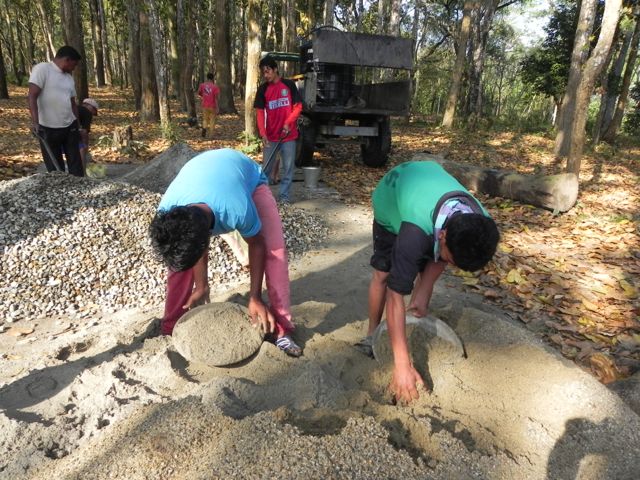
    Chantelle’s assistance frees me up to concentrate on the bigger picture of our Chain Free Means Pain Free Program work: identifying locations, designing chain-free corrals, managing the fence building crew from India and overseeing the local labor.

    Each installation comes with its own unique set of challenges, both situational and logistical.

    To ensure a water source for elephant bathing and drinking, most hattisars are built near a river, which means that they flood during monsoon season.

    For safety, the mahouts (elephant staff) always want the chain-free corrals to be built directly adjacent to their sleeping quarters.  There is the constant threat of an unscheduled appearance of wild rhinos, man-eating tigers and menacing bull elephants in musth.

    In some locations, available space is limited or there is sparse tree cover.

    Contaminated soil caused by years of stockpiling and burning elephant manure is a universal issue.

    With 31 corrals to our credit in 2014, I was overly confident that the next installation would follow the same successful route.

    But I was in for a rude awakening. I immediately realized I would be facing my greatest challenge yet.

    Both installations scheduled for this year house multiple elephants–ivory carrying males, females and calves. Like humans, elephants are individuals and even though they share common language and needs, they have unique personalities that must be acknowledged in order to improve their lives.

    Upon arrival, my first challenge was to discover that the dense forest promised for 15 corrals was no longer available. Instead, it had been set aside for the local people, a decision that is difficult to argue with.

    This left me with a dilemma: build corrals for ivory carrying males that I intuitively know are too small, or build nothing at all.

    In Nepal decisions are made by unanimous agreement of the entire group involved. If one stockholder does not agree, the project will not move forward. Opinion was split: the mahouts, head veterinarian and an influential NGO wanted to keep the males on chains, while the chief warden and I wanted to make some degree of improvement and meet our goal of getting the bulls off chains.

    After a healthy group discussion, we took a walking tour of the facility. Everyone agreed we would build mini-corrals, to see if they would work.

    Optimism is my strong suit, definitely what drives me to believe that elephants in captivity can experience a better, more humane existence. I agreed to reduce the size of the chain-free corrals rather than building none at all.

    After working diligently for two weeks to create six chain free corrals, the volunteers, fence crew, local labor, mahouts, chief warden and I were present for the unchaining. What a thrill.

    But shortly after dark, after the crowd had dispersed and we were patting ourselves on the back, forty-year-old, mild mannered bull Dipendra Prasad effortlessly and silently removed the back gate of his corral and slipped out into the night.

    When his escape was discovered, you could hear a collective exhale of disappointment.

    This morning the mahouts returned Dipendra Prasad to the hattisar but only after a massive manhunt to bring him back.

    Everyone is now in agreement that there is not enough space in this location for chain-free corrals for adult males. My job now is to get back to the drawing board and come up with solutions. Adult males are always the most challenging individuals to care for in captivity.

    If we hope to provide a chain-free life for the mature ivory carrying bulls of Nepal, corrals must be spacious, heavy with trees and natural vegetation and away from human populated areas. Most important, they must be constructed of steel pipe!

    But our effort at this location, the Sauraha hattisar, is not a total loss. Three acres of densely forested land has been set aside for a chain-free corral for three females and a young male.

    The volunteers and fence crew are constructing the corral as we speak. The corral will be completed and the elephants; Loctundra Kali, Oma Kali, Sundar Mala and Paris Gaj, released from their chains within 7 days.


  • Why Does That Elephant Have A Chain Around His Neck?

    Why Does That Elephant Have A Chain Around His Neck?

    For the past few years, most of my time and energy has been devoted to freeing captive held elephants from chains.

    Working alongside Nepali partners, we have created 37 chain free corrals, in 15 different elephant facilities. Before years end, we will add another five chain free corrals in two facilities in Thailand and a huge 100 acre habitat in India.

    Chain Free Means Pain Free has caught on.

    As more elephants are freed from leg chains, attention is shifting to the neck harness elephants wear during anti poaching patrol.

    In the case of elephants in Nepal, the neck harness serves one purpose. It enables a mahout  to stay seated if his elephant becomes frightened and runs.

    Some neck harnesses are made of rope. Others are a combination of rope and light weight chain. All are loose fitting and have loops for the mahouts’ feet. These loops lie flat along the side of the elephants’ neck, behind each ear.

    Remaining seated when an elephant spins around and runs away is virtually impossible, unless your feet are strapped in.

    In the case of Laxman Gaj and his twin brother Ram Gaj, a combination harness is used. The bottom half of the harness is chain. The half that goes over the top of their neck is rope.

    Laxman and Ram are young elephants, only six years old. Regardless of their youth, they are required to participate in daily anti poaching patrol activities in Chitwan National Park. Being young, they are easily frightened when surprised by a wild rhino or tiger.

    They wear the harness because when an elephant is frightened, he or she runs away. Spinning and then sprinting at speeds up to 30 miles per hour, can cause a rider to fall off.

    Having a harness adds a sense of security for the mahout who clearly knows that if he falls from his elephant, while in proximity of a wild rhino or tiger, he will be killed.

    When the elephant recovers from his or her fright, the patrol resumes.

    When an elephant learns s/he is able to escape a frightening situation, their self confidence builds. With each exposure to wildlife their fear level is further diminished. By the time they reach adulthood, the elephant has gained the experience necessary to fearlessly encounter wild tigers, rhinos and bears.

    Undoubtedly, some will insist that the harness is unnecessary as elephants should simply be returned to the wild. I have no problem with this argument. But, until such time as society evolves, some elephants are destined to remain in captivity.

    Constructed and used properly, a neck harness is harmless and provides measurable benefits. The mahouts’ personal safety is guarded, while a young elephant is allowed his natural response to fear, without being punishment.


  • Sunder the Elephant Embarks on New Life

    sunder__family_bannerghatta_zoo_india-1_med
    Sunder (left) with his new family

    Elephant welfare expert Carol Buckley says rescued elephant is in good hands at model facility.

    More than a month after his rescue from a life of horrific suffering, 15-year-old bull elephant Sunder is enjoying lush forests, cool ponds and the close companionship of 14 other elephants at the Bannerghatta Biological Park (BBP) outside Bangalore, India.

    Sunder’s tragic plight touched the hearts of people from all around the world and galvanized an international social media campaign that helped win his release and recovery.

    sunder_and_family_india_2_med“Sunder has a new life and a fresh start at a wonderful facility,” said Carol Buckley, an expert in innovative approaches to elephant welfare in captivity, who recently visited Sunder in India to design a chain-free facility at the park where he now lives.

    “Thanks to the courage of the Supreme Court of India, which ruled against Sunder’s longtime abusers, the willingness of BBP to accept Sunder for permanent residence and the tireless logistical and legal efforts of PETA India, Sunder’s future looks very bright.”

    Buckley, who founded and leads the US-based nonprofit Elephant Aid International, says BBP has all the desired components for captive elephants. Its 122 acres of diverse habitat include open pasture, shaded forests and ponds, where the elephants are free to roam and play during the day. At night, they are given access to the adjoining national park forest for foraging and exploration.

    The upcoming construction of a custom designed, solar powered, chain-free perimeter fence system to enclose the entire daytime habitat will give the elephants even more autonomy. The fence creates a safe containment area, eliminating the need for mahouts to dictate the elephants’ activities. It should be completed before the end of the year and will be the first constructed at any zoo in India.

    Buckley noted that unlike most elephant facilities throughout the world, BBP’s mahouts manage their captive elephants in a “herder style” manner that supports their physical, emotional and mental health. This style of management acknowledges elephants’ nature as highly social, herd animals, giving them freedom to wander at will while mahouts keep a watchful eye on their whereabouts.

    “Bannerghatta Biological Park, working in partnership with PETA India, offers the world an exemplary model for managing captive-held elephants and the best possible new home for Sunder,” said Buckley. “I’m so grateful for their efforts.”

  • Elephant Back Safaris: Misery for Elephants

    Elephant Back Safaris: Misery for Elephants

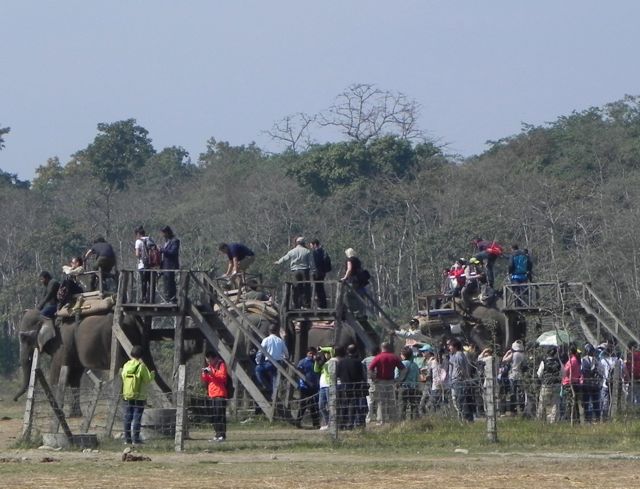
    boarding safari rides

    May 24, 2014, 8:30AM, Sauraha, Nepal.

    The temperature is already 32 degrees Celsius (about 90 degrees Fahrenheit).

    Tens of elephants are already hard at work.

    Each morning at dawn, seven days a week, elephants are saddled up in preparation for another day of carrying tourists on safaris.

    This is the routine the elephants will follow, year in and year out, until they die.

    First, they are forced to lower themselves onto their elbows to accept the saddle. This unnatural position causes pain and irreversible damage to their elbows.

    Next, a heavy canvas pad and ill-fitting howdah (saddle) are placed on their back. The pad and howdah are each so heavy, it takes two men to lift them, one at a time.

    Then, a howdah strap is cinched tightly around their chest, lacerating sensitive flesh in their armpits and cutting the tissue of their breasts.

    A second synthetic rope is tied from the back of the saddle under their tail, ripping deep gashes in the flesh around their anus.

    The life of the safari elephant

    3 eles carrying tourists

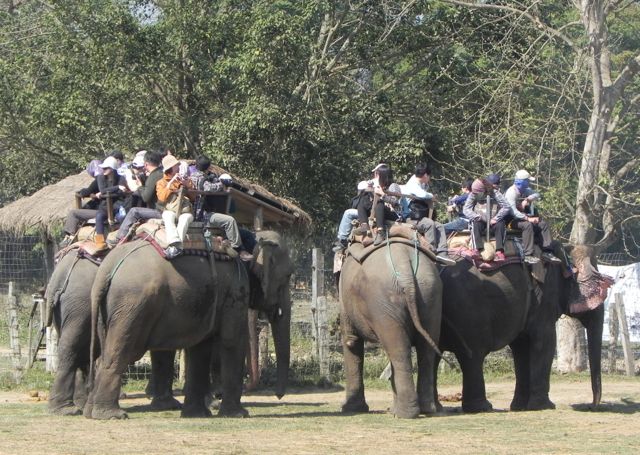
    Safari elephants spend the day carrying tourists — four to six at a time — through the jungle in sweltering heat.

    Elephants are poorly suited for this activity. The pad and howdah cause huge blisters that fester into deep abscesses that can take months to heal.

    According to a study published in the Journal of Experimental Biology, four hours of exercise in the sun causes overheating and can be fatal. Laboring in direct sunlight, carrying too much weight – pad, saddle and tourists — elephants quickly become overheated.

    What does it take to force an elephant to work under such conditions?

    Brutality.

    Mahouts hit the elephants over the head with heavy sticks, metal knives and axes. The wounds remain infected for weeks.

    Bright white scarring can be observed across the forehead of virtually every working elephant in Nepal. The abuse is systematic, accepted by elephant owners, locals and the tourists.

    The images haunt me.

    I can’t help but wonder: Is this the memory of Nepal tourists want to take home with them? And what will it take for them to see the abuse?


  • Five Elephants Freed!

    Five Elephants Freed!

    Two years ago, a young captive born elephant broke free from an ancient tradition.

    That was Prakriti Kali, the first elephant in Nepal to be released from chains.

    Six months later, five more elephants were released from a lifetime in chains.

    Mel Kali was the record holder in the herd, having lived in chains for nearly 70 years.

    Culture shift continues in Nepal

    On April 6th, at 4:30pm, Nepal made history again when all five resident elephants at the government’s Kasara hattisar went chain free!

    Six-year-olds Tamor Kali and Himal Gaj were the first to be given their freedom.

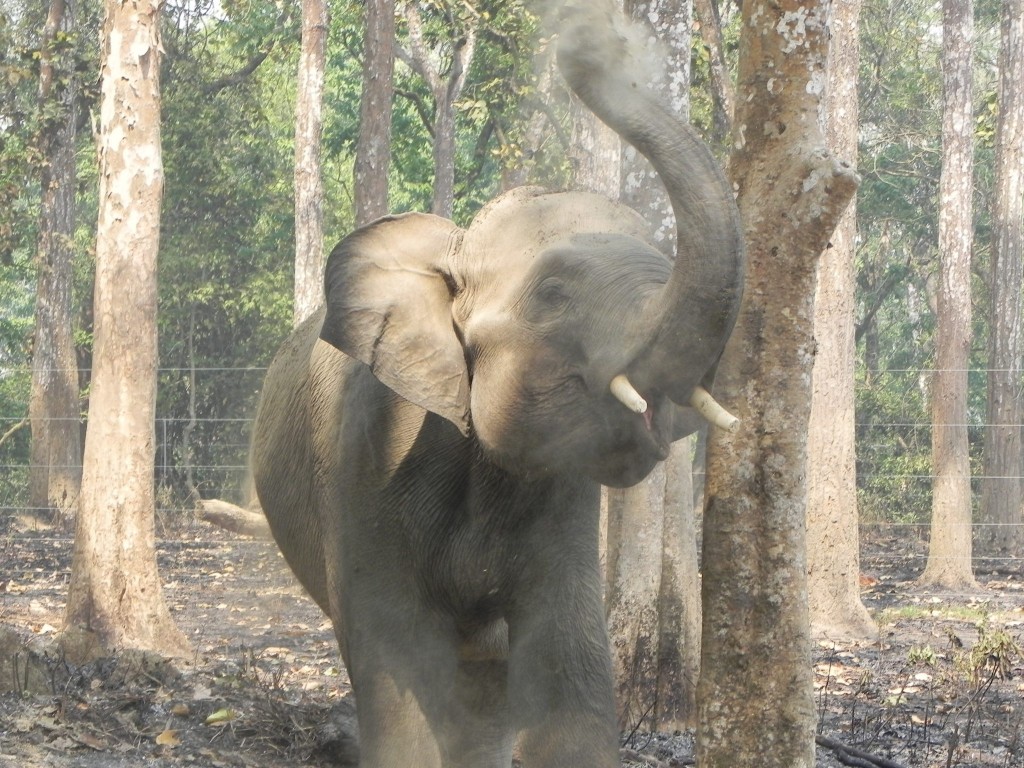
    They wasted no time, finding the best scratching trees and dusting bowl.

    Then, a few days later, after all six chain free corrals were completed, Prayan Kali, Laxmi Kali and Khosi Kali dropped the chains of tradition and went free as well.

    Transition 

    Watching the elephants shed their chains and adapt to the change so effortlessly is breathtaking.

    Young and old alike seem instinctively to know what is happening.

    In synchronized movement, they revel in a scratching and dusting ritual. Nearly becoming one with the trees, they exfoliate every inch of their robust body. Even the tender skin behind their ears and under their massive legs get the invigorating treatment.

    After the exfoliation is complete they follow up with a full-body dusting. In the most graceful slow motion, they fling trunkfuls of dirt under their bellies, on their backs and everywhere in between. This natural spa experience is essential for maintaining healthy skin.

    Chained elephants are denied this opportunity.

    Become an elephant

    For one minute become an elephant. Close your eyes and step inside their skin. Feel the frustration when denied access to trees for scratching and clean dirt for dusting. Now feel the sensation of scratching every tick bite and itch spot until completely satisfied.

    More good news to come

    The five elephants in Kasara hattisar are just the beginning. When our project is complete, 63 elephants will enter the ranks of the chain-free.

    A huge thank-you goes to Kamal Kunwar, chief conservation officer of Chitwan National Park, the hattisar staff and, of course, all who believe in and support this project.

    Five freed. Fifty-eight to go!

  • Change is Afoot

    Change is Afoot

    March 29

    The first two corrals at Kasara hattisar are finally ready.

    The air is charged with anticipation.

    Rescuing an elephant to sanctuary or releasing them from chains brings the same mix of emotions — anticipation, apprehension and excitement.

    Each elephant is a unique individual with a distinct personality. Life’s experiences mold their behavior, shaping them as they mature. Each of them responds differently to different situations.

    Himal Gaj
    Himal Gaj

    When I first arrived at the Kasara hattisar, I noticed that young Himal Gaj was resistant to his mahouts. He appeared fearful. An old scar at the base of his trunk indicated a past confrontation.

    Watching the mahouts struggle through the morning routine, preparing Himal Gaj for duty, was disconcerting. I wondered how he and the mahouts would respond to going chain-free.

    The mahouts were also concerned. They feared for their safety.

    As a result, it was decided that Himal Gaj would be released from his tether but would wear loose hobbles until the mahouts felt safe around him.

    It was disappointing that Himal Gaj would not immediately be completely free, but the compromise was the first step to his future freedom. If the mahouts fear for their safety, Himal Gaj would be destined for a life in chains.

    With time and Compassionate Elephant Care training I hoped Himal Gaj would settle down and become more responsive.

    The chains come off

    The elephants usually return from their anti-poaching patrol duties around 4pm. Chief Conservation Officer Kamal Kunwar postponed a scheduled meeting so he could be present for this auspicious occasion.

    Just before 4pm, the hattisar suba arrived. He’d been out of office for a couple of weeks.  He and Kamal discussed the plan in Nepali. I would soon see that following their brief conversation plans would change dramatically.

    The elephants arrived back from the forest. To my surprise and contrary to the plan, Himal Gaj was walked directly into his new chain-free corral. He was not put on loose hobbles. Calmly and confidently, his mahout gave the command to bite  (stretch out on his sternum).  Without hesitation or fear, Himal Gaj calmly responded.

    I realized that the mahout I’d seen with Himal Gaj the past week was now assisting, rather than riding.

    In that moment things became perfectly clear. The mahout to whom Himal Gaj was resistant to this past week was the junior mahout. And now that his main mahout was back from vacation, everything was fine.

    Himal Gaj waited patiently as his gear was removed. Then he rose and immediately began dusting, as his friend and senior mahout left the corral.

    What a difference a good relationship makes.

    Kamal Kunwar’s turn

    tamor-kali-female2
    Tamor Kali

    I did not have time to dwell on the glory of Himal Gaj’s transformation because Tamor Kali was about to enter her chain-free corral for the first time.

    Kamal Kunwar was sincerely excited, filming her first chain-free steps like a proud father.

    After seeing how well Himal Gaj responded to his mahout, everyone was engaged and relaxed. They gestured at both young elephants free-of-chains with huge smiles on their faces.

    Now was the time to stand back and savor the moment. The instant that life changed for two young elephants and their family of mahouts.

    The three other elephants stood chained under their shelter watching the scene.

    I whispered, “You’re next ladies.”

    It will be close to a week before the other corrals are completed. Without a doubt, Khosi Kali, Laxmi Kali and Prayna Kali, who have all been prisoners to chains for decades, will transition seamlessly.

    Imagine the joy when they are all chain-free. Heart bursting JOY!

  • Progress Report on Chain-Free Corral Project at Kasara Hattisar

    Progress Report on Chain-Free Corral Project at Kasara Hattisar

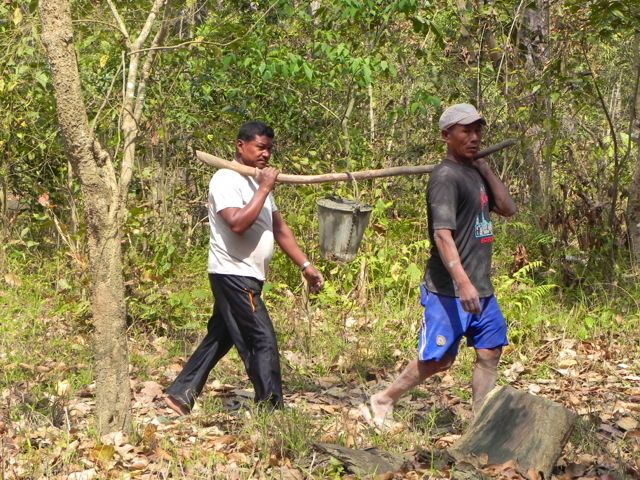
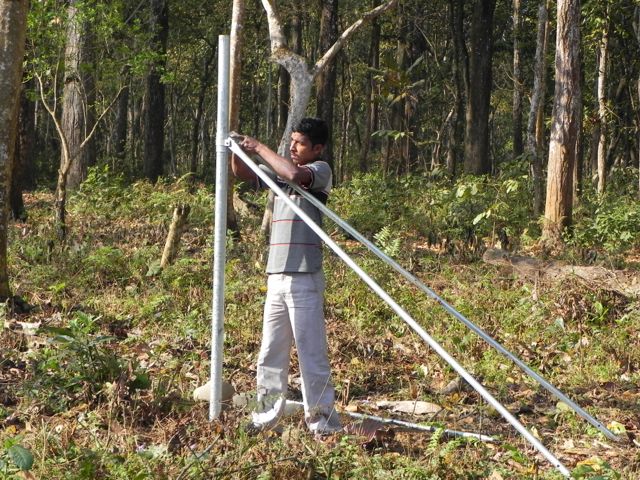
    The framework for all six chain-free corrals at the Kasara hattisar is in place.

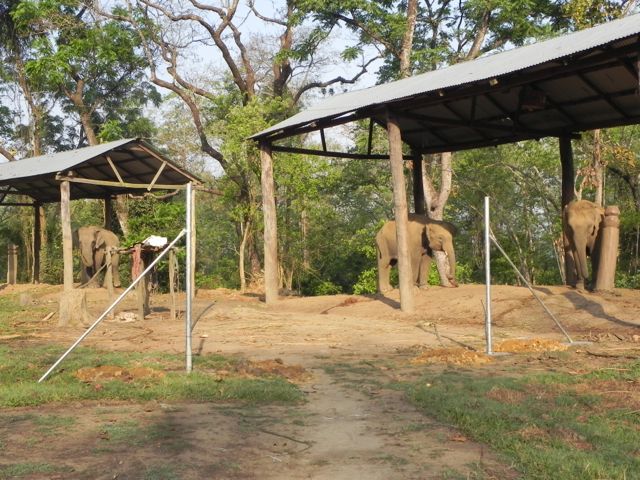
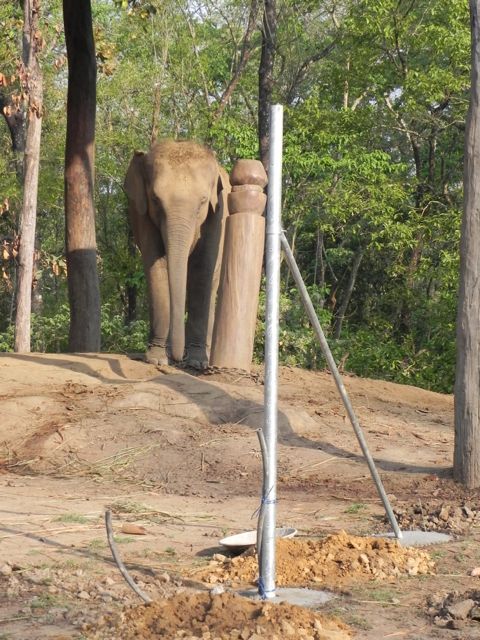
    Support and brace posts are concreted. Gateposts mark the entrance to each new corral.

    Heart work

    Eyeing the progress of this project, my heart pounds. Here it comes, that joyfully intoxicating feeling cursing through my veins.

    My eyes transport the image to my heart. My heart responds, sending a warm glow through my body, filling my eyes with tears. My heart swells with the promise of a better life for these elephants.

    In this moment I stand in my personal space of pure peace. I caress it. Breathe it in deeply. I don’t attempt to own it, only experience it, knowing the feeling is a gift meant to be experienced not possessed.

    Some people meditate, others run, cycle or climb mountains to connect to that place within where they feel most themselves, most centered, most peaceful.

    This is the place of autonomy and personal freedom.
    Such activity can literally become an addiction, in the best sense of the word.

    Watching the chain-free corrals come to life before my eyes is my addiction. Knowing that my actions help reduce the suffering of captive-held elephants brings me great joy! It is heart work, soul fulfilling work. My meditation.
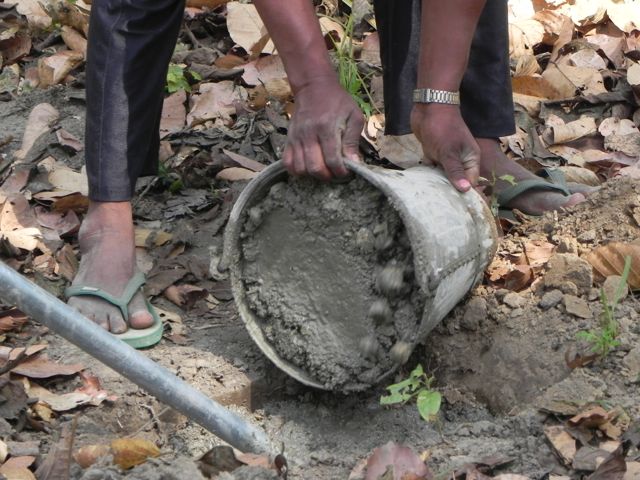
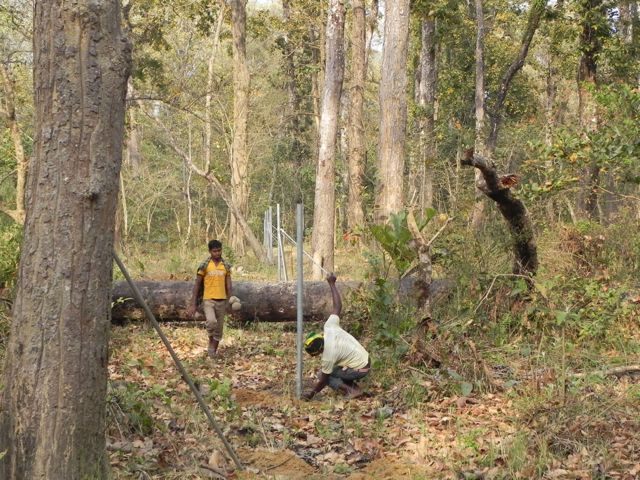
    At times the joy is overwhelming and I just have to cry. Seeing elephants gain even a semblance of autonomy moves me to do more. Knowing that we are able to help bring some peace and freedom to their lives drives me.

    I may never know any of these elephants personally. But that is not the point of my work. I am not here to expand my elephant family. I am here to better the lives of these elephants.

    They know we are helping them. That is good enough for me.
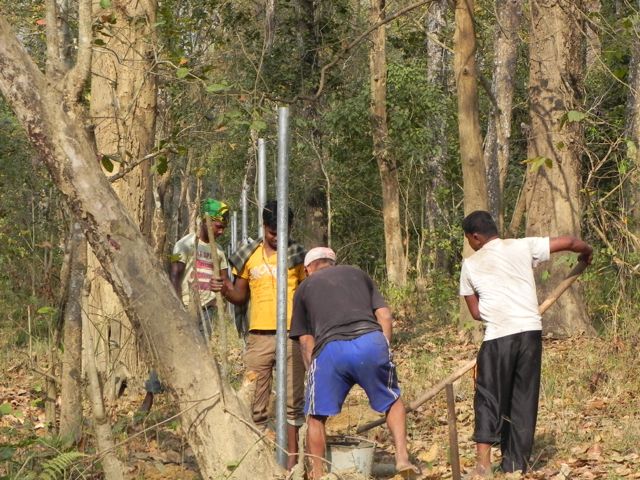
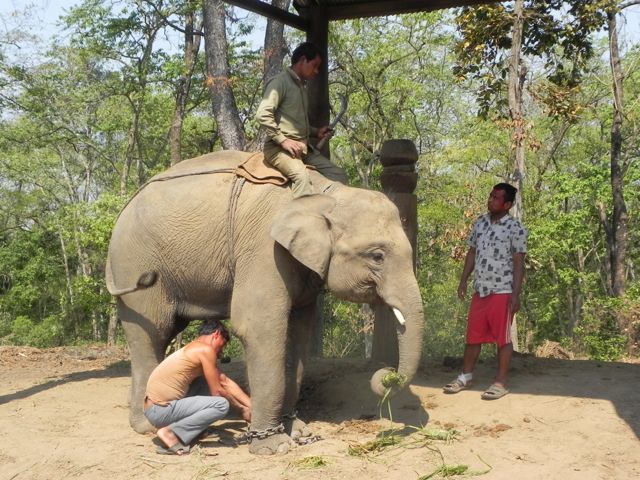
    Construction continues

    The next step is to string the wire between support posts and hand-build the topes (post protectors).

    Each corral is one full acre in size. It is equipped with six strands of wire equaling nearly one mile of wire per corral.

    Ditches will be dug to bury the wires that enable each corral to operate independently.

    Last, the steel box that contains and protects the energizer and batteries will be installed and wired to the solar panel that powers the system.

    A perfect vantage point

    From the open-air raised platform that I have claimed for my new office, I survey the work site. What a gift to witness this miracle unfolding right before my eyes.

    A humble thanks to Kamal Kunwar, Chitwan National Park chief conservation officer, the entire hattisar staff, our IBEX fence crew and all of you who have contributed to this worthwhile project.

    Together we are improving elephant welfare, showing due respect to these wise, kind and self-aware beings who grace our planet and our lives.


  • Himal Gaj

    Himal Gaj

    Himal Gaj is a six-year-old captive born elephant. His father is the dominant wild bull in the area. His mother is a wild born, captive resident of the elephant breeding center at Khosor, Chitwan, Nepal.

    Himal  Gaj was one of five young elephants trained together at the breeding center several months ago. Until their formal training, they lived with their mothers.

    All five elephants were chained from the age of three months. Chaining is the practice all over Asia. Domestic livestock and captive elephants are tied or chained. It is the cheapest way to keep them in one place.

    The training technique used with Himal Gaj and the others at the breeding center was a deviation from the traditional pujan, a brutal breaking of spirit. Introduced by a foreign NGO, a mixture of traditional methods was used—including the use of koonkie elephants, negative reinforcement and punishment—combined with positive reinforcement techniques known to be successful with domestic horses.

    Unfortunately, once training began, Himal Gaj showed signs of aggression and resistance. He was frightened by the training process and responded poorly to his mahouts. A few months later his training was deemed unsuccessful.

    No video, photographic or written records exist to document the daily training process and Himal Gaj’s progress and difficulties.

    But it does not take such documentation to see that Himal Gaj is a very insecure individual.

    Although Himal Gaj responds well when his mahout is riding, his weakness is responding to commands when his mahout is on the ground.

    Himal Gaj is a good example of the importance of sound training techniques, mahout training and follow through.

    Captive elephants are not domesticated—they are wild animals living in a captive environment. Even generations born in captivity are not domesticated. The scientific process of breeding selected individuals for specific traits is the process required to create a domestic species. This has never been undertaken with elephants.

    In the case of all elephants born at the breeding facility in Khosor, the mothers are wild born living in captivity and the fathers are wild born living in the wild.

    Himal Gaj’s mahouts are as gentle as I have seen anywhere. They are patient but frustrated. What the training process failed to do was give them the tools necessary to help Himal Gaj learn.

    As a result, all are left feeling like failures. Without intervention, Himal Gaj is doomed to be a dangerous elephant for the remainder of his life.

    The good news is that the mahouts and Kamal Kunwar, the chief commanding officer of Chitwan National Park, are receptive to Himal Gaj receiving additional training. His private training course will begin soon.

    This is such exciting news. I feared Himal Gaj would remain a lost cause in the minds of the mahouts. But before his chain-free corral is completed Himal Gaj, will be well on his way to understanding what is expected of him and his mahouts will have gained the humane tools to understand and assist him in his training process.