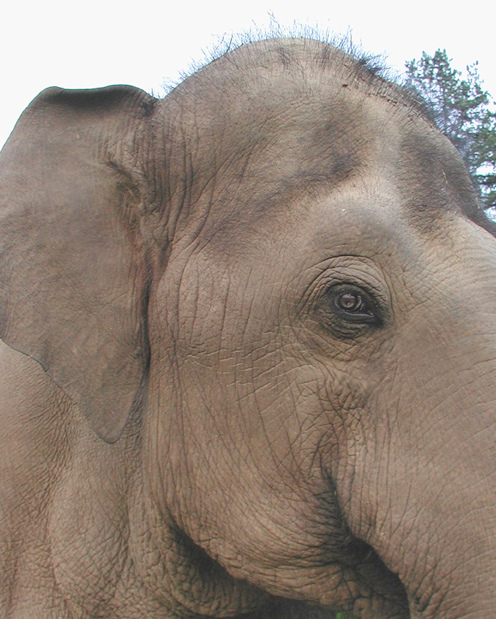
An article by Carol Buckley and G.A. Bradshaw, Ph.D., Ph.D., on how sanctuary creates a healing trans-species community in which humans and elephants live together. In sanctuary, the humans function as catalysts, interpreters and negotiators of relational repair for elephants in recovery from trauma.
Tag: carol buckley
-
Elephant Aid International Creates First-Ever Elephant Care Center in India
Hohenwald, TN, October 27, 2011 – Elephant Aid International (EAI), a Carol Buckley Project, announces its official partnership with the Wildlife Rescue & Rehabilitation Centre (WRRC), one of India’s foremost wildlife organizations, to create the first prototype Elephant Care and Rehabilitation Center in Karnataka, Bangalore, India.
With the endorsement of the Indian government, this private project will serve as a model for future care and rehabilitation centers throughout the country. The center will rehabilitate elephants who have been removed from the confines of zoos, circuses and temples, and offer them a more natural lifestyle, free of chains and negative management techniques.
Carol Buckley, founder, president and CEO of EAI, will supervise the Center’s development, training of mahouts (elephant handlers) and elephant acquisition and relocation. This first facility will house up to seven elephants.
“We are honored to partner with WRRC on this landmark project,” said Buckley. “I believe this care center will be a beacon of hope and a challenge for change for people working to improve the lives of captive elephants.
There is an urgent need for care centers (what are known as sanctuaries in the U.S.) in India. In November 2009, the country’s Central Zoo Authority mandated that all elephants be removed from zoos and placed in alternative facilities better suited to address their needs. India’s wildlife parks and game sanctuaries are not well suited for zoo elephants and, until now, no other alternative existed.
In August 2010, the Elephant Task Force of India’s Ministry of Environment and Forests issued a set of recommendations, including the creation of state-of-the-art lifetime care centers.
Designed to provide freedom of movement and a healthy social environment, care and rehabilitation centers will provide a safe place for elephants to escape the abuses of captivity.
- The centers will support the rehabilitation of elephants suffering from physical and psychological trauma by providing a more naturalistic environment.
- They will not involve tourism.
- The grounds will be fenced, eliminating the need to restrain elephants with leg chains.
All mahouts will be trained in Compassionate Elephant Care techniques, a system developed by Buckley that is based on understanding elephant biology, physiology and psychology; relationship building between the mahouts and their elephants; and positive reinforcement.
The number of elephants housed at the Center will be limited to ensure there is adequate vegetation for them on-site and in the bordering national forest. The elephants will have access to areas of the forest during daylight hours and will return to the Center at night.
The Center is based on The Elephant Sanctuary in Tennessee, which Buckley co-founded and led to international recognition as one of the leading models of humane management of elephants in captivity.
-
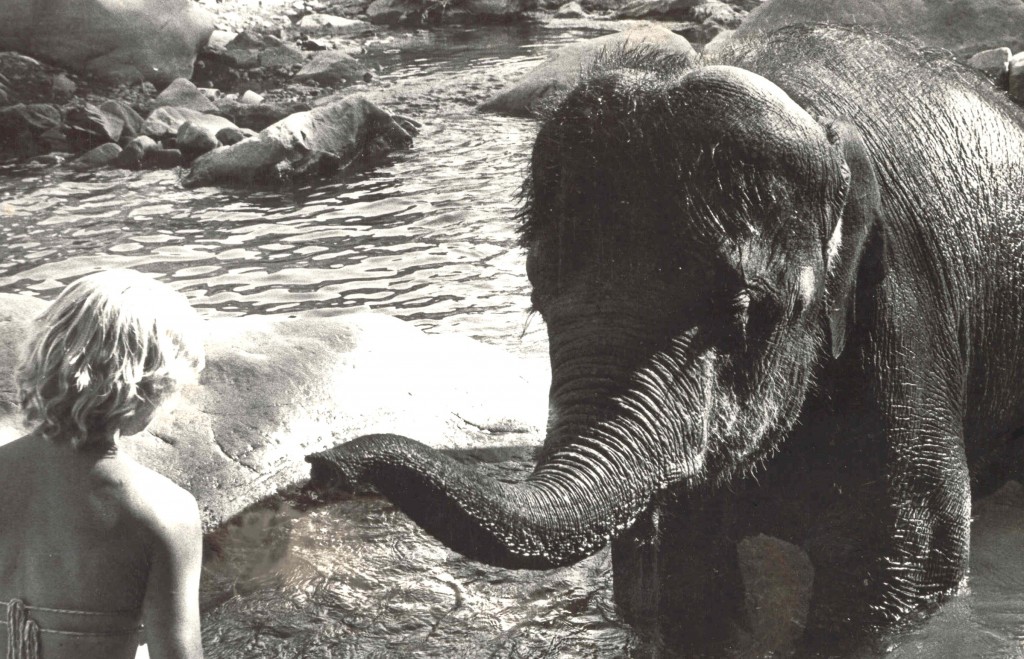
While daydreaming about Tarra……
I recalled our first romp on a pristine beach in Santa Barbara, CA. Tarra was a spunky youngster, small by elephant standards, full of playful energy. It was early morning, the sun was just lighting up the southern California sky and the beach was surprisingly empty. Like kids off on a grand adventure we climbed over the dunes that divided the highway from the beach beyond. Tarra sunk to her knees in the dry sand with each gangly step, leaving cavernous holes in her wake.
Abandoned volleyball courts lay down the beach to the left. The water’s edge was active with sandpipers plunging their beaks into the sand like tiny oil derricks. With an excited trumpet blast Tarra bolted toward the big blue ocean, dragging her toes in the wet sand as she ran. The resulting gouges filled in with each consecutive wave, erasing any trace of her presence.
Tarra enthusiastically ran toward the ocean as the water receded. But when an underdeveloped wave crashed at her feet, she screeched to a halt and back peddled awkwardly. Squeaking gleefully, trunk curled up under her chin, head pulled down low, she got eye level with the wave. As it once again receded, her confidence returned. Ankle-deep in the foamy swirl of sand and salt water, she did not notice the new wave building. It formed quickly, rising like a cobra from the ocean floor and slapped her broad side with a crack. Caught by surprise, Tarra’s eyes flashed wide. She stood frozen for a split second, staring straight at me. I could not help it, I broke up with laughter.
Recognizing the mischievous look on her face, I started running down the beach to get the jump on our ever familiar foot race. Tarra came tearing out of the water, running as fast as her stocky legs could drive her, trunk and tail fully extended like a bird dog on point. Our foot race ritual was a bonding exercise. Sometimes I let her win and other times she let me. This time it appeared that she was determined to be the winner. Slowed by the soft sand caressing our ankles, we raced down the beach, neck-in-neck, until she surged forward in a final sprint, leaving me in her dust clinching my sides in laughter.
Only then did I notice we were being watched. A uniformed man standing some distance away called out, “Miss, you cannot have an elephant on the beach.” Jokingly I responded, “Sorry, I didn’t see the sign.”
-
The TARGET of target training
A target is a tool — a flexible pole with a spongy end — used to shape behaviors. Its purpose is to create a focal point, a benign object for the elephant to focus on.
To start, we touch Chang Yim’s head gently and say “target.” When he makes contact, we blow a whistle and give him a treat. Chang Yim quickly connects the whistle with the touch and, of course, the treat with the whistle. Throughout the training we touch the target to different parts of Chang Yim’s body — his foot, ear, leg and side — following the same process, giving each body part a name.
When Chang Yim understands what we want, he responds by touching the appropriate body part to the target. The whistle sounds and he receives a reward, a treat. In moments, Yim makes the connection. He is quickly learning his ear, head, side, feet and back.
The purpose of this training is to gain Chang Yim’s cooperation for medical procedures and foot care. He is never told no and can never fail, which helps boost his self-confidence and willingness to engage in the game. Done properly, the training becomes a much-anticipated activity that Chang Yim freely participates in.
Learn the basics of target training.