Category: Mahouts

  • a powerful lesson

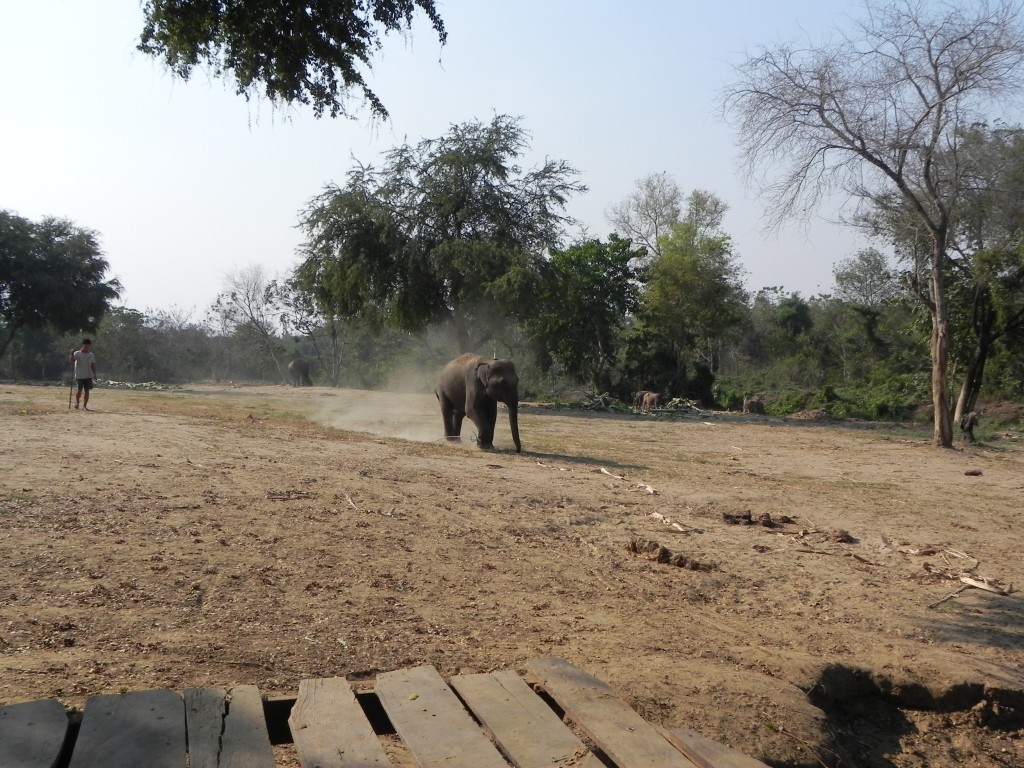
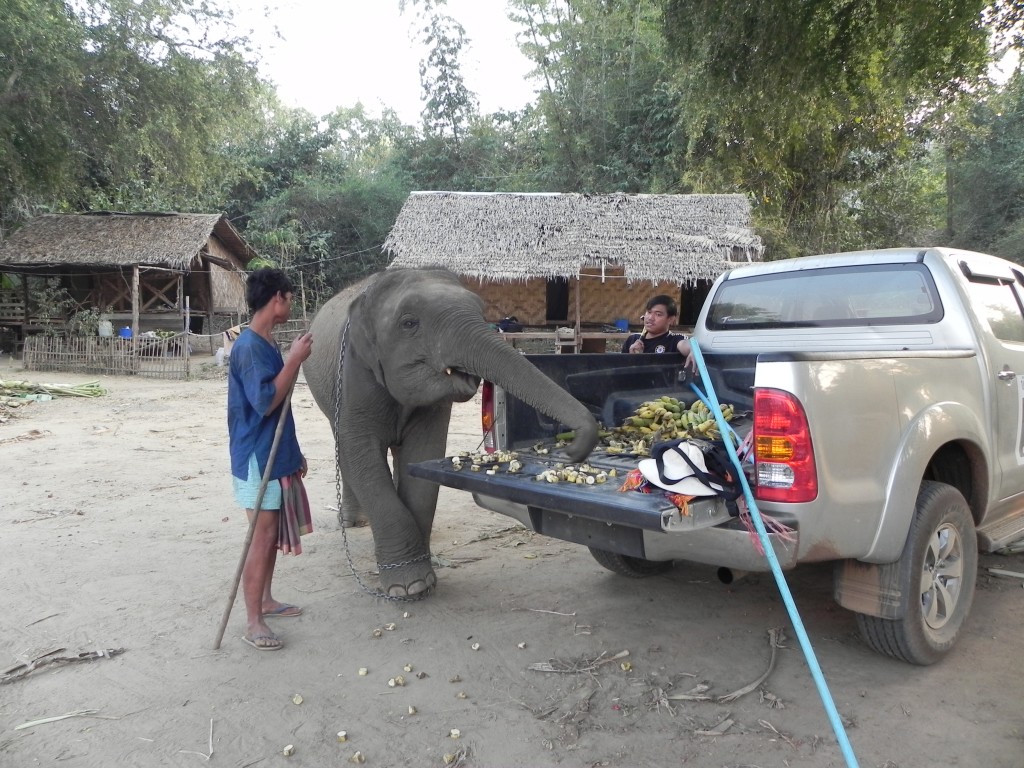
    I am back in Sauraha, feeling like I have come full circle. For the past week I have trimmed feet at the government center. The majority of elephants who have received pedicures are adult males used for night patrol in the forest to protect wildlife from poachers. Their lives are far removed from their birthright but at least they spend a portion of their time walking on the soft forest floor, taking in the sights and sounds of the natural world. They are a shadow of their true selves; where those selves have gone, I don’t know.

    Today I began work at the elephant breeding center, another government project in Chitwan. I was disappointed to leave behind the mahouts I had spent the previous week training, but felt confident that these mahouts would learn as quickly.

    Most of the elephants at the breeding center are young, as you would expect: there are fewer adult males and lots of females and young calves. The first thing I noticed is that the mahouts are not as gentle or patient as the mahouts at the government center. It registered as I realized I was hearing the thump thump thump of a stick hitting a young male on the head.

    I was reminded of the wise words of Karl, a fellow elephant caregiver at the Elephant Nature Park. I am paraphrasing, but his words went something like: “Even when we think we are helping elephants, many times it is more about us than about them.”

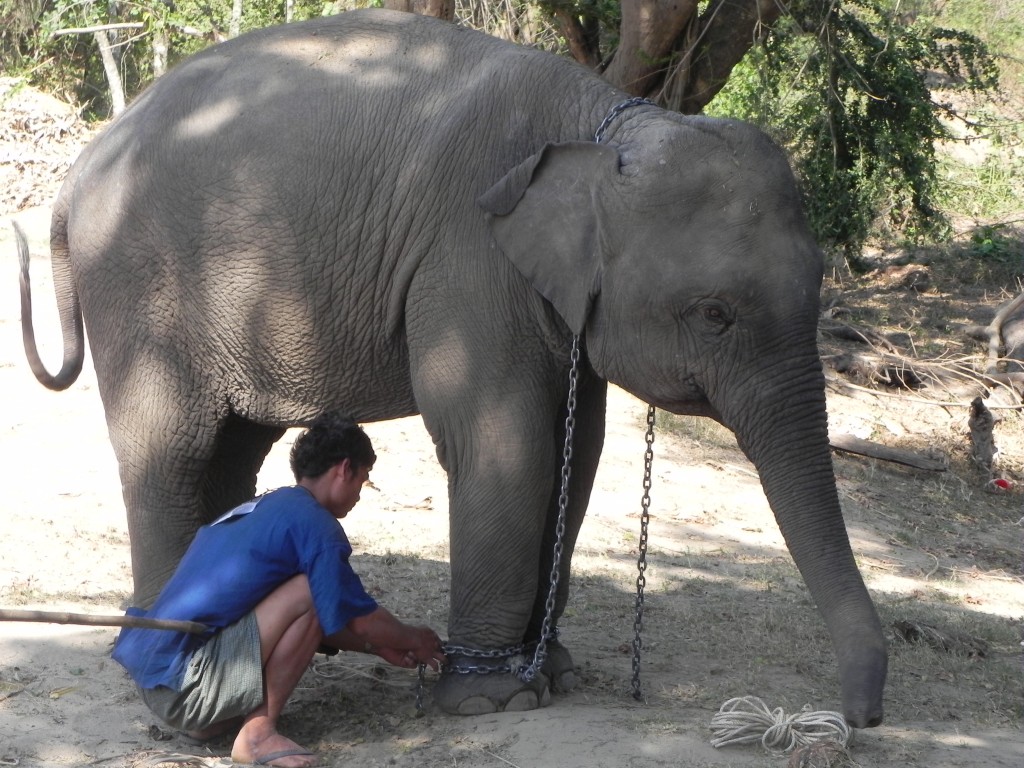
    Karl’s words came to me loud and clear as I was trimming the feet of a young elephant. I was so intent on providing a service that I ignored the fact that he was suffering because of me. He was quite frightened to lie down for the pedicure, and the mahouts were insensitive to his fear.

    When I finally allowed myself to realize what was happening, I froze in my tracks. What good could my help possibly be if this little elephant was being hurt to enable me to do my work?

    I took a step back to reevaluate the situation. Even though I was not participating in the abuse, I allowed it to happen, and in that way I was a party to it. Karl’s words helped me to see my error; I want to make sure that no elephant is harmed in my presence or as part of my giving assistance.

    I owe Karl a great deal for his wisdom and plan to be more conscious from this moment forward. Just because the mahouts have no concept of na pit neu (don’t hit) is no reason for me to assume they cannot learn.

    My next pedicure session is in a couple of hours. I plan to bring a bag of treats for the young male, learn his name and have his mahout lie him down without hitting him. I will then instruct the mahout to give the elephant the treats as I apologize to him for my insensitivity. I will not trim his feet; only give him the opportunity, perhaps for the first time in his captive life, to experience what it feels like to be respected.

  • Lakshmipriya and Bishnu

    I have spent the past several days observing Lakshmipriya and Bishnupriya, two young temple elephants living at an ashram in Mayapur, India. Thanks to the dedication of Hrimati Dasi, a lifetime devotee of the temple, these two elephants are living a relatively good life. Few facilities worldwide meet the standard held here.

    The area is fenced, mahouts are mature and experienced, a variety of quality foods are grown on-grounds and bought from local farmers, there is access to good vets and, most important, a welfare committee exists to deal with problems and ensure the well-being of the elephants.

    Being the only elephants in the area makes them somewhat local celebrities. Word spreads quickly when they are on their daily walk. “Hati, Hati” echoes through the village as children come from all directions hoping to get a glimpse of these revered animals.

    The younger elephant Bishnupriya is around four years old and quite spunky. I bet the fresh cut oat hay she is given each day contributes to her feistiness. Lakshmipriya, her older “sister,” has a calming effect on her and never strays far from her side. Together they walk without urgency down the roads and dirt paths that stretch out into the countryside, sampling a variety of trees, shrubs and grass.

    Today Bishnu’s mahout teased her when she failed to sample the fruit of a tree he had led her to. “What kind of elephant are you?” he asked. “I brought you to this tree and you don’t want the fruit?” Bishnu expresses herself enthusiastically with a short trumpet blast whenever any opportunity arises. Both she and Lakshmipriya are quick-witted and very curious.

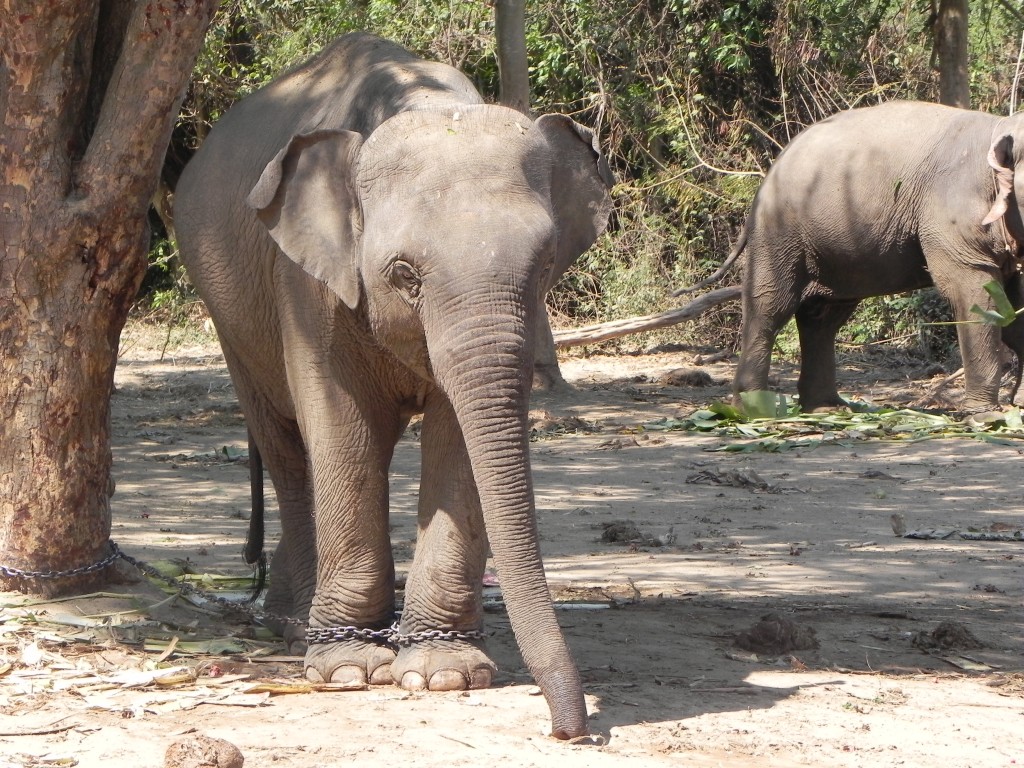
    The mahouts for the most part are patient but they expect full compliance. They exert their dominance over the elephants using a small bamboo stick instead of an elephant hook, while Hrimati continues to work with them to soften their ways. When not out on a walk or in their pool, the elephants are secured on a long chain in their forest.

    If I could make only one change for Lakshmipriya and Bishnu, it would be to add an electric fence inside the security fence (which is not elephant proof) so the girls can be off chains during the day. With that improvement, I would say this is one of the better elephant facilities that I have seen.

  • Leaving Elephant’s World and Jon

    Leaving Elephant’s World and Jon

    Sitting in the passenger seat of the bright orange son tough (vehicle), the solo passenger bouncing down the dusty road, I left Elephant’s World. The tornado of emotion swirling inside made me dizzy, happy, sad, thankful, torn, already longing for the family I am leaving behind.

    The last three days have been trying. Jon is in detention. He is fighting against the restraints of control being put upon him. Being as respectful as possible, I have made every effort to find common ground with management and the mahouts in order to ensure that Jon receive proper care during this critical time. They are not beating him, nor being overtly cruel, but they are punishing him by tightening the reins of control and reducing his freedom. They are mirroring their forefathers, who taught that disobedience results in punishment, which in this case requires deprivation.

    Today was especially hard because I knew I was leaving. I felt I had failed Jon and the mahouts, and struggled for inspiration. I spent time observing the elephants in the morning. We were alone — the mahouts had gone to collect fodder and there were no tourists on grounds. I found myself melting into the elephants’ rhythm. It took no effort to feel their boredom, their thirst and their hunger. Their resignation hung heavy in the air.

    In a near meditative state I found myself thinking about the mahouts and their families, living in their simple bamboo huts. Laundry hanging on bamboo rods to dry in the open air. Breathtakingly colorful violets draped from the rickety porch shaded by scraps of shade cloth. I thought about this for a long time. I tried to feel how it would feel to live here, to be here, to know nothing else. Would I yearn for something different? Do they yearn for something else? Or are they content, surrounded by their families and friends and their elephants?

    Drawn back to the massive gods chained in front of me, I wondered if my need to help them resulted from an unrealistic personal projection, or could it be that they too recognize the lack of freedom of choice they live with day after day. The peaceful river flowed nearly silent on one side of me, while tethered elephants simply existed on the other. On the river side, life is abundant, rich with texture and color, teaming with bugs, darting birds, the swirling current and the wind. On the other side, a colorless one-dimensional backdrop of dust covered half dead trees rooted in a barren carpet of dehydrated earth devoid of vegetation did nothing to enhance the elephants, who were deep in the escape they have mastered, nearly void of life from being left on chains for nearly every hour of every day. They don’t even sway — they just breathe, hardly existing.

    Being kept on chains creates a disconnect that cuts an elephant off from the natural world and, as result, their own nature. They look so out of place. Watching them, I’m sure the elephants know the difference between here and their real home, and they realize that the choice is not theirs. Some rebel, some accept and others go insane. I wonder if the mahouts ever feel this way.

    Piza knew I was sad about leaving with Jon still incarcerated. Over the past three days, I asked about Jon’s food, water and chain-free time at every opportunity. Piza was always polite and kind and explained the current plan as best he could.

    I had delayed my departure to the very last moment so I could see the elephants in the river one last time. I heard a familiar playful voice call out to Jon and spun around in its direction. I couldn’t believe it — Jon was running full speed ahead, hobbled, with drag chain trailing behind, making a beeline for the river and the other elephants. He was a whirlwind of energy, like a tornado, spinning rapidly while steadily moving forward. Piza had intentionally released Jon for the river, standing a few feet behind, wearing that “I love Jon, too” grin that stretches across his entire face.

    I was overjoyed. What a sight Jon was, running FAST, glancing back at Piza every few seconds to make sure he was not being followed too closely. He was ready for this mad dash to the river; he had waited all day for it. My heart burst seeing the look on Jon’s face: he was ecstatic, about to explode with excitement. He did not slow as he approached the river and nearly created a tidal wave when he plowed into the water at full speed.

    I looked at Piza. He had a cheeky look on his face and I realized that he had allowed Jon to go to the river for me. Piza knows how deeply I want Jon to have some freedom and I am eternally grateful that he created the situation where my last memory of Jon was watching him play with full abandon.

    In the river, the scene was “watch out elephants and mahouts-on-elephants, Jon is here!” He flew into the water, eyes intense, wild in anticipation. He ran, hopped, swam and play-charged the other elephants. He literally dove into the water doing a sideways body slam not holding back an ounce of his boundless energy — he was on fire. The mahouts were on guard, but they were happy that Jon was able to experience a moment of fun as well.

    Later, speeding down the paved highway toward the Kanchanaburi bus station, I found myself grateful for my time at Elephant’s World even as I pondered the plight of elephants worldwide. Can we help them? Is it possible to give them their lives back? I am optimistic because to fail them is not an option.

    Because of this, I know I will go back to Elephant’s World. Not because it is a progressive facility where elephants’ needs are met first and foremost — quite the contrary. I will go back to help Elephant’s World reach these goals. They have good intentions and I believe that in the future EW will be an organization that I will proudly endorse. I will go back to help EW make a better life for Jon, for all of his elephant family and for the mahouts. This is my Kanchanaburi family and I will not forget them.

    I am thankful for Jon, Piza and all the mahouts. I am especially thankful for all of you who made my unscheduled stay at Elephant’s World possible by your generous support. My life is enriched daily and today I feel like a billionaire.

    Namaste

  • powerful lessons

    powerful lessons

    What I have witnessed over the past 24 hours has been both heart wrenching and illuminating. Change is indeed the only constant we can depend on. Learning seems to come in a consistent formula — two steps forward, one step back and, at other times, giant leaps in either direction. But one thing is for sure: any suggestion that the process of life’s lessons moves in a linear direction is illogical.

    Yesterday afternoon as Piza was bringing Jon back from his morning foraging, they met up with another mahout carrying an armful of freshly cut produce. Jon was interested in the food but was told that he could not have it. In an instant, his cooperative attitude flipped to rage.

    Piza recognized the flare in Jon’s eye as a signal that he was about to act aggressively toward the other mahout. When Jon moved toward the food, Piza, working upon instinct and his dominance-based training, struck Jon across the leg with the handle of his hook. Jon’s reaction was instantaneous and life threatening: he turned on Piza.

    I was not present but was told that Jon first kicked Piza with his front foot and then swung his head, knocking Piza down. What came next was pure instinct on Jon’s part, the wild bull in him still smoldering below the surface. He lunged toward Piza, who was attempting to regain his footing and put distance between him and the outburst. Blinded by his rage, Jon tried to pin him under his tiny tusks. Piza escaped with a few bruises, but no broken bones or internal injury, and a deeper knowledge and respect for Jon’s nature.

    This behavior was not new for Jon; in fact, it is why Elephant’s World invited me to come and work with him. Jon arrived at EW only two months ago and no one seemed surprised by this most recent outburst.

    With Piza rushed to the hospital for x-rays, the other mahouts were left to secure Jon on his chain. What followed was not the scene I expected. The mahouts worked calmly, systematically, and, I must admit, quite humanely. Jon remained defiant, a cover for his fear of what he assumed the mahouts would do to him once he was recaptured. He avoided their attempts to get him to cooperate, which of course made things a little tense.

    The mahouts were calm and patient, and watchful for their own safety. Jon was given every opportunity to cooperate but we all understand why he was apprehensive. He is a wild male elephant living in a human’s world facing the greatest challenge thrust on anyone — denying his nature.

    The mahouts surrounded Jon. At no time did he fully submit, but he finally resigned himself to the fact that he was outnumbered. The leg shackles he had worn when I first arrived, the long drag chain and nail-tipped bamboo poles, were reinstated. Jon had no choice but to acquiesce. Deep inside I know that Jon is smart enough to figure out his lot in this life, that the best thing he can do for himself is to find his strength in cooperation rather than defiance.

    When I asked the mahouts if they felt Jon’s new training had contributed to his aggressive outburst, they said no and appeared genuinely surprised by the suggestion. They spoke of Jon’s actions as an emotional outburst of anger as opposed to a conscious choice simply to be defiant. They clearly saw that Jon had a temper tantrum when he did not get the food he wanted and were completely comfortable recognizing and acknowledging that Jon is an emotional being.

    Modern science is slowly accepting what astute mahouts have known for centuries: elephants are highly intelligent and emotional beings. One mahout spoke for the rest when he said that they were happy I was working with them because the elephants seem, in his words, happier.

    This morning I waited until the mahouts were off-grounds collecting food for the elephants before going to check on Jon. He did not act particularly emotional. He did not appear fearful, angry or despondent. He was not exhibiting stereotypical behavior, but did appear hungry. Although I do not concur, I do understand that the mahouts’ method of dealing with Jon’s attack includes withholding or reducing food. This method is not limited to Asia; it is used by some elephant trainers in the US today.

    For nearly one hour I watched Jon, without focusing too much energy on him. Tears streamed down my face at his fate, wild and captive. I wondered if there is anything we can do to make the injustice of that reality right again. With no safe wild left to elephants, it is up to us to create an alternative, one that protects and respects this species that so many of us are drawn to.

    I will admit to being relieved that in the hour I observed Jon he never engaged in stereotypical behavior or acted stressed. He was not angry and did not even display signs of being confused. He was not despondent, he was resigned. And, thankfully, he was relaxed enough to play. A large rope had been wrapped around the tree he was chained to. Jon flipped the rope over his neck and wiggled his head back and forth, tugging on the rope playfully with his ears. I heard a huge sigh leave my body; I don’t know how long I had been holding my breath.

    As I left Jon, I could not help but ponder the dilemma humans have created for our planet and her inhabitants. Deep in thought, I realized that an EW staff member was waving her arms trying to get my attention. Looking in the direction she was pointing, I saw Jon in the banana plantation, happily reaching for the highest leaf and, with much gusto, tearing it loose and stuffing it into his mouth.

    I assumed that Jon had slipped his chain. I decided to try to head him off by getting to the food hut first and loading up on his favorite treat. I felt confident that if I could drop a trail of bananas, I could get him to follow me back to his stable area.

    When I got to the hut I was surprised to see Piza casually lounging in one of the flimsy plastic chairs, watching the DVD I had given him of “All Our Girls so Far.” I hesitated for a moment, so pleased he was watching the video of my girls, but realized I must interrupt him with the news of Jon.

    With my best body language yet, arms flailing and in ridiculous broken English — yes, broken English. That’s what happens when everyone you talk with speaks broken English. You begin to speak like them! — I told Piza about Jon being loose. He smiled and said it was okay. I thought perhaps Piza had suffered a concussion and didn’t understand what I was saying — that Jon was loose! — but a huge grin spread across his face again, and I understood.

    Even though Piza had told me last night that Jon would be kept on chains for up to three days, he had decided that Jon was ready for a degree of freedom. It was then that I remembered that Piza had said Jon would be kept on chains until he was no longer angry. I had seen for myself earlier in the day that Jon was not angry. Piza was true to his word and, as a result, Jon was having a feast in the banana forest.

    Once I understood that all was well and Jon was no longer being punished, I turned to thank Piza. When our eyes met I felt deep admiration for this young man. He has such love and respect for Jon. In my heart I know that these two are matched souls, brothers from another time. They are meant to teach each other and the world about what it means to be held captive, because the mahouts are no less captive to the elephants than the elephants are to them. Let’s dream that together Jon and Piza will make a new world for captive elephants.
  • Jon and Piza

    Jon and Piza

    Feb 6
    Today we experienced a major breakthrough with Jon’s training…I passed the training target over to Piza.

    Oh man, was it hard to stand back and let Piza make mistakes and see Jon struggle with the resulting frustration, but it was time. Jon kept coming towards me, soliciting my interaction, but I had to return him to Piza. It was time for the game to be something the two of them share.

    Jon finally accepted the change and fully engaged with Piza. I clearly saw that they will invent their own version of the training game, which will serve them well.

    The game is as much about a philosophy as it is about technique. I understand that this type of training will not replace the customary training in Asia, at least not any time soon. But it is a therapy that can help strengthen the trust and bond between mahout and elephant.

    I see now that the training game has the power to heal the deep emotional wounds caused by traditional training, which serves to break the elephant’s spirit. Piza’s love and respect for Jon has grown tremendously over the past few days and the trust and respect returned by Jon is obvious in the way he relates to Piza. Their budding relationship is a gift to behold. Jon’s broken heart is healing. Even thought young Piza might not be aware of the depth of what is happening, he is filled with joy and a fatherly pride in Jon.

  • so much going on

    Things are moving so fast it is hard to keep track of the daily occurrences. Exciting things are developing at lightning speed: contrary to the normal Thai time, it feels as if we are on a moving sidewalk that has been set to full speed ahead.

    Jon is progressing well. He no longer sports that heavy chain around his ankle and Piza has abandoned the long pole with a sharp nail in the end. Their relationship has grown in the short two months they have been together and deepened in the short time I have been here. It is beautiful to see both mahout and elephant relax and enjoy each other’s company. Piza wears a permanent smile, so proud of Jon and their accomplishments together.

    Today Piza began playing the training game with Jon. When Piza asked Jon to approach and present his forehead, Jon froze in his tracks. He lowered his head in apprehension at hearing Piza’s voice and my heart sank. I was concerned that Jon would no longer trust me or the game and that in some way I had betrayed a sacred unspoken trust between us. But instinctively I knew that I must assist in the transition from me to Piza and that Jon had to trust that I would continue to protect him.

    Piza was great. He didn’t understand a word of what I was saying to him but willingly allowed me to physically direct him so that Jon would relax and participate. It worked, and both Jon and Piza were fabulous. It was so sweet to watch Piza, who broke into cheers of congratulations when Jon presented a foot or ear. Concentration was thrown to the wind as Piza spun around beaming at his fellow mahouts, mimicking my “good boy, good boy.” What a joy!

    In record time the two of them were playing like boys, on even ground, neither dominant, neither conscious of how important their time together in the training game would be for their future together.

    I have noticed that Piza has softened a little with Jon. He is proud of him and praises him, something that I have never heard mahouts do without instruction. These two are a special team and together they are teaching me a great deal about how positive reinforcement training can enhance the lives of captive elephants and their mahouts in Asia.

    After lunch we got a call: a two-year-old female elephant was found street begging. Her owner was arrested and sent to jail overnight; two mahouts would accompany her here to Elephants World, where the court mandates she will stay for one month. Good news, bad news — oh, it is so difficult.

    Knowing that Som Kran will be in this place for a month under the supervision of caring people and off the city streets is a good thing, but it is distressing to know that once the 30-day penalty period is served she will return to her owner and her life of street begging. She is such a sweet baby, it is heartbreaking. The problem is that tourists are ignorant to the situation of street begging elephants. Feeding baby elephants brings in big money for owners. The tourists love it and the owners get rich.

    I just learned that Som Boon has been moved to the hospital area because she has not deficated in two days, I will finish this entry later, and report back on how she is doing.

  • Jon’s progress

    Jon’s progress

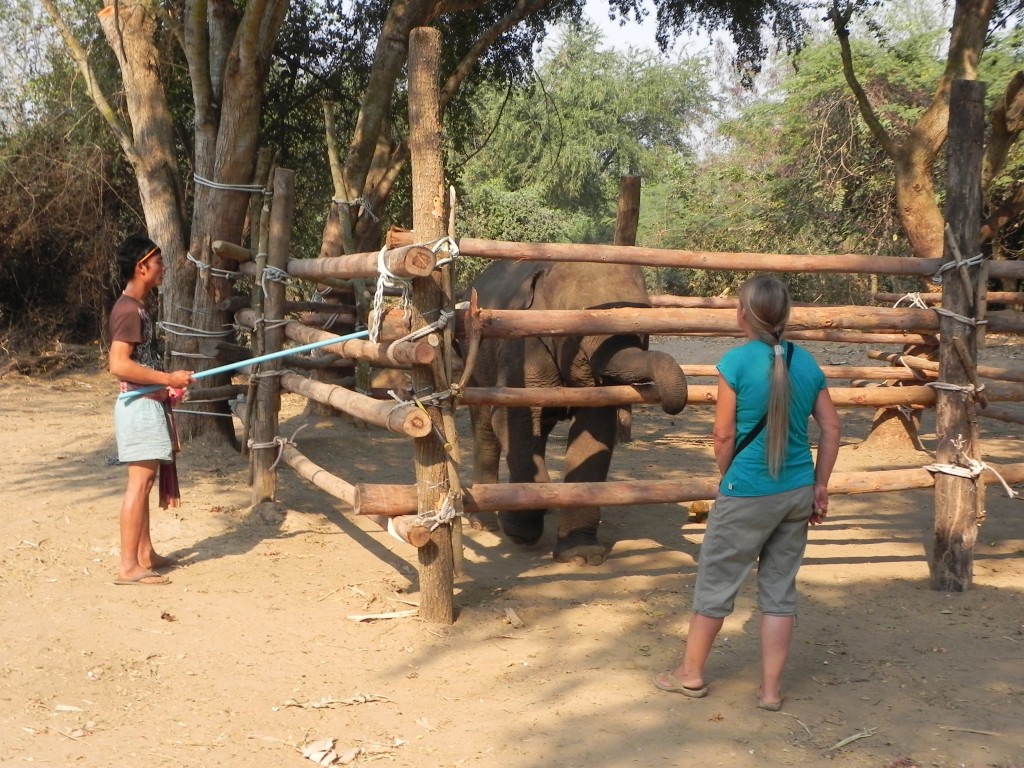
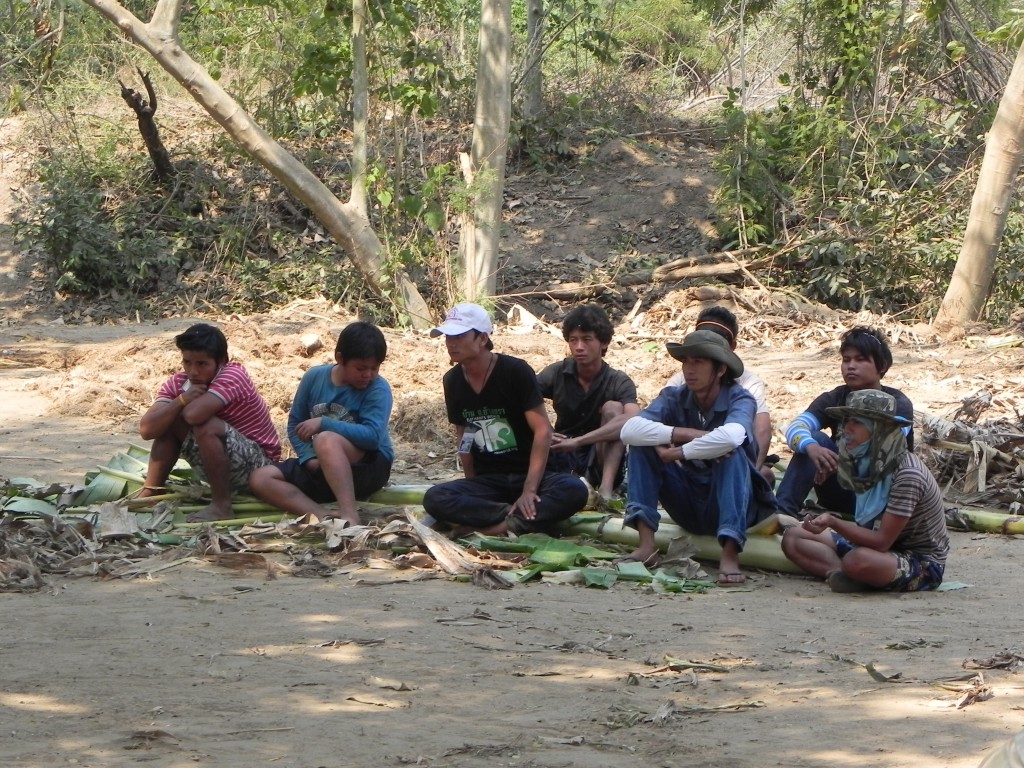
    Jon was well rested for his morning training session. Clearly he had thought about what he wanted to accomplish today. The mahouts sat a short distance from the corral in intense silence. They are all very young and, contrary to my initial concern, are quite open to this new training and me, a foreign woman, instructing them and their elephants.

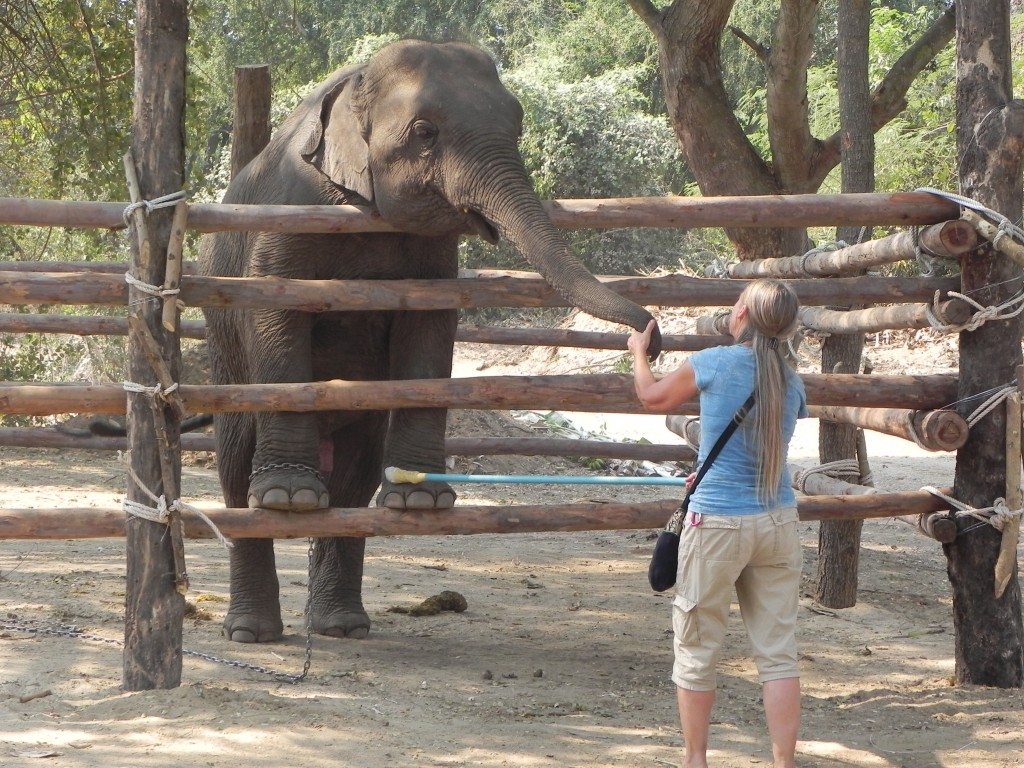
    Jon has figured out that hanging both front legs over the corral no longer gets a reward as it did in the first two sessions. He knows that the reward comes when one or both front feet are on the lower rungs of the corral. What a quick learner he is. The sparkle in his eyes is contagious; he finds much entertainment in the training game.

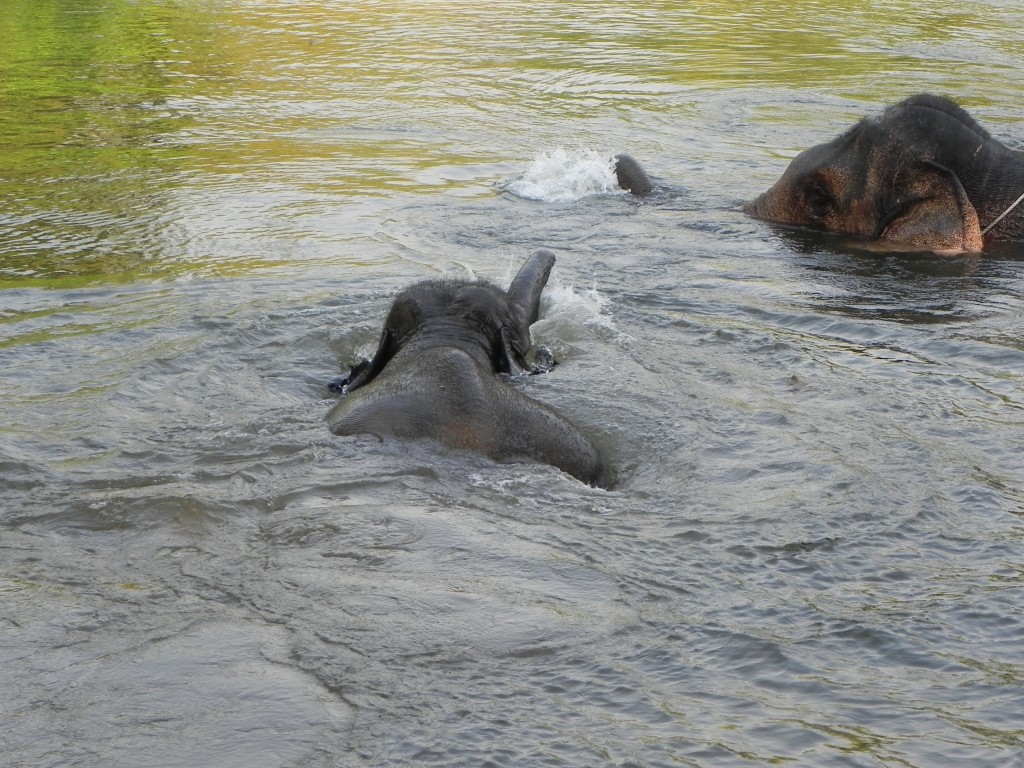
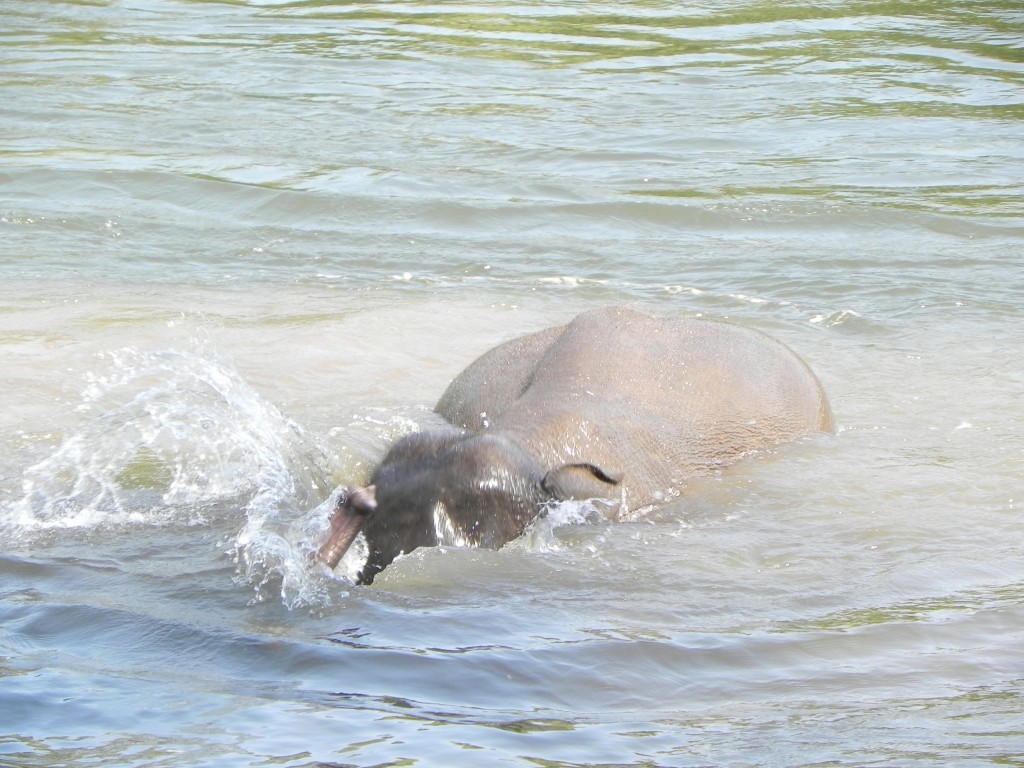
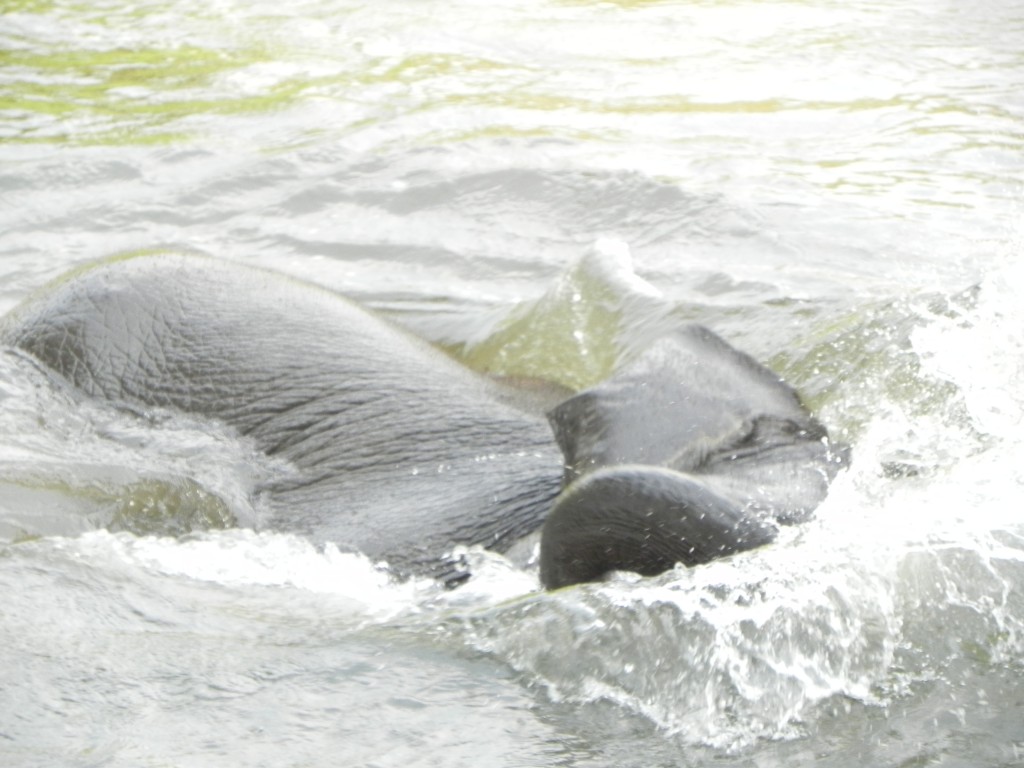
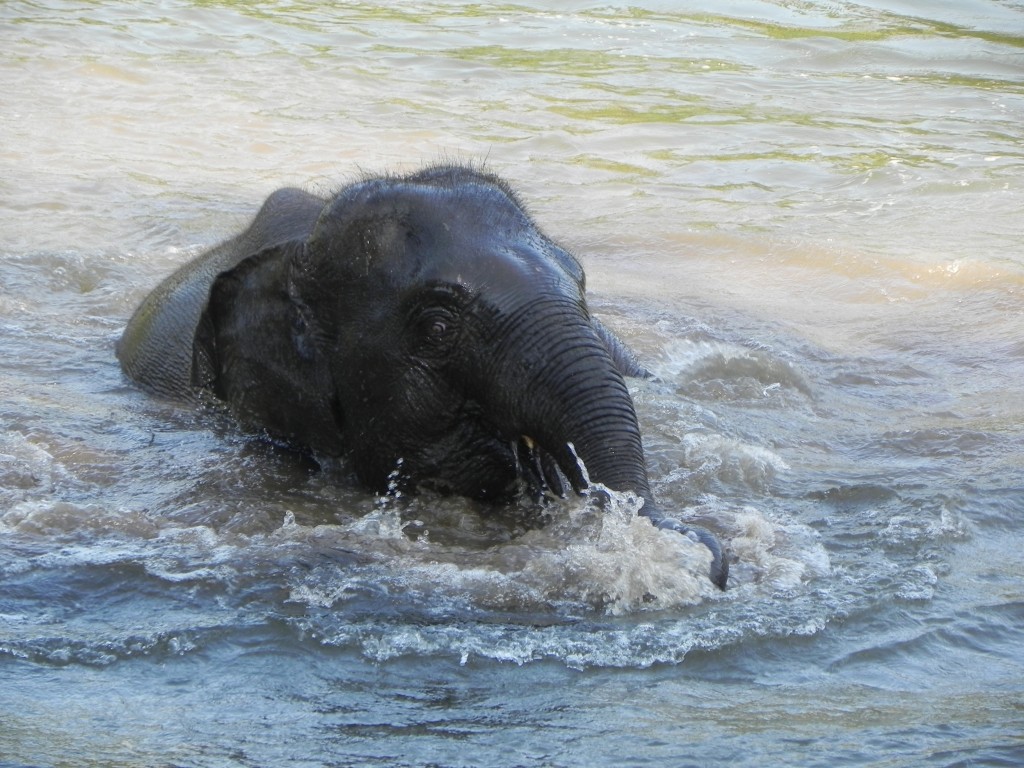
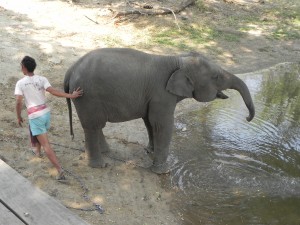
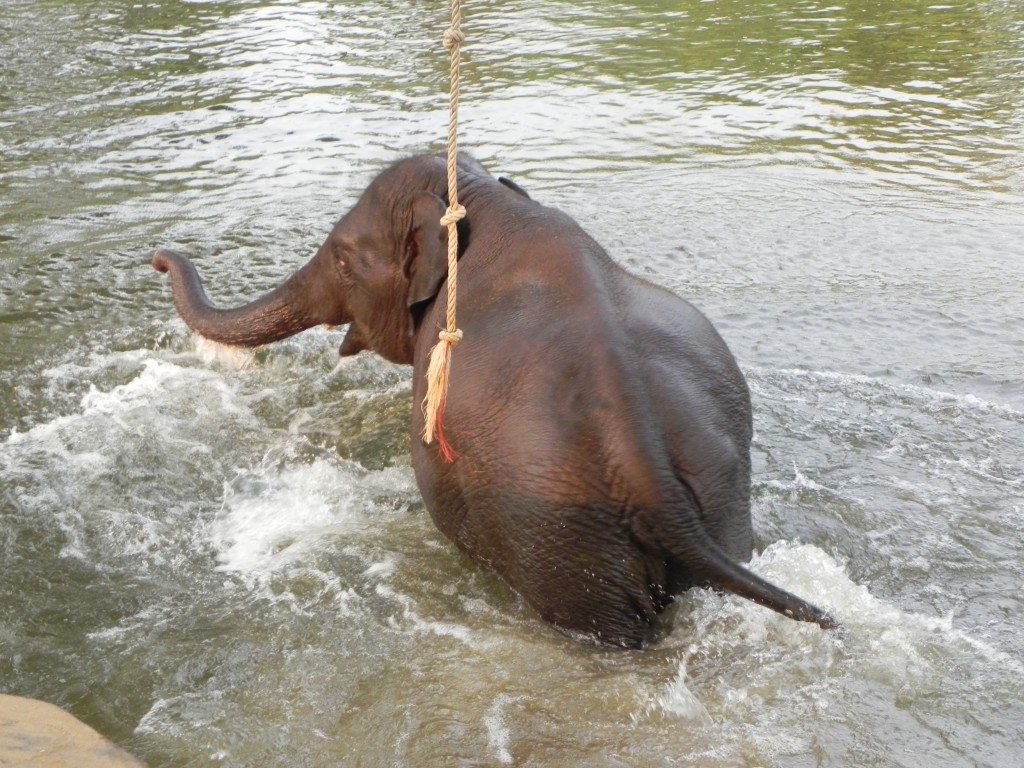
    After the session, Jon’s mahout took him for the ultimate reward: a swim in the river. The swift moving water is deep and refreshing from the looks of his antics. He spent more time under the surface than atop.

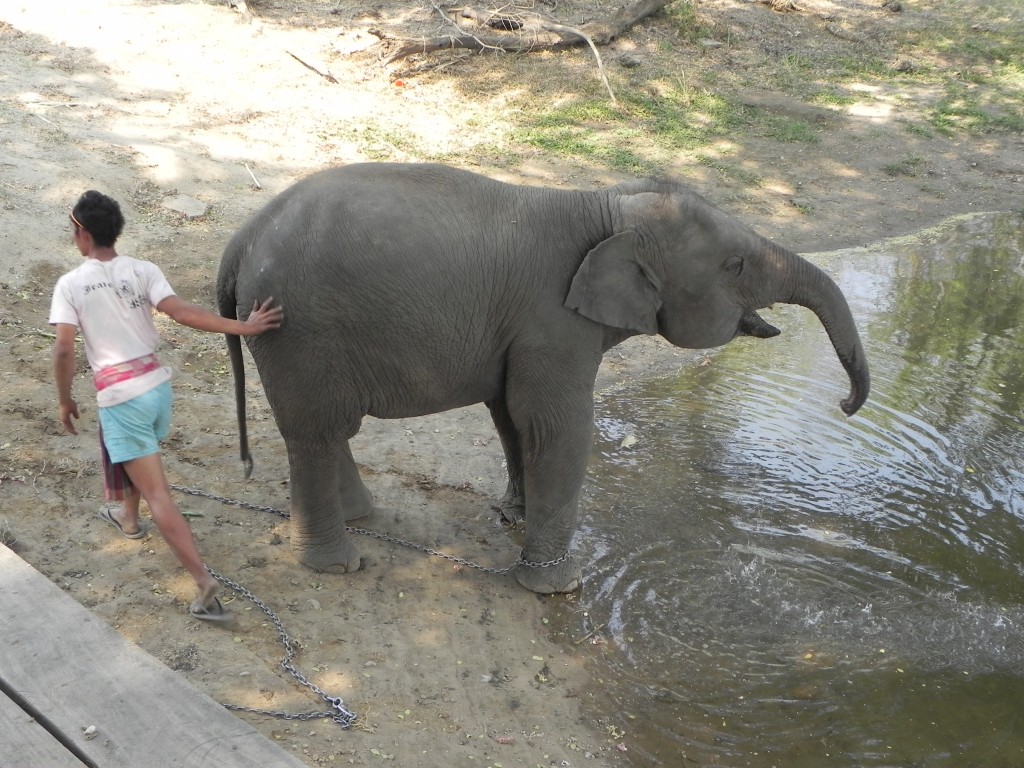
    I mistakenly assumed that Jon was never allowed in the river without a long drag chain attached to his ankle. But I learned that the tether was for the safety of the tourists. This morning there were no tourists so Jon was rewarded with extra freedom. He had a blast, completely unencumbered. Imagine how fabulous the freedom felt!

    Of course, every young boy has to test his limits and Jon is no different, so when he swam to the edge of the wooded observation deck and started to test his strength by pushing on it with his head, Piza, his twenty-one-year-old mahout told him to leave it alone. If we could hear the lower frequency used by elephants to communicate much of their thoughts and emotions, I am sure we would have heard Jon squeal in glee as he flung his body into the shallows causing a tidal wave when his huge head smacked the surface of the water and disappeared underneath.

    Jon played this way alone and unencumbered for several minutes, then emerged without hesitation at the invitation of his mahout, who cleverly presented a freshly cut stock of bananas.

  • a chance to help another calf in need

    a chance to help another calf in need

    The drive from Kanchatanaburi to Elephants World took about 30 minutes, the scenery quickly changing from bustling city to serene country side. I noticed acres upon acres of cultivated elephant grass, the first sign that a plan was underway to ensure that the elephants held in captivity are guaranteed a healthy food supply.

    It’s the dry season and the landscape shows it. The countryside is dry and sparsely treed in comparison to Northern Thailand. I made a mental note to ask if the seemingly barren hills that jutt up from the fertile valley floor are naturally treeless or the result of logging. I later learned that the hills are actually covered in bamboo. Since they are presently dormant the bamboo looks like dried brush, but learning that it is dormant bamboo made me see the distant rocky peaks in a much different light — they are mountains of elephant food.

    Elephants World is a new project with several rescued elephants ranging from 3.5-year-old Jon to the two ancient wise females affectingly referred to as the old ladies. A most magnificent river runs through the property, the jewel of the place and probably the best reason to create an elephant sanctuary in this location. They do allow visitors and most are Thais, who are different from the demanding foreigners who think every elephant was born to be ridden. The Thais are rather quiet and reserved in such a public setting. They were happy to sit on a wooden tree house platform on the river’s edge and watch in silence as the elephants enjoyed a lively swim.

    While observing, we discuss the center’s plans, dreams and current challenges. The discussion quickly focused on Jon, who is a wild calf who arrived in December after losing his mom. He is quite aggressive. There is concern among the staff about how to manage him humanely. His young mahout has done well with him, but the vet hopes to teach the mahout gentler ways.

    It only took about twenty minutes before I heard myself agreeing to come back to train Jon and his mahout and to trim the elephant’s feet as well. My mind was racing a hundred miles an hour because there were so many travel arrangements to change; well, not so many — nothing is ever permanent — and I simply cannot turn down an opportunity to help hands-on, making life better for elephants.

    The staff was excited when I said I would be happy to change my plans and return; it truly is my pleasure. We discussed the corral that needed to be constructed. The mahouts were so engaged, conferring with the vet and volunteer coordinator determining exactly where it would be, the size and construction and where the materials would come from. After a bit a discussion the vet turned to me and said that the mahouts will start collecting the supplies tonight and begin to build the corral tomorrow. I was pleasantly surprised because this is not an example of Thai time. It is an example of people seriously interested in improving their elephants’ lives and knowing that things need to be done now. What could I say but, of course, I will change my plans!

  • Mee Chok and Pang Suai

    Jan 24

    It’s my first day back at BLES and I am over-the-moon excited about what has taken place. As promised, Katherine had a sturdy exercise/training pen constructed and a raised concrete platform for foot trimming. With everything well in place and the mahouts briefed on the plans, Pang Suai made her way to the foot trimming platform. At first she was apprehensive about walking to the edge of the platform. Snaking her trunk over the side examining the distance between herself and the ground, she hesitated to get too close to the edge. The mahouts were fabulous, one on her neck in a position she finds familiar and another at her side reassuring her that she was okay. No elephant hooks, knives, nails or weapon were used, only patience and the talent developed over years of being with this elephant. It is an honor to work with these mahouts.

    Uncharacteristic of other elephants whom I have provided pedicures for, Pang Suai preferred that I trim her back feet instead of her front. This is unusual but I accepted her preference. After she relaxed into the back foot trims, we were able to trim her front nails and pads.

    Her pads and nails are healthy and only slightly overgrown, no cracks or serious decayed areas. Her cuticles were little overgrown but the pedicure took care of that. Like proud parents the mahouts could not stop bragging about how beautiful Pang Suai’s feet were. One mahout commented that her feet were so beautiful he would ask her to marry him!

    Still aglow from the success of the foot trimming session, I was told that Mee Chok would soon be available for his training session. With a bucket of cut bananas and a flexible target pole in hand, we made our way over to the training area. Mee Chok had just emerged from a refreshing swim in the pond with Lom and Pang Tong. All three made the gradual climb up to the empty elephant stalls. The elephants don’t stay in the stalls so it’s a bit of a ghost town with empty stalls dotting the area.

    With a little encouragement Mee Chok and his adopted family entered the stall, curious about the new enclosure. Stoic Pang Tong stayed at the far end while Lom and Mee Chok engaged in the new training activity. Mee Chok was full of energy, moving around a lot but always returning to the area of activity, which was the target, whistle and banana treats. He and Lom did well, and he started to get the idea after only 15 minutes. I did have to laugh at all the distractions, which in other training environments would be squelched — electric saws at a construction site, staff discussing their morning duties and a large delivery truck dropping off supplies. The elephants were aware and responded to the different distractions but continued to show interest in the training.

    That was the morning session, Mee Chok’s first session.

    When Kat asked how I felt Mee Chok did, I said he did well, by  the end of the session grasping the concept of the training. My guess was that he would spend the next few hours pondering the activity.

    Wow, did he ever ponder. When the family arrived for the second session, Mee Chok immediately responded to the “target” request. He had it! I pointed the spongy end of the target toward the stall and said “target.” Without hesitation, moving at a fast clip, singularly focused, Mee Chok walked right up and placed his forehead square on the target. BINGO, he got it!

    What came next was so exciting, a firestorm of activity driven by his comprehension of the game. What a joy to see Mee Chok engage in this game, so foreign but so stimulating. In no time he was striking the target with his feet at the word  “talle.” And then he decided that if one foot on the horizontal bar was good enough to get a piece of banana, two feet must be even better. Was he ever proud of himself, and I was filled with joy knowing that yet another baby elephant in Thailand will benefit from positive reinforcement training.

    The mahouts were smiling from ear to ear and giving us the thumbs ups. They could not have been more pleased. The session continued for about fifteen minutes with Mee Chok fully engaged and anxious to learn more. To say this was a good day would be an understatement!

  • Finishing up my work in Thailand

    Tim Gorski of Rattle the Cage Productions spent all day yesterday at the Park, from sun up to sun down, documenting the relationship between Chang Yim and Karl, his mahout. I was thrilled when Tim decided to wave his fee…he is an authentic animal welfare advocate. Check out his site at www.rattlethecage.org.

    The footage Tim took will provide the visuals necessary for a video comparison of free-contact dominance and free-contact non-dominance elephant training. This footage will be the first of many hours collected in support of positive reinforcement training for elephants.

    Oh boy, was it ever hard leaving ENP today. It was impossible to not get attached to the elephants during my stay because they absorbed me right into their family. I love and respect each one for their good humor, resilience and individuality. They are permanently embedded in my heart.

    I am on my way back to Boon Lott’s Sanctuary for one more week of foot care and positive reinforcement target training with Mee Chok. I can’t wait to see how he responds!

  • A Blessed Way to Spend Christmas Morning

    This afternoon I am leaving ENP for a few weeks. My travels will take me to Vietnam for nearly two weeks and then back to Thailand for a week at Boon Lott’s Elephant Sanctuary. So, as you might imagine, I was feeling anxious about leaving “the family.” Against all efforts I have grown seriously fond of them. In their world I am just another human sharing their days, but they are quite special to me.

    Leaving elephants even for a day has never been easy for me. It’s not that I need them; it’s that I feel so comfortable with them. I feel more like me in their presence. So in anticipation of my noon departure I did not linger at breakfast, knowing they were already out in the pasture.

    The morning was cooler than normal. The mahouts were bundled in jackets and hats. Several were crouched down in a tight circle, the crowns of their heads touching, focused on an activity that I soon realized was fire building.

    The elephants were several meters away, calmly grazing and mingling with each other. From the side I saw comical Faa Sai, frustrated mahout in tow, prancing across the pasture…holding a brand new house broom in her trunk. Obviously her mahout had abandoned his effort to get her to drop the broom, allowing her to bring her newly found “Christmas toy” with her.

    Faa Sai has been acting out for the past few days, since her former mahout left her to work with another elephant. Faa Sai does not respond well to all mahouts — loss of her mahout means that she must get used to a new mahout telling her what to do. Needless to say, she has been giving him fits.

    With Faa Sai back with the family, Dok Ngern started moving further out into the habitat. Instantly a voice rang out telling her to stop, to not go any further. The mahouts were cold and wanted to stay near the fire; if the elephants move, the mahouts are forced to move as well. Since the mahouts call the shots, the elephants sometimes are not allowed to roam as freely as they would like.

    But this morning I decided to take advantage of my designated authority and called to the mahout telling him “chang bai.” I don’t know if that is how it is spelled but it means “elephant go.” The mahout knew exactly what I meant and stared at me hoping I would change my mind. I repeated my request and what followed was glorious, humorous and admittedly probably a little frustrating for the mahouts who are being encouraged to accept some changes in the way they manage their elephants.

    Bua Thong, Faa Mai’s mother, was the first to sense a shift and began to walk slowly, almost guardedly, in the direction of freedom. I took advantage of my position out in front of the family and headed toward the river bed, hoping they would see that as a signal that they were free to follow and go wherever they wished…within reason of course.

    The family moved like a gentle ripple across the surface of a still pond and only the elders kept an ear out for the command to stop. It did not come so they kept moving. When they reached the edge of the pasture, which drops off into the river bed, Bua Thong and Dok Ngern appeared to shed the invisible cloak of control the mahouts cover them with and led their family out onto the river bottom, sampling the sparse vegetation that remains. The mahouts did not follow. For a moment in time it was the family and me.

    The mood was broken as one mahout left the warmth of the fire and came racing across the pasture intent on turning Bua Thong back. Bua Thong, ever the mature leader wanting only to keep peace and harmony, is easy to turn and, with her, many of the family members. When the mahout’s intent was clear, I called out “chang bai.” Body language goes a long way…luckily. I signaled for him to stop, moved my arms in the direction the elephants were heading and repeated “bai, bai.” His body language suggested he wasn’t happy with the request, but he complied and allowed the elephants to continue in the direction they were headed.

    I motioned for the other mahouts to join us, which they did, actually carrying their fire with them. By now the family had figured out that they were free to explore their environment with the sole restriction to not enter the banana grove and the nearby road. After one more request that the mahouts not prevent the elephants from grazing the tall grasses along the river bank, the elephants settled into a wonderful feast.

    Bua Thong discovered the giant grass and shared it with the others. The babies wallowed in the thick mud as they cruised the embankment selecting tasty trunkfuls of fresh grass. Faa Sai, always the one to push the limit, tried to climb further up the hillside than was acceptable. But she returned to grazing without much fuss, probably because the grasses were lush further down the hill.

    Each time the mahouts got comfortable in their tree beds or huddled around their portable camp fire, the elephants’ natural migrating tendencies forced them to move again. This dynamic is a challenge for elephant management: the elephants want to move but the mahouts would prefer they hang around in one place. On this day, at least as long as I was there, these elephants would be wandering. The mahouts seemed to finally understand the plan and, even if only half-heartedly, got with the program.

    Sitting on the dry sand river bottom with my knees held close to my chest, I took in the glorious scene playing out in front of me. I was filled with joy and gratitude to be here at this moment in time, watching elephants being elephants, in perpetual motion, playing, grazing, drinking, dusting and exchanging the nonstop physical and verbal communication that they are famous for. I forgot the chill of the cool breeze that was cutting across the open space as a feeling of deep contentment warmed my entire body. I felt the morning sun hug me from behind and gave thanks for this blessed moment.

    Walking away from the family was inevitable but I did so knowing that today, at least for the few hours I spent admiring them, they were as close to free as a captive elephant can be.

  • An added benefit of non-invasive research

    Earlier this week I had the opportunity to visit two more elephant facilities in Thailand.

    Anantara, near the Golden Triangle, was my first stop. Although long, the bus trip north was well worth the time.

    Anantara is a spacious resort nestled in lush forests bordering Myanmar. I was told that on rare occasions an elephant has silently swum across the river to foreign soil. An unsanctioned border crossing for sure.

    The elephant program at Anantara is well thought out. With the exception of the first few elephants acquired by the organization in its early development, all of the elephants are rented, providing continued employment for their owners. The mahouts’ families relocate from their homes in Surin, where street begging is a staple employment. Renting the elephant instead of buying has many advantages, including the quality of mahout, the beneficial long-term relationship between the mahout and elephant and removing begging elephants from city streets.

    Due to the number of captive elephants available in Surin, Anantara can insist on renting elephants with skilled mahouts who properly care for their elephants. By renting the elephant instead of buying, Anantara also avoids creating a market for elephant sales. (In the last few years, dealers have figured out that they can sell a sick or injured elephant and with the revenue buy a couple more.)

    The company pays a higher than average rental fee to encourage owners to stay long-term. They provide village-style accommodations and ensure that the children of the mahouts receive an education.

    What I observed at Anantara were relaxed elephants who had what appeared to be a healthy relationship with their mahouts. They were playful, responsive to their mahouts and displayed no fear or anxiety.

    Anantara is conducting non-invasive research on elephant intelligence, which was very interesting to observe. I cannot divulge information about the exact projects currently being conducted, but from what I saw this work will definitely add to the current deficient body of scientific knowledge about elephant intelligence. I am anxious to see what will be learned over the next few years.

    A by-product of the research is behavioral enrichment. Since these elephants, like all elephants in Asia, spend many hours each day on chains, the research benefits the elephant because they are off chains and engaged. Of course I would like to see the elephants off chains many more hours, if not completely, and posed that idea to John Roberts, the program manager. A progressive thinker with an open mind, John is motivated to explore ways to increase the elephants’ quality of life. Hot wire is a proven effective way to confine elephants without using chains and is already used in a small area of the elephant stable area. At first the mahouts were resistant to its use but they now seem to accept the new idea. I feel confident that in the future Anantara will utilize hot wire yards to increase the elephants’ freedom of movement.

    One of the most commendable things about Anantara is that all of the funds generated by its elephant program go directly to elephant conservation projects that benefit Asian elephants.

    In my next entry I will tell you about the second facility I visited.