Tag: asianelephants

  • a fiery red head

    a fiery red head

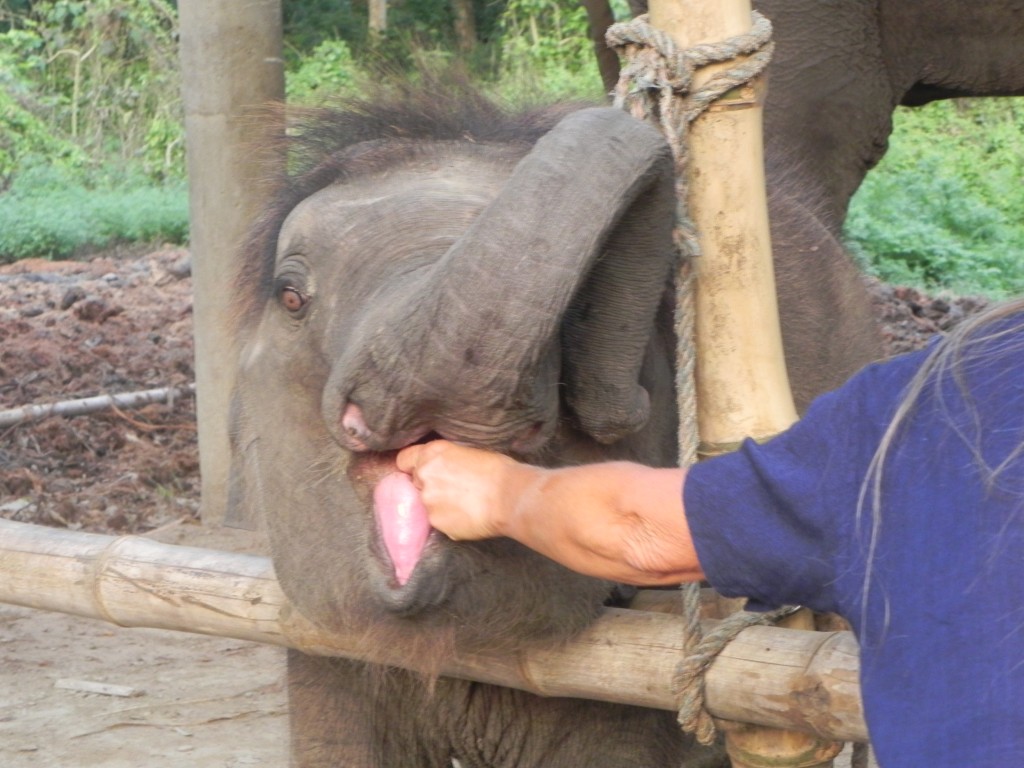
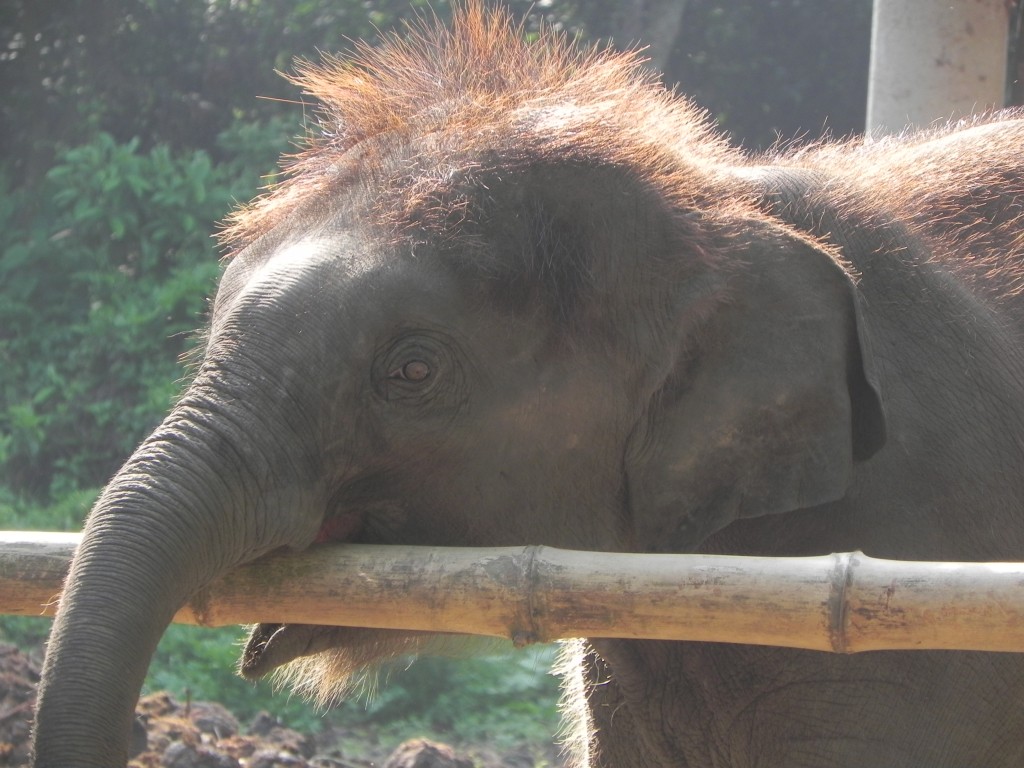
    I’ve got a new heartthrob. He is smart, dark and seriously handsome, with a full head of fiery red hair! Admittedly on the young side, Bhadra still lives with his mom and spends the entire day gallivanting in the Chitwan National Forest.

    We met two days ago and have spent only limited time together but let me tell you this little boy is smart. He is my latest ele-student, one year old and full of spunk and sweetness. There goes another piece of my heart!

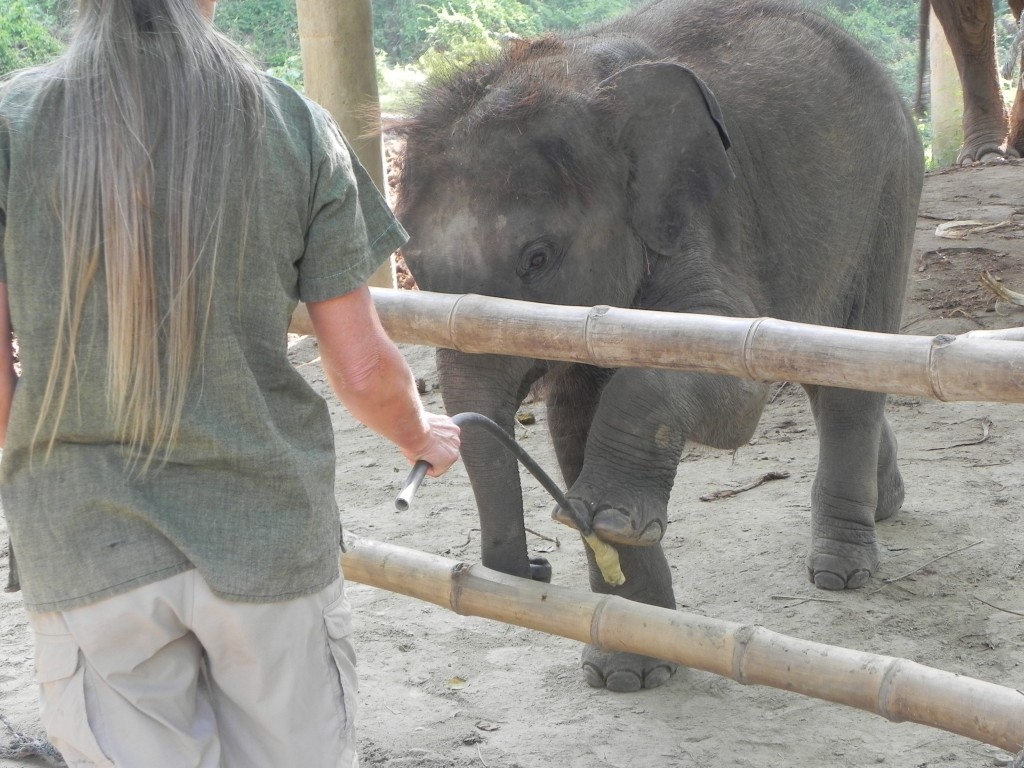
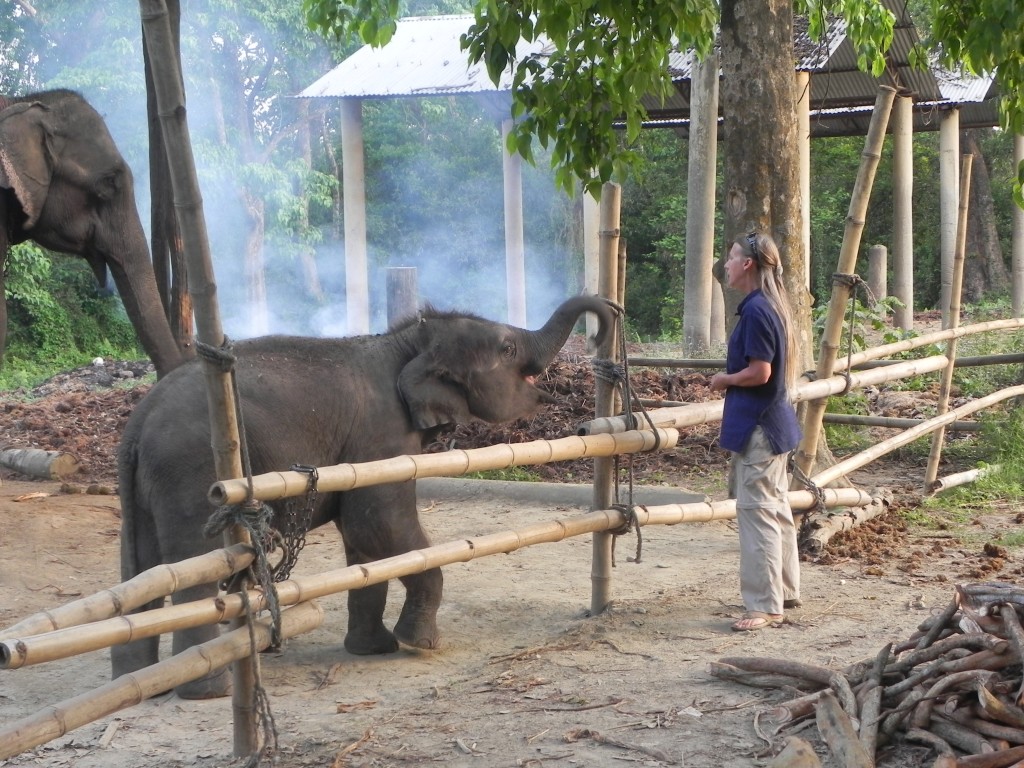
    Bhadra lives at a private resort on the border of Chitwan National Park with his mother, his sister and other non-related family. The resort has been closed for a couple of years, making life that much easier on this elephant family. No tourist rides, just lazy days in the forest and short training sessions, when Bhadra gets to demonstrate to his mahouts what elephants are capable of when trained through positive reinforcement.

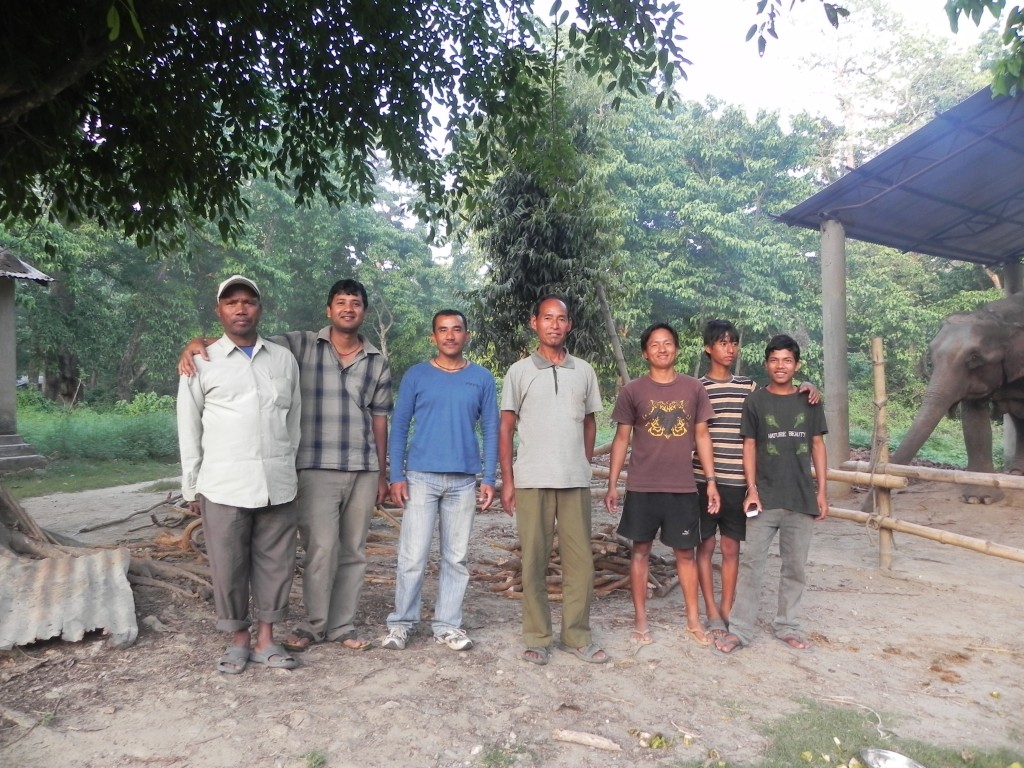
    The mahouts have been fabulous, very interested and engaged. Bhadra has only had four 15-minute sessions over the past two days and now responds to agot (come here) and ra (stand still), and presents his pow (foot), kan (ear) and thuk mud (head) when asked. Things were a little slow getting started because Bhadra surprised me by not liking bananas or apples. His mahouts knew exactly what he would like — molasses. One taste of the favored treat and he was all ears, head and feet!

    What a blessing it has been to work with him. Hopefully together we have planted a seed with these young mahouts.

  • Kasara Camp

    Kasara Camp

    Today I traveled many kilometers through Chitwan National Park to reach my foot trimming clients. To get there, I hiked to the river’s edge, boarded a small sailing vessel, crossed a river and drove through a magnificent forest, crossing over creeks on what I would call barely-bridges (as opposed to sturdy concrete ones). It was a wonderful adventure!

    When I reached the river, the tourists were packed like sardines in their low-rider boats with a boatman steering them lazily down river. Dr. Geare, the head Government veterinarian at Chitwan National Park, Chitra, a vet tech who works with Dr. Geare, and I were ushered onto our private dugout canoe with removable seats (little wooden stools that fold up against the side of the canoe when not in use), which silently glided across the river to the sand bank on the opposite side.

    Our driver magically appeared. We climbed into a truck and I must say had a ride of my life. It was only after we picked up several young soldiers hoofing it back to camp that I was able to release my firm grip on the door frame, the only thing keeping me from bouncing out of my seat and hitting head on the roof. The weight of the men in the back gave the truck better traction and kept the back end from bouncing up and down like a trampoline. It was a great ride through a beautiful forest.

    Within minutes a wild boar had crossed the road, male peacocks could be seen and heard sounding their calls, a monkey clung to the side of a tree, a couple of deer flashed by and too many muggers (crocs) sunned themselves along the back of a small creek.

    Our destination was the Kasara forest camp where four government elephants live. What a shift from Sauraha. Don’t get me wrong — Sauraha is a nice place for the government elephants — but in Kasara the elephants are really living in the forest. If I could only get rid of the chains and hobbles and put up some hot wire fencing, I would really feel as if I was helping them. Okay, one thing at a time — first feet trimming and then more freedom!

    Kiran was not with us today, but Chitra also excels at foot trimming. Upon arrival, I found that instead of the three elephants I was expecting there were actually four. Three elephants were scheduled for foot trims which is why they made it on the list, or maybe it was because the fourth elephant actually is unnamed. She is Laxmi Kali’s year-old calf. When I asked her name, a slight hesitation was followed by, “Her name is Laxmi’s calf.”

    After spending several days trimming the feet of privately owned elephants, I must admit that today really highlighted the differences from those owned by the government. The government mahouts seem to have a much better relationship with their elephants. They do not yell incessantly nor strike their elephants absentmindedly, which is good because Chitra and Dr. Geare had already heard my request for no pit neu. Actually, my request has grown more sophisticated following an impromptu Nepalese lesson I had last night. I was told that no pit neu is nonsensical and that the proper way to get my point across in proper Nepalese is hati lie na pita, which translated means, “Do not hit the elephant.”

    The foot trimming went smoothly, with the mahouts seeing for the first time how to administer proper foot care. They were very interested and helpful, and each appeared proud when his elephant’s trimming was completed.

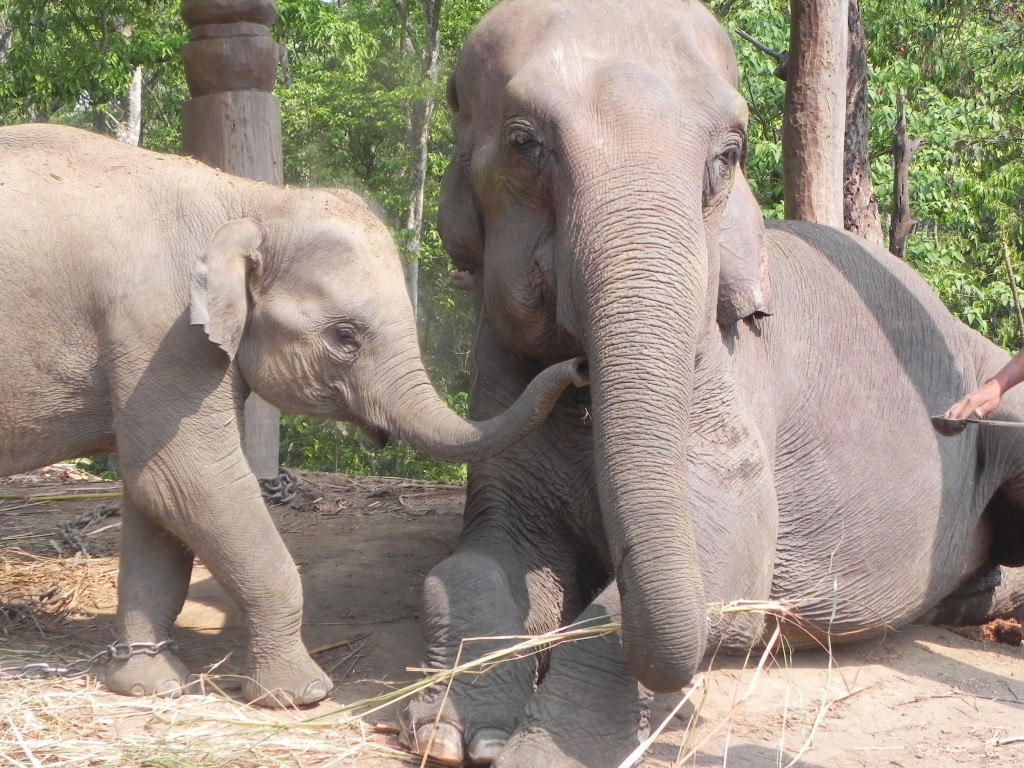
    Just as we were finishing up with Laxmi Kali, her calf decided that it was time for a drink and let out a boisterous “I’m thirsty!” yell. Mom immediately threw her hind leg in the air to get up, a fair warning to the mahouts that she really needed to respond to her calf. We all laughed, knowing how the babies call the shots. Laxmi jumped to her feet and baby got the drink she was so thirsting for.

  • Nepal Mobile Pedicure Parlor

    Nepal Mobile Pedicure Parlor

    Foot trimming with the privately owned elephants started yesterday. Once again Kiran, a veterinary technician working with NTNC and the government in Chitwan National Park, came through, setting up the foot trimming schedule and arranging for the elephants to be at the stable.

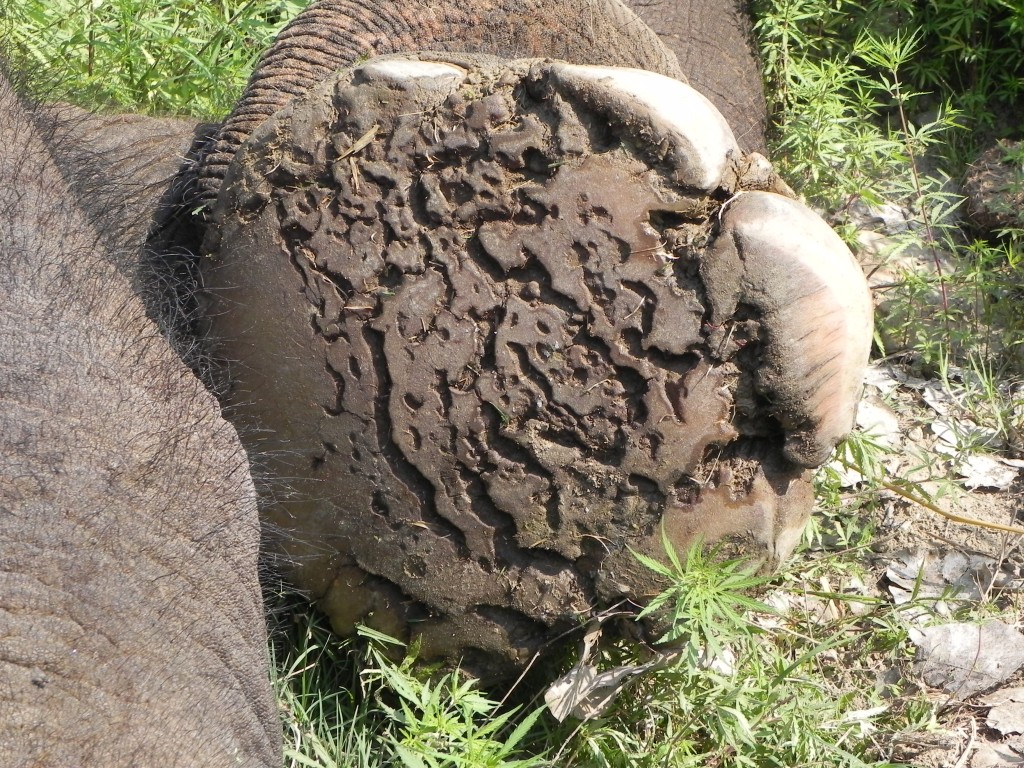
    Sona Kali laid down to expose feet in dire need of trimming. Her back pads were okay but the nails on all four feet were severely overgrown, decayed and split. The pads of her front feet had deep black tracks of bacteria.

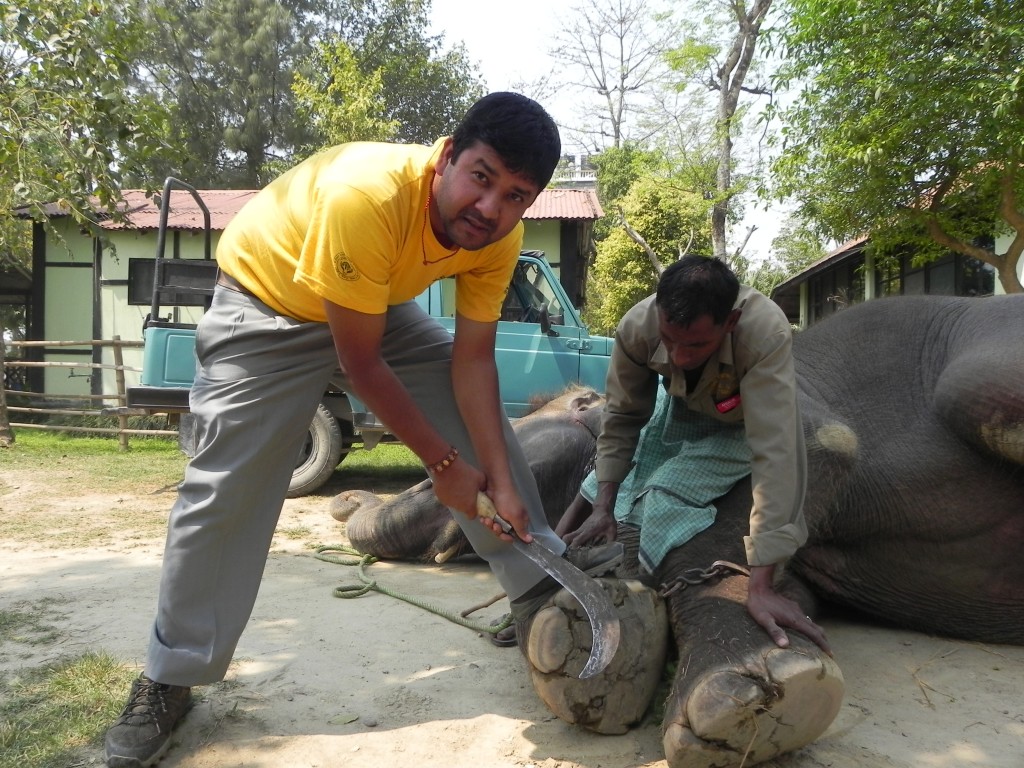
    The first difficulty we experienced was the mahout’s failure to respond to Kiran’s direction. At first I thought he was ignoring Kiran and then it seemed he did not understand what Kiran was saying. Araw means stop and, even if you don’t speak Nepalese, a mahout would know that word because they use it with their elephants continually. But when Kiran said “araw,” the mahout kept cutting. Without hesitation, Kiran took the knife and continued the trimming himself. The mahout training was a bit slow at first but when he finally started following Kiran’s directions, it seemed that he could end up being a good foot trimmer.

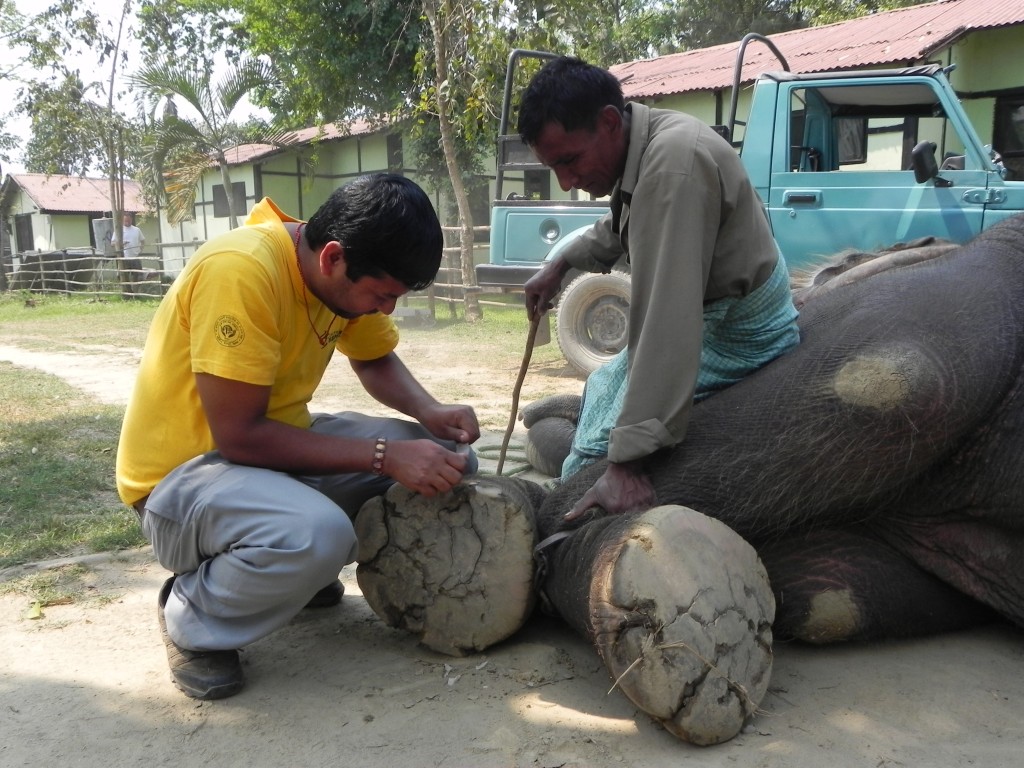
    Kiran’s and my partnership is well established. He starts with the big cutting, shaving down the overgrown nails, and I follow up with digging out the rotten areas, taking off more of the overgrown nail and shaping everything into place. It is a pleasure to work with him, not only because he does a good job but because he takes pride in doing a good job. When I am deep in concentration focused on a problem area Kiran will say, “Carol, please,” which I have come to understand means “move out of the way with that sissy knife and let me cut away more of that excess nail.” I am happy to oblige him because I can save my energy for sculpting.
    I must admit that Sona Kali’s feet had me sweating — they were definitely the most overgrown so far. We were able to trim her nails into shape but the thick tracks of bacteria were so deep between the toes of her front feet, it will take several follow-up visits over the next many weeks to bring her feet back to health.

    With all that Kiran has done to make this Nepal Mobile Pedicure Parlor a success, I want to raise some funds to show appreciation. There are forty private owned elephant here in Sauraha so we have our work cut out for us, but the effort is worth it: the elephants will have healthier feet and the mahouts will acquire additional skills. The truth is that I could not have provided this service without Kiran’s assistance.

  • Sweetie Kali

    Upon returning to the National Trust for Nature Conservancy in Chitwan, I was surprised and pleased to see Sweetie Kali still there. Last year I was told she was to be moved to the zoo in Kathmandu.

    Sweetie is less than ten years old so it was difficult for me to understand such a move. In Chitwan, Sweetie has daily access to the forest, the river, free grazing and foraging and lots of other elephants –: a life that provides benefits she would not experience in an urban zoo.

    Today I saw little Sweetie Kali moving at a fast clip, of her own motivation, across the expanse of community forest that borders Chitwan National Park. She and seven of her counterparts were in pursuit of a rhino that was to be radio collared. Gracefully moving faster than the other elephants she accompanied — all were her seniors — Sweetie Kali exuded pride and self confidence.

    I found myself caught in a quandary: why was I feeling positive about Sweetie’s engagement in this rhino search?

    It seems that I had allowed myself to let go of my personal opinion that Sweetie should not be working and allowed myself to experience Sweetie’s reaction to her involvement. Her self-motivation was obvious; there was no fear or apprehension or even hesitation on her part. Quite the contrary. A hint of a smile graced her baby face when she was able, without prodding, to overtake the other elephants in her group.

    The fact that Sweetie was part of the search party is testament to her skill and confidence level. Each elephant must contain the confidence to remain in pursuit, even when charged by an angry rhino. Sweetie has proven that she’s got what it takes: not fear of her mahout but confidence in him and most important, in herself.

    Sweetie’s mahout rode gallantly atop her bare neck, projecting the image of a proud father. He never struck her or yelled, but encouraged her to challenge herself to move faster than the others, cutting them off and gaining rank.

    The look on her face was priceless — she reveled in the game. Her age gave her an advantage. Being young, Sweetie does not suffer the aches and pains experienced by her elders. Her gate was smooth as a still lake and her attitude reeked of confidence.

    I saw young Sweetie Kali and all the forest patrol elephants in a different light today. These elephants will never return to a life in the wild; they will spend their entire life in servitude to man. Within such parameters, I cannot think of a better way for them to live than amongst their comrades, immersed in the forests, engaged in stimulating elephant-friendly activity that keeps them fit and confident.

    No, I am not advocating that captive elephants should work for their keep, but they do. What I do support is that they be treated with kindness and respect and allowed to live a life as close to nature as possible. I believe that we can improve upon the life of forest patrol elephants, making improvements to their welfare. But short of returning them to a safe wilderness (which does not exist), these captive elephants are the lucky ones.

  • Breeding Center

    Kiran, the government veterinary technician, and I finished trimming feet at the Government Breeding Center yesterday.

    I was so pleased that things really changed from the first day. I spoke with Kiran about the mahouts hitting the elephants; he was great. Without hesitation, he engaged the mahouts, men he has worked with for many years, and explained why they cannot hit their elephants. From his intonation and body language, I could tell that Kiran took my request very seriously and the phonits (lead mahouts) and mahouts listened intently. . They respect Kiran and followed his direction without hesitation, which was that at no time should they hit the elephants.

    When the first nervous elephant laid down, the mahout unconsciously went to strike her instead of allowing her time to lay her arthritic body gently to the ground. The other mahouts and Kiran cried out in unison – “no pit nau” (show respect-don’t hit).

    Stopping in mid-swing, you could see that the mahout had not realized he was about to hit his elephant; the action is so ingrained there is no thought associated with it. Like breathing, it is automatic. For the next 90 minutes, the mahouts needed to remind each other only a couple of times, and the reflex to hit was quickly under control.

    It was great to see the mahouts monitor each other in an effort to comply with our request. There was even laughter when a mahout would absentmindedly raise his stick and other mahouts would verbally jump all over him. All of the mahouts and phonits got into the act of making sure no elephants were harmed during my time at the center. Joking around with the mahouts and having Kiran present made it possible to create a calm and abuse-free environment. As expected, the elephants relaxed into their pedicures.

    The elephants at the breeding center spend the day out in the forest browsing and the nights chained under a shelter. Mothers and calves are allowed to stay together until the calf is around five, and I must say, the center runs quite smoothly.

    With a good mix of young and senior phonits and mahouts, we had lots of guys jockeying for a turn to trim feet. The competition between men and boys did not hurt a bit, and then add to the mix that a woman was doing trimming. By the second day I was able to instruct the mahouts to do the heavy cutting with the cycle knife (which I refuse to touch), leaving me to do my favorite part: intricate trimming and shaping with my prissy exacto blade. At first the guys laughed at my knife but the smiles melted from their faces when they tried to trim with it. They quickly learned that my knife was designed for precision work, not brute strength, and that it takes some time to get a feel for it. In the end, the guys were opting for the girly knife and doing some really fine trimming on their elephants’ feet.

    Dr. Geare, the head government vet, checked on our progress several times over the past two weeks. He encouraged his staff to learn as much as possible, stating that with proper foot care the center would save money. He said that in the past many elephants developed foot problems requiring drug therapy, antibiotics and anti-inflammatory treatment. He was optimistic that by learning foot trimming skills, the phonits and mahouts could ensure better foot health for their elephants and reduce the need for drug therapy.

    Each morning on our way to the breeding center we stopped at a local produce stand to buy a stock of bananas. Kiran was a champ, never complaining about having to taxi me around on his motorcycle. The road to the breeding center is…well…how do I say? — rocky! Potholes are not the concern; it’s all the boulder-size rocks used to make the paved surface. Watch out when you fall…ouch!

    We did take a spill, once. Luckily we were driving quite slow, crossing another road, when a baby goat, in hot pursuit of breakfast, darted right under the front tire. Kiran successfully avoided the youngster but spilled the bike as result. I saw it coming and was only concerned that we not hit the goat. The local shopkeepers rushed out to brush the dust from our clothes and make sure we were okay. I craned my neck to see the condition of the goat. She was safe and sound a few feet away, suckling from her mom with her twin sister, unconcerned about the commotion she had created. In Asia animals may be treated differently but they are valuable, more valuable than the motorcycle we rode on. If Kiran had harmed or killed the goat he would have had to reimburse the owners for her value. Needless to say, every precaution is taken to avoid harming someone else’s livestock.
  • The TARGET of target training

    A target is a tool — a flexible pole with a spongy end — used to shape behaviors. Its purpose is to create a focal point, a benign object for the elephant to focus on.

    To start, we touch Chang Yim’s head gently and say “target.” When he makes contact, we blow a whistle and give him a treat. Chang Yim quickly connects the whistle with the touch and, of course, the treat with the whistle. Throughout the training we touch the target to different parts of Chang Yim’s body — his foot, ear, leg and side — following the same process, giving each body part a name.

    When Chang Yim understands what we want, he responds by touching the appropriate body part to the target. The whistle sounds and he receives a reward, a treat. In moments, Yim makes the connection. He is quickly learning his ear, head, side, feet and back.

    The purpose of this training is to gain Chang Yim’s cooperation for medical procedures and foot care. He is never told no and can never fail, which helps boost his self-confidence and willingness to engage in the game. Done properly, the training becomes a much-anticipated activity that Chang Yim freely participates in.

    Learn the basics of target training.