Tag: asianelephants

  • A Tribute to Mel Kali

    A Tribute to Mel Kali

    In 2013, Mel Kali, the senior member of the National Trust for Nature Conservation’s elephant herd, fell ill. It was winter, it was cold and she was suffering from pneumonia.

    Being in her early 70s and in poor body condition, her prognosis was not good. In fact, staff told me there was nothing they could do and that she was dying.

    Mel Kali’s chain-free corral had been completed only recently. It struck me that after all her years of service she wouldn’t benefit from her new found physical freedom. I was overcome at the thought that nothing could be done medically to ease her pain or address her condition.

    Mel Kali had served the Trust well for decades, performing daily anti-poaching surveillance, transporting wildlife researchers and generating funds by providing tourist rides. She was mentioned in many research papers and was even featured in a book, which noted her bravery when encountering tigers inside Chitwan National Park.

    It saddened me that Mel Kali would be allowed to suffer and die without any effort to ease her pain. I felt helpless and ineffective.

    A new plan

    As I sat watching Mel Kali, I knew I wanted to help her one more time. I had a good relationship with the mahouts and knew that if I asked, they would convince management to let me arrange for treatment for her. Even if she did not survive, she would not suffer.

    The mahouts could see I was distraught. But when they tried to comfort me by saying there was nothing we could do, I told them of my plan. All were immediately on board.

    I arranged for the best veterinary care available — Kiran Rijal, a local vet tech under the direction of senior government veterinarian Dr. Gairhe.

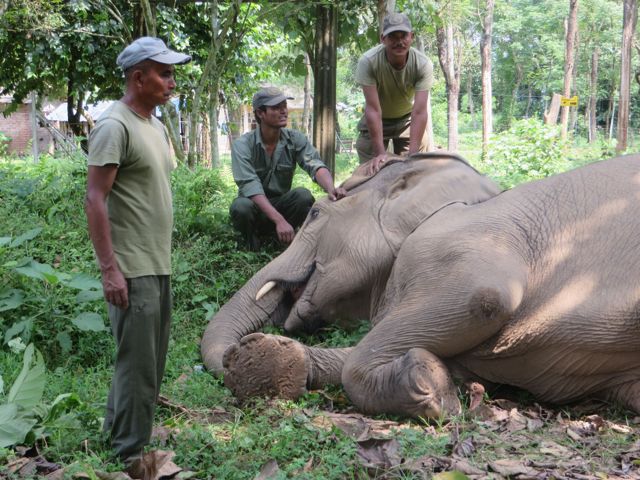
    Within hours Mel Kali’s corral was abuzz with mahouts, veterinary assistance and hope. We were all working together to help her. Her mahout sat on top of her head holding bags of meds and fluids while Kiran attached intravenous drips to the veins in the back of her ears. We administered vitamins and antibiotics to help her fight off the infection that threatened to take her life. And Shanti Chaudhary, head mahout Paspat’s daughter-in-law and a dear friend of mine, sat down at her sewing machine to create a blanket to keep Mel warm.
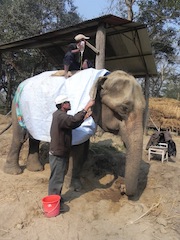
    The energy in the hattisar (elephant stable) was alive with hope and camaraderie. Any sense of helplessness was gone. We were united in our effort to help Mel Kali, who was cooperative in every way. There is no doubt she was aware we were doing all we could to help her.

    After three days of around-the-clock care it was obvious that Mel was going to recover. So much had changed. In addition to administering medicine, fluids and supplements, we reevaluated Mel’s diet. We added extra rations, including a giant cauldron of cooked rice with molasses and gram, a source of protein, to put weight back on her emaciated body.

    EAI put out a call for help and our supporters responded generously. Their donations paid for Mel Kali’s medical treatments, blanket and daily rice and molasses rations for the next many months.

    But what followed next was a surprise, without question the most exciting thing to come from her recovery.

    Mel Kali was officially retired.

    Retired and thriving

    The action was unprecedented. Mel Kali was the first elephant in the history of Nepal to be retired. No longer would she give elephant rides. No longer would she be used as a transport vehicle for researchers. And no longer would she spend long days engaged in anti-poaching patrols. Instead, Mel Kali was to begin a new chapter in her life as a free roaming elephant.

    Once she was fully recovered, Mel Kali was escorted to the banks of the Rapti River, a short distance from her hattisar, each morning. Then her mahout-escort would say, “Okay go, you’re free.”

    Without hesitation Mel Kali would wade into the middle of the river and pause to take several refreshing drinks before continuing to cross into Chitwan National Park. She had no escort, no mahout, no riders, no one to direct her movement or dictate her actions. She had complete autonomy to do whatever she wanted.
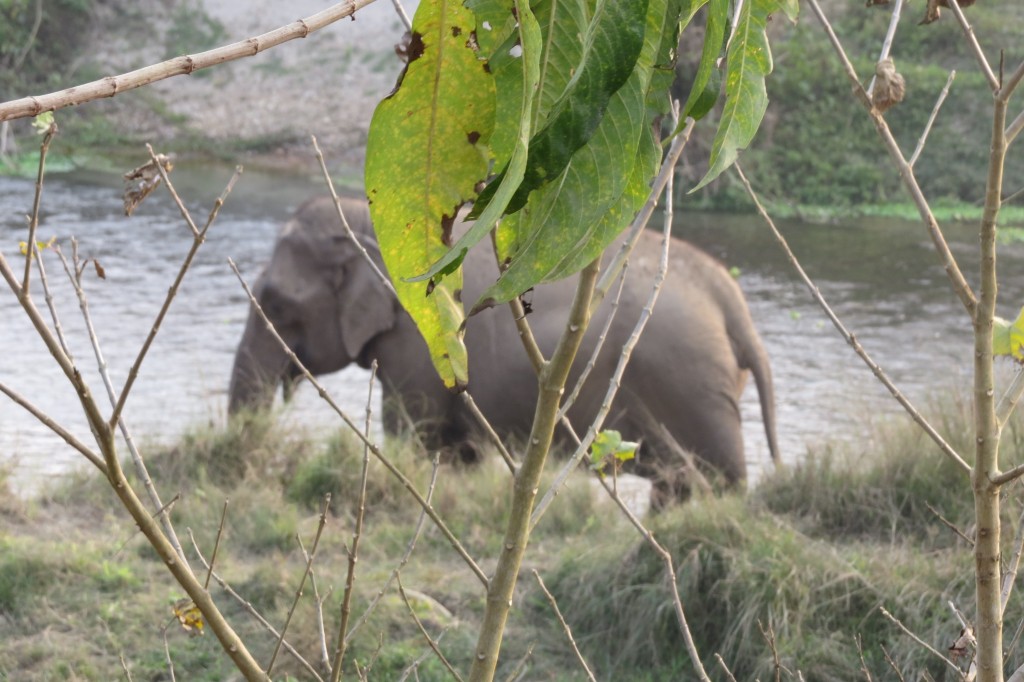
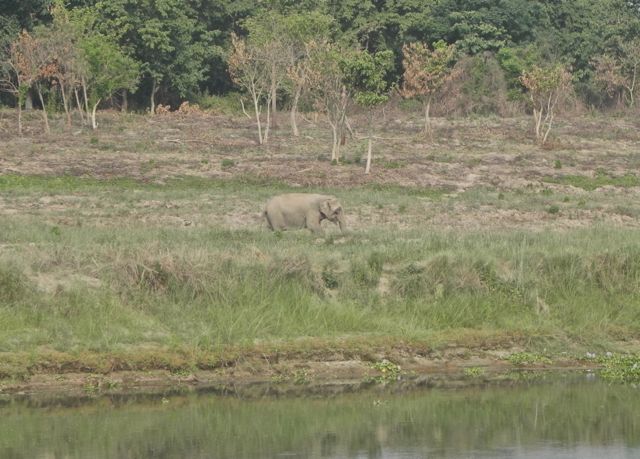
    What she wanted was to disappear into the dense jungle each and every day. She was free to wander for the rest of the day and even overnight if she so desired. Many days she could be seen in the company of Renaldo, the resident wild bull elephant. It seems they enjoyed each other’s company.
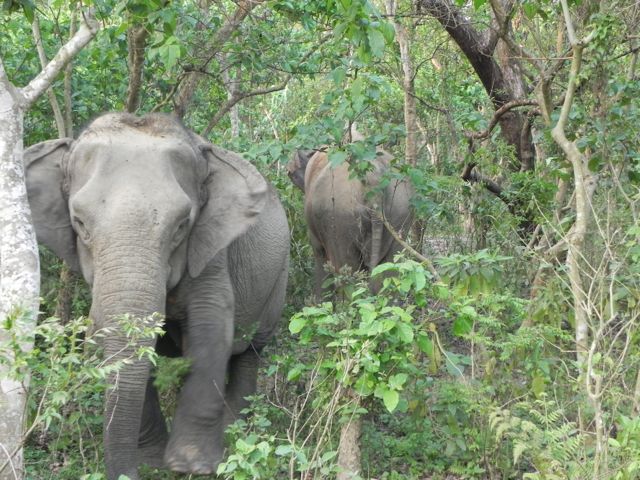
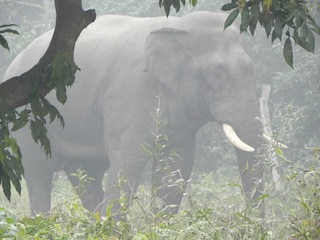
    Five adventure-filled years later, Mel Kali continues to thrive. Most evenings she returns to the hattisar on her own. As she approaches the riverside tourists point and exclaim in excitement, “Jungle hatti!” (wild elephant), unaware that Mel Kali is not wild. She wades across the river, scales the embankment (avoiding the curious tourists) and makes her way to the back side of her corral. Many times she has to stop on the narrow dirt footpath until awestruck tourists scamper out of the way. Never does she show aggression or pay any attention to the two-leggeds snapping selfies as she passes by.
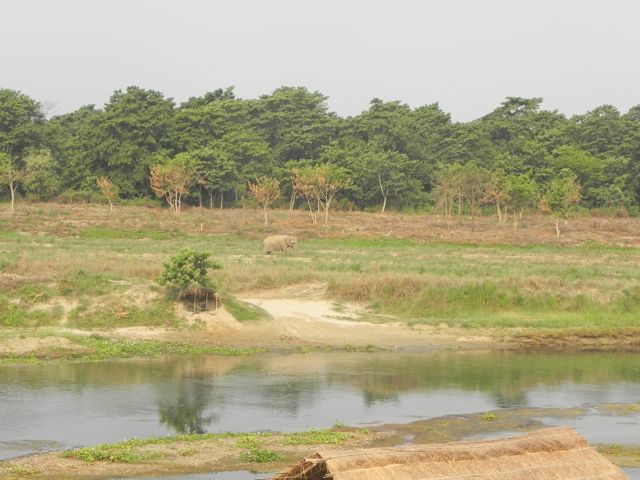
    In anticipation of her return, a mahout stands ready to open the gate to her corral.

    Like a queen returning to her throne, Mel ambles to the front of her spacious chain-free corral to partake of her cauldron of freshly cooked rice and molasses, a treat that her mahouts enjoy providing as much as she enjoys eating.

    Five years ago when Mel Kali fell ill, no one expected her to live past a few months. No one expected her to gain weight and the confidence to live free. No one expected to see her spend every day free of human dominance.

    No one but me.

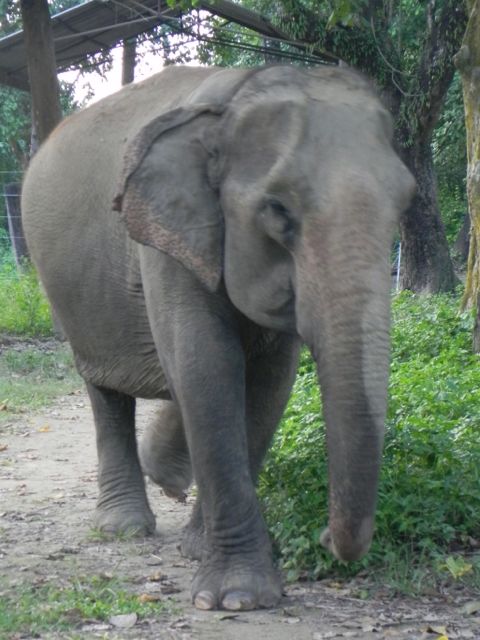
    Today Mel Kali is not only the most famous elephant in all of Chitwan National Park, she is also known as the healthiest elephant in the region. She is living a new model in the world of captive-held elephants, a model that respects her lifetime of service and recognizes that freedom from human control is her birthright.
  • Two Great Ways to Support ERNA!

    Two Great Ways to Support ERNA!

    CoCre homepage imageTwo terrific fundraising sites are supporting the Elephant Refuge North America (ERNA) fundraising campaign.

    The Animal Rescue site is offering an opportunity to support ERNA and have your donation doubled! For a limited time, a generous donor will match your $8 donation, which will pay for two feet fencing, up to $15,000! Don’t wait – donate today!

    The CoCre website is a storytelling platform to raise awareness and resources for good causes and organizations. The site has launched a fundraising campaign to support ERNA.

  • National Geographic Features EAI

    National Geographic Features EAI

    img_8428_carol-interviewed-by-nat-geo_med

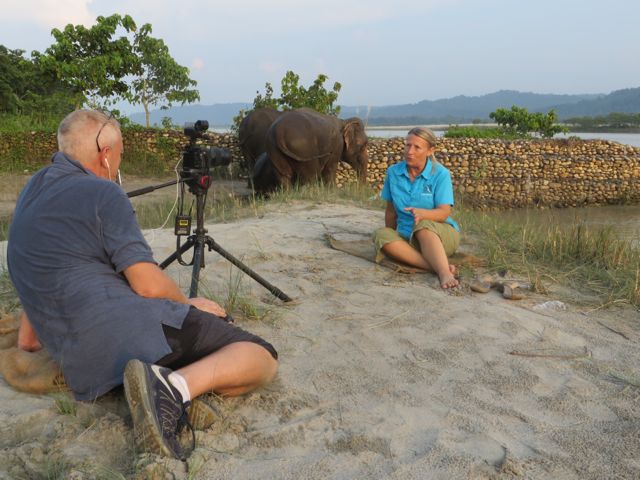
    A new feature in National Geographic, “Captive Elephants Freed From a Life in Chains highlights EAI’s work in Nepal. Carol tells the magazine that “getting [the elephants] ‘chain-free and pain free’ is a start toward improving the lives of captive elephants across Asia.’”

    Read the story and watch the video.

  • Unchained: New Documentary on EAI

    Unchained: New Documentary on EAI

    unchained poster

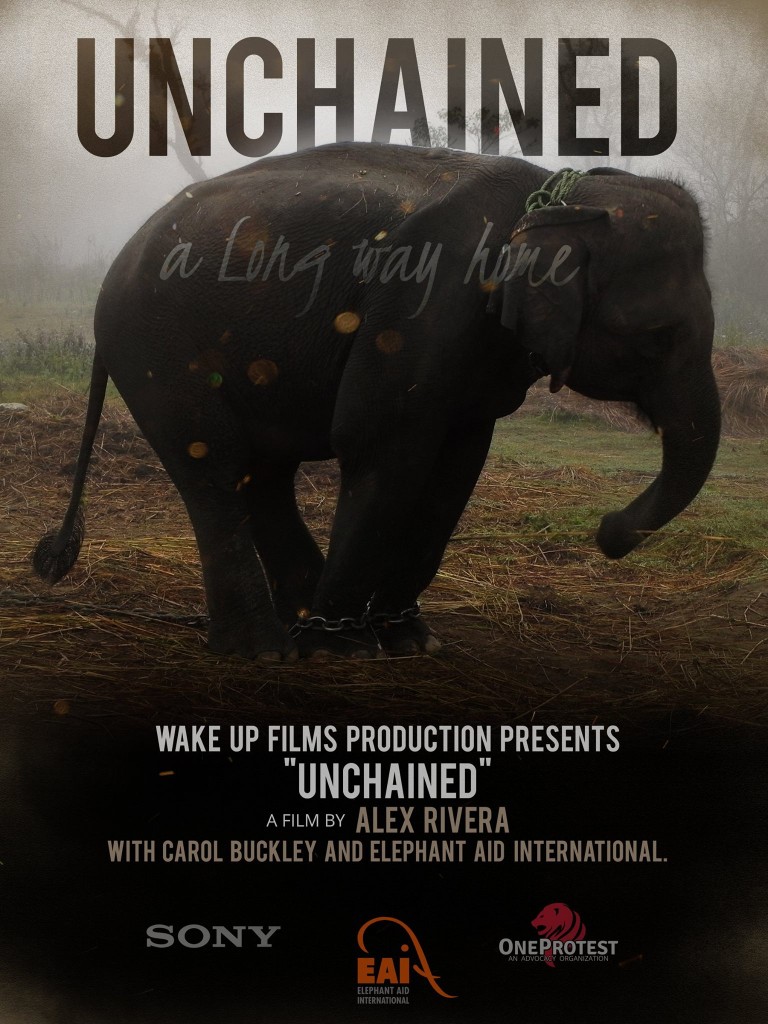
    A new documentary on the work of Carol Buckley and EAI improving elephant welfare throughout Asia has been selected for the 15th annual Wild & Scenic Film Festival.

    unchained_wild-scenic-festival

    “Unchained” follows Carol and her team in their quest to enhance captive elephant welfare in Nepal. Using gentle persuasion and showing by example that there is a better way to treat elephants in captivity, Carol takes a phased, pragmatic approach to changing attitudes that relies on winning the buy-in of owners and mahouts (elephant handlers).

    Watch the trailer.

    Learn more from the Unchained Facebook page.

  • The Escrow Contract is Signed

    The Escrow Contract is Signed


     The escrow contract is signed! 75 days until closing. Elephant Refuge North America will build on what has come before, providing additional options for elephant rescues and retirement. Please participate in this grass roots project to create the next generation of elephant sanctuaries.

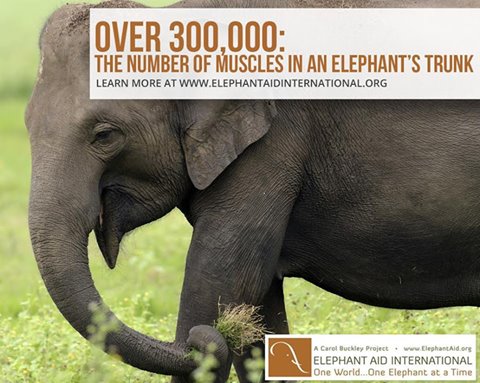
    Did you know: There are over 300,000 muscles in an elephant’s trunk. Elephants’ strong trunks help them navigate through life, aiding in the ability to eat, bathe and protect themselves.

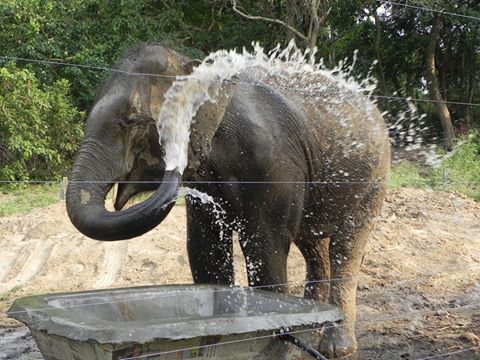
    This magnificent beauty is happy to be bathing chain-free.

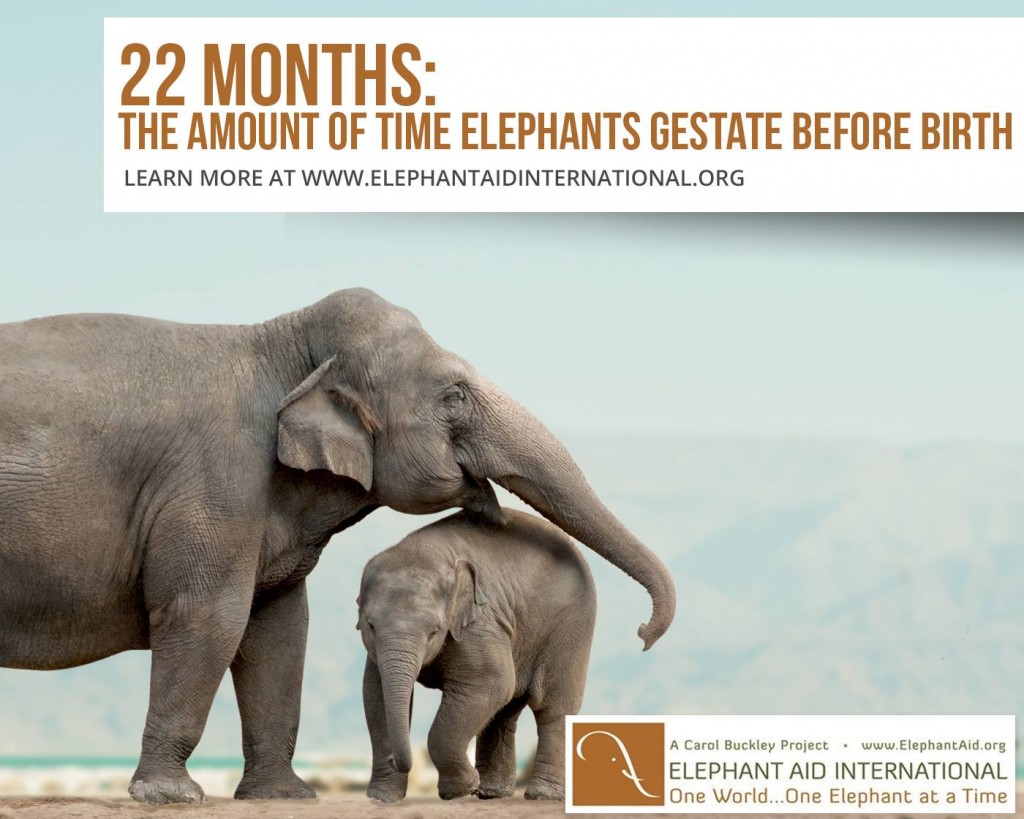
    Did you know: Elephants gestate for 22 months before birth.


    “Until one has loved an animal, a part of one’s soul remains unawakened.” — Anatole France

  • New DJ&T Grant Funds Lambodhar Prasad Project

    New DJ&T Grant Funds Lambodhar Prasad Project

    Lambodhar PrasadElephant Aid International sincerely appreciates a generous grant from the DJ&T Foundation in support of our The Lambodhar Prasad Project: Freeing Nepal’s Chain Gang. DJ&T founder Bob Barker is known for his philanthropy on behalf of animals; EAI is delighted to have the foundation’s support for this revolutionary project.

  • Hanako

    Hanako

    Three days have passed since I was in Japan to meet Hanako and assess her welfare.

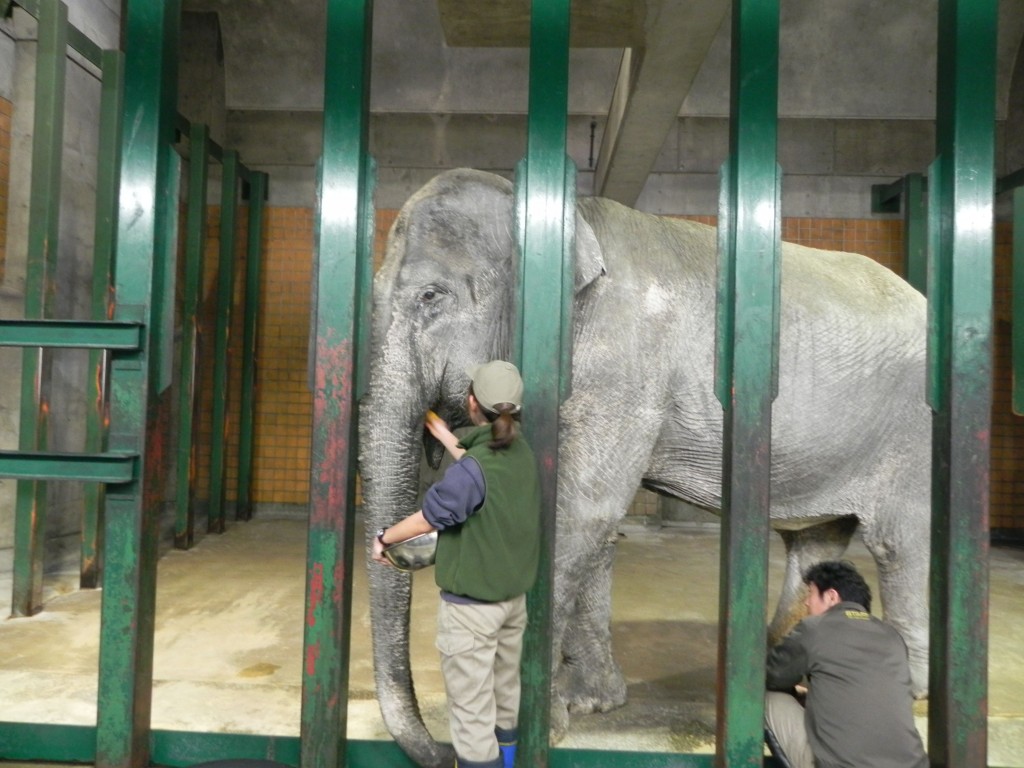
    Hanako has lived at the Inokashira Park Zoo for the majority of her 69 years. Her small concrete exhibit, antiquated dry moat and solitary existence are a far cry from what nature intended for this wild-born, highly evolved, social being.

    In a better world Hanako would have lived her entire life with her extended family of mother, sisters, nieces, aunts and grandmother. Knowing that Hanako has been denied her natural life has led many people to believe that she must be miserable.

    The common consensus was that moving Hanako to a sanctuary is the only way to improve her life. Under different circumstances that might be true.

    But after visiting with Hanako and seeing her for myself, I realized that moving her now, at this stage in her life, is not an option. I prepared a report for the zoo with many recommendations for how staff can improve her life. Moving Hanako to a sanctuary was not one of them.

    The news that Hanako will not be moved to a sanctuary resulted in an outpouring of emotional responses from her supporters worldwide. Many were angry. Some could not accept the fact that such a move would traumatize this geriatric elephant, causing her more harm than good. The universal reaction shared by all was mourning Hanako’s lost opportunity for freedom.

    No one is more heartbroken than I that Hanako will never experience her birthright, living in a natural environment with trees, grass and other elephants. It would have been a dream come true, if not for Hanako’s advanced age, lack of teeth, failing eyesight, frailness, change in sleeping habits (she no longer lies down to sleep) and inability to cope with change. Hanako’s reality is that she is a senior citizen in hospice care.

    I am convinced that zoo staff are sincere in their intention to better Hanako’s situation. Ulara, who is spearheading this effort for Hanako, will work diligently with them to implement the changes I recommended.

    Even though Hanako will not be moved from the zoo, the deficiencies she has lived with for decades will be addressed. The outdated moat can be filled in or fenced off to keep her from falling in. Rubber flooring is a quick and viable solution to hard, cold concrete surfaces. Additional behavioral enrichment objects will help stimulate and keep Hanako active. Strategically placed infrared heaters and automatic waterers will increase her comfort. And Hanako’s keepers, whom she is so very fond of, will be encouraged to spend more time interacting with her to satisfy her social needs. This arrangement is not perfect, but Hanako will benefit from the improvements.

    My goal for Hanako is to enrich her life while respecting her limitations. She is a grande old dame who has given her life to the people of Japan. In her final days, every effort should be made to bring her comfort and ensure that she feels loved, on her terms.

    Hanako’s Report submitted to the zoo

  • The Measure of Success

    The Measure of Success

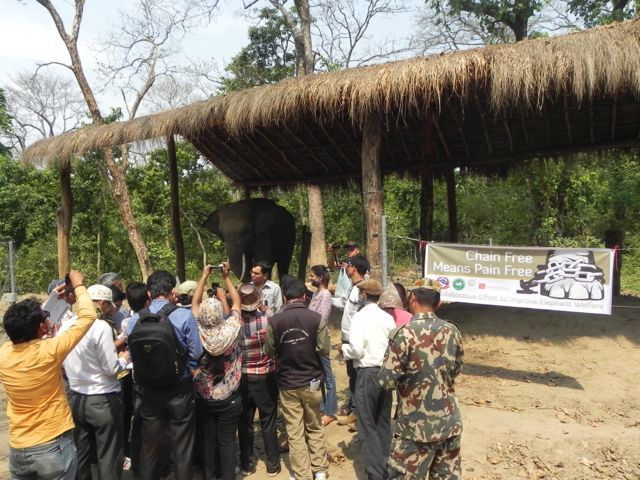
    EAI’s Chain Free Means Pain Free project, which frees elephant from chains is the first of its kind in Asia. Honestly I was surprised to learn that such an effort had never before been attempted for the thousands of captive-held elephants used in the tourist industry all over Asia.

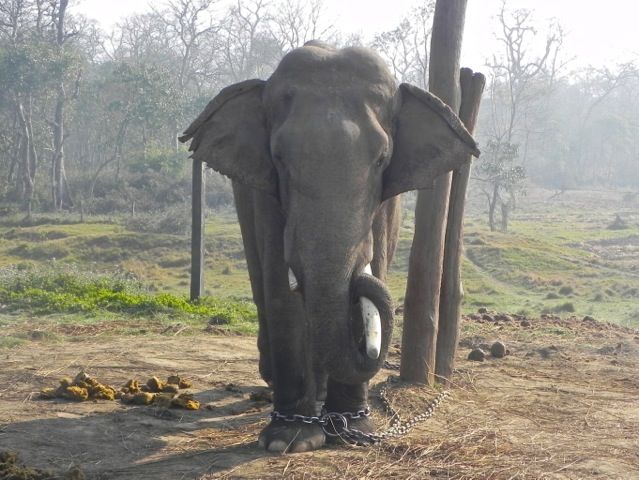
    Solar powered high tensile wire fencing is a simple and relatively inexpensive solution to the decades-long practiced of chaining elephants to a stake in the ground.

    Nepal chain free done Apr 2015

    When our Chain Free Means Pain Free project was completed in Nepal in April 2015, I breathed a sigh of relief and felt flush with appreciation for what we’d accomplished.

    It was not an easy project, working in remote areas, many times with no means to transport fencing materials, except on our backs. We crossed rivers, hiked through miles of jungle and dealt with hostile locals who saw the areas selected by the government for elephant corrals as their domain.

    And then there were the naysayers, people incapable of embracing change, who made progress slower than necessary.

    But through all the trials and tribulations, downpours, leaky roofs, river crossings, miles hiked in the searing heat and skeptics, we prevailed, creating corrals for 54 elephants and releasing them into their personal chain-free sanctuaries.

    Without exception, introductions to the corrals were a phenomenal success, including for a few adult males with long tusks. Why not? The elephants clearly understood the freedom they were being given. Freedom and autonomy are great healers for a soul enslaved for decades. Each, without hesitation or concern, melted into the lush habitat that was their new home.

    Mahouts feared change

    Before their elephants were released from chains, the mahouts lost sleep, fearing that their elephant would take advantage of the freedom and become feral.

    The consistency of the their fear surprised me. I naively assumed that mahouts knew elephant behavior and understood that freedom from chains reduces stress, which results in the elephants relaxing and becoming more cooperative. But they thought the opposite.

    It was from this experience, repeated with every mahout, that I learned how little mahouts actually know about elephant psyche and behavior.

    Hours spent in the hattisar (elephant stable) with the mahouts and the elephants taught me that most mahouts do not recognize an elephant’s most characteristic behaviors, such as playing, socializing, bonding and grieving.  Mahout knowledge is limited to how to control an elephant and avoid getting killed. So much of what they think they know is superstition and folklore.

    The first time the mahouts observed an adult elephant playing in her new corral they panicked. The mahouts wanted to stop her, control her, because they thought she was becoming aggressive. Awareness of an elephant’s emotional life or physical suffering is not something they are taught. Even minor physical problems are ignored until they become serious and require veterinary attention.

    Different approach to unchaining pays off

    As result of the time I spent observing the mahouts with their elephants, I realized I needed to approach the unchaining process differently. I needed to teach the mahouts about their elephants—their behavior, fears, likes and dislikes—and explain why unchaining affects elephants in a positive way.

    This approach paid off. Even though some mahouts remained skeptical, most felt more confident in my promise that their relationship with their elephant would get better, not worse.

    No success without sustainability

    Another lesson I’ve learned though our Chain Free Means Pain Free project is that we must build sustainability into foreign projects.

    It is not enough to provide a great product with stellar results if the locals are not able or willing to sustain it.

    I returned to Nepal eight months after completing 54 chain-free corrals to find that few were actually still functioning and being used. I was devastated.

    It seemed incomprehensible that minor repairs were not even attempted. In some cases, fully functioning corrals housed elephants on chains!

    But I knew there had to be a solution. I simply would not give up. Sustainability is the measure of success and I was determined to keep these elephants off chains.

    EAI hires Nepali manager

    Last November, thanks to generous underwriting from supporter Donna Marshall, EAI hired a manager for our projects in Nepal.

    Kulendra Kunwar

    Kulendra Kunwar, a native Nepali, was well known to EAI prior to being hired. He’d volunteered in the spring of 2015 during corral construction at the largest hattisar in Khorsor. He proved to be a valuable asset then and the perfect manager for our project now.

    In just a few short months, thanks to Kulendra’s ability to repair corrals and educate and motivate the mahouts, 14 out of 15 hattisars now have corrals that are fully functional.

    Of these 14 hattisars, all but two keep their elephants chain free 24/7. Those two keep their elephants chain free during daylight hours but, due to fear of the area’s poisonous king cobra snakes and tigers, the elephants are chained close to the home fires of the mahout housing at night.

    New mahout housing means chain-free elephants

    There is an easy solution for the two hattisars (Sukivar and Khoria Mohan) that fear the poisonous snakes and tigers.

    Currently, the mahout housing—a simple two-room wooden shack, outhouse and outdoor cooking area—is several hundred yards from the corrals.

    If we raise the funds to build mahout housing adjacent to the corrals, the elephants will be left off chains 24/7.

    Our goal is to raise $16,500 for improvements at the two hattisars. As soon as the funds are raised, housing in both hattisars can be built and the elephants can once again be left chain free 24/7. If you would like to donate, you can do so here.

    I am quite the optimist, dogged about my dreams. Hard work and seemingly impossible challenges don’t scare me off, although I do wonder why some things have to be so difficult. Then I remember that there is Nepali time and there is U. S. time, polar opposites in many ways. But there is never a time to give up.

    Please join me in continuing to dream the dream that releases elephants from chains, reunites loved ones and changes culture to benefit captive-held elephants and the people who care for them.

  • Elephant Slaves

    Elephant Slaves

    Another predawn awakening, like a recurring dream.

    I’m woken abruptly from a deep sleep by the heart wrenching cries of a suffering elephant. All I can do is swing open my window and yell into the pitch black night, “Hatti la na pita!” (Don’t hit the elephant!). My plea echoes through the darkness, landing on deaf ears.

    It is not yet dawn, the time when most elephants savor their sleep. My heart clinches when I hear the too familiar crack of a bamboo stick across the hide of an elephant slave.

    I try to block the sound and associated pain from my ears but I cannot. The reality and degree of suffering experienced by captive-held elephants in Chitwan National Park is unconscionable.

    If it were not for a drive to improve the lives of the elephants used in Chitwan National Park, admittedly I would never come back to this place. The air is perpetually thick with the sights and sounds of elephant suffering.

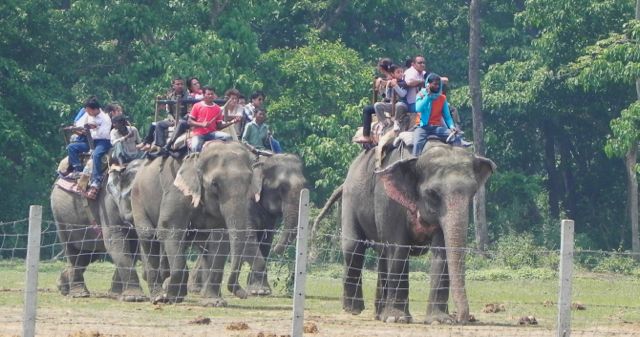
    tourist safari

    The apathy among tourists and owners alike is mind-boggling. Both the mahouts and the elephants in their care are merely money-making machines, no more.

    The elephants’ day begins before sunrise and ends after most tourists are in their rooms preparing for sleep.

    Before the rooster crows, the chained elephants are roused from their slumber and forced by threat of physical punishment to eat, drink and be readied for safari rides for the hundreds of tourists who visit Chitwan National park every day of the year.

    The elephants’ food consists of cuchi—rice wrapped in mildewed, dehydrated rice hay—so unpalatable they must be beaten to eat it. The mahouts will strike them repeatedly with bamboo sticks until they have eaten.

    Mel Kali—the lucky one

    Mel Kali

    In the far distance I hear the familiar trumpet call of Mel Kali. She is one of the lucky elephants in Nepal.

    Mel Kali was retired two years ago. She is the only retired elephant in Nepal. As a result of her advanced age—72—and near-death experience two years ago, Mel Kali is finally allowed to live a pseudo-elephant life, free to wander the national park free of riders and the continual domination of her mahouts.

    Abuse woven into the fabric

    Many tourists come to Chitwan National Park for elephant entertainment, but I come because of the elephant suffering. To experience their pain and not make an effort to help seems unconscionable.

    It is not possible for me to return to my relatively cushy life in the US and forget the elephants’ pain. Their cries tear at my heart. Their incarceration and treatment boggle my mind. It seems like a dream, but it is reality for the elephants 24/7, 365 days a year, for their entire lives. It is an elephant slave camp.

    When I am in Nepal it is my policy to stay only at guest houses that do not own an elephant. It is my way of not contributing to the exploitation and abuse.

    But it is impossible to avoid the abuse completely; it is woven into the fabric of Chitwan National Park.

    At all hours of the morning and evening, the haunting cries of elephants echo across the landscape of dozens of tourist hotels. They live in filthy stables, experience continual harassment and beatings and work from sun-up to sundown carrying heavy loads of riders seeking a fun day in the national park. I cannot help but absorb the feelings of despair and pain the elephants experience. How can the tourists, elephant owners, conservation organizations and locals be oblivious to such obvious suffering? What has become of the human race that we are so insensitive to the cries of others?

    Progress is slow but steady

    Hatti la na pita—do not hit the elephant¬—were the first words I learned after arriving in Nepal five years ago. A phase lost on most. But now, all these years later, the mahouts are familiar with my request. Although they do not comprehend why I ask that they not hit their elephants, out of respect for my work, most refrain from hitting their elephant in my presence.

    But seeing the abuse is not the only way to sense an elephant’s suffering. I am now hyper-sensitive to the sharp crack of the bamboo stick, the body language of an abused elephant, the demanding guttural commands of the mahouts and the oppressive energy in the elephant slave camps.

    After spending more than two dozen months in Nepal working closely with our Nepali partners to improve elephant welfare, I am discouraged by the slow process.

    But I must remember that we have succeeded in influencing many mahouts to treat their elephants more kindly; educated private and government owners alike about the welfare needs of elephants; and, most recently, freed 56 captive-held elephants from chains by creating chain-free corrals. The lives of these elephants are seriously improved.

    And we will not stop until all elephants in Nepal are treated and fed properly, and are living chain-free.

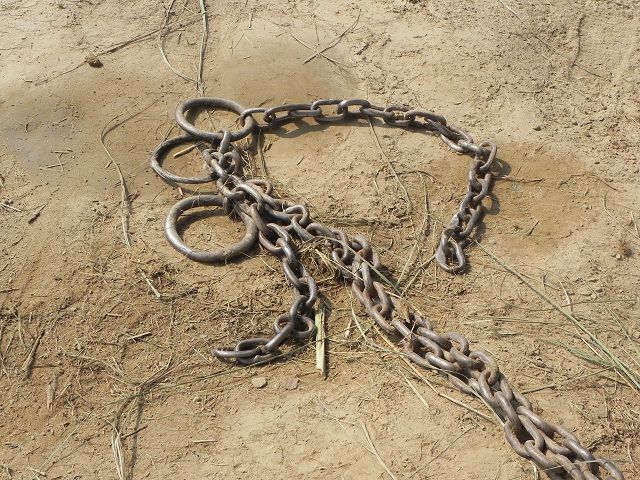
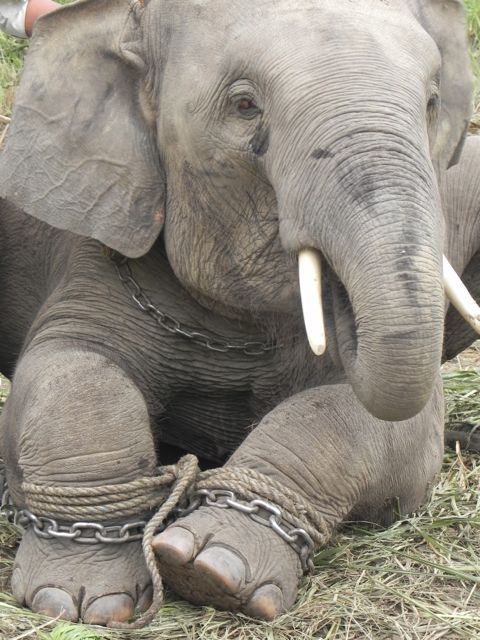
    close-up chained ele

  • Chain Free in Thailand

    Chain Free in Thailand

    Boon Lott's eles

    Lotus stood perfectly still while her mahout removed the chain from her ankle. Next came Pang Dow and, last, Wassana, a land mine victim who lost part of her foot several years ago in an explosion.

    They were unaware that their next few steps would be monumental.

    Lovely Lotus led the small herd, the family she chose after arriving at Boon Lott’s Elephant Sanctuary (BLES). She walked in the direction of the corral. For a split second she hesitated at the gate opening. A calculating glance from gate post to gate post and the open span between and she was satisfied that it was safe to lead her family inside. Almost in slow motion, Lotus entered the chain-free corral.

    I held my breath, knowing from experience the joy the elephants, their caregivers and the crew that only hours before had completed this first solar powered chain-free corral in Thailand, would feel.

    Pang Dow and Wassana followed close behind Lotus, less than inches apart, as they silently flowed into the expansive corral filled with vegetation and clusters of trees. The air was buzzing with anticipation. The elephants knew something was up. How could they not? Half a dozen people gave off quite a collective energy as we watched in hopeful anticipation of the elephants’ reaction to their new found freedom.

    Lotus, Pang Dow and Wassana cleared the gate opening, walked single file for less than 50 feet and then erupted into excited squeaks and trumpets. They broke line and huddled together, a tangle of trunks and tails, chattering excitedly, gently touching each other in reassurance.

    The mahouts stayed silent to ensure the elephants knew they were free to do as they pleased–a novel experience for a captive-held elephant, especially in countries like Thailand, where elephants are a commodity used for tourist entertainment, always under the control of a mahout.

    Before finding sanctuary at BLES, Wassana, Lotus and Pang Dow did not know freedom of any kind. Now they were about to experience the next level of freedom–autonomy. The ability to make their own choices about where they walk, when and with whom. What they eat, where they sleep and, most important, who they share their life with.

    It took mere seconds for all three to realize they were free to wander at will. They moved like a school of fish, close together, in step with each other, exploring as one. Happy squeaks, trumpets, chattering and ground thumps echoed across the hilly terrain.

    They soon forgot the humans who observed from outside the corral. They were in their own world, with their family, free from chains, to interact and share the natural habitat together.

    After sampling the tender vegetation underfoot, they made their way into a thicket of trees. With low rumbles and tender chirps they disappeared into their personal mini-sanctuary.

    Each time I witness the release of an elephant from chains, I am flooded with such deep emotion and with such gratitude, it’s as if it’s the first time I’ve experienced such a joyful event.

    I see their immediate shift, their letting go of the past. They accept the gift provided and without looking back immerse themselves in their new found freedom.

    I know that we have given a gift so great it transforms them. Being witness to an elephant’s release is life changing, the most powerful experience I’ve ever had.

    Elephants living in captivity are stripped of everything meaningful in their lives; autonomy, freedom of choice, family. Sanctuary life begins to restore some of these things. Although most captive-held elephants will never experience a real family of their own, they form bonds as deep and meaningful with unrelated others as if they were biologically related.

    The pure joy an elephant exhibits when given a resemblance of freedom is what drives me to do more. Chain free does mean pain free to these elephants. It is an honor to give back some of what has been taken away.

    Watch their release:

    and their introduction to their new chain-free corral:

  • THAILAND HERE WE COME!

    After nearly two years of preparation and numerous setbacks our chain-free corral project In Thailand is scheduled to begin July 12th.

    In October 2013, I visited two sites–Friends of the Asian Elephant (FAE) and Boon Lott’s Elephant Sanctuary (BLES)–to map areas for chain-free corrals. The corral locations were identified and construction plans laid out. Everyone was excited about giving their well-cared-for elephants more autonomy and physical freedom within a safe and secure jungle environment.

    This is when things became challenging.

    I soon learned that Thailand did not have a supplier for the materials we use for solar powered chain-free corrals. The closest supplier was IBEX Galleger in India. All materials would have to be shipped from India via the wholesaler in New Zealand.

    Stopped at the border

    The plan was to build the corrals last October.

    I monitored the progress of the materials shipment from my US office. The Indian fence crew would fly to Thailand to oversee the arrival of materials, while the staff at BLES stood by, ready to receive the delivery. Partners in three countries experienced a great deal of anticipatory anxiety.

    As soon as the materials arrived from New Zealand, they were transported from Bengaluru, India, to the coast and loaded onto a cargo ship, which crossed the Bay of Bengal and docked in Bangkok, Thailand. They cleared customs without a hitch.

    This is when we hit a major snag.

    The Indian crew was supposed to receive the delivery in order to avoid a hefty unloading and storage fee.

    But the crew was stopped at Thai immigration to verify their residence while in Thailand.

    BLES’s phone and internet were not working so there was no way for Thai immigration to verify the crew’s destination. Emails flew back and forth among continents, to no avail. We couldn’t reach BLES.

    After a couple of hours, Thai immigration refused the crew entry and sent them back to India.

    Unfortunately, the project had already exceeded the estimated cost even before the materials were loaded onto the cargo ship. This latest development didn’t help. At this point, the costs threatened to skyrocket.

    Everything falls into place

    Thanks to this experience, the Indian crew was afraid to return to Thailand.

    I set out to find qualified installers in Thailand. No luck. No one in Thailand wanted to take on the job, as they were unfamiliar with the corral system.

    After weeks of searching, I decided to try to convince the Indian crew to try again. They were leery, so it took months to finally convince them. By the time they finally agreed, they were working on a new project in India, and unavailable to return to Thailand until later this year.

    But here we are, several months later, heading to Thailand once again.

    We don’t have to worry about the materials–they are safely stored at BLES.

    Pre-construction is already underway at FAE and they are clearing the fence line as we speak. It will be cleared and ready for my arrival on July 12.

    The plan is to get all the corner posts set at both FAE and BLES before the fence crew arrives on the 18th.

    All we have to worry about is getting the crew into Thailand. This time I plan to be standing outside immigration at the airport with a working cell number, ready to handle any problems that might arise.

    This project has been a serious challenge but I have no doubt that it will be well worth every bit of frustration and anxiety when we see the elephants released into their new chain-free corrals.

    Thank you for helping us create the first solar powered chain-free corrals at Boon Lott’s Elephant Sanctuary and Friends of the Elephant Hospital in Thailand.


  • Male Elephants in Captivity

    Male Elephants in Captivity

    Caring for male elephants in captivity is a challenge at best.

    Attempts to provide a quality of life within the parameters dictated by their captivity produce poor results. Their size, natural tendency toward dominance and drive to breed, combined with their innate wildness, is a recipe for disaster in a captive situation.

    Males are especially dangerous when they are in musth, a natural biological function when testosterone levels increase. During their annual musth season, captive-held males become too aggressive to approach and stop responding to their mahouts.

    EAI respects the true nature of each elephant and would prefer that no elephant live in captivity. But elephants whose lives are forever altered by captivity need our help.

    Lambodhar Prasad: In musth, out of water

    Lambodhar Prasad

    We were building chain-free corrals when Lambodhar Prasad came into musth. He was unapproachable. His front wrists were chained together, secured to a large wooden timber that was buried 10 feet deep to prevent his escape. He had no shelter from the hot sun, the seasonal storms that pellet him with golf ball-size hail or the frightening earthquake that devastated entire villages in Nepal earlier this month.

    And he had no access to water to drink unless the mahouts brought it to him.

    Because of his aggressive state, mahouts could not get close enough to Lambodhar Prasad to give him water, which concerned them and made them anxious to find a solution. Their only option was to offer Lambodhar Prasad water in a large metal cooking pot.

    Out of trunk’s reach, several mahouts struggled to push the heavy pot close to Lambodhar Prasad with a long bamboo pole. A thick handmade rope was tied to one handle of the pot in order to pull it back, out of Lambohdar Prasad’s reach, after he finished drinking.

    But things did not go as planned. Lambodhar Prasad was irritable, not in a mood to cooperate. He grabbed the pot with his trunk and before the mahouts could yank it away, he crushed it under his foot.

    The mahouts were out of ideas and had no resources to solve the problem, so they came to EAI for help.

    A simple solution

    An immediate solution was devised, simple but effective.

    EAI volunteers headed to town to buy a replacement cooking pot/water dish. We purchased an electric water pump and water hose and hired a plumber to hook it up to the existing well where the mahouts bathe and wash their cloths and dishes. The Chitwan National Parks Department provided a large water storage tank as a back-up for when the electricity is out, which in Nepal is more often then not.

    While the plumber was installing the pump, connecting the water hose and setting up the water tank, the mahouts wasted no time wiring the pump at a nearby building.

    There are no inspections required or codes for electric and plumbing work at the hattisar. You just do it!

    In a couple of hours our solution was up and running. The mahouts were relieved and excited about the prospect of being able to water Lambodhar Prasad and give him a bathe as well.

    Then came the moment to test out the new watering system.

    As suggested, the mahouts filled the water pot before maneuvering it in front of Lambodhar Prasad. He was seriously thirsty and drank hurriedly for several minutes. But as he quenched his thirst, his drive for dominance surfaced.

    The muscles in his face tightened as he grabbed for the pot in an act of defiance. The mahouts recognized his attitude shift and pulled the pot out of his reach. The pot lived to provide water for another day.

    Learn how you can support EAI’s pilot project to build Lambodhar Prasad his own steel pipe corral.

    Mahouts know we care

    Every effort in Nepal is unnecessarily difficult due to limited or nonexistent resources, expertise and motivation. Generations of mahouts have grown to believe that nothing can or will be done to make their job easier or the lives of the elephants in their care better. They have stopped asking for help, or perhaps they never started.

    supplies to mahouts

    But now, because you, our supporters, have enabled EAI to offer new resources, options and solutions, the mahouts know that there are people who truly care about them and the welfare of their elephants. They have begun to ask for help. They have begun to believe that when they ask, their concerns will be heard and their need for assistance will be answered.

    The most encouraging shift we have observed is that mahouts are beginning to speak up for their elephants. Improvements in elephant welfare can be encouraged from the outside but true sustainability comes from within. The mahouts are the key to improved elephant welfare in Nepal.

    3 mahouts & eles

    EAI is honored to partner with them. Learn how you can support mahouts and their elephants.