Author: Carol

  • Pawan Kali’s Support

    May 10

    As I prepared to experience my final day in Kathmandu I was ever grateful for Joy’s expert navigational skills. Without incident we arrived at the narrow pedestrian lane that leads to the zoo. Behind a fenced in area adjacent to the zoo a large group of school children were engaged in a sports event. Two teams were assembled on either side of what resembled a volley ball net, but that is where the similarity to volleyball ended. The teams were darting around the court, hitting the ball, sending it over the net and back again. But they did not use their hands, instead they used their feet. The organized mayhem was being cheered on by a bleacher full of enthusiastic classmates.

    I found my way inside the zoo through the security entrance, where an attentive young guard was stationed. He listened politely as I asked to see Dr. Jeewan Thapa. After repeating Jeewan’s name a couple of times the guard’s eyes lit up in recognition. It is fabulous how forgiving the Nepalese are with my pronunciation. I am sure I make mincemeat of their language but they seem to appreciate my effort.

    Jeewan, myself and Director Sarita Jnawali met. We discuss Pawan Kali’s move to Chitwan. I was assured that we would be kept up to date when the time arrived for Pawan Kali to be moved. Director Jnawali graciously accepted the donation generated by Pawan Kali’s new supporters and was sincerely touched by the show of kindness for Pawan Kali.

    The donation was handled very officially. The accountant was summoned to witness and record the donation and issue a receipt. It was all very formal. Director Jnawali asked permission to write about the contribution for Pawan Kali in their zoo publication. Of course, I assured her that the friends of Pawan Kali would be honored to have their support recognized in such a way. Once I get a copy of the publication I will make sure to post it.

    I was pleased to be reminded of the beauty of this zoo, with its manicured grounds and peaceful park-like setting. Thanks to the support of caring individuals affiliated with IEA, another bridge has been built. A relationship has been initiated which hopefully will have a ripple effect  not only for Pawan Kali and the Central Zoo in Kathmandu, but for a consciousness worldwide that we are all connected in a deep and real way. One elephant at a time is not a slogan, it is a goal.
  • Back to Kathmandu

    May 9

    The flight from Chitwan to Kathmandu provided a magnificent view of the mountain range that surrounds the bustling city; it was magnificent.

    Joy, our trusted driver, and Rishi, the proprietor of the Sunrise Cottage, were waiting for me at the baggage claim when I arrived. For domestic flights the baggage claim is an open-sided structure covered with a tin roof, expertly staffed. No luggage leaves the sight without a claim ticket…of course I could not find mine! After some discussion between the baggage attendant and Rishi an allowance was made. Rishi provided the baggage attendant assurances and a business card just in case it turned out that I was actually stealing the backpack, and off we went. Minutes later I found my baggage claim ticket and we all had a good laugh.

    Arriving at the Sunrise Cottage was like a reunion. My momentary apprehension about arriving solo, minus the elephant care team which I had so identified with for the past month, was obviously a wasted concern. I felt right at home. The bandh of the past week had driven many of the tourists from the city, leaving me with the pick of the rooms. I decided on a second floor room with walls of windows on two sides which looked out onto an ancient gnarled tree that felt like the mother herself.

    Knowing my way around town was invigorating. I needed a few supplies and felt strangely empowered navigating through the sea of noisy vehicles and preoccupied tourists mingling through the richly colorful shops. Stocking up on staples such as laundry detergent and batteries gave me the sense of being a local. This destination, not really Kathmandu but the suburb of Thamel, is a starting point for the hugely popular activity of trekking. Interestingly enough, the tourists include few Americans.

    On this, my last night in Thamel, I headed to my favorite eating establishment located on the border of tourist-ville and the local turf. Tucked a few feet off of the busy road, and I do mean a few feet, it is a tiny place. I literally have to duck my head to get through the door. Seating is familiar, some might say crowded, but that is the flavor of the place. I comfortably settled into a seat by a wall of open windows and studied the menu while two young boys played hide and seek in the shadows.

    After I ordered, the place began to fill up, which is not hard to do when you only have a few tables. Some VIPs had gathered in the back room. A group of trekkers arrived with a large dog in tow and slid into the table directly in front of me. Even though dogs are all over the place, my experience has taught me that they are not seen as companion animals or pets. Instead they are treated more like wild or feral animals, allowed to come and go at will. If they choose to stay around your house or establishment they are, most of the time, allowed, as long as they do not become a nuisance. Even if a dog stays at your house continually, it is not customary to feed him/her regularly.

    I know it may sound cruel but, according to custom, dogs are not allowed indoors. They are viewed as dirty, disease-infested animals. This attitude is held even by many veterinarians and stems from the reality that dogs can infect humans with rabies. Since there are no requirements for dogs to be vaccinated against rabies, it is understandable that the culture has developed to not associate with dogs on a personal level.

    Dogs customarily have a life of their own, free to run the streets, hanging out in the locations of their choice throughout the day and night. Not surprisingly, the dog the foreigners had brought into the restaurant was causing quite a stir, especially with the young boys who abandoned their game of hide and seek to stare at the dog. Not only was this dog large, he was on a leash and he was inside their restaurant.

    When my food arrived so did a large group of young people. There were only two small unoccupied tables. Since I was sitting at a table for four I offered to share my table. The group graciously accepted. I learned that this group was traveling from China. We had a wonderful conversation and I left feeling enriched by the evening’s experience.

    I was scheduled to fly from Kathmandu to Kolkata (Calcutta) the following morning. The next leg of my adventure was about to begin.  But I had one last thing to do…present the donations made by Pawan Kali’s supporters to the zoo.

    Namaste

  • In the field

    I am going to be in the field in Assam for many days without access to the internet.

  • Leaving Sauraha

    May 9, 2010

    This morning I left Sauraha, Chitwan, heading for Kathmandu and my flight to India. After 22 days living as a member of the village of Sauraha I felt sad to be leaving.

    The Tiger Residency staff gathered and I received the TIKA blessing in a traditional ceremony. A circle of red powder was placed in the middle of my forehead. I was offered a glass of lassie, a red flower, and surprisingly, a chocolate candy bar. The candy bar was a deviation from the traditional gifts. It felt extremely personal, an indication of the sensitivity and awareness of others that is typical of the Nepalese people. The candy bar was a very kind gesture.

    You’d have to be here to understand the significance of the candy bar. Shiva is the person who served our meals, made sure our water containers were filled and refrigerated, was patient with our bizarre food requests and brought us tea each morning. To say the least, Shiva made sure we were safe, well fed, and comfortable.

    More than once we saw Shiva peddling off on his bicycle in the direction of town. Unwilling to tell us that something we requested was unavailable, he preferred to speed off like a mad man into town, regardless of the humidity and heat, to fulfill our request. Yes, we asked him to simply tell us they were out of what we requested but Shiva would not be swayed; he took his job seriously and it showed.

    Learning that I have a fondness for chocolate resulted in Barb joking about candy bars and different chocolate treats in front of Shiva. We teased him about adding a new selection to their breakfast menu — chocolate pancake with chocolate pudding topped with sliced bananas, all a figment of our imagination of course. Shiva would smile politely, repeat the recipe out loud and act as if he was considering how it would taste. After much serious silence Shiva would agree that this sounded like a good idea…sort of.

    The jeep that would take me to the airport waited outside the dining hall door. It was hugs and namaste all around as I headed for the jeep. In that moment, an elephant and mahout appeared directly in front of our path, both on their way to the bath. I did not recognize which of the 45 elephants of Sauraha she was, but I will never forget her.

    She reached her trunk toward me, like a silk scarf dancing in the wind. I felt so drawn to her, to making a gesture that I had not allowed myself to experience while in Sauraha. For 22 days I had seen myself as providing assistance to the elephants of this village. In this moment a goddess was coming to me, blessing me. I wanted to give her something, wanted to pay my respects, to let her know how honored I was to be in her presence.

    The candy bar in my hand was the gift. I don’t believe in feeding junk food to elephants but in that moment it was not a candy bar but a sacred gift, a sign of my appreciation of her. Gifting forward, the candy bar had been given to me as a sign of love and I was now in a position to pass that love forward. I tore open the wrapper and broke the candy bar in half and placed it gently into her outstretched trunk. I hesitated to feed her the entire bar for fear that doing so might be viewed as disrespectful to the Tiger Residency staff who had gone out of their way to provide the gift.

    But as quickly as the thought came to mind, I realized that the candy bar was a gift from all of us. In a show of our connectedness, I took a small bite of the second half of the candy bar and placed it in her patiently waiting trunk. She was in no hurry to place the candy in her mouth but lingered as I greeted her with a gentle touch, trunk to hand; we were one.

    As quickly as she had appeared, my elephant blessing disappeared, causing me to wonder if I had imagined the entire experience.

  • The Bandh is Over…at least for one week!

    May 7, 10pm

    There is a reason that you have not heard from me in a few days. There was a bandh (bond-da) in effect. Yahoo,  it is over… at least for a week.

    A bandh is a serious event caused when the two political parties are in opposition. A bandh is a strike when all commercial operations are halted, virtually shutting down the entire country. Even if you oppose the bandh, you, as a citizen of the country, are expected to respect it.

    All stores are closed, with the exception of the pharmacy. You cannot buy food, clothes or even get money from the bank or the ATM because there is no way for supplies to be replenished with the use of all motorized vehicles prohibited.

    A bandh is a serious situation and must  be respected. The common citizen is effected, from shops being closed to farmers not being able to get their product to market.

    Each evening during the bandh, permission is given for shops to open from 6-8pm. This way citizens can attempt to purchase staples and tourists can go to dinner. As we sat on the second story balcony eating a wonderful plate of vegetable appetizers, the pharmacists across the road ran out into the street screaming the news that the bandh had been lifted for one week.  We were the only clientele in this restaurant but staff came out of the woodwork to join in on the cat calls, whistles and cheers of joy that rang from our balcony and all balconies along the street.

    Music was cranked up, blasting from long-ago blown speakers and pouring out into the street below. Dueling balconies competed for the loudest whistle and most boisterous males jumping up and down in synchronized dance, obviously filled with joy over the news.

    We had to join in with yelps and football game style screams. We had been a part of the oppression. We were one with the locals, sharing in the feeling of freedom from control. We danced, smiled until our cheeks hurt and reveled in the amazing camaraderie shared between these happy people; the Nepalese and us visiting Americans. Namaste to all of Nepal. What a blessing it is to share this time of emancipation with them.

    Hopefully the powers that be will work out their differences within a weeks’ time and spare the people of Nepal the hardships that are caused by bandhs.

  • Mahouts and Kuchi

    Mahouts and Kuchi

    May 2

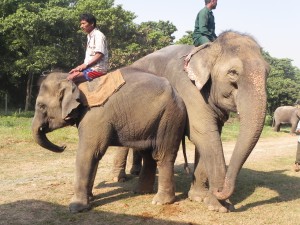
    I thought you would be interested to learn that by tradition each elephant in Nepal has three handlers. They are the phanet (fawn-it) the lead handler, the pachuwa (paw tsue-wa) second to the lead and the mahout, an apprentice. Each position has its own specific responsibilities. The phanet helps to oversee the community of elephant handlers so he often remains at the stables, leaving the pachuwa and mahout to take care of the elephant’s daily needs.

    At first light, the elephant, pachuwa and mahout head into the forest to collect elephant grass, enough for making kuchi plus a full day’s fodder for the elephant. Both handlers ride atop the elephant’s bare back, balancing effortlessly, barefoot and sometimes holding an umbrella to shade themselves. Upon their return they work cooperatively to make the kuchi and clean the stable area.

    Two handlers return with fodder while others make kuchi

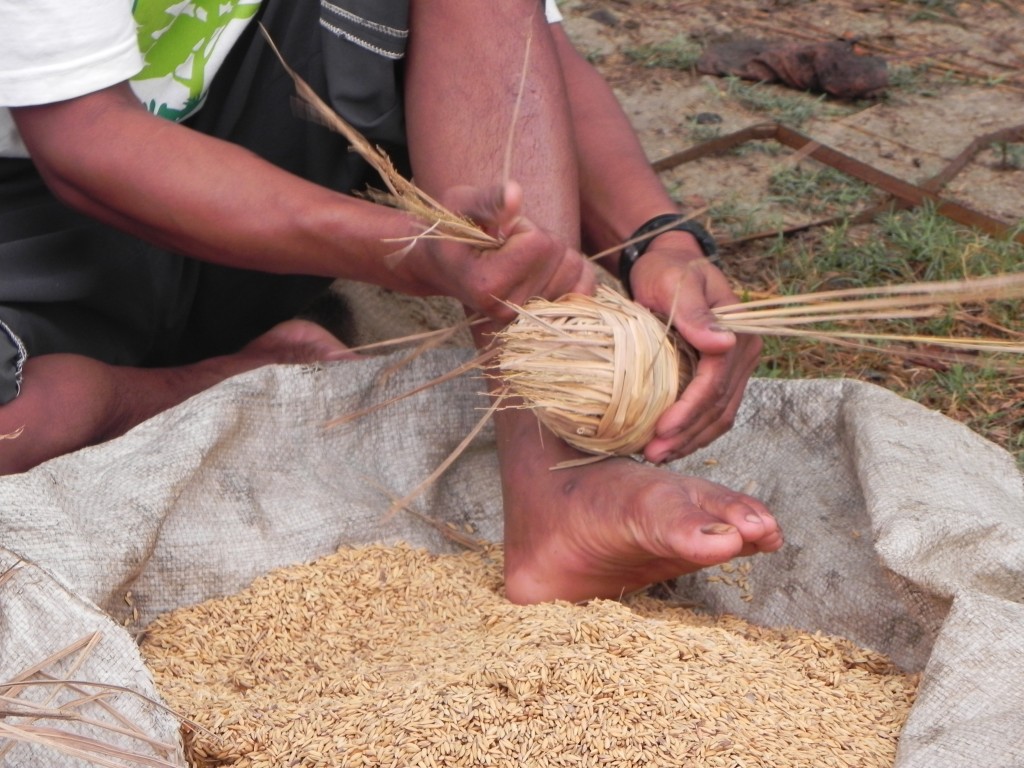
    The kuchi is a traditional food ball made by folding the surprisingly supple elephant grass into the shape of a bowl. Rice, salt, and molasses are packed into the bowl. Other supplements can be added to the kuchi if the elephant has a special dietary requirement. Another name for the kuchi is dana, meaning gift, which explains the ritual involved in creating the fresh kuchi everyday.

    Filling the bowl

    After packing the bowl, the grass is folded over the top. Working two strands of grass in opposite directions, the bowl is tightly wrapped. After securely enclosing the bowl, the ends of the grass are tied in a twisting motion then tucked under the wrapping like a knot. Each adult elephant receives approximately 90 kuchi each evening.

    Tying the kuchi ball with elephant grass

    I could not resist, I had to try my hand at kuchi making. I love a challenge and really, it was quite fun.  First you have to position yourself as comfortably as possible on the ground, with one leg bent so you can use your ankle as support to bend the grass.  Next you follow a very defined technique of shaping the grass, first folding the grass and then wrapping it around itself until you have created a grass bowl. Making the bowl is not as easy as it looks.

    Although I pride myself on being good with my hands, I must admit that the contents of my first kuchi fell out of the bottom. But I was determined and after a few tries my kuchi bowls were holding their contents.

    The mahout was very patient with me even though I was slowing him down

    I am sure the elephants and the mahouts found humor in my amateur kuchi making, but the elephants ate them just fine.

    Kuchi time!
  • Down by the River

    Down by the River

    April 30

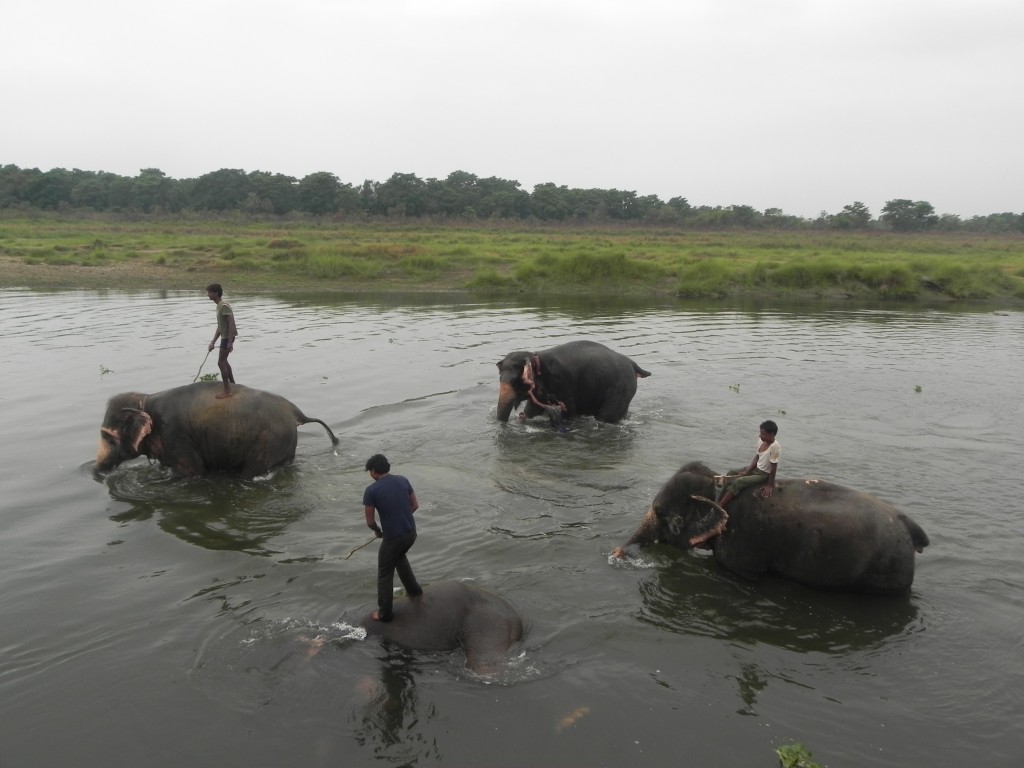
    This morning I followed the elephants down to the river for their morning bath. The sheer joy of immersing in water is universal with elephants. It gave me goose bumps to see them so relaxed, splashing water, throwing trunkfuls over their backs and drinking freely.

    When I am standing, quietly observing the Sauraha elephants, I can’t help but notice similarities between this group of elephants and my girls. There is one who is Sissy’s twin in looks and temperament and another that is a younger version of Billie-Sue. This elephant caught my eye the first day I met her, not only because she looked so much like Billie-Sue but also because she seems very insecure, much like Billie-Sue when she was first rescued.

    Sissy’s look-a-like!

    My most memorable time this morning was when one of the elephants “accidentally” dumped her handler into the water. I of course was silently cheering for the elephant as the young man tried to maneuver in the shallow water to remount his elephant.

    The elephant took full advantage of her temporary freedom, turning her hind end to the boy each time he got close. I don’t know exactly what he was saying but he was not happy that the elephant was not responding. His commands got louder and louder, his embarrassment at her outsmarting him was obvious.

    Ignoring his attempts to control her, the elephant continued to cover herself with trunkfuls of the cool river water, until another man appeared. He yelled a few commands to the elephant and climbed onto her back while she was still in the river. She continued to play, trying to ignore him as well but it was obvious that she respected him more than the boy.

    The phanit was aware of being watched and thankfully did not physically punish the elephant. Instead he made her go through a series of repetitive commands like turning from side to side and lying down in the water. She was not willing to give it over right away and did a “Minnie stunt,” dropping her head to the river bottom with her rear and one hind leg sticking up in the air.

    The handler was obviously her phanit. Although she was making it difficult to stay on top of her back, he succeeded. He actually laughed, which relieved my concern that she had gone too far and would pay for her disobedience. I exhaled, realizing only then that I had been holding my breath.

    The pachuwa stood looking dejected on the river bank. No doubt he had just learned some valuable training lessons and, hopefully, a deeper respect for the intelligence of his elephant.

    A young pachuwa fell off his elephant

    The reality is that no matter the amount of academic training a person has, practical experience is essential in order to develop an expertise with elephants. The number of different elephants and situations a handler is exposed to is key to developing skills. Each lesson an elephant teaches the handler is a building block for the next lesson in the unending series of lessons that brings valuable insight into who elephants are.

    I am doing my best to understand, without judgment, the traditions held in Sauraha regarding elephants and handlers. The more I learn about the traditions, the better prepared I will be to effect some degree of change. The elephant owners and handlers are receptive, which gives me cause to be optimistic. Change can occur, it will just take time.

  • Pawan Kali’s support is well received

    Thanks for the support for Pawan Kali. What a great opportunity this has been for so many elephant lovers to cross borders. Leave it to the elephants to bring us all together! Thanks to your support, Pawan Kali is all set.

    Over the next several weeks you will have many opportunities to be of assistance. Our next venture is the elephant foot care workshop. In addition to the fabulous custom foot knives that have already been made, I was able to locate wood rasps to trim the nails, wire brushes to clean debris from the pads and an elephant-size aluminum bucket for foot soaks.

    I am getting excited about the workshop, which will include a PowerPoint presentation followed by a demonstration by yours truly. I finally have a defendable reason to put my hands on the elephants!

  • Foot Care

    Foot Care

    April 26

    As result of the owners’ cooperation and participation in the Elephant Health Camp, a thorough examination was done on every elephant’s foot. The sheer number of elephants was a blessing, enabling the team to determine patterns, both positive and not, regarding the condition and wear of the elephants’ feet. Collectively their feet were in good condition.

    Foot pad and nail overgrowth is a common condition in captive elephants. Trimming tools vary in size and style but the goal is universal: maintain elephant’s feet to ensure even wear of both the pads and the toe nails and prevent overgrowth. The challenge is to not over-trim.

    When foot pads are trimmed excessively, the elephant will bruise the bottom of the foot. If repeated, the bruised areas can become infected. Once an infection becomes chronic it is possible for the condition to advance to osteomyelitis, a disease that, to date, has not been cured in elephants.

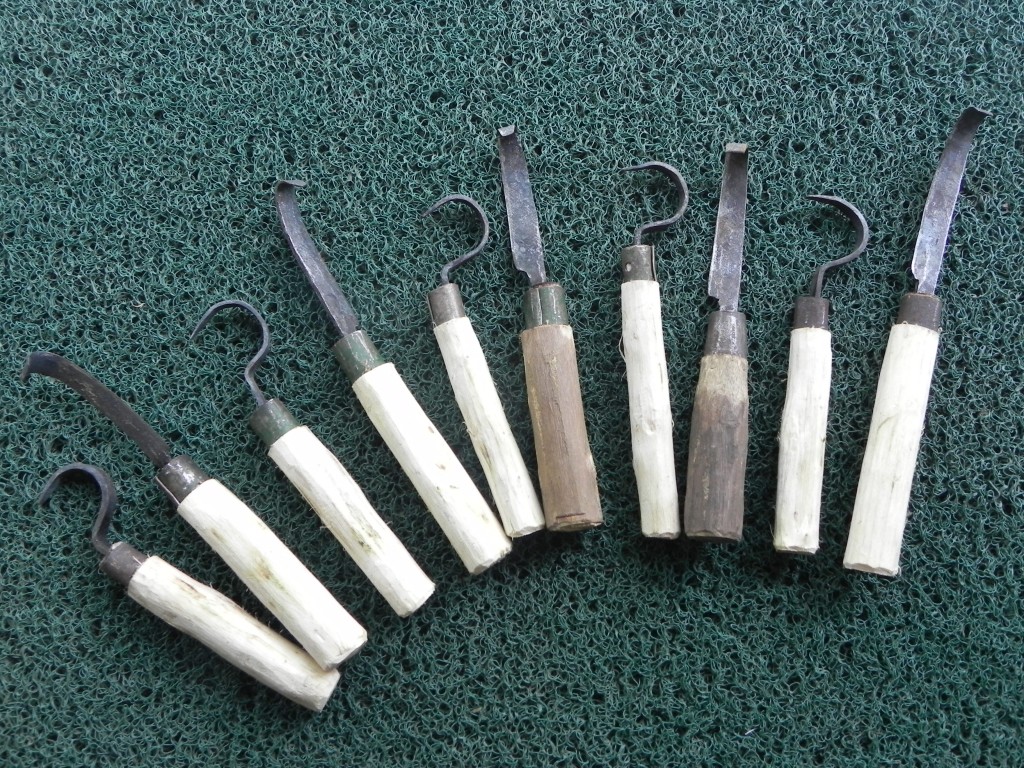
    Having the proper foot trimming tools is essential, so the other day we paid a visit to the local iron worker. He listened intently as our translator explained exactly what we wanted.  He nodded his head, asked questions and finally agreed to create a prototype and have it delivered to us the next morning. True to his word the custom-made hoof trimming tool arrived as promised; it was perfect.  He did such a great job on the first prototype that we gave him a second and ordered five sets.

    Soon we will meet with the owners and mahouts to provide a workshop on foot care. Judging by the receptivity and interest shown by the owners and mahouts, I have no doubt that the foot care workshop will be well received.

    Everything we do and everything we provide to the owners and mahouts is free of charge. At this point it is most important that the owners buy into the idea of change. By providing these tools and our expertise free of charge, we are helping to further our welfare goal. By working cooperatively with the owners and mahouts the elephants will benefit.

    Feeling the need to make a contribution to this effort I signed International Elephant Aid up as the underwriter for the workshop. IEA will cover the cost of the tools, which will include supplies for foot soaks and foot trimming. I will donate my time and services to give the workshop and tutor the mahouts on proper elephant foot care.

    I am so excited about this component of Dr. Mikota’s work at Chitwan National Park. Fortunately the owners and mahouts are receptive to our offer of assistance. They appear eager to learn whatever they can for the benefit of their elephants.

    Custom hoof knives created by the local iron worker
  • Pawan Kali’s diet

    Pawan Kali’s diet

    Dr. Jeewan Thapa participated in ECI’s Elephant Health Camp. Prior to working for the zoo, Jeewan worked with the elephants at Chitwan. Dr. Jeewan promised to keep me informed about Pawan Kali’s pending move.

    Along with information about Pawan Kali’s housing, daily routine, care and diet, Dr. Thapa provided information about the cost to feed Pawan Kali at the zoo. I found it interesting that the cost to feed Pawan Kali was equal to the cost to feed an elephant at the Sanctuary. The chart below lists Pawan Kali’s daily diet, minus the special foods she receives on “Ganesh Tuesdays.”

    Feed items for Pawan Kali Daily requirement in (kg)=(2.2lbs) Cost/Kg (NRs) Total cost Remarks
    Unhusked rice 12 29 348
    Molasses 1 57 57
    Straw 15 17 255
    Salt 0.15 10 1.5
    Carrot 2 37 74
    Pumpkin 2 20 40
    Potato 2 15 30
    Green fodder Around 100 1,600 Still fodder is collected  free around Kathmandu valley. The cost is for two handlers to work a half-day to collect fodder twice a week. (Rs800/times)
    2,405
    Total cost (1$=Rs72) $33

    Out of respect for the possibility of cultural differences regarding the solicitation of funds, I consulted with the zoo about money being donated for Pawan Kali. They graciously agreed that this is a great opportunity to educate people and raise awareness worldwide. My idea is that maybe the EleAids would like to designate Pawan Kali as a Feed an Elephant for a Day recipient. Instead of having a PenPal in Nepal, you would have an ElePal.

    Fresh-cut fodder collected daily for Pawan Kali.
  • Last Day of the Health Camp

    Last Day of the Health Camp

    Close to 50 elephants participated in Dr. Mikota’s elephant health camp. Today was the final day, at least for the elephant examinations. Over the next several days samples will continue to be processed, with results reported to the owners of the elephants.

    This is precedent-setting work. The owners voluntarily participated — enthusiastically, in fact. Today one of the proud owners provided information about his recently acquired elephant, complete with physical and behavioral information.

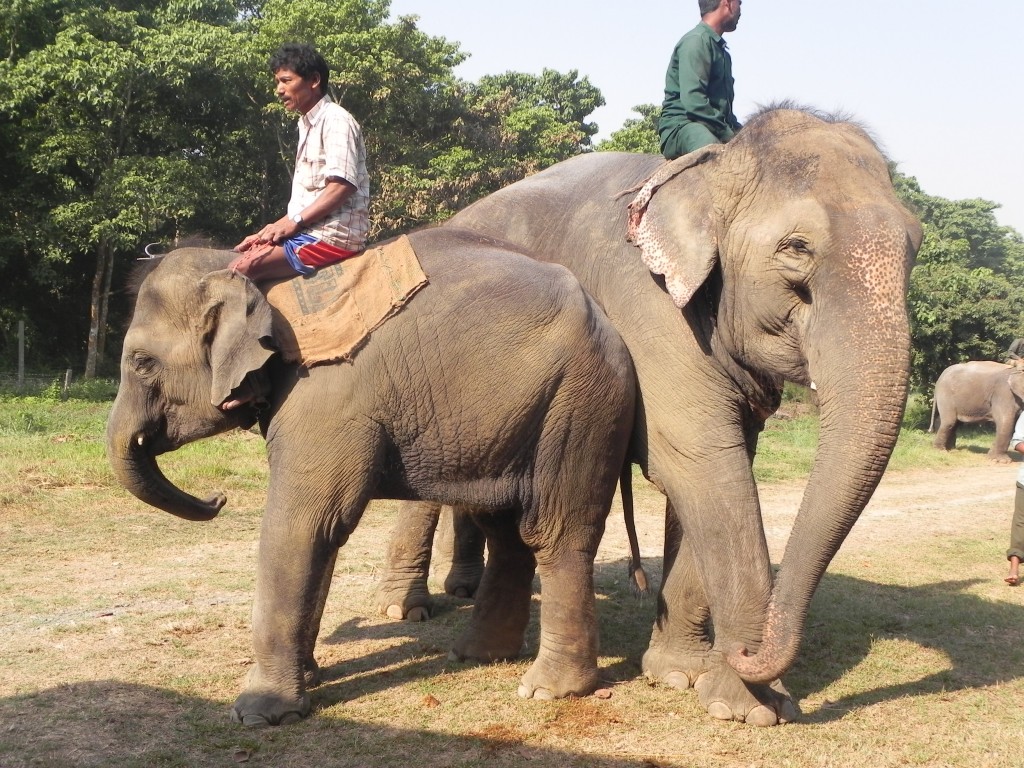
    When one of the elephants became nervous about the exam, another mahout mounted on a young elephant  brought his elephant close to “her friend” with favorable results. The nervous elephant immediately settled down. The younger elephant touched her friend around her mouth and stomach in an obviously reassuring way. Their display of  friendship was tender and the mahout’s sensitivity was refreshing.

    Our work is not done. While samples are being processed, records made and treatments prescribed, Dr. Mikota will pursue other community-related projects that will enhance elephant welfare while benefiting the community. As soon as these projects get the official go-ahead I will report on them. They are all very exciting.

    Sauraha is a close knit community. Even though tourism is the backbone of their financial support, the daily activity of earning a living and caring for their families is the activity that is observed each day, from dawn until dusk.

    These are a happy people. Their connection to mother earth is the common thread that ties them together. Busy building new homes, resorts, replenishing dirt for planting, tending to the rice paddies, planting young plants that will later feed their family and tending to their animals is what occupies their daylight hours. The heat and absence of air conditioning brings them out onto rustic porches and stoops bordering the earthen roads after dusk. Children chase each other through the darkness while dogs cavort freely, homeless or not. The heat is forever present but a lightness fills the air. You are one with the community with a simple but genuine head nod and namaste, which brings a beaming smile to a previously serious face. All is one; all is well with the world.

  • The Flow of Life

    April 20

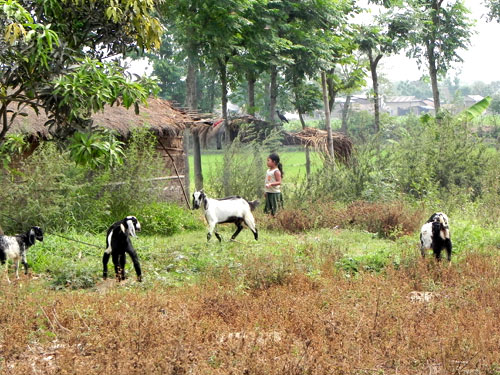
    Activity begins early in Sauraha, not surprising since as the day unfolds the temperature rises to a sweltering level. At sunrise the air has a refreshing coolness about it. The community comes to life as goats and water buffalo are taken from their night quarters to grazing areas. Upside down handmade woven baskets are righted, allowing the contents — live chickens — free access to hunt and peck at their leisure.

    The NTNC elephants silently head out of their personal stables, mahout on board, to collect the following day’s supply of fresh-cut elephant grass. The privately owned elephants adhere to a different routine and a different diet. Not permitted inside the national park, the privately owned elephants eat grass that is cut seasonally in bulk and stacked, forming a hut-type structure next to their mahout’s house. This grass is stored for months at a time, much like the baled hay fed to elephants in zoos and circuses worldwide.

    By contrast, elephants owned by the government and NTNC, a NGO (nongovernmental organization) have access to the forest areas, where grass is plentiful. They collect their own fresh-cut grass daily. This activity has many benefits, including that the elephants eat high-quality good-tasting fodder and spend hours engaging with their natural habitat.

    Life in captivity is restrictive but access to home range forests brings these elephants closer to their roots and provides them with an opportunity to walk, forage and bathe in the environment they are adapted to. If elephants are to be maintained in captivity, keeping them in range countries definitely has benefits.