Author: Carol

  • Taking Care of Baby

    June 26, 2010

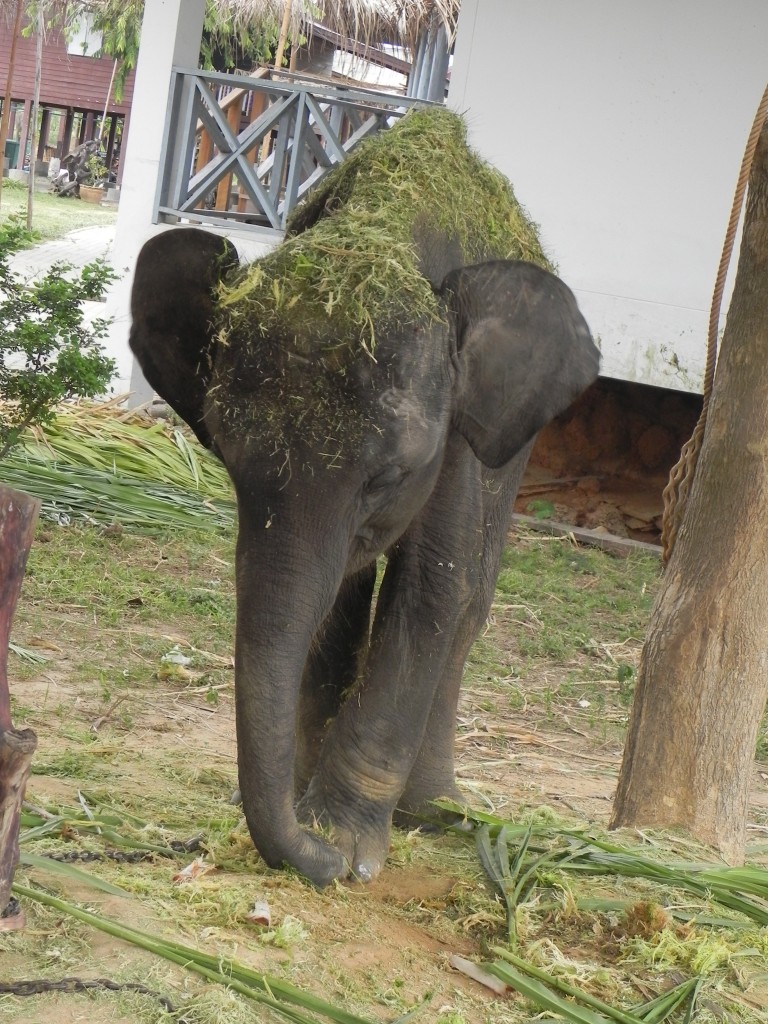
    Baby has captured my heart. Her condition is serious but it seems no one at the government center is concerned. Her owner gets paid to have her at the Elephant Study Center all day. He is absent. I have seen several different mahouts working her.

    At a little more than two years old, Baby is trained to perform in the show twice daily and walk two kilometers round trip daily, to and from her home stable.

    She is scrawny and malnourished, with a ravenous hunger. It’s encouraging to see her grab for long-stem grasses and stuff them into her mouth, chew nonstop and grab another.

    Luckily Baby likes the rice and coconut milk supplement I am feeding her 3 times a day. The first two days my effort to help was tentatively accepted by the mahouts. But Baby reached out eagerly, looking for the bowl she knows contains the new tasty food. Now the senior mahout welcomes me with a smile and casual greeting. He thanks me after Baby eats.

    Today is my last day with Baby.

  • Lek’s Surin Project

    Lek’s Surin Project

    June 23

    The Surin Project is a new effort that Lek has undertaken. I was not aware of just how many projects Lek is involved in. Her plate is full.

    We arrived in Surin after a 13-hour overnight bus trip. Even though the accommodations on the bus were top of the line, 13 hours in the same seat can wear on you. We joked about being able to fly to Australia and back in the same amount of time. Regardless of the temporary uncomfortable situation, the long bus ride was worth it; no words could effectively describe what we would experience over the next week’s time.

    For the Surin trip I joined a group of Elephant Nature Park volunteers from around the world — the US, Australia, England and the Netherlands. It was a diverse and dedicated group of elephant lovers ranging from 16 to 56, what fun!

    Lek’s Nature Park Surin Project is in conjunction with the Thai government. In an effort to get elephants off the streets of Bangkok, the Surin Provincial government has set aside 2000 acres. Mahouts are given a place to stay with their elephant and paid to have their elephant on display. Unfortunately, display means chaining the elephant up all day — not much of an improvement for the elephants, but it’s a start. Mahouts are paid extra if they put their elephant in the show that is presented to the public twice daily.

    160 elephants currently reside at the government center, half of them males. As you might imagine having so many individually owned elephants in a relatively small area can be challenging. The biggest problem right now is lack of available food for the elephants. The monsoons are late in coming and everything is quite dry. The demand for food has resulted in owners having to drive great distances and pay higher prices to feed their elephants. Many elephants are quite thin as result of the shortage.

    The number of calves on grounds is frightening. Each elephant an owner has increases the amount of money he receives from the government. I don’t believe owners are breeding just for the money but it is uncertain what will happen over the next decade with so many calves being born.

    The government has big plans for this place. They plan to dump 60 million into developing this project as a tourist destination. Their goal is to return Surin to its previous status as the elephant capital of Thailand.

    So far we have prepared elephant grass for planting, planted two fields of elephant grass, constructed a shade structure, weeded areas where elephant grass and bamboo were previously planted and spent time with our sponsored elephants in the forest, ponds and river.

    Everywhere you turn there are elephants; the place feels a bit crowded to me.  It is set up like a reservation with elephants being the prominent fixture of the landscape, tethered under trees, shade structures or in the direct sunlight without shade. Most are alone, unable to interact with other elephants.

    A two-year-old calf has caught my attention. She was recently separated from her mom because the mother’s milk supply had dried up. I was also told that the mom was difficult to handle whenever the calf was around so they separated them to gain control over the mom. The calf is seriously thin and has a problem eating grass. She is ravenous, chewing mouthfuls of broad leaf grasses to a pulp. But after chewing the grass she spits it out instead of swallowing it.

    The vet was on grounds today. Alex, the project manager, spoke with her at length about this baby.  The problem of ownership, authority and the lack of elephant welfare awareness was offered up as the challenges the vet faces when trying to help one of the elephants.  The vet has no authority to intervene if an elephant is sick and suffering.

    The calf’s owner does not live on-grounds but, by sending her to the facility each day, he receives a monthly payment. The calf walks two kilometers roundtrip daily, to be chained on display and make an appearance in the show.

    I was so pleased today when the vet engaged Alex regarding the calf’s condition. Her medical history was shared and recommendations for tests that I received from Dr. Mikota were discussed.  Hopefully we will be able to get help for this baby.

    In the meantime, I continued to try to find a supplement she will eat. For two days I have been experimenting with different rice mixtures. This afternoon I succeeded and Baby finally started eating. I will keep you posted.

  • Little Chang Yim

    June 17

    Today Chang Yim and So Sac, his mahout, had their first lesson in positive reinforcement training; they were fabulous! Little Chang Yim is not yet one year old and he is as sharp as a tack. He took to the training readily.

    The language barrier was made easier by Kat, the mahout manager who speaks very good English. Within a couple of minutes and a handful of bananas Chang Yim was walking between two trainers, clearly understanding the training game.

    At first I wondered how Chang Yim would do with all the distractions, including guests hand feeding the adult elephants in the same corral. He was unphased by the guests and the elephant blockades. It was great to see this little fellow weave around the adults, under chins and through legs to get to the mahout calling his name. He was brilliant.  Of course it was all about the bananas.

    It struck me that being a herd elephant was not a deterrent to the training session; in fact, his conditioning to live, eat and play alongside the family activities was an advantage.  It should be no surprise that learning from his mahout in this environment would not be problematic.

    I must admit that seeing Chang Yim respond to his mahout with such ease brought me great joy. Lek is determined to make sure that her baby elephants never experience the pain of traditional training. I know that Chang Yim has a chance to learn without experiencing negative reinforcement.

  • Lek has accomplished so much

    June 16

    I have enjoyed being able to spend an extended period of time observing different facilities and programs. One day is really not enough time to get a true sense of how a program works. This, my second day at Lek’s Elephant Nature Park brought a deeper understanding of the operation.

    The elephants genuinely spend the majority of their time out on the pasture grazing, paying little attention to the volunteers and guests that occupy the boardwalks bordering their habitat. I have watched for hours trying to figure out why the elephants do not return to the public areas to beg for food. One reason might be that each elephant has a mahout who follows them around to ensure their safety. The mahouts might encourage the elephants to stay out in the pasture but I really saw no indication that elephants were prevented from moving anywhere they pleased, except the construction area of course.

    The other reason might be because of the designated feeding time. The elephants are released from their stables at 7am and guests are allowed to feed them produce from a feeding platform at 10:30am. A “feeding bell” is rung and the elephants can be seen heading for the feeding platform right on time with no encouragement from their mahouts.  After eating, they head back out to pasture until evening, when they return to the platform for a second guest feeding, and then return to the stables for the night. In between they go to the river twice a day for bathing. It is all very calm and casual. The elephants move around like cattle with no noticeable prodding from the mahouts. It is obvious that the elephants are comfortable with the day’s routine. It is designed around them to meet their needs.

    Today I was honored to be asked to assist the mahout of the youngest calf. He is not yet one year old and already a handful. Understandably, he is the focus of the guests’ attention and, since he has contact with the guests from behind a wooded corral, he can be a little pushy.

    The first session with the mahout and calf went well. The calf is sharp as a tack and in no time he was responding to his mahout’s request to “come here.”  After a few minor instructions, the mahout was expertly maneuvering the calf from one side of the stall to the other. Of course this is easy to do, since the calf was given a piece of banana as a reward.

    Lek has a new project in Surin that I plan to visit next week. In conjunction with the government, Lek is helping to design a new pilot project for mahouts and their elephants. I look forward to seeing the projects and reporting back about it. Lek has accomplished so much in such a short period of time, and there is no sign that she plans to stop. Elephants and elephant lovers alike owe her a debt of gratitude.

  • A little piece of heaven!

    June 15, 2010

    After a ninety-minute drive I arrived at Lek’s Elephant Nature Park, north of Chiang Mai. Although I have known Lek for years, this was my first visit to the Nature Park. I have always marveled at the similarities shared between our two facilities but seeing the place for myself amplified just how similar our philosophies and work for elephants is.

    The first thing shared was a piercing glance and sincere condolences for what had transpired in my life over the past several months. Lek shot me a glance, no words necessary, and instantly I felt that she knew exactly how I felt. When she did speak her words were simple, “Never give up. You can’t give up.”

    Lek comes from a place of knowing that to give up is just not an option. The reason that both of us have been able to create what we have is because of who we are; giving up is simply not in our vocabulary.

    So I must say, the day started on a good note and continued throughout the day. Lek’s place is more developed than I imagined. It is well designed and organized. With nearly 200 employees and a dozen volunteers, the place is quite busy. A new river wall is being constructed which made me feel right at home.

    Dump trucks full of large rock and cement trucks came on grounds all day, reminding me of our corral construction of recent. The difference being that instead of the elephants racing over to the noisy trucks to investigate and play like our girls do, Lek’s elephants kept their distance. I asked and was told they are not attracted to the trucks. Instead they remained in the vast grazing area, paying little attention to the comings and goings of the roaring engines and clatter of the rock being dumped in the construction zone.

    Of course there always has to be one or maybe two elephants who do not follow the norm. In this case it was the youngest members of the herd — two yearling calves who found the activity at the construction site irresistible. The mahouts did their job well, following the playful young elephants like dutiful nannies, never chastising, only shadowing their huge babies. Verbally they encouraged the calves to return to the pasture with the other elephants. Of course, the antics of the calves was quite comical for observers. Only after grabbing a bolt cutter, tossing it on the ground and trying to put a head print into a sheet of plywood were the playful elephants escorted out of the construction site and back out to pasture.

    While visitors were given instruction on the day’s routine, safety parameters, proper elephant observation, feeding and bathing etiquette, the staff, volunteers and elephant keepers expertly went about the business of caring for the guest and elephants.

    This is a very well-run organization. In stark contrast to the stressed-out elephants I observed yesterday, the elephants at Lek’s Nature Park are calm and comfortable with their lives. I can’t say I was surprised to see how comfortable the elephants are; the facilities provide for the elephants’ every need. They are indeed very lucky elephants.

  • Unprepared

    June 14, 2010

    I was not at all prepared for what I would experience this afternoon.  Still flying high from my experience at Boon Lott’s Elephant Sanctuary, I was caught off guard as we drove north of Chiang Mai to one of the many tourist attractions that feature elephants. I was shocked at what I saw…and smelled. In fact, I had a hard time accepting everything about this elephant show camp.

    More than fifty elephants, mostly adult females, were chained on concrete under a stable shelter, with no food or water in sight. They were edgy, grabbing at each other, pacing, swaying and showing signs of discomfort and agitation.

    Fresh-cut grass, enough for two elephants, was bundled in a storage area out of the elephants’ reach. The place reeked of urine. I realized that the entire time at Boon Lott’s I had not once caught a whiff of urine or feces even though ten elephants lived on the property. This facility was not Boon Lott’s.

    Aside from the owner and two other men, we were the only people at this tourist attraction; something seemed out of place. Where were the tourists?  Where was the elephant food? Why were there nearly fifty elephants chained under rows and rows of shelters?  It reminded me of a state fair with livestock in the exhibition barns.  Everywhere I looked there were chained elephants.

    And there were more than I thought. Around the next corner and the next, elephants seemed to be piled on top of each other. To make things even more unbelievable, there were two babies, each with an adult, in a 10×12 wooden corral.

    Even though there was hardly room for the adult to walk two steps, both the adults and the calves were chained. The older calf — we were told that he was less than two years old — had chains on both front legs tied to two separate posts, severely restricting his movement. His anxiety level was painful; it was very difficult to watch him. The other calf was also chained on one front leg and his front feet were hobbled together. We were told that this calf was only seven months old.

    I cannot begin to understand how these young calves can be treated in such a barbaric manner. As I watched, it seemed obvious that the adult elephants were not the mothers of these two calves. At no time did the calves attempt to suckle or solicit comfort from the adult elephant.

    Their bugged-out eyes said it all. They were agitated and displayed some aggressive behavior toward the people who came near the cage. The adults were as stressed as the calves and were of no comfort to each other.

    Bluntly put, this tourist attraction felt like a cross between a puppy mill and a prisoner of war camp. Elephants were lashing out at each other, fidgeting, pacing and generally acting quite stressed. In my career I have never seen such an unhealthy situation for elephants.

    On top of many of the stables was storage for rows and rows of elephant saddles. In fact, even though it was the hottest time of the day, one tusker was saddled up and chained in the stall, even though not one tourist was there to ride him.

    In the middle of the stables stood a small arena surrounded by wooden bleachers. Rows of painting easels, musical instruments and basketball hoops were standing ready for the next show, whenever that would be.

    The owner explained that tourism had dropped off and he needed to sell some baby elephants in order to pay his mahouts, who, from what he said, had not been paid in three weeks. Unfortunately, this owner of more than fifty elephants did not think he should have to dip into savings to pay staff; if the tourists did not come, the mahouts did not get paid and, from the looks of it, the elephants did not get fed.

    As we were driving out we found even more elephants crowded into more stables: a tusker in musth surrounded by other elephants and two more calves who looked less than six months old. The entire scene was devastating.

    Thailand has a serious elephant problem and using them for tourism in this way is not helping the problem. The more tourists who go to these elephant show camps, the less likely it is that an alternative elephant-friendly solution will be created. But, honestly, I cannot imagine what tourists think when they visit a place like this. How can a person overlook the obvious pain and suffering? If the Asian elephant is to survive and recover in Thailand, exploitative situations like this one need to be closed down.

    Thailand has a huge challenge in front of them. Definitely the solution is not easy but exploiting this nation’s treasure should not be acceptable. Hopefully Thailand will enact and enforce strict laws that will protect their elephants; the alternative is unthinkable.

  • My First Stop in Thailand

    June 14, 2010

    At the break of dawn I left a little piece of heaven called Boon Lott’s Elephant Sanctuary. Completely removed from the real world, this elephant paradise is a ray of hope for Asian elephants. I am thankful that I decided to stay a few days because that is the only way to take in everything that is Boon Lott’s.

    Inspired by the short life and death of a brave baby elephant named Boon Lott, this sanctuary has done something no other has. What they have created is a model for others to imitate and honestly I hope many do.

    It seems that it takes an “outsider” to break all the rules. It also appears that women are willing to work outside the box for elephant welfare. Thank goodness! The founders of Boon Lott’s share a love of elephants; one, a lifetime mahout, the other an English woman who championed for a baby elephant named Boon Lott. Together they are making a mark on the story which is elephant. Their future is bright.

    The facilities are designed with the elephant’s welfare and comfort in mind — well designed, functional, artistic and meticulously spotless. Kat and Anon have dedicated their lives and their every effort to elephants. The family atmosphere includes not only Kat, Anon and their children but the mahouts, their families and the elephants they have built their lives around. All of the elephants are rescues with staggering stories to tell.

    Even though Kat and Anon allow visitors an intimate perspective into the lives of the elephants, they do not exploit the elephants to do so. No rides are offered. The visitors are allowed to observe the elephants as they go about their day from dawn to dusk, starting with a morning bath, followed by a long walk to grazing and foraging habitat, afternoon swim time and another excursion to the forest, where the elephants are tethered overnight. The events of the day are not designed for the visitor; they are the elephant’s daily activities and the visitor is permitted to observe.

    The Sanctuary is young, not five years old yet, and already they are home to ten rescued elephants. The goal is to expand land holdings so that areas can be fenced, making it possible to release the elephants tether-free overnight. Fencing is a must in order to accomplish this goal in order to ensure the elephants’ safety.

    Their challenges are many but Kat and Anon have beaten the odds so far, creating a model sanctuary. I am honored to know these two amazing people and the talented team of forward-thinking mahouts and their families that make Boon Lott’s the special place that it is. The elephants that call Boon Lott’s home are lucky elephants indeed.

    I have high hopes for Kat and Anon. Much pressure will be on them over the next many years, to continue what they have started. Blazing this trail is hard but the progress that has already been made is astonishing. I know this team and the elephants they care for will help change the face of elephant management in Thailand.

  • Leaving India

    June 8

    I am sitting on my duffel bag, back up against a pillar, facing the platform in the Dehradun train station. So far the activity resembles any high traffic transport area but it mostly reminds me of Grand Central station in New York City. A variety of messages are broadcast over the loud speaker system nonstop. Not only are arriving and departing trains announced, travelers are also advised, “To the kind attention of passengers, please do not accept packages from strangers as they might contain intoxicants.”

    This will be my first train ride in India and the last of my adventures here…for now.

    My train will travel overnight to Delhi, then I will fly to Bangkok. This will be my last full day in India. It has been a whirlwind trip.

    My exposure to the different situations for captive and wild elephants has been extensive. I look forward to a few days off to collect and record my thoughts, organize my photos as well as the information that I have gathered. There was so much to see, so many elephants to observe. I know much will come of this trip.

    I cannot thank my colleagues enough for organizing everything to ensure my time was spent observing the elephants of India and their management. Without a doubt the trip could not have been more fruitful and jam packed. The success of my trip is thanks to Christy Williams, Dr. K.K. Sarma, Suparna Ganguly of CUPA and Surendra Varma.  I look forward to the many collaborations that will follow.

  • Rajaji National Park

    June 6

    Today I traveled from Corbett Tiger Reserve to Rajaji National Park. It was great to finally have an opportunity to spend time with Christy Williams, who oversees wild elephants and rhinos throughout Asia for the World Wildlife Fund. A more knowledgeable and committed person you will not find.

    I was fortunate to start working with Christy a decade ago, when we provided financial support for some of his elephant research. Over the past decade Christy’s work has resulted in priceless data about the movement, feeding behavior and breeding activity of the elephants that reside in both Corbett and Rajaji National Parks.

    The first thing I noticed as we entered the park, aside from the absence of tourists, was a concrete wall that ran parallel to the road inside the park. There is a serious human-elephant conflict problem in this area. From the proximity of the large city that bumps up to the park’s boundary, conflict would be expected. The wall has succeeded in preventing the elephants from leaving the park as long as it stretches, but the wall ends at the riverbed. Christy explained that the elephants learned almost immediately to walk down the wall to the river bottom where the wall ends and simply exit the park at that point.

    Unfortunately, the conflict that is taking place outside the park is due to the human activity inside the park. Local tribal families live inside the park. The Forest Department has tried to move the families, even offering them free land as an incentive. So far only a few families have taken the government up on the offer.

    As a result, the trees and grass inside the park are being decimated. Trees are virtually stripped of branches and leaves to provide fodder for the many head of cattle owned by the tribal families. Additionally, the cattle themselves overgraze the grasses, resulting in a need for the elephants to exit the park to find food. As a result of the overgrazing, weeds have invaded, replacing the grass land with vegetation that is not suitable for elephants.

    Christy is determined to protect this jewel of a national park and the animals indigenous to the area. Each challenge has a solution and Christy discussed the many solutions that are available to the Forest Department. Spending time with such a motivated, highly dedicated human brings me hope for the future of wild elephants in India.

    As soon as we arrived at the guest house, tea was served and then we headed out on a trek. It was fabulous. I saw firsthand the damage to the vegetation and the department’s efforts to insure that the animals had ample access to water. Although I did not see elephants, evidence of their presence was all around, from fresh footprints by the watering holes to twisted tree branches, a sign that elephants had been tugging on them for food.

    As the sunlight faded, a Sambar deer vocalized. Over a short period of time other warning calls sounded many times. These calls seemed to make a full circle around us. Easily recognized as the warning that a tiger had been detected, the Sambar deer informs the entire forest when a tiger is on the prowl.

    Nighttime fell on some very content people who savored every moment of being in this wild habitat.

  • abundant wildlife

    June 3, 2010

    This morning I really hated to pack my bags and leave the Annimalai Tiger Reserve. Its towering bamboo stands, peaceful setting and intensely beautiful landscape was spellbinding.  This forest was different from the others I’ve visited. The late afternoon haze draped over the trees like a delicate silk scarf. Upon entering the forest I felt strangely transported from the present.

    The Rest House that was arranged for my stay sat in a prime location on a hill, overlooking a grassy area grazed by wildlife. It was build by the British in 1926, and had a fine air about it. The large high ceiling rooms and expansive porch was delicious.

    After dark, when I went outside to shake the caked dirt off my tennis shoes, I heard a rustle coming from behind. Conditioned to the realities of these wild habitats, I silently retreated inside the window lined porch. Darkness prevailed with the exception of a porch light that I had flipped on when I exited.

    In moments I saw movement, something was emerging from the dark. It was a full-grown female wild boar. I stood in awe of this chance opportunity to witness the nighttime adventure of this wild and potentially dangerous animal, just outside my reach. I was later told that wild boars have been known to fight off a tiger for up to an hour.

    Yes, I had silently hoped the sound maker was an elephant but it is probably best that instead this equally wild but smaller forest inhabitant showed itself. The boar took no notice of me, but went about her business, scouring the ground for something tasty to eat.

    I rose with the sun, a new habit that I have developed since arriving on the Asian continent. My nocturnal ways have shifted to meet the pattern of the local people: up early, to bed by 10. No more staying on the computer until 2am!

    From my perch on the hilltop, which provides a panoramic view of the mountain (ghate) range, I watched the sun rise, appreciating the birds and other creatures whose vocalizations echoed above the forest canopy. A large family of spotted deer grazed nearby on the immense naturally manicured lawn. Young deer of every size frolicked playfully under the watchful tender eyes of their mothers, while the three males in their midst attentively surveyed the landscape.

    Tea was served.

    Driving down the mountain gave me time to reflect on the beauty of this biodiverse forest, home to so many endangered and precious animals. The Forest Department is responsible for protecting the forest and its inhabitants. From my perspective, the men on the ground are seriously dedicated to their work. Even as I left the reserve I saw more species of animals I had not already seen. In two days time, I saw wild elephants, wild boar, forest chicken, spotted deer, bonnet monkey, three striped squirrel, samber deer, malabar giant squirrel, unidentified red headed wood pecker and wild hare. And as our vehicle neared the check point, where crossing would mean leaving the mystical world of the forest, a barking deer froze in his tracks just off to the side of the road.

  • such beautiful forests

    June 2

    All I can say is  sensory overload, starting with the forest rest house built in 1926 and including the wildlife and spectacular landscape.

    While catching up on some journaling, the first monsoon rain of the season passed over. Pre-storm, a family of bonnet monkeys silently scurried across the expansive pasture area in front of the rest house. They disappeared into a large stand of bamboo. They could be heard deep inside the bamboo, apparently well aware of the approaching storm. With the family safe they would wait out the storm.

    The wind picked up, sky clouded over and the rain began, It was glorious. After about 30 minutes the storm passed and the skies cleared. A mature deer with a huge set of antlers was calling and then stepped into the clearing. He continued moving along the tree line, calling several times. He lifted his nose into the air, twisted it along with his head, scenting. Before long, female deer began sprinting across an open area, clearly nervous. Each adult female was accompanied by a very young calf. The bravest of the females led the way for others, who followed in the direction of the male.

    Over the next few minutes a young monkey was seen collecting something edible, then disappeared back into the thick bamboo. This bamboo is mammoth. It grows in large clumps and I can’t begin to guess how tall it is. A giant squirrel was the next creature to catch my eye as he scampered along a tree branch, hesitated for a moment and then disappeared into the forest cover. A small woodpecker landed in a nearby tree and a baby wild boar, focused on his mission, ran with a very rigid gait across the front lawn toward the back of the rest house, toward the kitchen door.

    Each forest I’ve visited is unique, as if it is its own person, related but individual from the next. In this forest, the giant bamboo creates a mystical feeling. The giant stands gave rise to the imagination; ancient times, undiscovered worlds, the land of bamboo, deep within the forest, reflecting dappled light, shaggy stocks snapped by wind or elephant, creating a memorizing aura, almost magic.

    Finally it was 5pm — time to make the seven-kilometer drive to the elephant camp. The drive permitted time to assimilate to the special world shared by elephant and tribal caregivers. Leaving the modern world behind, entering Anaimalai Tiger reserve was like stepping into a parallel world.

    I am told that 85 tribal families live in this village. Actually they make up the village which consists of mahouts,  kavadis and laborers who assist with maintenance of the forest. These are indigenous people who traditionally have maintained elephant.  The culture of society lived by these people is compatible with the culture of captive elephants. The two cultures mesh perfectly. It appears that when the tribals are well established and able to care for their families they provide a seriously important service for the elephant and the forest department. Without bull hooks, knives or anything more than a small branch they maintain a working relationship with their elephant.

  • Temple elephant

    Temple elephant

    June 1, 2010

    Today I left Mudumalai for Coimbatore. Each place I stay has a distinct flavor, subtle differences that catch me by surprise. At first glance it seems that all the places are alike, but indeed, that perception is not correct.

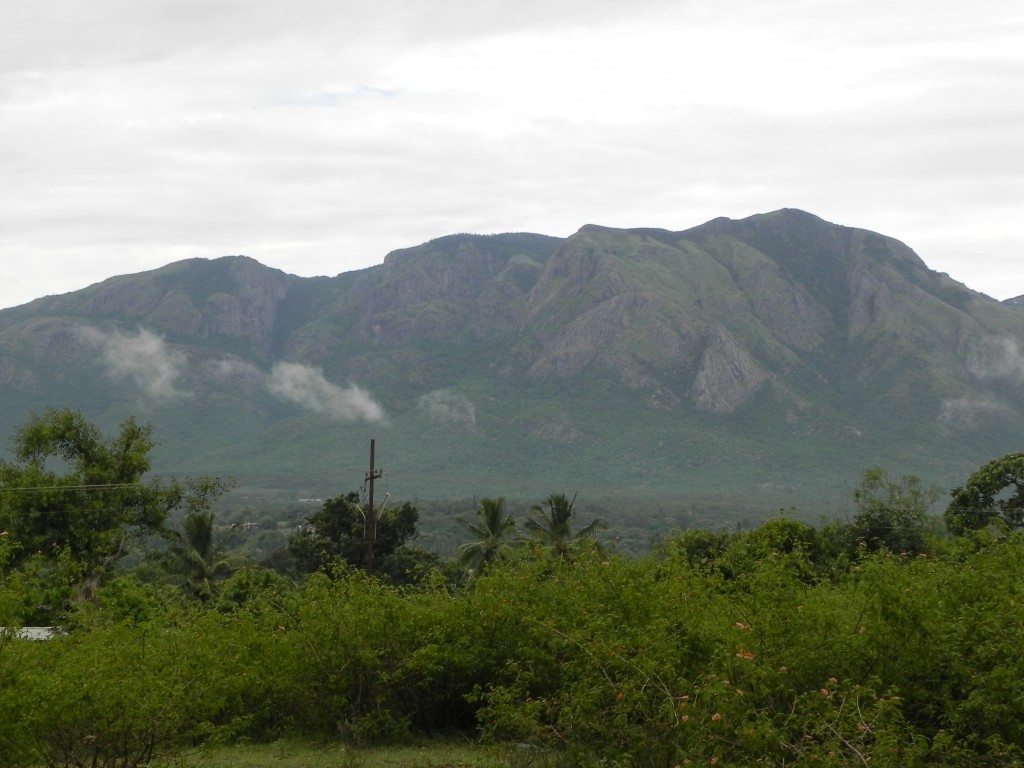
    The view from my India Institute of Science guesthouse provided an ever-changing array of activities; I nearly wore my camera out.

    The spectacular mountain range directly in front of me.
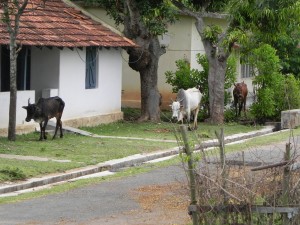
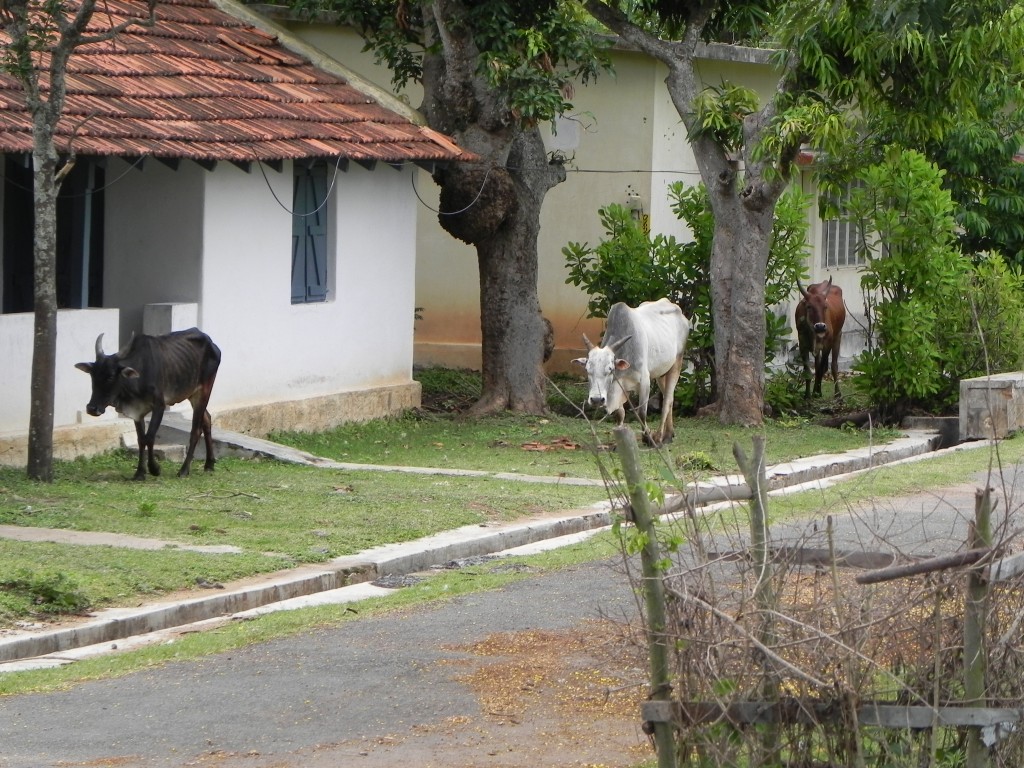
    Free roaming cattle even closer.
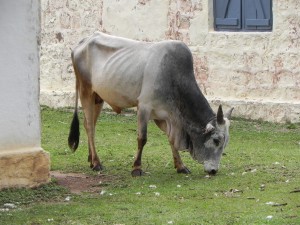
    It has taken a bit of behavior modification on my part to stand back and observe the nonhuman animal life that is part and parcel of this culture. The animals are really not accustomed to being approached. They flee if too much attention is given to them. So I have learned to be satisfied with simply watching the cats, dogs, cattle, goats and pigs, just as I do the wild boar, monkeys and elephants, all going about their lives in complete synchronicity with one another.

    Unique to any other place I have visited so far is the piped music coming from a towering speaker in the local village. The first night in Mudumalai, an hourly bell sounded from the loud speaker followed by a kind sounding message in a woman’s voice. I don’t know what the message was but from the tone of her voice, she was wishing everyone well.

    On the first morning, when I heard the music and identified it was coming from the village area I thought to myself, “What if you are a villager and don’t want to listen to that particular music at that time?” Then I realized that it is a cultural thing. These villages seem to function as a group, many individuals and family providing different services to the community. Although each person is an individual, I believe that ultimately they operate as one. In such a social community I realize that group music could indeed be appreciated as a gift.

    The drive to Coimbatore took us through some pretty treacherous mountains; when they say hairpin turn they are not kidding! The views were breathtaking. I continue to be overwhelmed by the richness of this culture and the mosaic of color, texture and sounds, all nature dependent.

    It has taken me this long to finally realize that India is very animal welfare conscience. Learning something new is much easier than relearning, which explains my delay in recognizing just how welfare conscious the people are. Throughout the wildlife sanctuaries and national forests signs are posted instructing visitors not to harass, feed or touch the animals.

    In Mudumalai, a main thoroughfare cuts through the park, providing access to two large cities. The traffic is nonstop. Along this stretch of road it is illegal to stop your vehicle or take photos. Signage with animated photographs reminds the traffic to drive slow, not disturb the animals and protect wildlife and the forest.

    Without exception, forest officials, veterinarians and biologists all speak with one tongue when it comes to animal welfare. Animal welfare is understood as an integral part of the forest department’s responsibility. How refreshing to hear a high-ranking officer state that elephants should be treated without abuse and that their welfare is paramount. Listening as one official stated that elephants have feelings, too, brought a smile to my face and courage to my heart. Efforts for animal welfare are not considered controversial here in India.

    Coimbatore was a pleasant surprise. The travel books warned that it was void of anything to do but that could not be more untrue. A bustling modern city, Coimbatore was actually a nice break, another variation of scenery and culture, as well as the home to the WWF India offices. I was escorted to two temples and just as my luck would have it our timing was perfect.

    After driving through communities with roads hardly wide enough for a single jeep, we arrived at the Patteeswarar Temple.  I was instructed to leave my slippers (shoes) in the jeep as slippers are not permitted in the temple. The moment we arrived at the ornate stone entrance I was overwhelmed by the sheer massiveness of the structure towering overhead. I snapped out of my trance when I heard, “Madam, madam, the elephant.”  I realized almost too late that their calls were meant for me. I nearly missed seeing the full-grown elephant exiting the temple, walking mere inches behind me.

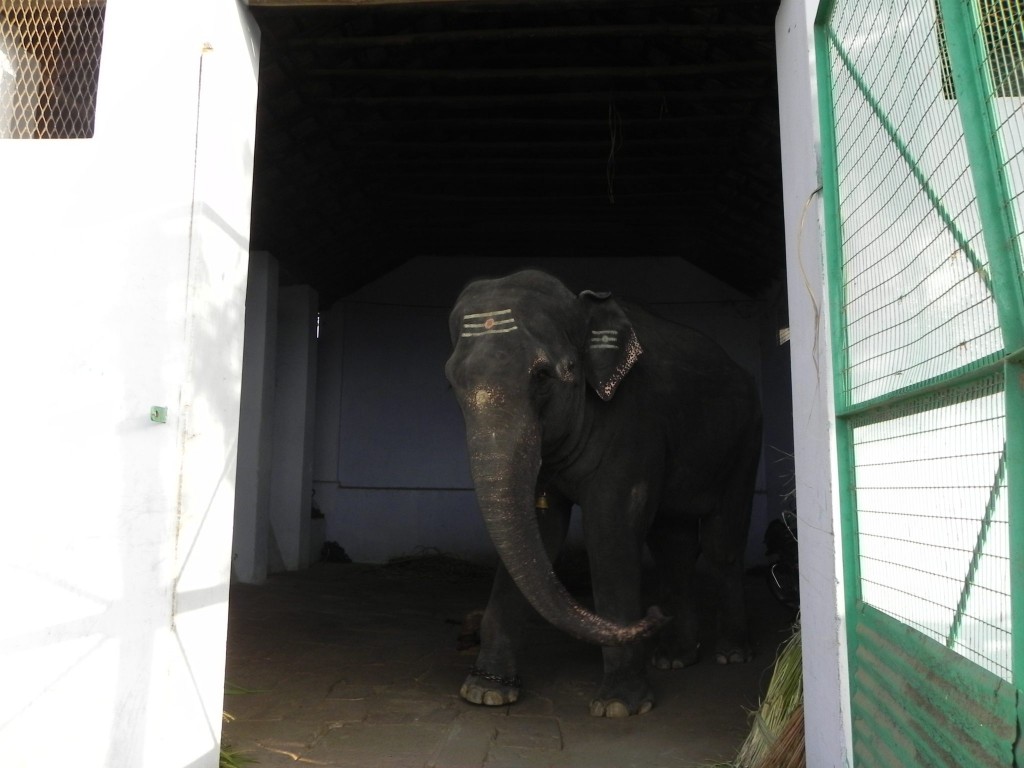
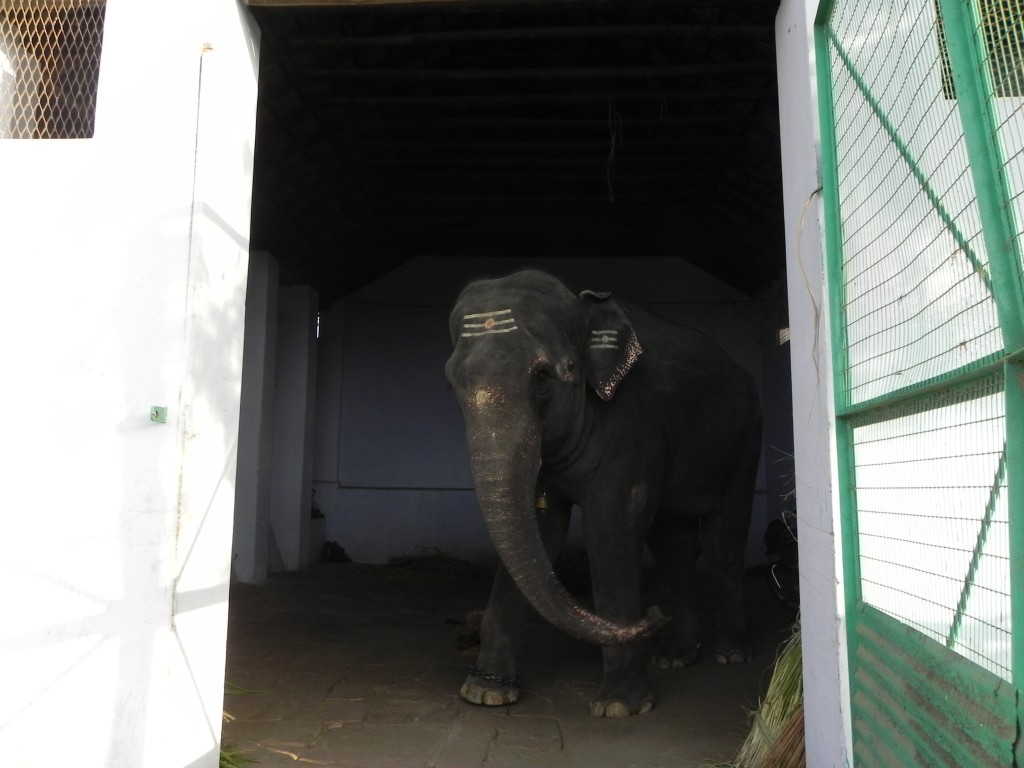
    Kalyani has been the solitary female pachyderm resident of the temple for the past 17 years. Although the manager did not know her exact age she looked to be in her early thirties. Her daily temple duties concluded, Kalyani was heading home to her stable for the night.

    Running, I tried to get ahead of Kalyani to take photos but her long legs hampered my efforts. Remember, I had left my slippers in the car so indeed I was barefoot. My escort/translators kept pace. The scene must have been comical: one crazy barefoot American lady and two well-dressed local men running along with the elephant with a vehicle following close behind.  I really had to laugh. It is moments like this that I am reminded of how kind and helpful everyone has been, assisting with my fact finding mission on elephants.

    Just when I succeeded in getting ahead of Kalyani and in position to take photos, the Phandis made a right turn along with Kalyani who ducked into the doorway of her stable. With precision executed with silent direction, Kalyani maneuvered herself into place for chaining. Her stable was a concrete structure with a metal screen door.  I snapped as many photos as I could as Kalyani was secured for the evening.  Fodder was laid out and two motorcycles that were leaning up against the wall were removed. In a matter of moments, it couldn’t have been a minute, Kalyani was secured in her stable and the mahout was ushering me out so he could close and lock the screen door.
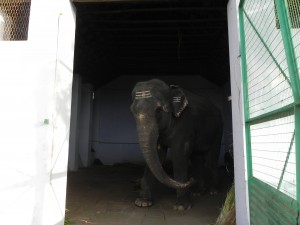
    The mahout indulged me for a few minutes as I asked questions that were translated to him. How old is she, how long has she been here? Does she go for grazing? Does she go for bathing? How much time does she spend at the temple? By this time the mahout clearly was done with all the questions and gestured that he was leaving. I looked at the screen door that divided Kalyani from the outside world and then surveyed the surrounding area. Kalyani’s stable was on a quaint, narrow dirt road with crowded residences and shops lining both sides of the street. I asked the mahout if he slept here with Kalyani and he said no, that he lived close by.

    On the way out I noticed an expansive area with the lush vegetation, places where Kalyani could easily have foraged for food, providing her not only with live vegetation but also relaxation, distraction and natural substrate.

    As I was still pondering Kalyani’s existence, we received permission to visit another temple elephant. We had gone to the temple earlier but the elephant was not there. Many times it’s difficult to gain permission from privately run temples so getting an invite was exciting.

    Congestion is a way of life in India’s cities. Every manner of vehicle crowds onto the roadways and jockeys for a position closer to the finish line. I won’t lie and say I have become accustomed to being a passenger in this driver’s mayhem. I was excited to see my next temple elephant……