Author: Carol

  • For Tarra

    Drescher Heller Pieper Martin1720 West End Blvd.
    Nashville, TN 37203
    Telephone: (615) 425-7111

    October 28, 2011

    VIA EMAIL ONLY

    Robert E. Boston, Esq. – [email protected]
    Catherine H. Molloy, Esq. – [email protected]

    WALLER, LANSDEN DORTCH &DAVIS, LLP

    511 Union Street, Suite 2700

    Nashville, TN 37219

    Re: Buckley v. The Elephant Sanctuary, et al. 

    Dear Bob and Katie:

    In light of Bella’s unfortunate death, I am writing to request that my client be given immediate access to Tarra. As Tarra comes to terms with the loss of her best friend, she will need the support of those closest to her. There is no one better suited to fill this role than Ms. Buckley.

    Please let me hear from you immediately. You can reach me on my mobile phone at any time. The number is (615) 429-0383.

    Thank you.

    Sincerely,

    Sean J. Martin

    Cc (via email):

    Noah McPike
    Carol Buckley

  • For Tarra and her Bella

    Every tree that you pass,

    In the next several days,

    Will remind you of Bella,

    In so many ways.

    But she is still with you,

    Each step of the way,

    And nothing can sever,

    The bond that you made.

    Think of her sweet smell,

    And see her out there,

    Remember her playing,

    Throwing sticks in the air.

    Her essence is with you,

    Her spirit is strong,

    You are one with each other,

    She will never be gone.

    She brought you the sunshine,

    On those cold winter days,

    Then cuddled beneath you,

    On a warm pile of hay.

    When times get the hardest,

    With no will to go on,

    Remember your Bella,

    And the pain will be gone.

    I wish I could be there,

    To hold you and say,

    I’ll love you forever,

    Forever and a day.

    Namaste my sweet girl, Carol

  • I went to court for Tarra

    I created the Sanctuary expressly for Tarra and have no intention of removing her from her home. But due to the changes in management at the Sanctuary since my removal, specifically the departure of co-founder Scott Blais and the entire senior caregiver staff, I feel an urgency to monitor Tarra’s wellbeing.

    On August 17, I filed a Motion for Pendente Lite Relief in the Chancery Court of Lewis County, Tennessee. The motion asked the court for an order allowing me visitation with Tarra and for another requiring the defendant to remove certain documents filed before the court. The motion was to be heard September 7 but was postponed by opposing council and rescheduled for October 17.

    Days before the hearing, opposing council filed a thick brief with the court arguing against the motions and the hearing. The brief mirrored opposing counsel’s previous attempts at character assassination and avoided any discussion of their client’s breach of contract regarding my visitation with Tarra. Instead, the brief contained a battery of insults, unfounded accusations and downright lies to distract the court from the issue of visitation.

    The judge ruled to hear the motion.

    My attorney argued that the Sanctuary had reneged on an agreement allowing me access to Tarra. It has been 18 months since I was last allowed to see Tarra and evaluate her wellbeing.

    Opposing council argued that a request for visitation did not fall within the court’s authority.

    The judge explained that the courts view Tarra as property and, as such, he could grant permission to “inspect” her only in the event that I planned to remove her from Sanctuary grounds. Since removing Tarra from her Sanctuary home is not my intention, the motion for visitation was denied.

    In a heartening display of empathy, the judge assured me and all present in the courtroom that my request was very reasonable, but that the law does not have a provision allowing him to grant the request.

    The second part of my motion, a request to remove specific documents from the Sanctuary’s website was also heard. My lawyer pointed out that several anonymous, unsigned inflammatory letters were posted on the Sanctuary site along with their response to my lawsuit. The letters, written by disgruntled employees, most of whom had not been employed by the Sanctuary for years, contained vicious and false accusations. It was argued that these letters should either be removed or the authors identified.

    Citing First Amendment rights, the judge ruled that the letters do not have to be removed. He explained that people are allowed to say anything they wish. It is up to the person being wrongly accused to sue for slander.

  • Continuing Our Education

    Over the past two years I have refrained from engaging in public discussions about the Board’s actions. I did not want to fuel the fire of already heated discussions. Quite honestly, my input would have not helped anyone better understand the situation because the Board’s action was beyond my comprehension.

    As my chance to be heard in a court of law comes closer, I am beginning to gain insight into the “WHY” of the Board’s action. It will take our day in court to expose its motivations. Time moves slowly in court cases, especially when one side stalls, preferring to put off due process or accountability. So, we must remain patient.

    I would like to reconnect with all of you. It has been too long since I shared my elephant experiences and engaged in open discussion about our mutual ele-love.

    While waiting for my case to come to court I would like to change gears so we can continue to advance our knowledge and understanding of elephants together. We have had a chance to vent at the injustice, but now I would prefer to spend my energy discussing what brought us all together in the first place….elephants.

    You might have a better suggestion but I think a prescheduled weekly online discussion would be great. I could pick the subject of the day from a list submitted by all of you. We would be required to stay on topic, with the goal of learning more about elephants. I want to discuss who they are, how they live, their ability to overcome and recover from unhealthy situation and so much more. I want to expand on the positive aspects of work being done to right the wrongs against them. Instead of focusing on the negative, I prefer to do as I always have and focus on what we can do to help one elephant at a time.

    Although I am happy to talk about all the girls, I think our time will be well spent if we strive to continue our larger education about elephants. There is so much to learn!

    If anyone is interested in this idea, let’s set up a site for the discussions, appoint a person to organize it and schedule the first session.

  • Great suffering of the heart for elephant and human alike; separating bonded individuals is paramount to abuse.

    Great suffering of the heart for elephant and human alike; separating bonded individuals is paramount to abuse.

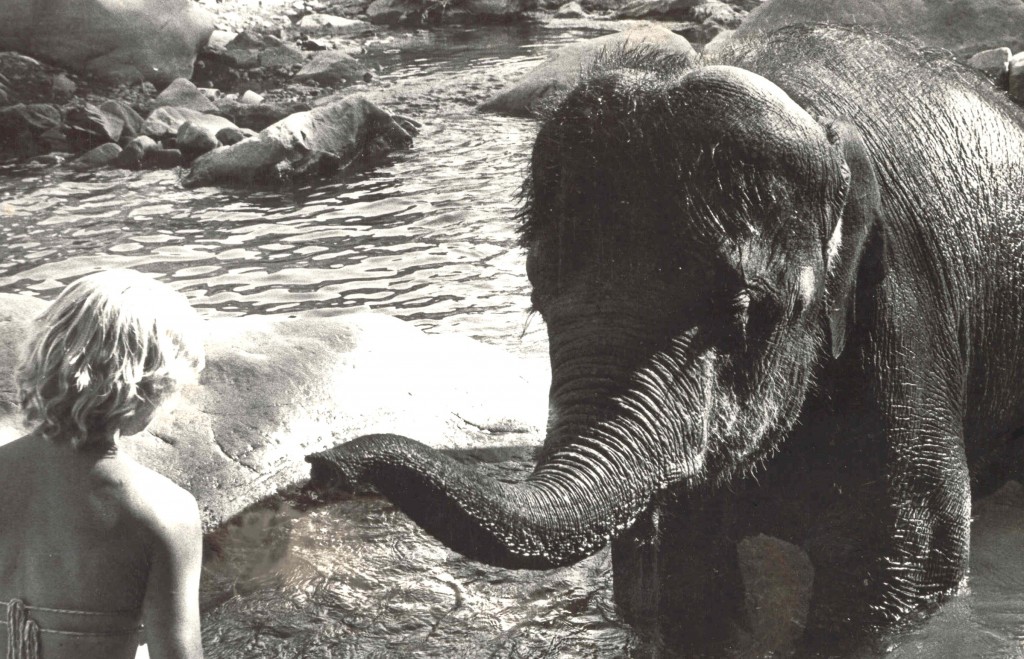
    Tarra and I have shared our lives for 36 years, resulting in a deep personal relationship. What began as a novice caretaker and displaced orphaned elephant soon evolved into much more. Our shared experiences have forged a deep bond, much like mother and child.

    The Board’s decision to keep Tarra and me apart is counterproductive for Tarra’s emotional wellbeing. Their actions defile the spirit of the Sanctuary. If aware of the depth of emotion elephants possess, they would not attempt to sever any significant relationship. As stewards of the Sanctuary, their abuse would appear to border on criminal.

    Yesterday, inside the Lewis County courthouse, my attorney argued for my right to see Tarra in order to monitor her wellbeing. The Board’s attorney argued against, stating that my request was only intended to satisfy my own emotional need. The Board’s attorney spoke of the Sanctuary’s ability to monitor Tarra’s physical health, but not her overall health. Currently the Sanctuary has no expert on staff to monitor Tarra’s overall health, the wellbeing of her mind, spirit and body. The lack of such expertise puts all Sanctuary elephants at risk and negatively affects their continued rehabilitation.

    There was little the Judge could do to grant my request under the confines of the law, which views animals as property. If Tarra had been a Kubota Tractor I would have be granted permission to “inspect” her. But as a thinking, feeling, non-human animal, her needs, as far as the law is concerned, are irrelevant.

    Tarra and I have once again found ourselves in uncharted territory, this time with no law designed to protect our relationship. It is not the first time we have found ourselves governed by a system that is not designed to address or protect Tarra’s wellbeing.

    Tarra has no resemblance to a piece of property. It is insulting for the Board to suggest so. Her relationship needs are real. As stewards, the Board bears the responsibility to allow Tarra and her precious sisters to develop the relationships they desire — a principle the Sanctuary was founded on.

    Although today the court was unable to provide protection for Tarra, I am confident that my continued effort will be successful. I founded the Sanctuary 17 years ago for the express purpose of protecting Tarra from a cruel and unjust world. I will not allow anyone to harm her no matter how long this effort takes. I will not allow this judgment to deter me from my goal to reunite us. The promise I made to Tarra 36 years ago still holds true; I will never abandon her.

  • While daydreaming about Tarra……

    While daydreaming about Tarra……

    I recalled our first romp on a pristine beach in Santa Barbara, CA. Tarra was a spunky youngster, small by elephant standards, full of playful energy. It was early morning, the sun was just lighting up the southern California sky and the beach was surprisingly empty. Like kids off on a grand adventure we climbed over the dunes that divided the highway from the beach beyond. Tarra sunk to her knees in the dry sand with each gangly step, leaving cavernous holes in her wake.

    Abandoned volleyball courts lay down the beach to the left. The water’s edge was active with sandpipers plunging their beaks into the sand like tiny oil derricks. With an excited trumpet blast Tarra bolted toward the big blue ocean, dragging her toes in the wet sand as she ran. The resulting gouges filled in with each consecutive wave, erasing any trace of her presence.

    Tarra enthusiastically ran toward the ocean as the water receded. But when an underdeveloped wave crashed at her feet, she screeched to a halt and back peddled awkwardly. Squeaking gleefully, trunk curled up under her chin, head pulled down low, she got eye level with the wave. As it once again receded, her confidence returned. Ankle-deep in the foamy swirl of sand and salt water, she did not notice the new wave building. It formed quickly, rising like a cobra from the ocean floor and slapped her broad side with a crack. Caught by surprise, Tarra’s eyes flashed wide. She stood frozen for a split second, staring straight at me. I could not help it, I broke up with laughter.

    Recognizing the mischievous look on her face, I started running down the beach to get the jump on our ever familiar foot race. Tarra came tearing out of the water, running as fast as her stocky legs could drive her, trunk and tail fully extended like a bird dog on point. Our foot race ritual was a bonding exercise. Sometimes I let her win and other times she let me. This time it appeared that she was determined to be the winner. Slowed by the soft sand caressing our ankles, we raced down the beach, neck-in-neck, until she surged forward in a final sprint, leaving me in her dust clinching my sides in laughter.

    Only then did I notice we were being watched. A uniformed man standing some distance away called out, “Miss, you cannot have an elephant on the beach.” Jokingly I responded, “Sorry, I didn’t see the sign.”

  • Anantara built a training wall!

    With the world of elephant welfare seemingly in constant turmoil, it is encouraging to learn when progress is being made. Some elephant programs never seem to move past the philosophy of control, be it under the guise of positive or negative reinforcement. So when an organization makes the effort to transition from dominance to non-dominance, congratulations are in order.

    Earlier this year I visited Anantara, a facility located in Northern Thailand. Anantara differs from many other tourist facilities; most notably, they are a five-star resort and do not buy elephants away from their owners. Instead, Anantara leases elephants, keeping the owner/mahout and elephant pair intact, thereby reducing the likelihood of the owner going and purchasing a new elephant. Removing the pair from the streets has the potential to improve their quality of life but, unfortunately, the move alone does not necessarily change the manner in which the mahout manages his elephant.

    You can imagine my gratification when I discovered a new YouTube video showing a training wall and mahouts engaged in positive reinforcement training at Anantara. As if this is not fabulous enough, I have learned that the Government Elephant Conservation Center in Lampang sent representatives to Anantara to learn about positive reinforcement training. I could not be more excited about this development.

    I knew it would take time for positive reinforcement training to catch on in Asia but never in my wildest dreams did I expect it to happen this quickly. A colleague working with elephants in Thailand stated that it stemmed from what I started there. If this is true, I am externally grateful for being in the right place at the right time with the right intention. The wave of change has begun!

  • The Surin Project

    It has been more than a year since my stay at the Surin Project in Thailand. After viewing a YouTube video announcing the completion of their long-awaited fenced habitat, I had to check out their progress.

    I was pleased to learn that their growth has been steady, meeting each goal they established along the way. This privately-run elephant welfare project faces the difficult challenge of operating within a larger, much different government-run elephant attraction. In my opinion, this project surpasses all others in its capacity to bring about change for captive Thai elephants.

    This grassroots project is directed by Alex Godfrey and funded by volunteers and, in part, by the Abraham Foundation. The project subsidizes mahouts to ensure that their elephants receive nutritional food and live chain-free days, foraging, swimming and interacting with other elephants. Although the experience of seeing how government-subsidized mahouts and elephants live is disheartening, Alex’s project, in staggering contrast, demonstrates incredible promise. Experiencing the two diverse programs, side-by-side, can be eye-opening for volunteers.

    The Surin Project is the real thing. If you plan to visit Asia, volunteering at the Surin Project is a must. You will experience firsthand the crisis facing Thai elephants and have an opportunity to be a significant part of the solution for improved elephant and mahout welfare.

  • UPDATE: Elephant Care Center

    In 2009, India’s Central Zoo Authority mandated that all elephants living in zoos had to be moved to national parks and sanctuaries. Unfortunately, facilities to accommodate the displaced elephants do not yet exist.

    My goal is to create an elephant care center prototype in India that can be easily replicated countrywide, ensuring that all zoo elephants can be relocated to more suitable environments.

    Serious discussion for the development of Elephant Aid International’s first elephant care center (sanctuary) in India, which has been underway for many months, is in the final stages. A fabulous piece of land bordering a National Forest has been selected, complete with forests, pastures and ponds. It is a wonderful location for rescued elephants.

    Last week, at our request, government officials toured the property. They asked questions about management and funding, voiced concerns about co-mingling of wild and captive elephants and requested follow-up information regarding our plans. All concerns were minor and easily addressed.

    Although government endorsement is not a requirement for the creation of the elephant rescue center, enlisting government input will serve to strengthen relationships essential for a successful project. We are confident of an emerging rescue center reality! Stay tuned for future updates. We hope to confirm government endorsement within a few weeks.

  • Colic in Captive Elephants

    While in Asia this past year I witnessed a serious health problem, rampant in captive elephants: colic. The individuals most affected are in middle to old age, in questionable health, poor drinkers, have tooth problems and a history of colic episodes. Colic usually affects an elephant when there is a sudden change in fodder. The fatal cases always involve lack of water intake or dehydration.

    In Asia, like the US, captive elephants by and large receive their diets from keepers, as opposed to selecting and collecting their own vegetation from a variety of live sources. Even in the best of captive situations, hand cut grass, corn stock, banana plants and pawn frowns are fed, which means a change in food supply. In Asia, hay is seldom stockpiled so throughout the year the elephant is given different plants and trees collected from different sources.

    Elephants not given the benefit of a gradual transition can suffer greatly from the switch between different fodder. Usually the transition goes smoothly, especially when the elephant has access to live vegetation. But in some cases, individuals experience difficulty on a regular basis. Observant keepers anticipate an elephant’s weakness for colic by adding probiotics to support healthy digestion and making a gradual change in diet. But even under the most attentive care, some elephants continue to experience painful bouts of colic.

    My experience in Asia has taught me that dehydration plays a huge role in the onset of colic. A well-hydrated body has a greater chance of avoiding colic than a dehydrated one. An elephant’s inability to effectively digest what she consumes creates pain and distress. The lack of sufficient water intake slows the transit time of the consumed matter. When the digestive progress comes to a screeching halt, with little eaten and nothing eliminated, the elephant is in trouble. Acting immediately can mean the difference between life and death for the elephant. At the first sign of colic, when the elephant postures and then later refuses to eat or drink, a problem already exists.

    One type of colic is a severe stomach ache caused by trapped gasses, as a result of poor digestion. In many cases, physical activity and a large volume of water help the elephant to pass the gas and poorly digested mater. But in cases when a lack of water consumption played a part in the colic, the situation can be dire.

    Over a three-month period I observed several elephants suffer from colic. In most cases dehydration played a role. Poor digestion of newly introduced fodder was complicated by a lack of water intake, resulting in the development of a blockage of fodder in the intestinal track. The onset of symptoms — cramps and pain — leads to further dehydration as the elephant is unwilling to drink and in most cases will eat only a token amount of food. Intuition tells the elephant not to eat more fodder, which would only add to the blockage. The blockage, which forms a hard, dry mass in her intestinal track, becomes too large and dry to be eliminated. The longer the blockage remains lodged in the intestinal tract, the dryer it becomes as the moisture is drawn through the wall of the intestinal track.

    In the cases I observed when the elephant eliminated the blockage and survived, she had been administered gallons of oil that literally lubricated the blockage so it could be passed. Sadly, in one case the blockage was too large and the oil administered too late to help the suffering elephant, who finally succumbed to it. Upon necropsy, a 50-pound mass of dried fodder was removed from her intestinal tract.

    The pain and suffering of captive elephants is unfortunately one of the ways we learn how to help other elephants in our care. Every effort must be made, at the onset of colic symptoms, in order to prevent a tragedy from occurring.
  • A tribute to elephant advocates everywhere

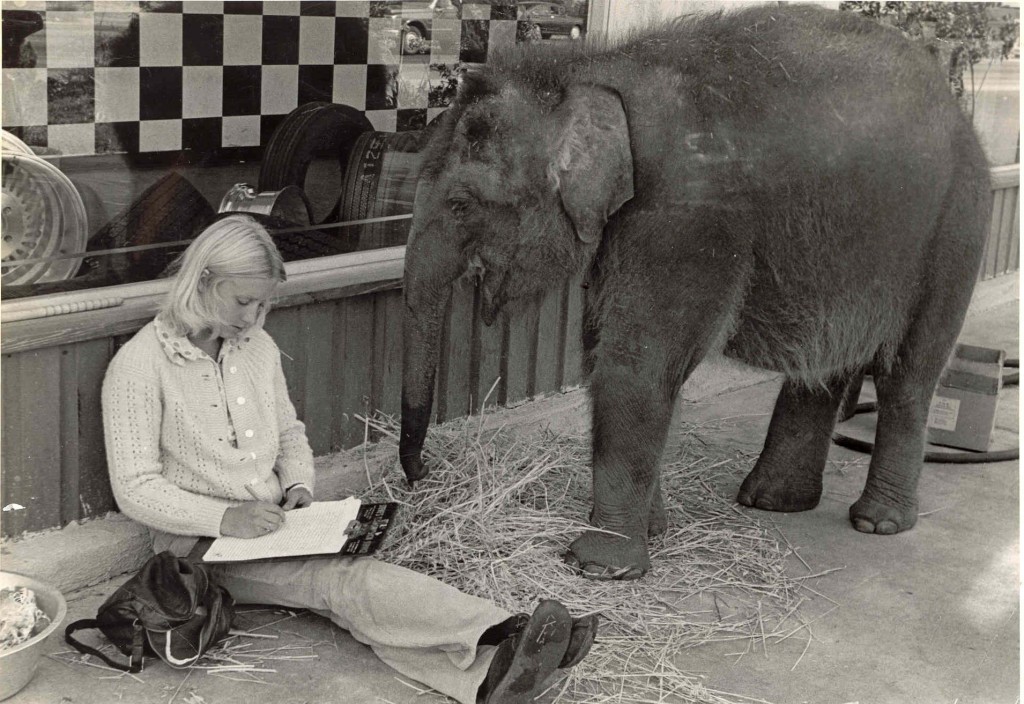
    The effort to create an environment in which captive elephants can experience autonomy and true freedom of choice is a daunting challenge and an honorable pursuit.

  • India’s continued efforts to protect captive elephants

    India continues to make elephant welfare a priority. Following the banning  of elephants from zoos and circuses, the Travacore Devasworm Board has severely restricted the practices of using elephants in temples and ceremonies. I am encouraged by this most recent action taken to protect India’s captive elephants.