Category: Elephant welfare

  • Final Day in Assam

    May 22

    Yesterday was my last day with Dr. K. K. Sarma and his health camp team: Kalita (elephant owner and management expert), Manav (assistant vet to Dr. Sarma) and the ever-inspiring elephants of Assam.

    Interestingly enough, I find myself somewhat desensitized to my foreign surrounding. That is, until I get into a vehicle, but that is a story for another time. At all other times I feel no borders between us. I am fortunate that my companions speak such fluent English; they can’t say the same for my Assamese. My attempt to casually respond in conversation brings polite smiles or confused looks. Everyone has been very kind to accept my effort to communicate in their native tongue.

    The two privately owned elephants we visited today had recently returned from logging in a nearby province. Well, not so nearby. One of the elephants, 65-year-old Jaymala, walked more than 150 miles in a few days to return to her owner’s home. She was a bit underweight from her labors and the walk, resulting in a strong tongue lashing for the Phandis from both Jaymala’s owner and Dr. Sarma.

    Apparently the Phandis had pushed to get home after completing the logging job in order to be with his family. Although one can understand his desire to return home, he was reminded that while employed as Jaymala’s Phandis his first and foremost responsibility is to her welfare. A discussion between Dr. Sarma and the owner followed, focused on the challenges of finding good staff. I soon realized that no matter how different our customs, staffing issues appear to be universal.

    In addition to her regular Phandis, Jaymala has a young mahout in training. I believe he falls into the category of Ghansi; the grass cutter and assistant to the Phandis. He could not be older than thirteen years but moved with confidence while attending to Jaymala. It was obvious that she was very comfortable with this boy, standing millimeters from him as he prepared her daily ration of ceremoniously-folded banana leaves dipped in a rice mixture.

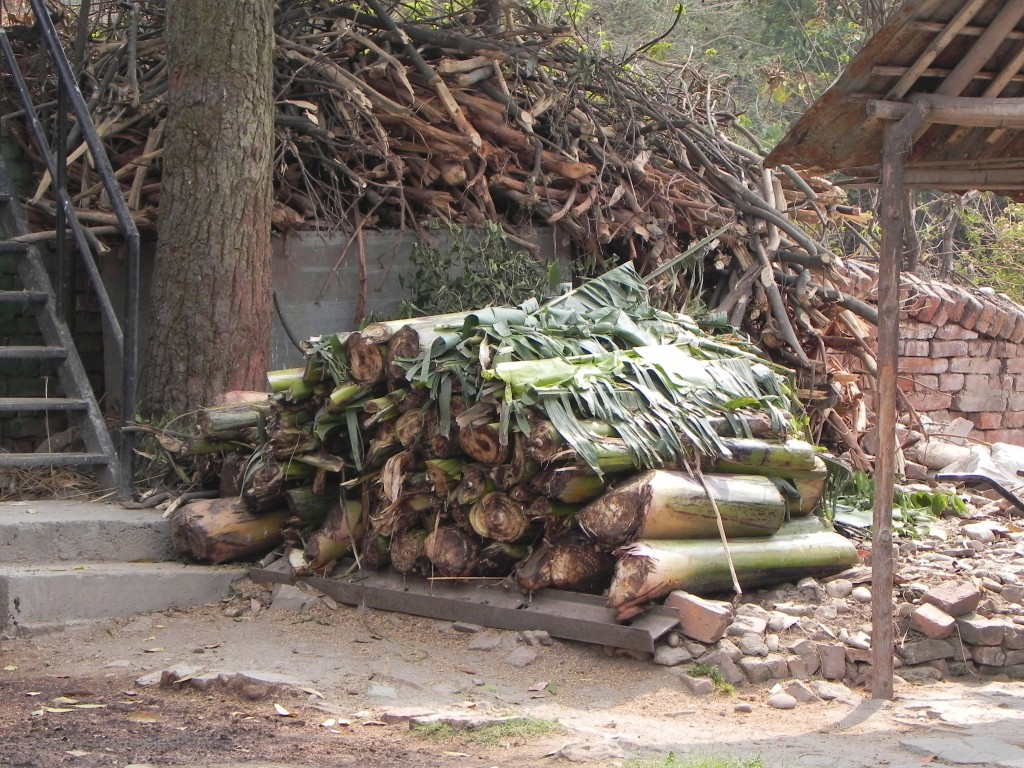
    The rhythm of the food preparation was mesmerizing. Focused but unhurried, the Ghansi cut a long banana stock in half and chopped off the end. Precisely driving his multi-purpose knife a few inches into the end of the stock, he then used the curved knife to pry the stock in half lengthwise. With a thud, the knife was driven into a nearby stump, freeing his hands to fold the banana stock, including the large feathery leaves, much the same way kuchi is folded. The stock was folded over onto itself and the leaves wrapped around the stock. Then the organic bundle was dipped into a bucket of liquid rice mixture and placed ever so gently into Jaymala’s mouth.

    Calm and comfortable, Jaymala chewed as her Ghansi prepared her next ration, opening her mouth as he completed the process of making the next bundle. When the boy became distracted by the visiting veterinary team, Jaymala would reach out attempting to take a banana leaf herself. Obviously she knew this was not allowed and readily accepted the Ghansi’s verbal instruction to leave it alone.

    My observation was that Jaymala had trained her Ghansi quite well. When he slowed his process all she had to do was attempt to help herself and he would get right back to work. I am unaware of the length of time devoted to this process but it went on for the entire time we were there and would continue until the heaping pile of fresh cut banana leaves and bucket of rice mixture were consumed.

    Later we met up with 55-year-old Anguronala in the town of Goalbara. She was on military grounds, behind a guarded gate, grazing peacefully when we arrived. Recently she had been brought to this area, hired as a koonki to drive away a problematic wild bull that had killed a couple of villagers. The koonki represents a second chance for wild elephants who cause damage in human settlements. In many cases the koonki can drive the wild elephants, including a bull, away, which results in their lives being spared. If a problematic elephant cannot be driven off, the government has only two options, both equally unacceptable: capture or kill.

    Anguronala showed the wear and tear consistent with logging elephants, including an old injury that resulted in a deformity to her back leg. A large log had rolled into the leg, causing a fracture below the knee. I saw a few other elephants with this same deformity, which reminded me of the injury that left Shirley crippled while she was performing in the circus. In each case the crippling injury could have been avoided if the elephant lived in a natural setting and was not forced to engage in harmful commercial activities.

    So many logging elephants have such injuries from being struck by heavy logs while working. Of course the injuries are avoidable — the answer is not to log — but the owners claim that the elephants have to work. Believe me, I am brainstorming with colleagues to come up with ways to help elephants out of this highly dangerous activity. It is a huge challenge but there are many experts who are working to find a solution.
  • thought you would like to know

    May 20

    A few tidbits of information

    In India:

    • Thik ase hobo (teak aw-say hobo) is a polite way to say NO
    •  Nehi nehi (nay nay) is the way to say YES
    •  Tika  means OK

    Bicycles are a popular mode of transportation in India. One bike can accommodate four riders, although most of the time there are only one or two. Most bikes are equipped with a SARI-GUARD. This is the safety devise designed to prevent a female rider’s sari from becoming entangled in the chain and spokes of the bike.

    Vehicles drive on the left side of the road.

    Pedestrians do not have the right-of-way when crossing the street. It can be dangerous and appear strangely comical at the same time.

    Due to the hot temperatures during the day, it is illegal to work elephants between the hours of 10am and 4pm, at least in the state of Assam. It is a welfare issue since elephants will become overheated if worked during the heat of the day.

  • One Elephant at a Time

    May 19

    Yesterday’s camp left me feeling conflicted. These elephants, denied a natural life, yet living within their home range country, seem to be the ultimate in contradictions.

    Elephants represent so much in one being: wild animal, god, beast of burden and fellow earth resident. Coming to terms with the reality of their lives, the lives of all elephants in captivity worldwide, challenges me.

    The Indian government has enacted laws to protect elephants against mistreatment. Regardless, elephants continue to be used for activities that can cause them physical injury. Their godly status does not protect them from servitude. The contradictions are so profound that I find it difficult to find peace with the realities of their existence.

    The human population in this country has exploded. Politics and long-held traditional beliefs fuel the continuation of current elephant management. Long-held traditions could have serious implications for the life and future of one of this country’s most revered and endangered indigenous residents. The beauty of the land and animals stands in sharp contrast to the cruelty man is capable of.

    Yesterday I chastised myself for not doing more when I observed a heavy-handed Phandis treating his elephant harshly. Remaining silent was not a possibility so I pointed out the cruelty to Dr. Sarma, asking if he could justify such treatment. He could not and immediately requested that the supervisor reprimand the Phandis. A problem existed: the Phandis was newly appointed by a high-ranking official. To criticize the Phandis would surely result in problems for the supervisor.

    The cruelty ceased but, by being witness to it, I left the camp feeling in some way responsible. Dr. Sarma told me later that he spoke with the head warden to inform him of the Phandis’ actions and assured me action would be taken. So today I set out for our next health camp with a heavy heart. I could not get Phulmati’s resigned face out of my mind. Such a nurturing and good-natured elephant. Her plight haunted me.

    Lost in thought, I was caught by surprise to see our first patient, Rupalim, grazing off the side of the highway. Young and beautiful, Rupalim is close to ten years old. She lost her mother when she was four and is the pride of her owner. After completing the road-side physical examination and inoculations, Phandis and Rupalim maneuvered across the busy highway and headed up the muddy hill toward home.

    Many kilometers later we found Geeta, Manimala and Bijulee also waiting for us on the roadside, but in a rural area with little traffic. Fresh banana trees were piled in front of the girls, who munched contently. A small crowd of locals had already gathered. Once the veterinary team assembled their equipment and supplies, the crowd grew.

    Initial visual examination by the vet team caused discussion in low whispers. I did not have to understand the language to get the gist that the vet team was concerned about something.

    In my unofficial capacity as team photographer, I began taking photos of the overall condition of the elephants. I quickly saw what was causing the concern. Manimala had a significantly deep gash across her tail, which the Phandis claimed was caused by her rubbing on bamboo. I listened to the unbelievable claim and knew today was not the day to expect me to keep quiet in the face of injustice.

    I zoomed my camera in close to get a photo of the gash across Manimala’s tail and found several other lesser cuts that crisscrossed down the length of her tail. The smaller ones were superficial and uniform, but proof that bamboo was not the cause of her injury. Dr. Sarma agreed as I pointed out my findings and I stated my opinion about the cause of the injury.

    All attention was on Manimala who continued to tear apart the fibrous banana tree in long strips and place them in her mouth. She appeared unaware that the focus was on her. As I formulated how I would handle this delicate situation, because I definitely would not keep quiet, Dr. Sarma informed me that although the Phandis did not admit to causing the wound, he had been fired on the spot.

    The breath I was holding expelled. I realized that Dr. Sarma was as angered as I about Manimala’s treatment. Without prompting he said, “Such a lovely and gentle elephant, how could anyone harm her?”

    Cruelty to elephants is illegal in India. The Phandis could have been arrested and charged for the offense but not without firsthand evidence. The way to ensure that he could no longer hurt Manimala was to simply fire him. Unfortunately, nothing prevents him from getting another job caring for elephants.

    Later, in the car we discussed the ignorant and cruel treatment by some of the Phandis. The entire team voiced sincere disdain for such treatment. A true solution for the problem of elephant cruelty is to elevate elephant management standards, educate the trainers working with elephants and enforce the law.

    I may be half a world away from home but the problems and solutions for elephants in many captive situations are similar. Fixing the problem in one place can act as a prototype for solutions worldwide.

    I slept better knowing that action was taken to protect Manimala. Hopefully the remaining Phandis learned that their jobs would also be in jeopardy if they treated their elephant in a cruel manner.

    The two situations where I observed elephants being handled in a heavy-handed and cruel manner seems outside of the norm. By and large the forest elephants experience a high level of professional care and management. It seems that the elephants used for logging are the ones most often treated cruelly.

  • Each Government Forest Camp and Wilderness Sanctuary is Different

    Each Government Forest Camp and Wilderness Sanctuary is Different

    May 18

    Today’s health camp was held at Pabitora, a wilderness sanctuary where nine elephants reside. National parks and wilderness sanctuaries are government-run and hold different classifications, with national parks holding a higher ranking. In both cases the animals are protected and tourism is not aggressively commercially marketed .

    At 16 square kilometers, Pabitora is considered small but it protects the largest concentration of Indian rhino in the world. Their renowned breeding success is enhanced thanks to the cooperation of the local people; poaching is not a problem. The landscape is unbelievably beautiful with a year-round clean river running through it; by all accounts Pabitora is an Eden.

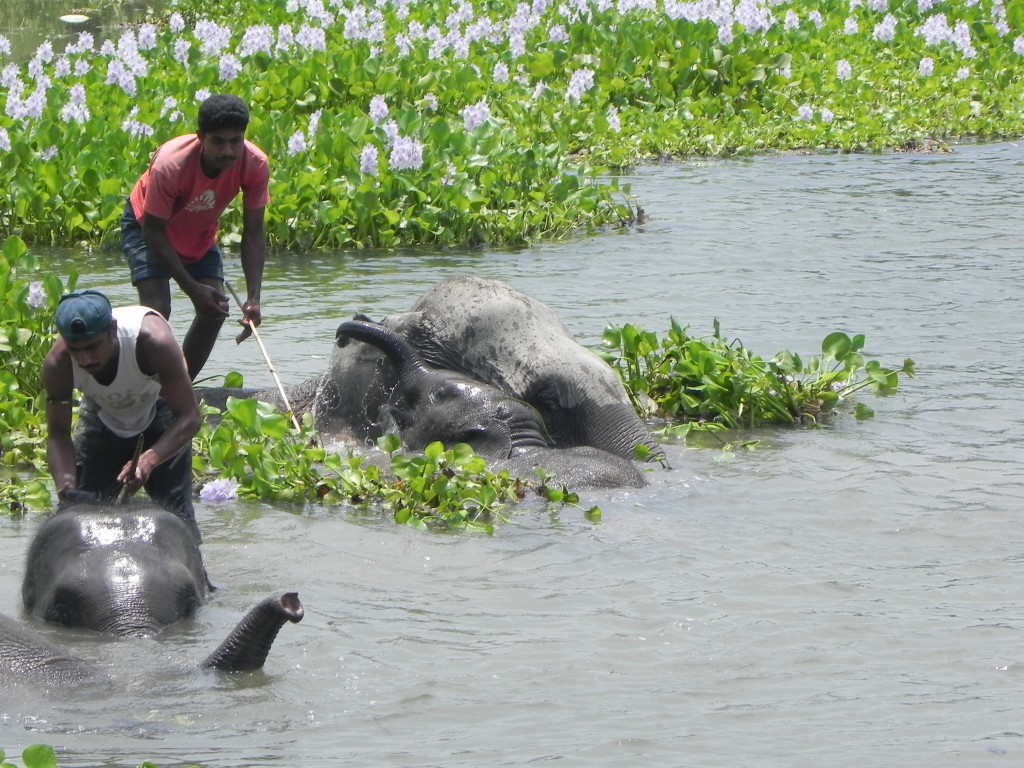
    The elephants were beginning to gather when we arrived. Some had just finished their morning bath while others where just taking the plunge. Bishwajit stuck close to his mother as she carefully maneuvered the river bank entering the shallows. At four months of age Bishwajit is already an expert swimmer, resembling a 500-pound bobbing cork.

    Phulmati is an experienced mother, calm and confident. She never lost sight of her lively calf as she gracefully waded around him. When she lowered herself in the shallows to allow her Phandis (lead mahout) to scrub her skin with a fistful of vegetation, little Bishwajit took full advantage. His comical play included climbing on his ever-patient mother’s face and over her head, concluding with a belly flop off the other side. In between submarine dives Bishwajit would surface and extend his tiny trunk, making contact with his mother’s face every thirty seconds or so.

    Bohagi, Phulmati’s first calf, is already five years old and recently completed her formal training. I looked closely to see if I could find the scars I was confident she would be wearing as result of the training process but to my surprise there were none.

    By the time Bishwajit and his mother emerged from the river, the camp was well underway. The males here outnumbered the females six to three. Two of the males, Naga and Rudra, were recently moved to the sanctuary from the Guwahati Zoo. Even though, in theory, the move is in their best interest as now they live in a natural habitat with access to clean water and live vegetation, their initial introduction was problematic. Bikaram, the sanctuary’s resident mature male was not impressed with the new arrivals and was extremely aggressive toward them. Determining if and how captive males should be introduced to semi-wild environments already occupied by mature males is a subject that will need to be studied to ensure the welfare of all concerned.

    Each elephant has a Phandis, their trainer and caregiver, who attends to their needs, takes them on anti-poaching patrols and ensures they spend many hours each day in prime grazing and foraging habitat. I know we would love to think of these elephants as being free to wander at will and do as they please but that is not possible. The parks are not fenced and human settlements encircle the national parks and wildlife sanctuaries. In the recent past some captive elephants have been released into the wild only to pay a horrific price when they wandered outside the boundaries of their protection and become a pest to the locals. Of the options, including illegal logging, tourist safaris and unemployment, which can be disastrous for their welfare, it would appear that these elephants are in the best situation currently available to them.

    Consistent with Dr. Sarma’s other camps, the elephants received a thorough physical examination, inoculations, fecal exams and deworming when needed. A large abscess on Phulmati’s back right leg was the biggest issue of the day.  Unfortunately for Phulmati, some time back a veterinarian had administered a high volume of drug at a single injection site, resulting in an infection. Dr. Sarma had been called in to address the problem and was pleased at the condition of the wound since his last visit. While dressing the wound he remarked that it was healing nicely.

    Bishwajit was full of himself, desperate for someone to play with. He figure-eighted under his mom’s belly and around her legs as she patiently accepted her abscess treatment. Cleaning out the wound and placing new dressing inside took about 15 minutes, during which time the ever-active calf made a nuisance of himself. At his tender age he knows no authority except his mother, thank goodness for that. And in the case of his mom, like most experienced elephant moms, Bishwajit could do no wrong. When he found that the humans would not engage in elephant games he targeted a nearby dog, promptly chasing it off.

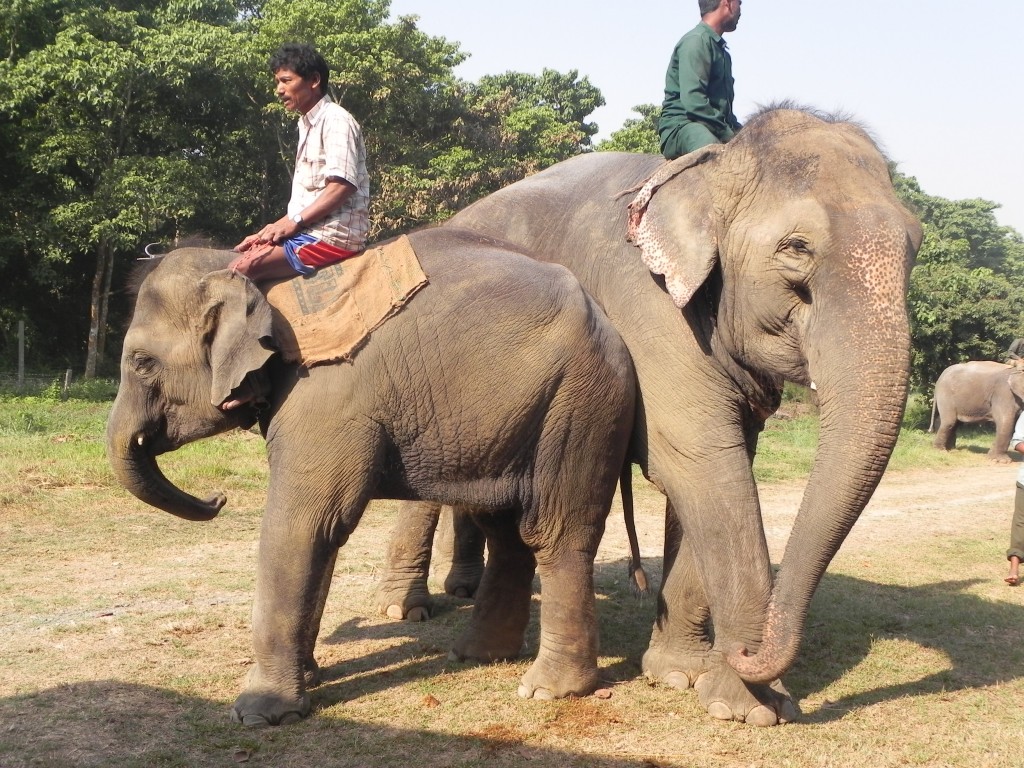
    During the camp, all the elephants, Phandis and mahouts mingled around the site. Only after all the elephants had completed a physical examination and treatment did the exit process begin. A seemingly discarded piece of burlap was silently grasped and effortlessly flung by an elephant over her head to the waiting Phandis. Serving as a seat cushion of sorts, the rider placed the burlap just behind the elephant’s shoulder blades. He settled comfortably on the burlap, draped his legs behind her ears and tucked his feet on the inside of the neck rope.  Each Phandis signaled to his elephant in foot-language and the elephants responded. In a synchronized dance they fanned out in different directions, all leading to the same place, the forest.

    Now the elephants will spend hours grazing and foraging and later in the day they will patrol their home. Protecting the endangered rhinos is their job. Considering the alternatives for elephants living in captivity in Asia, theirs is a relatively good life.

    bath time before health camp examination
  • So Much To Learn

    May 17

    I have spent the past several days traveling with Dr. K.K. Sarma, Ph.D., and his team of skilled veterinarians, assistants and driver, to various elephant health camps in Assam. I have seen and learned so much. The experience gives me hope for the elephants in this region.

    Dr. Sarma is an Associate Professor in the Department of Surgery and Radiology at the College of Veterinary Science, AAU Khanapara, Guwahati, Assam, India. Spending time with such a dedicated professional has caused me to realize that although we may be spread across this planet, elephant caregivers share the same mind, the same vision: a more humane and healthy existence for elephants.

    Years ago, I held a hardline opinion against providing assistance for elephants held in captivity in Asia. But several years ago my opinion changed as I came to believe that regardless of how I feel personally about the deprived life captivity provides, elephants suffer in captivity and require our assistance. A person who influenced my change of mind was Mr. A. Christy Williams, who at the time was completing his studies focused on wild elephant populations in the Northern National Parks of India.  After being much impressed by Christy’s work I decided that The Elephant Sanctuary should do what we could to initiate a pilot program to assist privately owned elephants in need in Asia. We collaborated with Christy and later Dr. Sarma to create a Mobile Veterinary Care program in Assam.

    This program has been supported by the Sanctuary for years. It has been seriously successful thanks to Dr. Sarma’s expertise and dedication to elephant health care. You can always tell a true elephant devotee — they will drop everything at a moment’s notice, at great cost to themselves and their bank account, to assist a needy elephant.

    About five years ago, Christy informed me that Dr. Sarma’s camps were increasing in demand. He was traveling great distances on a regular basis and Christy felt that a valuable addition to the project would be a reliable vehicle. Not only was Dr. Sarma not being paid for his services, he used his own vehicle for travel. Christy wondered if the Sanctuary would consider entering into a formal agreement to support Dr. Sarma’s work for another five years.

    This request came at a time when the Sanctuary was experiencing increased support as result of the National Geographic documentary that featured the reunion of Jenny and Shirley. This proposed commitment by the Sanctuary would require a large upfront expenditure to purchase a four-wheel drive vehicle for the mobile veterinary care work. I saw this commitment as a way of paying forward the support we were experiencing. There was no question in my mind that the Sanctuary was well advised to increase our support of Dr. Sarma’s important service.

    In addition to setting up elephant health camps, where elephants arrive en mass at a predetermined location, Dr. Sarma tends to individual elephants whenever called upon.  Over the 20 plus years that Dr. Sarma has provided free veterinary care to the elephants of Assam, he has developed a well-deserved reputation. His work is extensive; he assists as many as 400 elephants in this region, resulting in a wealth of experience. On any occasion possible, time off or after hours, you will find Dr. Sarma in pursuit of better health care for the elephants of Assam. Teaching at the Veterinary College is his profession but caring for the elephants of Assam is Dr. Sarma’s passion.

    Attending three days of scheduled camps and a bull recovering from partial paralysis of the left side of his body has meant driving great distances. From Guwahati we drove to our first camp in Lamari, then Satsimalu, and then Biswanath Chariali in the Sonitar District. Driving through the countryside of Assam plays tricks on me because it looks and feels just like the landscape of Hohenwald, Tennessee. This elephant country with its lush vegetation, humidity, streams, rivers, pastures and forest lands is a mirror image of The Elephant Sanctuary. I do wonder how I found the pearl of place in America that so resembles and perfectly fits the needs of Asian elephants.

    This past week I have been fortunate to document Dr. Sarma and his team attending to forty-four elephants…so far: calves, datals (tusker), maikis (mikee) females, and makhanas (mock-naw) naturally tuskless males, ranging from a few months of age to 60 years. The camps are well organized, well attended and attract more than the elephants it is organized to help. The locals come out in droves and, unlike any public gathering I have ever observed involving elephants, all of the bystanders are respectful, quiet and reserved.

    The level of respect shown to the elephants, their mahouts and the veterinary team was an eye opener for me. Imagine close to 20 elephants, many of them mature males, gathered in an area half the size of a football field. Each elephant is assigned a number. When their number is called, the elephant and mounted mahout jockey into place. Other elephants, some riderless, left untethered and munching on cut banana trees, shift to make room for the next patient.

    As result of the elephant gathering, a sea of local people congregated to watch the open-air clinic. At first I was concerned about the crowd of people but quickly noticed that they respectfully keep their distance. Not once did a person, adult or child, need to be reprimanded for getting too close, becoming a nuisance or teasing an elephant. This phenomenon alone caused me to look on the people of Assam in admiration.

    In this culture the elephant is a god, which may begin to explain the respectful attitude I observed.  But it is more than that. As time passed some of the village children and men would move in closer, especially when an elephant reclined on its side to receive an injection or have the foot pads examined. Crowded around in complete silence, their curiosity was palatable. Although shoulder to shoulder, watching intensely, they were never in the way.

    At the camps a full body examination is conducted. Eyes are checked, fecals done and any wounds or problems discussed and treated. In the case of logging elephants, the mahouts provide details about any trauma or accidents that their elephant may have sustained during the course of their work. The mahouts are very engaged in the discussion about their elephant’s health and appear completely receptive to recommendations made by Dr. Sarma and his team.

    Surprisingly, contrary to what I had expected to find, the elephants appear healthy, in good weight, calm and cared for. I saw little of the scarring and wounds I feared I would see. According to Dr. Sarma, the biggest problem he encounters is parasites. Thanks to the trust he has developed with the mahouts and owners, Dr. Sarma is allowed to provide worming medicine, inoculations for tetanus, Vitamin B shots and mineral supplements.

    At one of the camps, three of the elephants were pregnant. The Phandis of these mothers-to-be proudly posed for a photograph, displaying the bag of mineral supplement provided by Dr. Sarma. Even though each man remained silent, their faces could not hide the pride they felt for their elephant.

    The elephants of Assam have an obvious advantage over elephants living in captivity in other areas of the world. These elephants, although in human care, live in wilderness areas. They spend the majority of their time grazing and foraging on natural vegetation, walk and sleep on natural substrate and are sheltered from the sun by the forest canopy. With the exception of the privately owned elephants who are taken to neighboring countries for logging, the elephants of Assam are not overworked. Most are used for anti-poaching patrols of the national parks to protect not only rhinos but other treasured and endangered animals.

    Participating in Dr. Sarma’s health camps have caused me to consider what more we can do to help him help the elephants of Assam. I am thinking that a small laboratory would be a welcome asset. It would not need to be lavish; just the basics would enable Dr. Sarma and his team to do even more. Fecals are done in the field but blood must be transported back to Guwahati to be processed. Given his own lab, I believe Dr. Sarma would be able to conduct additional non-invasive testing in a timely manner, all under his direct supervision.

    When I get access to internet where I can upload photos I will.

    Namaste

  • Foot Care

    Foot Care

    April 26

    As result of the owners’ cooperation and participation in the Elephant Health Camp, a thorough examination was done on every elephant’s foot. The sheer number of elephants was a blessing, enabling the team to determine patterns, both positive and not, regarding the condition and wear of the elephants’ feet. Collectively their feet were in good condition.

    Foot pad and nail overgrowth is a common condition in captive elephants. Trimming tools vary in size and style but the goal is universal: maintain elephant’s feet to ensure even wear of both the pads and the toe nails and prevent overgrowth. The challenge is to not over-trim.

    When foot pads are trimmed excessively, the elephant will bruise the bottom of the foot. If repeated, the bruised areas can become infected. Once an infection becomes chronic it is possible for the condition to advance to osteomyelitis, a disease that, to date, has not been cured in elephants.

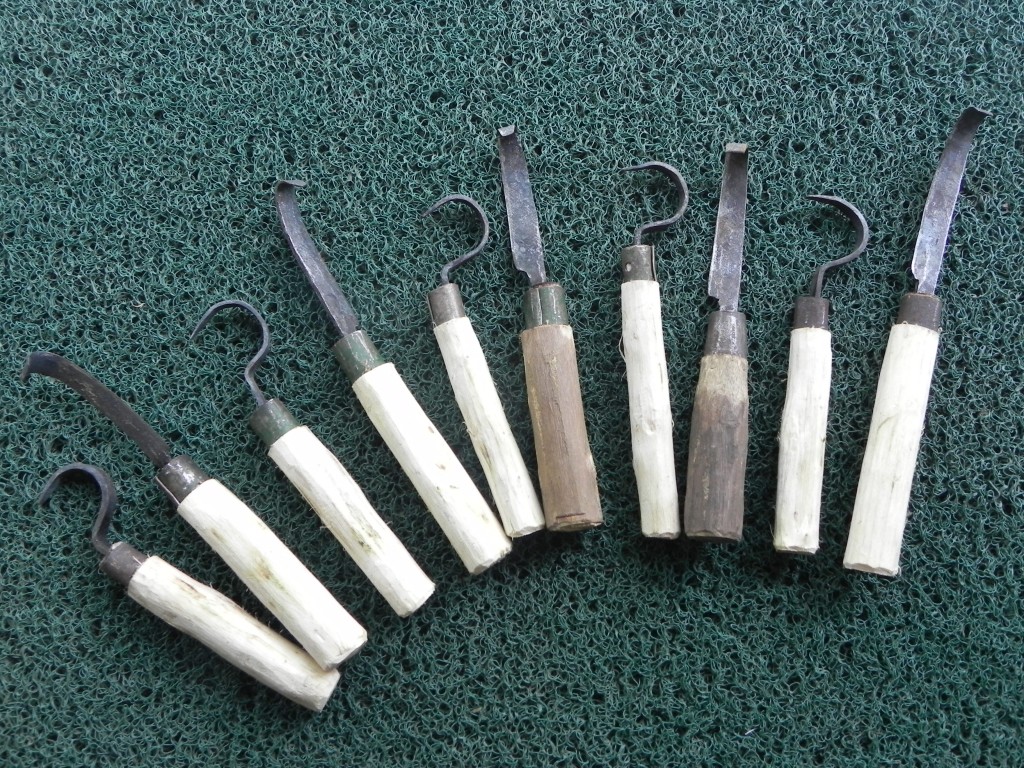
    Having the proper foot trimming tools is essential, so the other day we paid a visit to the local iron worker. He listened intently as our translator explained exactly what we wanted.  He nodded his head, asked questions and finally agreed to create a prototype and have it delivered to us the next morning. True to his word the custom-made hoof trimming tool arrived as promised; it was perfect.  He did such a great job on the first prototype that we gave him a second and ordered five sets.

    Soon we will meet with the owners and mahouts to provide a workshop on foot care. Judging by the receptivity and interest shown by the owners and mahouts, I have no doubt that the foot care workshop will be well received.

    Everything we do and everything we provide to the owners and mahouts is free of charge. At this point it is most important that the owners buy into the idea of change. By providing these tools and our expertise free of charge, we are helping to further our welfare goal. By working cooperatively with the owners and mahouts the elephants will benefit.

    Feeling the need to make a contribution to this effort I signed International Elephant Aid up as the underwriter for the workshop. IEA will cover the cost of the tools, which will include supplies for foot soaks and foot trimming. I will donate my time and services to give the workshop and tutor the mahouts on proper elephant foot care.

    I am so excited about this component of Dr. Mikota’s work at Chitwan National Park. Fortunately the owners and mahouts are receptive to our offer of assistance. They appear eager to learn whatever they can for the benefit of their elephants.

    Custom hoof knives created by the local iron worker
  • Pawan Kali’s diet

    Pawan Kali’s diet

    Dr. Jeewan Thapa participated in ECI’s Elephant Health Camp. Prior to working for the zoo, Jeewan worked with the elephants at Chitwan. Dr. Jeewan promised to keep me informed about Pawan Kali’s pending move.

    Along with information about Pawan Kali’s housing, daily routine, care and diet, Dr. Thapa provided information about the cost to feed Pawan Kali at the zoo. I found it interesting that the cost to feed Pawan Kali was equal to the cost to feed an elephant at the Sanctuary. The chart below lists Pawan Kali’s daily diet, minus the special foods she receives on “Ganesh Tuesdays.”

    Feed items for Pawan Kali Daily requirement in (kg)=(2.2lbs) Cost/Kg (NRs) Total cost Remarks
    Unhusked rice 12 29 348
    Molasses 1 57 57
    Straw 15 17 255
    Salt 0.15 10 1.5
    Carrot 2 37 74
    Pumpkin 2 20 40
    Potato 2 15 30
    Green fodder Around 100 1,600 Still fodder is collected  free around Kathmandu valley. The cost is for two handlers to work a half-day to collect fodder twice a week. (Rs800/times)
    2,405
    Total cost (1$=Rs72) $33

    Out of respect for the possibility of cultural differences regarding the solicitation of funds, I consulted with the zoo about money being donated for Pawan Kali. They graciously agreed that this is a great opportunity to educate people and raise awareness worldwide. My idea is that maybe the EleAids would like to designate Pawan Kali as a Feed an Elephant for a Day recipient. Instead of having a PenPal in Nepal, you would have an ElePal.

    Fresh-cut fodder collected daily for Pawan Kali.
  • Last Day of the Health Camp

    Last Day of the Health Camp

    Close to 50 elephants participated in Dr. Mikota’s elephant health camp. Today was the final day, at least for the elephant examinations. Over the next several days samples will continue to be processed, with results reported to the owners of the elephants.

    This is precedent-setting work. The owners voluntarily participated — enthusiastically, in fact. Today one of the proud owners provided information about his recently acquired elephant, complete with physical and behavioral information.

    When one of the elephants became nervous about the exam, another mahout mounted on a young elephant  brought his elephant close to “her friend” with favorable results. The nervous elephant immediately settled down. The younger elephant touched her friend around her mouth and stomach in an obviously reassuring way. Their display of  friendship was tender and the mahout’s sensitivity was refreshing.

    Our work is not done. While samples are being processed, records made and treatments prescribed, Dr. Mikota will pursue other community-related projects that will enhance elephant welfare while benefiting the community. As soon as these projects get the official go-ahead I will report on them. They are all very exciting.

    Sauraha is a close knit community. Even though tourism is the backbone of their financial support, the daily activity of earning a living and caring for their families is the activity that is observed each day, from dawn until dusk.

    These are a happy people. Their connection to mother earth is the common thread that ties them together. Busy building new homes, resorts, replenishing dirt for planting, tending to the rice paddies, planting young plants that will later feed their family and tending to their animals is what occupies their daylight hours. The heat and absence of air conditioning brings them out onto rustic porches and stoops bordering the earthen roads after dusk. Children chase each other through the darkness while dogs cavort freely, homeless or not. The heat is forever present but a lightness fills the air. You are one with the community with a simple but genuine head nod and namaste, which brings a beaming smile to a previously serious face. All is one; all is well with the world.

  • Elephant Care International’s Sauraha Elephant Health Camp

    Elephant Care International’s Sauraha Elephant Health Camp

    April 21

    Elephant Care International’s Sauraha Elephant Health Camp has been a well-received service for privately owned elephants living outside Chitwan National Park. ECI’s efforts to gain the trust of the thirty-something private owners, who collectively own nearly 50 elephants, has proven successful. The owners are all participating in this health camp, a testament to ECI’s efforts.

    On this second day of the camp, seven elephants showed up for examination. How fortunate I am to be involved. The veterinarians, technicians, mahouts and elephants flowed together in a synchronized dance, collecting throat cultures, nasal drip, blood, urine and fecal samples, body temperature, respiration and pulse. Translators helped bridge the language gap, making the process more efficient.

    The elephants, all Kali (female) so far, have responded to the camp individually, and collectively have demonstrated receptivity to the experience. The reality is that most, if not all, of these girls have never before walked onto a portable scale nor provided the many samples requested of them. They have all responded incredibly well.


    It did not take long for the mahouts to understand that the ECI team prefers that they practice patience with their elephants. For some, the concept of a gentler approach had never been considered but they responded favorably.

    Not surprisingly, the mahouts demonstrated a capacity for innovation when met with the challenge of collecting samples. Some of the younger mahouts responded to sample collection requests with wide eyes and a noncommittal head tilt accompanied by a somewhat nervous giggle.

    The more seasoned mahouts listened intently to the translated directions, then immediately set out to accomplish the task. It soon became evident that the more advanced mahouts reveled in flaunting their superior skills. The resulting competition between mahouts proved beneficial. Overall, the elephants are in good shape. None are overweight. The ankus is not used to pull and push the elephant so hook wounds are not an issue.

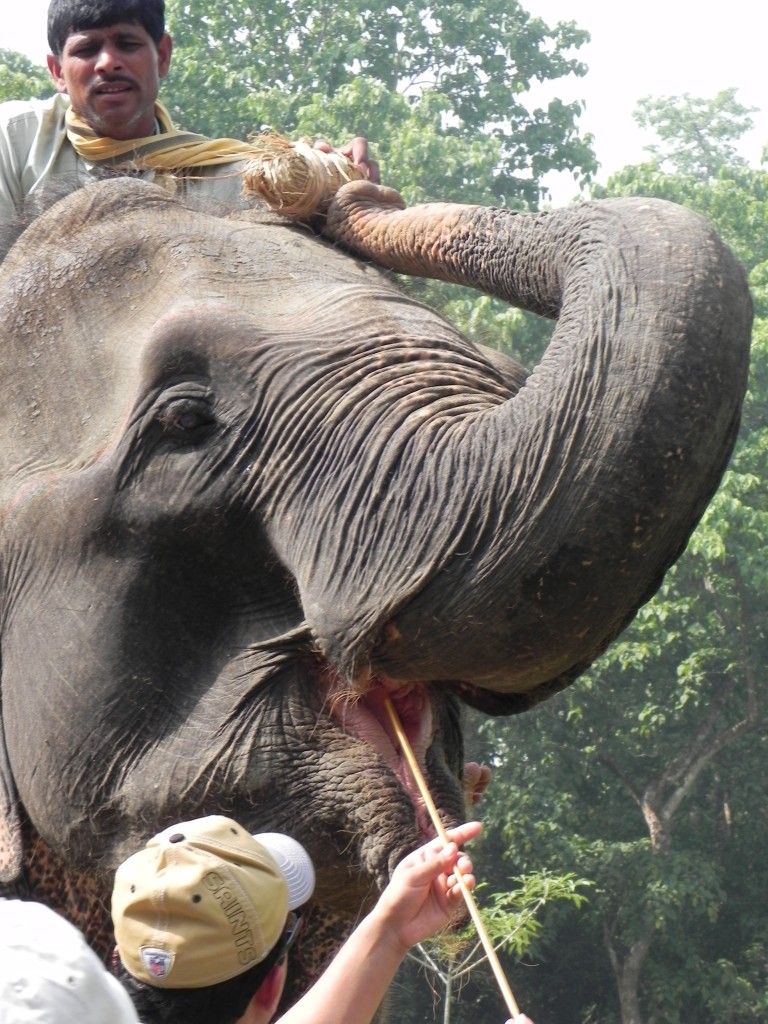
    Getting a throat culture with an extra-long Q-tip

    Living on natural substrate and in an appropriate climate has benefited the elephants greatly. Improving the standard of living for these and other elephants in captivity begins with education and improved health care. The elephants of Sauraha, their owners and mahouts have embarked on a journey destined to change their lives for the better. I am so thankful to be a part of the process.

  • The Flow of Life

    April 20

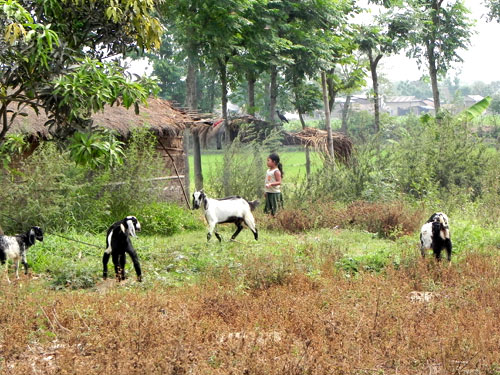
    Activity begins early in Sauraha, not surprising since as the day unfolds the temperature rises to a sweltering level. At sunrise the air has a refreshing coolness about it. The community comes to life as goats and water buffalo are taken from their night quarters to grazing areas. Upside down handmade woven baskets are righted, allowing the contents — live chickens — free access to hunt and peck at their leisure.

    The NTNC elephants silently head out of their personal stables, mahout on board, to collect the following day’s supply of fresh-cut elephant grass. The privately owned elephants adhere to a different routine and a different diet. Not permitted inside the national park, the privately owned elephants eat grass that is cut seasonally in bulk and stacked, forming a hut-type structure next to their mahout’s house. This grass is stored for months at a time, much like the baled hay fed to elephants in zoos and circuses worldwide.

    By contrast, elephants owned by the government and NTNC, a NGO (nongovernmental organization) have access to the forest areas, where grass is plentiful. They collect their own fresh-cut grass daily. This activity has many benefits, including that the elephants eat high-quality good-tasting fodder and spend hours engaging with their natural habitat.

    Life in captivity is restrictive but access to home range forests brings these elephants closer to their roots and provides them with an opportunity to walk, forage and bathe in the environment they are adapted to. If elephants are to be maintained in captivity, keeping them in range countries definitely has benefits.

  • A Rooftop View

    A Rooftop View

    April 15

    Today members of Dr. Susan Mikota’s  Elephant Care International team met with representatives from  the Center for Molecular Dynamics – Nepal to discuss their collaborative work on elephant DNA. This is seriously promising work that will provide yet another diagnosis tool for elephant diseases. The full extent of the application of this study is yet to be realized but without a doubt this is important work for captive elephant welfare.

    The rooftop view from the CMDN lab was staggeringly impressive, equal only to the depth of brilliance, enthusiasm and dedication exhibited by CMDN’s International Director Dibesh(Da-besh) Karmacharya and Country Director Sameer (Sue-mar) Dixit.  Although full underwriting has yet to be secured for the current DNA project, the benefits of this research will be immeasurable.  As evidence of their dedication to elephant welfare, CMDN has agreed to move forward on the project, which involves hours of lab work, processing hundreds of samples collected by Dr. Mikota’s team.

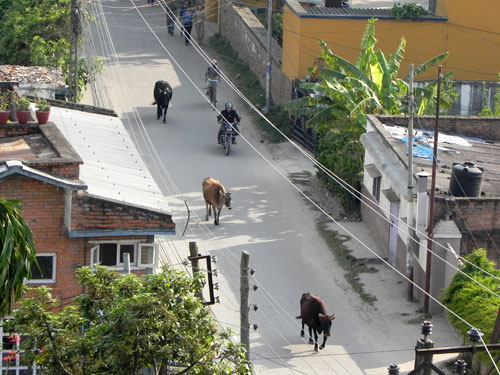
    From my perch on the roof top a scene familiar to city dwellers caught my eye. Down below, casually ambling along a busy city street, were several cows, a sacred and revered animal in Nepal. While cars and motorcycles gave the animals a wide berth to ensure their safety, the cows meandered along, seemingly undisturbed by the hustle and bustle of the city—their destination known to only them.

  • Anticipation

    My adventure begins when the plane touches down in Kathmandu, Nepal, on April 14. I will spend the first few days familiarizing myself with my new surroundings, the society and the people.  Kathmandu will be my initial introduction to Nepal’s elephant culture.

    It is my good fortune to be joining a highly skilled and seriously motivated veterinary team. Meetings are scheduled with NGOs and government officials in order for the team to be brought up-to-date on several projects.  As a new member of the team, I will focus on absorbing as much information as is humanly possible.  After less than a week in Kathmandu, we will travel southeast to Chitwan, to administer veterinary care to tens of elephants over the next several weeks.

    Elephants have been my focus and the driving force in my life since I was 20 years old. Although travel has always been my second love, my work at the Sanctuary has kept me virtually home-bound.  I have no regrets, only gratitude for the years spent providing a safe haven for elephants. The Sanctuary is the manifestation of my dream; a significant component of my life’s work. Without question, I will always cherish the memories and relationships that I have developed with all my Girls.  As my future unfolds I realize that I have found a way to combine my two true loves by traveling to assist elephants.

    It is hard to contain my excitement at the prospect of being of assistance to so many elephants.

    Carol