Category: Elephant welfare

  • An added benefit of non-invasive research

    Earlier this week I had the opportunity to visit two more elephant facilities in Thailand.

    Anantara, near the Golden Triangle, was my first stop. Although long, the bus trip north was well worth the time.

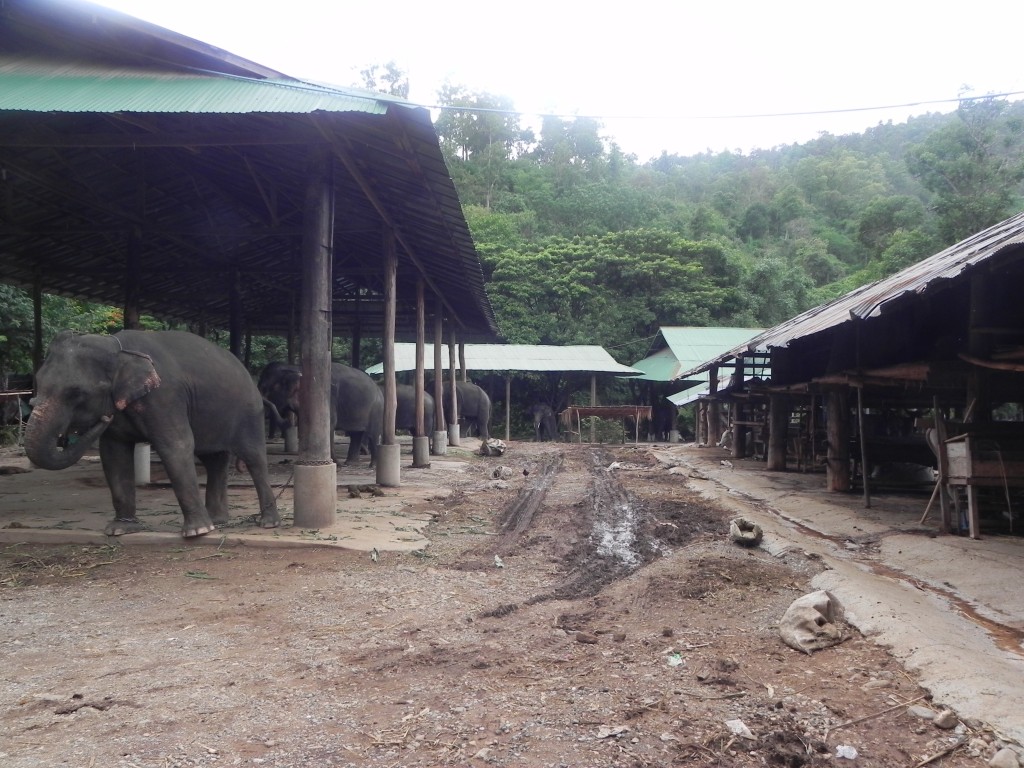
    Anantara is a spacious resort nestled in lush forests bordering Myanmar. I was told that on rare occasions an elephant has silently swum across the river to foreign soil. An unsanctioned border crossing for sure.

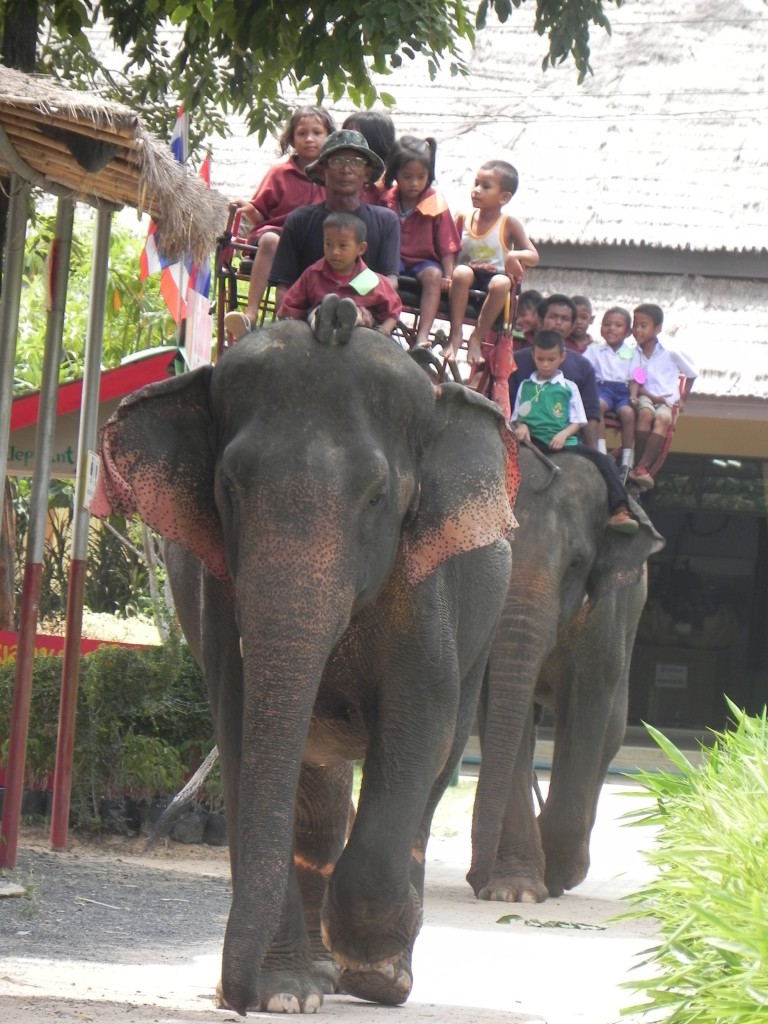
    The elephant program at Anantara is well thought out. With the exception of the first few elephants acquired by the organization in its early development, all of the elephants are rented, providing continued employment for their owners. The mahouts’ families relocate from their homes in Surin, where street begging is a staple employment. Renting the elephant instead of buying has many advantages, including the quality of mahout, the beneficial long-term relationship between the mahout and elephant and removing begging elephants from city streets.

    Due to the number of captive elephants available in Surin, Anantara can insist on renting elephants with skilled mahouts who properly care for their elephants. By renting the elephant instead of buying, Anantara also avoids creating a market for elephant sales. (In the last few years, dealers have figured out that they can sell a sick or injured elephant and with the revenue buy a couple more.)

    The company pays a higher than average rental fee to encourage owners to stay long-term. They provide village-style accommodations and ensure that the children of the mahouts receive an education.

    What I observed at Anantara were relaxed elephants who had what appeared to be a healthy relationship with their mahouts. They were playful, responsive to their mahouts and displayed no fear or anxiety.

    Anantara is conducting non-invasive research on elephant intelligence, which was very interesting to observe. I cannot divulge information about the exact projects currently being conducted, but from what I saw this work will definitely add to the current deficient body of scientific knowledge about elephant intelligence. I am anxious to see what will be learned over the next few years.

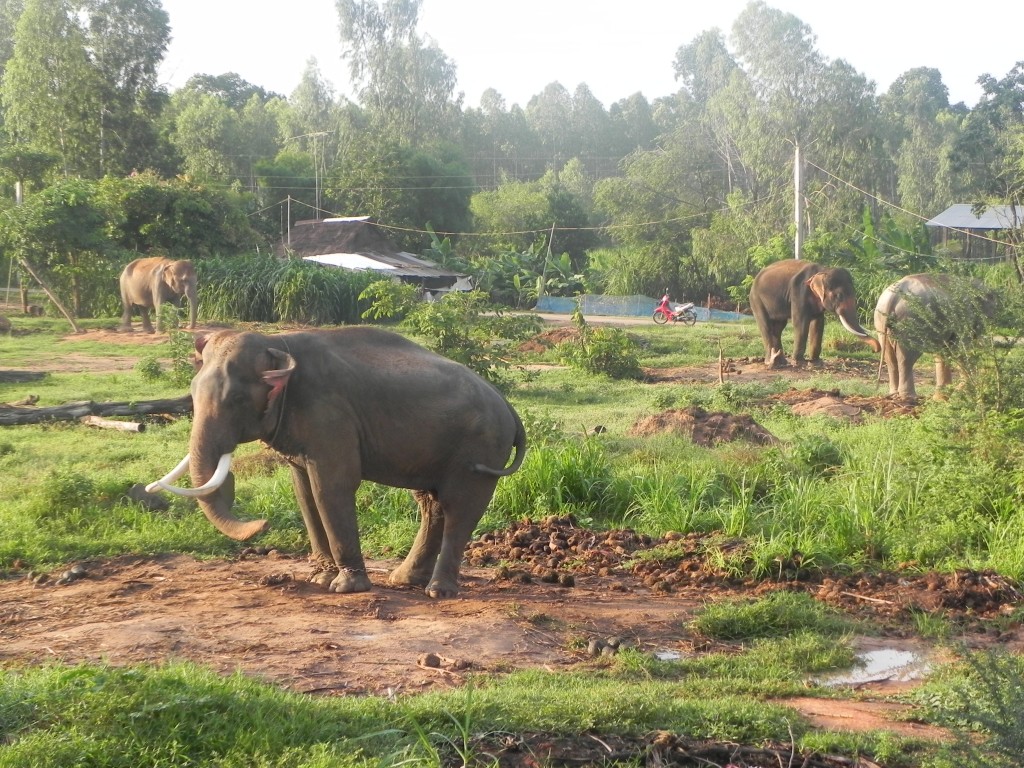
    A by-product of the research is behavioral enrichment. Since these elephants, like all elephants in Asia, spend many hours each day on chains, the research benefits the elephant because they are off chains and engaged. Of course I would like to see the elephants off chains many more hours, if not completely, and posed that idea to John Roberts, the program manager. A progressive thinker with an open mind, John is motivated to explore ways to increase the elephants’ quality of life. Hot wire is a proven effective way to confine elephants without using chains and is already used in a small area of the elephant stable area. At first the mahouts were resistant to its use but they now seem to accept the new idea. I feel confident that in the future Anantara will utilize hot wire yards to increase the elephants’ freedom of movement.

    One of the most commendable things about Anantara is that all of the funds generated by its elephant program go directly to elephant conservation projects that benefit Asian elephants.

    In my next entry I will tell you about the second facility I visited.
  • CBS Assignment America

    After the recent airing of a CBS Assignment America piece by Steve Hartman, many of you were seeking clarification.

    The statement that has caused confusion is toward the end of the piece when I seem to say that elephants don’t need people or human interaction. The sound bite was an excerpt from an interview done two years earlier for the Tarra and Bella story.

    If there had been more time for the expansion of my statement, you would have heard me say something like…..“Elephants don’t benefit from public visitation by strangers. But elephants thrive on relationships with caregivers with whom they form deep bonds.”

    The media has limited time to report on any single subject, which can result in misunderstandings. Without a doubt, Steve Hartman knows of Tarra’s capacity to bond with another individual of a different species. He was the one who first introduced Tarra and Bella’s endearing relationship to the world.

    My intention for the Sanctuary was to provide a rich captive environment for elephant rehabilitation: an environment where elephants have autonomy, can rediscover themselves and form deep bonds with others.

    The Sanctuary is not the wild; caregivers are an essential part of the equation.  The goal is to train caregivers how to develop sincere relationships with the elephants.  The deeper the relationship between the elephant and caregiver, the more effective the caregiver can be in his/her job. Without a deep and respectful relationship, the caregiver could be a source of stress for the elephant.

    The “people” I referred to in my comment are strangers. Of course elephants living in captivity will form strong bonds with their caregivers. It is an elephant’s nature to form deep relationships with other herd members. For elephants in captivity their relationships extend to the caregivers who provide for them on a daily basis. Caregivers are an elephant’s extended family and their relationships should be strong and healthy.

    Provided that an elephant in captivity lives in a healthy environment with ample space, the freedom to make his/her own choices, other individuals to bond with and access to an abundance of live vegetation, s/he doesn’t need the distraction of and interaction with strangers. (Some zoo and circus elephants live in such a deprived environment that they benefit from such distraction and interaction.)  Elephants in healthy environments thrive on mutually respectful long-term relationships with elephants and other individuals they consider members of their family.

  • Gratitude on so many levels

    There has been a whirlwind of activity on the EAI website since it launched less than two weeks ago.  The response to our mission, goals and programs has been outstanding. Our 2010 focus on Thailand, India and Nepal has been met with enthusiastic support.

    Elephant Aid International is humbled by the many elephant experts who have agreed to be on our Advisory Council. It is my honor to welcome these renowned professionals, people distinguished by  their contributions to elephant welfare. These accomplished individuals will assist EAI’s efforts, providing expertise and direction for EAI’s elephant welfare programs and the care of individual elephants . We welcome the Advisory Council with sincere appreciation, recognizing that our combined efforts will further benefit elephants worldwide.

    The two people responsible for the design, development and content of our stunning website may prefer to remain behind the scenes but their brilliance must be acknowledged. This site will continue to be a vehicle to move our work forward. It will be a source of news, features and information; a place for all of us to stay engaged.

    As for the outpouring of support from elephant lovers, trainers, caregivers, keepers, activists, veterinarians, scientists, researchers and educators, thank you from the bottom of my heart. Your trust and support of this work is the catalyst that will spur our programs forward.  Without you we simply could not accomplish this important work. Personally, I plan to harness the enormous volume of positive energy flowing into EAI to empower our vision for elephants.

    Namaste

  • EAI is Live!

    A huge thank you to all  who have already discovered the EAI site and contributed towards our exciting programs. For those  who are not yet aware…………

    The Elephant Aid International site has launched. After months of site development, this masterpiece has gone live. Check it out – you’ll learn about EAI’s mission and innovative projects to improve elephant welfare. We have two amazing elephant welfare supporters to thank for this stunning creation. The content is current and fresh and the design reflects the caliber of EAI’s webmaster and communications coordinator; their work is unsurpassed. Please visit the site and see for yourself what I am talking about: a beautiful site introducing an organization destined to do amazing work. Come join us!

  • continuing my work

    Since my return from Asia in July I have found myself deeply involved in elephant welfare activity here in the US. These past few months have been a whirlwind of activity, flying cross country, participating in Animal Control officer training, providing elephant expertise to city officials and inspecting the conditions of elephants traveling in the circus. This activity is a perfect fit for me, a continuation of the work I have done for the past fifteen years. The difference is that I am traveling much more and have an opportunity to help a greater number of elephants, in new ways.

    While at the Sanctuary I was aware of how sheltered I had become, one level removed from the daily suffering of the majority of elephants living in captivity. My effort to help and rescue elephants to sanctuary was made more bearable by my daily observation of the elephants who were living a sanctuary life.

    Now I am back on the frontlines again, immersed in the lives of elephants who are chained by two legs, provided water only at intervals determined by their overseers, forced to perform behaviors on command that in some cases cause great physical pain, as they are transported around the country in trailers and railroad cars for the majority of their lives. Denied autonomy, freedom of choice and their culture.

    With so much science to support an elephant’s need for space, compatible companionship and autonomy, it is difficult to comprehend how this modern day slavery continues. The image of elephants chained on asphalt parking lots, watered from 50-gallon plastic barrels, paraded down city streets trunk-to-tail, is a powerful testament to the degree in which elephants are an exploited commodity.

    I am grateful for the opportunity to apply my knowledge and experience to improving elephant welfare both here and in Asia. Only through continued education will government officials and the public come to understand just how detrimental traditional captive life is for elephants.

  • Flora’s Documentary

    October 1

    “One Lucky Elephant,” a documentary about Flora’s life, was included in the 2010 Woodstock Film Festival this week. The film highlights the tragedy that plagues elephants in the entertainment industry.

    Like so many elephants living in captivity, Flora lost everything when her family was culled in the wilds of Africa. She came to America as an orphaned infant and was immediately inducted into the circus. After years of performing, Flora began to show signs of emotional disconnection and aggression, which were later determined to be symptoms of Post Traumatic Stress Disorder. On her 21st birthday she retired to the Sanctuary.

    Many viewers of “One Lucky Elephant” are left in a quandary about David not being allowed to see Flora. Unfortunately, David’s reappearance in Flora’s life could trigger another PTSD episode. Putting Flora’s wellbeing first means that such a gamble should be avoided.

    This film demonstrates the lifelong effect trauma has on such a highly intelligent and exceedingly social animal.

  • India’s elephants

    September 29

    For years, colleagues in India have expressed frustration over the number of wild elephants killed by trains. This past week, seven elephants died when they were mowed down by a speeding cargo train. The herd was on the tracks trying to help a calf who was unable to cross. In true elephant fashion, the entire herd came to the calf’s rescue, losing their lives in the process.

    What makes this tragedy different, in addition to the number of elephants killed, is the response by the government. Vowing to make the necessary changes to prevent future calamity, the government is holding the railroad accountable. The train conductor responsible for the massacre has been cited, the railroad officials have been put on alert and the public has been assured that provisions will be made to protect against future loss of life.

    From my observation, India is on the fast track of improved elephant welfare in situ and captivity. In the past year, the government has banned elephants from zoos, and stopped the practice of temple elephants being forced to bless devotees. Regulations against street begging, which causes the serious injury and death of elephants hit by vehicles, are being strengthened. The owner or mahout of a street begging elephant is fined, as well as the person who pays to feed the elephant. The Elephant Task Force recommended elephant care centers (life-time sanctuaries) as an alternative for elephants living in captivity. And finally, earlier this month, India recognized their elephants with the well-deserved official status of National Heritage Animal, giving them the same protection as tigers.

  • Elephant Nature Foundation Surin Project

    Elephant Nature Foundation Surin Project

    While in Thailand, I spent one week with Alex Godfrey and a passionate group of volunteers, participating in the Elephant Nature Foundation Surin Project.  The project is grand, with much planning, dreaming, and manifesting ahead. Such a project requires a special person at the helm. The Elephant Nature Foundation has found that person in Alex Godfrey.

    A world traveler, Alex exudes competence beyond his twenty-something years. His youth serves him well as he has not been soured by disappointments; he sees no mountain too high to climb. I am confident that this talented young man will continue to have a profound impact on the welfare of captive elephants. The success of his Surin Project will undoubtedly be a model for captive elephant facilities of the future.

    In its infancy, the ENF Surin Project is providing an alternative lifestyle for 7 elephants and their mahouts living in a government-run elephant “camp.” The project operates inside the physical boundary of the greater government program, the Surin Project, designed to remove begging elephants and their mahouts from the streets of big cities in Thailand.

    As part of the government-run program, each elephant owner is given a small spot of land for his elephant. The government pays each owner a monthly stipend to keep his elephant at the camp during the day, instead of begging on city streets. Additionally, the government has created a show arena at the camp, where elephants perform for the public twice daily. There is nothing unique about the shows — tricks, elephants painting, and elephant rides — the standard fare. Elephants who perform in the shows receive additional funding, another incentive to remain in the camp.

    In an effort to gain her support, the government invited Lek, founder of the Elephant Nature Park (ENP) north of Chiang Mai, to participate. But although the ENF project operates within the government program, it could not be more different.

    The ENF Surin Project aims to shift the paradigm, creating an elephant friendly program that will benefit elephants, country, and elephant enthusiasts. It is well on its way to accomplishing its goal. With ingenuity and sheer determination, the ENF Surin Project demonstrates a healthy alternative to the exploitive practices so prevalent worldwide.

    The project centers on several elephants and their human families. Provisions are provided for elephants and humans; the program is, by design, meant to be self sustaining. Funds and labor provided by volunteers are the backbone of the project. Volunteers from all over the world pay to spend a week immersed in camp culture. In personalized home-stay fashion, volunteers stay in a private room of an elephant’s family home. Bathrooms are modern and the accommodations are clean. Volunteers are invited to participate in the family’s daily routine, which includes care of their elephant(s).

    The concept is perfect. The volunteer immediately becomes part of the family with an opportunity to learn firsthand the trials, tribulations and joys of Thai living and captive elephant care.

    This program is focused on putting elephant welfare first. The elephants benefit greatly because they are not forced to undergo intensive and continued training in order to give tourists rides and perform in shows. Instead, they are taken out into the fields and wooded areas during the day. While volunteers engage in soil preparation and planting elephant food crops such as “elephant” grass, bamboo and trees, the elephants are chain-free, allowed to engage in species-specific activity.

    Eating dominates an elephant’s life. Elephants spend nearly every waking hour — 20 hours each day — searching for, selecting, collecting, and consuming vegetation. It was awe-inspiring to watch these elephants forage for food while we prepared land and crops for their future.

    In a culture in which bathing is a ritual, it is not surprising that elephant bathing is customary. Nothing is more rewarding than to sit on the bank of a river or pond when a family of feisty elephants takes the plunge. Age is not a limiting factor when it comes to playing — water brings out the kid in all elephants. They roll and tumble together, calves clamoring over others, splashing with their trunk and feet, flopping onto their sides in glee, causing a wave that swamps others.

    The elephants participating in the ENF project are the lucky ones. Others in the camp — close to 200 — stand chained by one leg, many out in the direct sunlight, swaying back and forth in an effort to escape mentally from their reality.

    Knowing that the ENF has an opportunity to change the situation for other elephants is what drives Alex and the volunteers to do more. Continuing to develop this already stellar program is essential.

    We owe the Elephant Nature Foundation, Alex Godfrey, ENP and all the volunteers involved a huge thank-you for their dedication. My sincerest hope is for the continued success and expansion of the ENF Surin Project.

  • BLES has rescued again!

    BLES has rescued again!

    My last day with Katherine and Anon of BLES was spent driving hours to find a baby elephant reportedly in trouble. Upon our arrival the calf was nowhere to be found, but we were introduced to Wassana.

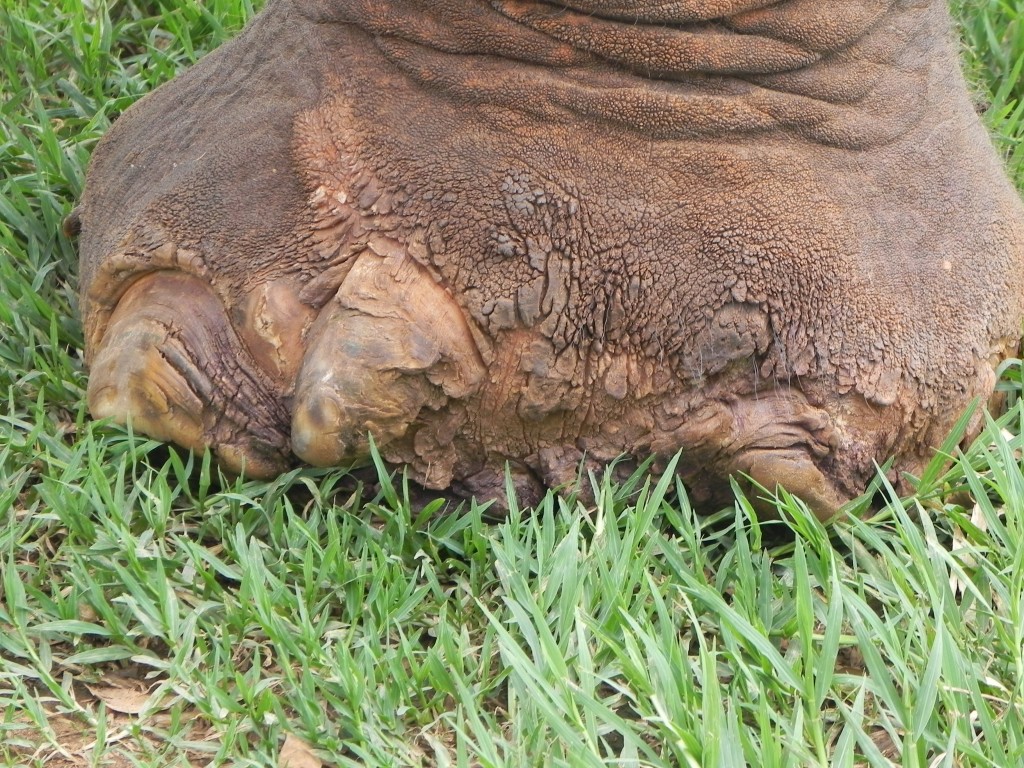
    A mature elephant of more than 40 years, Wassana was being used for tourist trekking.  Her pronounced limp brought attention to the serious injury she had sustained some time ago. A large section of her foot, including a toe and nail, had been blown away by a land mine. Like so many other working elephants, this injury happened while Wassana was being used for illegal logging.

    With heavy hearts we drove to another tourist trekking and show camp to find baby Pheung Yai. When we arrived I nearly shut down, unable to process the magnitude of suffering experienced by the elephants in this camp.

    Over the next several weeks Katherine worked diligently, negotiating and fundraising. Thanks to the generosity of many supporters, BLES was able to rescue not only Wassana, but the tiny baby Pheung Yai, as well.

    BLES is providing a humane alternative for Thailand’s jewels; without a doubt, guided by Ganesha.

  • Education is the Key

    July 29

    Earlier this week I was once again on a plane. My mission was to assist in animal control officer training. The more an officer knows about elephants, the better equipped they are to protect elephants and the public.

    The officers were seriously interested in the information provided. From my assessment, their new knowledge will enhance their ability to identify elephant suffering.

    Animal control officers are on the front lines. In some cases, they are a performing elephants’ only empowered champion. The more informed these officers are, the greater their chances are of protecting performing elephants in their jurisdiction.

  • Rewarding Work

    The other day I hopped back on a plane and flew to California, to provide expert testimony before a city council.

    I presented information in support of a local effort that would ban animal circuses inside city limits.  It was encouraging to see the number of citizens who had came to the meeting, to show their support of the ban.

    One woman approach the microphone, practically in tears. She explained that she was not aware of this effort prior to attending the meeting. Instead of speaking to the city council members, the woman turned to the supporters of the ban and thanked us for speaking out for the animals.

  • I’m Back

    Upon my arrival in Tennessee, the temperature, humidity level, vegetation, forests and even the rainfall caused me to question if my flight from Thailand had even left the country. The similarities between the places I visited in Asia and the home of the elephants I helped rescue is striking. It’s like a mirror image.

    I am back, for how long I can’t yet say. There are numerous opportunities that I must consider and many projects to participate in.

    But first I must thank each of you who helped to make this trip to Asia possible. It was another instance where I had to close my eyes and take a leap of faith!

    Being unemployed and having no funding for the trip made the idea of it seem impossible. Even though I am a seriously thrifty person, one can only stretch minimal funds so far. When I considered what I wanted to do — learn firsthand how elephants live and are cared for in Asia — I knew what I must do. I believed that the support would come and of course it did.

    Not from The Elephant Sanctuary or other sources that you might expect. The funding came in the form of in-kind support from people who authentically care about elephant welfare: a room, food, a car and driver to my next destination. Even my camera and computer were provided days before I left for the trip; essential tools to document the elephants and their environments.

    I am eternally grateful for these gifts, your monetary donations to International Elephant Aid, and your moral support. Doors were opened and introductions made that have already created a ripple of change for Asia’s elephants.

    A huge thank you goes to Christy, Suparna, Varma, Dr. Sarma, Dr. Mikota, Lek, Katherine and all the others who arranged for me to see hundreds of Asia’s elephants in the wild, government camps and temples and under private ownership.  I believed that the support to explore the needs of Asia’s elephants would materialize and it did.

    Thank you for helping to make it happen,

    Carol