Category: Sanctuaries

  • Mundi’s Move

    Mundi’s Move

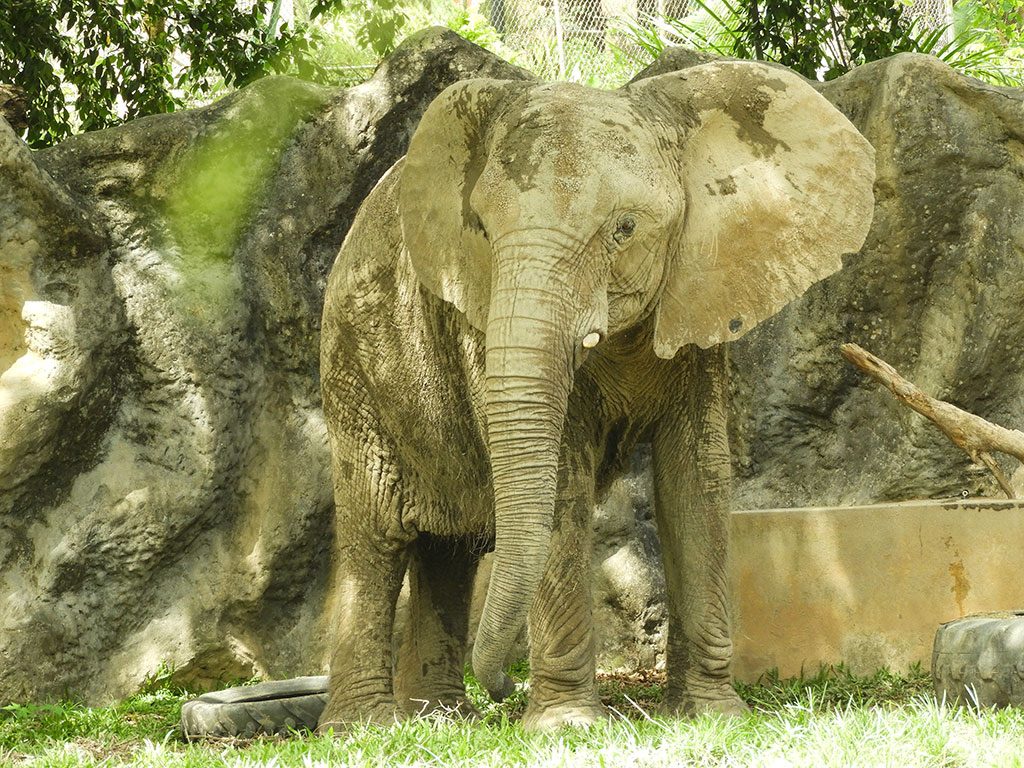
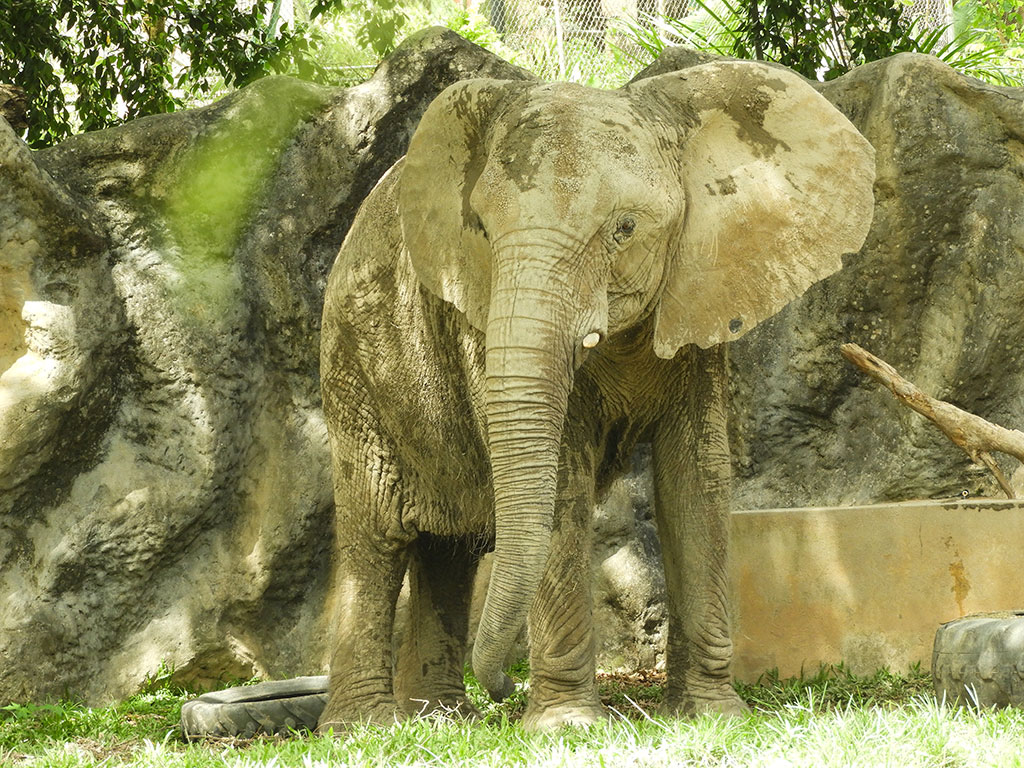
    Mundi the elephant

    Immediately following EAI’s public announcement that Mundi would be moved to Elephant Refuge North America (ERNA) mid-March, EAI received an email from Puerto Rico’s Department of Natural Resources (DNR) cancelling the contract for the move. The email cited no violations of the contract, but stated that DNR is considering other facilities for Mundi.

    EAI has adhered to all the terms of the contract, which has been in effect for 18 months, so the purported cancellation came as a complete surprise.

    EAI CEO Carol Buckley immediately began trying to get more information but received no response from Puerto Rico officials.

    Since then:

    • DNR Secretary Tania Vázquez contacted Carol to apologize for her lack of communication since assuming authority over Mundi weeks prior. She informed Carol that she would be visiting prospective locations for Mundi’s placement, including ERNA and The Elephant Sanctuary in Tennessee (TES).
    • Secretary Vázquez offered no explanation for duplicating the thorough research conducted more than 18 months earlier by a committee assigned by the governor and first lady. She did, however, disclose that TES was hosting her visit.
    • Secretary Vázquez visited ERNA on January 15 for three hours, then traveled to TES.
    • EAI was advised that since it was in full compliance with all terms of the contract, the cancellation was invalid. EAI then hired attorney Neysa Gonzales of the Jorge R. Jimenez Law Office in Puerto Rico, who also questioned the validity of the cancellation.
    • Gonzales tried to arrange meetings with all parties to the contract but received only one response, from the Department of Sports, the original signatory of the contract. The department stated that since authority over Mundi had recently been transferred to DNR, it was no longer involved.
    • Gonzales also informed TES about EAI’s contract with the government of Puerto Rico but received no response.
    • After continued silence from the DNS secretary, EAI filed a petition for injunction for a legal solution.
    • On Wednesday, February 20, EAI CEO Carol Buckley and EAI Secretary/Treasurer Leslie Pon Tell-Schreiber traveled to Puerto Rico to appear in court. They sought immediate relief and a decision on whether the contract cancellation is legal.
    • Late on the day before the hearing, the defense filed a motion for dismissal, stating that the case should be heard in civil court, where the proceedings could drag on for years. EAI asserts that the contract should be enforced and Mundi moved as soon as possible.

    On March 1, 2019, the judge determined that the plaintiff (EAI) could not prove that there is irreparable damage. This means the judge will not hear the case in her court and that the case would need to be heard in civil court.

    We will continue to report updates on this page.

    Contract Milestones

    On August 30, 2017: In compliance with Puerto Rico Law 154 the Governor Hon. Richard Rossello Nevares, in a written document, ordered the transfer of Mundi the elephant to Elephant Refuge North America. Read the document.

    On May 23, 2018, the Department of Recreation and Sports, represented by its Secretary, Hon. Adriana G. Sanchez Parés, signed a formal Transfer Contract with Elephant Aid International for the female African elephant known as “Mundi” of the Dr. Juan A. Rivero Zoo. The Contract signed by the parties was valid until December 31, 2020. Read the original contract in Spanish. Read a translated copy of the contract in English.

    November 2018: EAI announced on their Facebook page that Mundi would be moved from Puerto Rico to Elephant Refuge North America mid-March 2019.

    December 2018: Authority over Mundi the elephant was transferred from the Department of Recreation and Sports of the Government of Puerto Rico to the Department of Natural Resources.

    On December 28, 2018, the Secretary of the Department of Natural Resources of the Government of Puerto Rico, Tania Vázquez Rivera, submitted a written communication to EAI. The letter argued that because the EAI sanctuary was not ready to receive the elephant immediately in order to preserve its life the Agreement was rescinded. Read the letter.

  • Two Great Ways to Support ERNA!

    Two Great Ways to Support ERNA!

    CoCre homepage imageTwo terrific fundraising sites are supporting the Elephant Refuge North America (ERNA) fundraising campaign.

    The Animal Rescue site is offering an opportunity to support ERNA and have your donation doubled! For a limited time, a generous donor will match your $8 donation, which will pay for two feet fencing, up to $15,000! Don’t wait – donate today!

    The CoCre website is a storytelling platform to raise awareness and resources for good causes and organizations. The site has launched a fundraising campaign to support ERNA.

  • Chain Free in Thailand

    Chain Free in Thailand

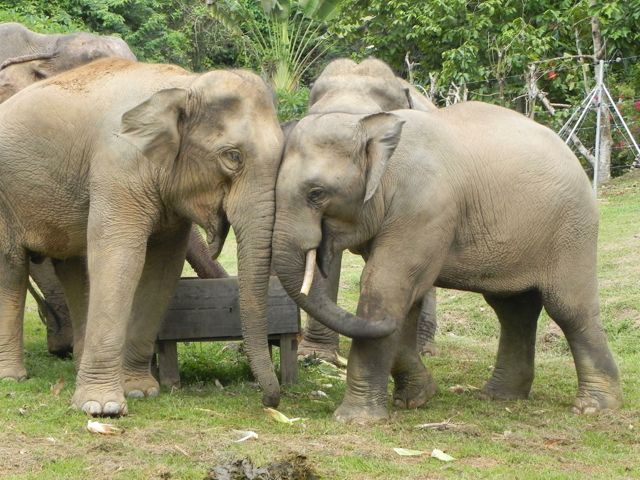
    Boon Lott's eles

    Lotus stood perfectly still while her mahout removed the chain from her ankle. Next came Pang Dow and, last, Wassana, a land mine victim who lost part of her foot several years ago in an explosion.

    They were unaware that their next few steps would be monumental.

    Lovely Lotus led the small herd, the family she chose after arriving at Boon Lott’s Elephant Sanctuary (BLES). She walked in the direction of the corral. For a split second she hesitated at the gate opening. A calculating glance from gate post to gate post and the open span between and she was satisfied that it was safe to lead her family inside. Almost in slow motion, Lotus entered the chain-free corral.

    I held my breath, knowing from experience the joy the elephants, their caregivers and the crew that only hours before had completed this first solar powered chain-free corral in Thailand, would feel.

    Pang Dow and Wassana followed close behind Lotus, less than inches apart, as they silently flowed into the expansive corral filled with vegetation and clusters of trees. The air was buzzing with anticipation. The elephants knew something was up. How could they not? Half a dozen people gave off quite a collective energy as we watched in hopeful anticipation of the elephants’ reaction to their new found freedom.

    Lotus, Pang Dow and Wassana cleared the gate opening, walked single file for less than 50 feet and then erupted into excited squeaks and trumpets. They broke line and huddled together, a tangle of trunks and tails, chattering excitedly, gently touching each other in reassurance.

    The mahouts stayed silent to ensure the elephants knew they were free to do as they pleased–a novel experience for a captive-held elephant, especially in countries like Thailand, where elephants are a commodity used for tourist entertainment, always under the control of a mahout.

    Before finding sanctuary at BLES, Wassana, Lotus and Pang Dow did not know freedom of any kind. Now they were about to experience the next level of freedom–autonomy. The ability to make their own choices about where they walk, when and with whom. What they eat, where they sleep and, most important, who they share their life with.

    It took mere seconds for all three to realize they were free to wander at will. They moved like a school of fish, close together, in step with each other, exploring as one. Happy squeaks, trumpets, chattering and ground thumps echoed across the hilly terrain.

    They soon forgot the humans who observed from outside the corral. They were in their own world, with their family, free from chains, to interact and share the natural habitat together.

    After sampling the tender vegetation underfoot, they made their way into a thicket of trees. With low rumbles and tender chirps they disappeared into their personal mini-sanctuary.

    Each time I witness the release of an elephant from chains, I am flooded with such deep emotion and with such gratitude, it’s as if it’s the first time I’ve experienced such a joyful event.

    I see their immediate shift, their letting go of the past. They accept the gift provided and without looking back immerse themselves in their new found freedom.

    I know that we have given a gift so great it transforms them. Being witness to an elephant’s release is life changing, the most powerful experience I’ve ever had.

    Elephants living in captivity are stripped of everything meaningful in their lives; autonomy, freedom of choice, family. Sanctuary life begins to restore some of these things. Although most captive-held elephants will never experience a real family of their own, they form bonds as deep and meaningful with unrelated others as if they were biologically related.

    The pure joy an elephant exhibits when given a resemblance of freedom is what drives me to do more. Chain free does mean pain free to these elephants. It is an honor to give back some of what has been taken away.

    Watch their release:

    and their introduction to their new chain-free corral:

  • THAILAND HERE WE COME!

    After nearly two years of preparation and numerous setbacks our chain-free corral project In Thailand is scheduled to begin July 12th.

    In October 2013, I visited two sites–Friends of the Asian Elephant (FAE) and Boon Lott’s Elephant Sanctuary (BLES)–to map areas for chain-free corrals. The corral locations were identified and construction plans laid out. Everyone was excited about giving their well-cared-for elephants more autonomy and physical freedom within a safe and secure jungle environment.

    This is when things became challenging.

    I soon learned that Thailand did not have a supplier for the materials we use for solar powered chain-free corrals. The closest supplier was IBEX Galleger in India. All materials would have to be shipped from India via the wholesaler in New Zealand.

    Stopped at the border

    The plan was to build the corrals last October.

    I monitored the progress of the materials shipment from my US office. The Indian fence crew would fly to Thailand to oversee the arrival of materials, while the staff at BLES stood by, ready to receive the delivery. Partners in three countries experienced a great deal of anticipatory anxiety.

    As soon as the materials arrived from New Zealand, they were transported from Bengaluru, India, to the coast and loaded onto a cargo ship, which crossed the Bay of Bengal and docked in Bangkok, Thailand. They cleared customs without a hitch.

    This is when we hit a major snag.

    The Indian crew was supposed to receive the delivery in order to avoid a hefty unloading and storage fee.

    But the crew was stopped at Thai immigration to verify their residence while in Thailand.

    BLES’s phone and internet were not working so there was no way for Thai immigration to verify the crew’s destination. Emails flew back and forth among continents, to no avail. We couldn’t reach BLES.

    After a couple of hours, Thai immigration refused the crew entry and sent them back to India.

    Unfortunately, the project had already exceeded the estimated cost even before the materials were loaded onto the cargo ship. This latest development didn’t help. At this point, the costs threatened to skyrocket.

    Everything falls into place

    Thanks to this experience, the Indian crew was afraid to return to Thailand.

    I set out to find qualified installers in Thailand. No luck. No one in Thailand wanted to take on the job, as they were unfamiliar with the corral system.

    After weeks of searching, I decided to try to convince the Indian crew to try again. They were leery, so it took months to finally convince them. By the time they finally agreed, they were working on a new project in India, and unavailable to return to Thailand until later this year.

    But here we are, several months later, heading to Thailand once again.

    We don’t have to worry about the materials–they are safely stored at BLES.

    Pre-construction is already underway at FAE and they are clearing the fence line as we speak. It will be cleared and ready for my arrival on July 12.

    The plan is to get all the corner posts set at both FAE and BLES before the fence crew arrives on the 18th.

    All we have to worry about is getting the crew into Thailand. This time I plan to be standing outside immigration at the airport with a working cell number, ready to handle any problems that might arise.

    This project has been a serious challenge but I have no doubt that it will be well worth every bit of frustration and anxiety when we see the elephants released into their new chain-free corrals.

    Thank you for helping us create the first solar powered chain-free corrals at Boon Lott’s Elephant Sanctuary and Friends of the Elephant Hospital in Thailand.


  • another possible care center in India

    For the past two months I have been in communications with a well-established foundation interested in collaborating with Elephant Aid International on a care center in Northeast India.

    Early next week I will walk the land proposed for the care center. It took a bit of flight rescheduling to accomplish this layover, but passing up the opportunity to consider an additional site for a care center was simply not an option.

    I have a short twelve hours to travel from the airport to the proposed site, walk the land, assess its suitability for a care center and meet with the foundation and forest department representatives to discuss my findings.

    Am I excited? Absolutely!

    I realize I posted a bevy of ChipIns this past week. All our projects came to fruition in rapid succession and I am eternally grateful to everyone who rallied to make the fundraising efforts a huge success.

    This time I need to raise $421 for airfare to visit this proposed care center site in India.

    If you already gave to Sweetie Kali’s yard or water trough or the pool for the babies at the government breeding center, don’t burden yourself thinking you need to give again. Others will contribute and feel the joy of giving to a good cause. I have complete confidence that the funds will be raised.

    As always, my sincerest thank you for your compassion and concern for elephants.

  • March update on India Care Center Project

    March update on India Care Center Project

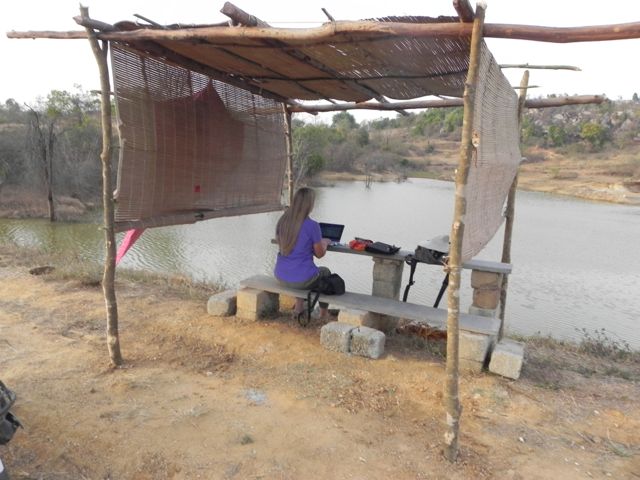
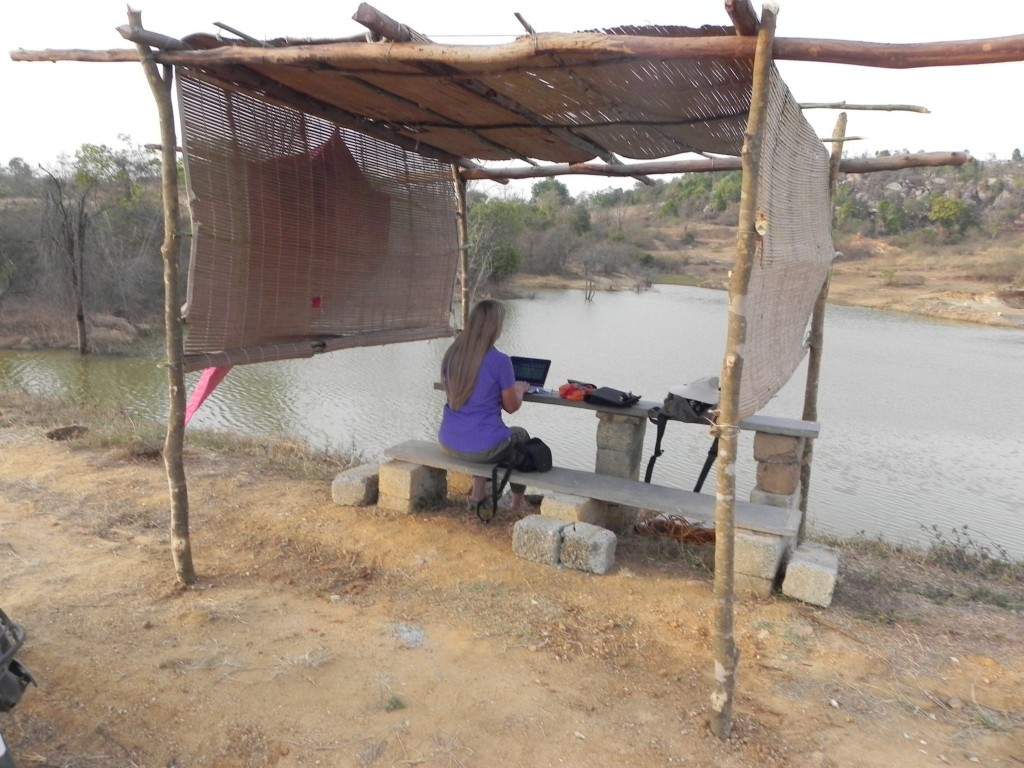
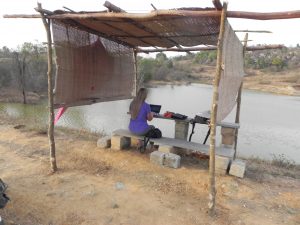
    Carol in her officeFrom my lake-front office, Bannerghatta, India

    The two months since my arrival in India have been filled — with meetings, brainstorming sessions, hiking through cinder-dry forests and continual reality checks.

    It is so important that I am here now—on the care center site—to study the land, the wild elephant activity in the adjacent forest, the habits of the local villagers and the laws that govern land ownership and use. There is so much to learn, I am ever thankful that everyone I am working with speaks fluent English.

    The project’s scope widens

    The project has remained focused on elephant welfare but its scope and approach has shifted a bit…for the better.

    Initially, we planned to have a relatively small plot of land in exchange for the care center elephants being allowed access to the national forest. Allowing elephants nighttime access to the forest is standard practice for the forest department’s captive-held elephants and seemed like a viable solution to limited day time space.

    But as I hiked the adjacent national forestland, I was disheartened to see how the forest’s resources are exploited. The forest herself appears to be barely breathing, suffering from over-grazing, intentionally set fires and the destruction of trees by the local villages that border the forest.

    Seeing the poor condition of the forest made me realize how the wild elephants are struggling to survive, with not enough food, water or shelter to sustain them. The idea of adding even a few more elephants to the already stressed habitat—reducing wild elephant resources even further—was a deal breaker for me.

    Following a frank discussion with the collaborators on the project, we decided to expand the land used for the care center, something close to 200 acres, thereby eliminating the need for the center’s elephants to use the forest.

    No chains, no dominance

    This change in operations has resulted in positive shifts in the facility design and style of elephant care.

    The original plan called for a small plot of land and giving the elephants access to the national forest at night. But I recently learned that allowing the elephants into the forest overnight called for a compromise: the elephants would have been required to wear a drag chain on one leg whenever they were in the forest. The chain helps keep them from being mistaken for wild elephants by villagers and makes it easier for the mahouts to track, retrieve and return them to their home during daylight hours.

    But now, with national forest use no longer an issue, there is no compromise required – chains will have no place at the care center.

    You can imagine how excited I am about this unforeseen turn of events! I had almost been convinced that in India elephants will never be completely free of chains. But with our land expansion we will be able to do just that—keep elephants on a large tract of forested land, free of chains and dominance.

    Infrastructure development and acquiring land

    As result of this positive shift in the design of the project, we need more time for preconstruction development than earlier projected. We must conduct an expanded survey to identify land ownership. Surveying the entire tract of land will provide the legal assurance required prior to constructing the miles of necessary trenching and fencing.

    This expansion also requires a follow-up communication to the government informing them of our desire to expand…even before we have begun!

    We also have the challenge of acquiring a small parcel of land that is essential to the project but is currently occupied by another person. We have received assurance that this parcel of land—approximately seven acres—can be acquired.

    In India, land rights are complicated but well defined, if not always enforced. In some cases property owners hold a deed and are permitted to sell to whomever they choose. In other cases, villagers and tribals who receive land from the government are allowed to pass the land down to family members, but are not allowed to sell outright.

    Becoming familiar with the regulations is essential for anyone intending to own, lease or occupy land in India.

    I am told that when it comes to land, possession is nine-tenths of the law and even in cases in which the land cannot be sold, occupants can accept payment to vacate. As I understand, once they have vacated the land, another person can occupy it, with stipulations that it be used for some agricultural purpose or forest restoration and it can never be sold. One small parcel of land essential to our project falls in this category.

    I am keeping a positive outlook about acquiring this piece of land, which stretches across the edge of the lake, one of the essential areas for our elephants. Negotiations are underway. All I can do right now is wait.

    Co-existing with wild elephants

    In the meantime, I am tracking the movement and land use of wild elephants in the area. There is one section of the care center land they frequent. All the collaborators have agreed that no care center land used by wild elephants will be blocked to them. Our goal is to be mindful that our project, although well meaning and helpful to captive elephants, not cause hardship to wild elephants who use the land.

    We have identified a small corridor just inside the care center property, adjacent to the national forest, where wild elephants leave the forest to enter the care center property. They have a well-established path, which will remain open for their use.

    Protecting this wild elephant corridor is another unexpected development that makes me even more excited about the care center project. Being able to create a healthy space for captive elephants to recover and thrive, while at the same time preserving land for wild elephants who migrate through the area, feels like the right thing to do.

    Care center and bird sanctuary

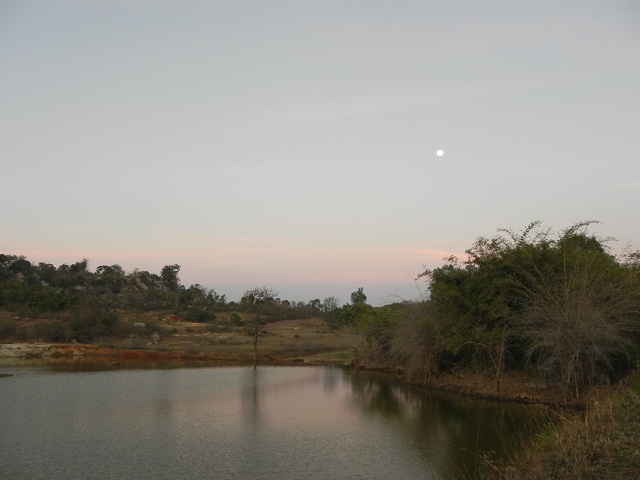
    With an estimated 180 different species of wild birds in the area, the care center property is already a bird sanctuary. Never before have I been so enthralled by bird watching but from day one I was in awe of the many different birds and their beauty.

    The lakes draw a variety of fishing birds, from the Indian Pond Heron to the regal Brahminy Kite. Their nonstop activity, sometimes entertainingly comical, has sparked my interest in studying these winged creatures with whom I now share my space.

    The animated and gutsy Blue Eared Kingfisher was the first to catch my attention. His fishing perch is feet from my outdoor office. The first time I watched him make a catch, I admit to being a bit shocked that this minute blue bundle of constant movement disarmed his prey by bashing its head against a rock.

    I’ve observed Brahminy Kites collecting branches for nest building, a trio of Red-Wattled Lapwings singing a chorus, a Black Shoulder Kite dive-bombing to catch a mouse and a Great Cormorant perching on a branch 30 feet above the lake on its awkward looking webbed feet. I’ve seen egrets of every size follow the resident horses, snatching up displaced insects. Then there were the stunning Rufous Treepie, Red Whiskered Bulbul and a pair of White Browed Wagtails who chased a Crested Serpent Eagle away from their favorite tree.

    Being able to observe so much winged activity has opened a new world to me.

    Survey and land

    Surveying the expanded land is the next step required to move forward on this project. Acquiring the seven-acre parcel of land currently in negotiations will come after that, followed by a government endorsement of our expansion. All this needs to be accomplished before beginning construction.

    Fencing and trenching

    Only after the survey is completed, the extra parcel of land acquired and government approval secured can we begin work on the perimeter trenching and electric fence required to keep wild elephants out and our care center elephants chain-free inside. The fencing is estimated to cost $7 per foot/$36,000 per mile. The approximately four miles of trenching and electric fence will come to about $142,000.

    Compare this to the average $100 per foot elephant sanctuaries in the US spend on fencing. For 7 percent of the cost, we can provide a safe and secure, chain-free environment for needy elephants in their authentic natural habitat while simultaneously protecting wild elephants and their land.

    I am very anxious to move forward on this project but am cognizant that we cannot overlook any step or detail in our enthusiasm to make the care center a reality. If great journeys are launched one step at a time, who knows where helping one elephant at a time will take us.

    Please visit EAI’s Facebook page so I can keep you updated on our progress as it happens!

    Thank you for your interest and continued support. This care center promises to be more than any of us ever expected. Thank you for sharing my dream.

    Carol
  • progress report of sorts

    progress report of sorts

    Each day living at the proposed care center property brings more insight and, in some cases, more unanswered questions.

    The temperature has heated up, causing afternoon activities to slow down. Even the shade offers little relief. Thank goodness for the breeze that has proven to be a near constant in this area.

    Today a group of college students arrived to tour the property. This is a popular education sight for the conservation minded. The students, all city dwellers, were given an opportunity to see how desperate the situation is for the forest in this area.

    Included in the group was a man who has dedicated his life to bringing awareness to India’s conservation issues. We shared a few minutes of conversation and he expressed true dread about the future of the area’s forests. When I commented on how important it is for the youth to become involved in conservation, he bluntly said he felt there was not enough time for us to wait for this new generation to turn things around—at least not in this immediate area. It was a sobering statement from a person who has studied the deterioration first-hand. I felt his desperation.

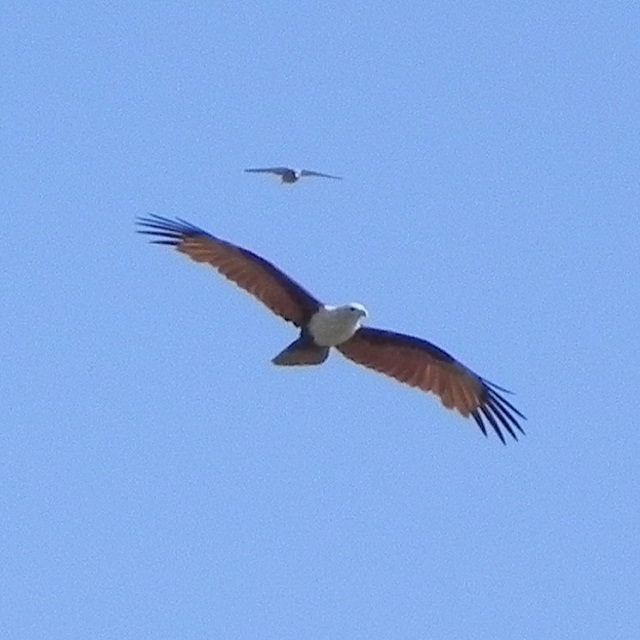
    As the students followed their professor down the levee, responding to his questions about plant life and its purpose in a forest area, the resident Brahminy Kite soared overhead. This was her third cruising over the lake this morning and she was putting on quite a show. Her massive wingspan and grace were spellbinding. Keenly eying the lake below, she circled and soared, gently dipping toward the water.

    A much smaller bird pestered her with dive bombs but the Kite expertly shrugged the pest away with a well-calculated twist, dip and spin whenever the attacker got too close. As she soared overhead I was able to get a few good photos but none that really did her grace and precision justice.

    I am learning, out of necessity, about land holdings here. The jigsaw pieces of this puzzle are finally coming together to give me a clearer picture of how things work. Perhaps I should have read up on India’s land laws before coming but, honestly, the thought never crossed my mind. I naively assumed that you buy land, sell it, lease, rent or give it away. I now have a clearer understanding of other ways a person can acquire land, how land can be occupied and how possession is—or isn’t— regulated.

    According to those I have consulted with, one of the important things for me to know is that occupation is nine-tenths of the law. But more on that later.

    The collaborators on the care center project are meeting regularly to provide progress reports on each partner’s responsibilities and to discuss questions and issues as they arise. Everyone is dedicated to the project and wants to make sure we have considered every eventuality before taking the next step.

    The time that is being taken to ensure we don’t overlook anything in the early planning stage has been invaluable to me. More often than not, I awake in the morning with a much sought-after solution to a challenge or with a new idea that I had not yet considered. The work that is being done on a subconscious level—while I sleep—makes me laugh because, without question, I am working on the project day and night.

    In the process of developing the project I have been fortunate to meet many very kind and gentle people. They share a passion for the project, which is a blessing. I clearly remember while dreaming up the Elephant Sanctuary for Tarra that many people, mostly colleagues, were less than supportive of the idea. Of course my family knew very well that the dream I had been dreaming for so many years would indeed come to fruition and could not have been more supportive. So to have complete strangers, with no vested interest in the success of the care center project, show this degree of interest and support is very gratifying.

    On a wild elephant sighting note: A few nights ago an adolescent male was seen harvesting jack fruit from the tree on the perimeter of the village only a few hundred yards from my house. The fellow was sly and silent; I did not hear a sound. If it had not been for the village dogs sounding the alarm, no one would have witnessed the midnight raid.

  • thinking about the big picture

    thinking about the big picture

    Things are progressing well with the care center — lots of discussion, meetings and scouting the land. But this time around the process is quite different from when my Tennessee sanctuary dream was becoming a reality. This time things are moving slower, every step evaluated and reevaluated by the team of people involved.

    Vishnu is well respected for his conservation efforts by area property owners. At a meeting yesterday I learned that his land is unique to the area as he is honoring and restoring the forest with no motivation of capital gain. Apparently, over the years, many have tried to persuade Vishnu to turn the place into a high-end resort, but he has resisted all offers.

    I love the fact that the land has been honored, forest replanted, wildlife respected and only limited numbers of humans allowed to bird watch and escape from the city.

    Vishnu would be the first to admit he never imagined his restoration would benefit captive elephants. But there is a low-level, nearly undetectable hum here, like something is ready to unfold, blossom or be born. The land is ready to serve elephants again.

    I am intrigued by what I am learning about the ways of wild elephants in a semi-urban environment. The fact that they can avoid trouble is nearly inconceivable with the degree of human encroachment surrounding their habitat. Putting myself in their skin is frightening. Every step they take brings them too close to human settlements. Everywhere they turn there is a road, a village, a rock quarry. They have no space and no safe haven; they must spend a great deal of time stressed by this mounting pressure, no doubt resulting in the same types of illness anyone experiences when exposed to constant low-level stress.

    Being an optimistic person by nature I will not say the situation for wild elephants is hopeless, but being realistic, I admit it would appear that their chances of survival are slim. A major shift in the universal consciousness regarding our planet, resources and all life would need to occur, and quite soon, for mega vertebrates such as elephants, to survive in a free state on our planet.

    Not a day goes by without horror stories regarding elephants, both captive and wild, making headlines worldwide. In India alone, several stories appear daily, chronicling human/elephant conflict, elephants mowed down by trains, buses and trucks driving through national forests, elephants electrocuted on tea garden estates by live electrical wires left dangling intentionally to curb trespassers. Ganesha is alive in the hearts of the people in Asia but the connection to his live counterpart seems to have been severed.

    To date I have not seen a wild elephant in the forest bordering the care center, and honestly I believe I prefer not to. I can only imagine the toll the challenge of survival has taken on them. Where I would hope to see a calm and majestic inhabitant of the natural world, I am afraid I would see someone much different, a pale image of who s/he was before the human madness overtook their well-balanced world.

    The care center will be a beacon, a haven for a few needy elephants and an example for other conservationists to emulate. But time is not on the side of the elephants, captive or wild. I can’t say for certain that our small project will change reality for elephants…but like I said, I am an optimist and stranger things have happened.

  • Scouting Around

    While scouting the land today I found elephant boluses (dung) scattered along a granite hilltop on the care center property. The granite is spectacular, with sheered layers and huge natural depressions. During monsoon season rainwater fills the many depressions, creating a series of watering holes, some deep enough for an elephant to wallow in. Judging from the age of the dung, monsoon season is probably when the elephant was here.

    While exploring another area of the elephant-lake shoreline I found footprints from a single elephant… Where he exited the water is quite muddy so his footprints were well preserved. They weren’t recent but they were BIG.

    I have been thinking a lot about the wild elephants that use this land. Their corridors must be reestablished and protected or wild elephants will not survive. I would trash my plans for a captive elephant care center if giving this land to the wild elephants would make a difference, but the reality is that 200 acres will not fix the problem.

    Guarding the national forest from further human invasion is an important step toward fixing the problem. One of the reasons Vishnu bought this land was to act as a steward for wild elephant land . He wanted to stop human encroachment, at least in this area. If more landowners took this perspective, things could turn around for elephants. They need land, connecting corridors and stewards willing to protect the land.

    The care center borders the national forest. Years back, in an effort to keep wild elephants from leaving the forest to raid crops, the Forest Department erected miles of stone walls. Unfortunately, with villagers growing crops just feet from the walls, the temptation is too great. Elephants—usually a lone bull— pushes over a section of the wall. It is an easy task for a full-grown male, who lowers his massive head and pushes until a section of the wall topples, creating an opening. After seeing a couple of these breaches in the walls, I am growing ever more thankful for my Indian collaborators.

    Vishnu has lived on this land for years, accumulating quite a bit of knowledge about wild elephants. He is required to know the species because his company is one that installs electric fences designed to keep wild elephants and villagers separate. I recently learned that he installed the fencing at Corbett National Park. Last year, while visiting with Christy Williams, I had the opportunity to observe the effectiveness of Vishnu’s fencing enclosing the compound where I was staying, smack in the middle of the forest. Late one night I noticed a juvenile bull standing close to the fence. He stood there for quite some time, several minutes for sure. He appeared to be contemplating something, perhaps the likelihood of being able to get through the fence. Or maybe he was just as curious about us as we were of him. Either way, the fence held him out.

    After a few more days of scouting, I believe we’ll be able to decide on the location of the perimeter fencing. This is a very exciting time. I do miss the presence of elephants but I realize they would be a huge distraction. I need to stay focused on the project. The elephants will be here soon enough!

  • tribesmen and internet signals

    I woke at six–just as the morning light was creeping over the granite hilltop—feeling refreshed and happy as a clam! I went to sleep under a bed of stars and woke to birds singing and a fabulous sunrise — simply heaven. I feel like myself again — I just needed to get out of the city!

    Derrick greeted me with a downward down stretch followed by his mellow tail wag. We hiked up the hill to see if I could get cell reception, but no luck. Actually, what I really wanted to do was some exploring. Derrick had the same idea and led the way. The granite rock formations on these hilltops are inspiring.

    Back at the house, Derrick went into a barking frenzy. I heard rustling in the nearby underbrush and expected to see a deer or two. Instead, I caught a glimpse of three wild pigs– two adults and a piglet — scampering in the opposite direction. I was excited — my first wildlife sighting!

    Mahadeva, a local tribesman, is helping me get comfortable with the area. We spent all morning hiking the property. It really is spectacular. One feature that the elephants will appreciate is the diversity of the land, from pastures to rocky hillsides, forest and, of course, a beautiful lake. I saw that one of the creeks feeds fresh water into the lake. Partially spring fed — just another plus.

    This land is elephant country. At one time all the land around here belonged to wild elephants. I have been thinking hard about this reality.

    Late this afternoon I decide to set out on another hike, this time to see if I could find a cell phone signal. I was gifted a pin drive which, if in range, will give me wireless internet service for my computer. I was determined to locate a signal.

    Vishnu says he gets reception in front of his house but I did not, so I hiked further. I finally did get a signal and wouldn’t you guess it was smack dab in the middle of elephant country on the shore of the lake. I had to laugh out loud. What a fabulous place to set up my mobile office. I plopped myself down on a granite bench and was able to send and receive emails while watching a variety of birds fishing on the lake.

    This care center is going to be more than I even envisioned. It is heaven and the elephants will love it. I am so happy to be back, to make dream real.

  • the start of a new year

    My departure to India is fast approaching–really fast–I leave Jan 18th. I am grateful for your well wishes and support.

    It’s time to pack my bags, put the phone on “vacation,” make arrangements to store my vehicle and deliver Java to her Auntie Kate. The two are best friends which makes leaving Java behind more bearable.

    Although my plane ticket is round trip, I do not know when I will return. That will depend on how quickly the Care Center Project progresses. Top on the list of priorities are two chain-free elephant corrals, the perimeter fencing and a fresh water well.

    Without unforeseen delays we should be operational in a few months!

  • India Calls

    It is time for me to return to Asia. My Elephant Care and Rehabilitation Center is calling.

    Learning from my past, I have decided to stop for a least one second to stand in the glow of this monumental moment. This time around I plan to rejoice in each tiny success, revel in each new development and give thanks for the progress made each and every day. I look forward to the challenge of staying in the moment as much as I can, recognizing that each unique moment will slip by without acknowledgement if I don’t make the effort to cherish it.

    So many people are with me on this journey. I feel you shoulder-to-shoulder traveling with me and, of course, those at my back, pushing me forward. This is truly a time of celebration. Thanks for joining me on this fabulous journey.

    I recently sent the following appeal to EAI’s loyal supporters. The response has been overwhelming.

    Our Elephant Care and Rehabilitation Center project in Bangalore, India, finally received the government endorsement we have been waiting for. I cannot tell you how excited I am that we are finally able to move forward on this project to provide a humane home for elephants in India. I know you share my enthusiasm.

    The property for the center has been secured. It is fantastic — complete with two large ponds, woods and pasture area — and it borders a national forest that we have received government permission to use.

    Can you believe it? Our elephants will be allowed to use the national forest as if it were their home! This really is a dream come true!

    In the surprisingly short time since I founded EAI, it has already had a notable impact on the welfare of captive elephants living in Thailand, Nepal and India. Hundreds of elephants have received pedicures and mahouts have been introduced to a kinder, gentler way to manage their elephants.

    And now we are preparing to create a care and rehabilitation center – the first of its kind – that promises to change how captive elephants live in Asia.

    Helping one elephant at a time takes the efforts of many. I need your help now.

    Before we can rescue even one elephant we must complete the infrastructure including perimeter fencing, construct chain-free corrals and build night shelters to provide protection from wild elephants and poachers. A sanitary water collection and containment system must be installed to ensure a continuous supply of clean water. And we need a small vet clinic to support each elephant’s recovery following his/her rescue.

    Elephants like 12-year-old Menaka, who will be our first resident. Chained in a temple for most of her life, Menaka has experienced horrors we cannot even imagine. She spent day and night standing on concrete, forced to stand at attention in the hot sun for hours and bless temple worshipers. Whenever Menaka attempted to move, she was punished harshly with bullhooks. At night she was left alone and hungry, with heavy chains tied around her legs; her attempts to free herself caused painful wounds that went untreated.

    Fortunately, once Menaka arrives at the center, her life will be forever changed and her past will become a distant memory.

    I can’t wait to see the gleam in young Menaka’s eyes when she enters her chain-free corral and realizes her new-found freedom.

    The cost of the infrastructure required to provide sanctuary for needy elephants like Menaka is estimated at $200,000.

    I have complete confidence that we can reach this goal. But, I cannot accomplish this alone. I depend on you to help me make this dream a reality.

    Your donation can help Menaka be the first of many elephants rescued to our care center. They will make history, living proof of a better, kinder way of caring for elephants living in captivity.
    Please help us meet our goal. As with all my projects, every dollar you contribute goes directly to helping the elephants.

    I know we have a big job ahead of us. But my experience of creating The Elephant Sanctuary in Tennessee has taught me that we can accomplish anything we set our mind to. Together we can create this care center, a solution for India’s suffering elephants and a model for the rest of Asia.

    Thank you for your support and for being a part of the solution!

    Carol Buckley

    P.S. Please contact me if you have questions or suggestions.