Category: Sanctuaries

  • Our Dear Lottie Has Passed Away

    Our Dear Lottie Has Passed Away

    October 10

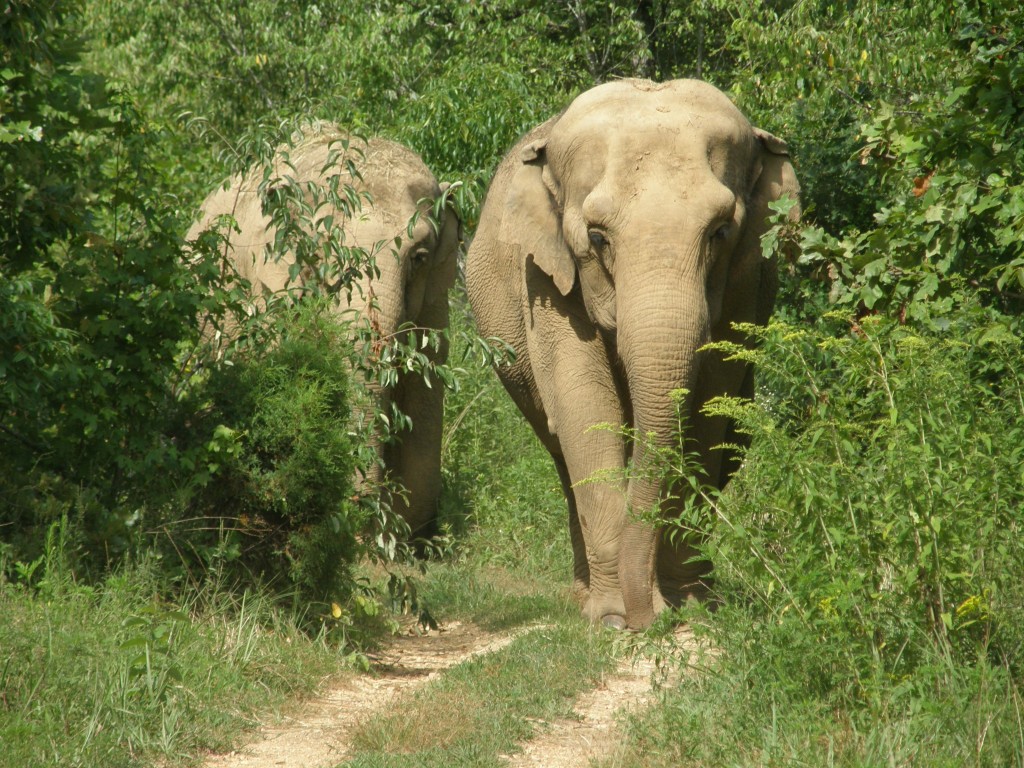
    Loyal, dependable, calm, an unconditional friend to all; Lottie was a loving sister and the matriarchal energy to all of the divas. She blessed everyone with her wisdom, always cooperative and engaged. Her patience with Minnie was magic. At times when Minnie would work herself into a pushing frenzy on fences or other elephants, Lottie would calm her down with a silent gentle trunk touch.
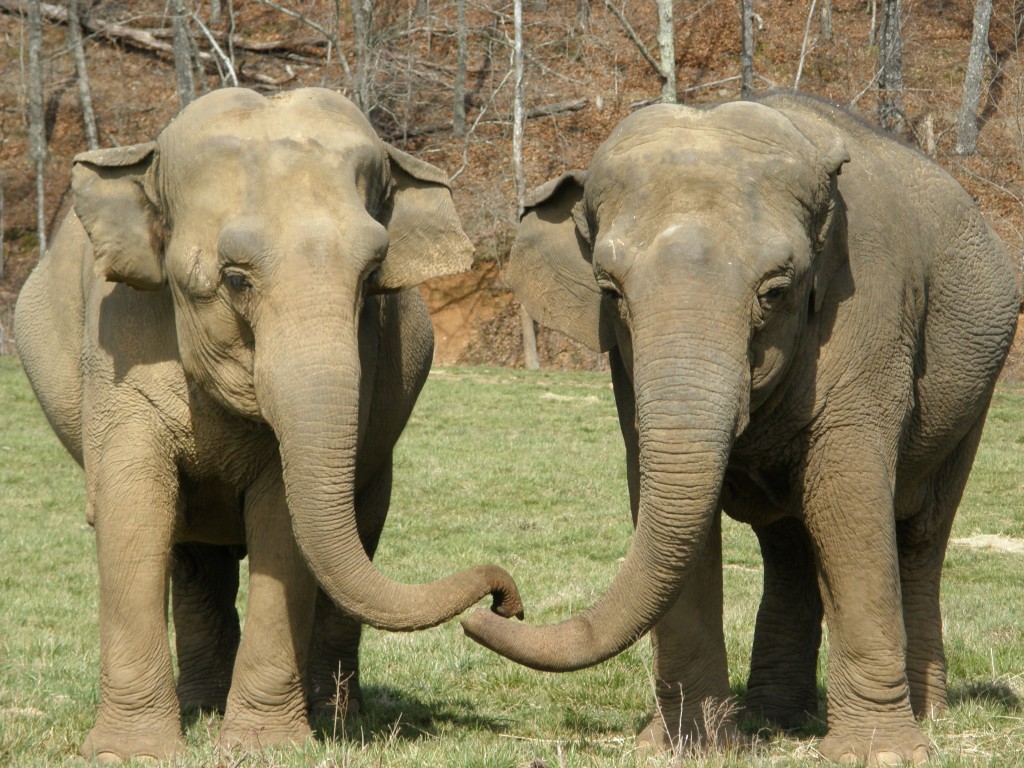
    When night time temperatures forced Lottie inside, she would rumble repeatedly until Minnie finally joined her in the warm barn. Minnie would  stay inside long enough to grab some food and swallow a few trunkfuls of water before dashing out of the rubber flap door. Racing down the hill to the moon-lit habitat, Minnie would plunge into the pond, dragging a log from the muddy bottom. Or dash across the pasture, kicking up clumps of grass with her toe nails like a golfer’s divots in the manicured lawns of a golf course.

    Lottie would remain inside benefiting from the “me” time, getting pets and dried cranberries, her favorite treat. Lottie would stand completely still except to gently guide my hand up to her tusk socket. She had very short, almost nonexistent tushes. She loved to get me to massage the inside of the tusk socket. Her eye lids would flutter and she would let out a low rumble. If the massage stopped, her eyes would pop open and again she would softly reach out for my hand and guide it back to the tusk socket. A kinder, gentler elephant you will never meet.
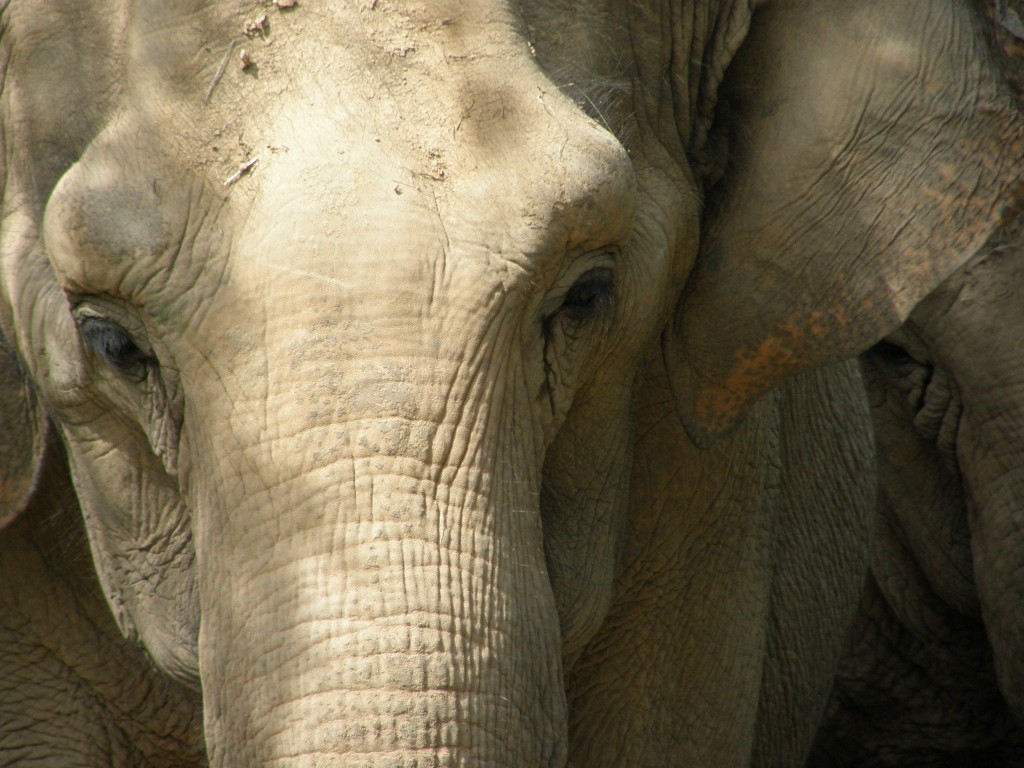
    Lottie’s estimated birth year was 1963. Since moving to the Sanctuary at 12pm CT, January 31, 2006, Lottie was the picture of sound health. She had healthy feet, a good appetite, and always remained at her optimum weight. She drank well, stayed physically active and was extremely calm. Mostly she was Minnie’s best friend. These two had a powerfully loving relationship.
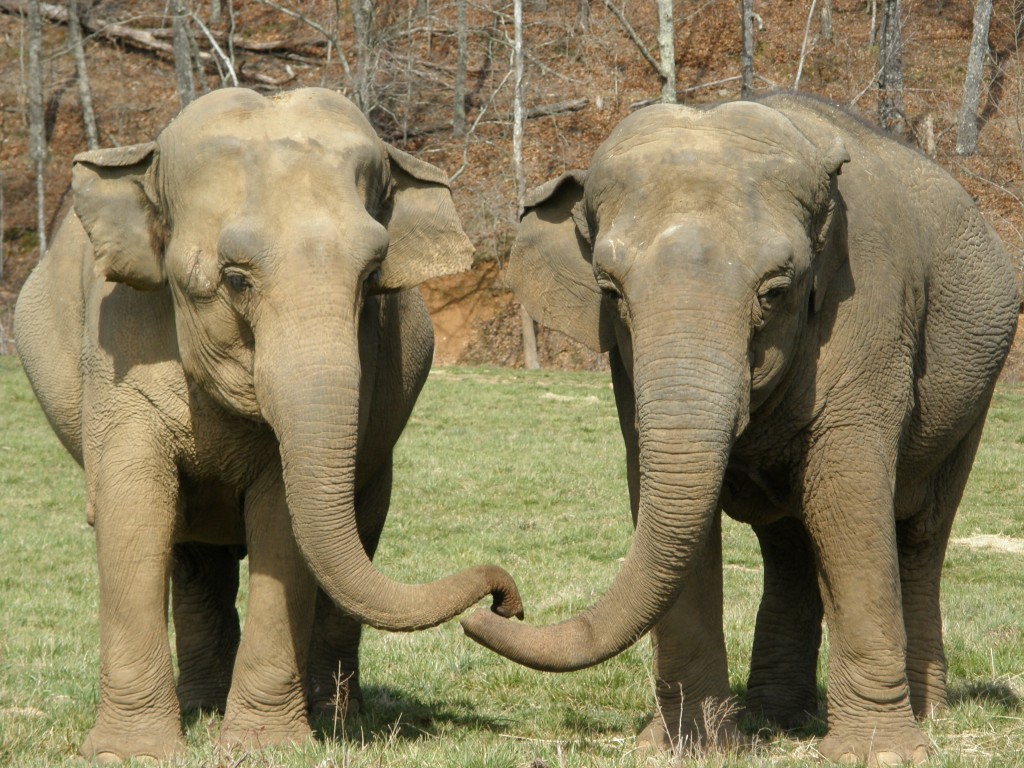
    Although Lottie seldom engaged in physical play with Minnie, she was never far from her friend.
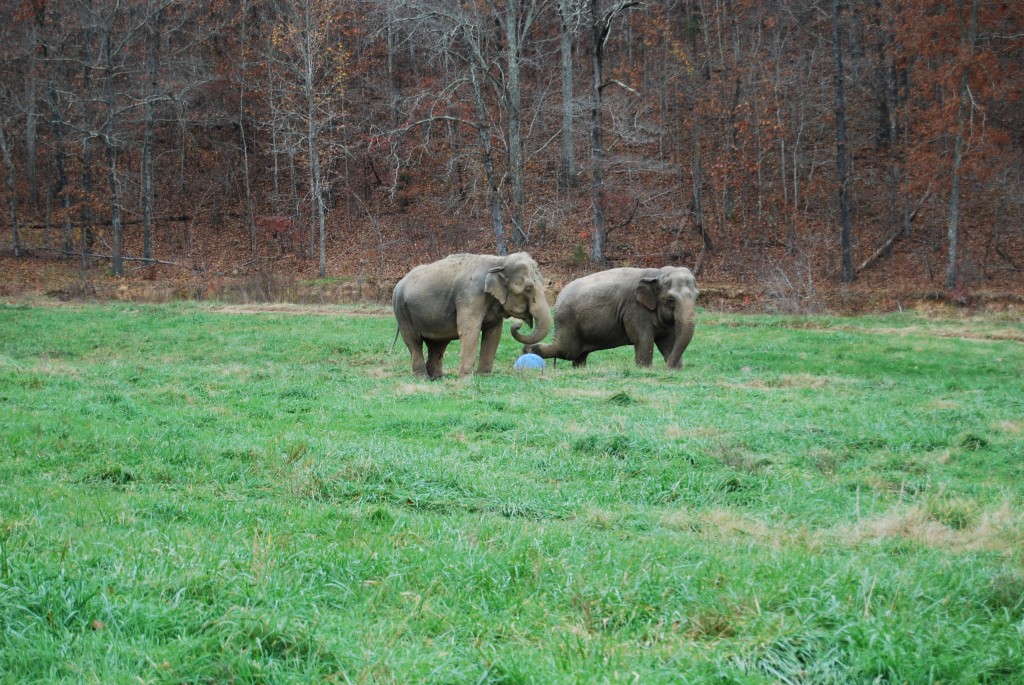
    They grazed, bathed and slept side by side. Sometimes in the early afternoon Minnie would wander away from Lottie as she slept. If Lottie woke and could not see Minnie the drama would unfold. Lottie would let out a loud squeak and then another, raising her head in an anxious posture looking around for Minnie, who would respond with a throaty bellow. When the two finally heard the other they would break into a run, full speed ahead, screaming at the top of their lungs. When they were finally reunited Minnie would spin circles around Lottie whose eyes would twinkle as she chirped and squealed in delight. Trunk touches all over, followed by powerful trumpets and then relaxed sighs, and the greeting was complete.
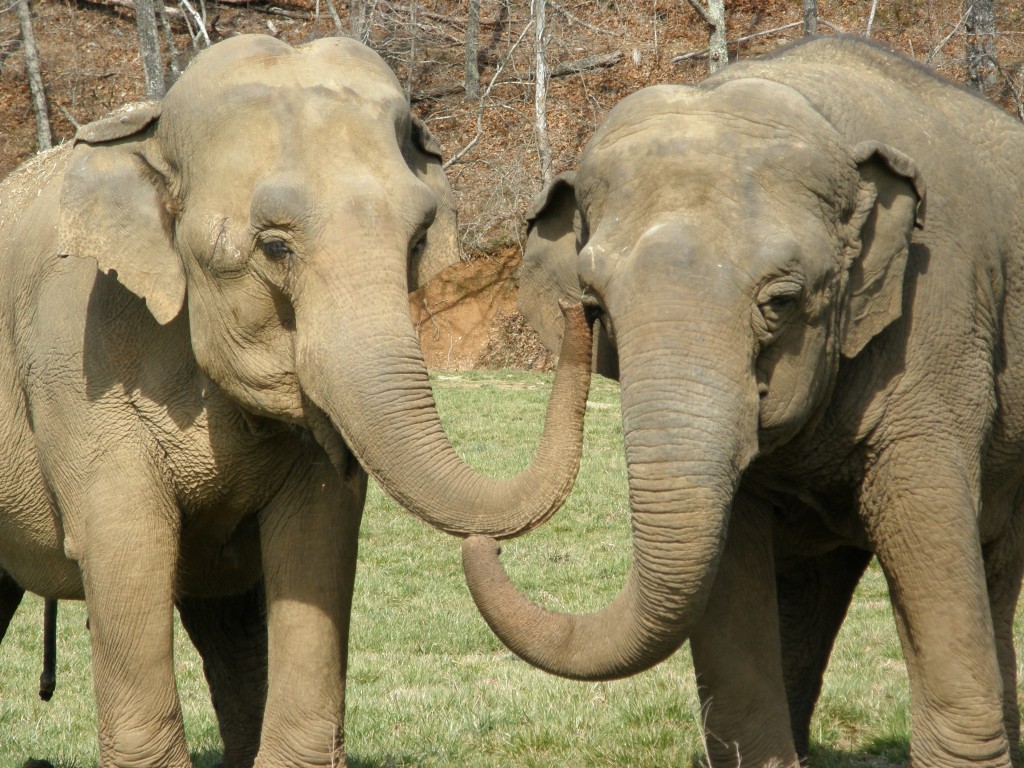
    Without hesitation they would resume their grazing as if no emotional display of affection had taken place. But if you were close by, you would feel the air permeated with love. Then they would wander off again on another adventure. They lived for each others company.
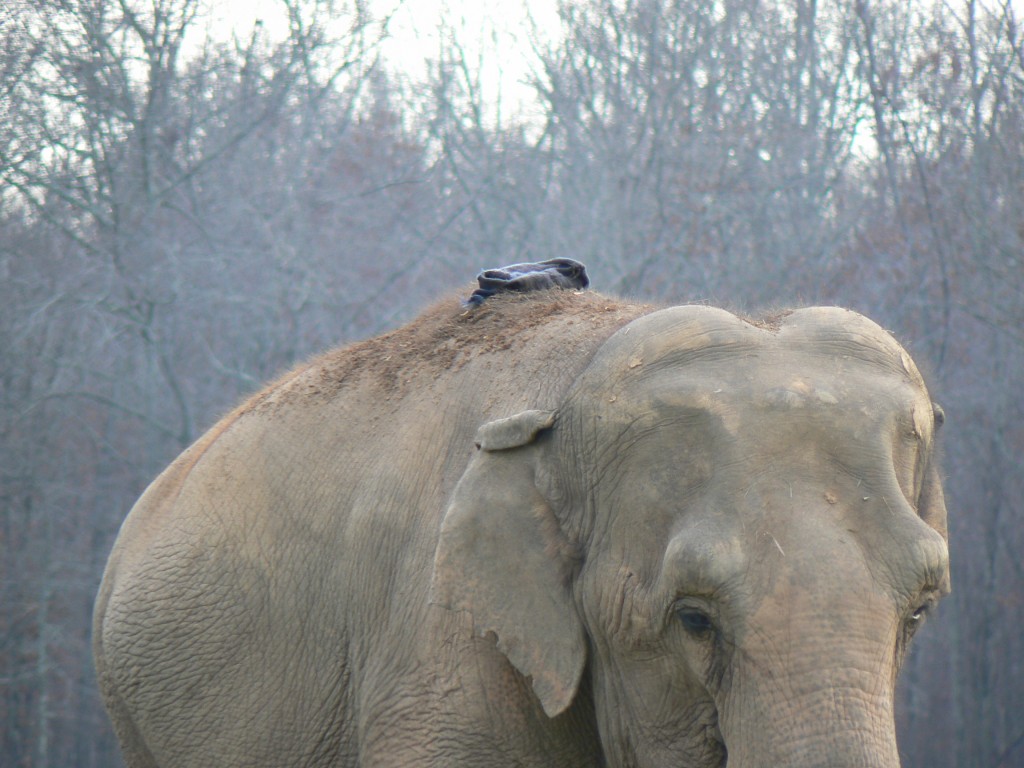
    Lottie had a silly side, reserved but silly. One time, when my winter hat had gone missing during a 10pm feed, Lottie was later seen sporting it fashionably on her back. It was hardly recognizable, a bit worse for wear but still an attractive accessory — at least Lottie thought so. It hardly resembled a hat at all as Lottie had chewed it, pulled it apart at the seams and ground it into the dirt before finally tossing it onto her back.
    Mostly Lottie will be remembered for her nurturing nature and deep affection for Queenie and Minnie.
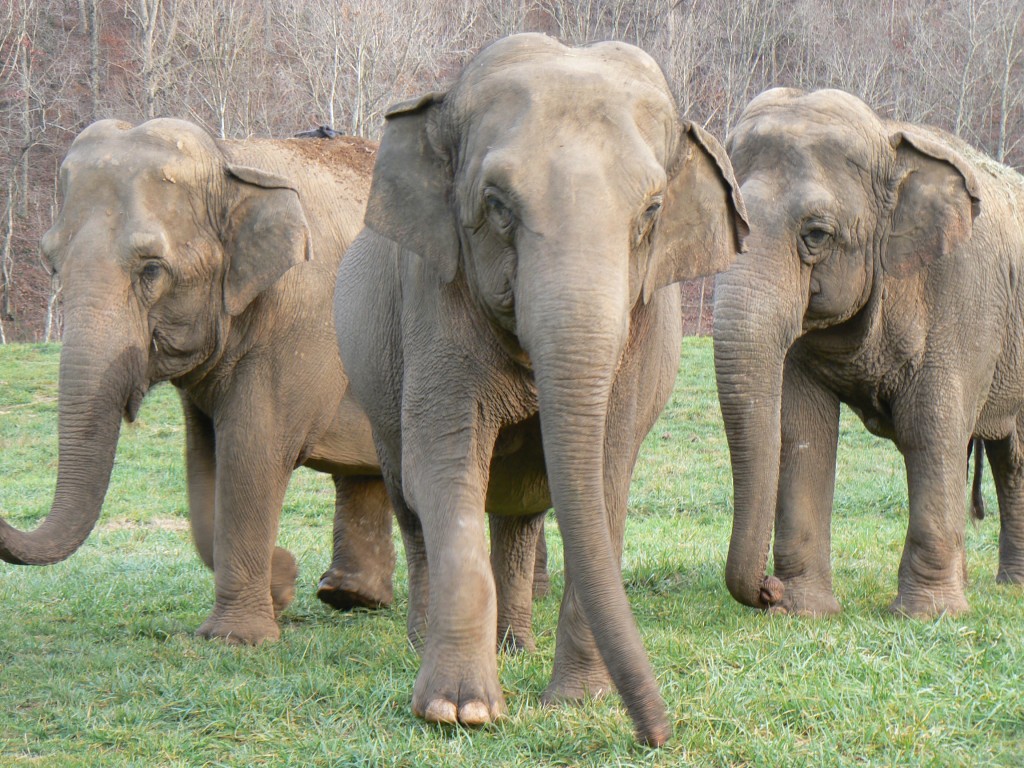
    After Queenie passed away two years ago Lottie and Minnie grieved desperately. The two grew even closer and helped each other through their loss. Now Minnie has a heartbreaking challenge ahead of her. She and Lottie had been together for four decades: this separation will be difficult. Hopefully Minnie will be able to face her loss with an open heart and not put on the “tough guy” act that was her mode of operation in the past. If Minnie puts up a wall to the pain and acts as if she is not hurting, recovery will be that much more difficult for her. We have to trust that Minnie will be able to allow Debbie and Ronnie back into her life so they can help her through this difficult time.
  • Flora’s Documentary

    October 1

    “One Lucky Elephant,” a documentary about Flora’s life, was included in the 2010 Woodstock Film Festival this week. The film highlights the tragedy that plagues elephants in the entertainment industry.

    Like so many elephants living in captivity, Flora lost everything when her family was culled in the wilds of Africa. She came to America as an orphaned infant and was immediately inducted into the circus. After years of performing, Flora began to show signs of emotional disconnection and aggression, which were later determined to be symptoms of Post Traumatic Stress Disorder. On her 21st birthday she retired to the Sanctuary.

    Many viewers of “One Lucky Elephant” are left in a quandary about David not being allowed to see Flora. Unfortunately, David’s reappearance in Flora’s life could trigger another PTSD episode. Putting Flora’s wellbeing first means that such a gamble should be avoided.

    This film demonstrates the lifelong effect trauma has on such a highly intelligent and exceedingly social animal.

  • India’s elephants

    September 29

    For years, colleagues in India have expressed frustration over the number of wild elephants killed by trains. This past week, seven elephants died when they were mowed down by a speeding cargo train. The herd was on the tracks trying to help a calf who was unable to cross. In true elephant fashion, the entire herd came to the calf’s rescue, losing their lives in the process.

    What makes this tragedy different, in addition to the number of elephants killed, is the response by the government. Vowing to make the necessary changes to prevent future calamity, the government is holding the railroad accountable. The train conductor responsible for the massacre has been cited, the railroad officials have been put on alert and the public has been assured that provisions will be made to protect against future loss of life.

    From my observation, India is on the fast track of improved elephant welfare in situ and captivity. In the past year, the government has banned elephants from zoos, and stopped the practice of temple elephants being forced to bless devotees. Regulations against street begging, which causes the serious injury and death of elephants hit by vehicles, are being strengthened. The owner or mahout of a street begging elephant is fined, as well as the person who pays to feed the elephant. The Elephant Task Force recommended elephant care centers (life-time sanctuaries) as an alternative for elephants living in captivity. And finally, earlier this month, India recognized their elephants with the well-deserved official status of National Heritage Animal, giving them the same protection as tigers.

  • BLES has rescued again!

    BLES has rescued again!

    My last day with Katherine and Anon of BLES was spent driving hours to find a baby elephant reportedly in trouble. Upon our arrival the calf was nowhere to be found, but we were introduced to Wassana.

    A mature elephant of more than 40 years, Wassana was being used for tourist trekking.  Her pronounced limp brought attention to the serious injury she had sustained some time ago. A large section of her foot, including a toe and nail, had been blown away by a land mine. Like so many other working elephants, this injury happened while Wassana was being used for illegal logging.

    With heavy hearts we drove to another tourist trekking and show camp to find baby Pheung Yai. When we arrived I nearly shut down, unable to process the magnitude of suffering experienced by the elephants in this camp.

    Over the next several weeks Katherine worked diligently, negotiating and fundraising. Thanks to the generosity of many supporters, BLES was able to rescue not only Wassana, but the tiny baby Pheung Yai, as well.

    BLES is providing a humane alternative for Thailand’s jewels; without a doubt, guided by Ganesha.

  • I’m Back

    Upon my arrival in Tennessee, the temperature, humidity level, vegetation, forests and even the rainfall caused me to question if my flight from Thailand had even left the country. The similarities between the places I visited in Asia and the home of the elephants I helped rescue is striking. It’s like a mirror image.

    I am back, for how long I can’t yet say. There are numerous opportunities that I must consider and many projects to participate in.

    But first I must thank each of you who helped to make this trip to Asia possible. It was another instance where I had to close my eyes and take a leap of faith!

    Being unemployed and having no funding for the trip made the idea of it seem impossible. Even though I am a seriously thrifty person, one can only stretch minimal funds so far. When I considered what I wanted to do — learn firsthand how elephants live and are cared for in Asia — I knew what I must do. I believed that the support would come and of course it did.

    Not from The Elephant Sanctuary or other sources that you might expect. The funding came in the form of in-kind support from people who authentically care about elephant welfare: a room, food, a car and driver to my next destination. Even my camera and computer were provided days before I left for the trip; essential tools to document the elephants and their environments.

    I am eternally grateful for these gifts, your monetary donations to International Elephant Aid, and your moral support. Doors were opened and introductions made that have already created a ripple of change for Asia’s elephants.

    A huge thank you goes to Christy, Suparna, Varma, Dr. Sarma, Dr. Mikota, Lek, Katherine and all the others who arranged for me to see hundreds of Asia’s elephants in the wild, government camps and temples and under private ownership.  I believed that the support to explore the needs of Asia’s elephants would materialize and it did.

    Thank you for helping to make it happen,

    Carol

  • Mae Tee and Kham Geao

    July 5th

    The past week has been humbling, filled with joy and gratitude. Upon the vet’s return from a trip to Cambodia, the first thing on his agenda was a crash course in foot trimming. I had been waiting for the opportunity and was honored to be invited to provide a workshop.

    Most of the elephants at the park have no need for foot trimming. They walk in the lush grass, wade in the brisk moving river and graze through varied substrate all day. These activities keep their pads and nails naturally trimmed.

    But Mae Tee and Kham Geao are aged and arrived at the Park with stiff wrists as a result of injuries from their logging days. Before my arrival, these two ladies had been spending extended periods inside the hospital yard, which resulted in a reduction of physical activity. Upon evaluation, it was determined that along with foot soaks and foot trims, both elephants would benefit from free-choice access to the habitat. Now they will spend as many daylight hours as they wish, out in the pasture grazing and bathing with the other elephants.

    After a short conditioning period, both elephants were voluntarily participating in medicated foot soaks and pedicures. The mahouts, painfully shy and unable to speak  much English or Thai, struggled to understand the directions at first. But the elephants demonstrated that they could easily understand “the whistle and banana game.” Soon the mahouts began to understand as well; in fact, very well, to the point that very little direction needed to be given.

    Most of the communication was through body language and the mahouts soon understood what I needed the elephants to do in order to trim their feet. In no time the elephants and the mahouts were fully engaged in the procedure.

    Foot and nail trimming has always been one of my favorite activities. It is so rewarding to have the elephant voluntarily cooperate. Elephants quickly seem to understand that I have no intention of hurting them. Their comfort level is my priority. With mahouts handing pieces of banana to the elephants for standing in place, the elephants settle in and allow me to trim away overgrown pad and nails.

    The challenge for me is to find what combination of position, pace and human participation provides the atmosphere that allows the elephant to relax enough to cooperate with the procedure. When it all comes together resulting in the elephant standing still for an extended period of time, I am overjoyed. I can’t help but be seriously proud of the effort made by the elephants. I feed off elephants wanting to be cooperative participants.

    I think what I find most rewarding is that the elephants are permitted to engage or not. It is their choice. At first the mahouts thought they needed to ensure that the elephant stayed in place. But soon they understood time-outs are important, not as punishments but as a sign of respect for the elephant’s needs. The mahouts also saw that the elephants returned in moments, to get more bananas of course.

    After a few days the mahouts really became engaged. They would be waiting for us when we arrived for foot trims. Beaming with pride for their elephants, the mahouts started asking if I would come back later that day or the next day for more trimming. On the day before my departure I told them that I would not be back tomorrow. I was touched at their response. These mahouts, guarded when I first arrived, were now very willing to allow me to help them care for their elephants.

    Mae Tee, Kham Geao and their mahouts have enriched my life with their acceptance of my assistance. The vet seemed to enjoy the workshop as well.

  • Lek has accomplished so much

    June 16

    I have enjoyed being able to spend an extended period of time observing different facilities and programs. One day is really not enough time to get a true sense of how a program works. This, my second day at Lek’s Elephant Nature Park brought a deeper understanding of the operation.

    The elephants genuinely spend the majority of their time out on the pasture grazing, paying little attention to the volunteers and guests that occupy the boardwalks bordering their habitat. I have watched for hours trying to figure out why the elephants do not return to the public areas to beg for food. One reason might be that each elephant has a mahout who follows them around to ensure their safety. The mahouts might encourage the elephants to stay out in the pasture but I really saw no indication that elephants were prevented from moving anywhere they pleased, except the construction area of course.

    The other reason might be because of the designated feeding time. The elephants are released from their stables at 7am and guests are allowed to feed them produce from a feeding platform at 10:30am. A “feeding bell” is rung and the elephants can be seen heading for the feeding platform right on time with no encouragement from their mahouts.  After eating, they head back out to pasture until evening, when they return to the platform for a second guest feeding, and then return to the stables for the night. In between they go to the river twice a day for bathing. It is all very calm and casual. The elephants move around like cattle with no noticeable prodding from the mahouts. It is obvious that the elephants are comfortable with the day’s routine. It is designed around them to meet their needs.

    Today I was honored to be asked to assist the mahout of the youngest calf. He is not yet one year old and already a handful. Understandably, he is the focus of the guests’ attention and, since he has contact with the guests from behind a wooded corral, he can be a little pushy.

    The first session with the mahout and calf went well. The calf is sharp as a tack and in no time he was responding to his mahout’s request to “come here.”  After a few minor instructions, the mahout was expertly maneuvering the calf from one side of the stall to the other. Of course this is easy to do, since the calf was given a piece of banana as a reward.

    Lek has a new project in Surin that I plan to visit next week. In conjunction with the government, Lek is helping to design a new pilot project for mahouts and their elephants. I look forward to seeing the projects and reporting back about it. Lek has accomplished so much in such a short period of time, and there is no sign that she plans to stop. Elephants and elephant lovers alike owe her a debt of gratitude.

  • A little piece of heaven!

    June 15, 2010

    After a ninety-minute drive I arrived at Lek’s Elephant Nature Park, north of Chiang Mai. Although I have known Lek for years, this was my first visit to the Nature Park. I have always marveled at the similarities shared between our two facilities but seeing the place for myself amplified just how similar our philosophies and work for elephants is.

    The first thing shared was a piercing glance and sincere condolences for what had transpired in my life over the past several months. Lek shot me a glance, no words necessary, and instantly I felt that she knew exactly how I felt. When she did speak her words were simple, “Never give up. You can’t give up.”

    Lek comes from a place of knowing that to give up is just not an option. The reason that both of us have been able to create what we have is because of who we are; giving up is simply not in our vocabulary.

    So I must say, the day started on a good note and continued throughout the day. Lek’s place is more developed than I imagined. It is well designed and organized. With nearly 200 employees and a dozen volunteers, the place is quite busy. A new river wall is being constructed which made me feel right at home.

    Dump trucks full of large rock and cement trucks came on grounds all day, reminding me of our corral construction of recent. The difference being that instead of the elephants racing over to the noisy trucks to investigate and play like our girls do, Lek’s elephants kept their distance. I asked and was told they are not attracted to the trucks. Instead they remained in the vast grazing area, paying little attention to the comings and goings of the roaring engines and clatter of the rock being dumped in the construction zone.

    Of course there always has to be one or maybe two elephants who do not follow the norm. In this case it was the youngest members of the herd — two yearling calves who found the activity at the construction site irresistible. The mahouts did their job well, following the playful young elephants like dutiful nannies, never chastising, only shadowing their huge babies. Verbally they encouraged the calves to return to the pasture with the other elephants. Of course, the antics of the calves was quite comical for observers. Only after grabbing a bolt cutter, tossing it on the ground and trying to put a head print into a sheet of plywood were the playful elephants escorted out of the construction site and back out to pasture.

    While visitors were given instruction on the day’s routine, safety parameters, proper elephant observation, feeding and bathing etiquette, the staff, volunteers and elephant keepers expertly went about the business of caring for the guest and elephants.

    This is a very well-run organization. In stark contrast to the stressed-out elephants I observed yesterday, the elephants at Lek’s Nature Park are calm and comfortable with their lives. I can’t say I was surprised to see how comfortable the elephants are; the facilities provide for the elephants’ every need. They are indeed very lucky elephants.

  • My First Stop in Thailand

    June 14, 2010

    At the break of dawn I left a little piece of heaven called Boon Lott’s Elephant Sanctuary. Completely removed from the real world, this elephant paradise is a ray of hope for Asian elephants. I am thankful that I decided to stay a few days because that is the only way to take in everything that is Boon Lott’s.

    Inspired by the short life and death of a brave baby elephant named Boon Lott, this sanctuary has done something no other has. What they have created is a model for others to imitate and honestly I hope many do.

    It seems that it takes an “outsider” to break all the rules. It also appears that women are willing to work outside the box for elephant welfare. Thank goodness! The founders of Boon Lott’s share a love of elephants; one, a lifetime mahout, the other an English woman who championed for a baby elephant named Boon Lott. Together they are making a mark on the story which is elephant. Their future is bright.

    The facilities are designed with the elephant’s welfare and comfort in mind — well designed, functional, artistic and meticulously spotless. Kat and Anon have dedicated their lives and their every effort to elephants. The family atmosphere includes not only Kat, Anon and their children but the mahouts, their families and the elephants they have built their lives around. All of the elephants are rescues with staggering stories to tell.

    Even though Kat and Anon allow visitors an intimate perspective into the lives of the elephants, they do not exploit the elephants to do so. No rides are offered. The visitors are allowed to observe the elephants as they go about their day from dawn to dusk, starting with a morning bath, followed by a long walk to grazing and foraging habitat, afternoon swim time and another excursion to the forest, where the elephants are tethered overnight. The events of the day are not designed for the visitor; they are the elephant’s daily activities and the visitor is permitted to observe.

    The Sanctuary is young, not five years old yet, and already they are home to ten rescued elephants. The goal is to expand land holdings so that areas can be fenced, making it possible to release the elephants tether-free overnight. Fencing is a must in order to accomplish this goal in order to ensure the elephants’ safety.

    Their challenges are many but Kat and Anon have beaten the odds so far, creating a model sanctuary. I am honored to know these two amazing people and the talented team of forward-thinking mahouts and their families that make Boon Lott’s the special place that it is. The elephants that call Boon Lott’s home are lucky elephants indeed.

    I have high hopes for Kat and Anon. Much pressure will be on them over the next many years, to continue what they have started. Blazing this trail is hard but the progress that has already been made is astonishing. I know this team and the elephants they care for will help change the face of elephant management in Thailand.

  • CUPA

    May 24

    I spent the day with Suparna Ganguly, a trustee of CUPA, Compassion Unlimited Plus Action,  a well-respected animal welfare NGO doing fabulous work in India.

    In addition to running a dog and cat shelter, CUPA operates a rehabilitation facility outside of the city, adjacent to the Bannerghatta Biological Park. Suparna is actively involved in many animal welfare projects, with welfare of elephants in captivity currently a main focus.

    CUPA underwrites the cost of care, including the mahout’s salary, for an elephant confiscated from a temple who is currently residing at the zoo.

    The rehabilitation facility sits on seven acres enclosed by a substantial electric fence.  The village is on one side and the wilderness on the other.  Wild elephants come down into the village and raid the farmer’s fields so the government is constructing a block wall to keep the elephants out. From what I understand the wall has been under construction for a few years and is now close to completion.

    CUPA’s rehab facility was built on land donated by the government, on the elephant side of the wall. Only two nights back a wild bull elephant took down several sections of the electric fence, giving him full access to the rehab facility. He did no damage to the buildings but he did eat a couple banana trees, sampled a few other varieties of trees and no doubt was observed by the rehabbing monkeys, since the banana trees he ate were inches from their cage.  He damaged more fencing on his way out as he exited on the opposite side from where he entered. It was sort of surreal to be inspecting a fence that so recently was damaged by a wild bull elephant.

    I toured the spotless grounds with cages, aviaries, ICU and a surgery room. The varieties of the soon-to-be-released birds and mammals were mostly foreign to me, some quite rare.

    When the veterinarian appeared, we were ushered off to one of the flight cages to release several kites who were ready to be set free. Being unfamiliar with the process, I was dumbfounded when a handsome adult bird, the size of a large rooster, was handed to me for release. The timid creature held his/her head down, mouth open and held very still, no doubt quite scared.

    “Throw it up into the air!” I was told. I scanned the immediate area for a fairly unobstructed flight route and threw the bird skyward. With little effort she spread her wings with grace and precision, catching the hot-air draft and flew off. What a thrill to be able to set this magnificent bird free. I have never experienced anything like it.

    In fairly quick succession four birds were released, leaving several more in the flight cage. Their time for release would come soon. As we walked back toward the building I glanced up to see five gently soaring kites overhead. The newly released birds were floating, catching a draft, swooping down and then back up again, riding the invisible sky waves. The new arrivals to the sky had been joined by another of their kind; now all five danced over the rehab facility, blessing the place that had protected them and given them back their freedom.

    The main reason for my visit to the rehab facility was to evaluate it for elephants. I learned that CUPA hopes to acquire an adjacent 55-acre parcel of land and develop it for elephants. The land, once over-used by the villagers, is beginning to recover. The grasses are spreading and a few trees have begun to grow.  A rock formation that was used as a quarry now serves as a water basin, holding hundreds of gallons of rain water.

    We walked the property as I listened to the plans to create room, initially for two rescued elephants. India’s new regulations requiring all zoo elephants to be moved to sanctuaries has caused quite a stir in the country, with strong opinions on both sides of the issue. CUPA would like to create a prototype of what can be done in an effort to move the process forward.

    We discussed, among other things, available water, shade and access to the adjacent government-owned forest land for the elephants’ night release. There is a lot to consider but the fact that India wants to make internal changes to address elephant welfare is incredibly encouraging. I am honored that my input has been solicited.

  • Each Government Forest Camp and Wilderness Sanctuary is Different

    Each Government Forest Camp and Wilderness Sanctuary is Different

    May 18

    Today’s health camp was held at Pabitora, a wilderness sanctuary where nine elephants reside. National parks and wilderness sanctuaries are government-run and hold different classifications, with national parks holding a higher ranking. In both cases the animals are protected and tourism is not aggressively commercially marketed .

    At 16 square kilometers, Pabitora is considered small but it protects the largest concentration of Indian rhino in the world. Their renowned breeding success is enhanced thanks to the cooperation of the local people; poaching is not a problem. The landscape is unbelievably beautiful with a year-round clean river running through it; by all accounts Pabitora is an Eden.

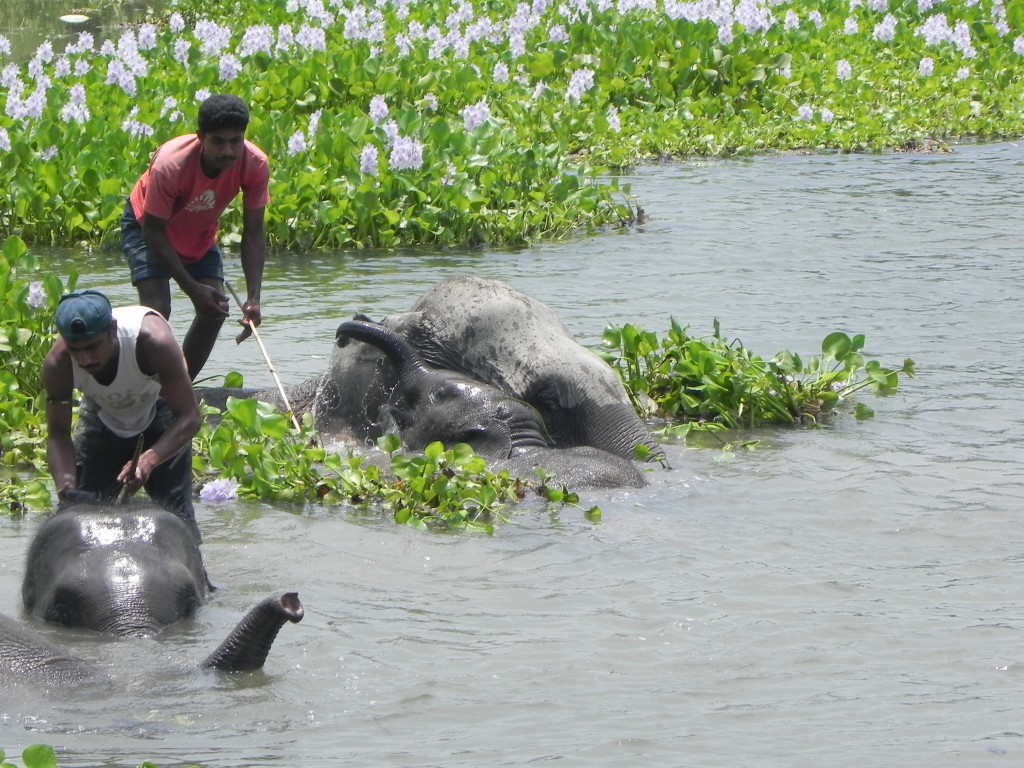
    The elephants were beginning to gather when we arrived. Some had just finished their morning bath while others where just taking the plunge. Bishwajit stuck close to his mother as she carefully maneuvered the river bank entering the shallows. At four months of age Bishwajit is already an expert swimmer, resembling a 500-pound bobbing cork.

    Phulmati is an experienced mother, calm and confident. She never lost sight of her lively calf as she gracefully waded around him. When she lowered herself in the shallows to allow her Phandis (lead mahout) to scrub her skin with a fistful of vegetation, little Bishwajit took full advantage. His comical play included climbing on his ever-patient mother’s face and over her head, concluding with a belly flop off the other side. In between submarine dives Bishwajit would surface and extend his tiny trunk, making contact with his mother’s face every thirty seconds or so.

    Bohagi, Phulmati’s first calf, is already five years old and recently completed her formal training. I looked closely to see if I could find the scars I was confident she would be wearing as result of the training process but to my surprise there were none.

    By the time Bishwajit and his mother emerged from the river, the camp was well underway. The males here outnumbered the females six to three. Two of the males, Naga and Rudra, were recently moved to the sanctuary from the Guwahati Zoo. Even though, in theory, the move is in their best interest as now they live in a natural habitat with access to clean water and live vegetation, their initial introduction was problematic. Bikaram, the sanctuary’s resident mature male was not impressed with the new arrivals and was extremely aggressive toward them. Determining if and how captive males should be introduced to semi-wild environments already occupied by mature males is a subject that will need to be studied to ensure the welfare of all concerned.

    Each elephant has a Phandis, their trainer and caregiver, who attends to their needs, takes them on anti-poaching patrols and ensures they spend many hours each day in prime grazing and foraging habitat. I know we would love to think of these elephants as being free to wander at will and do as they please but that is not possible. The parks are not fenced and human settlements encircle the national parks and wildlife sanctuaries. In the recent past some captive elephants have been released into the wild only to pay a horrific price when they wandered outside the boundaries of their protection and become a pest to the locals. Of the options, including illegal logging, tourist safaris and unemployment, which can be disastrous for their welfare, it would appear that these elephants are in the best situation currently available to them.

    Consistent with Dr. Sarma’s other camps, the elephants received a thorough physical examination, inoculations, fecal exams and deworming when needed. A large abscess on Phulmati’s back right leg was the biggest issue of the day.  Unfortunately for Phulmati, some time back a veterinarian had administered a high volume of drug at a single injection site, resulting in an infection. Dr. Sarma had been called in to address the problem and was pleased at the condition of the wound since his last visit. While dressing the wound he remarked that it was healing nicely.

    Bishwajit was full of himself, desperate for someone to play with. He figure-eighted under his mom’s belly and around her legs as she patiently accepted her abscess treatment. Cleaning out the wound and placing new dressing inside took about 15 minutes, during which time the ever-active calf made a nuisance of himself. At his tender age he knows no authority except his mother, thank goodness for that. And in the case of his mom, like most experienced elephant moms, Bishwajit could do no wrong. When he found that the humans would not engage in elephant games he targeted a nearby dog, promptly chasing it off.

    During the camp, all the elephants, Phandis and mahouts mingled around the site. Only after all the elephants had completed a physical examination and treatment did the exit process begin. A seemingly discarded piece of burlap was silently grasped and effortlessly flung by an elephant over her head to the waiting Phandis. Serving as a seat cushion of sorts, the rider placed the burlap just behind the elephant’s shoulder blades. He settled comfortably on the burlap, draped his legs behind her ears and tucked his feet on the inside of the neck rope.  Each Phandis signaled to his elephant in foot-language and the elephants responded. In a synchronized dance they fanned out in different directions, all leading to the same place, the forest.

    Now the elephants will spend hours grazing and foraging and later in the day they will patrol their home. Protecting the endangered rhinos is their job. Considering the alternatives for elephants living in captivity in Asia, theirs is a relatively good life.

    bath time before health camp examination