Tag: asianelephants

  • Rhinos and reunions

    Rhinos and reunions

    Chitwan National Park’s annual rhino count is underway.

    50 government elephants, from all over Nepal, take part in the survey. Elephants and their mahouts fan out through the jungle, covering Chitwan National Park from east to west. This is the most effective way to gain an accurate count of the rhino population in the park.

    The elephants benefit because they spend a couple of weeks inside the jungle, day and night. Being immersed in their natural habitat is rejuvenating.

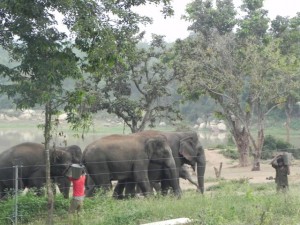
    In preparation for the count, the elephants gather at two central hattisars–Khorsor and Sauraha, the two hattisars where we completed our chain free corrals last week.

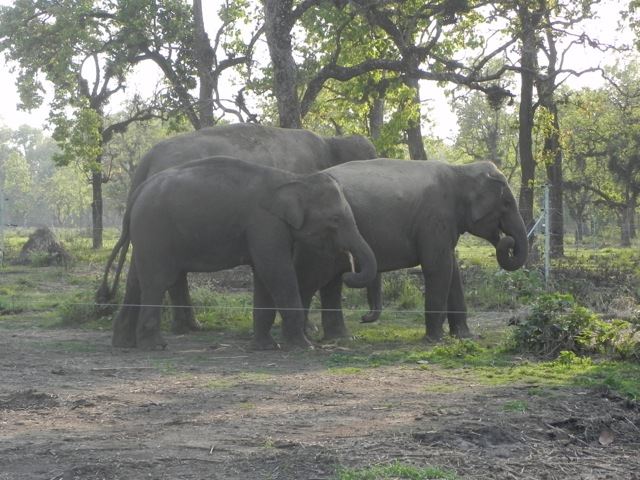
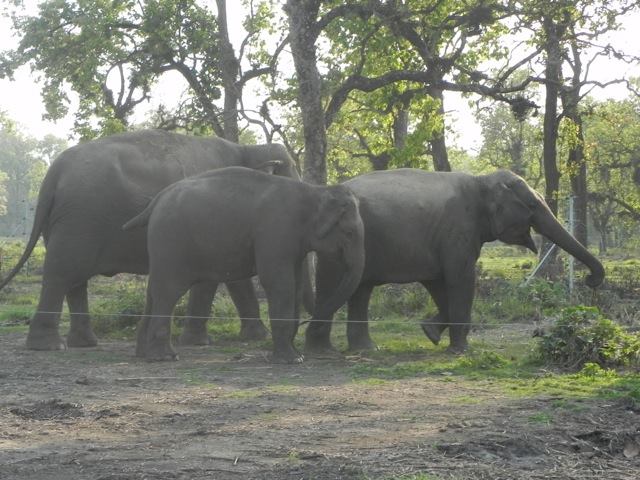
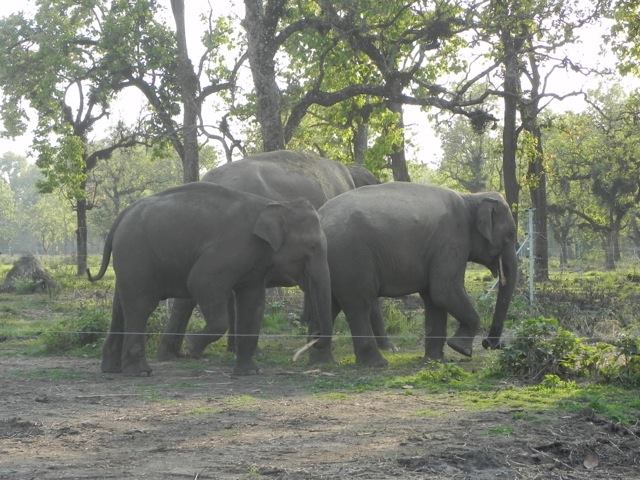
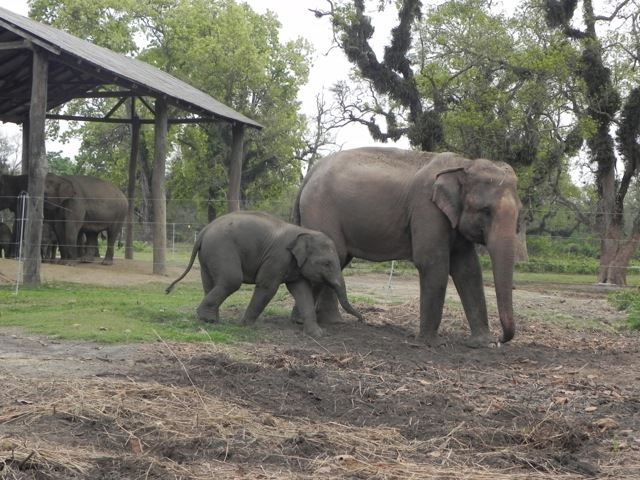
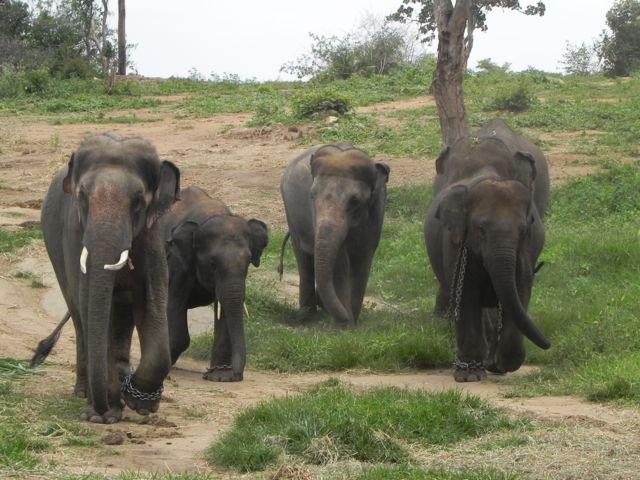
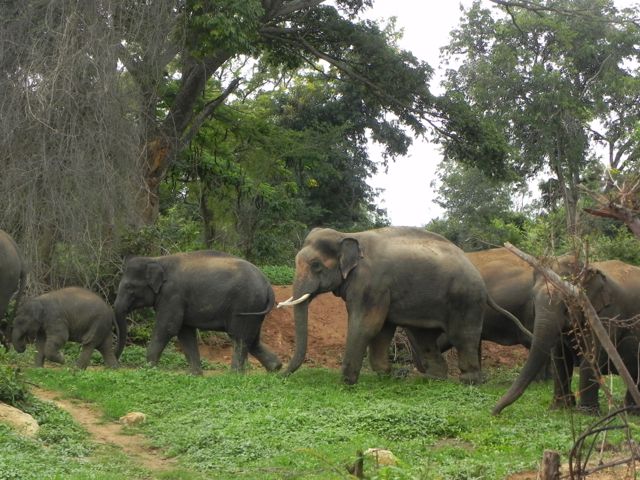
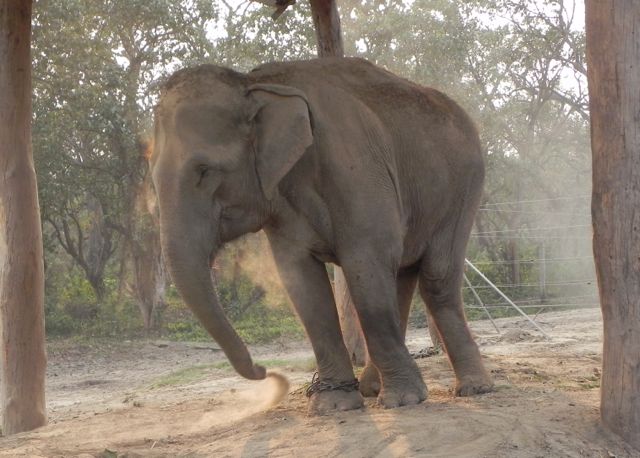
    Four boarders arrived at Khorsor yesterday. The scene was mesmerizing. Thanks to our chain-free corrals, families were reunited.

    Simsar Kali and her mother were as one, floating peacefully, side by side, chain free. Tumor Kali was also with them, a threesome of chain-free compatibility.

    Young Amaltari Gaj was also in elephant heaven. He and his mother grazed peacefully, chain free, a tearful reunion of joy.

    Change is happening!

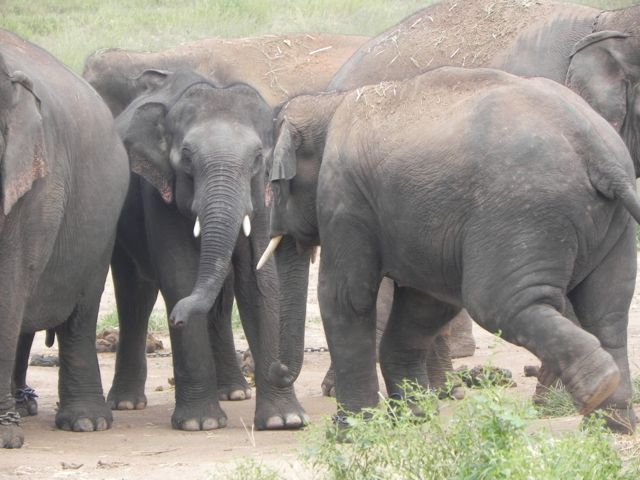
    Below: Mom, daughter and a friend reunited when mom visited from another hattisar.

    22109_946953388668356_279845061956447565_n 10441038_946953378668357_6965332770962719656_n 11008428_946953412001687_3724965258527183178_n


  • Changing minds, changing culture

    Changing minds, changing culture

    This release was a surprise to all of us and the reason we build a chain-free corral for each elephant, even if we are told the elephant will remain on chains.

    You just never know what will happen tomorrow. Changing minds, changing culture!

    Yesterday was a day of celebration for EAI and all who support our work. In addition to the work over the past year and a half, culminating in the release of tens of elephant from chains, it was the day you could actually feel the consciousness at the Khorsor hattisar shift.

    Without prompting, Puja Kali’s mahouts released her from chains.

    Earlier in the week, mahouts insisted that Puja Kali could not be released from chains due to her history of aggression. But they brainstormed and decided that if three mahouts were present when they approached Puja Kali, the situation would be safe.

    Without any further discussion they released her from chains.

    11016965_946096498754045_6101301223297155402_n

    This is a seriously significant turn of events. It is the first time we have witnessed the mahouts trouble shooting a problem, putting the elephants’ needs first.

    The mahouts deserve all the credit!

  • Ganesha Kali and her calf are chain free!

    Ganesha Kali and her unnamed calf were the first to be released in a procession of another seven ‪elephants in our ‪Chain Free Means Pain Free program. Their mahout was surprisingly receptive to having his elephants go chain free. Attitudes are changing. ‪

  • Soon They Will Be Chain Free!

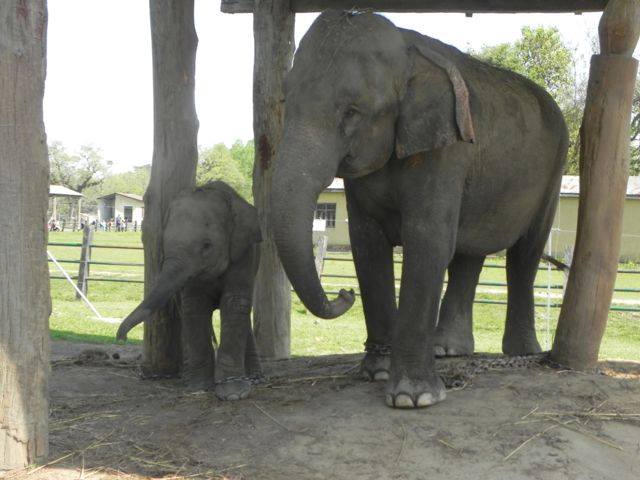
    Mother & calf

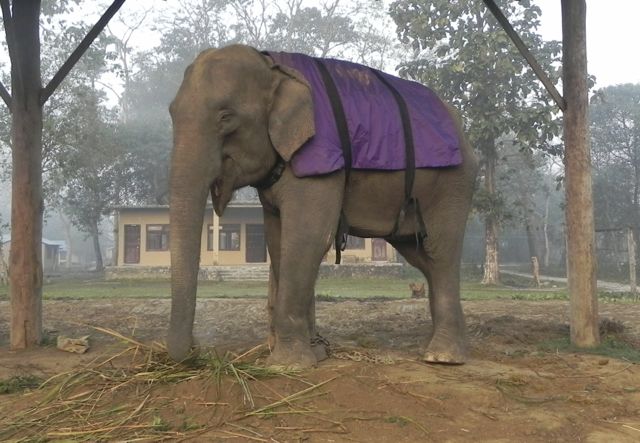
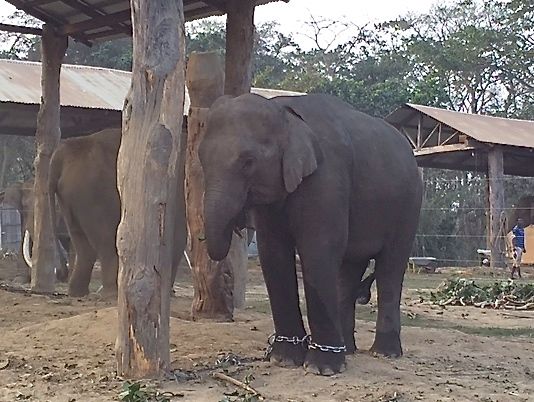
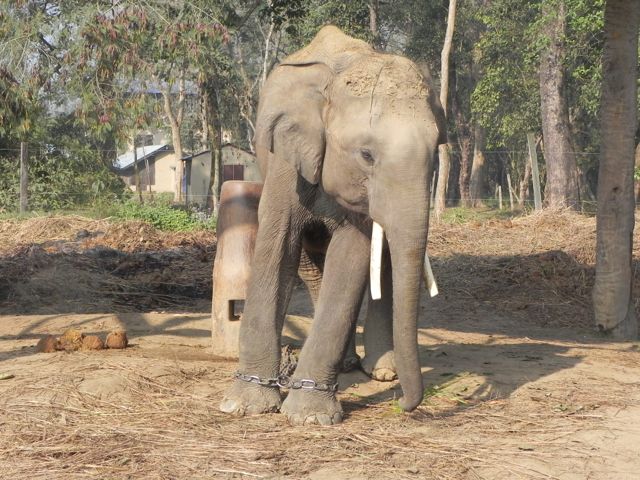
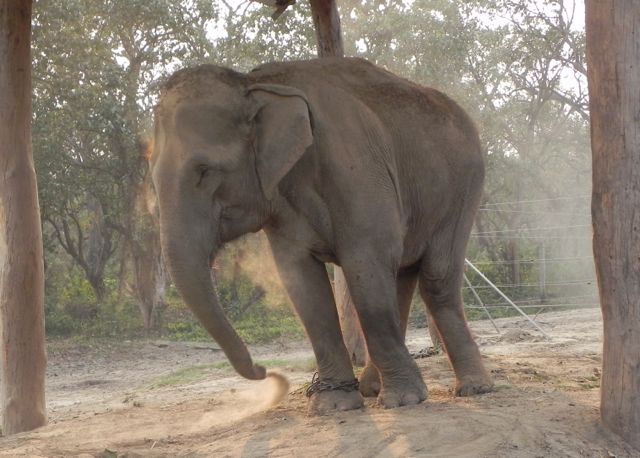
    Ganesha and her young calf Kasara Gaj have lived on chains their entire lives.

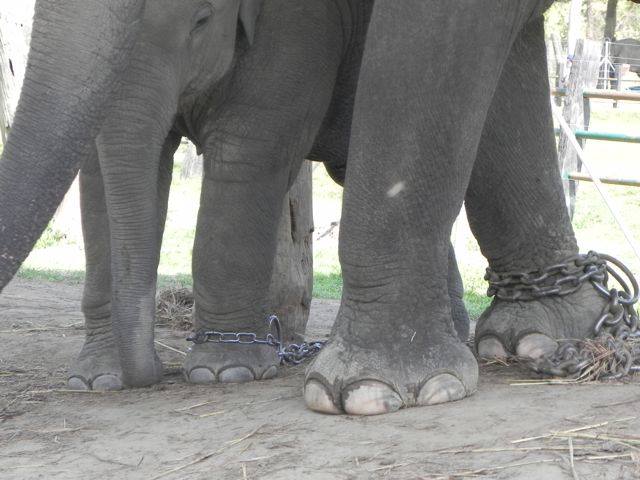
    Captive elephants are wild animals and an endangered species. The tradition of chaining disregards the trauma this practice causes.

    Chained feet
    But things are changing.

    Thanks to our Chain Free Means Pain Free program, Ganesha and her calf will be soon be released from chains.


  • A change in diet

    A change in diet

    Sundar Mala & mahout

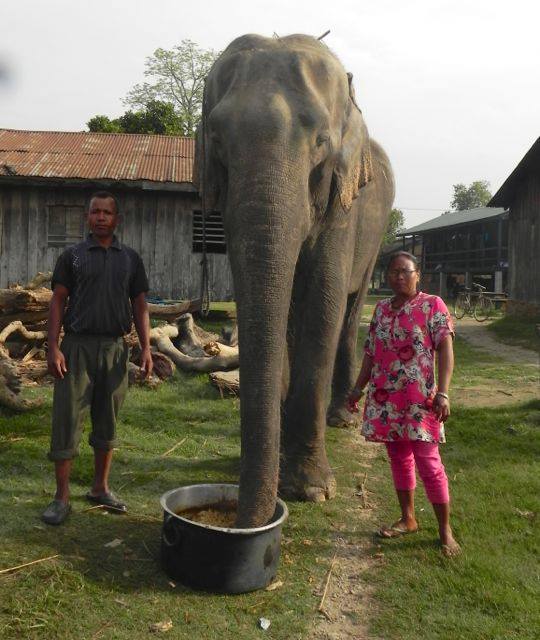
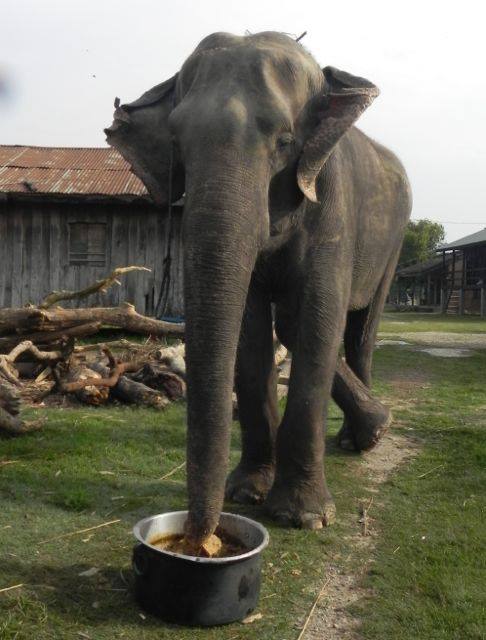
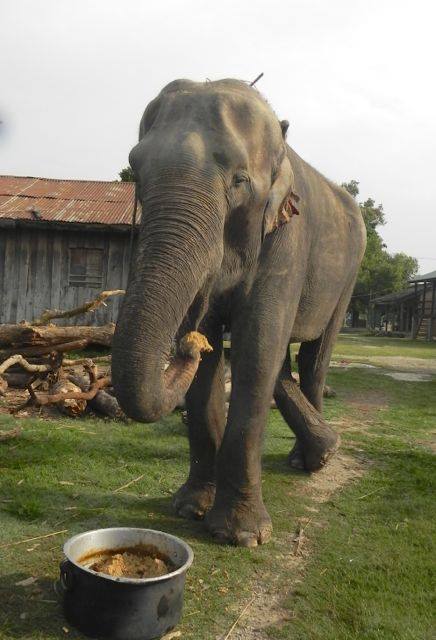
    Sundar Mala is nearly 70 years old and resides at the Sauraha hattisar in Chitwan, Nepal. Recently she began to lose weight, resulting in her removal from her friends Loctandra Kali and Oma Kali, to ensure the other elephants did not eat her food.

    We lobbied for a healthier solution. Our suggestion of a dietary supplement and reunion with her friends was accepted by the mahouts.

    sundar mala

    It took two days for Sundar Mali to acquire a taste for her new diet. She still eats slowly but does not stop until she has eaten it all.

    Sundar Mala eating2

    Sundar Mala eating

  • Help Us Keep Wild Elephants Wild and Captive Elephants Safe!

    Help Us Keep Wild Elephants Wild and Captive Elephants Safe!

    Thanks to your support, EAI is nearing the completion of its year-long project to free 63 working elephants from chains.

    2 eles chain free

    Elephants who have spent decades shackled by chains are now free to roam spacious mini-sanctuaries for the first time in their lives.

    But now we need your help with an unexpected expense: an elephant-proof perimeter fence to keep wild elephants wild and captive elephants safe.

    Last hattisar: Prototype for a healthy captive elephant environment

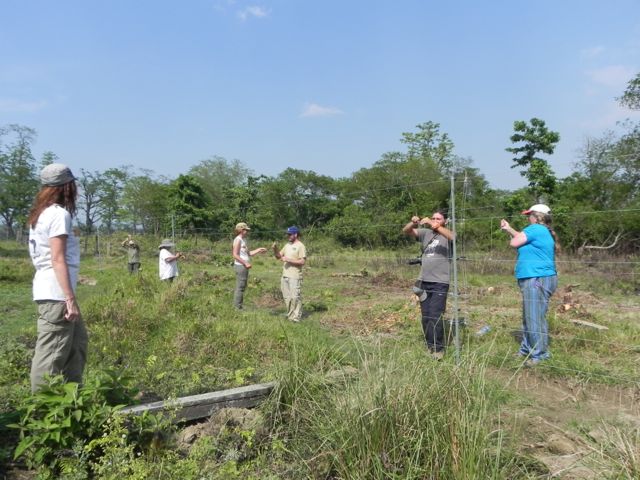
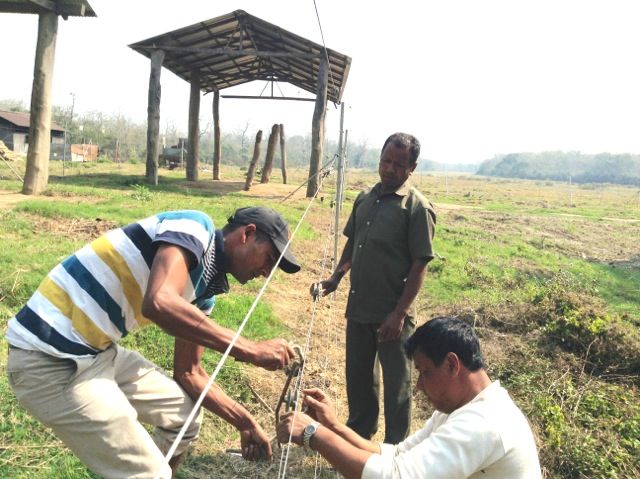
    dscn0321_medFor five weeks, EAI and its tireless volunteers have toiled in sweltering temperatures erecting solar powered corral fencing so that captive-held anti-poaching patrol elephants at one of the government’s 15 hattisars (elephant stables), in Khorsor, Nepal, can be released from their chains forever.

    This hattisar is home to 18 elephants: six females with suckling calves; an older female who acts as auntie, babysitter and wet nurse; a young pregnant female; two adolescents; and two young males who no longer live with their mothers.

    This, the last hattisar in EAI’s Chain Free Means Pain Free project, has the potential to be a prototype for a healthy captive elephant environment and transform elephant management in Nepal.

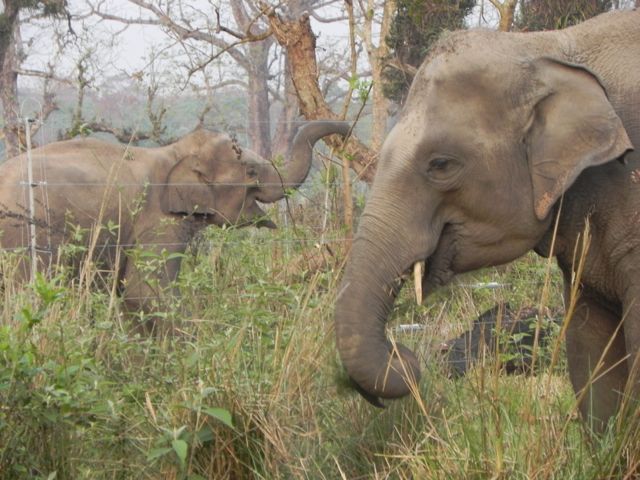
    But an unlikely culprit threatens the success of the project. His name? Sano Jungli Hatti — small wild elephant

    jungli hatti

    Every night for the past month, sano jungli hatti has visited the hattisar, damaged the newly constructed section of corral fencing and then disappeared into the breaking dawn.

    This wild elephant was dubbed sano jungli hatti because he is less than six feet tall and under 10 years of age. First seen traveling alone more than two years ago, the separation from his wild biological family was many years premature.

    Although the circumstances surrounding his separation remain a mystery, sano jungli hatti’s actions clearly demonstrate that he has adopted the resident elephants in Khorsor as his family.

    It’s not clear if this young elephant is motivated by his desire to procreate or be mothered, but he is willing to disregard the pain of plowing through six strands of solar powered fencing to get to his adopted family.

    Until now, the fence kept out even the most dominant mature wild bulls.

    But this young sano jungli hatti’s destructiveness has created a crisis.

    repairing corral

    Each time sano jungli hatti breaks through the fence, it is repaired.

    It’s not a problem to repair the fence one or two times. But if the fence needs repairing day after day, it is not sustainable.

    If sano jungli hatti continues to break the fence, the resident elephants will be put back on chains.

    We simply cannot allow this to happen.

    Solution: A perimeter fence

    Capturing or relocating jungli hatti is not a viable option.

    Neither is returning all 18 captive-held elephants to chains.

    The answer?

    Build a perimeter fence around the entire 15-acre chain free project to keep wild elephants out and the eighteen resident elephants chain-free.

    The six-foot-high elephant-proof perimeter fence will cover 4,000 running feet. It is estimated to cost $1 per foot, a total of $4,000.

    To ensure the success of our chain free project — to keep sano jungli hatti free and the captive-held elephants chain-free — we must raise the funds for the perimeter fence immediately.

  • The Work Continues to Get Elephants Off Chains

    Good news! Baby Tec Gaj was released from chains.

    Unfortunately, it is not all good news because his mother, Puja Kali, was not.

    Two-year-old, captive-born Tec Gaj and his mother Puja Kali reside in Khorsor, ‪Nepal, at the government breeding center.

    Puja Kali is quite aggressive, known to attack her mahouts even while she is on chains.

    Such aggression is an indication of great suffering, usually on a mental and emotional level.

    Responding to Puja Kali’s aggression with corporal punishment compounds her condition but mahouts find themselves with few alternatives.

    Aggressive behavior exhibited by ‪elephants triggers retaliatory aggressive behavior by the mahouts. Aggression breeds aggression, resulting in a vicious cycle in which neither man nor elephant benefits.

    EAI does not endorse the use of any negative means to manage elephants and we empathize with the position the mahouts and captive-held elephants find themselves in.

    Hopefully, with our continued efforts, the day will come when aggressive elephants will no longer be used for activities that put them and their mahouts in danger. And, mahouts will learn alternative ways to care for their elephants.

  • The Suffering Continues At Nepal’s Top Tourist Destination

    The Suffering Continues At Nepal’s Top Tourist Destination

    EAI‬ has been “boots on the ground” in ‪Nepal for nearly five years. Initially, much of our efforts were focused on improving welfare for the privately owned ‪elephants used for tourist rides.

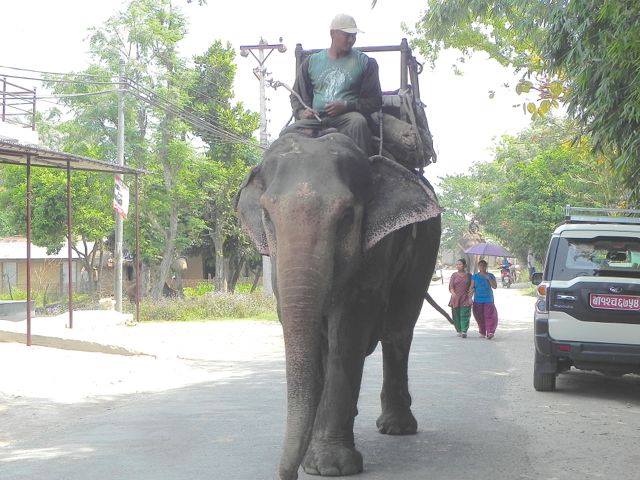
    We’ve provided free pedicures and husbandry and training advice bi-annually since 2011. But today the safari elephants of ‪Chitwan suffer to the same degree as they did when we first started. As long as ‪tourists pay to ride elephants, the elephants of Nepal will continue to be exploited.

    One way for you to help is by supporting groups actively working to influence tour companies to drop elephant safaris from their tour packages. Elephant Watch Nepal is one such group.

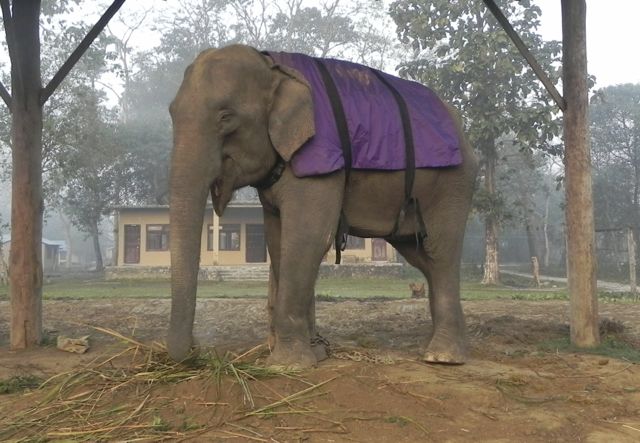
    Old abused ele
    Six months ago we found this elephant being walked along a busy highway, in the midday scorching sun, on a 30-mile walk back from a party she’d been hired for.

    Today we found her in Sauraha on her way to the tourist ride area.

    saggy dehydrated flesh
    Saggy, dehydrated flesh

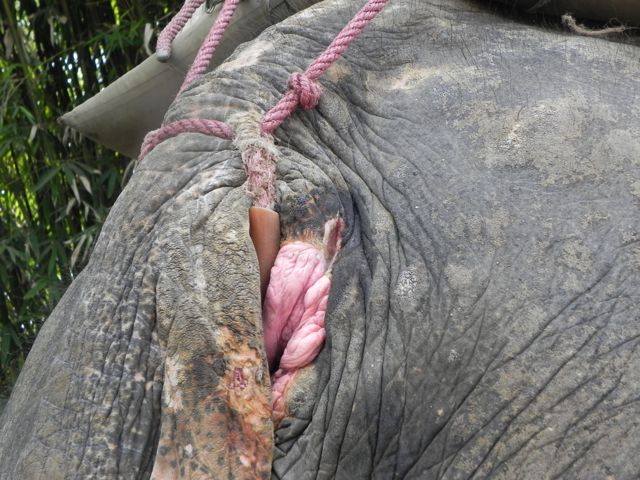
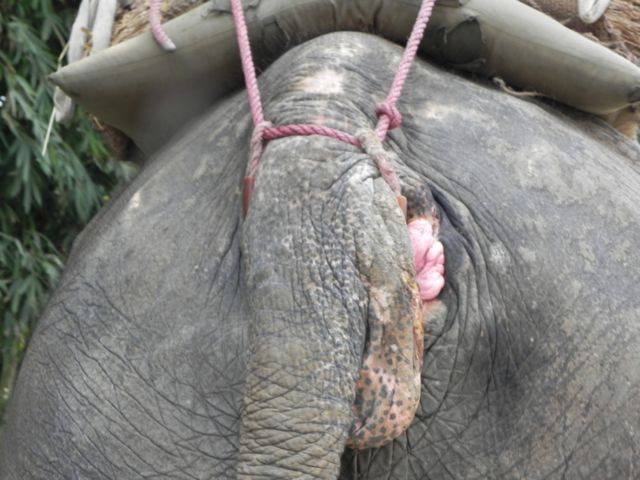
    This old elephant is blind, dehydrated, exhausted, underfed, continually beaten and suffers from deep gouges around her anus from the howdah (saddle) rope.

    Painful wounds caused by nylon ropes
    Painful wounds caused by nylon ropes used to tie the howdah (saddle) on for tourist rides
    torn anus
    Torn anus

    The owner and mahouts are aware of her injury and how to prevent and treat it. But they do nothing to ease her suffering.

  • Progress Involves Three Steps Forward and One Step Back

    Progress Involves Three Steps Forward and One Step Back

    Partnering with people and organizations with shared goals is key to success as a foreign NGO working in Asia.  Since hurry up and wait is a culturally accepted norm, an ample supply of patience and flexibility is required if you hope to have a successful project.

    And even the best-laid plans can unravel without a moment’s notice.

    But the daily challenges of different language, conflicting cultures and not having a Home Depot to run to for much needed supplies, is what builds character. Serious determination is required.

    When I shift from the U.S. to Nepal, I know to reset my internal clock, tone down my aspirations and prepare myself for unexpected changes to my plans. This may be a breeze for some, but it is a serious challenge for me. But by keeping my eye on the prize—improved elephant welfare—I am able to operate outside my comfort zone and learn a different way of being.

    The Next Phase of Chain Free Corral Construction 

    By the time I stepped off my flight in Kathmandu, the image of my goal was playing in technicolor in my brain, primed for manifesting.

    But that is when reality strikes. I recognize that my vision must be shared by my partners for it to become more than a well-thought-out dream.

    I am currently working with a fabulous young Australian woman named Chantelle Ridley, whom I hired to organize our Free the Elephant Program volunteers in Nepal.

    Chantelle interned with me a year ago and has turned out to be a perfect fit for this job. Her easygoing attitude, combined with excellent people skills and intimate knowledge of Chitwan, has helped make our new volunteer program a smashing success.

    Chantelle’s assistance frees me up to concentrate on the bigger picture of our Chain Free Means Pain Free Program work: identifying locations, designing chain-free corrals, managing the fence building crew from India and overseeing the local labor.

    Each installation comes with its own unique set of challenges, both situational and logistical.

    To ensure a water source for elephant bathing and drinking, most hattisars are built near a river, which means that they flood during monsoon season.

    For safety, the mahouts (elephant staff) always want the chain-free corrals to be built directly adjacent to their sleeping quarters.  There is the constant threat of an unscheduled appearance of wild rhinos, man-eating tigers and menacing bull elephants in musth.

    In some locations, available space is limited or there is sparse tree cover.

    Contaminated soil caused by years of stockpiling and burning elephant manure is a universal issue.

    With 31 corrals to our credit in 2014, I was overly confident that the next installation would follow the same successful route.

    But I was in for a rude awakening. I immediately realized I would be facing my greatest challenge yet.

    Both installations scheduled for this year house multiple elephants–ivory carrying males, females and calves. Like humans, elephants are individuals and even though they share common language and needs, they have unique personalities that must be acknowledged in order to improve their lives.

    Upon arrival, my first challenge was to discover that the dense forest promised for 15 corrals was no longer available. Instead, it had been set aside for the local people, a decision that is difficult to argue with.

    This left me with a dilemma: build corrals for ivory carrying males that I intuitively know are too small, or build nothing at all.

    In Nepal decisions are made by unanimous agreement of the entire group involved. If one stockholder does not agree, the project will not move forward. Opinion was split: the mahouts, head veterinarian and an influential NGO wanted to keep the males on chains, while the chief warden and I wanted to make some degree of improvement and meet our goal of getting the bulls off chains.

    After a healthy group discussion, we took a walking tour of the facility. Everyone agreed we would build mini-corrals, to see if they would work.

    Optimism is my strong suit, definitely what drives me to believe that elephants in captivity can experience a better, more humane existence. I agreed to reduce the size of the chain-free corrals rather than building none at all.

    After working diligently for two weeks to create six chain free corrals, the volunteers, fence crew, local labor, mahouts, chief warden and I were present for the unchaining. What a thrill.

    But shortly after dark, after the crowd had dispersed and we were patting ourselves on the back, forty-year-old, mild mannered bull Dipendra Prasad effortlessly and silently removed the back gate of his corral and slipped out into the night.

    When his escape was discovered, you could hear a collective exhale of disappointment.

    This morning the mahouts returned Dipendra Prasad to the hattisar but only after a massive manhunt to bring him back.

    Everyone is now in agreement that there is not enough space in this location for chain-free corrals for adult males. My job now is to get back to the drawing board and come up with solutions. Adult males are always the most challenging individuals to care for in captivity.

    If we hope to provide a chain-free life for the mature ivory carrying bulls of Nepal, corrals must be spacious, heavy with trees and natural vegetation and away from human populated areas. Most important, they must be constructed of steel pipe!

    But our effort at this location, the Sauraha hattisar, is not a total loss. Three acres of densely forested land has been set aside for a chain-free corral for three females and a young male.

    The volunteers and fence crew are constructing the corral as we speak. The corral will be completed and the elephants; Loctundra Kali, Oma Kali, Sundar Mala and Paris Gaj, released from their chains within 7 days.


  • Blending of Two Worlds

    Blending of Two Worlds

    Haatha, hati, hatti, hathi, are all words referring to the Asian elephant. Kipling, in his infamous Jungle Book, gave life to his supporting character, naming him Colonel Hathi.

    There is something pure and powerful about the Colonel as the representative of an entire species. He becomes more than himself: he is the conduit to the world of elephants, their ancient culture and lives.

    I am continually amazed by the impact elephants have on people. Even those who have never been in the presence of an elephant can become obsessed with protecting them. It is as if elephants can reach into your soul and light a spark that defies reason. Their culture is complex, their nature compassionate and resilience indefinable.

    A wild bull joins Sunder and friends

    Recently I experienced a scene that touched me deeply. I was at the Bannerghatta Biological Park (BBP) in India to inspect the chain free-enclosure I’d designed for Sunder and his new family.

    The staff excitedly told me that a young wild elephant had entered the enclosure 15 days prior and remained inside. I found this disconcerting. I imagined the young bull to be frightened and holed up in the back reaches of the 122 acres, hiding from the scary humans who surrounded the entrance and exit of the enclosure.

    As I walked the fence line inspecting the corral, there were signs of another inspection. The young bull had made his rounds, leaving footprints and signs of dusting and foraging along the fence line on the inside, but no damage. I had no doubt that he was looking for a way out.

    Yet, although the fence was newly completed and would not be operational until after my inspection, this jungle, pronounced junglee (wild) hatti (elephant) did not breach it. The solar power energizer had not yet been turned on, the fence wasn’t yet powered, so the bull would have felt no discomfort if he pushed through it to escape. I was curious why he hadn’t.

    The jungle hatti appears

    About two hours later, the mahouts became active, calling to each other and moving to the exterior of the enclosure, closer to the fence line. The mahouts understand the danger of wild elephants; I was told they were afraid of this hatti because he was wild.

    When I first saw the jungle hatti my heart melted. He was just a kid, maybe 10 years old. His skin pigment was much darker than that of the two captive-held BBP residents who accompanied him into the clearing. The three stuck together like glue, with the jungle hatti sandwiched in the middle.

    The mahouts nervously checked their escape routes. The jungle hatti tensed when they started yelling to warn each other that the wild one had emerged from the forest. I was in awe at the scene unfolding.

    Once the hatti and his friends converged with other herd members, the tension in the air dissipated. All the elephants appeared quite comfortable with their wild cousin. In fact, they seemed to know each other quite well.

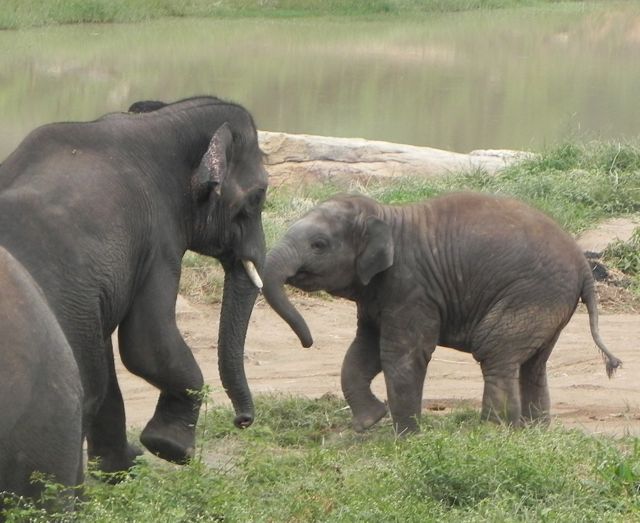
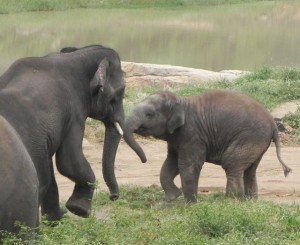
    Shiva, the baby of the herd, could not get enough of his wild friend. He followed him around, pushed and shoved on his legs and trunk, trying to get the jungle hatti to play. What a sight — tiny Shiva and this wild 10-year-old, acting as if their interactions were common place. And perhaps they were.

    During the daytime hours, the BBP herd is on exhibit in the drive-through safari section of the Park, corralled in a pasture area with a sizable pond. The new 122-acre chain free enclosure eliminates the need for the elephants to be chained during the day to contain them.

    But at night, the entire herd is released in the nearby National Park to forage and commune with wild elephants. Captivity is a burden for elephants but this arrangement, releasing the elephants into the wild overnight, is genius and the healthiest captive situation I am aware of in India.

    An adoptive family

    Throughout the day, the jungle hatti continued to interact with the entire herd. When Shiva became too much of a pest, as a younger sibling sometimes is, the jungle hatti pushed Shiva off his feet. Without a single vocalization Shiva’s mother and aunt instantly moved in on either side of him.

    I realized I was holding my breath when the elephants relaxed and returned to eating. Shiva got up, brushed himself off and went right back to pestering the jungle hatti.

    It was then that I understood the relations was familiar. For whatever reason the jungle hatti left his biological family and had joined the BBP family. And they had accepted him.

    He grazed with them, swam with them, dusted with them, communed with them. The only thing he had not yet done in the past two weeks was to leave the corral with them, but it was time.

    Food and friends entice

    The mahouts wanted suggestions how to get the jungle hatti to leave the corral. After I assured them that food and the companionship of his friends would entice the wild one to leave the corral, the mahouts had the confidence to implement a plan.

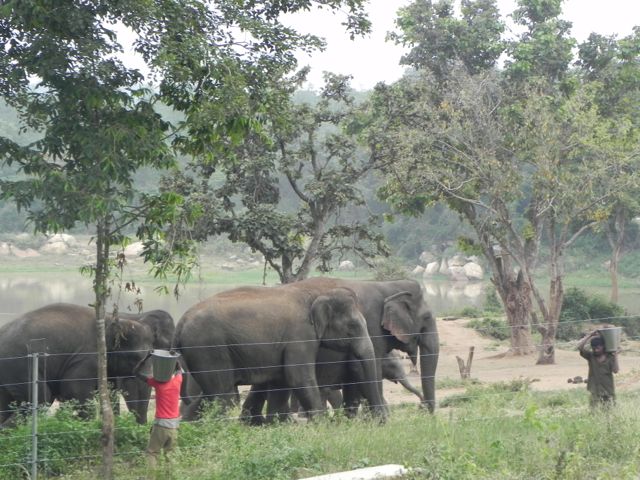
    At 5pm, amidst anticipatory rumbles and trumpets, the food truck arrived. Buckets of prepared treats were unloaded, each containing supplemental, softball-size rice balls. Elephants and mahouts alike were in high gear, vocalizing and dashing around on opposite sides of the corral fence.

    The young jungle hatti resumed his position sandwiched between the two other juveniles as they raced back and forth in unison, moving like a perfectly synchronized school of fish. His head and tail were raised, his eyes bugged. He was afraid, prompted by the noisy humans on the other side of the fence.

    The jungle hatti and his bodyguards hung back while the other elephants were called from the corral. There was organized confusion as the elephants ran in every direction to their appointed mahout and food bucket. As mahouts gently placed the freshly prepared nutritious food balls inside the gaping mouths of their respective charges, the jungle hatti and friends continued to pace the inside of the corral.

    Finally, it was time to see if the plan would work. The empty buckets had been gathered and, along with the nervous mahouts, were sitting in the back of the truck that stood ready to speed away if necessary.

    As the jungle hatti and his escorts made a wide circle back toward the lake, one brave mahout opened the gate.

    The jungle hatti nervously approached the open gate with his friends close on either side. At one point he broke ranks and turned to run away, but his friends quickly sandwiched him and helped guide him out through the open gate. He was seriously frightened but clearly he trusted his friends.

    Once through the gate, it was all butts, raised tails and trumpets of excitement as the entire herd stampeded off toward the National Park.

    The mahouts were all smiles as the elephants disappeared over the hill into the forest.

    I have never before observed a more powerfully moving sight. This herd of elephants–some wild caught decades ago, some rescued from temples, some captive born at BBP–and one wild boy who chose them for his new family.


  • Why Does That Elephant Have A Chain Around His Neck?

    Why Does That Elephant Have A Chain Around His Neck?

    For the past few years, most of my time and energy has been devoted to freeing captive held elephants from chains.

    Working alongside Nepali partners, we have created 37 chain free corrals, in 15 different elephant facilities. Before years end, we will add another five chain free corrals in two facilities in Thailand and a huge 100 acre habitat in India.

    Chain Free Means Pain Free has caught on.

    As more elephants are freed from leg chains, attention is shifting to the neck harness elephants wear during anti poaching patrol.

    In the case of elephants in Nepal, the neck harness serves one purpose. It enables a mahout  to stay seated if his elephant becomes frightened and runs.

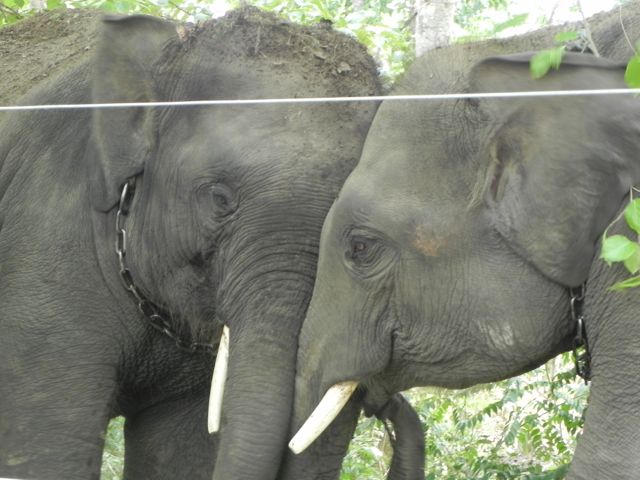
    Some neck harnesses are made of rope. Others are a combination of rope and light weight chain. All are loose fitting and have loops for the mahouts’ feet. These loops lie flat along the side of the elephants’ neck, behind each ear.

    Remaining seated when an elephant spins around and runs away is virtually impossible, unless your feet are strapped in.

    In the case of Laxman Gaj and his twin brother Ram Gaj, a combination harness is used. The bottom half of the harness is chain. The half that goes over the top of their neck is rope.

    Laxman and Ram are young elephants, only six years old. Regardless of their youth, they are required to participate in daily anti poaching patrol activities in Chitwan National Park. Being young, they are easily frightened when surprised by a wild rhino or tiger.

    They wear the harness because when an elephant is frightened, he or she runs away. Spinning and then sprinting at speeds up to 30 miles per hour, can cause a rider to fall off.

    Having a harness adds a sense of security for the mahout who clearly knows that if he falls from his elephant, while in proximity of a wild rhino or tiger, he will be killed.

    When the elephant recovers from his or her fright, the patrol resumes.

    When an elephant learns s/he is able to escape a frightening situation, their self confidence builds. With each exposure to wildlife their fear level is further diminished. By the time they reach adulthood, the elephant has gained the experience necessary to fearlessly encounter wild tigers, rhinos and bears.

    Undoubtedly, some will insist that the harness is unnecessary as elephants should simply be returned to the wild. I have no problem with this argument. But, until such time as society evolves, some elephants are destined to remain in captivity.

    Constructed and used properly, a neck harness is harmless and provides measurable benefits. The mahouts’ personal safety is guarded, while a young elephant is allowed his natural response to fear, without being punishment.


  • Sunder the Elephant Embarks on New Life

    sunder__family_bannerghatta_zoo_india-1_med
    Sunder (left) with his new family

    Elephant welfare expert Carol Buckley says rescued elephant is in good hands at model facility.

    More than a month after his rescue from a life of horrific suffering, 15-year-old bull elephant Sunder is enjoying lush forests, cool ponds and the close companionship of 14 other elephants at the Bannerghatta Biological Park (BBP) outside Bangalore, India.

    Sunder’s tragic plight touched the hearts of people from all around the world and galvanized an international social media campaign that helped win his release and recovery.

    sunder_and_family_india_2_med“Sunder has a new life and a fresh start at a wonderful facility,” said Carol Buckley, an expert in innovative approaches to elephant welfare in captivity, who recently visited Sunder in India to design a chain-free facility at the park where he now lives.

    “Thanks to the courage of the Supreme Court of India, which ruled against Sunder’s longtime abusers, the willingness of BBP to accept Sunder for permanent residence and the tireless logistical and legal efforts of PETA India, Sunder’s future looks very bright.”

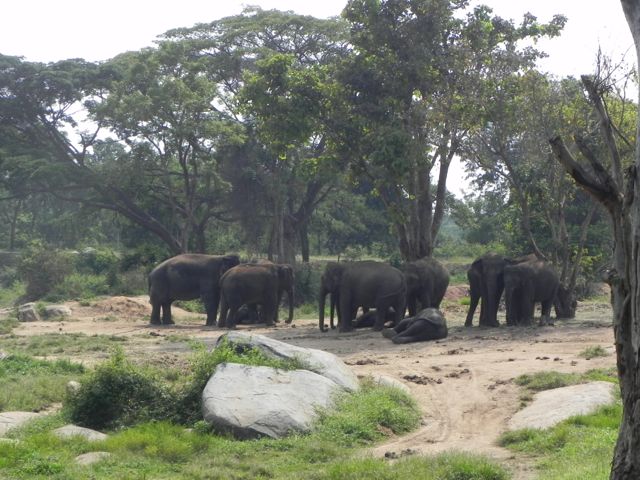
    Buckley, who founded and leads the US-based nonprofit Elephant Aid International, says BBP has all the desired components for captive elephants. Its 122 acres of diverse habitat include open pasture, shaded forests and ponds, where the elephants are free to roam and play during the day. At night, they are given access to the adjoining national park forest for foraging and exploration.

    The upcoming construction of a custom designed, solar powered, chain-free perimeter fence system to enclose the entire daytime habitat will give the elephants even more autonomy. The fence creates a safe containment area, eliminating the need for mahouts to dictate the elephants’ activities. It should be completed before the end of the year and will be the first constructed at any zoo in India.

    Buckley noted that unlike most elephant facilities throughout the world, BBP’s mahouts manage their captive elephants in a “herder style” manner that supports their physical, emotional and mental health. This style of management acknowledges elephants’ nature as highly social, herd animals, giving them freedom to wander at will while mahouts keep a watchful eye on their whereabouts.

    “Bannerghatta Biological Park, working in partnership with PETA India, offers the world an exemplary model for managing captive-held elephants and the best possible new home for Sunder,” said Buckley. “I’m so grateful for their efforts.”