Tag: elephants

  • Blending of Two Worlds

    Blending of Two Worlds

    Haatha, hati, hatti, hathi, are all words referring to the Asian elephant. Kipling, in his infamous Jungle Book, gave life to his supporting character, naming him Colonel Hathi.

    There is something pure and powerful about the Colonel as the representative of an entire species. He becomes more than himself: he is the conduit to the world of elephants, their ancient culture and lives.

    I am continually amazed by the impact elephants have on people. Even those who have never been in the presence of an elephant can become obsessed with protecting them. It is as if elephants can reach into your soul and light a spark that defies reason. Their culture is complex, their nature compassionate and resilience indefinable.

    A wild bull joins Sunder and friends

    Recently I experienced a scene that touched me deeply. I was at the Bannerghatta Biological Park (BBP) in India to inspect the chain free-enclosure I’d designed for Sunder and his new family.

    The staff excitedly told me that a young wild elephant had entered the enclosure 15 days prior and remained inside. I found this disconcerting. I imagined the young bull to be frightened and holed up in the back reaches of the 122 acres, hiding from the scary humans who surrounded the entrance and exit of the enclosure.

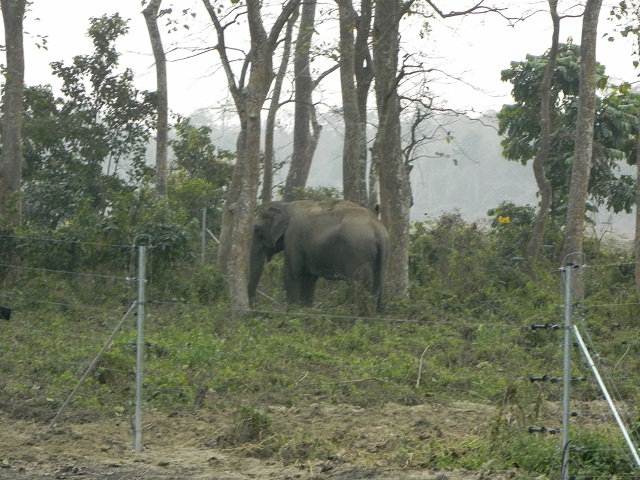
    As I walked the fence line inspecting the corral, there were signs of another inspection. The young bull had made his rounds, leaving footprints and signs of dusting and foraging along the fence line on the inside, but no damage. I had no doubt that he was looking for a way out.

    Yet, although the fence was newly completed and would not be operational until after my inspection, this jungle, pronounced junglee (wild) hatti (elephant) did not breach it. The solar power energizer had not yet been turned on, the fence wasn’t yet powered, so the bull would have felt no discomfort if he pushed through it to escape. I was curious why he hadn’t.

    The jungle hatti appears

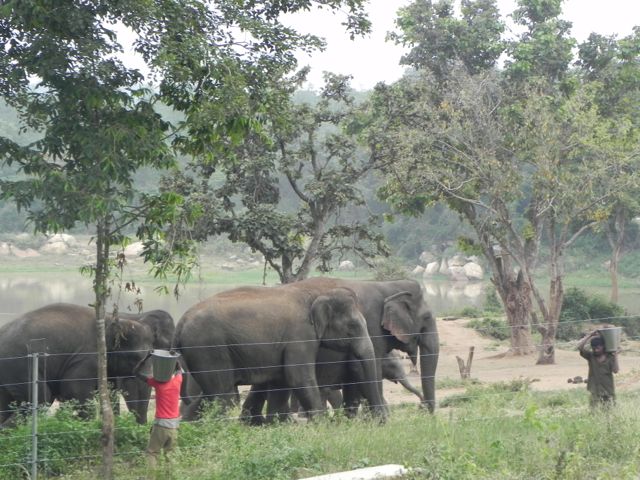
    About two hours later, the mahouts became active, calling to each other and moving to the exterior of the enclosure, closer to the fence line. The mahouts understand the danger of wild elephants; I was told they were afraid of this hatti because he was wild.

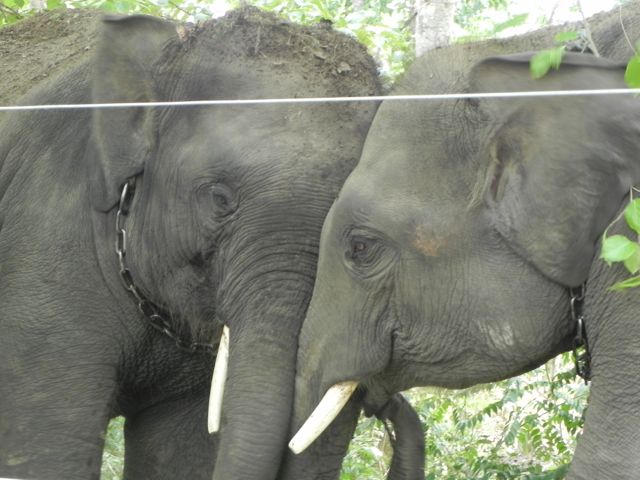
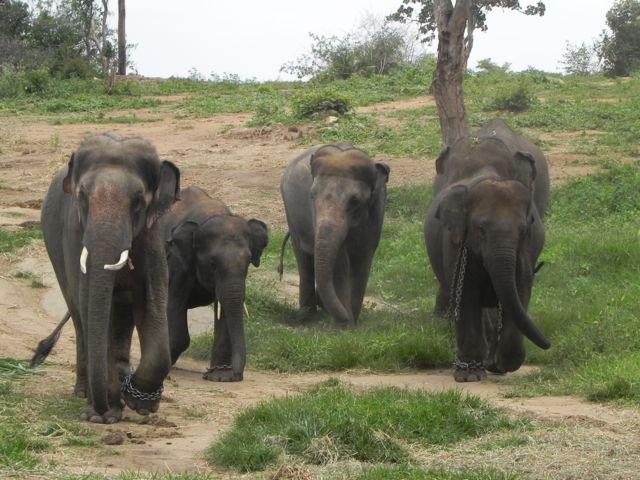
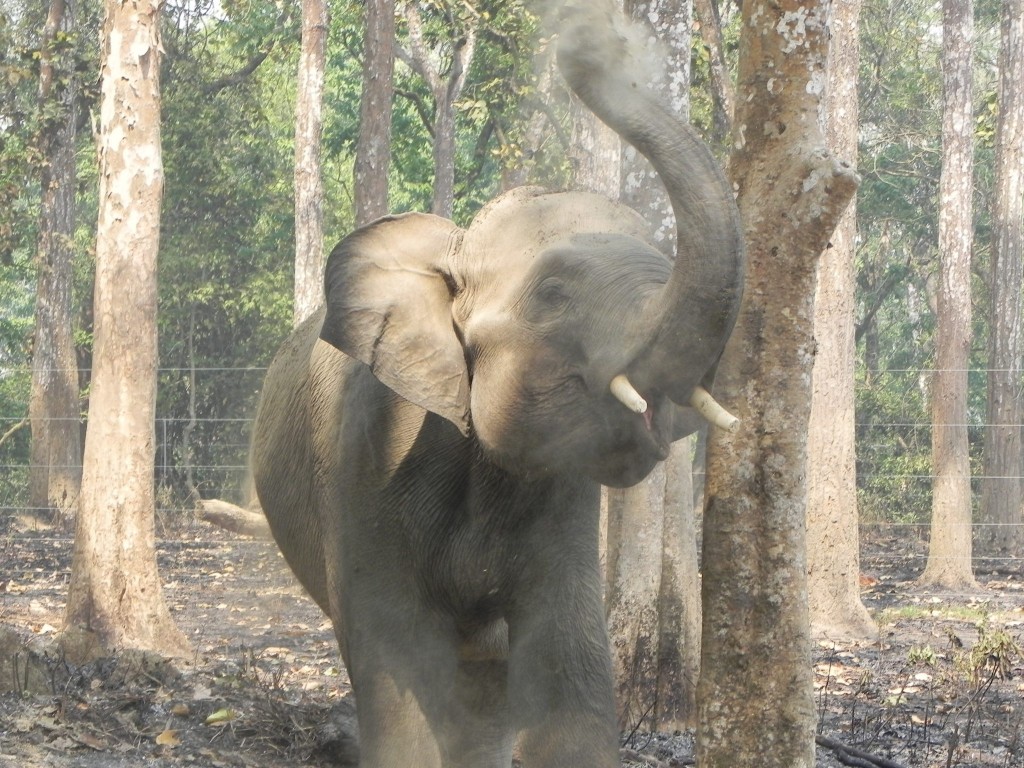
    When I first saw the jungle hatti my heart melted. He was just a kid, maybe 10 years old. His skin pigment was much darker than that of the two captive-held BBP residents who accompanied him into the clearing. The three stuck together like glue, with the jungle hatti sandwiched in the middle.

    The mahouts nervously checked their escape routes. The jungle hatti tensed when they started yelling to warn each other that the wild one had emerged from the forest. I was in awe at the scene unfolding.

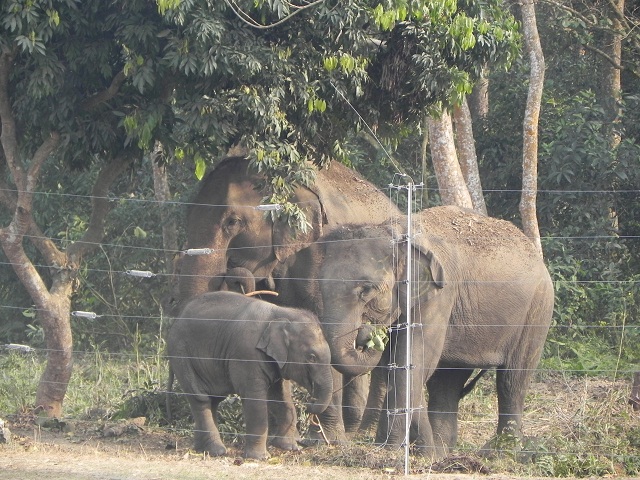
    Once the hatti and his friends converged with other herd members, the tension in the air dissipated. All the elephants appeared quite comfortable with their wild cousin. In fact, they seemed to know each other quite well.

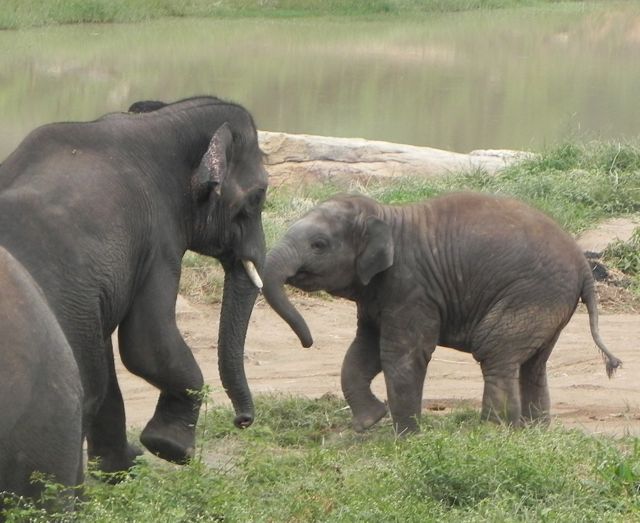
    Shiva, the baby of the herd, could not get enough of his wild friend. He followed him around, pushed and shoved on his legs and trunk, trying to get the jungle hatti to play. What a sight — tiny Shiva and this wild 10-year-old, acting as if their interactions were common place. And perhaps they were.

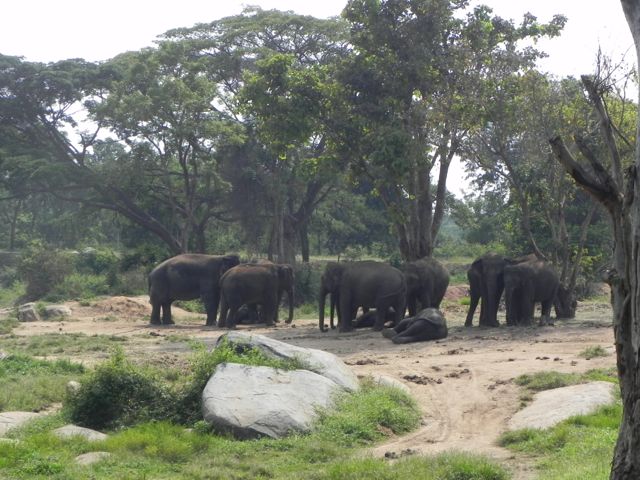
    During the daytime hours, the BBP herd is on exhibit in the drive-through safari section of the Park, corralled in a pasture area with a sizable pond. The new 122-acre chain free enclosure eliminates the need for the elephants to be chained during the day to contain them.

    But at night, the entire herd is released in the nearby National Park to forage and commune with wild elephants. Captivity is a burden for elephants but this arrangement, releasing the elephants into the wild overnight, is genius and the healthiest captive situation I am aware of in India.

    An adoptive family

    Throughout the day, the jungle hatti continued to interact with the entire herd. When Shiva became too much of a pest, as a younger sibling sometimes is, the jungle hatti pushed Shiva off his feet. Without a single vocalization Shiva’s mother and aunt instantly moved in on either side of him.

    I realized I was holding my breath when the elephants relaxed and returned to eating. Shiva got up, brushed himself off and went right back to pestering the jungle hatti.

    It was then that I understood the relations was familiar. For whatever reason the jungle hatti left his biological family and had joined the BBP family. And they had accepted him.

    He grazed with them, swam with them, dusted with them, communed with them. The only thing he had not yet done in the past two weeks was to leave the corral with them, but it was time.

    Food and friends entice

    The mahouts wanted suggestions how to get the jungle hatti to leave the corral. After I assured them that food and the companionship of his friends would entice the wild one to leave the corral, the mahouts had the confidence to implement a plan.

    At 5pm, amidst anticipatory rumbles and trumpets, the food truck arrived. Buckets of prepared treats were unloaded, each containing supplemental, softball-size rice balls. Elephants and mahouts alike were in high gear, vocalizing and dashing around on opposite sides of the corral fence.

    The young jungle hatti resumed his position sandwiched between the two other juveniles as they raced back and forth in unison, moving like a perfectly synchronized school of fish. His head and tail were raised, his eyes bugged. He was afraid, prompted by the noisy humans on the other side of the fence.

    The jungle hatti and his bodyguards hung back while the other elephants were called from the corral. There was organized confusion as the elephants ran in every direction to their appointed mahout and food bucket. As mahouts gently placed the freshly prepared nutritious food balls inside the gaping mouths of their respective charges, the jungle hatti and friends continued to pace the inside of the corral.

    Finally, it was time to see if the plan would work. The empty buckets had been gathered and, along with the nervous mahouts, were sitting in the back of the truck that stood ready to speed away if necessary.

    As the jungle hatti and his escorts made a wide circle back toward the lake, one brave mahout opened the gate.

    The jungle hatti nervously approached the open gate with his friends close on either side. At one point he broke ranks and turned to run away, but his friends quickly sandwiched him and helped guide him out through the open gate. He was seriously frightened but clearly he trusted his friends.

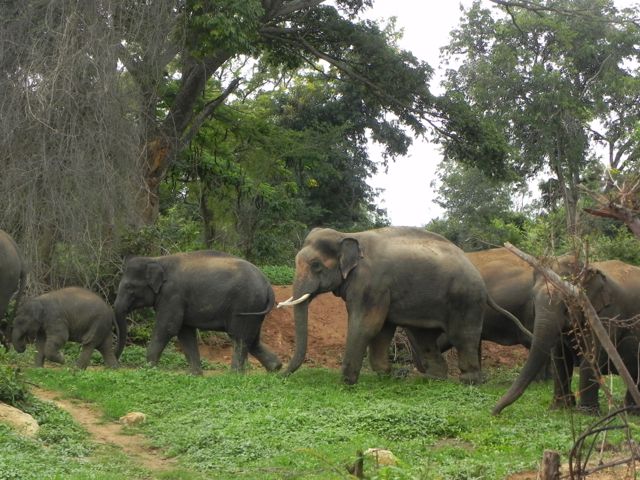
    Once through the gate, it was all butts, raised tails and trumpets of excitement as the entire herd stampeded off toward the National Park.

    The mahouts were all smiles as the elephants disappeared over the hill into the forest.

    I have never before observed a more powerfully moving sight. This herd of elephants–some wild caught decades ago, some rescued from temples, some captive born at BBP–and one wild boy who chose them for his new family.


  • Why Does That Elephant Have A Chain Around His Neck?

    Why Does That Elephant Have A Chain Around His Neck?

    For the past few years, most of my time and energy has been devoted to freeing captive held elephants from chains.

    Working alongside Nepali partners, we have created 37 chain free corrals, in 15 different elephant facilities. Before years end, we will add another five chain free corrals in two facilities in Thailand and a huge 100 acre habitat in India.

    Chain Free Means Pain Free has caught on.

    As more elephants are freed from leg chains, attention is shifting to the neck harness elephants wear during anti poaching patrol.

    In the case of elephants in Nepal, the neck harness serves one purpose. It enables a mahout  to stay seated if his elephant becomes frightened and runs.

    Some neck harnesses are made of rope. Others are a combination of rope and light weight chain. All are loose fitting and have loops for the mahouts’ feet. These loops lie flat along the side of the elephants’ neck, behind each ear.

    Remaining seated when an elephant spins around and runs away is virtually impossible, unless your feet are strapped in.

    In the case of Laxman Gaj and his twin brother Ram Gaj, a combination harness is used. The bottom half of the harness is chain. The half that goes over the top of their neck is rope.

    Laxman and Ram are young elephants, only six years old. Regardless of their youth, they are required to participate in daily anti poaching patrol activities in Chitwan National Park. Being young, they are easily frightened when surprised by a wild rhino or tiger.

    They wear the harness because when an elephant is frightened, he or she runs away. Spinning and then sprinting at speeds up to 30 miles per hour, can cause a rider to fall off.

    Having a harness adds a sense of security for the mahout who clearly knows that if he falls from his elephant, while in proximity of a wild rhino or tiger, he will be killed.

    When the elephant recovers from his or her fright, the patrol resumes.

    When an elephant learns s/he is able to escape a frightening situation, their self confidence builds. With each exposure to wildlife their fear level is further diminished. By the time they reach adulthood, the elephant has gained the experience necessary to fearlessly encounter wild tigers, rhinos and bears.

    Undoubtedly, some will insist that the harness is unnecessary as elephants should simply be returned to the wild. I have no problem with this argument. But, until such time as society evolves, some elephants are destined to remain in captivity.

    Constructed and used properly, a neck harness is harmless and provides measurable benefits. The mahouts’ personal safety is guarded, while a young elephant is allowed his natural response to fear, without being punishment.


  • Sunder the Elephant Embarks on New Life

    sunder__family_bannerghatta_zoo_india-1_med
    Sunder (left) with his new family

    Elephant welfare expert Carol Buckley says rescued elephant is in good hands at model facility.

    More than a month after his rescue from a life of horrific suffering, 15-year-old bull elephant Sunder is enjoying lush forests, cool ponds and the close companionship of 14 other elephants at the Bannerghatta Biological Park (BBP) outside Bangalore, India.

    Sunder’s tragic plight touched the hearts of people from all around the world and galvanized an international social media campaign that helped win his release and recovery.

    sunder_and_family_india_2_med“Sunder has a new life and a fresh start at a wonderful facility,” said Carol Buckley, an expert in innovative approaches to elephant welfare in captivity, who recently visited Sunder in India to design a chain-free facility at the park where he now lives.

    “Thanks to the courage of the Supreme Court of India, which ruled against Sunder’s longtime abusers, the willingness of BBP to accept Sunder for permanent residence and the tireless logistical and legal efforts of PETA India, Sunder’s future looks very bright.”

    Buckley, who founded and leads the US-based nonprofit Elephant Aid International, says BBP has all the desired components for captive elephants. Its 122 acres of diverse habitat include open pasture, shaded forests and ponds, where the elephants are free to roam and play during the day. At night, they are given access to the adjoining national park forest for foraging and exploration.

    The upcoming construction of a custom designed, solar powered, chain-free perimeter fence system to enclose the entire daytime habitat will give the elephants even more autonomy. The fence creates a safe containment area, eliminating the need for mahouts to dictate the elephants’ activities. It should be completed before the end of the year and will be the first constructed at any zoo in India.

    Buckley noted that unlike most elephant facilities throughout the world, BBP’s mahouts manage their captive elephants in a “herder style” manner that supports their physical, emotional and mental health. This style of management acknowledges elephants’ nature as highly social, herd animals, giving them freedom to wander at will while mahouts keep a watchful eye on their whereabouts.

    “Bannerghatta Biological Park, working in partnership with PETA India, offers the world an exemplary model for managing captive-held elephants and the best possible new home for Sunder,” said Buckley. “I’m so grateful for their efforts.”

  • Elephant Back Safaris: Misery for Elephants

    Elephant Back Safaris: Misery for Elephants

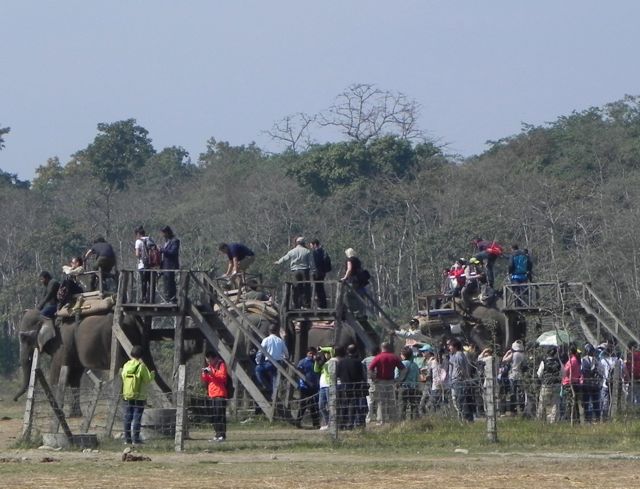
    boarding safari rides

    May 24, 2014, 8:30AM, Sauraha, Nepal.

    The temperature is already 32 degrees Celsius (about 90 degrees Fahrenheit).

    Tens of elephants are already hard at work.

    Each morning at dawn, seven days a week, elephants are saddled up in preparation for another day of carrying tourists on safaris.

    This is the routine the elephants will follow, year in and year out, until they die.

    First, they are forced to lower themselves onto their elbows to accept the saddle. This unnatural position causes pain and irreversible damage to their elbows.

    Next, a heavy canvas pad and ill-fitting howdah (saddle) are placed on their back. The pad and howdah are each so heavy, it takes two men to lift them, one at a time.

    Then, a howdah strap is cinched tightly around their chest, lacerating sensitive flesh in their armpits and cutting the tissue of their breasts.

    A second synthetic rope is tied from the back of the saddle under their tail, ripping deep gashes in the flesh around their anus.

    The life of the safari elephant

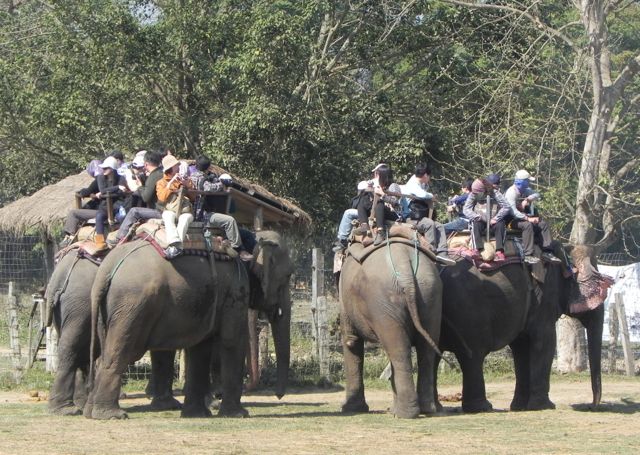
    3 eles carrying tourists

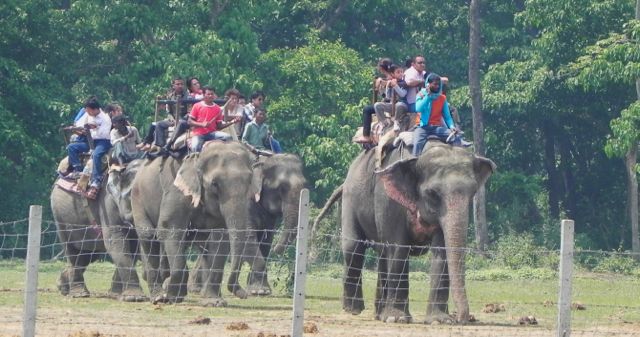
    Safari elephants spend the day carrying tourists — four to six at a time — through the jungle in sweltering heat.

    Elephants are poorly suited for this activity. The pad and howdah cause huge blisters that fester into deep abscesses that can take months to heal.

    According to a study published in the Journal of Experimental Biology, four hours of exercise in the sun causes overheating and can be fatal. Laboring in direct sunlight, carrying too much weight – pad, saddle and tourists — elephants quickly become overheated.

    What does it take to force an elephant to work under such conditions?

    Brutality.

    Mahouts hit the elephants over the head with heavy sticks, metal knives and axes. The wounds remain infected for weeks.

    Bright white scarring can be observed across the forehead of virtually every working elephant in Nepal. The abuse is systematic, accepted by elephant owners, locals and the tourists.

    The images haunt me.

    I can’t help but wonder: Is this the memory of Nepal tourists want to take home with them? And what will it take for them to see the abuse?


  • Five Elephants Freed!

    Five Elephants Freed!

    Two years ago, a young captive born elephant broke free from an ancient tradition.

    That was Prakriti Kali, the first elephant in Nepal to be released from chains.

    Six months later, five more elephants were released from a lifetime in chains.

    Mel Kali was the record holder in the herd, having lived in chains for nearly 70 years.

    Culture shift continues in Nepal

    On April 6th, at 4:30pm, Nepal made history again when all five resident elephants at the government’s Kasara hattisar went chain free!

    Six-year-olds Tamor Kali and Himal Gaj were the first to be given their freedom.

    They wasted no time, finding the best scratching trees and dusting bowl.

    Then, a few days later, after all six chain free corrals were completed, Prayan Kali, Laxmi Kali and Khosi Kali dropped the chains of tradition and went free as well.

    Transition 

    Watching the elephants shed their chains and adapt to the change so effortlessly is breathtaking.

    Young and old alike seem instinctively to know what is happening.

    In synchronized movement, they revel in a scratching and dusting ritual. Nearly becoming one with the trees, they exfoliate every inch of their robust body. Even the tender skin behind their ears and under their massive legs get the invigorating treatment.

    After the exfoliation is complete they follow up with a full-body dusting. In the most graceful slow motion, they fling trunkfuls of dirt under their bellies, on their backs and everywhere in between. This natural spa experience is essential for maintaining healthy skin.

    Chained elephants are denied this opportunity.

    Become an elephant

    For one minute become an elephant. Close your eyes and step inside their skin. Feel the frustration when denied access to trees for scratching and clean dirt for dusting. Now feel the sensation of scratching every tick bite and itch spot until completely satisfied.

    More good news to come

    The five elephants in Kasara hattisar are just the beginning. When our project is complete, 63 elephants will enter the ranks of the chain-free.

    A huge thank-you goes to Kamal Kunwar, chief conservation officer of Chitwan National Park, the hattisar staff and, of course, all who believe in and support this project.

    Five freed. Fifty-eight to go!

  • Change is Afoot

    Change is Afoot

    March 29

    The first two corrals at Kasara hattisar are finally ready.

    The air is charged with anticipation.

    Rescuing an elephant to sanctuary or releasing them from chains brings the same mix of emotions — anticipation, apprehension and excitement.

    Each elephant is a unique individual with a distinct personality. Life’s experiences mold their behavior, shaping them as they mature. Each of them responds differently to different situations.

    Himal Gaj
    Himal Gaj

    When I first arrived at the Kasara hattisar, I noticed that young Himal Gaj was resistant to his mahouts. He appeared fearful. An old scar at the base of his trunk indicated a past confrontation.

    Watching the mahouts struggle through the morning routine, preparing Himal Gaj for duty, was disconcerting. I wondered how he and the mahouts would respond to going chain-free.

    The mahouts were also concerned. They feared for their safety.

    As a result, it was decided that Himal Gaj would be released from his tether but would wear loose hobbles until the mahouts felt safe around him.

    It was disappointing that Himal Gaj would not immediately be completely free, but the compromise was the first step to his future freedom. If the mahouts fear for their safety, Himal Gaj would be destined for a life in chains.

    With time and Compassionate Elephant Care training I hoped Himal Gaj would settle down and become more responsive.

    The chains come off

    The elephants usually return from their anti-poaching patrol duties around 4pm. Chief Conservation Officer Kamal Kunwar postponed a scheduled meeting so he could be present for this auspicious occasion.

    Just before 4pm, the hattisar suba arrived. He’d been out of office for a couple of weeks.  He and Kamal discussed the plan in Nepali. I would soon see that following their brief conversation plans would change dramatically.

    The elephants arrived back from the forest. To my surprise and contrary to the plan, Himal Gaj was walked directly into his new chain-free corral. He was not put on loose hobbles. Calmly and confidently, his mahout gave the command to bite  (stretch out on his sternum).  Without hesitation or fear, Himal Gaj calmly responded.

    I realized that the mahout I’d seen with Himal Gaj the past week was now assisting, rather than riding.

    In that moment things became perfectly clear. The mahout to whom Himal Gaj was resistant to this past week was the junior mahout. And now that his main mahout was back from vacation, everything was fine.

    Himal Gaj waited patiently as his gear was removed. Then he rose and immediately began dusting, as his friend and senior mahout left the corral.

    What a difference a good relationship makes.

    Kamal Kunwar’s turn

    tamor-kali-female2
    Tamor Kali

    I did not have time to dwell on the glory of Himal Gaj’s transformation because Tamor Kali was about to enter her chain-free corral for the first time.

    Kamal Kunwar was sincerely excited, filming her first chain-free steps like a proud father.

    After seeing how well Himal Gaj responded to his mahout, everyone was engaged and relaxed. They gestured at both young elephants free-of-chains with huge smiles on their faces.

    Now was the time to stand back and savor the moment. The instant that life changed for two young elephants and their family of mahouts.

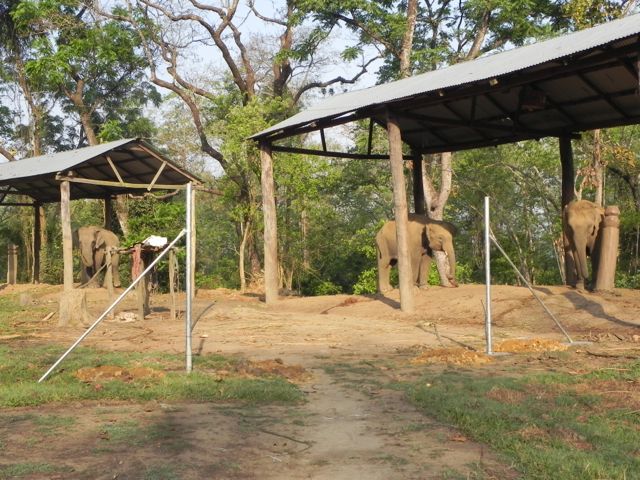
    The three other elephants stood chained under their shelter watching the scene.

    I whispered, “You’re next ladies.”

    It will be close to a week before the other corrals are completed. Without a doubt, Khosi Kali, Laxmi Kali and Prayna Kali, who have all been prisoners to chains for decades, will transition seamlessly.

    Imagine the joy when they are all chain-free. Heart bursting JOY!

  • Progress Report on Chain-Free Corral Project at Kasara Hattisar

    Progress Report on Chain-Free Corral Project at Kasara Hattisar

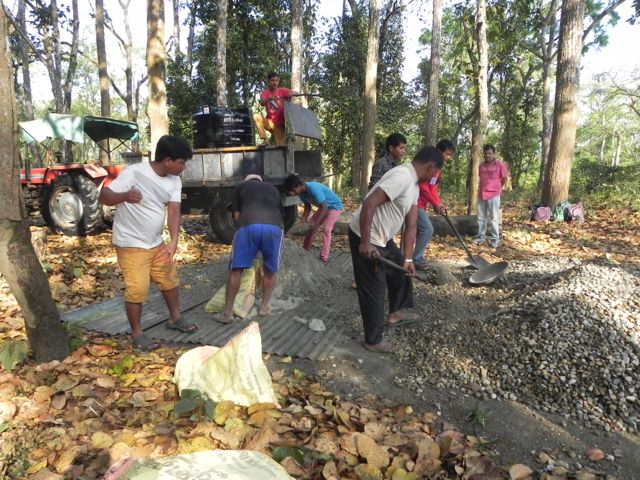
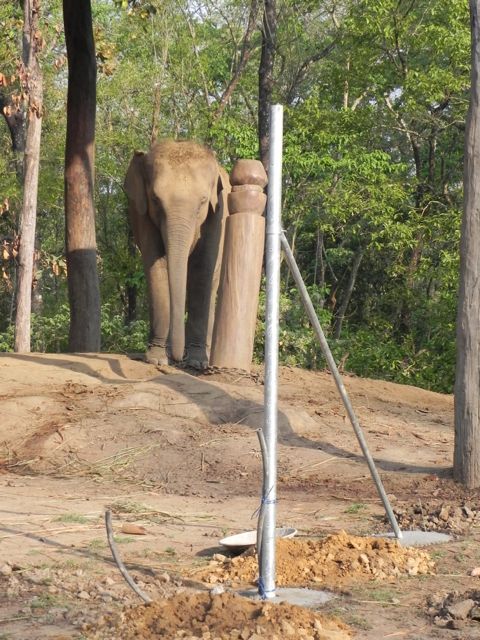
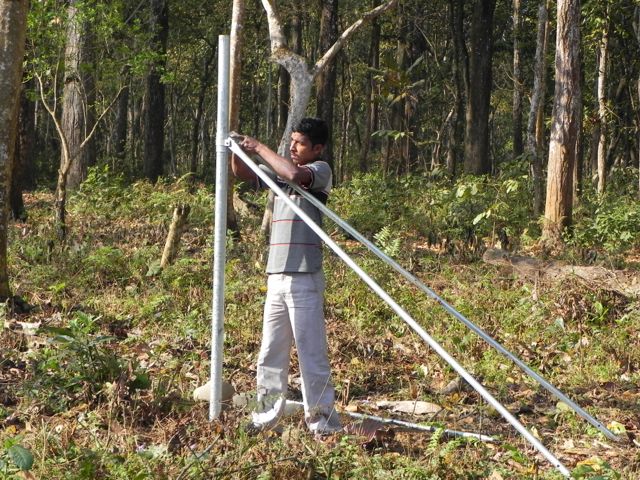
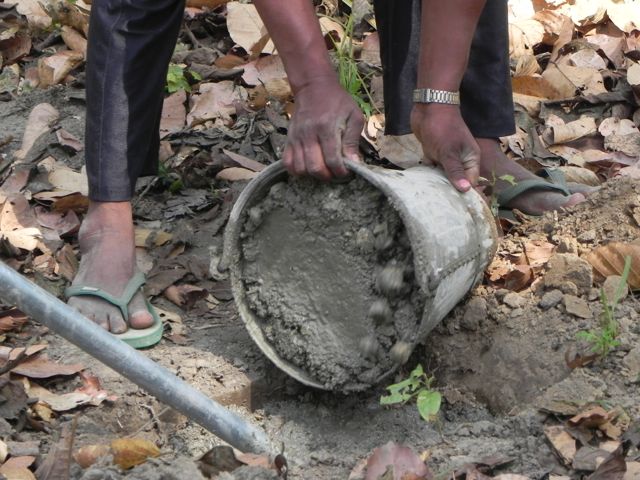
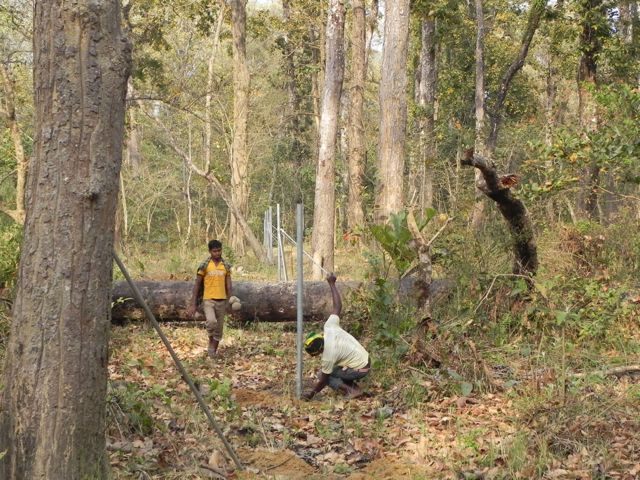
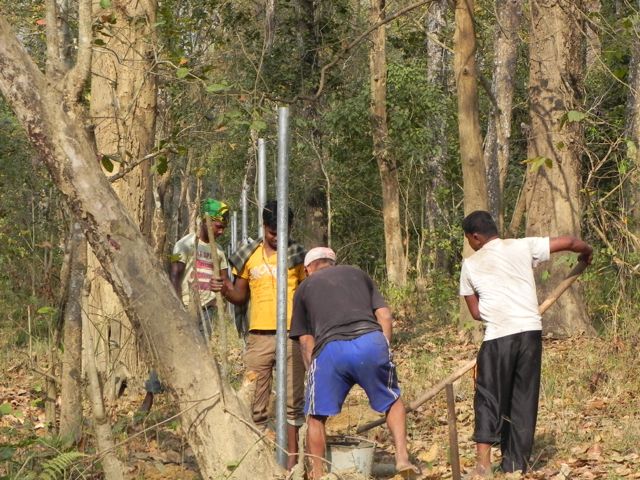
    The framework for all six chain-free corrals at the Kasara hattisar is in place.

    Support and brace posts are concreted. Gateposts mark the entrance to each new corral.

    Heart work

    Eyeing the progress of this project, my heart pounds. Here it comes, that joyfully intoxicating feeling cursing through my veins.

    My eyes transport the image to my heart. My heart responds, sending a warm glow through my body, filling my eyes with tears. My heart swells with the promise of a better life for these elephants.

    In this moment I stand in my personal space of pure peace. I caress it. Breathe it in deeply. I don’t attempt to own it, only experience it, knowing the feeling is a gift meant to be experienced not possessed.

    Some people meditate, others run, cycle or climb mountains to connect to that place within where they feel most themselves, most centered, most peaceful.

    This is the place of autonomy and personal freedom.
    Such activity can literally become an addiction, in the best sense of the word.

    Watching the chain-free corrals come to life before my eyes is my addiction. Knowing that my actions help reduce the suffering of captive-held elephants brings me great joy! It is heart work, soul fulfilling work. My meditation.
    At times the joy is overwhelming and I just have to cry. Seeing elephants gain even a semblance of autonomy moves me to do more. Knowing that we are able to help bring some peace and freedom to their lives drives me.

    I may never know any of these elephants personally. But that is not the point of my work. I am not here to expand my elephant family. I am here to better the lives of these elephants.

    They know we are helping them. That is good enough for me.
    Construction continues

    The next step is to string the wire between support posts and hand-build the topes (post protectors).

    Each corral is one full acre in size. It is equipped with six strands of wire equaling nearly one mile of wire per corral.

    Ditches will be dug to bury the wires that enable each corral to operate independently.

    Last, the steel box that contains and protects the energizer and batteries will be installed and wired to the solar panel that powers the system.

    A perfect vantage point

    From the open-air raised platform that I have claimed for my new office, I survey the work site. What a gift to witness this miracle unfolding right before my eyes.

    A humble thanks to Kamal Kunwar, Chitwan National Park chief conservation officer, the entire hattisar staff, our IBEX fence crew and all of you who have contributed to this worthwhile project.

    Together we are improving elephant welfare, showing due respect to these wise, kind and self-aware beings who grace our planet and our lives.


  • Elephant abuse in Nepal: Are the mahouts really to blame?

    Elephant abuse in Nepal: Are the mahouts really to blame?

    private owner NepalIt’s easy to look at an elephant shackled by both front feet to the ground, with open wounds, and blame the mahout.

    But I challenge you to learn the facts.

    Elephants belong to hotel owners

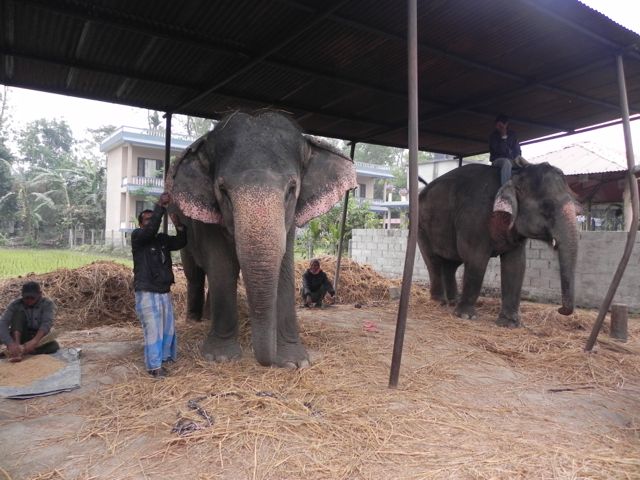
    In Chitwan, Nepal, mahouts do not own elephants. Elephants are the private property of hotel owners, who use them to augment their income by offering elephant back safaris to overnight guests and daytrippers coming to Chitwan in search of fun and adventure.

    tourist safariElephant back safaris not only provide a bountiful financial benefit for the owner, they are actually the life’s blood of Chitwan.

    In Sauraha, Chitwan’s tourist destination, every shopkeeper, restaurant owner, hotel, bar, service provider, wilderness guide, money changer, street vendor and orphanage owe their survival to these elephants. Many falsely claim that without elephant safaris, this tourist destination would cease to exist.

    Grueling work schedule

    All day long, 24/7, mahouts and elephants give safari rides in the community forest.

    private owner stableMahouts train, feed and ready the elephants for the rides. It is a grueling job for both.  Up at 4:30am, the pair sets out on the long trek to the safari loading area as the rising sun lights up the morning sky.

    During what is supposed to be a one-hour lunch and rest period, the elephants instead are taken to a riverfront area where tourists mount them to have their photo taken.

    Walking back and forth to the safari ride area, tourist bathing area and home stable, while carrying hundreds of pounds of tourists for hours at a time, takes its toll on elephant and mahout alike.

    At dusk, and even into the dark of night, elephants can be seen silhouetted against the sky trudging down the paved roads of Chitwan toward their home stable.

    Mahouts: Overworked, underpaid and devalued

    img_8199-2
    Elephant owners know nothing about elephants and rely on the mahouts to keep the elephants alive and working without killing tourists. This is a heavy burden to put on overworked, underpaid and devalued employees.

    When mahouts “ask for more,” be it food for themselves or the elephants, they are chastised. Many owners view the mahouts as stupid, uneducated and unmotivated and blame them for the elephant’s unsanitary living conditions and poor health.

    3 mahouts & ele

    Yet mahouts are not provided even the most basic supplies to ensure the health and wellbeing of the elephants in their care. Owners fail to supply nutritious food but blame the mahouts for the elephant’s poor health. Stables are rancid cesspools because no provision is made for waste disposal. Many stables don’t even have a source of fresh water. For this, the mahout is unjustly blamed.

    A marginalized community

    img_8462
    The truth is that the mahouts are a marginalized community. The custom of treating them as poorly as the elephants is woven into the fabric of society and their living conditions are a mirror image of those of the elephants.

    Mahouts learn their trade on the job, from senior mahouts. Their lot in life dictates they do as they are told without question. They hit the elephants because they are taught they must in order to ensure the elephant does not kill them.

    Still, this does not excuse how the mahouts mistreat the elephants.

    Abuse can be eliminated

    Through education and culture shifting, elephant abuse can be eliminated.

    Demonizing either owners or mahouts is not the solution.

    The first step is understanding why the situation exists and accepting the challenge to help move culture forward.

    Owners must be held responsible and mahouts and tourists must be educated.

    This will result in improved welfare for the elephants in Chitwan.

    How we can help

    carol-indicating-how-much-on-ele-foot-with-2-mahouts_medDeveloping sustainable assistance programs is essential. Live demonstrations, educational resources such as videos and manuals, translators and hands-on assistance are needed to improve mahout knowledge and understanding of new approaches to elephant care.
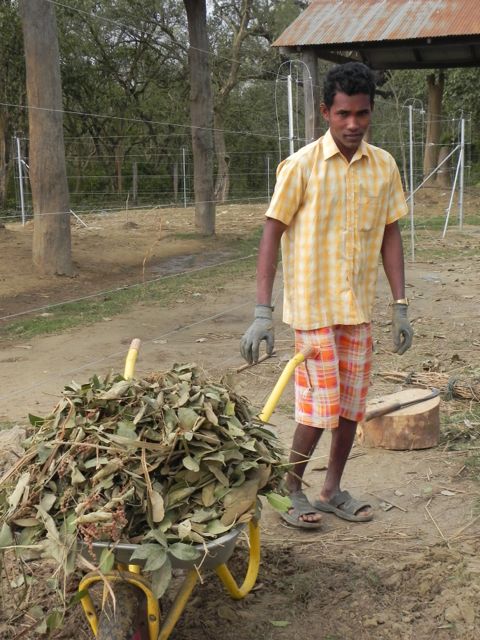
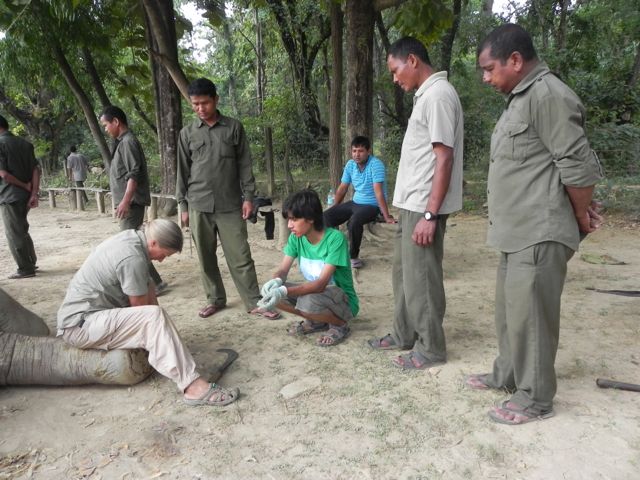
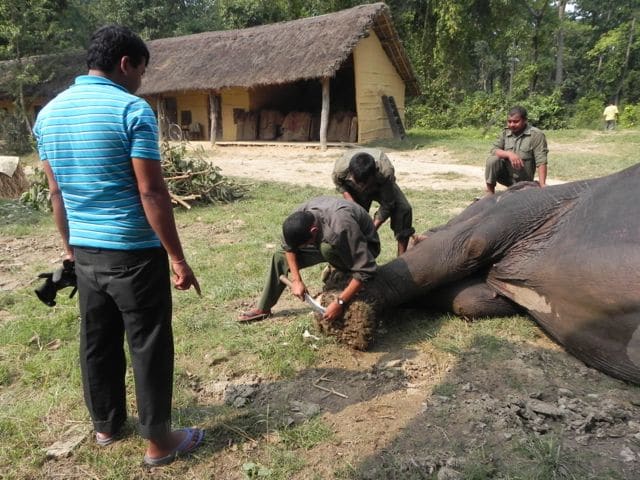
    This is Elephant Aid International’s mission. By providing bi-annual foot trimming; training mahouts and vet techs in the skill of foot trimming; teaching positive reinforcement training philosophy and techniques; and constructing chain-free corrals, we are laying the foundation for positive change.

    mahout & wheelbarrow
    EAI doesn’t blame the mahouts. We give them the tools necessary to take better care of their elephants.

  • Foot Trimming in Bardia, Nepal

    Foot Trimming in Bardia, Nepal

    I’m back from Bardia. What an adventure!

    It was a 10-hour drive through mountains on rough roads. The 19-year-old driver of our rental truck scared the daylights out of all of us with his speeding, passing trucks on blind curves and nearly missing oncoming vehicles. Oh man — it was a stressful ten hours!

    Carol et al in BardiaBut our foot trimming program was a grand success. We had a fabulous trimming team: Dr. Gairhe; Kiran the vet tech; Hira, Kirti Kali’s phanet (head mahout) from the NTNC hattisar; and I.

    Our students included Chantelle, our intern; Surajan, a new friend and translator; and the vet tech from Bardia.

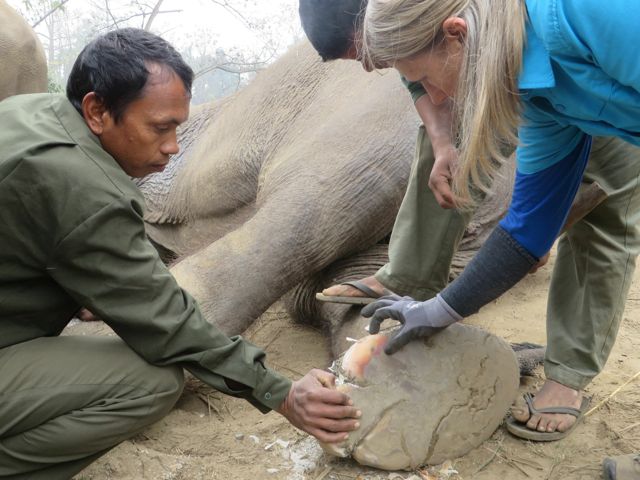
    foot trimming BardiaIn two short days we trimmed the feet of 24 government and privately owned elephants.

    Honestly, the condition of the privately owned elephant’s feet was criminal, similar to the privately owned elephants in Chitwan. Their pads were dry, cracked and severely overgrown. The nails were equally as dry and overgrown and many had splits and deep cracks.

    broken shelter
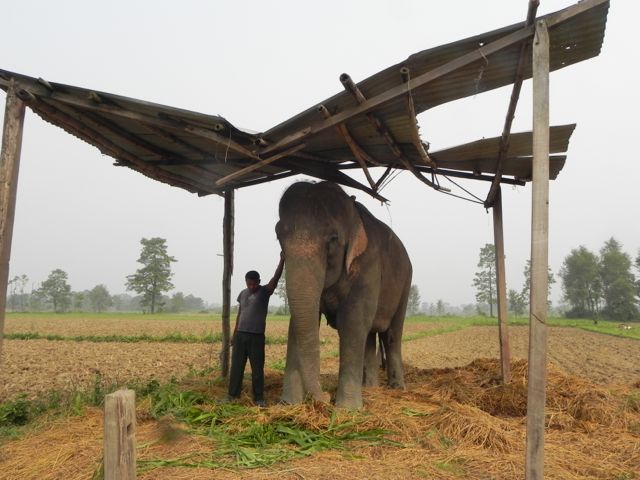
    Private owner, broken shelter

    I am always shocked to see how poorly the privately owned elephants are kept, especially since they are the breadwinners for their owners.

    The good news is that 24 more elephants received pedicures and their mahouts were introduced to foot care. With time things can change for these over-used, abused and neglected elephants…I hope.

    A huge thank-you goes out to the trimming team. Without their enthusiasm and hard work we could not have accomplished our goal to provide foot care for elephants in Bardia!

    You can make a difference in the life of a captive elephant by supporting our Foot Care project. Thanks for your help.


  • Report: Chain-Free Project, National Trust for Nature Conservation — Biodiversity Conservation Center

    Report: Chain-Free Project, National Trust for Nature Conservation — Biodiversity Conservation Center

    Chain-Free Hattisar Project
    National Trust for Nature Conservation – Biodiversity Conservation Center
    Chitwan, Nepal

    REPORT

    Project completed Jan 10, 2013

     Department of National Parks and Wildlife Conservation
    Jhamak Karki, Chief Warden-Chitwan National Park
    Dr. Kamal Gairhe, Senior Wildlife Veterinarian-Chitwan National Park

    National Trust for Nature Conservation
    Naresh Subedi, Senior Conservation Officer
    Chiranjibi Pd. Pokheral, Senior Conservation Officer-Biodiversity Conservation Center
    Babu Ram Lamichhane, Conservation Officer-Biodiversity Conservation Center
    Dr. Arjun Pandit, Staff Veterinarian- Biodiversity Conservation Center

    In collaboration with

    Elephant Aid international-USA
    Carol Buckley, Founder and CEO

    INTRODUCTION

    In January 2013, construction was completed on a solar-powered chain-free hattisar at the National Trust for Nature Conservation’s Biodiversity Conservation Center (NTNC-BCC).

    This first-of-its-kind pilot project was developed to study the benefits of working elephants in Nepal living chain-free.

    Six elephants, ranging from seven months to seventy-plus years, currently live in five interconnected chain-free corrals designed to improve their welfare.

    The elephants spend an average of fifteen hours in the hattisar each day. In the past they were hobbled by both front legs, chained under a shelter that prevented natural posturing and healthy physical activity.

    Now, living in the chain-free corral, each elephant is free to move at will and engage in natural behavior such as dusting, foraging, sleeping, bathing, walking, playing. In the case of Man Kali and her children, eight-year-old daughter Prakriti Kali and seven-month-old son Hem Gaj, this related family is able to engage in normal social behavior.

    Corral construction and operating system

    The corral’s operating system is a solar-powered energizer with a double battery back-up. Three hours of sunlight is required to keep the batteries charged for 10 days.

    Specifically designed for wildlife, the corral administers a mild shock upon contact. Due to the pulsating current, it is virtually harmless. Being highly sensitive to the clicking sound of the current, most elephants avoid the fence without ever coming into contact with it.

    The chain-free hattisar consists of five interconnected corrals on approximately two-and-one-half acres of open and wooded land.

    The corrals stand seven feet tall, constructed of rust-free steel posts and six strands of high tensile wire. Each post is encased in a protective tope.

    Each corral has a front, back and side gate for ease of access for cleaning, feeding, moving elephants in and out and providing socialization opportunities.

    The energizer and batteries are housed inside the mahout residence; two solar panels that charge the batteries are attached to the roof of the residence.

    Each corral is equipped with a cut-off switch enabling independent operation.

    This design has proven successful in many areas of Asia to prevent entry by wild bull elephants.

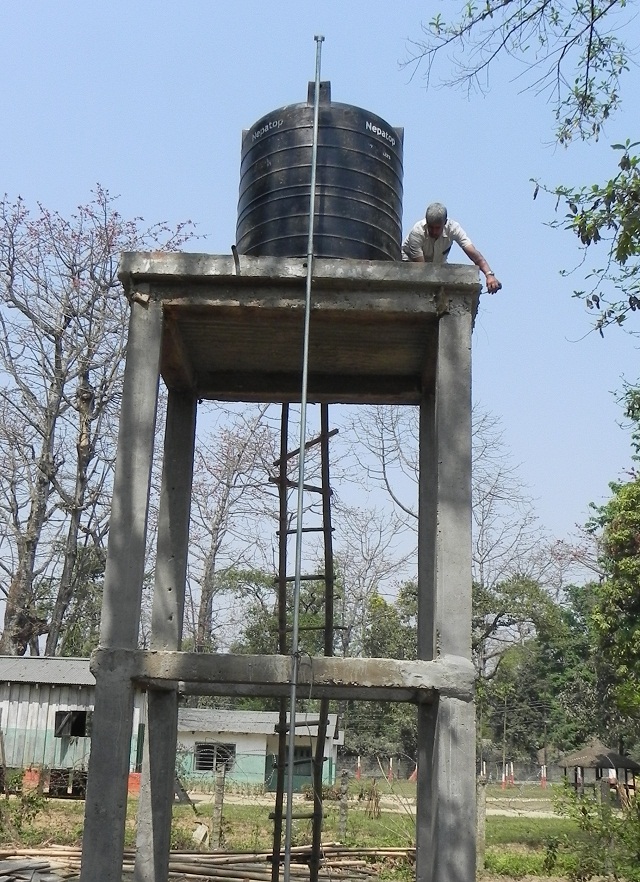
    Fresh water is stored in an elevated water tank and troughs are filled by gravity feed.

    water trough reduced 3
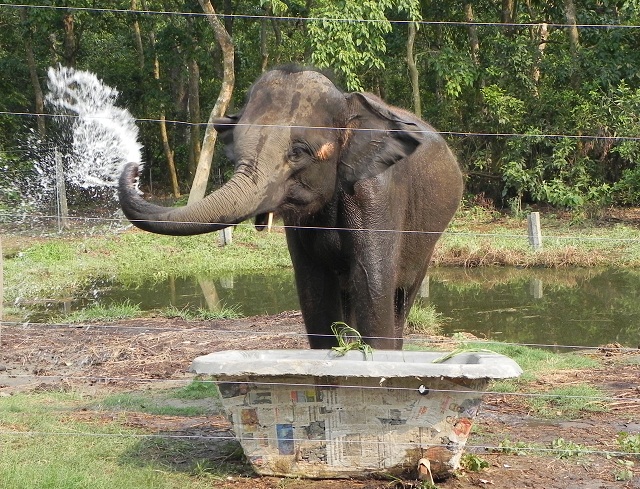
    All corrals have a custom-made concrete water trough that provides clean water.

    Healthy trees are an important component of the chain-free corrals, providing shade, browse and a natural scratching surface.

    To prevent serious damage to trees from elephant tusking activity, protectors were built around select trees.

    GOALS AND OBJECTIVES

    • Reduce or eliminate stereotypical behavior caused by chaining
    • Eliminate low-level long-term stress caused by chaining
    • Increase physical activity
    • Encourage engagement in natural species-specific behavior such as  foraging, dusting, bathing, walking, playing, socializing and exploring
    • Eliminate injuries and bone and joint damage
    • Improve foot health
    • Maintain elephants’ compliance with mahout authority

    METHODS

    • Ethogram
    • Husbandry protocol
    • Management protocol
    • Feeding protocol

    1.   ETHOGRAM

    In order to quantify the effectiveness of the chain-free corral, an ethogram spreadsheet was created to track a list of natural and stereotypical behaviors, including walking, eating, dusting, playing, exploring, drinking, socializing, sleeping and exhibiting stereotypic behaviors.

    2.     HUSBANDRY PROTOCOL

    Manure removal and corral cleanliness standards were established to ensure the highest level of hygiene.

    3.    MANAGEMENT PROTOCOL

    Training and management practices for inside the corral were established to give elephants a sense of freedom and security.

    4.    FEEDING PROTOCOL

    Changes to traditional feeding practices were established to promote activity and alleviate boredom.

    PROGRESS AND PRELIMINARY RESULTS

    Each elephant spends approximately 15 hours each day in the chain-free corrals. The remainder of their time is spent in Chitwan National Park engaged in grass collecting, anti-poaching patrols and conservation work and jungle safaris.

    Upon first introduction to the chain-free corrals, each elephant calmly explored the area, foraging, dusting and scratching on trees. Each evening they dig in the soft dirt of the forest, creating a comfortable sleeping spot; none return to the stable area to sleep.

    The related family of Man Kali, Prakriti Kali and Hem Gaj are housed together. They bonded immediately when united in the chain-free corral and continue to exhibit healthy elephant behavior, with Prakriti Kali assuming the role of big sister to Hem Gaj.

    A survey was conducted to track the behavior of the elephants toward the mahouts and drivers. Mahout compliance has not changed. Each elephant continues to respond favorably to mahouts and drivers—both inside and outside the corral—at the same high level as before being released from chains.

    Photographic records are being kept to track foot health and bone and joint conditions.

    Collectively, the elephants’ behavior represents a substantial improvement in natural activity and reduction in stress and stereotypical behavior.

    CONCLUSION

    The goal to eliminate stress from chaining and the resulting stereotypic behavior is realized. Adherence to the new feeding protocol ensures that both Prakriti Kali and Mel Kali do not engage in stereotypic, food anticipatory behavior. Since being introduced into the chain-free corral hattisar, all elephants engage in appropriate, beneficial, species-specific behavior; respond favorably to their mahouts; and appear to be calm and comfortable in their new environment, indications that the project is meeting its goals and objectives.

  • A precious soul lost

    A precious soul lost

    It’s been a pretty intense week. A two-year-old female calf at the breeding center was diagnosed with herpes. Even though she received treatment, she passed away two days later.

    Herpes is near-epidemic among elephants in the US and recently reared its ugly head in Chitwan. Young calves between the ages of one and three seem to be most susceptible but there are records of juveniles and adults dying from the disease as well.

    You’ll remember Bhadra, the fabulous flaming redhead we trained with positive reinforcement in Sauraha, Nepal. He died of the herpes virus last year, shortly before his second birthday. His mahout was so devastated that he left his job and returned to his home village.

    Famciclovir, the treatment of choice for herpes, is not available in Nepal and must be imported from India. A small elephant can require as many as 1000 pills to fight the virus. The exorbitant cost—75 cents per pill—and large quantity needed, made stockpiling the medication impossible.

    The calf was given available medication and was under treatment and constant surveillance as I arrange for a shipment of Famciclovir from friends at Wildlife SOS-India. Unfortunately, the drug did not arrive in time to save her. She died in the night with her mother stoically standing by. Records indicate that even with Famciclovir many calves do not survive.

    I accompanied the team for the necropsy and somber burial; both were done with the utmost respect. All the mahouts were present and, for the first time in my observation, near silent. As Dr. Gaihre led the exploratory necropsy, examining and collecting tissue samples for lab work, the mahouts dug a grave. It was a sad and sobering experience. This calf had the classic symptoms of herpes–severe hemorrhaging–but otherwise was a very healthy elephant.

    When it came time to lay her body to rest, I instinctively glanced around for wild flowers to place on her grave, just as we always did at the Sanctuary. After her precious body was covered with a sparkling clean white linen cloth, incense was lit and ceremonial red powder and flowers were sprinkled over her covered body. When the flowers I collected left my hand and floated down into her grave, a wave of gentle remembering engulfed my heart as I thought of the beloved elephants who had lived and died at the Sanctuary. At this moment we were all one, sharing the loss of a sacred soul.

    The senior wildlife staff presided over the burial. Although the words spoken over her grave were in Nepalese and foreign to my ear, I knew exactly what the prayers were. It was the same ceremony, the same prayers uttered each time we buried another precious elephant at the Sanctuary. Like never before, I felt a connection with the mahouts who care as deeply for their elephants as we do ours.

    Preparing for next time

    The signs of herpes include dark spots on the tongue. By checking the tongue twice a day, the disease can be diagnosed in the early stages. In an effort to monitor the other three young calves at the breeding center, I was asked to train them for tongue examinations, a request that I was happy to fulfill.

    checking tonguesThe first day of training was a heart-lifting success. We were able to get the calves to place their trunks on their foreheads—for a tasty piece of banana—and took photos of their tongues.

    Additionally, I ordered Famciclovir. Even though the drug may expire before it can be used, I feel strongly that having it on-hand whenever possible is important.  We were not able to help one precious elephant but if the disease strikes again we will be better prepared.

  • Back in Sauraha, Chitwan, Nepal

    Back in Sauraha, Chitwan, Nepal

    Working in Asia the past two years I have learned a tremendous amount about how culture and tradition affect collaborative conservation efforts. Among the most important lessons is the need to ensure project sustainability. No matter how groundbreaking or beneficial the project promises to be, it must be sustainable to be successful.

    Ways to sustain the project must be identified during the planning stage, otherwise the effort put into it will have been wasted. Sustainability determines success and people ensure sustainability.

    Before returning to Chitwan, I wondered if our chain-free yard pilot project for Sweetie Kali, aka Prakriti Kali, would prove to be sustainable. Although I prepared myself for less, I hoped the mahouts had truly embraced this welfare project. Success hinged on their acceptance of this approach to elephant care, which is nearly the polar opposite to their tradition.


    As I approached the elephant stables I saw Sweetie Kali foraging in her personal forest. The dense scrubs were a faint memory but the mature trees were standing tall, providing shade and enrichment, just as they had when we built the yard last May.


    I was pleased and honestly a bit relieved to see that the chain-free fence was in pristine condition. The staff, under the direction of Chiran Pokheral, the officer in charge, did a fabulous job of ensuring the success of our pilot project.

    It’s my nature to push headlong into the next project forgetting to take a moment to bask in the glow of a collaborative project well done. It is too easy to get swept away in the excitement of something new and forget to thank the people responsible for making everything happen.

    In addition to Paspat and the mahouts, who were completely receptive to the changes in their routine that a chain-free yard required, many other individuals, including Chiran Pokheral, Dr. Gairhe, Ram Kumar, Babu Ram, Nandu, Vishnu and Dibyendu and his crew, made this project possible. Without their support and assistance, this project would never have come to fruition, much less become sustainable.

    Special thanks goes to Chiran Pokheral who, after securing the required clearances, made sure I had access to plumbers, electricians and day laborers, and the cooperation of everyone needed to complete the project. Without Chiran we would still be dreaming about a chain-free yard instead of watching Prakriti Kali thrive in it.

    Dr. Gairhe, the senior government veterinarian, also played a key role in the project’s success. A true conservationist, Dr. Gairhe’s endorsement and oversight of the project provided the much-needed assurance at the government level.

    Now that I am back in Sauraha, it’s time to identify a location for the second chain-free yard. This yard will be for Man Kali and her three-and-a-half month old calf Hem Gaj. Once again we turn to Chiran Sir,  Dr. Gairhe and the NTNC staff  to lead us in our effort to improve elephant welfare in Nepal.