Author: Carol

  • continuing my work

    Since my return from Asia in July I have found myself deeply involved in elephant welfare activity here in the US. These past few months have been a whirlwind of activity, flying cross country, participating in Animal Control officer training, providing elephant expertise to city officials and inspecting the conditions of elephants traveling in the circus. This activity is a perfect fit for me, a continuation of the work I have done for the past fifteen years. The difference is that I am traveling much more and have an opportunity to help a greater number of elephants, in new ways.

    While at the Sanctuary I was aware of how sheltered I had become, one level removed from the daily suffering of the majority of elephants living in captivity. My effort to help and rescue elephants to sanctuary was made more bearable by my daily observation of the elephants who were living a sanctuary life.

    Now I am back on the frontlines again, immersed in the lives of elephants who are chained by two legs, provided water only at intervals determined by their overseers, forced to perform behaviors on command that in some cases cause great physical pain, as they are transported around the country in trailers and railroad cars for the majority of their lives. Denied autonomy, freedom of choice and their culture.

    With so much science to support an elephant’s need for space, compatible companionship and autonomy, it is difficult to comprehend how this modern day slavery continues. The image of elephants chained on asphalt parking lots, watered from 50-gallon plastic barrels, paraded down city streets trunk-to-tail, is a powerful testament to the degree in which elephants are an exploited commodity.

    I am grateful for the opportunity to apply my knowledge and experience to improving elephant welfare both here and in Asia. Only through continued education will government officials and the public come to understand just how detrimental traditional captive life is for elephants.

  • Our Dear Lottie Has Passed Away

    Our Dear Lottie Has Passed Away

    October 10

    Loyal, dependable, calm, an unconditional friend to all; Lottie was a loving sister and the matriarchal energy to all of the divas. She blessed everyone with her wisdom, always cooperative and engaged. Her patience with Minnie was magic. At times when Minnie would work herself into a pushing frenzy on fences or other elephants, Lottie would calm her down with a silent gentle trunk touch.

    When night time temperatures forced Lottie inside, she would rumble repeatedly until Minnie finally joined her in the warm barn. Minnie would  stay inside long enough to grab some food and swallow a few trunkfuls of water before dashing out of the rubber flap door. Racing down the hill to the moon-lit habitat, Minnie would plunge into the pond, dragging a log from the muddy bottom. Or dash across the pasture, kicking up clumps of grass with her toe nails like a golfer’s divots in the manicured lawns of a golf course.

    Lottie would remain inside benefiting from the “me” time, getting pets and dried cranberries, her favorite treat. Lottie would stand completely still except to gently guide my hand up to her tusk socket. She had very short, almost nonexistent tushes. She loved to get me to massage the inside of the tusk socket. Her eye lids would flutter and she would let out a low rumble. If the massage stopped, her eyes would pop open and again she would softly reach out for my hand and guide it back to the tusk socket. A kinder, gentler elephant you will never meet.

    Lottie’s estimated birth year was 1963. Since moving to the Sanctuary at 12pm CT, January 31, 2006, Lottie was the picture of sound health. She had healthy feet, a good appetite, and always remained at her optimum weight. She drank well, stayed physically active and was extremely calm. Mostly she was Minnie’s best friend. These two had a powerfully loving relationship.

    Although Lottie seldom engaged in physical play with Minnie, she was never far from her friend.

    They grazed, bathed and slept side by side. Sometimes in the early afternoon Minnie would wander away from Lottie as she slept. If Lottie woke and could not see Minnie the drama would unfold. Lottie would let out a loud squeak and then another, raising her head in an anxious posture looking around for Minnie, who would respond with a throaty bellow. When the two finally heard the other they would break into a run, full speed ahead, screaming at the top of their lungs. When they were finally reunited Minnie would spin circles around Lottie whose eyes would twinkle as she chirped and squealed in delight. Trunk touches all over, followed by powerful trumpets and then relaxed sighs, and the greeting was complete.

    Without hesitation they would resume their grazing as if no emotional display of affection had taken place. But if you were close by, you would feel the air permeated with love. Then they would wander off again on another adventure. They lived for each others company.

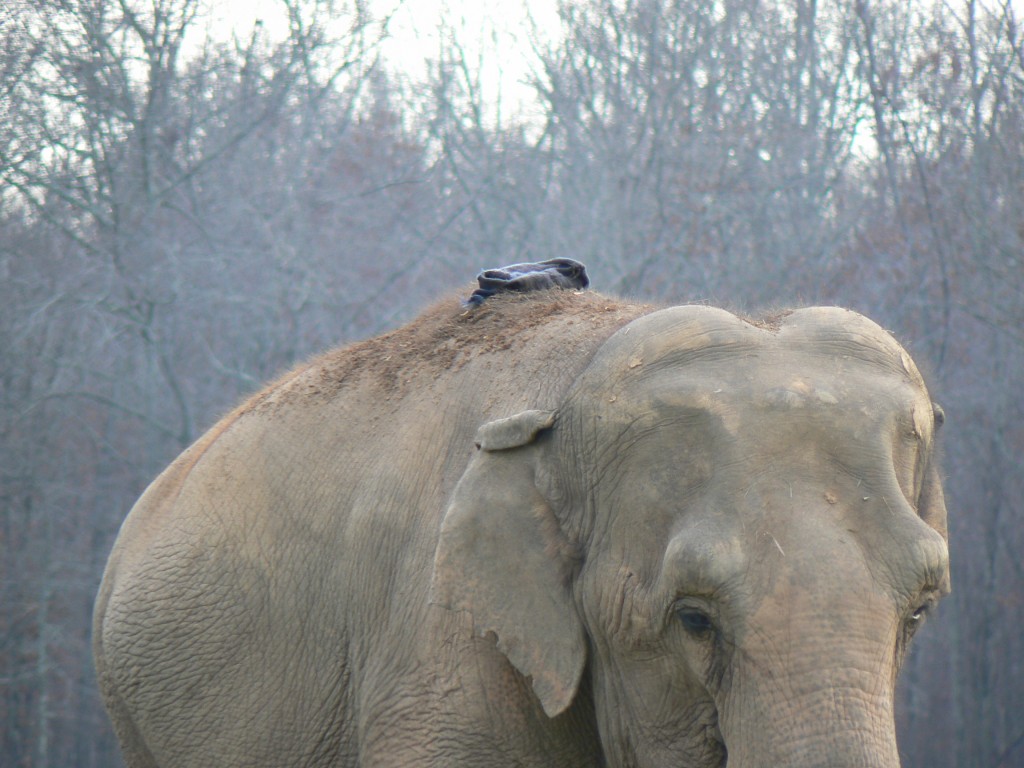
    Lottie had a silly side, reserved but silly. One time, when my winter hat had gone missing during a 10pm feed, Lottie was later seen sporting it fashionably on her back. It was hardly recognizable, a bit worse for wear but still an attractive accessory — at least Lottie thought so. It hardly resembled a hat at all as Lottie had chewed it, pulled it apart at the seams and ground it into the dirt before finally tossing it onto her back.

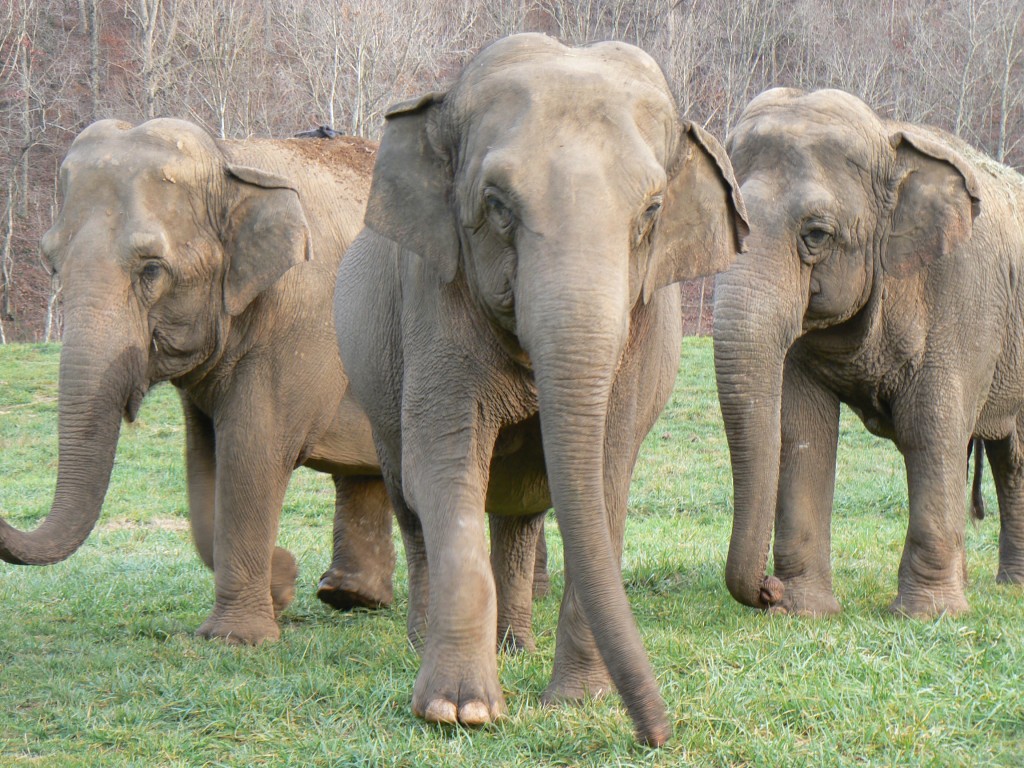
    Mostly Lottie will be remembered for her nurturing nature and deep affection for Queenie and Minnie.

    After Queenie passed away two years ago Lottie and Minnie grieved desperately. The two grew even closer and helped each other through their loss. Now Minnie has a heartbreaking challenge ahead of her. She and Lottie had been together for four decades: this separation will be difficult. Hopefully Minnie will be able to face her loss with an open heart and not put on the “tough guy” act that was her mode of operation in the past. If Minnie puts up a wall to the pain and acts as if she is not hurting, recovery will be that much more difficult for her. We have to trust that Minnie will be able to allow Debbie and Ronnie back into her life so they can help her through this difficult time.

  • Among Friends

    Among Friends

    Last November, Kix and Barbara Brooks graciously hosted a Sanctuary fundraiser at their home in Nashville. The guests were treated to a fabulous party with delicious food, fun and a live performance by Kix Brooks and friends.

    When it was time to auction off the exquisite art pieces and trips to places like Telluride and the Sanctuary, Kix stepped up to the auctioneer challenge, and what fun it was! Everyone was in stitches and the bids kept going higher.

    Kix got serious when the Sanctuary VIP tour was on the auction block. Obviously he planned to make this a big ticket auction item. The crowd broke into a roar when Kix offered up his tour bus to the “highest bidder” for the trip from Nashville to Hohenwald. But when he said he would be joining the group, the room broke out in yelps and whistles. Kix made it clear that this VIP tour would be like no other. Then he announced that I would be accompanying the group as well, to give them the entire story of the Sanctuary while in route. The auction was a huge success! Kix and Barbara outdid themselves, raising a significant amount of money for the Sanctuary. Their generosity and efforts were sincerely appreciated.

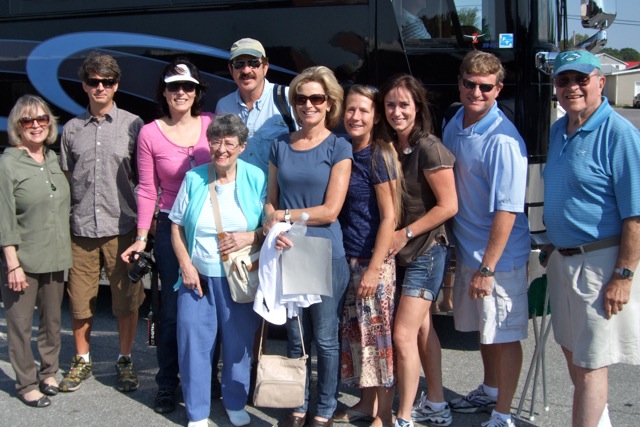
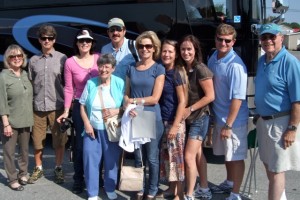
    Many months later Kix and Barbara and friends scheduled their VIP tour for September 22. I was invited to join them to share information about elephants, the story of my life with Tarra and the creation of the Sanctuary. Imagine having 90 minutes to share information about my obsession while cruising in Kix Brooke’s tour bus from Nashville to Hohenwald. We had a fabulous time!

    When we arrived at our destination at the city parking lot in Hohenwald, I wished everyone a memorable tour of my beloved Sanctuary.  Group photos were taken, thanks and goodbyes were exchanged, with hugs all around. There was electricity in the air. The group was anxious to tour the Sanctuary. The exchange of glances confirmed that they had already been touched by elephants, even before entering the sacred grounds.

    As I left I asked them for a favor. “If, during your tour, Tarra makes an appearance, and you’ll know her because she will have a feisty dog at her feet, please tell her I love her.” The smiles and knowing glances told me they planned to fulfill my request.

  • Flora’s Documentary

    October 1

    “One Lucky Elephant,” a documentary about Flora’s life, was included in the 2010 Woodstock Film Festival this week. The film highlights the tragedy that plagues elephants in the entertainment industry.

    Like so many elephants living in captivity, Flora lost everything when her family was culled in the wilds of Africa. She came to America as an orphaned infant and was immediately inducted into the circus. After years of performing, Flora began to show signs of emotional disconnection and aggression, which were later determined to be symptoms of Post Traumatic Stress Disorder. On her 21st birthday she retired to the Sanctuary.

    Many viewers of “One Lucky Elephant” are left in a quandary about David not being allowed to see Flora. Unfortunately, David’s reappearance in Flora’s life could trigger another PTSD episode. Putting Flora’s wellbeing first means that such a gamble should be avoided.

    This film demonstrates the lifelong effect trauma has on such a highly intelligent and exceedingly social animal.

  • India’s elephants

    September 29

    For years, colleagues in India have expressed frustration over the number of wild elephants killed by trains. This past week, seven elephants died when they were mowed down by a speeding cargo train. The herd was on the tracks trying to help a calf who was unable to cross. In true elephant fashion, the entire herd came to the calf’s rescue, losing their lives in the process.

    What makes this tragedy different, in addition to the number of elephants killed, is the response by the government. Vowing to make the necessary changes to prevent future calamity, the government is holding the railroad accountable. The train conductor responsible for the massacre has been cited, the railroad officials have been put on alert and the public has been assured that provisions will be made to protect against future loss of life.

    From my observation, India is on the fast track of improved elephant welfare in situ and captivity. In the past year, the government has banned elephants from zoos, and stopped the practice of temple elephants being forced to bless devotees. Regulations against street begging, which causes the serious injury and death of elephants hit by vehicles, are being strengthened. The owner or mahout of a street begging elephant is fined, as well as the person who pays to feed the elephant. The Elephant Task Force recommended elephant care centers (life-time sanctuaries) as an alternative for elephants living in captivity. And finally, earlier this month, India recognized their elephants with the well-deserved official status of National Heritage Animal, giving them the same protection as tigers.

  • blessings abound

    Waking up with a sense of gratefulness is a gift, one that we create for ourselves. Recognizing the power we have over our mood and life experience is empowering. Things don’t happen to us, they happen and we react. How we react is dictated by many things deep and personal, but make no mistake, we have the ability to turn lemons into lemonade!

    This morning a tiny rust-red squirrel scampered along the wood railing of my bedroom balcony. She froze for a few seconds as these delightful creatures do, perfectly framed by the window that instantly transformed her into a quaint picture. Expertly balancing on two legs, she nibbled an acorn held in her delicate front paws. I know this squirrel, or would like to believe I do.

    Earlier this year, while playing fetch with Java, I noticed movement through the small circular opening in a bluebird box that hung from a front yard sycamore tree. At first I thought the box must be infested with ants or some kind of wasp because the bluebirds had successfully raised two clutches of chicks this season. On closer examination, I saw fresh nesting material moving around seemingly unassisted and realized that whatever was in there was big. When I spoke, all movement ceased. I decided to move away and inspect later.

    Java dashed after the ball, hopping like a rabbit, totally enthralled with the game until spent. Some time had passed and the box appeared quiet. Peering inside the hole I saw no movement. Fully expecting that whatever was inside before had vacated, I spoke quietly and gently tapped on the side of the box. Nothing, not a sound nor a movement; the nesting material was motionless. Slipping the locking mechanism free, I slowly tilted the front wall of the box down, opening it just a few inches. This was enough to get a glimpse of what was inside. Filling the entire inside of the box was fresh brown grasses woven into a nest of sorts, but it was not a bird nest. Even with the door slightly open the nest maintained its shape. Through the small opening in the nest wall, I could see a tiny “thing”. I thought it was dead but looking closer I saw it move slightly. In the center of the nest lay a sleeping mammal; tiny, naked, bigger than a mouse, but unidentifiable without closer investigation. Realizing that the creature in the nest was indeed alive I quickly closed the box and secured the latch.

    My imagination raced, flashing images of exotic never-before discovered cave dwelling creatures. My discovery brought me joy. It was sweet and magical, an unexpected pleasure.

    I monitored the bird box for days, announcing myself with soft words and gentle tapping on the door. When I could see no activity, I would carefully lower the front door of the box enough to peer inside. Each day brought the glorious knowing that the baby inside was thriving, growing bigger by the minute. Her size seemed to triple each time I saw her. After a short time she had grown temendously and was soon covered with reddish brown fur. Then, finally I caught a glimpse of her elusive mother. I never saw her entering or leaving the box; that she did in complete secrecy. But one day I saw her scampering away from the box, through the tree branches close to her nest. I was tickled to discover that mom is my long-time neighbor, a red squirrel that I have admired since my arrival.

    I monitored baby for three weeks. The day before she left her nest, she greeted me when I approached, peering out, big-eyed and curious. For what seemed like an eternity our eyes locked.  Fearlessly she looked me straight in the eye, so inquisitive, so calm. I felt the soft fabric of a white cloud-blessing engulf me. Namaste, I said. The next day the box was empty.

    Now each morning I am audience to the hurried activities of two beautiful red squirrels, darting to and fro. Leaping gracefully from oak to sycamore; disappearing around the back side of the tree when I am too close. My neighbors are extremely busy this time of year and I am ever grateful for their activities.

  • full circle

    full circle

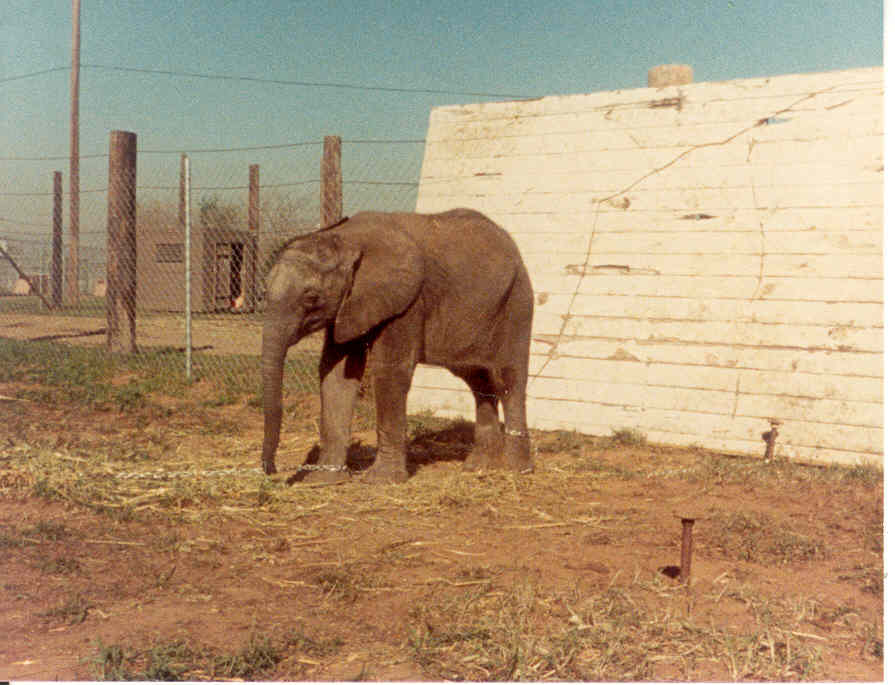
    When Tarra was twelve we participated in an elephant training course offered by Smokey Jones and Gary Johnson. Gary had purchased two wild caught baby elephants from Africa. For a fee, keepers were invited to attend the course to learn how to train an elephant.

    When we arrived Tarra joined Gary’s elephants. A short distance away stood a tiny African calf, chained and alone.

    Tarra and I stayed for a week. During this time the baby elephant was trained several times a day. She was kept separate from the other elephants. Tarra never had an opportunity to meet her close up and personal. But I did. I still remember thinking how tiny her trunk was and how she hardly uttered a sound the entire time I was there.

    When her training was completed she was loaded up into a trailer to begin her life as a performing elephant. She was the namesake of a newly formed circus.

    Nearly twenty years later our lives came full circle when Flora arrived at the Sanctuary. Without question she had grown into one of the most magnificent elephants I had ever seen. As she gracefully stepped from the trailer onto sanctuary grounds, I flashed back to the first day we met and thought…another miracle.

  • our souls move in close related circles

    our souls move in close related circles

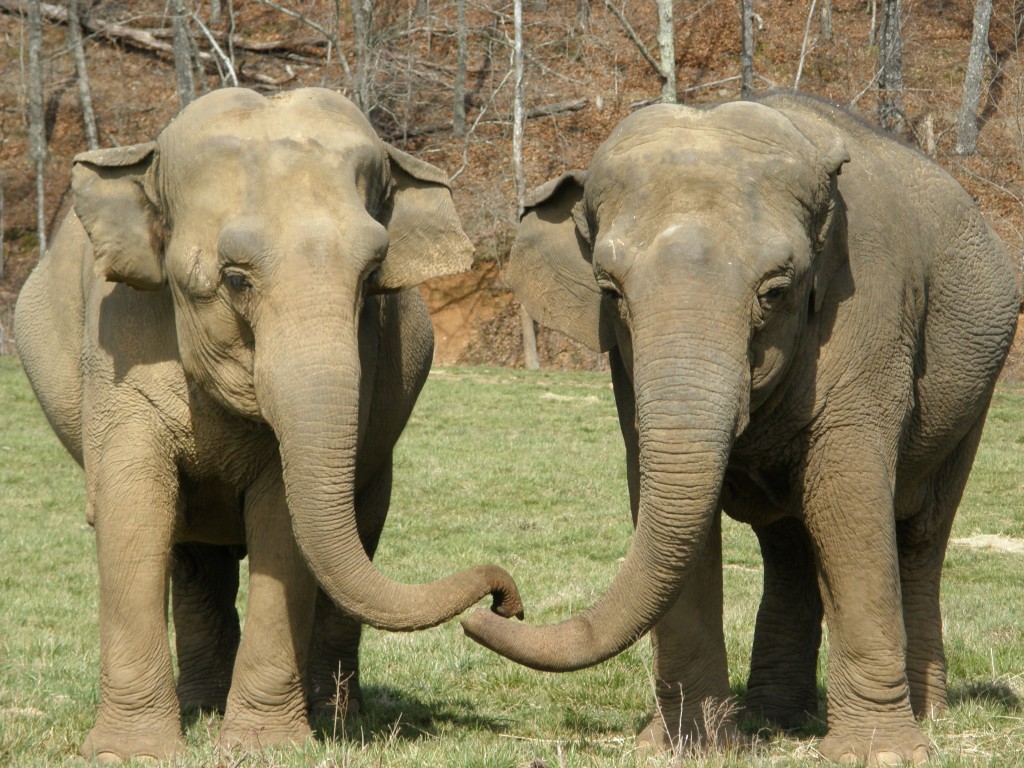
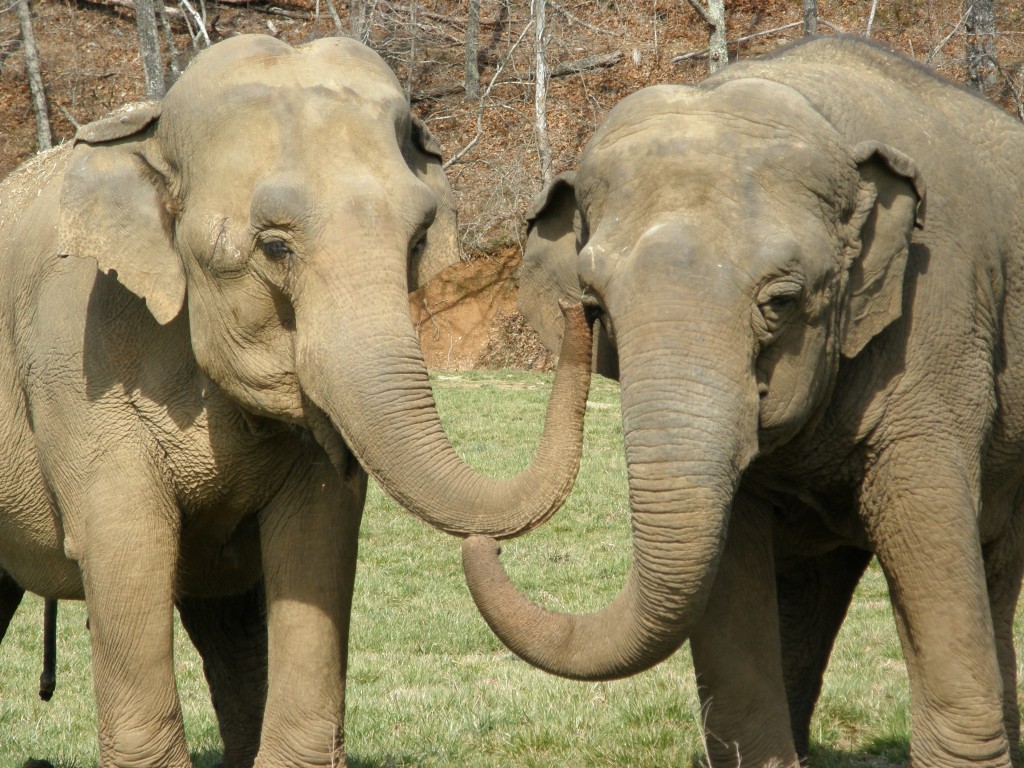
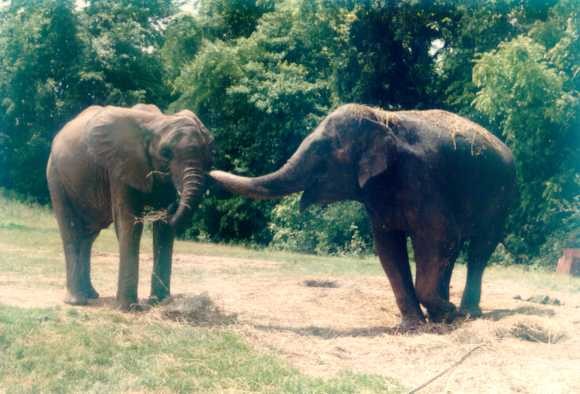
    I have a strong belief that our souls move in life circles, reuniting with the same souls over and over again. This relatedness means that we are closer than we know to those we spend any length of time with. Look at the photo I found while going through old files.

    This is a young Dondi on the right and our dear Flora on the left. The photo was taken one winter when Flora boarded with Dondi over a winter at Dondi’s home in Arkansas.

  • Dondi

    Everyone knows how painful it is to experience the loss of a loved one, especially one we raised, nurtured and protected.

    Last month Phil and Francine Schacht faced a terrible loss. Dondi, the elephant they raised from infancy, died of tuberculosis. When I heard the news, my heart went out to Phil and Francine. I thought of Tarra because the two were the same age. And I immediately flashed back to the time that Tarra and I met Dondi in Arkansas.

    Tarra and I were driving cross-country from Quebec, Canada, to our home in Ojai, California. It was the end of a long circus season and we were anxious to get home. As was our practice, late in the evening we found a rural campground to spend the night.

    These campgrounds were perfect because at this time of year they were empty of other travelers and usually backed up to a wildness area, a perfect playground for Tarra and her dogs.  Campground services seemed to be tailor made for a traveling elephant: a private parking space with a personal dumpster and water faucet plus bathroom, shower and phone for her caregivers.

    On this mid-fall evening driving through Arkansas, I spied a campground sign and followed the dark country road to the entrance. In front of me lay a vast pasture with a large wooden barn nestled way in the back of the property. The place was completely empty. I pulled Tarra’s rig into the prime space off the main road, adjacent to a large pond, between a few midsize shade trees.

    As usual, Tarra was excited to exit her trailer. With Ace and Tasha, our constant canine companions, Tarra and I took off towards the woods. It was always part of the fun to remind Tarra to contain her excitement until we were under the cover of the woods. Her squeals and boisterous trumpets had been known to cause alarm in areas unaccustomed to pachyderm visitors. Allowing Tarra the freedom to play with full abandon is what enabled us to deal with circus life. In the woods Tarra no longer had to curb her vocalizations. Admittedly a few trumpets and series of dog-like barks echoed from deep in the woods. That night she played until spent, which took close to 45 minutes and left many young trees wondering what had just blown through.

    In the morning, Tarra wasted no time plunging into her personal pond for her morning bath. The amenities at this campground were excellent. When I saw a man approaching I assumed he was the campground owner. So I braced myself for the reprimand I was about to receive. Boy — was I ever surprised. With a firm grip, the stocky man shook my hand and introduced himself as Phil Schacht, “owner of Dondi the elephant”.

    Dondi, an Asian elephant of Tarra’s age, emerged from the wooden barn at the far end of the campground. Who would have guessed that our travels would bring us to her doorstep? Phil and his wife Francine ran the campground and lived there with Dondi when not on the road traveling with the circus.

    What transpired a few minutes later forged an unforgettable bond between elephant guardians and newly acquainted elephants. We invited both elephants to “go see” the other. Like the slow motion commercial where two lovers gracefully run across an open filed into each other’s arms, Tarra and Dondi sprinted several hundred yards towards each other. They had never met before but they did not hesitate for a moment to engage in full-on pachyderm play.

    As their guardians stood by, beaming with pride at their foster children, these two adolescent elephants played like litter mates. Perfectly matched, they had no fear of each other, nor desire to dominate or be submissive. They rubbed their big bodies up against the other, wiggled and gently pushed, entwined trunks, rolled around on the ground together like pigs in mud, squeaked, squealed and trumpeted in delight. Dondi would freeze and then race over to Phil, vocalizing madly. Tarra would imitate, hovering her trunk centimeters from my nose, barking incessantly. Dondi lovingly slobbered all over Phil with her trunk and tongue and quickly dashed back to Tarra. They were a whirlwind of pure joy. These two played and played and played, until finally their energy was spent and they decided that grazing was the next activity of the day.

    This experience will be forever etched in my heart. Tarra and Dondi never met again, something I had always hoped for. But perhaps such magic is not repeated. Dondi will be sincerely missed.

  • connected is a feeling

    connected is a feeling

    Tarra continues to be my inspiration and mentor. We don’t have to be together to influence each other’s lives. I know that Tarra is fine because I know how Tarra looks at life. She obviously believes that dogs are meant to be an elephant’s best friend. Her eating habits suggest that she thinks a few extra pounds look fabulous on the right pachyderm lady. Tarra’s playful antics clearly indicate her preference for the lighter side of life. And without a doubt, Tarra’s love of adventures proves that she knows how to keep herself and Bella entertained. Clearly Tarra knows that I find her to be the most inspirational being on this planet. That works for her because she loves feeling special.

    Tarra is strong and wise, with the open heart of a child with angel eyes.

  • Elephant Nature Foundation Surin Project

    Elephant Nature Foundation Surin Project

    While in Thailand, I spent one week with Alex Godfrey and a passionate group of volunteers, participating in the Elephant Nature Foundation Surin Project.  The project is grand, with much planning, dreaming, and manifesting ahead. Such a project requires a special person at the helm. The Elephant Nature Foundation has found that person in Alex Godfrey.

    A world traveler, Alex exudes competence beyond his twenty-something years. His youth serves him well as he has not been soured by disappointments; he sees no mountain too high to climb. I am confident that this talented young man will continue to have a profound impact on the welfare of captive elephants. The success of his Surin Project will undoubtedly be a model for captive elephant facilities of the future.

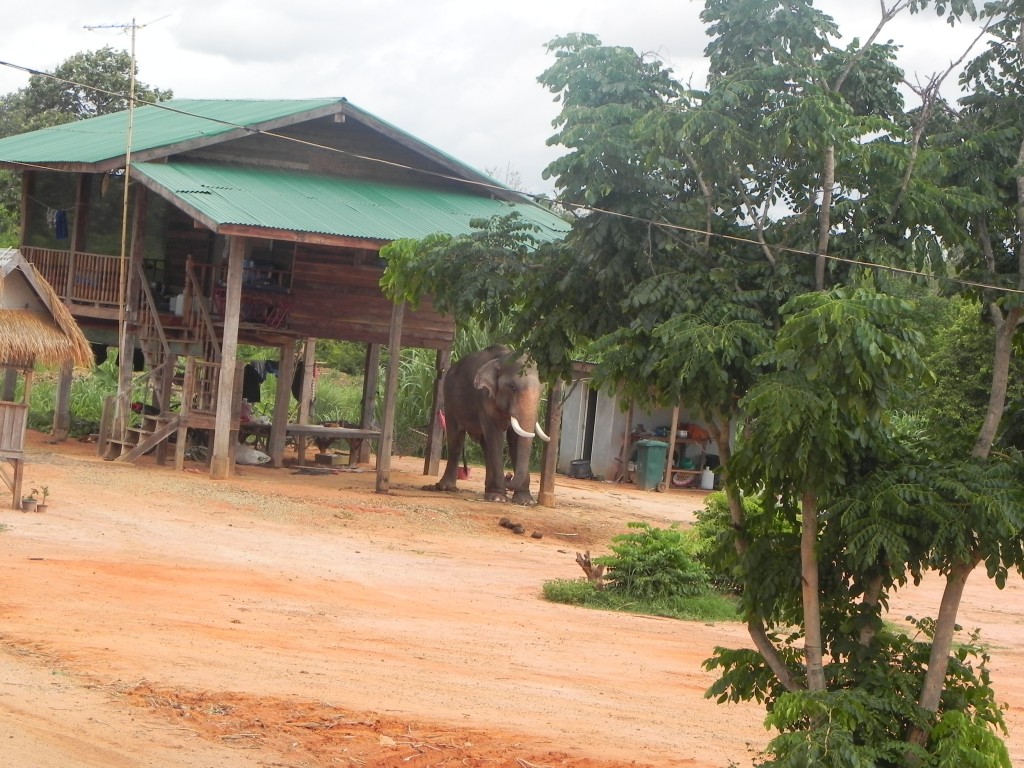
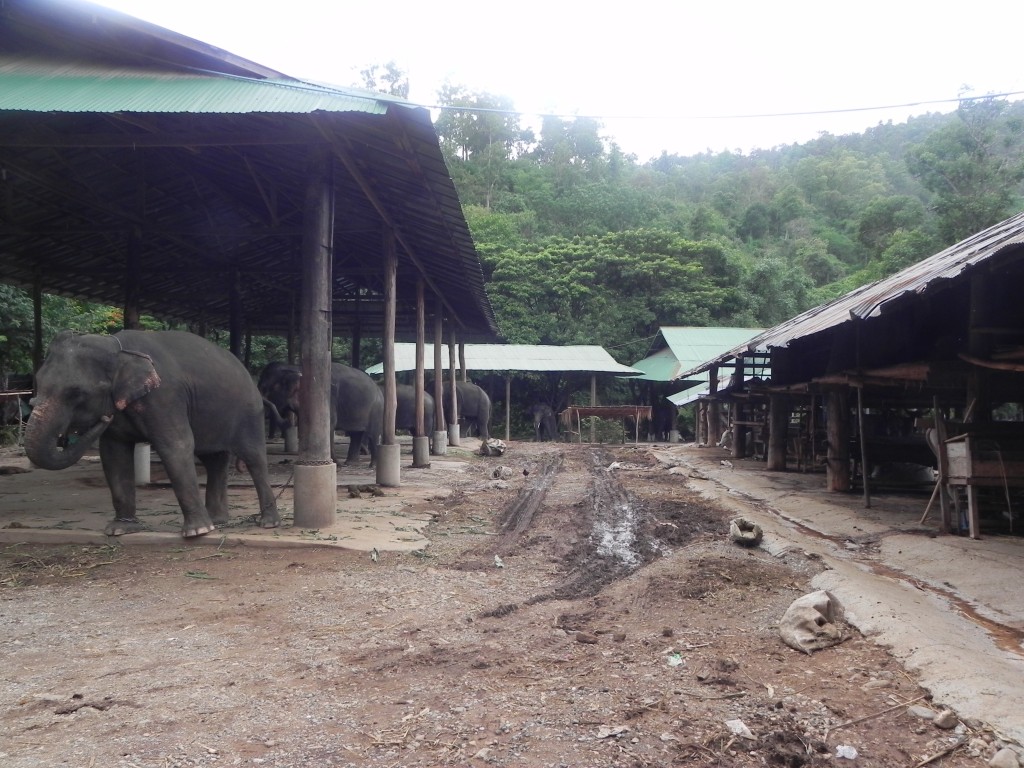
    In its infancy, the ENF Surin Project is providing an alternative lifestyle for 7 elephants and their mahouts living in a government-run elephant “camp.” The project operates inside the physical boundary of the greater government program, the Surin Project, designed to remove begging elephants and their mahouts from the streets of big cities in Thailand.

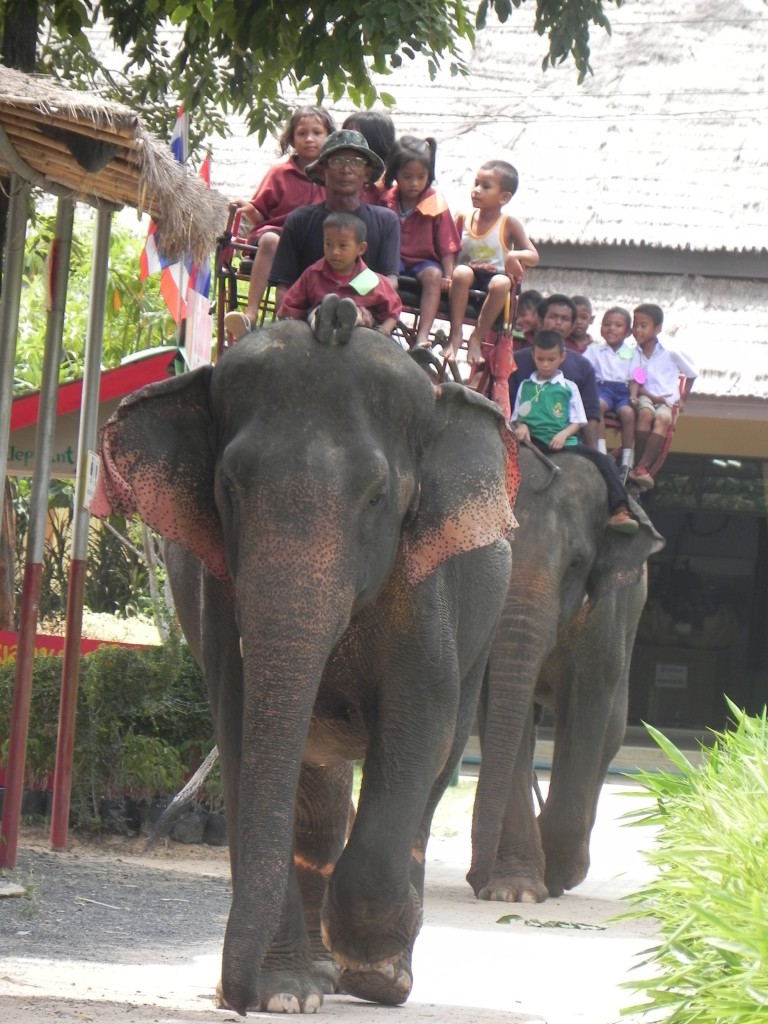
    As part of the government-run program, each elephant owner is given a small spot of land for his elephant. The government pays each owner a monthly stipend to keep his elephant at the camp during the day, instead of begging on city streets. Additionally, the government has created a show arena at the camp, where elephants perform for the public twice daily. There is nothing unique about the shows — tricks, elephants painting, and elephant rides — the standard fare. Elephants who perform in the shows receive additional funding, another incentive to remain in the camp.
    In an effort to gain her support, the government invited Lek, founder of the Elephant Nature Park (ENP) north of Chiang Mai, to participate. But although the ENF project operates within the government program, it could not be more different.

    The ENF Surin Project aims to shift the paradigm, creating an elephant friendly program that will benefit elephants, country, and elephant enthusiasts. It is well on its way to accomplishing its goal. With ingenuity and sheer determination, the ENF Surin Project demonstrates a healthy alternative to the exploitive practices so prevalent worldwide.

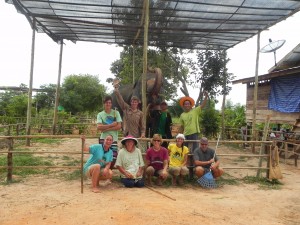
    The project centers on several elephants and their human families. Provisions are provided for elephants and humans; the program is, by design, meant to be self sustaining. Funds and labor provided by volunteers are the backbone of the project. Volunteers from all over the world pay to spend a week immersed in camp culture. In personalized home-stay fashion, volunteers stay in a private room of an elephant’s family home. Bathrooms are modern and the accommodations are clean. Volunteers are invited to participate in the family’s daily routine, which includes care of their elephant(s).
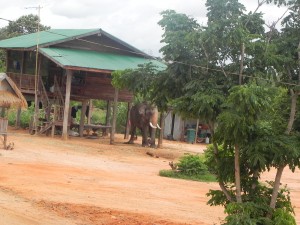
    The concept is perfect. The volunteer immediately becomes part of the family with an opportunity to learn firsthand the trials, tribulations and joys of Thai living and captive elephant care.

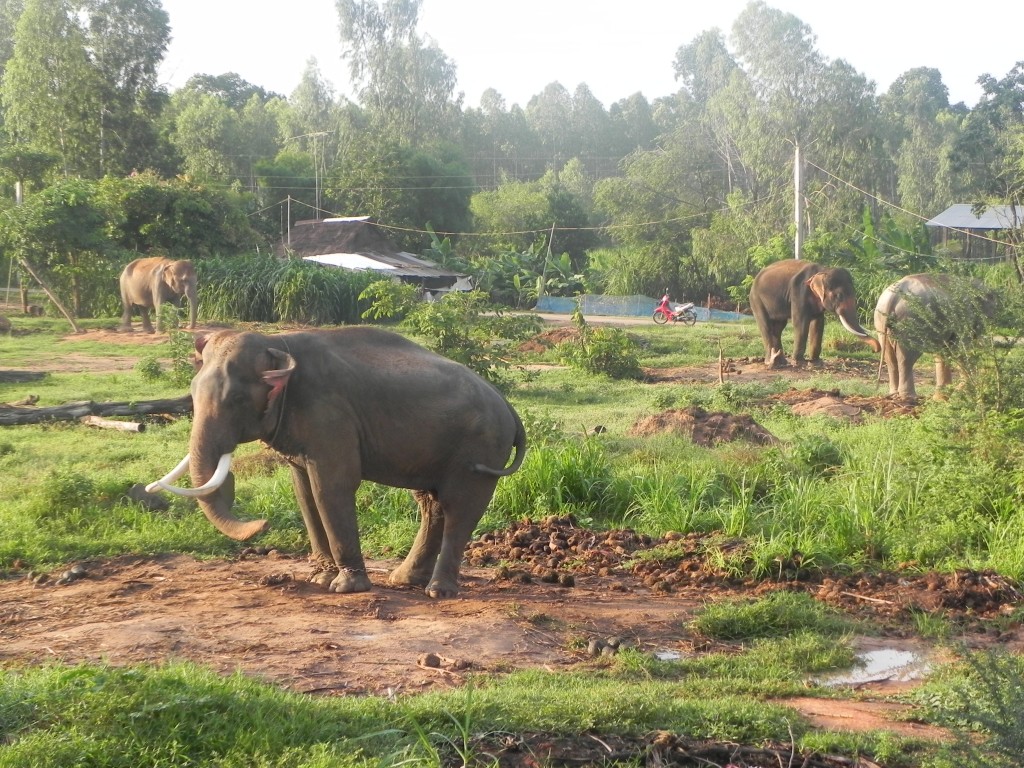
    This program is focused on putting elephant welfare first. The elephants benefit greatly because they are not forced to undergo intensive and continued training in order to give tourists rides and perform in shows. Instead, they are taken out into the fields and wooded areas during the day. While volunteers engage in soil preparation and planting elephant food crops such as “elephant” grass, bamboo and trees, the elephants are chain-free, allowed to engage in species-specific activity.

    Eating dominates an elephant’s life. Elephants spend nearly every waking hour — 20 hours each day — searching for, selecting, collecting, and consuming vegetation. It was awe-inspiring to watch these elephants forage for food while we prepared land and crops for their future.

    In a culture in which bathing is a ritual, it is not surprising that elephant bathing is customary. Nothing is more rewarding than to sit on the bank of a river or pond when a family of feisty elephants takes the plunge. Age is not a limiting factor when it comes to playing — water brings out the kid in all elephants. They roll and tumble together, calves clamoring over others, splashing with their trunk and feet, flopping onto their sides in glee, causing a wave that swamps others.

    The elephants participating in the ENF project are the lucky ones. Others in the camp — close to 200 — stand chained by one leg, many out in the direct sunlight, swaying back and forth in an effort to escape mentally from their reality.
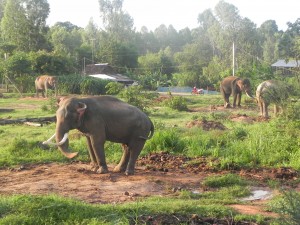
    Knowing that the ENF has an opportunity to change the situation for other elephants is what drives Alex and the volunteers to do more. Continuing to develop this already stellar program is essential.

    We owe the Elephant Nature Foundation, Alex Godfrey, ENP and all the volunteers involved a huge thank-you for their dedication. My sincerest hope is for the continued success and expansion of the ENF Surin Project.
  • BLES has rescued again!

    BLES has rescued again!

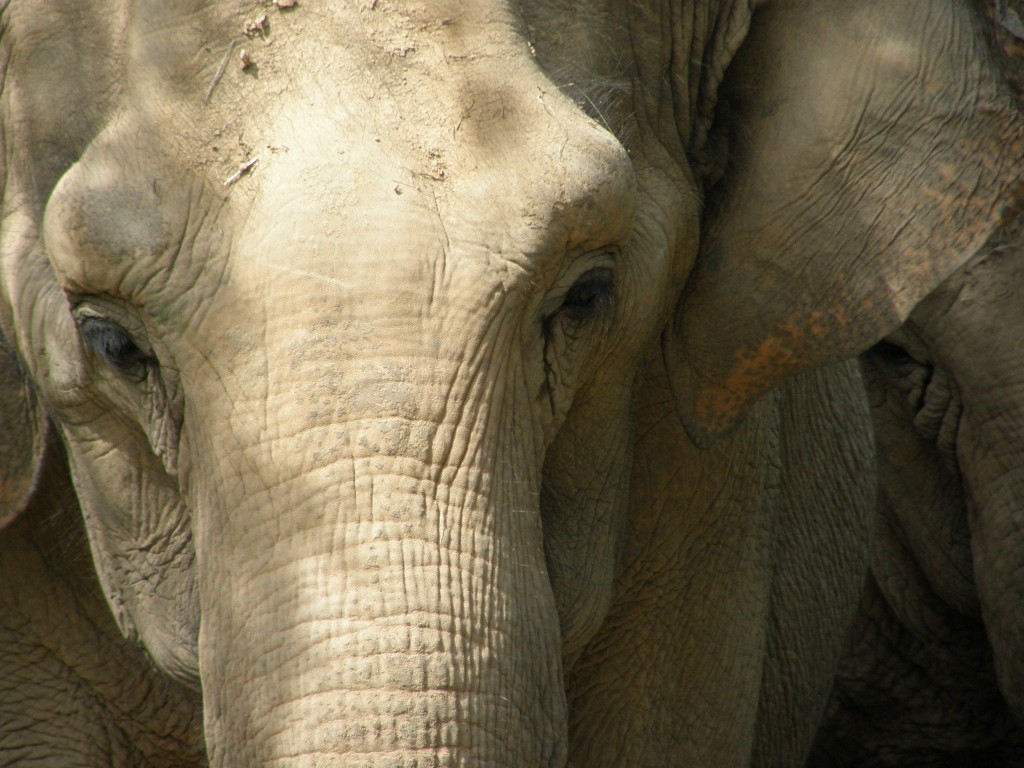
    My last day with Katherine and Anon of BLES was spent driving hours to find a baby elephant reportedly in trouble. Upon our arrival the calf was nowhere to be found, but we were introduced to Wassana.

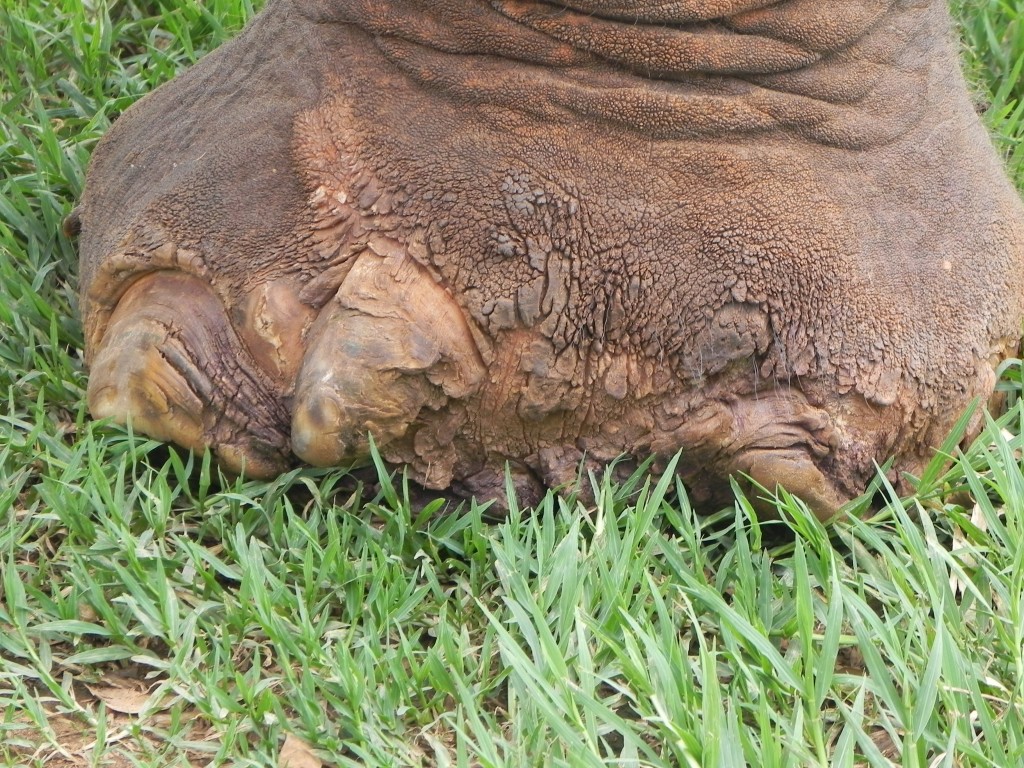
    A mature elephant of more than 40 years, Wassana was being used for tourist trekking.  Her pronounced limp brought attention to the serious injury she had sustained some time ago. A large section of her foot, including a toe and nail, had been blown away by a land mine. Like so many other working elephants, this injury happened while Wassana was being used for illegal logging.

    With heavy hearts we drove to another tourist trekking and show camp to find baby Pheung Yai. When we arrived I nearly shut down, unable to process the magnitude of suffering experienced by the elephants in this camp.

    Over the next several weeks Katherine worked diligently, negotiating and fundraising. Thanks to the generosity of many supporters, BLES was able to rescue not only Wassana, but the tiny baby Pheung Yai, as well.

    BLES is providing a humane alternative for Thailand’s jewels; without a doubt, guided by Ganesha.